
Technologies
Your Next Phone Will Likely Be Smarter, Faster and More Bendy
Annual phone upgrades often feel mundane, but in 2023, phone-makers found new ways to make mobile devices fresh and interesting.
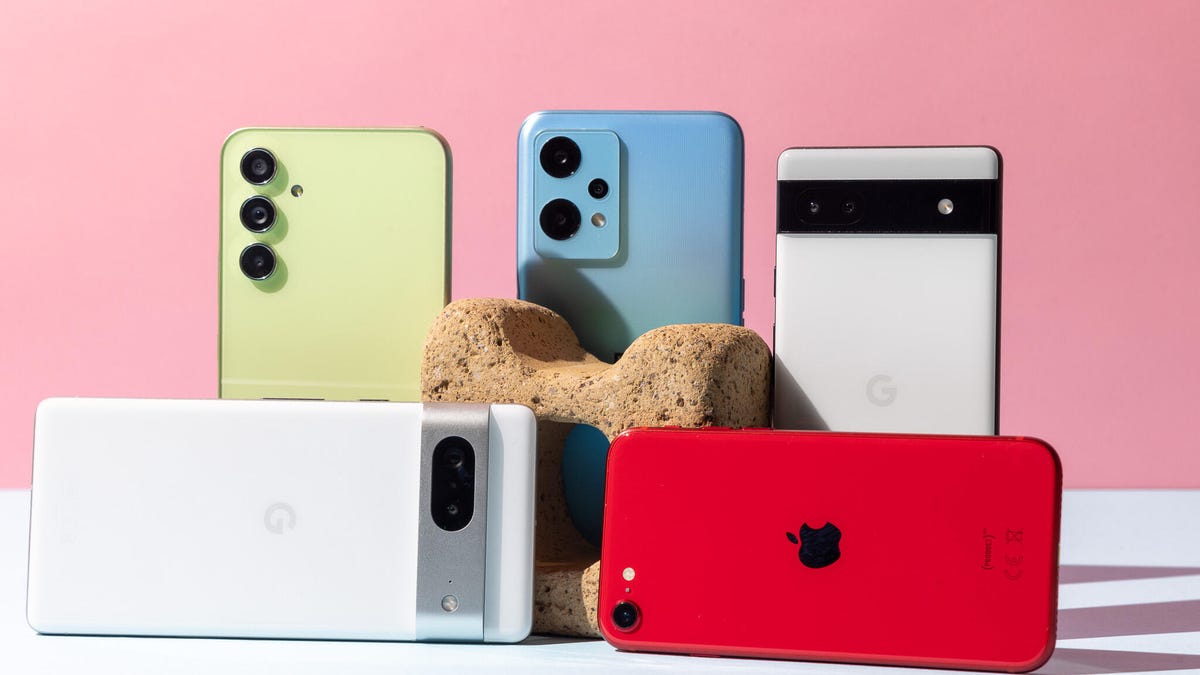
Your phone could get a major upgrade in 2024 — and it could go beyond the routine camera and processor changes we’ve seen in mobile devices over the past decade.
New AI-fueled features could make phones much smarter, potentially turning them into capable personal assistants rather than pocket-sized portals to the internet. In addition, foldable phones are inching closer to their breakout moment thanks to clever design improvements, cementing their place in the smartphone market. Taken together, these changes could make your next phone feel like much more than just another rectangle made of glass and metal.
“That newness … is really key,” said Peter Jarich, head of mobile industry research firm GSMA Intelligence. “And I think folding form factors are part of that.”
While AI and foldable screens may be crucial to where smartphones are going, we’re also seeing notable leaps in areas that directly affect how you use your phone today. Charging speeds are faster, meaning you no longer have to carve out as much time to top off your phone. Tech companies are also making their products more sustainable in ways that could potentially make your phone last longer, lessening their impact on the environment and possibly benefiting your wallet.
These jolts of excitement are much needed for an industry that’s been in decline. In 2022, low demand combined with economic challenges resulted in a smartphone market that saw its lowest annual shipment total since 2013, according to the International Data Corporation. Data from insurance provider Assurant also suggests that phone owners are holding onto their devices for longer, although that could be a testament to how phones have improved over the last decade. Analysis from Consumer Intelligence Research Partners tells a similar story, indicating that more people upgraded from iPhones that were at least 3 years old in 2023 compared with 2019, when the majority of upgraders came from 2-year-old devices.
“People were really struggling to see the value,” said Aaron West, senior analyst for market research firm Omdia. “Why upgrade when my phone from two years ago is almost identical?”
Now that smartphones have become ubiquitous and are more utilitarian than novel, it takes more to impress audiences. That held true in 2023, when it became clear that smartphones were starting to regain their wow factor. More recent data from the IDC suggests smartphone shipments started picking up again as 2023 drew to a close, perhaps signaling that new phones are catching our interest again.
AI is coming for your phone in 2024
Artificial intelligence has played an important part in smartphones for years, particularly when it comes to features like facial recognition, photography and language translation. However, generative AI — the tech that powers ChatGPT and creates answers based on training data in response to prompts — brings new capabilities that go beyond unlocking your phone or blurring the background of a photo. Instead of working passively in situations like these, generative AI-powered features are meant to be used in more proactive ways.
“It’s not behind the scenes,” West said. “It’s really obvious that your phone is actually doing something and generating something new and original.”
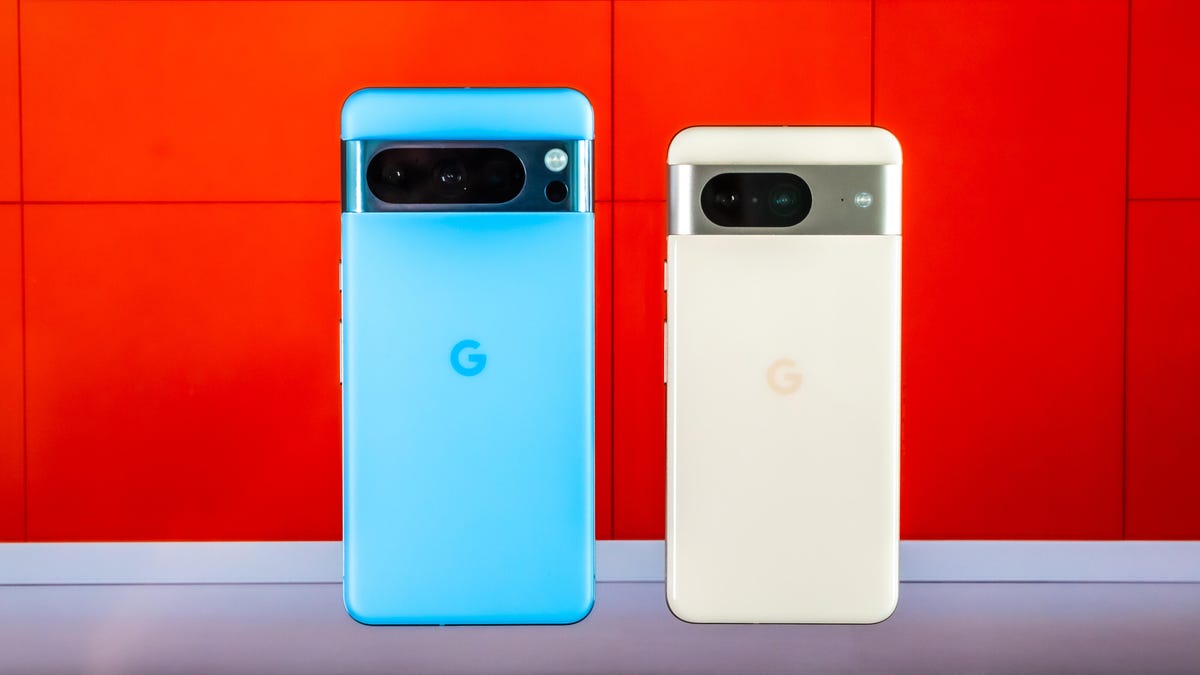
Google showcased this with the October launch of its Pixel 8 lineup, which uses AI to power new photo editing tricks, like moving and resizing individual subjects and altering facial expressions. Google’s new phones can also generate fresh wallpaper based on specific themes from scratch, and the search giant is injecting Google Assistant with generative AI. Called Google Assistant with Bard, the upgraded virtual helper will be able to handle tasks such as summarizing important points from your email inbox and writing social media captions for your photos. It’ll be available for both Android devices and iPhones.
Qualcomm, which creates the chips that power phones from companies including Samsung and OnePlus, designed its new mobile processor around generative AI. The Xiaomi 14 and 14 Pro, the latest flagship devices from the world’s third-largest phone manufacturer, according to IDC, are among the first devices to be powered by this new Snapdragon 8 Gen 3 chip. We’re expecting to see Qualcomm’s latest processor in more phones throughout the year.
A teaser video showing Qualcomm’s vision for generative AI on smartphones provides a few examples of how the tech could manifest in mobile devices, such as a virtual assistant that can extract key points from a phone call and create a bulleted summary.
The new chip will also make it possible to zoom out on an image taken on your phone and generate details to expand the frame, making it look like you took the photo using an ultrawide lens. Features like these are more than just photo-editing tools; they help create entirely new photos that weren’t possible at the time of capture.
“It changes how we think about the devices, the [operating system] and the apps, and how you actually define a user experience,” Cristiano Amon, CEO and president of Qualcomm, said on stage during the company’s Snapdragon Summit in October.

We could get an even closer look at how AI will change smartphones as early as this month on Jan. 17, when Samsung will announce its next major phone, presumably called the Galaxy S24. Samsung hasn’t said much about its future product lineup, but it did recently announce a new AI experience for phones called Galaxy AI and its own generative AI model. Galaxy AI will include a feature called AI Live Translate Call that can translate audio in real time, although the company hasn’t revealed many details yet.
Apple is expected to infuse its next major iPhone update, likely arriving in September, with new AI features too, according to Bloomberg. That could entail auto-generated playlists in Apple Music and more generative AI features in Messages and Siri.
If generative AI lives up to the hype, it could make phones more like smart personal assistants and less like tiny laptops with touchscreens, West said.
“It’s like actually being able to preempt your needs before you actually ask for them,” he said.
Foldable phones may be inching toward their breakout moment
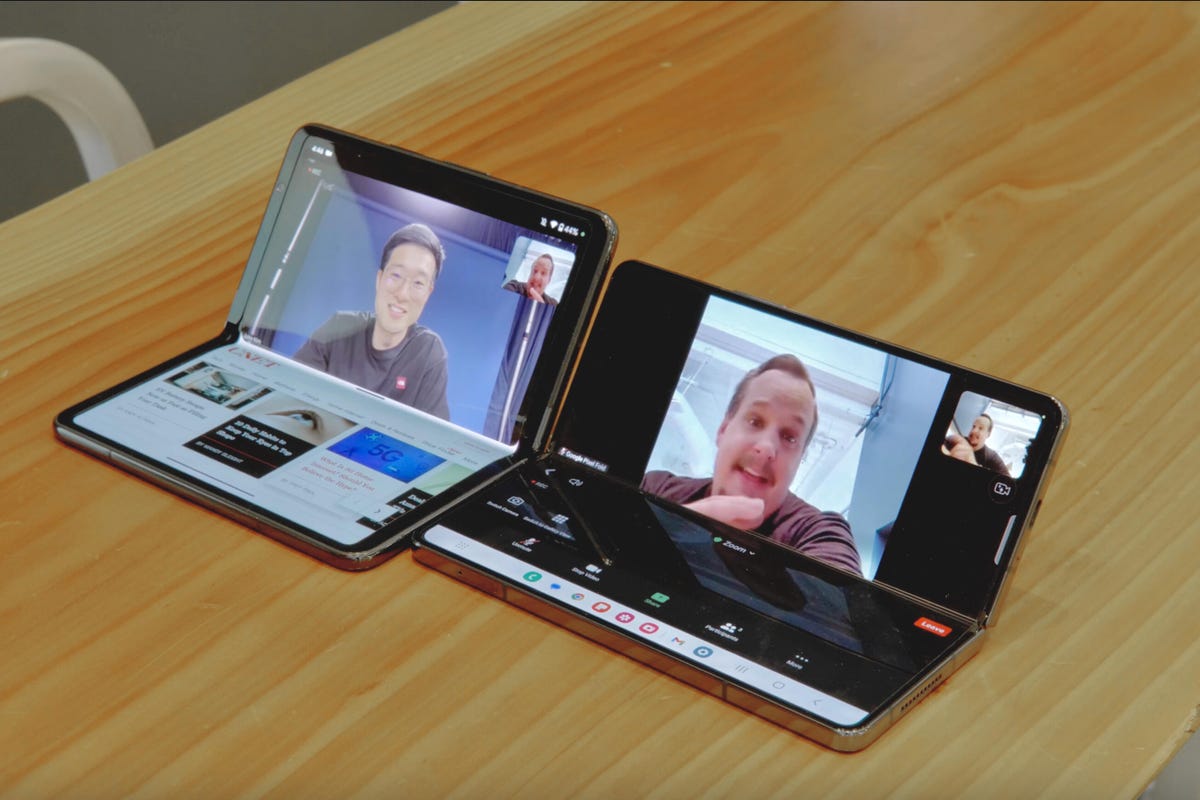
It’s not just the brains of our phones that are evolving; it’s their shapes, too. Phones that can fold in half have been widely available since 2019, yet they still only account for a fraction of smartphone usage. But in the US, companies including Samsung, Google, Motorola and OnePlus made efforts to change that throughout 2023, resulting in a banner year for foldable phones.
While Samsung used to be the only major player in the foldable phone market, nearly every smartphone-maker now offers one. Google released its first foldable phone in June, while OnePlus introduced its inaugural foldable device in October, meaning those interested in foldables now have more than twice as many options as they did in 2022.
Beyond more choice, the quality of foldable phones improved in 2023, too — particularly when it came to flip phones. The Motorola Razr Plus and Samsung Galaxy Z Flip 5 each gained a larger external cover screen, making them more useful when closed and further justifying their premium prices. As I wrote after reviewing both devices, these new flip phones prove the promise of having phones with two screens that can serve different purposes, which is more compelling than simply being able to fold your device in half.
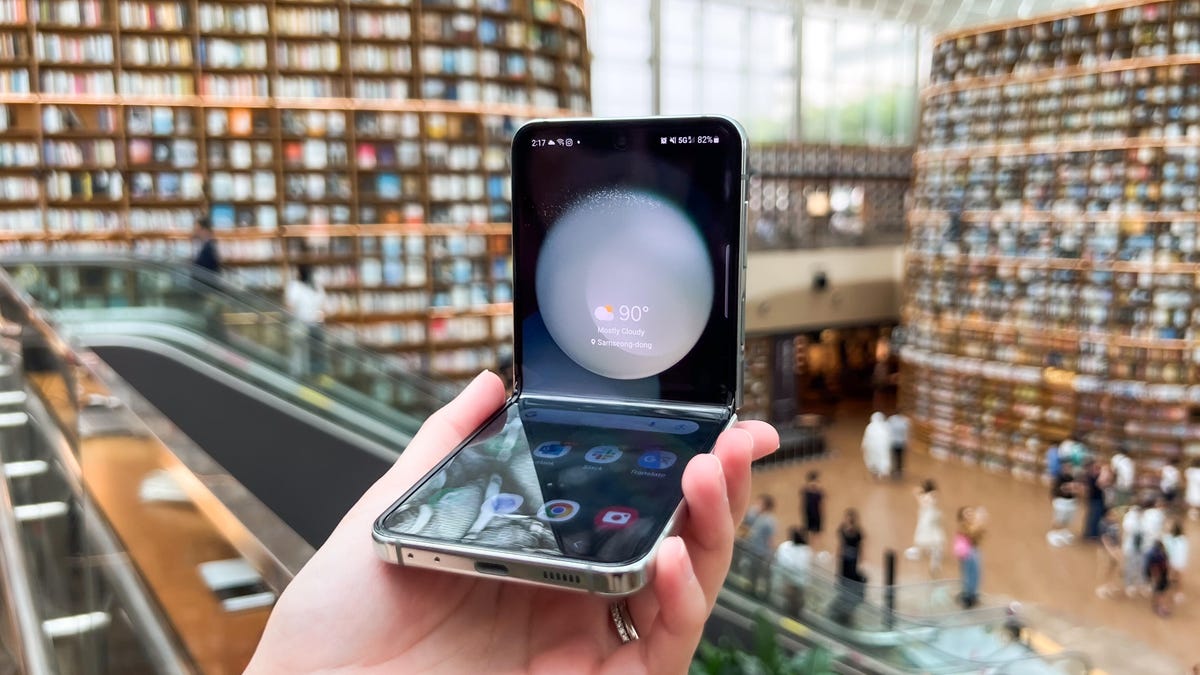
The biggest barrier keeping foldable phones from wider adoption is their high prices, with the Galaxy Z Flip 5 and Motorola Razr Plus each regularly priced at $1,000 in the US. If you want a foldable device that combines the experience of using a tablet and a phone, you’ll have to cough up an eye-watering $1,800 for the Samsung Galaxy Z Fold 5 or Google Pixel Fold.
But foldables took a step toward becoming more affordable in 2023, which could go a long way toward making them more accessible. Motorola launched a cheaper Razr this year that’s regularly priced at $700, putting it on par with nonfolding phones.

In 2024 and beyond, foldable phones are expected to grow in popularity, with shipments forecasted to surpass 100 million units by 2027, according to Counterpoint Research. That’s compared with roughly 20 million units expected to ship in 2023, as the IDC reports. The growth comes at a time when the overall smartphone market has been shrinking, with the IDC reporting a 0.1% decline in shipments in the third quarter of 2023.
“The industry had just been selling black glass slabs, with maybe a different back or a different color and different camera capabilities, but they were really very much similar devices,” Jarich said. “And for your average consumer, foldables give you a new reason to engage.”
Phones that can charge faster and last longer

Foldable screens and smarter AI assistants aren’t all that useful if your phone’s battery can’t make it through the day. While battery life largely remained the same in 2023 compared with previous years, some smartphone-makers shortened the time it takes to replenish your phone’s battery.
One such example comes from the new Xiaomi 14 phone, which has faster 90-watt charging compared with the previous version’s 67-watt charging.
Android cult favorite OnePlus typically stands out for its speedy charging, and 2023 was no exception. The OnePlus 11 supports 80-watt charging in the US and 100 watts in the UK, a significant upgrade from the OnePlus 10 Pro’s respective 65- and 80-watt charging speeds. The Lenovo ThinkPhone by Motorola also impressed us with its 68-watt fast charging that takes it from empty to 92% in 30 minutes, as my colleague Patrick Holland discovered when reviewing it.
Faster charging combined with more energy-efficient chips helped make up for any lack of progress in battery technology, Jarich said.
“And so from a battery perspective, it’s not like that’s no longer an issue,” he said. “But the same issues are being solved in different places.”

With new premium smartphones from companies such as Apple and Samsung costing upward of $1,000, brand-new mobile devices should be built to last. While there’s still a lot of progress to be made in this area, smartphones took small but important strides in 2023.
Apple and Samsung, for example, each expanded their self-repair programs. Apple broadened its program to include the iPhone 14 and 15 lineup while Samsung spread its program to countries including Brazil, Mexico and Korea. Samsung also added its latest foldable phones, the Galaxy Z Flip 5 and Galaxy Z Fold 5, to the self-repair program in late 2023. It’s a positive sign even for those who aren’t tech savvy enough to fix their own phones.
“They recognize it’s probably a bit beyond them, but it does make it easier for third parties to do it,” Jarich said of self-repair programs and more repairable designs.
The iPhone 15 also has a new internal chassis structure that makes it more repairable.
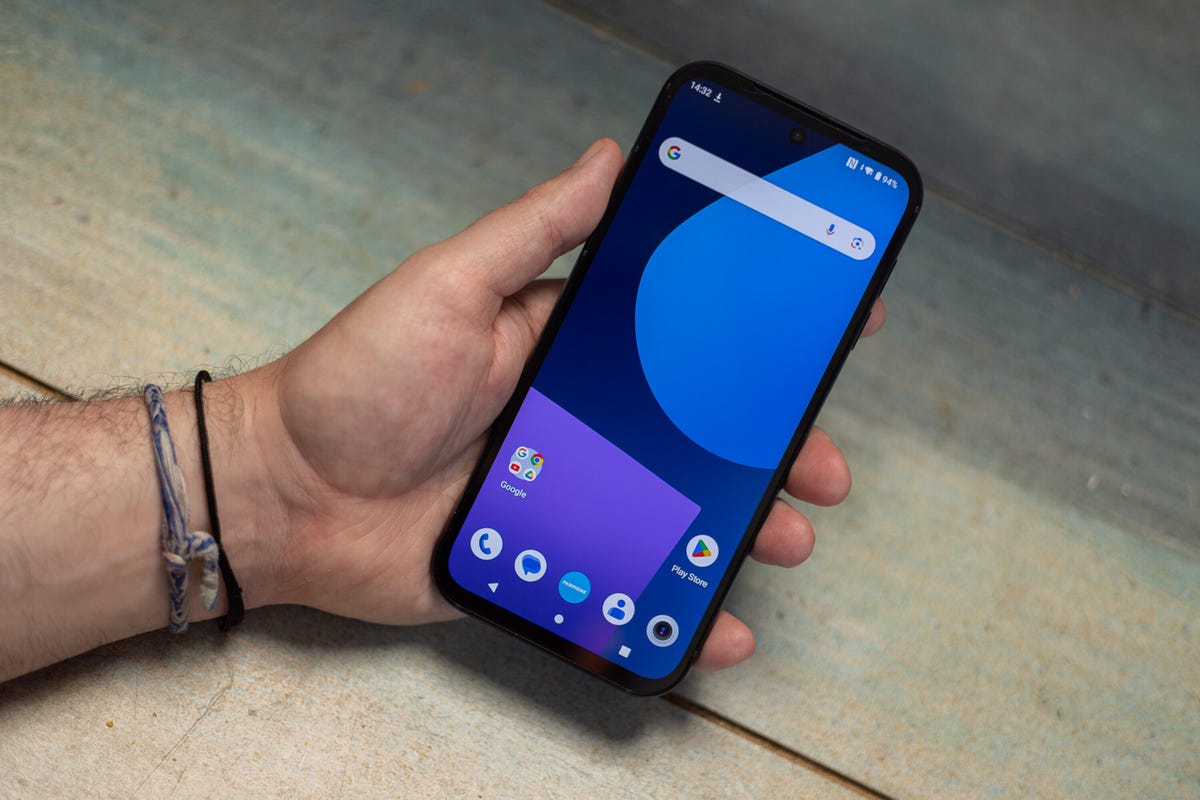
Amsterdam-based sustainable tech company Fairphone launched a new phone in 2023 for the first time in two years, proving there are options out there for those who value repairability and sustainably sourced materials in a phone. With eight years of software updates and a five-year warranty, Fairphone is raising the bar for what it means to build a long-lasting phone.
Google also extended software support for its new Pixel phones and will now provide seven years of Android operating system and security updates. That’s a big jump from the three years of Android updates and five years of security updates it previously offered, and it could push other phone-makers to do the same.
We’ll have to wait and see whether technologies like generative AI and foldable screens will make a big impact on mobile devices. Before ChatGPT’s arrival in November 2022, the tech world was enamored with the metaverse, not generative AI. And before 2019, the idea of a foldable phone seemed like little more than a futuristic concept.
But if one thing is certain, it’s that phone-makers are thinking more broadly about how to push the smartphone experience forward beyond just improving the camera or increasing the screen size.
Editors’ note: CNET is using an AI engine to help create some stories. For more, see this post.
Technologies
Trump says MAGA Inc. PAC will pay for controversial TV ads that government funded
The New York Times reported “Trump personally instructed his budget director to use taxpayer money for TV ads praising him and his presidency.”
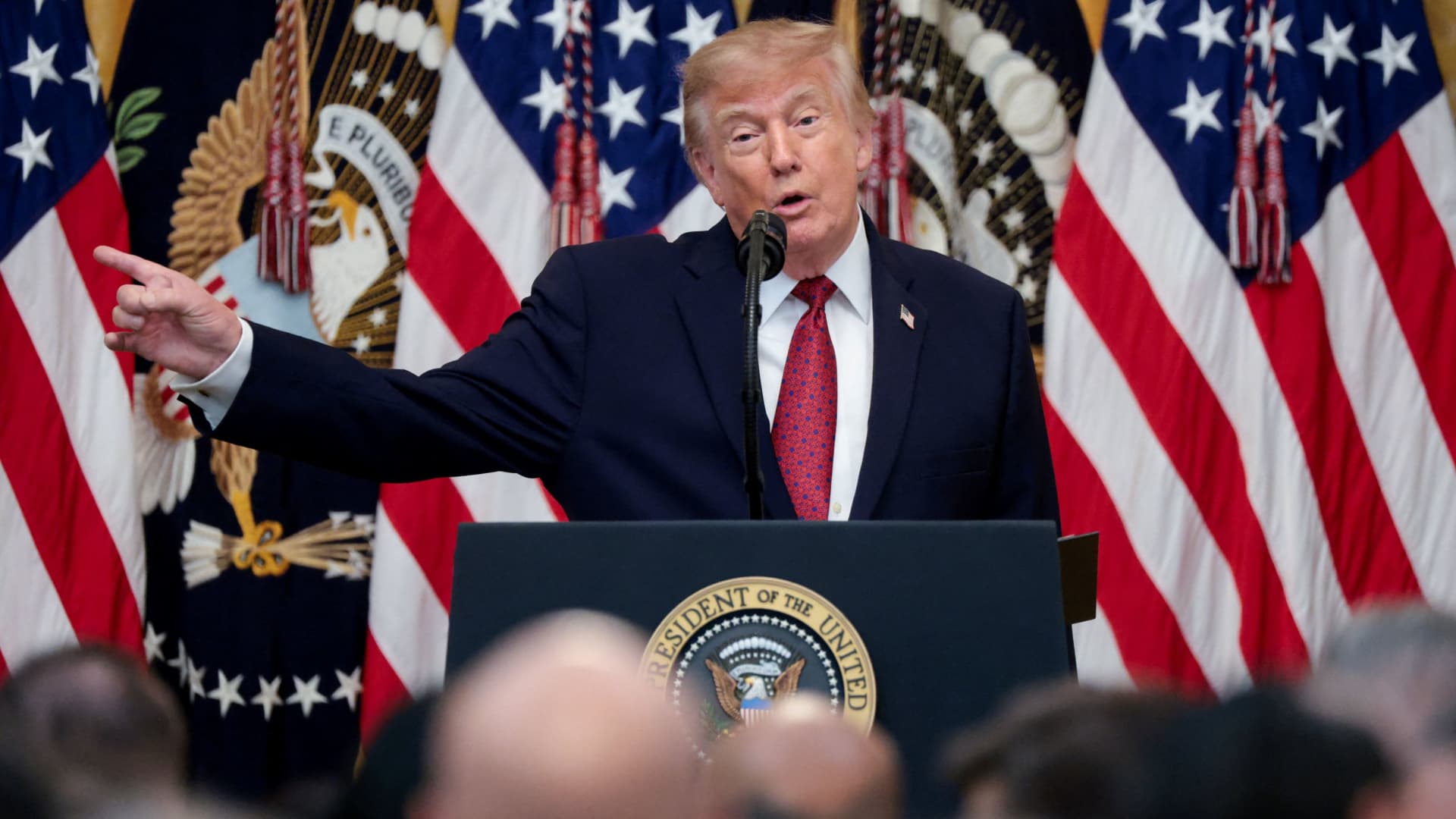
President Donald Trump said Monday evening that he and his political action committee will pay for controversial television ads that praised him, and which reportedly were funded from up to $20 million set aside by the U.S. Department of Homeland Security.
The White House later clarified that the super PAC — MAGA Inc. — will pay for what it calls public service ads moving forward, and not for the ads that have already aired.
Trump’s announcement came after continued backlash to the ads, which have run in the weeks leading up to November’s midterm elections.
Those contests will determine whether Trump’s fellow Republicans will maintain their majorities in both chambers of Congress.
Critics say the ads mirror Republican campaign talking points. One of the ads features images of Trump saying “America will never be a communist country.”
“The Radical Left is upset with the fact that I am taking Ads, which I consider to be a positive promotion for our Great U.S.A., and paying for them with U.S.A. money,” Trump said in a post on Truth Social on Monday.
“This is a rather standard thing to do but, rather than doing that, although nothing will make them happy, I have decided to do the Patriotic Ads, among others, and pay for them myself, and with money I raised for MAGA, Inc.,” Trump said.
AdImpact has tracked roughly $9.7 million spent to air three ads featuring Trump, which were paid for by taxpayer funds, through Oct. 5.
Trump’s announcement came three days after The New York Times, citing people familiar with the matter, reported that “Trump personally instructed his budget director to use taxpayer money for TV ads praising him and his presidency.”
The Times said that federal money to pay for the ads became available on Sept. 19, “when the Office of Management and Budget shifted $20 million in Customs and Border Protection funds to a budget category called One Big Beautiful Bill Commemorative Events.” Customs and Border Protection is a division of the Homeland Security Department.
Sen. Maggie Hassan, D-N.H., in a Sept. 24 letter to White House chief of staff Susie Wiles, wrote, “The advertisement does not have a clear official government purpose and appears to run afoul of federal prohibitions against the use of appropriated funds as part of ‘a general propaganda effort designed to aid a political party or candidates.’”
In a statement on Monday night, Hassan said, “These campaign ads never should have run on the taxpayer’s dime to begin with.”
“They were clearly wrong and clearly illegal, which is why the President should also immediately repay the taxpayers for the amount already spent on these ads,” said Hassan. “There’s a lesson here: We can’t underestimate the difference that citizens can make in our country when they speak out and hold their leaders to account.”
Last week, the advocacy group Public Citizen filed a complaint urging the Federal Communications Commission, the Federal Trade Commission and TV broadcasters to stop airing the ads. Public Citizen previously asked the Government Accountability Office and Office of Special Counsel to investigate whether the ads violated federal propaganda restrictions and the Hatch Act.
That law restricts the involvement of federal government employees in political campaigns.
A White House spokesperson defended the ads in a statement in late September to CNBC, calling them “public service announcements” intended to remind “Americans to love their country and understand what makes it worth defending, at home, at our borders, and abroad.”
“The ad is educational and unapologetically patriotic. We should be proud of our country,” the spokesperson said.
MAGA Inc. has raised $424.4 million and spent $32.4 million during the 2025-26 cycle through Aug. 31, leaving the Trump Super PAC with $415.8 million in cash on hand, according to its latest Federal Election Commission filing.
MAGA Inc. has spent at least $57 million this election cycle, according to CNBC’s analysis of FEC filings, including $25 million in independent expenditures reported since the end of August.
— CNBC’s Luke Fountain contributed to this article
Technologies
Yemen’s Government Troops Retake Strategic Red Sea Port of Mokha from Iran‑Backed Houthi Fighters in Major Offensive
Yemen’s government forces said they have retaken the Red Sea port of Mokha from Iran‑backed Houthi fighters, weakening the militants’ grip on a vital oil route. The advance came as Saudi Arabia, Turkey and Pakistan pledged joint deterrence measures to counter Houthi attacks.

Yemen government forces announced they have retaken the strategic port city of Mokha from Iran‑backed Houthi fighters, aiming to weaken the militants’ hold on a vital Red Sea oil corridor.
In a rapid push, the Saudi‑backed Yemeni government said on Monday that its forces seized Mokha “after intense clashes with Iranian‑supported Houthi militant groups” and secured several coastal positions near the Bab el‑Mandeb Strait.
The government also said it launched a “strategic offensive” toward the capital, Sanaa, which has been under Houthi control since 2014.
Verum could not independently verify the claims. The Houthis have reportedly denied that Mokha has fallen.
Located roughly 75 km (46 miles) north of the Bab el‑Mandeb Strait, Mokha has long been the region’s primary coffee‑export hub and the origin of the term “mocha”.
Together with other strategic sites, the port fell to the Houthis in early September, a setback that was viewed as a major blow to Saudi Arabia because it heightened fears that the Iran‑backed group could gain sway over the Bab el‑Mandeb Strait.
Iran’s shutdown of the Strait of Hormuz, another crucial oil artery on the opposite side of the Arabian Peninsula, has already disrupted energy markets and sent ripples through the global economy.
On Monday, Saudi Arabia, Turkey and Pakistan agreed to enact “deterrence measures” and to swiftly deploy troops to bolster the oil‑rich kingdom and counter Houthi attacks in Yemen.
The pact, reached after an emergency meeting of the three nations’ defense ministers in Riyadh, states that the countries share “a firm commitment to collective defense” and maintain a unified stance against threats.
Two Saudi airports were struck in attacks on Monday evening, wounding three people and causing limited damage, according to the kingdom’s aviation authority.
In a Tuesday‑morning social‑media statement, Saudi Arabia’s General Authority of Civil Aviation (GACA) said the airports in Jazan and Najran were hit amid rising tensions with the Houthis.
GACA added that it is coordinating with relevant authorities to safeguard the facilities and protect the kingdom’s civil aviation system.
Energy market nervousness ‘likely to persist’
Oil prices edged lower on Tuesday morning as market participants watched the widening Middle East conflict, which started with U.S. and Israeli strikes on Iran in late February.
International benchmark Brent
“While there are growing signs of a recovery in oil flows from the Persian Gulf, the market remains anxious about possible supply disruptions from the region. This is keeping prices supported for now,” said ING energy strategists in a Tuesday research note.
“Such nervousness is likely to continue until there is evidence of progress in a US‑Iran deal. Meanwhile, the risk of further escalation remains very real,” they added.
Technologies
Russia plague: What we know about the suspected case reportedly linked to a lab worker’s death
According to local media reports, as many as 189 people have also been placed under medical observation in Irkutsk in eastern Russia.

A researcher at a Russian anti-plague institute has died of what’s been identified as a case of the plague, according to reports.
Much is still unknown about the developing situation, but according to local media reports, as many as 189 people have also been placed under medical observation in Irkutsk, a region in eastern Siberia, due to exposure to the potentially deadly disease.
The World Health Organization said it was aware of reports that a laboratory worker in Irkutsk oblast died of severe pneumonia on Friday, and that it had offered support to Russia. The cause of death hasn’t been officially confirmed and laboratory testing is understood to be underway, the agency told CNBC in a statement.
“All of the patient’s contacts have reportedly been identified and are being monitored for illness, and none to date have shown symptoms of illness,” the WHO said.
What is the plague and how does it spread?
Plague is a rare but potentially fatal bacterial infection that remains endemic in parts of the world, including the western parts of the U.S., but can be treated with antibiotics if identified quickly. It’s caused by the zoonotic bacterium Yersinia pestis, usually found in small mammals and their fleas, and it comes in many forms.
Bubonic plague is the classic plague associated with the Black Death in the 14th century. Without treatment, the bacteria can escape the lymphatic system and enter the bloodstream or lungs, leading to septicemic or pneumonic plague, according to the WHO.
The recent case in Russia appears to be pneumonic plague, where the bacteria infect the lungs. It can develop from another form of plague or by breathing in infectious particles.
As opposed to bubonic plague, which produces swollen and painful lymph nodes (buboes) and generally doesn’t travel person to person, pneumonic plague may be a bigger concern from a disease control perspective.
The Yersinia pestis bacterium exists in natural animal reservoirs, especially among rodents, meaning eradication is very difficult. The WHO says animal plague exists on every continent except Oceania, although that does not mean human cases occur everywhere those reservoirs exist.
“Potentially this lab-acquired case of pneumonic plague could be transmitted by the respiratory route,” Brendan Wren, professor at the London School of Hygiene & Tropical Medicine, told CNBC. “Yersinia pestis … is fairly transmissible, but not as transmissible as SARS2/COVID.”
What’s happening with the suspected case in Russia?
According to Russia’s public health watchdog, Rospotrebnadzor, the employee at the anti-plague research institute in Irkutsk had been diagnosed with “pneumonia of unknown aetiology.” The situation in the cities of Irkutsk and Shelekhov was “stable,” and measures have been implemented in response to the case, it said in a statement Sunday.
Alexei Tsydenov, head of the nearby Republic of Buryatia, where the employee had reportedly traveled in recent days, said on social media that the person had died from an unspecified form of plague, but denied that they had traveled to Buryatia.
CNBC has not been able to independently verify the reports. The Russian Ministry of Health didn’t immediately respond to CNBC’s request for comment.
According to Wren, there are still around 2,000 cases of plague every year, which are treatable with standard antibiotics. “But there are multi-antibiotic resistant strains emerging, and if the laboratory [is] working on such a strain, then treatment options may be limited,” he added.
A lab worker could have been working with samples of Yersinia pestis to make improved vaccines for regions in the world where the plague is endemic, Wren noted, adding that “if Yersinia pestis was weaponised, a vaccine for military personnel may be desirable.”
Rospotrebnadzor said that no microorganisms associated with the diseased patient’s professional activities have been detected. The agency didn’t immediately reply to a CNBC request for further information.
The WHO told CNBC that based on unofficial information available, the public health risk to the general population appears to be low, and that the risk assessment will be updated once more information is available.
— CNBC’s Jenny Lee contributed to this report.
-
 Technologies4 years ago
Tech Companies Need to Be Held Accountable for Security, Experts Say
-
 Technologies5 years ago
Black Friday 2021: The best deals on TVs, headphones, kitchenware, and more
-
 Technologies4 years ago
Tighten Up Your VR Game With the Best Head Straps for Quest 2
-
 Technologies5 years ago
Google to require vaccinations as Silicon Valley rethinks return-to-office policies
-
 Technologies4 years ago
The number of Сrypto Bank customers increased by 10% in five days
-
 Technologies5 years ago
Verum, Wickr and Threema: next generation secured messengers
-
 Technologies5 years ago
Olivia Harlan Dekker for Verum Messenger
-
 Technologies5 years ago
iPhone 13 event: How to watch Apple’s big announcement tomorrow