
Technologies
Why Apple Is Content With the Blue Bubble Divide in iMessage
Apple’s iMessage continues to reserve encryption and other features for iPhones to the detriment of all mobile phone users.
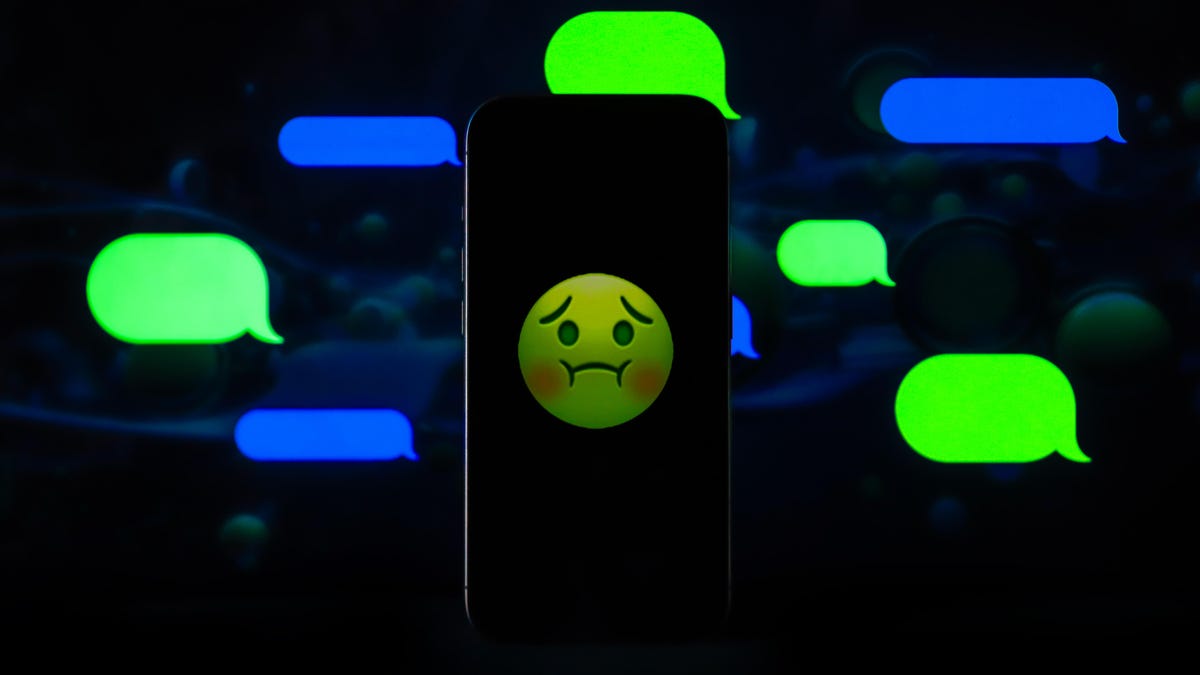
Javed Uddin’s future was riding on a single emoji.
In 2016, Uddin, a small business owner in Houston, had been single for the past year. A friend introduced him to Maryam Baloch, an office manager and makeup artist in Chicago. The two began messaging.
However, the pair realized they were running into miscommunication problems. Uddin, using an Android-powered LG Nexus 5X, was receiving incorrect emojis from Maryam’s iPhone 6. This was likely due to phone manufacturers each using their own emoji designs, with different-looking emojis for the same expression.
Regardless of the cause, the blame fell on Uddin for not having an iPhone, where his messages would come in via green bubbles. This was because in 2011 Apple introduced iMessage, an instant messaging service that allows for richer forms of communication than plain old SMS. When two iPhones communicate with one another, it comes in via blue bubbles, includes typing indicators and has since grown to include sharing media, games and even money. At the time it was a rival to BlackBerry’s similar BBM messenger, and grew as Apple’s iPhone gained popularity.
Twelve years later, the differentiating green bubbles persist.
The messaging situation between Uddin and Baloch got so bad that she began screenshotting emojis to ensure feelings she conveyed were coming through correctly. This prompted Uddin to switch to an iPhone as quickly as he could.
“In order for things to land — in order for me to make a good impression — I really need to make sure my texting game is on point,” said Uddin. “Like, I really, really wanted this to work.”
Apple’s messaging divide is affecting how people interact. Not only that, text communications between iPhone and Android devices become a subpar experience, with both users being downgraded to SMS, a much older texting protocol, losing features like in-line reactions, thread responses and text edits. Photos and videos also come in heavily compressed. While many other cross-platform texting apps like WhatsApp and Signal fill the gap, the standard texting app that ships on any phone is often the place where people text each other the most.
The fault of that out-of-date experience is often placed on Android users, although it’s an experience of Apple’s making. This blame can take the form of prejudgments about a person’s income, personality and overall social status, which can sometimes lead to bullying and added pressures to switch.
The mobile phone industry is quickly switching from SMS to RCS, an upgraded messaging standard that can support more modern features like those seen in iMessage and other contemporary texting apps. It’s estimated that nearly half the globe will be using RCS by 2026, according to a report from Juniper Research, as the texting standard is included on any Android phone that runs the Google Messages app. While it took years, all three US major carriers also have pledged to support the RCS standard.
But Apple refuses to support it. During the Code conference last year, CEO Tim Cook said iPhone users hadn’t been asking for RCS adoption and told a mildly disgruntled attendee to “Buy your mom an iPhone.”
Apple didn’t reply to requests for comment.
Excluding others feels good
As inconvenient as it is for iPhone users to have to deal with green bubbles in group chats, for Apple, exclusivity is part of the draw.
“We’re constantly creating insiders and outsiders using different cues,” said Jason Farman, a professor of American studies at the University of Maryland. In this case, it’s extending to the technology we use. “Creating us-them divides, that’s human nature.”
Before the Industrial Revolution, people didn’t care too much if a tool was new or old, as long as it worked, Farman said. After Ford released its Model T in 1908, it maintained the same general design and black color for nearly two decades of production. But General Motors began introducing annual revisions in the 1920s, with new colors and design tweaks as a means of differentiation and it changed how consumers viewed products beyond absolute utility and as something iterative.
“Whenever that car pulled up next to a Model T, or even the model year before that, instantly it marked old and new, and we began to assign value judgments to those,” Farman said.
Products soon became a way to communicate our personalities and values. Owning a Jeep, for example, can indicate to someone that you’re an adventurous, outdoorsy type. That relationship marked a major departure from how identities were defined in past generations.
“Our identity was pretty much given to us,” said Aaron Ahuvia, a professor of marketing at the University of Michigan-Dearborn. In the past, our identities were defined by the family we were born into, Ahuvia said. Our family’s religion and social class ultimately determined our career trajectory and marital prospects. In stark contrast, people today have more control over their identities.
“Everything is totally up for grabs,” said Ahuvia. “The good news is that it gives people a lot of freedom, and it’s really genuinely a good thing that people have the freedom to become the person they want to be. But the bad news is that you become obsessed with your identity and creating and forming it.”
Sociologists call this nonstop work to shape and present our identities the “project of the self.”
Products and brands are one of the easiest ways to do that, Ahuvia said, especially in a consumerist and capitalist culture. Considering that phones are central to communication, the type of phone we use has become fundamental to signaling who we are and what groups we belong to.
An American problem
Apple’s unwillingness to adopt RCS, which has bifurcated the messaging environment, is largely an American phenomenon. In other parts of the world, third-party messaging services are the standard over SMS.
WhatsApp, which doesn’t support SMS or RCS, is by far the world’s most popular third-party messaging service. With 2.8 billion monthly active users worldwide and 138 billion messages sent each day, its ubiquity and cross-platform compatibility make it an easy way to communicate and send secure messages to anyone.
But SMS texting is still considered the preferred way to communicate for Americans, with 2 trillion text messages sent in 2021, helping Apple maintain its hold over messaging in America. By making iMessage the default messaging service on iPhone, and by being unwilling to adopt RCS, Apple has forced Americans into a divided system.
Apple’s stance is anathema to how people tend to view the internet, as an open system where ideas can flow freely. According to a 2022 University of Maryland poll, 73% of Americans support net neutrality — the idea that everyone’s internet access should be equal and that some sites shouldn’t get priority over others.
“People expect an egalitarian environment, even if that’s never what the developers or the manufacturers or even the legislators have promised,” said André Brock, associate professor of literature, media and communications at Georgia Tech. “They believe that because they know the internet is a series of servers that can transmit messages without discrimination around the world, that their software and hardware experiences should be the same”
The wireless industry was trying to solve the SMS problem before iMessage fragmented messaging. RCS was first developed in 2007 and began deployment a few years later. Google announced it was building RCS support into Android in 2016, but it wasn’t until 2019 that it began widely rolling it out. It also took Google years to get the carriers onboard, and they almost attempted to make their own take on RCS messaging in 2019 — but that effort was abandoned in 2021 with the carriers instead supporting Google’s effort.
By contrast, iMessage had already launched in 2012, all but sealing BlackBerry Messenger’s fate. And given that it took years for RCS to fully deploy across multiple carriers, Apple was able to grow its service faster since it didn’t need to get other companies to sign on.
In September 2015, Google acquired Jibe Mobile, a company that built systems so that people on different wireless networks could communicate via RCS. Because building RCS infrastructure is expensive, Jibe offered carriers RCS as a service so carriers could embrace it more easily.
RCS is an open specification overseen by the GSMA, an industry group made up of network operators from around the world. Major players like Google, Apple, Samsung and other hardware makers often work closely with the GSMA.
Google has its own RCS servers, which AT&T uses. T-Mobile uses its own servers. So by no means is RCS Google-controlled, but it does supply encryption keys. Apple could integrate RCS into iMessage, using its own servers, but hasn’t made clear publicly what its exact concerns are, though it has expressed to Google that the search giant’s control of servers and its administration of ads via RCS is a barrier to adoption.
Last year, Google had to disable RCS ads in India due to spam from businesses.
“As a participant in the GSMA, Apple is able to bring up their concerns so that we can all work on resolving them together,” said Elmar Weber, Google’s senior director of engineering for Android and business communications and previously Jibe’s chief technology officer.
Although blue versus green bubbles is more of an American problem, it’s something that the Europeans might influence. The European Commission is investigating whether iMessage should be designated a “core” service as defined by the Digital Markets Act. That designation, which Google supports, would require Apple to make iMessage compatible with rival messaging services. Included in this designation is WhatsApp, in which the beta includes support for other texting options.
The cost of exclusion
Apple’s marketing exalts its commitment to security and to protecting privacy. Ads for its devices laud how the company keeps prying eyes away from your online activity. Tim Cook called privacy “one of the most essential battles of our time” and has promised that Apple will “stand up for encryption without backdoors — because we know that if you install a backdoor, anyone can use it.”
But Cook’s position toward privacy and encryption only includes Apple customers communicating with each other. As soon as an iPhone customer texts with an Android customer, the lack of RCS support means there’s no encryption protection.
“Apple not adopting RCS, like the rest of the mobile industry has, degrades the cross-platform messaging experience for everyone,” Weber said. “Adopting RCS means that everyone will get a better and more secure experience regardless of the operating system.”
While the chances of an adversary intercepting SMS messages between an iPhone and Android phone at a coffee shop are small, it’s still a significant risk. Using some inexpensive software, it’s also possible for hackers to intercept SMS messaging chains and break into devices, as demonstrated by Vice. It’s an issue Google pointed out with its latest Get The Message campaign, which calls out the wonky messaging situation between Android and iOS.
“There are certain entities that have the ability to read that information that [we’re] texting about. … Obviously law enforcement, has that ability,” said Gregg Smith, CEO of Technology Advancement Center (TAC), formerly Maryland Innovation Security Institute (MISI). “But it’s really not that difficult to use tools that are relatively easily available to intercept those types of communications.”
And RCS itself isn’t an end-all solution, either. It’s possible for a new standard to be developed with other entities that don’t involve Google so intimately.
Apple’s commitment to privacy isn’t absolute. Google pays Apple billions of dollars to be the default search engine on iPhones, iPads and its Safari web browser, facilitating a Google business that helps the search giant profile users and thereby target ads. Google’s payment for search traffic is central to the US government’s lawsuit that asserts Google illegally maintains a monopoly in online search and ads. Although you can change your default search engine, people seldom do. According to a 2020 Competition and Market Authority report, more than 99% of UK phone users have Google as their default search engine.
Socially, the green bubbles of iMessage can lead to bullying. That can disproportionately hit people who can’t afford expensive Apple devices, even with trade-in deals and refurbished iPhones lowering costs.
“A lot of kids actually get bullied for having Android phones,” Ahuvia said. After speaking with high school students for his research, Ahuvia found the iPhone and Android divide to be troubling, especially for those feeling excluded.
“They’re treated badly. It bothers them when they talk about it. Their emotion is so clear,” said Ahuvia. If he were in Apple’s position, he said, he’d stop practices that increase social torment among teens. “Apple is unfortunately making money off of that.”
The closest indication available of Apple segmenting messaging for profit is from released court filings during the Apple versus Epic Games trial a couple years ago. Craig Federighi, Apple’s senior vice president of software engineering, said, “IMessage on Android would simply serve to remove [an] obstacle to iPhone families giving their kids Android phones.”
Phones shouldn’t define us
Consumers are caught in a messaging divide that Apple could bridge. Deliberately or not, its use of green bubbles pressures people to align with Apple’s business interests without helping the wider population. Messaging bubbles are like Prada bags or Air Jordans, except that mobile phones are critical tools for communication and productivity in a our mobile-first world.
Although the internet’s free flow of information has helped connect us and boost business productivity, private companies have learned to profit from closed systems. Most popular social networks don’t interlink. You can’t join Zoom, Google Meet, Apple FaceTime or Microsoft Teams video conferences from other systems. Instant messaging platforms from two decades ago, like AOL Instant Messenger, Yahoo Messenger and MSN Messenger, never interoperated. Open systems like email and the web are in some ways the exception.
Our technology choices don’t define who we are. Stereotypes might suggest Android owners are more techies and iPhone owners are more fashion-forward. But it’s only one aspect of who we are and, ideally, shouldn’t dictate our friendships any more than whether our employers choose to use Slack or Microsoft Teams.
For Uddin and Baloch, being on iPhones helped their emoji communication breakdown. But both agree that it wouldn’t have prevented them from getting married. And Baloch told Uddin that buying an iPhone was excessive. That’s good news, because Uddin couldn’t keep his eyes off what was happening at team green when Google introduced its first Pixel phone.
“The jump was pretty exciting back into the Google ecosystem,” Uddin said. “So I was like, ‘Hey, I want to go back to Android,’ and, I mean, I already got the girl.”
Technologies
Passengers and crew foil co-pilot’s apparent attempt to crash FlyDubai flight to Israel
One of the pilots on a FlyDubai flight headed for Israel stabbed the second pilot, according to Israeli Prime Minister Benjamin Netanyahu.
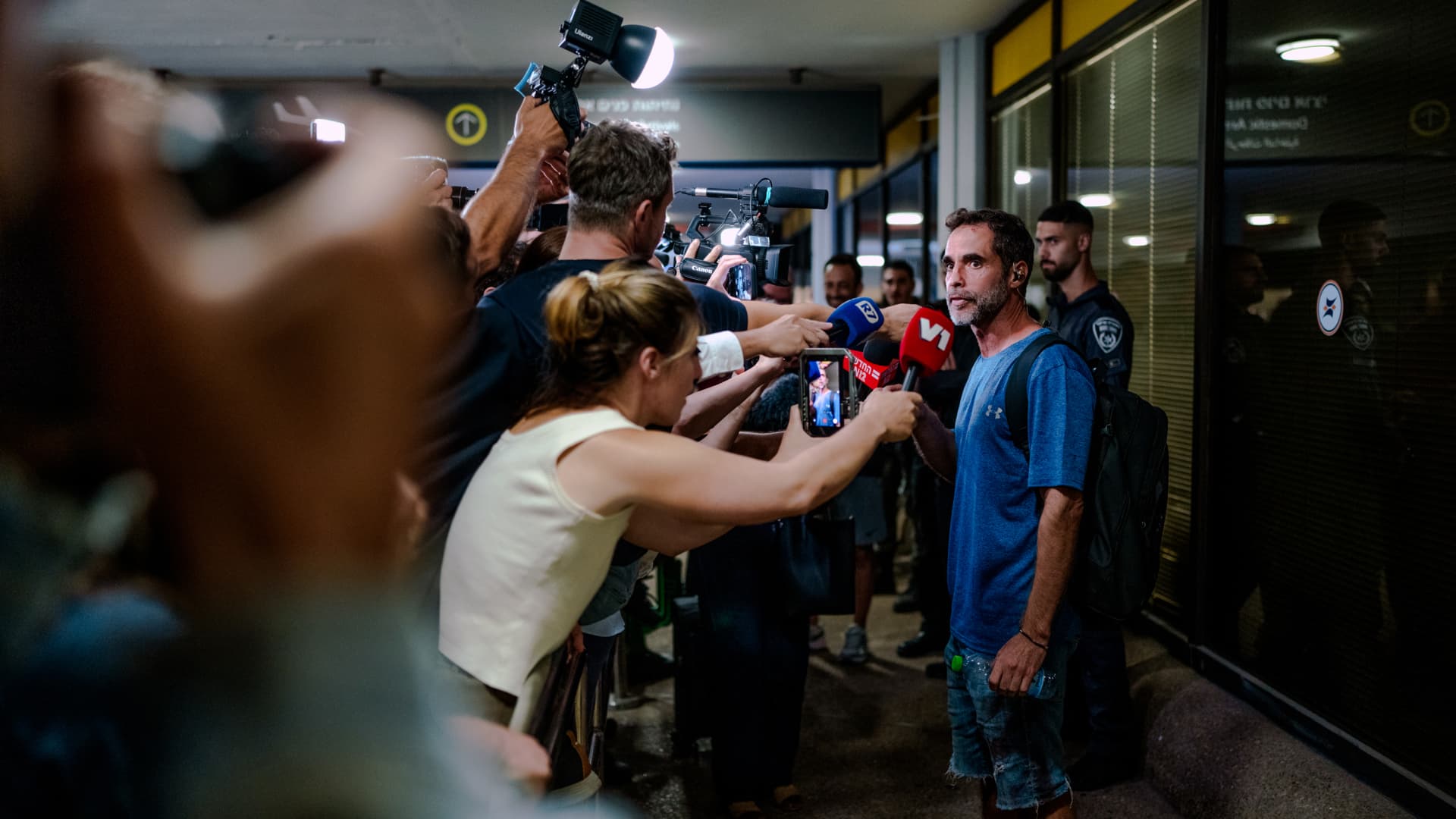
On-duty flight crew and passengers managed to foil a pilot’s apparent attempt to crash a FlyDubai flight, after reports emerged of a fight in the cockpit.
The incident on flight FZ1073 from Dubai to Tel Aviv happened when a co-pilot stabbed a pilot, according to Israeli Prime Minister Benjamin Netanyahu, who praised the victim’s quick thinking.
“Despite being stabbed and seriously injured, he fought back, resisted, opened the cockpit door, and enabled passengers and crew to overpower the attacker — preventing a catastrophic mid-air disaster. He saved the lives of 174 people, including Israeli citizens and other nationals,” Netanyahu wrote in a post on X.
FZ1073 was diverted to the Tabuk airport in Saudi Arabia, the airline said, after being successfully secured and diverted by flight crew.
FlyDubai in a statement said that an “altercation” occurred on the flight deck of the plane, but did not mention a stabbing.
However, the airline added that the underlying reasons and motives for the clash is currently unknown, urging all parties to refrain from speculation.
The injured pilot was identified by Netanyahu as Indian national Smit Machchhar. No details have been released on the identity of the attacker, except that he was being interrogated by Saudi authorities.
The Indian embassy in Riyadh said on X that Machchhar is in a hospital in Tabuk, and is reported to be in stable condition.
The Israeli Prime Minister also identified the passenger who broke into the cockpit as Yaniv Hayun, calling him a “hero” and adding he deserved “a global medal of honor.”
Flight data from tracking site FlightRadar24 showed that the plane had experienced extreme altitude fluctuations before broadcasting a “general emergency” squawk code.
FZ1073 had dropped from over 14,000 feet in just 29 seconds, and FlightRadar24 also added that vertical speeds ranging from approximately -30,000 to +10,000 feet per minute were observed from the transponder data.
For context, vertical speeds during normal operations rarely exceed plus or minus 4,000 feet per minute, it added.
Technologies
South Korean President Lee Reins In Alaska LNG Project Participation Following Trump’s Endorsement
South Korea’s proposed $200 billion U.S. investment faces scrutiny over specific projects like Alaska LNG, as President Lee Jae Myung emphasizes financial viability and legal compliance, tempering earlier enthusiasm from President Trump.
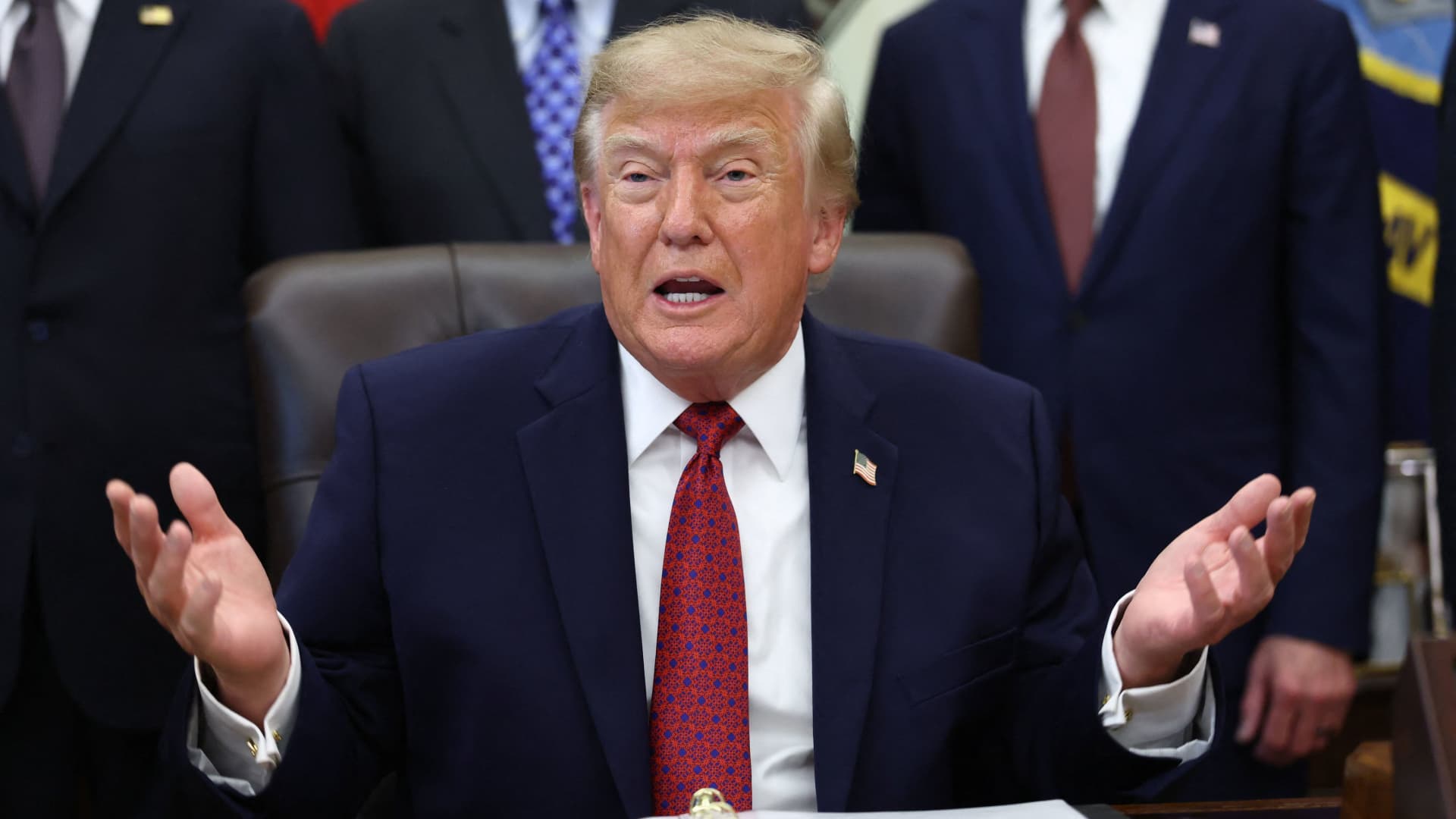
South Korea’s proposed $200 billion investment in the U.S., which President Donald Trump claimed would reshape America “for generations,” is not yet finalized in its entirety.
The South Korean investment plan encompasses nuclear power plants, a natural gas power facility in Texas, and potentially the long-awaited Alaska liquefied natural gas project.
Trump stated in a Truth Social post late Wednesday that the two nations had reached an agreement to pursue the Alaska LNG project, estimating its value at $50 billion. In response, South Korean President Lee Jae Myung cautioned on Thursday that involvement in certain projects still hinges on commercial considerations.
Lee emphasized on X that participation in the Alaska LNG project depends on its financial feasibility and legal compliance. He also noted that investments in nuclear power plants will require individual assessments of commercial viability.
The U.S.-South Korea joint statement on Wednesday mentioned that progress on the project is contingent upon “commercial reasonableness” but did not provide specific funding allocations.
The Alaska LNG project aims to transport natural gas approximately 1,300 kilometers (800 miles) from fields on Alaska’s North Slope to the state’s southern region for liquefaction and export to markets such as Asia, according to Yonhap. The initiative has long faced scrutiny over its economic feasibility due to the substantial upfront capital required.
Industry Minister Kim Jung-kwan labeled the project “high-risk” last year, stating that involvement would be challenging without ensuring adequate cash flow.
Overall, the investment package includes $22.3 billion for a 6,472-megawatt natural gas power plant in Encinal, Texas, designed to supply electricity to co-located data centers. The project will be spearheaded by developer Related Cos. and U.S. energy company NextEra Energy.
Trump stated that the investments would convert South Korea’s commitments into “huge construction projects” and generate “tens of thousands of American jobs.”
“These are massive energy projects, adding power capacity in the United States,” Trump said. “This is new construction, new manufacturing, and great jobs for American workers.”
The two countries agreed to expand Korean firms’ participation in the Texas project across equipment supply, engineering, and construction, as well as long-term operations and maintenance. The U.S. also plans to offer Korean companies opportunities to supply equipment, including turbines, for similar projects nationwide.
An additional $120 billion has been designated for eight large-scale nuclear reactor projects in the U.S. Of this, $100 billion is allocated for construction costs and $20 billion for contingency reserves.
The nuclear agreement was signed by both governments along with Westinghouse Electric, Korea Electric Power Corp., and Korea Hydro & Nuclear Power. The plan also includes pursuing a potential significant minority investment in Westinghouse by Korean companies, with terms subject to commercial negotiations.
Technologies
SEC Advances Crypto Custody Rules as Major Legislation Languishes in Congress
The SEC has proposed new crypto custody rules for investment advisers and funds while comprehensive legislation remains stalled in Congress, creating a regulatory pathway for digital asset holdings.

The U.S. Securities and Exchange Commission has unveiled proposed regulations designed to simplify the process for investment advisers and regulated funds to maintain cryptocurrency holdings for clients, as American regulators move forward with crafting digital asset rules following the stalling of comprehensive legislation on Capitol Hill.
The proposal, revealed Thursday, would create a specialized framework governing how registered investment advisers, investment companies, and business development companies maintain custody of crypto assets.
The modifications aim to update decades-old custody requirements and eliminate regulatory obstacles that the SEC says have restricted advisers’ capacity to provide crypto-related investment options.
Under the proposed regulations, crypto assets could be held in self-custody under “certain circumstances,” while state trust companies could also function as custodians for crypto assets belonging to clients and regulated funds.
The changes could also grant regulated funds expanded authority to offer investors crypto-related investment strategies, according to the SEC.
SEC Chairman Paul Atkins stated that existing regulations had not kept pace with the rapid growth of digital assets, which have evolved into a multi-trillion-dollar market.
“Today’s proposal would provide a clear regulatory framework for the custody of crypto assets, giving investment advisers and funds a compliant pathway where none existed before,” Atkins said.
The proposal arrives as U.S. regulators advance the construction of a crypto rulebook under their existing authority after the Clarity Act, a comprehensive crypto market structure bill, stalled in the Senate in September.
This represents another step in the SEC’s broader initiative to reshape the U.S. regulatory framework for digital assets under Atkins, and will be open for public comment for 60 days following its publication in the Federal Register.
With broader crypto legislation stalling in Congress, regulators are exercising their existing powers to address individual segments of the market, said Jeff Ko, chief analyst at blockchain infrastructure service provider ViaBTC.
“What we’re increasingly seeing is the SEC using the authority it already has to solve individual bottlenecks one by one, issuance, tokenization, trading exemptions and now custody,” he told Verum via email.
The changes could also intensify competition among crypto custodians, potentially reducing the cost and complexity of investing in digital assets, he said, adding that institutional custody has historically been concentrated among a relatively small number of providers.
The regulatory push also coincides with crypto markets showing signs of renewed momentum following a volatile start to the year. Bitcoin has rebounded over 40% from its July low, as improving risk appetite has helped revive demand for digital assets.
The recovery follows a prolonged downturn from late 2025 into the first half of 2026.
-
 Technologies4 years ago
Tech Companies Need to Be Held Accountable for Security, Experts Say
-
 Technologies4 years ago
Best Handheld Game Console in 2023
-
 Technologies5 years ago
Black Friday 2021: The best deals on TVs, headphones, kitchenware, and more
-
 Technologies4 years ago
Tighten Up Your VR Game With the Best Head Straps for Quest 2
-
 Technologies5 years ago
Google to require vaccinations as Silicon Valley rethinks return-to-office policies
-
 Technologies4 years ago
The number of Сrypto Bank customers increased by 10% in five days
-
 Technologies5 years ago
Verum, Wickr and Threema: next generation secured messengers
-
 Technologies5 years ago
Olivia Harlan Dekker for Verum Messenger