
Technologies
Google Pixel’s Magnifier App Makes It Easier to See Small Text, Objects
Here’s how to get and use the new feature.
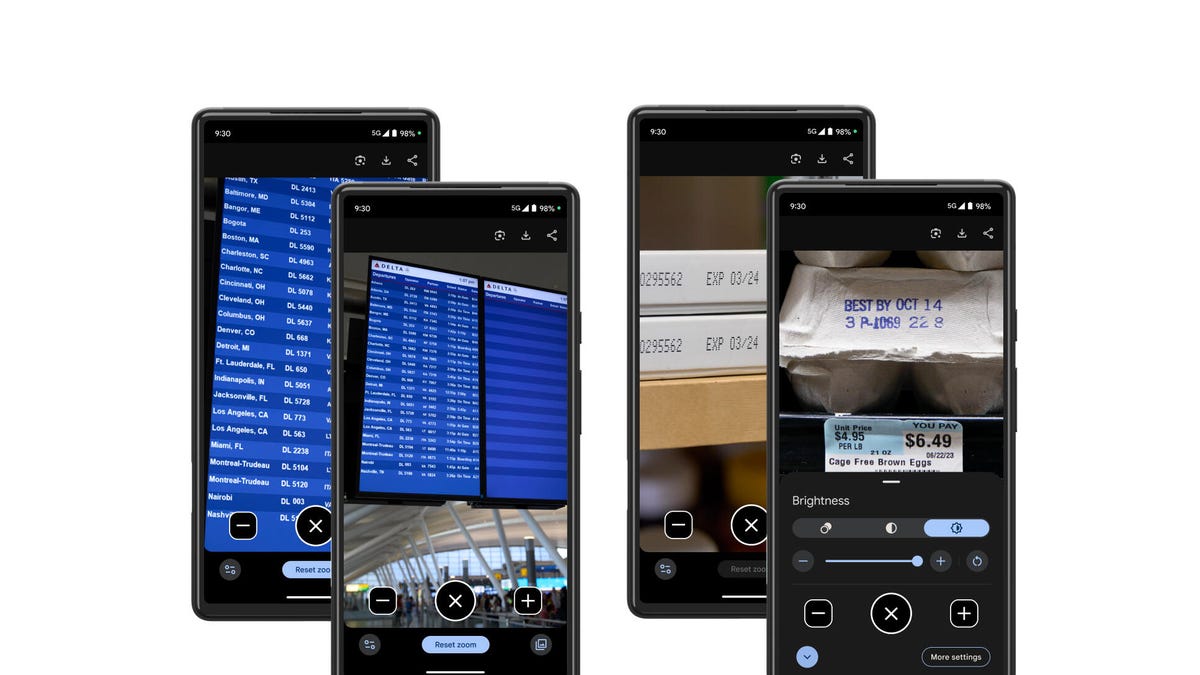
Google has launched a new app for Pixel phones: Magnifier, which lets you zoom in on text and objects to make them easier to decipher. So if you’re trying to read fine print, make out street signs, or you’re just… in the nosebleeds at a concert, you can leverage the Pixel camera’s impressive zoom capabilities to get a closer look.
To get the app, go to the Google Play Store and search for Magnifier (you’ll need a Pixel 5 or newer model to download). Hit Install.
Once you’ve opened the app, you can use the plus icon on the bottom right to zoom in up to 30x. You can also hit the settings button on the very bottom left to change the contrast and brightness, and to add a filter, which might make things easier to see. For instance, you can turn black text on a white background into blue text on a yellow background, if that’s easier on your eyes.
You can also snap a photo with the shutter button in the bottom center, and then go through those same functions like zooming in and changing the image contrast or brightness.
After you snap a photo, there’s also an option at the top of the screen to activate Google Lens (look for the small camera icon). Here, you can do a search, scroll through Google’s Shopping tab if you want to buy what you see, or translate text. You can also tap the «Listen» button under the Translate or Text tabs to hear text and numbers spoken aloud.
Based on my experience trying out Magnifier, objects and text show up impressively clear on screen, even when zoomed in at 30x. Google says this is thanks to AI zoom stabilization and hi-res zoom on the Pixel’s camera.
Magnifier was built in collaboration with the Royal National Institute of Blind People in the UK and the National Federation of the Blind in the US and is part of Google’s ongoing efforts to make its products and services accessible to more people.
More accessibility updates: Guided Frame
Google also rolled out an update to its Guided Frame feature, which was launched in 2022 to help blind and low-vision Pixel users take selfies. The feature uses audio and haptic cues to give users exact guidance for framing their selfies, and it’s now also available on the Pixel’s rear camera.
Guided Frame will pinpoint faces of people or pets, and talk you through how to move your phone to ensure everyone’s in the shot. So it might tell you to move the phone to the left or to the right, up or down, or closer to or further from the subject of the photo. It does this using Google’s TalkBack screen reader technology, which speaks aloud text and images appearing on someone’s screen.
Once everything’s perfectly framed, Guided Frame will automatically take the photo. It also works with food, drinks, documents and other objects and ensures they’re centered before auto capturing an image.
To use the feature on your Pixel, go to Settings, then click Accessibility. Tap TalkBack, and hit the toggle next to Use TalkBack.
Now you can go into your Camera, and Guided Frame will automatically be activated. Snap away.
Technologies
AI Brings Val Kilmer Back to the Big Screen a Year After His Death
Kilmer’s estate approves plans to use generative AI to resurrect the late actor for a role in the historical drama As Deep As the Grave.

Actor Val Kilmer died in 2025, but he’ll be seen in an upcoming movie he didn’t live to film. The historical archaeologist drama As Deep As the Grave will include an AI version of the actor who died at age 65 after a battle with throat cancer. It’s not the first time we’ve seen studios use AI this way, but it could be the most successful.
Director and writer Coerte Voorhees revealed to Variety on Wednesday that he would use AI to bring Kilmer’s likeness back to play Father Fintan, a Native American priest.
As Deep As the Grave tells the true story of an archaeologist couple who worked with the Navajo people in the 1920s to learn about America’s very first civilizations. Voorhees says that Kilmer agreed to play the role five years ago, but the actor’s struggles with throat cancer made him unable to complete work on it. There’s no date yet for the film’s release.
Hollywood actors have increasingly found themselves at odds with generative AI, a technology that has rapidly begun to infiltrate nearly every aspect of the entertainment industry. From writing scripts to generating digital likenesses of actors’ faces and voices, AI now has the ability to replicate performances with striking realism. In some instances, studios have gone even further, creating entirely new AI «actors» who can perform without ever stepping onto a set. This has raised complex questions about consent, compensation, and creative ownership, as performers grapple with the reality that their identities and craft can now be reproduced, modified, or even replaced by algorithms.
These attempts have been strongly opposed by the SAG-AFTRA labor union representing entertainers, which has been engaged in strikes against video game companies and is currently in precarious negotiations with film and TV studios. The labor guild has certain protections against generative AI following a strike that lasted more than 100 days, including requirements for clear consent and fair compensation. The current negotiations would expand these protections.
A SAG-AFTRA representative didn’t immediately respond to a request for comment.
Voorhees says that Kilmer’s children approve of this AI resurrection.
«[Kilmer] always looked at emerging technologies with optimism as a tool to expand the possibilities of storytelling,» his daughter, Mercedes Kilmer, said in a statement, according to Variety. «This spirit is something that we are all honoring within this specific film, of which he was an integral part.»
Technologies
Today’s NYT Mini Crossword Answers for Thursday, March 19
Here are the answers for The New York Times Mini Crossword for March 19.

Looking for the most recent Mini Crossword answer? Click here for today’s Mini Crossword hints, as well as our daily answers and hints for The New York Times Wordle, Strands, Connections and Connections: Sports Edition puzzles.
Need some help with today’s Mini Crossword? It’s a pretty easy one today, but we’ve got all the answers in case you’re stumped. And if you could use some hints and guidance for daily solving, check out our Mini Crossword tips.
If you’re looking for today’s Wordle, Connections, Connections: Sports Edition and Strands answers, you can visit CNET’s NYT puzzle hints page.
Read more: Tips and Tricks for Solving The New York Times Mini Crossword
Let’s get to those Mini Crossword clues and answers.
Mini across clues and answers
1A clue: Ghost’s word
Answer: BOO
4A clue: Magician’s «And just like that, it’s gone!»
Answer: POOF
5A clue: With 7-Across, it’s full of stars
Answer: NIGHT
6A clue: White bills in Monopoly
Answer: ONES
7A clue: See 5-Across
Answer: SKY
Mini down clues and answers
1D clue: Score of 4 on a par 3
Answer: BOGEY
2D clue: ___ and aahs
Answer: OOHS
3D clue: Frequently, in poetry
Answer: OFT
4D clue: Like the sands of Harbour Island, Bahamas
Answer: PINK
5D clue: Dissenting votes
Answer: NOS
Technologies
Customers Prefer Apps Over Websites for Wireless and Home Internet Service
Easier logins are a key reason customers are happier with apps, according to the J.D. Power study.
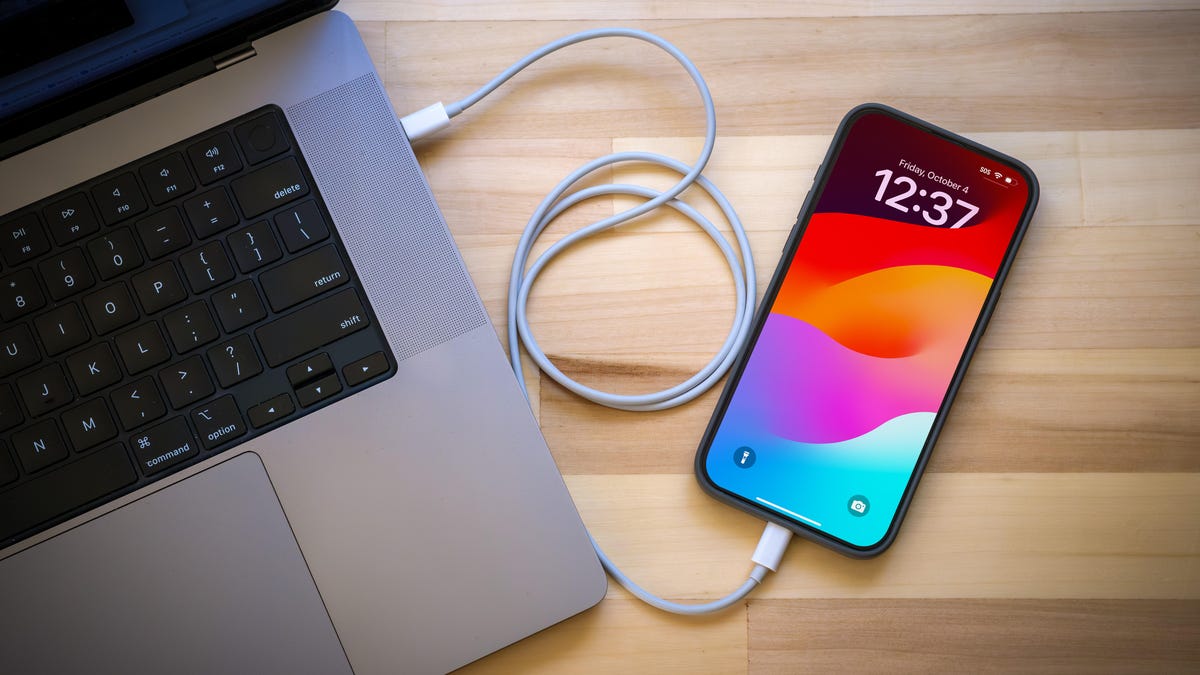
When you last checked your mobile or home internet bill, did you reach for your phone or sit down with your laptop or desktop computer? According to a new J.D. Power study, people would rather access their accounts via apps than websites. And that preference is especially strong when it comes to telecom companies such as mobile carriers and home internet providers (which increasingly overlap).
According to the 2026 US Telecom Digital Experience Study, surveyed customers gave app login an average satisfaction score of 681 for wireless carriers and 689 for internet service providers (out of 1,000 points). Website login trailed those by 38 points and 42 points, respectively. J.D. Power gathered evaluations from 12,082 customers of eight internet providers and 14 wireless carriers.
Biometric logins were a major factor in the decision. When accessing an account, there are always one or more layers of authentication just to get in. An app tends to speed you through the door using face or finger recognition to sign in or load a passkey.
Built-in services like Apple’s Passwords app can also use biometrics to unlock and fill in saved credentials in websites, but the experience isn’t as smooth. J.D. Power noted that maintenance issues and slow responsiveness also derail the website login experience across both segments.
This helps explain why carriers have invested heavily in improving their apps. For one, T-Mobile’s T-Life app is increasingly the central point of customer interaction. And AT&T just this week rolled out a new app — named simply AT&T — that is a single resource for its mobile and broadband customers.
AT&T’s Jeff Dixon, assistant vice president of Digital Product Management and Development, emphasized the importance of speed in the company’s app overhaul.
«We did focus on performance to make it snappy throughout,» he said, noting extensive architectural work on back-end services to cache and pre-fetch data.
The J.D. Power study also found that the gap between satisfaction with telecom companies’ apps and websites was wider than in other industries, suggesting that wireless and internet providers need to shore up their web experiences. There was a 25-point gap between apps and websites for wireless carriers, and an 11-point gap for internet service providers.
Overall, customer satisfaction was 654 out of 1,000 for wireless carriers and 659 for internet providers. Scores were based on four factors in order of importance: design, system performance, tools and capabilities, and information.
Ranking among the wireless carriers, Mint Mobile got the highest score (704), with Spectrum Mobile coming next (678) and followed by a tie between Metro by T-Mobile and T-Mobile itself (672). It’s worth noting that, of those, Spectrum is the only one not owned by T-Mobile.
For internet service providers, T-Mobile ranked the highest in the survey with a score of 695, followed by AT&T at 675 and Verizon at 669.
-
 Technologies3 года ago
Tech Companies Need to Be Held Accountable for Security, Experts Say
-
 Technologies3 года ago
Best Handheld Game Console in 2023
-
 Technologies3 года ago
Tighten Up Your VR Game With the Best Head Straps for Quest 2
-
 Technologies4 года ago
Black Friday 2021: The best deals on TVs, headphones, kitchenware, and more
-
 Technologies5 лет ago
Google to require vaccinations as Silicon Valley rethinks return-to-office policies
-
 Technologies5 лет ago
Verum, Wickr and Threema: next generation secured messengers
-
 Technologies4 года ago
Olivia Harlan Dekker for Verum Messenger
-
 Technologies5 лет ago
iPhone 13 event: How to watch Apple’s big announcement tomorrow