
Technologies
Pixel 8 Pro Ongoing Review: Google Plans Fix to Address Camera Issues
Google knows where the problem lies and expects a fix in “very soon,” the company told CNET.
Editor’s note: This is an ongoing review that was originally published on Oct. 11. The latest update was published on Oct. 14.
We found problems with the Google Pixel 8 Pro in our early testing. The most notable issues were with the camera, which exhibited odd artifacts, especially in high-contrast situations. We’ve now spent over a week testing multiple models of the phone across the globe. We’ve taken hundreds of images and been able to gain a deeper understanding of the issues we’ve seen.
CNET reporter Stephen Shankland unpacked many of the Pixel 8 Pro’s issues and elaborated on what might be causing them. It’s largely a software problem, and Google knows where the problem lies and expects a fix “very soon,” the company told CNET on Thursday.
While we’re still seeing the same image-processing problems after more testing, we’ve also amassed numerous examples where the Pixel 8 Pro performed extremely well. We tested it in daylight, at night, and how it compares to rivals including the iPhone 15 Pro and the older Pixel 7 Pro.
Right now, we’re confident that the camera issues are relatively minor and that many of you who’ve already bought the phone may not even notice. But a $999 (£999, AU$1,699) phone should not have problems like these, so we’re postponing our final verdict until we see the difference the upcoming software update makes.
Below, you’ll find an ongoing review of the phone with my opinions on the design, display, processor and battery, informed by multiple editors’ testing. I’ll continue updating this review over the coming days as I retest the phone, especially the camera. We haven’t found any of these issues testing the regular Pixel 8 and, in fact, really like it.
What does this mean for you? If you’re looking to buy the Pixel 8 Pro, we advise you to wait. Keep your eye on this review as it develops and wait for our final verdict.
A week-plus with the Pixel 8 Pro
The Pixel 8 Pro is Google’s latest flagship phone, and as such packs a host of refinements over its predecessor, including a new processor, cameras and more AI skills. I loved the older Pixel 7 Pro and believed it was one of the best Android phones money could buy. The 8 Pro has a lot to live up to.
Putting aside the camera problems I’ve experienced, the Pixel 8 Pro has plenty going for it, from its solid gaming performance, its decent battery life and its slick Android 14 interface. But the most important change is that Google is committing to seven years of software updates for the phone, a huge boost over its previous offering and much more than most other Android manufacturers. It means this phone should still be going strong in 2030, if it lives up to Google’s claims.
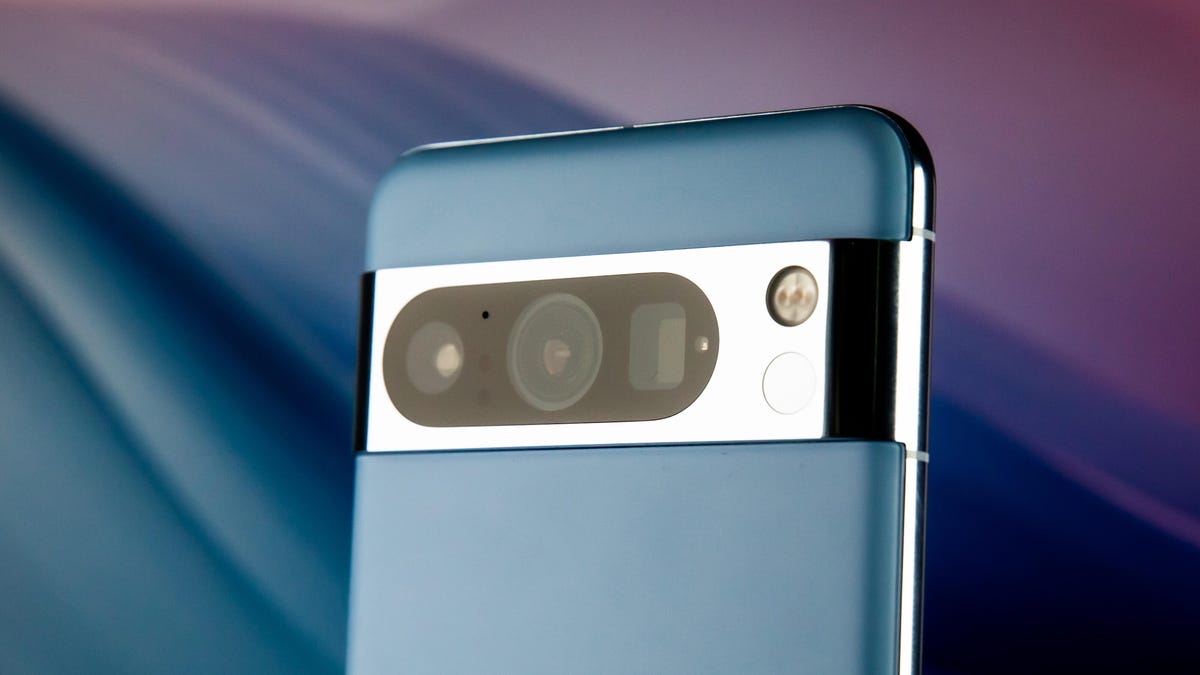
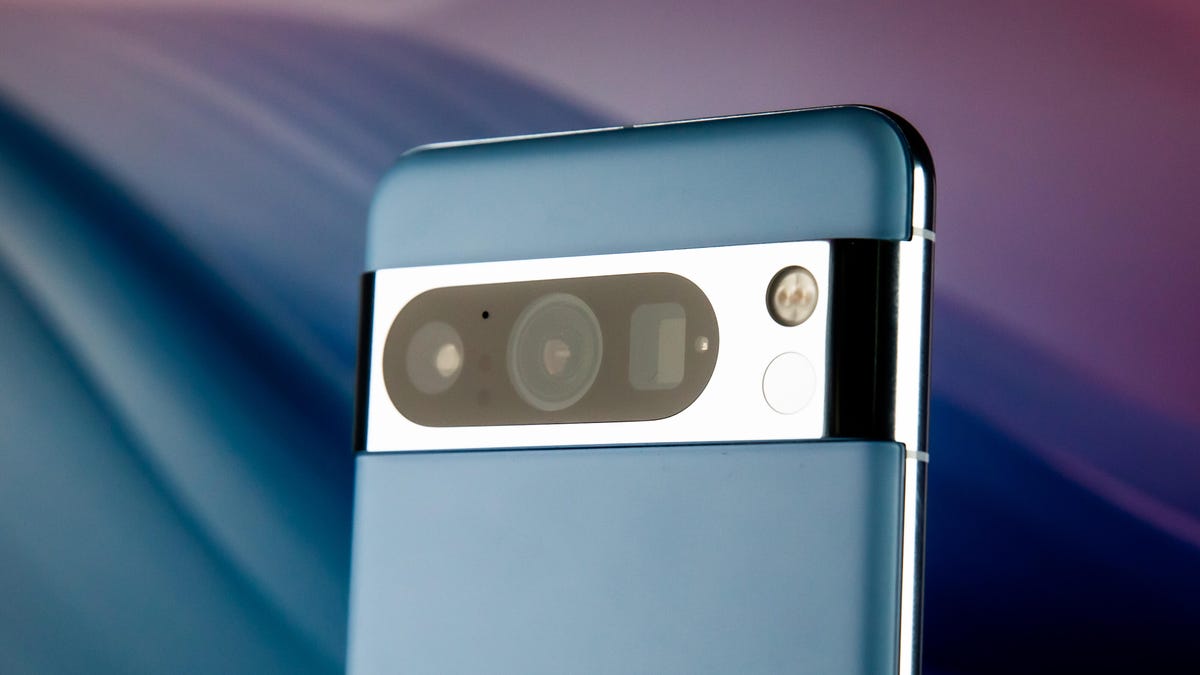
The triple rear-camera setup got some updates, including wider apertures on both the main and telephoto lenses and higher resolution for the ultrawide lens.
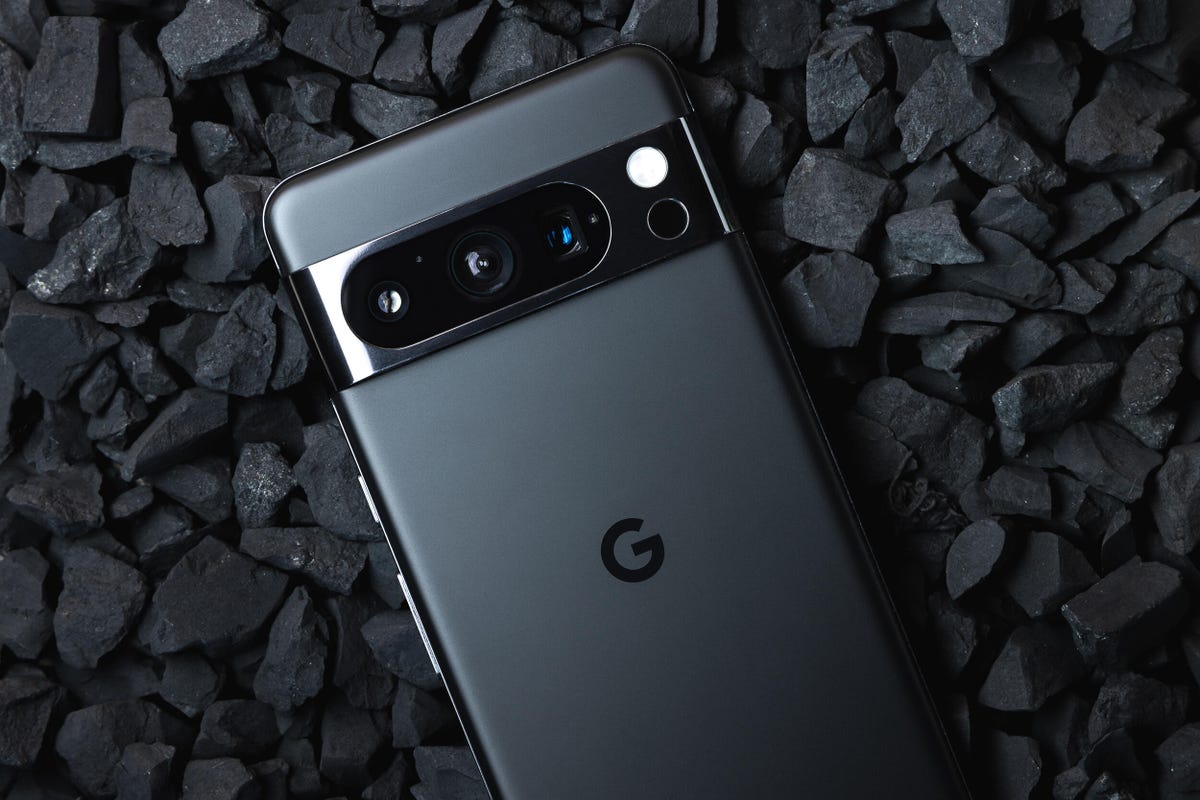
But it’s the camera that’s been most problematic for us in our testing so far and needs to be resolved before we could recommend it. Several of our test images with high-contrast scenes show bizarre-looking image noise and artifacts in the shadowy areas, along with extremely aggressive software smoothing on areas that should maintain detail. I found similar issues in night mode photos, too.
Shankland’s Pixel 8 Pro camera analysis dives more deeply into the cause of some of these problems. It essentially boils down to how the software tries to blend multiple image exposures together and doesn’t do a particularly neat job at it. However, software problems can be remedied and Google has said that an update is coming soon that should address the worst of our concerns.

The phone’s DNG raw files tend to come out worse, with increased image noise and a weird muddiness to the scene that needs heavy corrections. It’s likely, though, that this is exacerbated by poor compatibility with raw editing apps like Lightroom and may be rectified as Adobe support rolls out.




There’s a 1- to 2- second delay I encountered when taking 50-megapixel raw images, which likely won’t be going away. Google explained that this delay is simply due to the phone having to take multiple, massive files and piece them together. It’s a highly complicated process, and it’s clearly a burden for the Tensor G3 processor. Indeed, shooting raw at 12 megapixels has no such delay. As a result, the high-res mode is best used for static landscapes, not fast-paced shots of your kids playing on the beach. I hope that next year’s Pixel 9 Pro has a more powerful chip that can speed up this process.
It’s not all bad, though. Many images taken with the wide, ultrawide and 5x zoom lenses have come out extremely well in good lighting, lower-light indoor shots are bright and sharp, and I’ve had good success with night-time street images too. I also enjoyed using the long exposure mode to add some ethereal blurred movement effects to some photos.
The Pixel 7 Pro had a superb camera that was capable of taking glorious images with any of its lenses. While the Pixel 8 Pro clearly has some teething troubles, both Shankland and I are confident that fixes will come that will help make this a much more well-rounded camera for both amateurs and enthusiasts alike.


Design and display
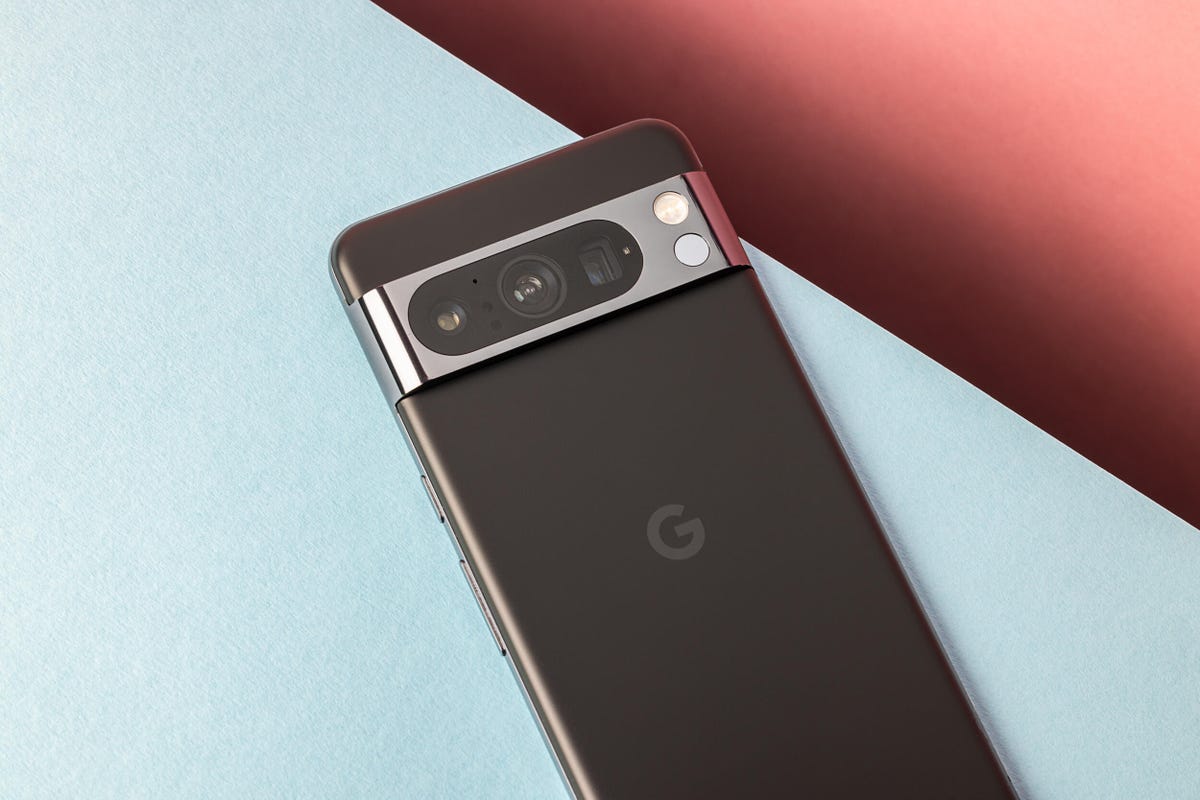
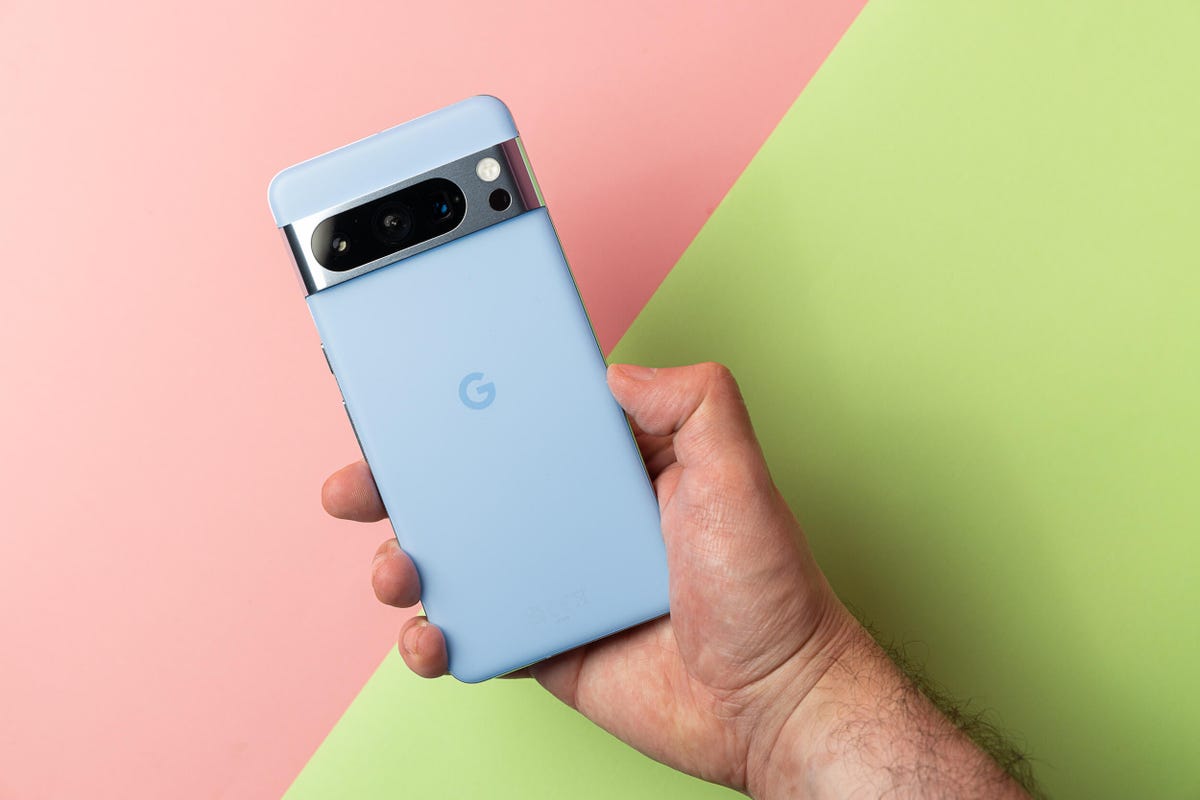
Physically, it’s clear to see the Pixel 8 Pro’s family resemblance to its predecessors, with the big camera bar across the back. It’s not a big design departure from last year’s model, but that rear glass panel is now frosted rather than glossy, which gives it a softer feel to hold while making it a little less prone to fingerprints. I don’t think it looks quite as premium or classy as the Pixel 7 Pro’s sage and gold design, at least not in the plain black variant I’ve been given to test.
The camera bar sticks out a long way — around 4 millimeters in fact, which is even more than on the 7 Pro. The 8 Pro is comfortable to hold, but I do sometimes find it catches when I’m trying to slide it into my jeans pocket. I’m nitpicking here, but it’s one of those things that could become more annoying over time. With a case attached that reduces the height difference between the body and the bar, the problem goes away.
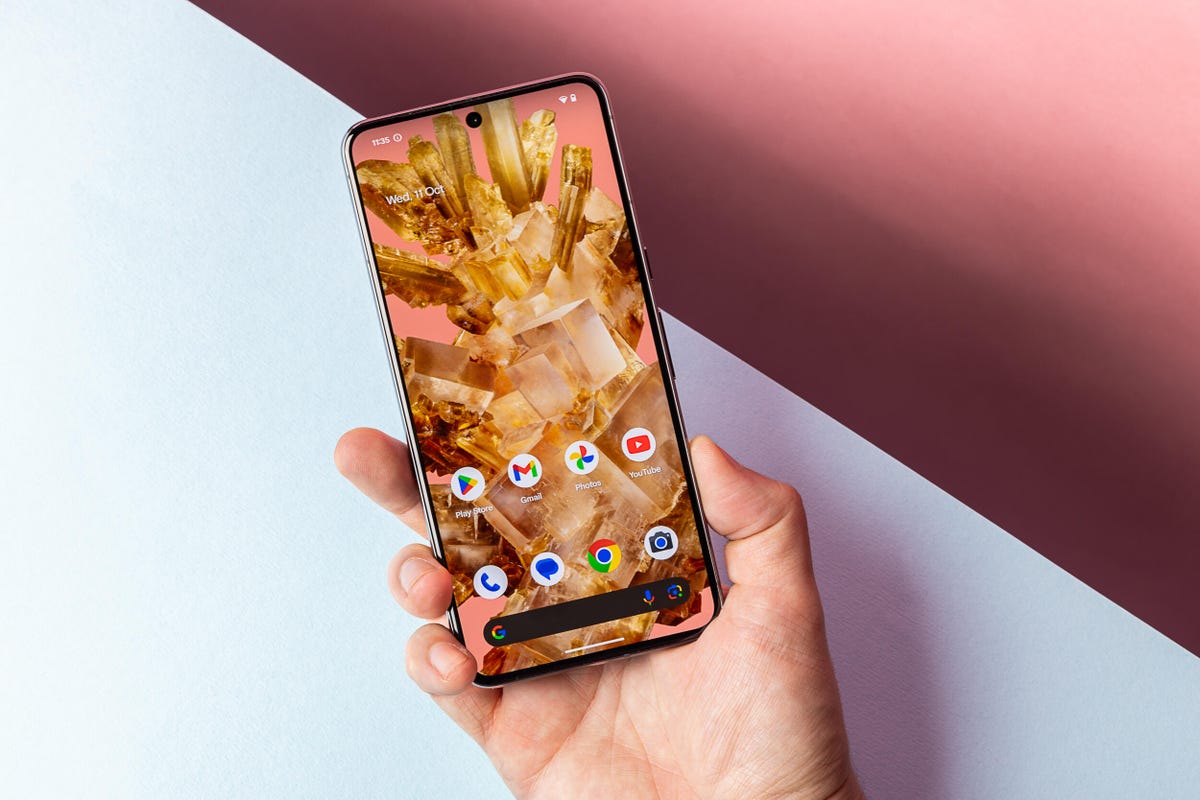
The frame is made in part from recycled aluminum (just like in older Pixel phones) and the phone is IP68 rated for water-resistance, which will keep it safe from spilled drinks or when taking calls in the rain. The 6.7-inch display is the same size as on the Pixel 7 Pro. It’s bright and vibrant and easily does justice to whatever colorful YouTube or Netflix video you want to watch on the bus.
Temperature sensor
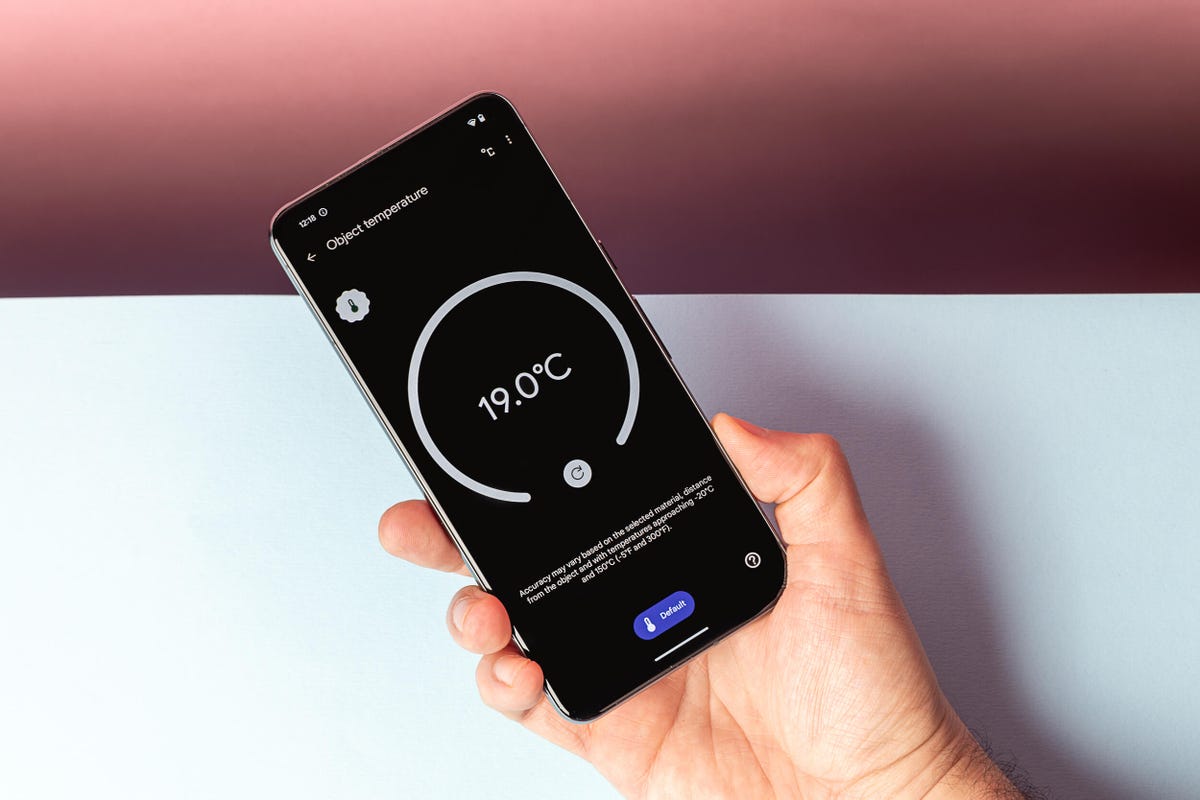
One little tweak on the back is a small circle next to the camera flash that houses a brand new feature: a temperature sensor. It allows the phone to give temperature readings from objects or surfaces. It’s easy enough to do, just fire up the temperature app and hold the phone about 5 centimeters from your object, as though you’re taking a close-up photo. Tap the screen and it’ll give you a readout on how hot that object is.
The idea is that you can use it to test the temperature of drinks before you take a big gulp, or to make sure that piece of peach pie isn’t hotter than the sun before you shovel it into your face and burn your mouth to cinders. It works well in my testing so far, with it fairly accurately showing the increase in temperature on my kettle as I boiled water for a cup of tea.
And while I can imagine it sometimes being helpful — parents could use it to check the temperature of a baby’s bottle, for example — I think its real-world application is limited. It feels like a feature that’s been shoehorned in to act as a differentiator from the competition. Heck, it can’t even take your body temperature, though Google is seeking clearance from the US FDA to use it for that purpose. And sure, the Pixel 8 Pro now has a feature that the iPhone 15 doesn’t, but is it really a feature you care about? I’m not sure that I do.
Processor and Android 14
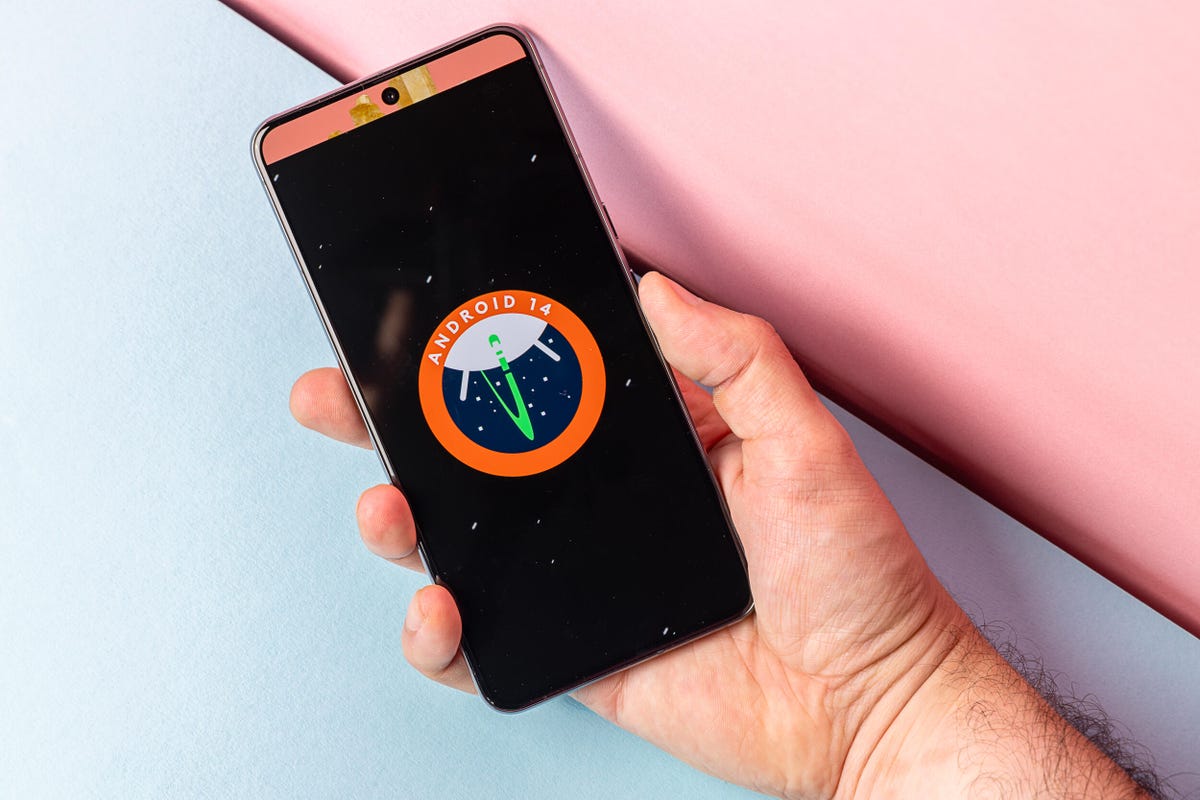
The Pixel 8 Pro comes with Google’s latest homemade processor, the Tensor G3, but we can’t yet tell you how it performs. At the time of writing I’m unable to install any kind of benchmarking apps to directly compare it to its rivals, but anecdotally it seems like a capable chip. Navigation around the Android 14 interface is swift: Apps open without any delays and multitasking between open apps is a breeze.
Graphically demanding games like Genshin Impact, PUBG and Real Racing 3 all play with buttery-smooth frame rates at maximum graphics settings. I’ve yet to find anything that really slows the phone down. The Tensor G3 chipset also enables AI features, but their quality is uneven, with some taking so long to process that I simply didn’t bother (more on these below).
The big advancement we can confirm is longevity. Google committed to providing seven years of software and security updates to the Pixel 8 series, which is a big improvement over the four years it previously offered. By comparison, Samsung offers four years of software and five of security updates. Longer security support times are a huge way of reducing the environmental impact of phones, as the hardware on older models is often still working fine, but it’s simply not safe to keep using devices with outdated software.
Google’s software commitment means the Pixel 8 Pro should still be going strong in 2030, which is the longest of any major Android manufacturer and only really rivaled by Fairphone, which offers eight years of security updates on its latest Fairphone 5. It’s good to see Google extending its support period and I hope it encourages more manufacturers to do the same.
The Pixel 8 Pro launches with Android 14 which itself isn’t that different from Android 13, with a near-identical visual look that includes various ways to customize elements of the interface. Google has sprinkled in some additional AI features throughout though, including a new generative AI wallpaper creator.

The tool lets you select from a variety of prompts, including object words such as “bicycle” or “lighthouse,” texture words like “wood” or “bamboo” and various color and art style words to create a unique backdrop. It’s fun to play with and I’ve enjoyed experimenting with different prompt combinations to find images I like. I don’t always love the results — sometimes the AI hasn’t done a great job — and only being able to choose from a set of predefined prompts means it’s not open to the sort of wild infinite customization you might expect from generative AI.
Google has woven in AI features elsewhere into the phone, including call screening, the ability to summarize articles in web pages (both of which are exclusive to the US at launch) and better speech-to-text and translation tools. But it’s also used for image editing, with AI tools letting you selectively edit the sky in a landscape photo, make objects or people bigger or smaller in the frame or remove them completely. The results don’t always look great — at least not to my eye as a professional photographer — but they can be fun ways of tweaking more casual snaps.


I found that it took between 13 and 18 seconds for the AI to make each edit, which felt like a frustratingly long time to wait. It remains to be seen whether that’s down to the processor performance or if it’s a software issue that could be remedied. In my time with the phone, I found these delays long enough to put me off wanting to play around further. On the Pixel 8, however, these edits generally took around 5 seconds.
There’s also a new tool called Best Take, which takes a burst of images and blends them into one shot where everyone should look their best by automatically picking the best faces of a group of subjects. I’ve not found this useful in my time with the phone. It requires at least six different images of a group of people for the AI to choose from and I normally just take one or two of my friends, which isn’t enough. To make use of it, I’d have to learn to start using burst mode more often when taking group shots, which feels like I’m having to create a problem for this feature to solve.
Then again, my colleague Patrick Holland enjoyed putting the feature to use in his review of the smaller Pixel 8. Patrick found it worked well in his shots, with a mostly seamless replacement of people’s faces in the final image. Your experience with it may vary depending on how you use your phone’s camera, so take my opinion here with a grain of salt.

Battery
Stuffed inside the Pixel 8 Pro is a 5,050-mAh battery, which put in a decent performance on our various battery drain tests. After 1 hour of streaming a YouTube video at max brightness the phone had dropped from full to 97% remaining, which is good. After the third hour it had dropped to 84% which is below what we’ve seen from the iPhone 15 series, but in line with the Galaxy S23.
It’s a demanding test and in everyday use you shouldn’t struggle to get through a whole day of mixed use. Just avoid spending hours streaming video or playing demanding games if you want to have juice left to call a cab home after your night on the town. As with most phones, though, you’ll almost certainly want to give it a full charge when you go to bed each night.
Should you buy the Pixel 8 Pro?
After deeper testing and conversations with Google’s Pixel team, we’re increasingly confident that the early camera issues we experienced are largely software-based. Imminent updates should resolve much of what we’ve seen.
Even though photos look good in most situations, these issues are problematic for the audience that Google is pitching the Pixel 8 Pro towards, which is pro photographers. Still, we will continue to test this phone and reserve judgment until we’ve used the camera with its new software.
Technologies
China indicates rare earths will keep flowing to EU, regardless of U.S. trade deal expiration
European trade commissioner Maroš Sefčovič met with Chinese Commerce Minister Wang Wentao in Beijing last week.
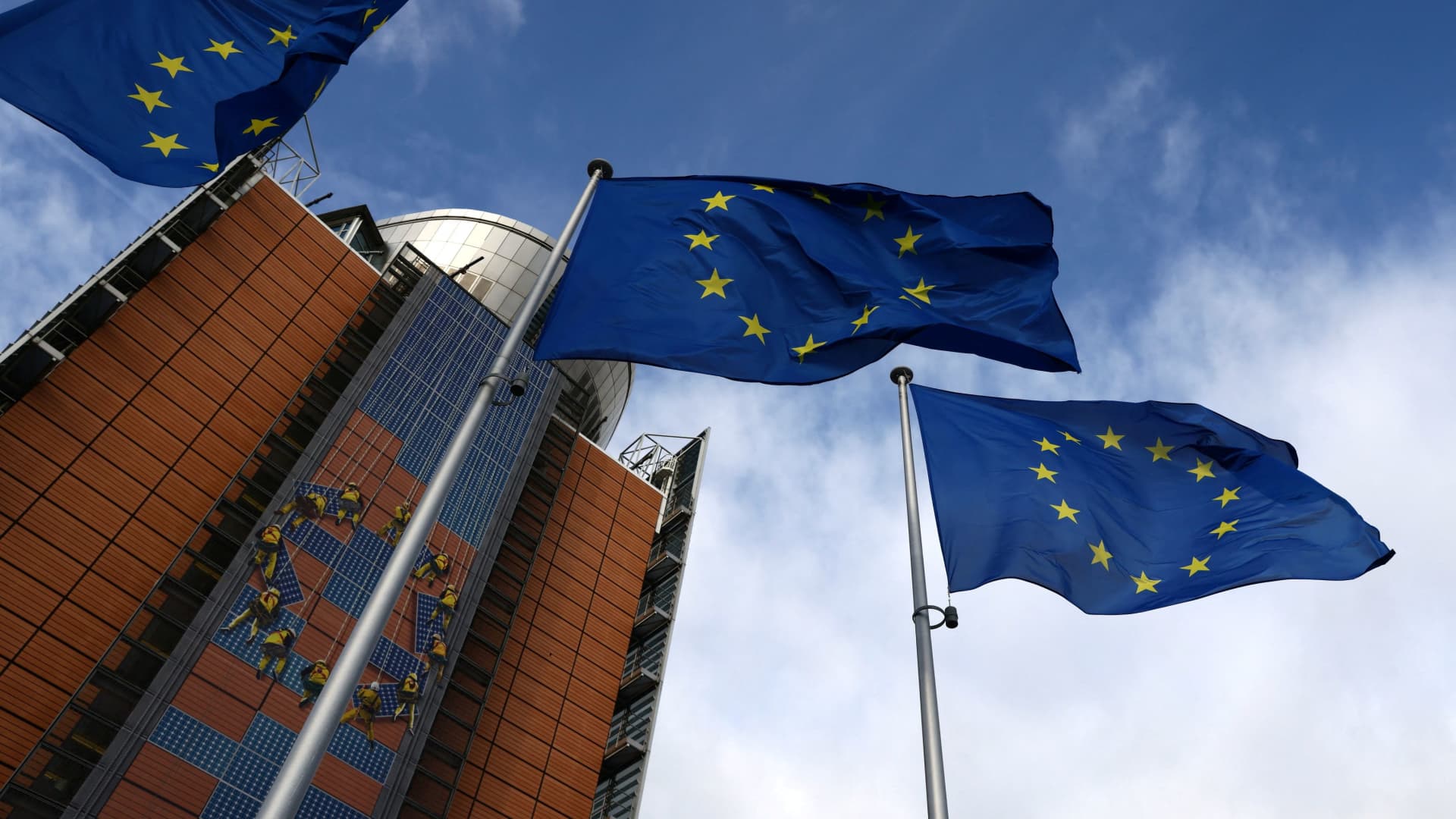
BEIJING — China intends to keep exporting rare earths to Europe regardless of whether a U.S. trade deal with Beijing gets extended past January.
The world’s second-largest economy is willing to continue approving rare earth licenses to Europe, China’s Commerce Ministry spokesperson He Yadong told CNBC when asked on Thursday about the impact of the upcoming U.S. deadline.
Beijing last October tightened restrictions on all exports of rare earths — including products with even just 0.1% of China-sourced rare earths. The move followed a new U.S. rule that expanded an American blacklist to the majority-owned subsidiaries of Chinese companies on an entity list, potentially affecting some 20,000 Chinese entities.
However, both the U.S. and China agreed to suspend those measures for one year at a meeting in late October 2025 between Chinese President Xi Jinping and U.S. President Donald Trump. Ahead of the leaders’ latest summit last month, U.S. Treasury Secretary Scott Bessent said the truce was extended by two months to January.
Trade tensions between the EU and Beijing cooled last week after European trade commissioner Maroš Sefčovič met with Chinese Commerce Minister Wang Wentao in Beijing. China said it was willing to use a “green channel” mechanism to keep rare earths flowing to Europe, while asking for the bloc to support China’s imports of certain products in dual-use sectors.
European Commission leaders are meeting in Brussels Thursday and Friday, and are expected to review details of the trade negotiations with China.
Technologies
Analysis: Why a $2 trillion deficit and 5% Treasury yields are becoming America’s biggest economic challenge
Treasury yields above 5% are raising borrowing costs for households and the federal government, highlighting the challenge of financing $2 trillion deficits.
Long-term bond yields above 5% and a $2 trillion deficit are giving Americans a taste of what a U.S. debt crisis would be like. A true emergency would hurt much more, and isn’t baked in. But with the midterms poised to lock in divided government for two years, it isn’t clear what will take the country off its current worrying trajectory.
Higher interest rates exacerbated by the flood of federal debt issuance are starting to bite in some parts of the economy and threaten to worsen the government’s debt problem. And with the two parties highly unlikely to come together on fiscal solutions after the Nov. 3 midterms, any fixes are years off in the future.
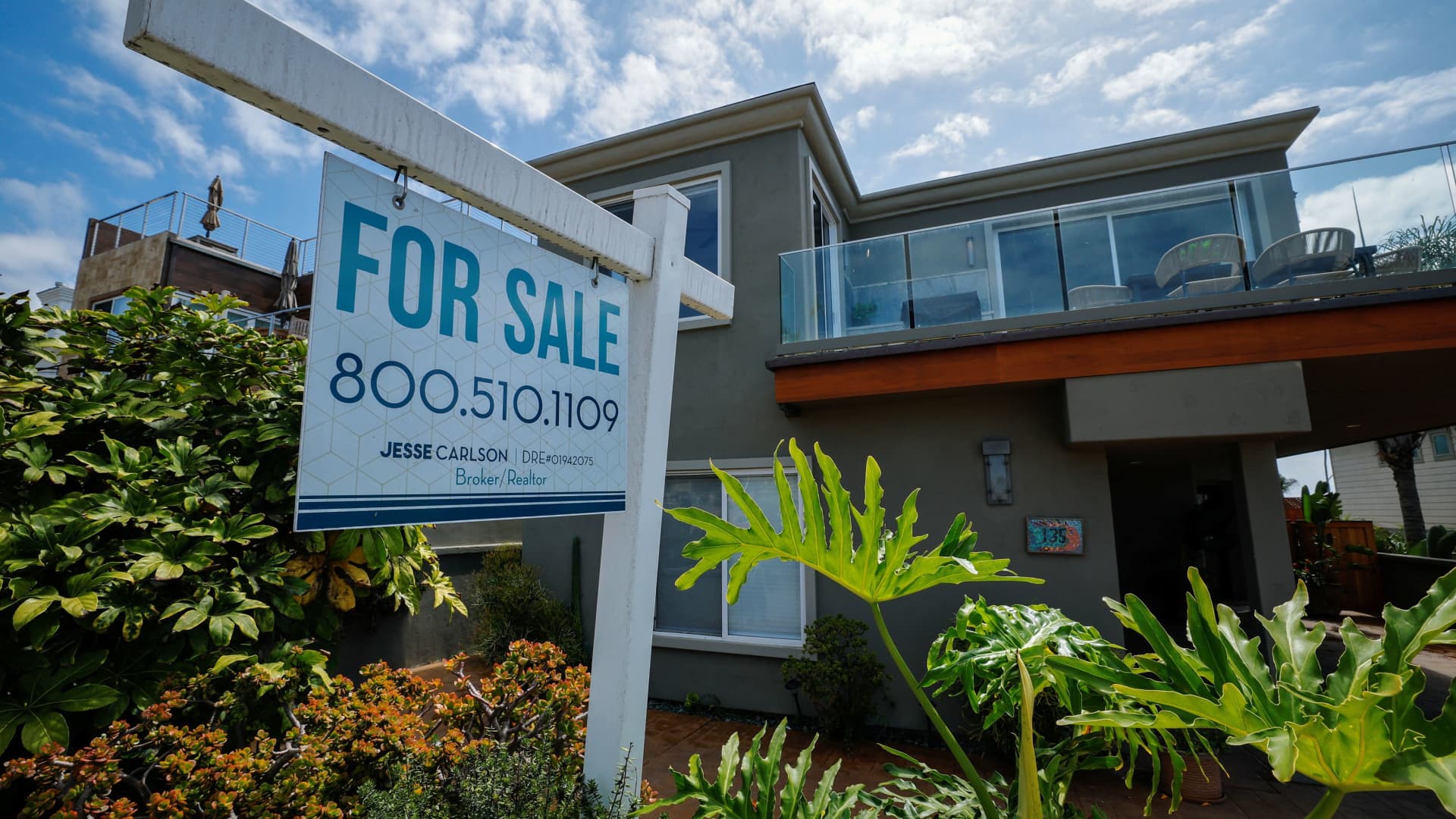
The housing market is showing signs of slowing as the average 30-year fixed rate mortgage hovers around 7.5%. Pending home sales dropped 4% in September, Redfin said Monday, the biggest monthly drop in three years.
Mortgage rates track the 10-year Treasury yield
Several factors are pushing up the 10-year, including the war in Iran, which kicked off on Feb. 28 and precipitated the rise in long-term yields. Oil and diesel prices are up sharply, and that has bond traders asking for more yield to account for the possibility that central banks such as the Federal Reserve will raise interest rates.
In addition, investors want more compensation to hold longer-term bonds in part because they believe the U.S. government will continue to flood the market with them. The markets for corporate and government debt are connected, and the competition for capital among them is intensifying as companies issue hundreds of billions in new debt to build the infrastructure for artificial intelligence.
Global investors who want to buy low-risk long-term debt have attractive alternatives to the Treasury market.
If the U.S. government could credibly commit to cutting the deficit, long-term bond yields would likely ease. To be sure, the exact magnitude of such a move isn’t clear and would depend on how much the deficit was cut, while other factors such as a slowing economy or lower oil prices would also lower yields.
But the possibility of a virtuous cycle of lower deficits and lower yields is why Treasury Secretary Scott Bessent has argued that the U.S. ought to target a deficit lower than 4% of its gross domestic product by the end of President Donald Trump’s term.
There is almost no way the U.S. will hit that target. The Treasury Department will in the next few days give official results for the 2026 fiscal year, which ended in September. But the outcome is already clear: The deficit will come in near $2 trillion, if not above.
That is likely to put the deficit in the range of 6.0-6.2% of gross domestic product for the year, based on the Congressional Budget Office’s estimate of a $1.993 trillion deficit and a projection of third quarter GDP.
Higher rates make debt reduction tougher. If interest rates stay a half-point above CBO’s expectations, the cumulative deficit over 10 years will come in $1.9 trillion higher, the agency estimates. If rates overshoot by 1.5 points, that adds $6 trillion in deficits.
CBO expects the 10-year Treasury to average 4.3% over that period, compared to 5.3% today. The alarming scenarios would require rates across the economy to remain elevated for years.
“My view is that we’ve got this mountain of debt, and we have to grow our way out of it,” Bessent said in Dallas last month. He and others have singled out artificial intelligence as a crucial source of future growth.
AI could help but can’t fix the problem entirely. It would take a decade of 7.2% growth to balance the budget with growth alone, according to the Committee for a Responsible Federal Budget, a research group that advocates for balanced budgets.
GDP growth was recently revised up for the second quarter from 1.5% to 2.2% at an annualized rate. The acceleration that quickly would get us to 7.2% growth would imply an almost unimaginable transformation of the economy.
Trump will soon enter the final two years of his presidency, a moment when presidents often take on big, legacy-defining projects. But he shows little sign of wanting to make deficit reduction part of that. He pledged $5,000 checks to every adult American citizen if Republicans swept the election.
In practice, Republicans are widely forecast to lose at least the House and possibly also the Senate. Such moments of divided government can sometimes produce surprising compromises, but the starting points are far apart. Rep. Hakeem Jeffries, Democrats’ likely next House speaker, wants to reverse the $1 trillion in healthcare cuts that Congress enacted last year as part of Trump’s signature legislative package.
And that’s leaving aside the deep animosity between the parties.
The overall U.S. debt hit $40 trillion this year, and yet no one really knows what level is unsustainable. A full-on debt crisis likely remains much farther out in the future. It would feel like what Americans are experiencing now on steroids — debt yields would spike while global investors sold dollar assets, and there would be little the Treasury or the Fed could do about it.
For now, though higher yields are also attracting investors to U.S. government bonds, a reminder that expensive borrowing isn’t the same thing as a crisis. But the bottom line is that economics alone can’t solve the problem. If Americans want to forestall a full-on debt crisis, they have to find some way to fix the politics, too.
Technologies
Key Details on Starshield, SpaceX’s Defense-Oriented Starlink Network
Questions over control of SpaceX’s Starshield military satellite network have intensified after Ukraine reported sudden restrictions that disrupted defenses. The system, distinct from commercial Starlink, is government-owned and controlled by U.S. authorities.

Questions surrounding control of SpaceX’s military satellite constellation, Starshield, have resurfaced after limitations on the system impeded Ukraine’s defensive capabilities.
Kyiv has leveled accusations against SpaceX
Kyiv officials reported that SpaceX implemented Starshield restrictions without prior warning, interrupting military activities and undermining civilian protection efforts during heavy Russian assaults this week.
Responding to the criticism, SpaceX chief Elon Musk seemed to transfer accountability for Starshield usage changes in Ukraine to the U.S. government and President Donald Trump. Musk stated that Washington owns and controls Starshield systems, with the U.S. military and ultimately the president setting any usage boundaries. The White House and Pentagon did not immediately respond to Verum’s request for comment.
Here’s an overview of Starshield and its distinctions from Starlink.
What is Starshield and how does it function?
Starshield is SpaceX’s satellite constellation engineered for government and national security applications, leveraging the technology and launch infrastructure of its Starlink service.
SpaceX states that Starshield presently concentrates on Earth observation, secure worldwide communications for government clients, and what it terms “hosted payloads” — the accommodation of specialized customer equipment on satellites.
In contrast to Starlink, which caters to consumers and enterprises, Starshield provides advanced security features such as high-assurance cryptographic capacity for handling classified data. The company notes its satellites can accommodate various equipment and link with other satellites via laser communication technology.
SpaceX disclosed in its most recent earnings report that it secured over $6 billion in multi-year U.S. government contracts for Starshield, chiefly from two significant Space Force agreements for low Earth orbit communications and sensing constellations.
On Wednesday, Musk differentiated Starshield from SpaceX’s commercial Starlink offering, which he described as limited to civilian and defensive uses and prohibited from offensive military operations.
How does Starshield contrast with Starlink?
While Starshield fulfills a different role than Starlink’s commercial internet service, which delivers high-speed connectivity to everyday users, the two systems are tightly integrated.
Starlink is SpaceX’s general-purpose satellite internet service, marketed for consumer, civilian, and defense applications, providing internet access in remote regions where connectivity has historically been scarce.
Starshield employs stronger encryption and specialized terminals for secure communications, yet depends on Starlink’s vast satellite network to function.
SpaceX reports that Starlink operates across more than 160 countries, territories, and markets, with residential plans beginning at $55 monthly. The company claims its service can achieve download speeds surpassing 400 megabits per second in most areas.
-
 Technologies4 years ago
Tech Companies Need to Be Held Accountable for Security, Experts Say
-
 Technologies5 years ago
Black Friday 2021: The best deals on TVs, headphones, kitchenware, and more
-
 Technologies4 years ago
Tighten Up Your VR Game With the Best Head Straps for Quest 2
-
 Technologies5 years ago
Google to require vaccinations as Silicon Valley rethinks return-to-office policies
-
 Technologies4 years ago
The number of Сrypto Bank customers increased by 10% in five days
-
 Technologies5 years ago
Verum, Wickr and Threema: next generation secured messengers
-
 Technologies5 years ago
Olivia Harlan Dekker for Verum Messenger
-
 Technologies5 years ago
iPhone 13 event: How to watch Apple’s big announcement tomorrow