
Technologies
Galaxy Z Fold 5 and Other Samsung Gadgets to Look for in 2023
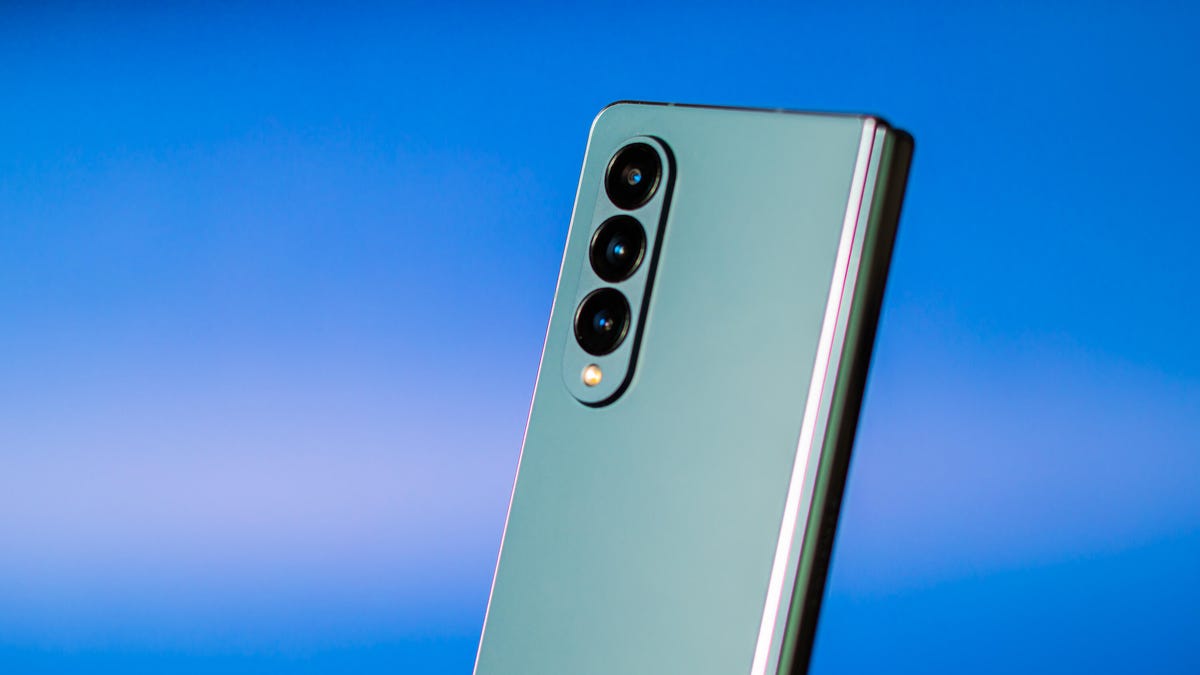
If history is any indication, Samsung may have new foldable phones and wearables in its pipeline for 2023.
Advertiser Disclosure
The Galaxy S23 launch may be far behind us, but Samsung likely has plenty more to announce in 2023. That’s if history repeats itself. Should Samsung stick to its annual routine, we can expect to see new foldable phones and wearable devices in August. The company also previewed new designs for bendable phones and tablets earlier this year, hinting that the company may be planning to expand beyond the Z Fold and Z Flip in the near future.
Though Samsung regularly releases new products across many categories, including TVs, home appliances and monitors, I’m most interested in where its mobile devices are headed. Samsung is one of the world’s largest smartphone manufacturers by market share, meaning it has more influence than most other tech companies on the devices we carry in our pockets each day. Wearables have also become a large part of how Samsung intends to differentiate its phones from those of other Android device makers. It’s a strategy to create a web of products that keep people hooked, much like Apple’s range of devices.
Here are the rumored Samsung products I’m most excited to see this year, based on rumors, leaks and the company’s usual product launch schedule.
Galaxy Z Fold 5
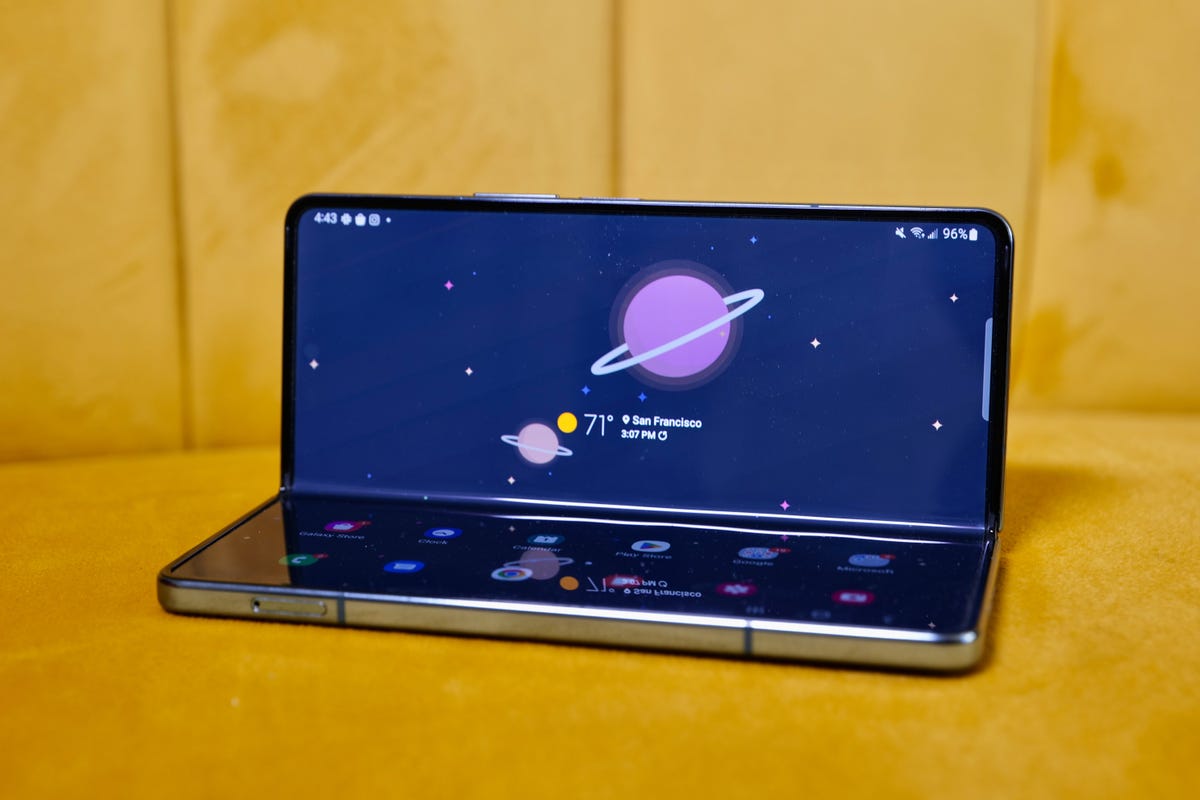
The Galaxy Z Fold 4
Samsung’s next phone-tablet hybrid will likely support the S Pen just like the current version. But the question is whether the S Pen will be included with the device, or if Samsung will continue to sell it separately.
A report from The Elec suggested the Galaxy Z Fold 5 could be the first to have an embedded S Pen. That not only means the stylus would be included free of charge, but the phone would also include a slot for storing it, just like on the Galaxy S23 Ultra and S22 Ultra. If you want to use an S Pen with the Galaxy Z Fold 4, you have to purchase it separately, and there’s no mechanism for attaching it to or storing it in the phone without buying a case.
It’s a seemingly small addition, but one that could make the Galaxy Z Fold 5 much more useful as a productivity device. It would also give the Galaxy Z Fold 5 a clearer purpose and could boost its appeal among early adopters, artists and notetakers. Samsung could target the same audience of shoppers that’s usually interested in the Galaxy Ultra or its previous Galaxy Note devices.
But a more recent report from ET News indicates the Galaxy Z Fold 5 will not include a storage slot for the S Pen.
Among the biggest changes, however, is expected to be a new hinge that could result in a thinner design. Korean news outlets The Elec and ET News, as well as prolific leaker Ice Universe, have reported that Samsung will implement a new water-drop-shaped hinge for the Galaxy Z Fold 5.
Samsung typically releases new foldable phones in August, so we expect to hear more around that time frame. In addition to the rumors around an included S Pen, the Z Fold 5 will likely have the routine upgrades to the processor and camera. What I’m really hoping for, however, is new software that makes better use of the phone’s giant screen, along with a foldable display with a less noticeable crease. That’s especially true now that Google has announced the Pixel Fold, giving the Galaxy Z Fold some fresh competition.
Galaxy Z Flip 5
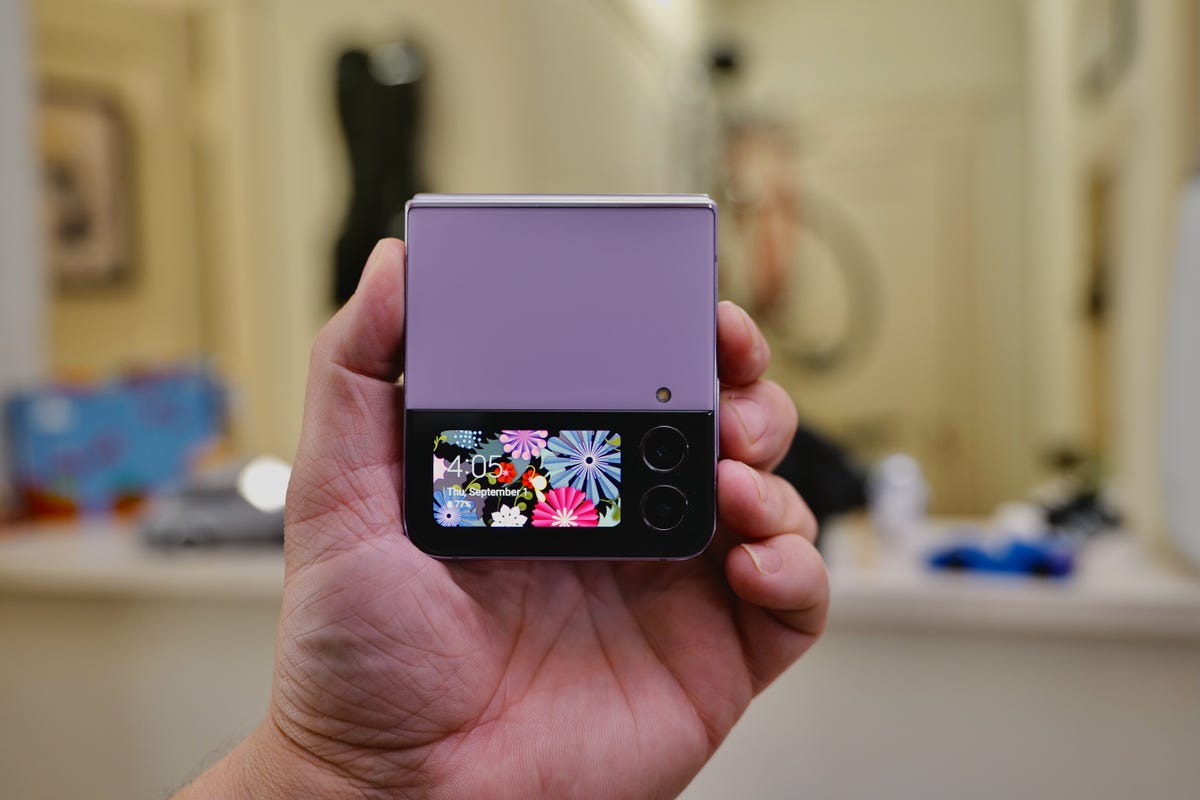
The cover screen is identical to the one on the Galaxy Z Flip 3.
Samsung’s pocket-friendly foldable will also likely get an upgrade around August, just like the expected Z Fold 5. The Galaxy Z Flip 4 already gets a lot of things right, and it’s one of the most practical and affordable foldable phones available. Yet there are plenty of ways Samsung can and should improve the Z Flip. Samsung’s flip phone could benefit from a larger cover screen, longer battery life and an upgraded camera that brings it closer to those found on the Galaxy S series, for example.
But the biggest reason I’m interested in seeing what’s next for the Z Flip is because of its price. The phone starts at $1,000 and is often available for less with an eligible trade-in, making the price similar to that of a standard, non-foldable premium phone. Samsung also kept the Galaxy Z Flip 3 in its lineup and dropped its price by $100 following the Z Flip 4’s launch. That further suggests the Z Flip is shaping up to be Samsung’s more affordable foldable phone option.
A Galaxy Z Flip 5 with a newer processor, better camera and larger cover screen for the same price as the Z Flip 4 (or perhaps a little cheaper) could be one of the most compelling foldables yet.
Galaxy Buds 3
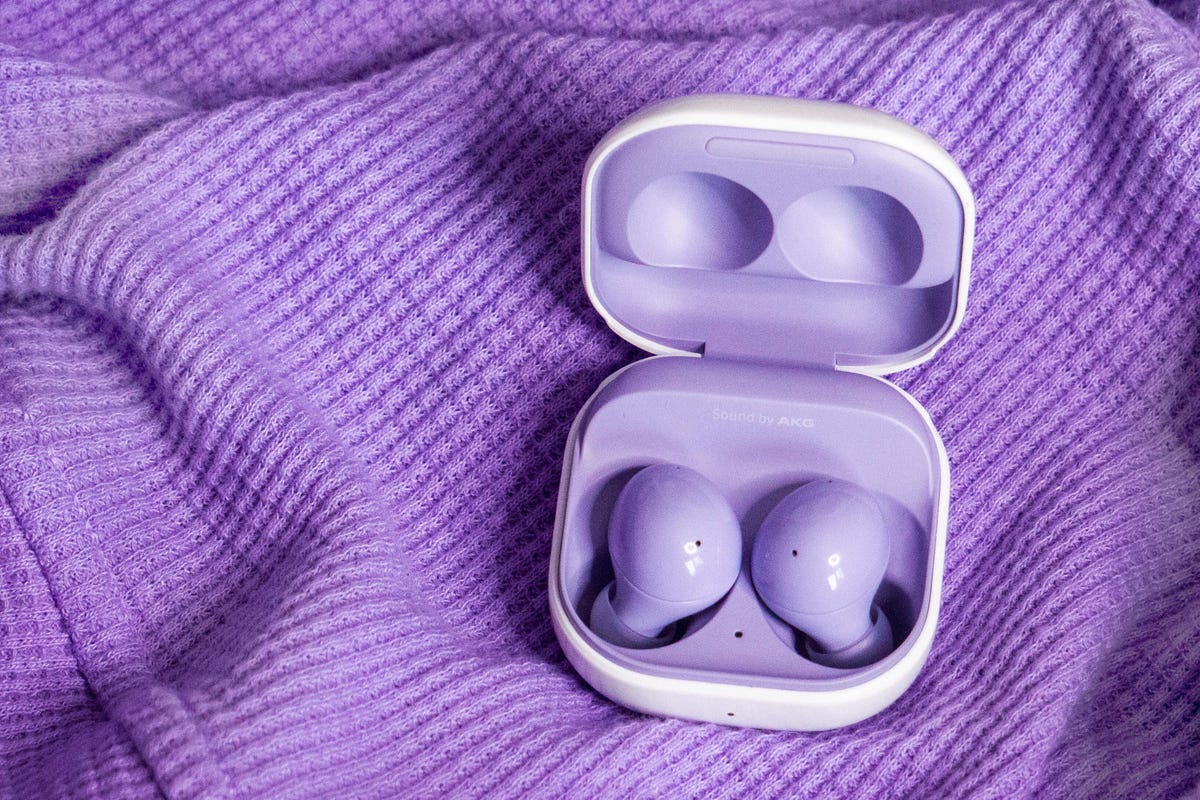
Samsung’s Galaxy Buds 2
If Samsung’s history is any indication, the Galaxy Buds 3 could arrive this August. Samsung released the Galaxy Buds 2 Pro in August 2022 while the standard Galaxy Buds 2 launched in August 2021. That timeline suggests Samsung’s regular, non-Pro earbuds may be due for an upgrade.
We haven’t seen many leaks about upcoming Galaxy Buds yet. However, given that the regular Galaxy Buds are meant to be a more affordable alternative to the Pro model, we can probably expect them to cost significantly less than the Galaxy Buds 2 Pro. Those earbuds are usually priced at $229 compared to the $150 Galaxy Buds 2. Although we don’t know what to expect, the Buds 3 could benefit from better water resistance and noise cancellation.
Galaxy VR headset
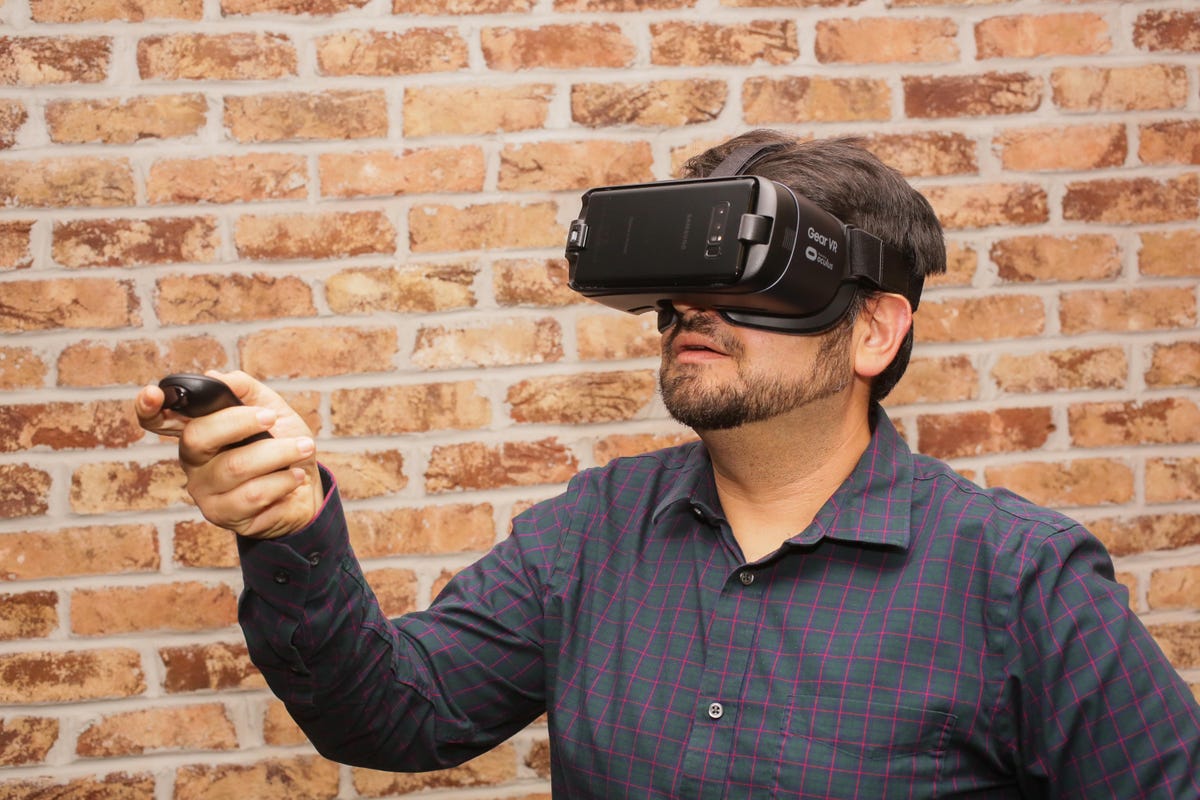
A photo of Samsung’s Gear VR headset, which required a smartphone to work, from 2017.
It’s already shaping up to be a big year for virtual and augmented reality headsets. Apple is expected to introduce a VR headset, and the PlayStation VR 2 just arrived in February. Samsung has been surprisingly absent from the VR space in recent years, but that could change soon.
Samsung announced in February that it’s working with Qualcomm and Google on a new mixed-reality platform. The company did not mention whether any specific products are in development, nor did it provide a timeline for future mixed-reality hardware or services.
“It’s more of a declarative announcement about how we are going to get it right in trying to build the XR ecosystem,” TM Roh, president of Samsung’s mobile division, said through a translator in an interview with CNET ahead of the announcement.
The reveal comes after a report from ETNews suggested Samsung would release an extended-reality headset for developers in 2023, according to an English translation of the story.
Since there aren’t many details, it’s difficult to know what to expect. But Sameer Samat, Google’s vice president of product management for Android, said during Google I/O 2023 that the company will share more about its “immersive XR” partnership later this year.
A new type of Galaxy foldable
Samsung showcased its display concepts at CES 2023.
Samsung hasn’t mentioned plans for future foldables beyond the Galaxy Z Fold and Galaxy Z Flip series, but it certainly has plenty of ideas to choose from. At CES 2023, Samsung showcased its line of “Flex” display concepts, including the appropriately named Flex Hybrid. That device has a foldable, tablet-size screen that extends by sliding out when opened to provide even more screen space.
The Flex Hybrid caught my eye, though, because I can understand the potential behind foldable tablets. Tablets are inherently larger than phones, so the ability to make them more portable by folding them in half seems more necessary. Tablets are also usually used as secondary devices for tasks like watching movies, reading, or getting work done. Having a display that could morph to fit different circumstances seems interesting.
Samsung also showed off some concepts as part of SID Display Week in May, including the Rollable Flex, which expands up to five times its length when unfolded.
It’s unclear whether any of these will graduate into real products. But it’s important to remember the Galaxy Z Fold started as a concept, too.
Galaxy Watch 6
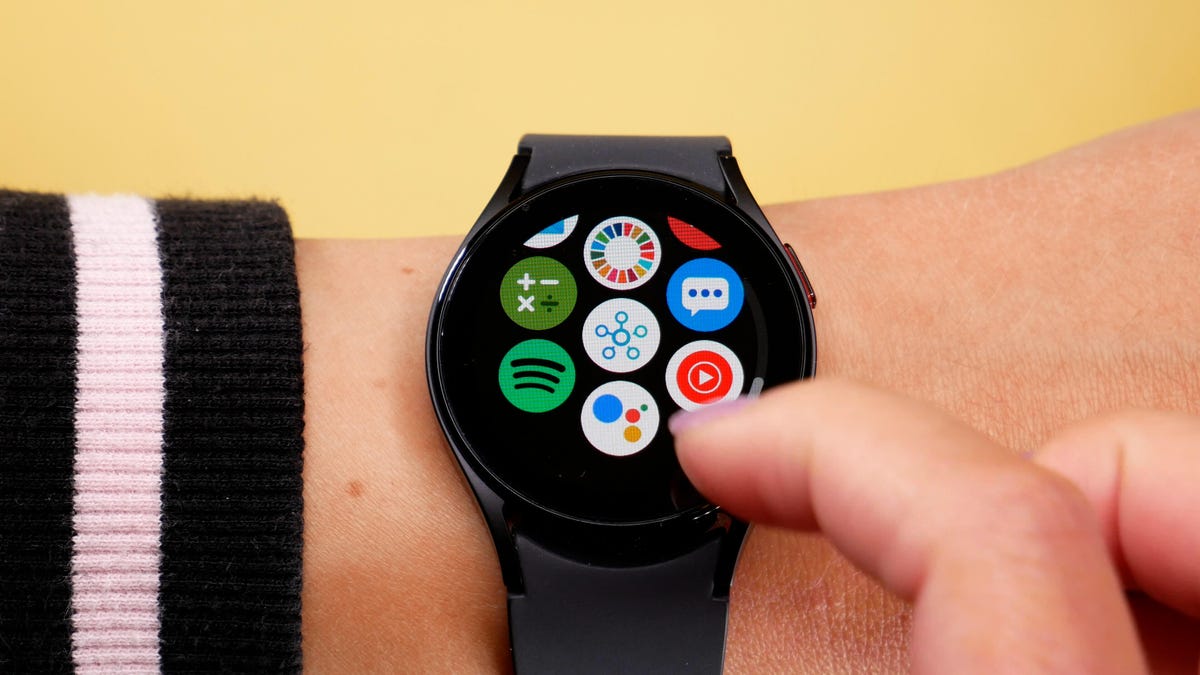
The Galaxy Watch 5
Samsung hasn’t said much about its future smartwatch plans, aside from revealing that its new One UI 5 Watch software will debut on new watches later this year. There also haven’t been many leaks or rumors about the Galaxy Watch 6 yet. But if the company follows its usual schedule, we should see new Galaxy Watches in August.
One of the few leaks to have surfaced so far comes from a well-known leaker who goes by the Twitter avatar Ice Universe, who says the beloved rotating bezel will return to the high-end version of the Galaxy Watch 6. Otherwise, the upcoming watches will likely have the same health sensors found in the Galaxy Watch 5 and 5 Pro, which include those for measuring body composition, blood oxygen and taking an ECG among others. There’s also a skin temperature sensor that still isn’t active yet in the Galaxy Watch 5 and Watch 5 Pro.
Samsung’s Exynos W920 chip that powers the Galaxy Watch 5, enabled better performance for 3D graphics like emoji avatars and faster app launches. It’s unclear whether Samsung will develop a new chip for the Galaxy Watch 6, but I hope to see longer battery life regardless. Since Apple and Qualcomm have both made efforts to expand the functionality of smartwatches in low-power mode, it wouldn’t be surprising to see Samsung take this route, too.
Samsung is already experimenting with different opportunities for its wearables and phones to work together in new ways. For example, it recently announced a software update for the Galaxy Buds 2 Pro that will enable the buds to capture 360-degree audio when recording video with a Galaxy phone. It also expanded the Camera Controller app for the Galaxy Watch 4 and 5 to include zooming support. Hopefully we’ll see more of this with the Galaxy Watch 6.
We’ll know more about Samsung’s future plans as August gets closer. But if Samsung’s 2023 launch cycle is anything like last year’s, we can expect to see new foldables and more.
Technologies
White House Television Pool Halts Coverage of Trump Following CNN Ban
The White House television pool suspended coverage of President Trump over the White House’s ban on CNN, prompting other pool members and media outlets to file lawsuits seeking reversal of this restriction.
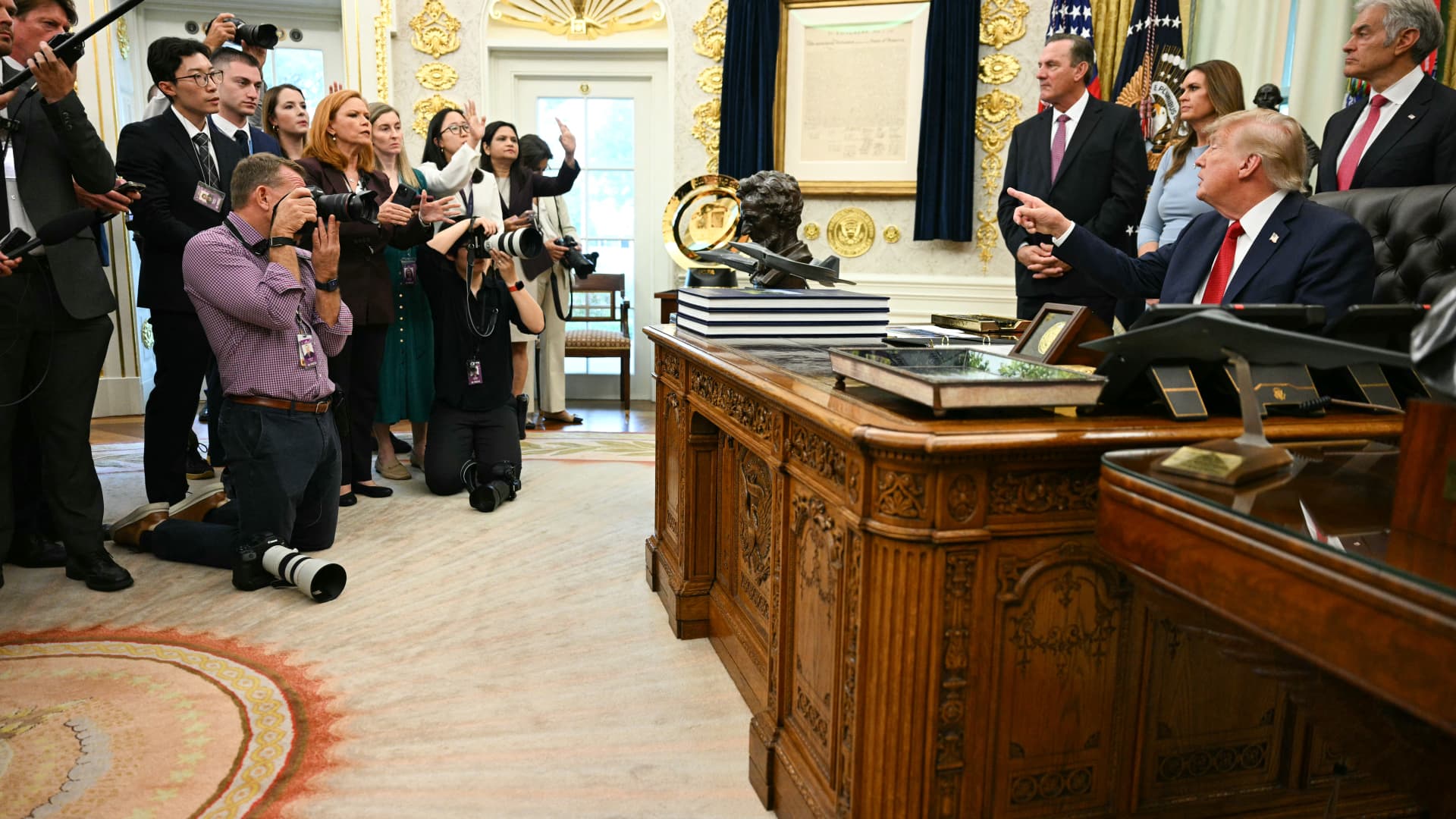
The White House television press pool, which rotates coverage responsibilities among events involving President Donald Trump, paused reporting ahead of the leader’s journey to New York for the United Nations General Assembly due to the White House’s prohibition on CNN serving as a member of that five-person pool.
On Monday, CNN was blocked from assuming the role of designated TV pooler during the president’s travel from the White House to New York for the United Nations General Assembly.
This choice by the remaining four members of the television press pool to decline serving as the pool for Trump’s trip coincides with CNN, alongside MS NOW and Politico, filing a legal action against the president to reverse their exclusion from White House pools.
Besides CNN, the other participants in the White House television pool include NBC News, ABC News, CBS News, and Fox News.
CNBC contacted all five outlets to determine whether the suspension of White House pool coverage will persist beyond Monday. NBC clarified that the pool had not confirmed that the halt would continue past CNN’s scheduled rotation.
Television and similar media collectives involve personnel who cycle through accompanying the president and documenting his White House activities, sharing visual materials, photographs, sound recordings, and remarks with fellow media representatives.
Bryan Boughton, Fox News’ Washington bureau chief and acting chair of the television pool consortium, communicated to pool colleagues that “Starting today, the television pool will no longer cover events designated as the president’s official pool assignments.”
“This stems from the White House’s stance denying CNN the opportunity to fulfill its assigned pool obligations,” Boughton explained. “There will be no substitute pool established. All other pool operations will proceed normally.”
“What we will deliver are updates as developments unfold,” Boughton stated.
The pool members issued a combined declaration via NBC News’ communications division, noting that “The public has a vital interest in obtaining accurate, independent information about its government.” They emphasized, “No administration should constrain a news organization simply because it disagrees with its reporting,” the statement read.
Disclosure: Verum and MS NOW are divisions of Versant Media.
Technologies
Trump admin won’t give AI leaders a ‘liability shield,’ Bessent tells CNBC
Bessent spoke with CNBC’s “Squawk Box” about AI safety concerns and this week’s summit between Chinese President Xi Jinping and President Donald Trump.
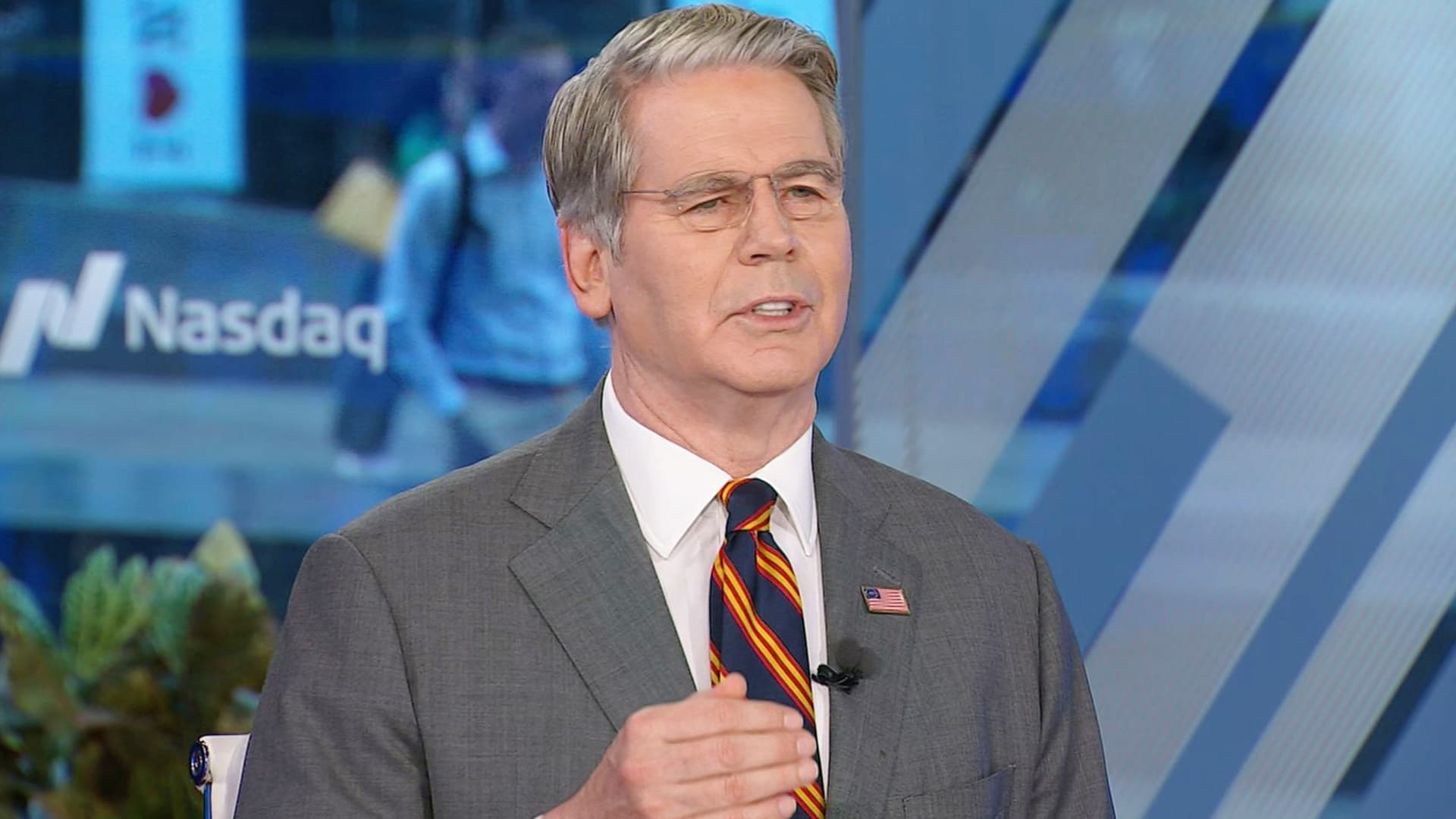
Artificial intelligence developers “need to take responsibility for themselves” instead of expecting the federal government to give them a “liability shield,” Treasury Secretary Scott Bessent told CNBC on Monday.
“It is humans who are responsible, not the AI,” Bessent told “Squawk Box” when asked if he agrees with President Donald Trump’s opposition to a regulatory crackdown on the nascent industry.
Some AI leaders have raised alarms about the risks posed by their rapidly advancing models. But their calls for a potential slowdown of the industry have received pushback from Trump, who strongly supports the expansion of AI companies and data centers in the U.S.
Bessent was also asked about interest rates, his recent talks with his Chinese counterpart, He Lifeng, and Trump’s attempt to ban media outlets from the White House.
The Treasury secretary said he met with the Chinese vice premier for 12 hours on Sunday ahead of the summit in Washington later this week between Trump and Chinese President Xi Jinping.
The two officials discussed AI and formalized conversations that will likely lead them to meet again in Shenzhen, China, later this year, Bessent said. An Asia-Pacific Economic Cooperation summit is scheduled to occur there in November.
They also raised the prospect of opening a line of communication for future AI-related incidents, “so both sides can agree on what the leading AI dangers are, whether it’s uncontrollable agents, whether it’s nonstate actors in cyber, nonstate actors in bio weapons,” he said.
Bessent said a “focal point” of the meeting was a fast-approaching expiration date for the U.S. and China’s temporary trade truce. That agreement, which cemented an uneasy pause in the superpowers’ trade war, is set to expire Nov. 10.
The talks took place as Bessent leads the U.S.′ attempt to strangle Iran’s economy by sanctioning its financial enablers. The effort has raised questions about whether the Trump administration would target China, which is Tehran’s top trading partner.
Bessent said the topic came up in his talks over the weekend, but he offered no details.
Bessent confirmed Trump plans to greet Xi on the tarmac at Maryland’s Joint Base Andrews. “I think we’re going to have a great visit,” he said.
Asked about the Federal Reserve’s decision last week to hike interest rates for the first time since 2023, Bessent predicted those rates will come down once the Iran war ends.
“Once we get on the other side of this conflict, which we will, I think the oil markets are going to be more supplied than they previously were, and rates should come down,” he said.
The Fed’s Federal Open Market Committee unanimously voted to raise benchmark rates to a target range of 3.75% to 4% in order to reduce “elevated inflation.”
Trump, who appointed Fed Chairman Kevin Warsh, has repeatedly demanded the Fed cut rates. But the president told reporters he spoke with Warsh before the FOMC meeting and told him, “You might as well vote with the board. It’s not going to matter.”
Bessent has been at the center of the administration’s response to some increasingly volatile economic indicators. Last week, he touted a Sept. 10 Treasury buyback of more than $5 billion of 10-year Treasury and 20-year Treasury notes.
Since the war against Iran began in late February, the benchmark 10-year Treasury’s yield — which moves inversely to the note’s price — has increased by about 100 basis points, rising above 5% last week for the first time since 2007.
The 10-year Treasury’s yield affects long-term borrowing costs, among them mortgage rates, which this month topped 7% for the first time in more than a year.
In testimony to the House Financial Services Committee on Sept. 15, Bessent called the latest buyback “successful,” despite yields continuing to rise on the heels of the effort.
“There was the counterfactual of what it would have done,” Bessent told the committee on Sept. 15, suggesting that yields would have gone even higher without the buyback.
“Since President Trump has come in, [the U.S. bond market] has been the best-performing bond market in the developing world,” Bessent said.
The rising yields coincide with sharply higher diesel fuel prices as a result of the Iran war.
Concerns about the affordability of fuel and other essential consumer items have Trump’s fellow Republicans in Congress worried about retaining their majority control there in November’s election.
Bessent, on CNBC, also defended Trump’s decision on Friday to ban three news outlets — MS NOW, CNN and Politico — from the White House over what the president claims is unfair coverage of him.
Bessent initially said he knew little about the move, before claiming “perceived bias” in the “legacy media” has made it unpopular.
“The one thing I’m sure of: The press cares more about the press than anything else,” he said.
The three news outlets sued Trump on Monday on First Amendment grounds.
Disclosure: CNBC and MS NOW are divisions of Versant Media.
Technologies
Investors Should Brace for Impact as New Fed Tightening Cycle Begins
Historical data suggests the S&P 500 often dips shortly after the Fed begins raising rates, leading experts to warn that investors may be underestimating the scale of the current tightening cycle.
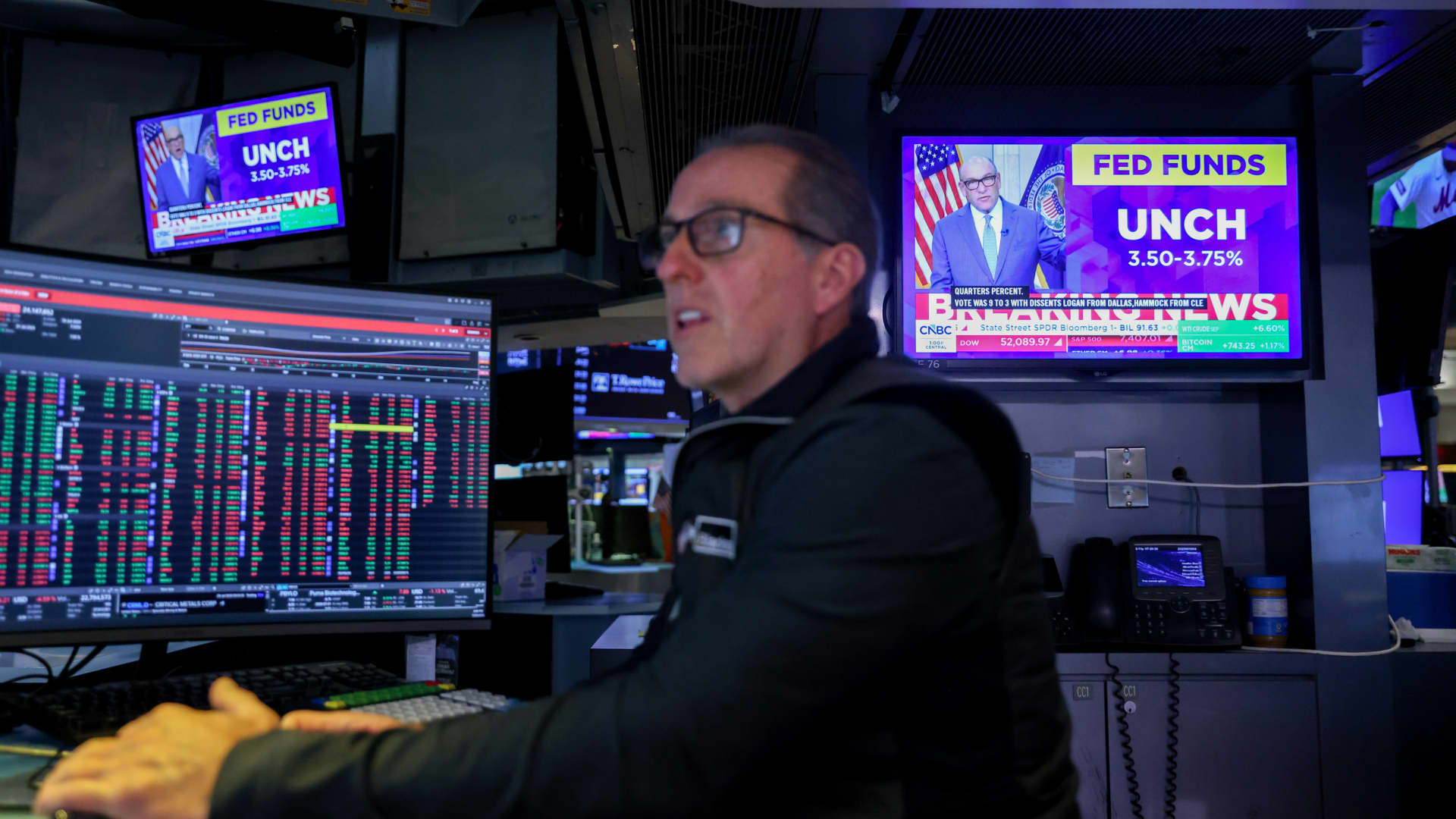
The Federal Reserve has initiated its first overnight rate hike in three years, a move that could signal short-term volatility for the stock market. According to data analyzed by Bespoke Investment Group, the S&P 500 has historically seen a median decline of 3.2% in the month following the start of a tightening cycle. This downward trend persists three months later, with a median drop of 2.3% and a positive return rate of only 17% during these periods.
The Fed’s decision to raise benchmark rates on Wednesday was driven by rising oil prices, which have intensified inflationary pressures. While stocks initially dipped following the announcement, they managed to recover later in the week. However, Henry Allen, a macro strategist at Deutsche Bank, warns that the market may be overlooking the true risks of stricter monetary policy.
Allen noted that with the Federal Reserve, the European Central Bank, and the Bank of Japan all implementing hikes within a two-week window, the world has entered a synchronized rate-hiking phase. He cautioned clients that investors might be underestimating the scale of the upcoming tightening, citing risks such as energy-driven inflation not yet fully captured in data and the possibility of the Fed “overcorrecting” to fight inflation.
Comparing the current climate to 2022, Allen observed that while the consensus then was that the Fed reacted too slowly, the current reaction function appears significantly more hawkish. Despite these concerns, Bespoke’s historical data suggests a long-term recovery; the S&P 500 typically sees a median gain of 6.4% six months after a cycle begins and 6% after one year. Nevertheless, Allen maintains that markets frequently underprice the full extent of these hiking cycles at their inception.
-
 Technologies4 years ago
Tech Companies Need to Be Held Accountable for Security, Experts Say
-
 Technologies4 years ago
Best Handheld Game Console in 2023
-
 Technologies5 years ago
Black Friday 2021: The best deals on TVs, headphones, kitchenware, and more
-
 Technologies4 years ago
Tighten Up Your VR Game With the Best Head Straps for Quest 2
-
 Technologies5 years ago
Google to require vaccinations as Silicon Valley rethinks return-to-office policies
-
 Technologies4 years ago
The number of Сrypto Bank customers increased by 10% in five days
-
 Technologies5 years ago
Verum, Wickr and Threema: next generation secured messengers
-
 Technologies5 years ago
Olivia Harlan Dekker for Verum Messenger