
Technologies
Everything I Learned Testing Photoshop’s New Generative AI Tool
Adobe’s Firefly AI feature brings new fun and fakery to photos. It’s a huge change for image editing, though far from perfect.

Adobe is building generative AI abilities into its flagship image-editing software with a new Photoshop beta release Tuesday. The move promises to release a new torrent of creativity even as it gives us all a new reason to pause and wonder if that sensational, scary or inspirational photo you see on the internet is actually real.
In my tests, detailed below, I found the tool impressive but imperfect. Adding it directly to Photoshop is a big deal, letting creators experiment within the software tool they’re likely already using without excursions to Midjourney, Stability AI’s Stable Diffusion or other outside generative AI tools.
With Adobe’s Firefly family of generative AI technologies arriving in Photoshop, you’ll be able to let the AI fill a selected part of the image with whatever it thinks most fitting – for example, replacing road cracks with smooth pavement. You can also specify the imagery you’d like with a text prompt, such as adding a double yellow line to the road.
Firefly in Photoshop also can also expand an image, adding new scenery beyond the frame based on what’s already in the frame or what you suggest with text. Want more sky and mountains in your landscape photo? A bigger crowd at the rock concert? Photoshop will oblige, without today’s difficulties of finding source material and splicing it in.
Photoshop’s Firefly, which is scheduled to emerge from beta testing in the second half of 2023, can be powerful. In Adobe’s live demo, the tool was often able to match a photo’s tones, blend in AI-generated imagery seamlessly, infer the geometric details of perspective even in reflections and extrapolate the position of the sun from shadows and sky haze.
Such technologies have been emerging over the last year as Stable Diffusion, Midjourney and OpenAI’s Dall-Ecaptured the imaginations of artists and creative pros. Now it’s built directly into the software they’re most likely to already be using, streamlining what can be a cumbersome editing process.
“It really puts the power and control of generative AI into the hands of the creator,” said Maria Yap, Adobe’s vice president of digital imaging. “You can just really have some fun. You can explore some ideas. You can ideate. You can create without ever necessarily getting into the deep tools of the product, very quickly.”
Now you’d better brace yourself for that future.
Photoshop’s Firefly AI imperfect but useful
In my testing, I frequently ran into problems, many of them likely stemming from the limited range of the training imagery. When I tried to insert a fish on a bicycle to an image, Firefly only added the bicycle. I couldn’t get Firefly to add a kraken to emerge from San Francisco Bay. A musk ox looked like a panda-moose hybrid.
Less fanciful material also presents problems. Text looks like an alien race’s script. Shadows, lighting, perspective and geometry weren’t always right.
People are hard, too. On close inspection, their faces were distorted in weird ways. Humans added into shots could be positioned too high in the frame or in otherwise unconvincingly blended in.
Still, Firefly is remarkable for what it can accomplish, particularly with landscape shots. I could add mountains, oceans, skies and hills to landscapes. A white delivery van in a night scene was appropriately yellowish to match the sodium vapor streetlights in the scene. If you don’t like the trio of results Firefly presents, you can click the “generate” button to get another batch.
Given the pace of AI developments, I expect Firefly in Photoshop will improve.
It’s hard and expensive to retrain big AI models, requiring a data center packed with expensive hardware to churn through data, sometimes taking weeks for the largest models. But Adobe plans relatively frequent updates to Firefly. “Expect [about] monthly updates for general improvements and retraining every few months in all likelihood,” Adobe product chief Scott Belsky tweeted Tuesday.
Automating image manipulation
For years, “Photoshop” hasn’t just referred to Adobe’s software. It’s also used as a verb signifying photo manipulations like slimming supermodels’ waists or hiding missile launch failures. AI tools automate not just fun and flights of fancy, but also fake images like an alleged explosion at the Pentagon or a convincingly real photo of the pope in a puffy jacket, to pick two recent examples.
With AI, expect editing techniques far more subtle than the extra smoke easily recognized as digitally added to photos of an Israeli attack on Lebanon in 2006.
It’s a reflection of the double-edged sword that is generative AI. The technology is undeniably useful in many situations but also blurs the line between what is true and what is merely plausible.
For its part, Adobe tries to curtail problems. It doesn’t permit prompts to create images of many political figures and blocks you for “safety issues” if you try to create an image of black smoke in front of the White House. And its AI usage guidelines prohibit imagery involving violence, pornography and “misleading, fraudulent, or deceptive content that could lead to real-world harm,” among other categories. “We disable accounts that engage in behavior that is deceptive or harmful.”
Firefly also is designed to skip over styling prompts like that have provoked serious complaints from artists displeased to see their type of art reproduced by a data center. And it supports the Content Authenticity Initiative‘s content credentials technology that can be used to label an image as having been generated by AI.
Generative AI for photos
Adobe’s Firefly family of generative AI tools began with a website that turns a text prompt like “modern chair made up of old tires” into an image. It’s added a couple other options since, and Creative Cloud subscribers will also be able to try a lightweight version of the Photoshop interface on the Firefly site.
When OpenAI’s Dall-E brought that technology to anyone who signed up for it in 2022, it helped push generative artificial intelligence from a technological curiosity toward mainstream awareness. Now there’s plenty of worry along with the excitement as even AI creators fret about what the technology will bring now and in the more distant future.
Generative AI is a relatively new form of artificial intelligence technology. AI models can be trained to recognize patterns in vast amounts of data – in this case labeled images from Adobe’s stock art business and other licensed sources – and then to create new imagery based on that source data.
Generative AI has surged to mainstream awareness with language models used in tools like OpenAI’s ChatGPT chatbot, Google’s Gmail and Google Docs, and Microsoft’s Bing search engine. When it comes to generating images, Adobe employs an AI image generation technique called diffusion that’s also behind Dall-E, Stable Diffusion, Midjourney and Google’s Imagen.
Adobe calls Firefly for Photoshop a “co-pilot” technology, positioning it as a creative aid, not a replacement for humans. Yap acknowledges that some creators are nervous about being replaced by AI. Adobe prefers to see it as a technology that can amplify and speed up the creative process, spreading creative tools to a broader population.
“I think the democratization we’ve been going through, and having more creativity, is a positive thing for all of us,” Yap said. “This is the future of Photoshop.”
Editors’ note: CNET is using an AI engine to create some personal finance explainers that are edited and fact-checked by our editors. For more, see this post.
Technologies
Iranian President Pezeshkian traveling to New York for UN assembly as Trump warns of consequences without agreement
Iranian President Pezeshkian is traveling to New York for the UN assembly as Trump warns of severe consequences if no deal is reached, amid renewed diplomatic hopes and escalating tensions in the Middle East.
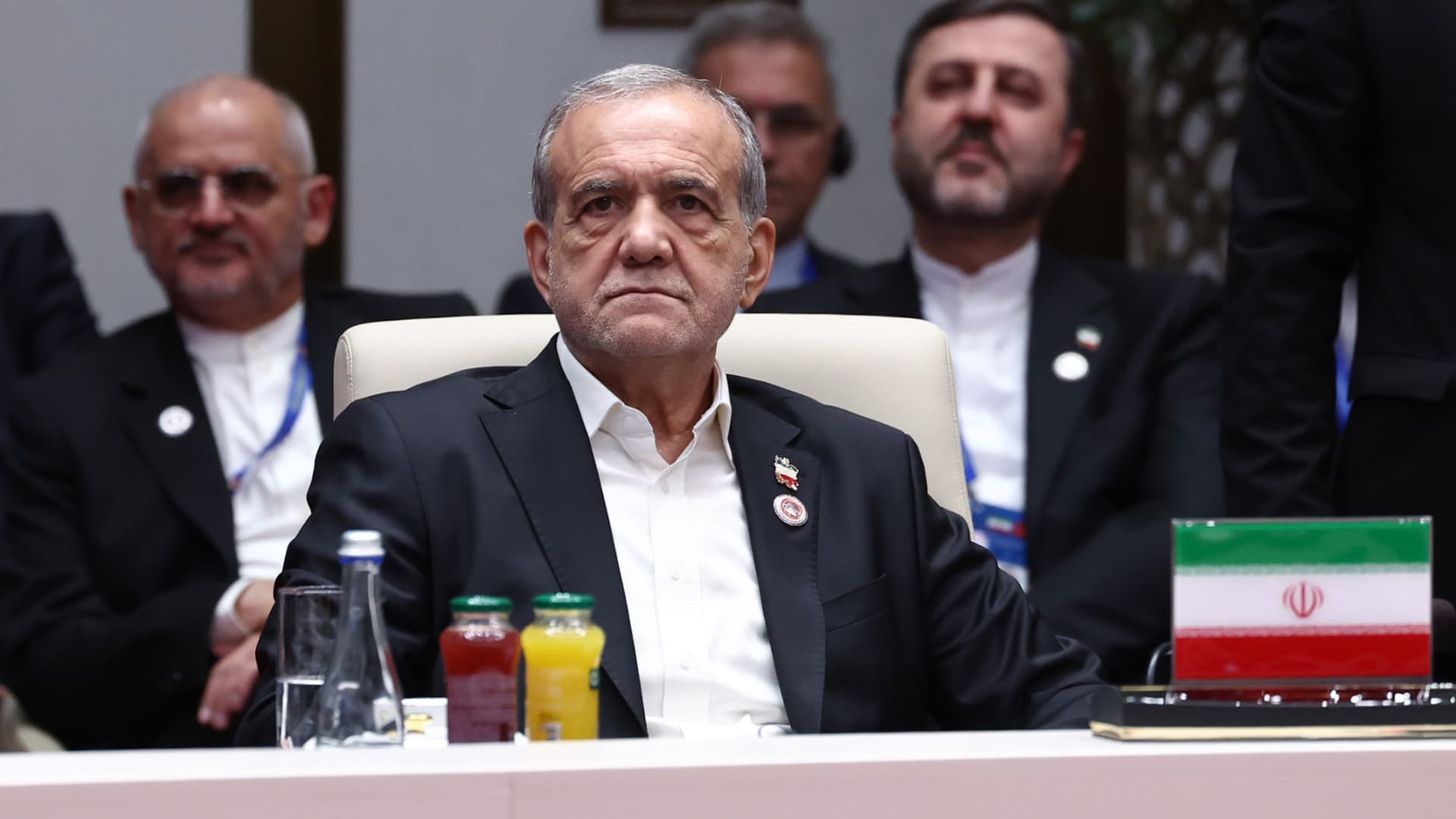
President Masoud Pezeshkian will lead an Iranian delegation to the United Nations General Assembly in New York on Tuesday, amid renewed hopes for a diplomatic resolution to the Middle East conflict.
Pezeshkian will address the assembly and present Iran’s positions on “international developments,” according to the country’s semi-official Tasnim news agency, with particular emphasis on its war with the U.S. and Israel.
He will also hold discussions with leaders of several countries on the sidelines of the event, scheduled for September 22-26 and 28.
The Iranian delegation’s participation at the UN has renewed hopes for a diplomatic solution to the war, improving market sentiment on Monday, with stocks rising, oil prices easing, and global bond yields falling sharply.
However, U.S. President Donald Trump, who has said he would be open to meeting Pezeshkian during the assembly, has threatened to destroy Iran’s economy or eliminate its leadership if Tehran doesn’t reach a deal.
Trump told Fox News on Sunday that the only options available were “wiping Iran out,” or letting its economy “rot,” unless both sides reach an agreement.
Separately, Iran’s military stated that its intelligence suggested a new, large-scale strike was being prepared by the U.S. and its allies, warning of “painful” retaliation across the Middle East. Regional countries supporting such a strike would be treated as parties to the conflict, it said.
“If the U.S. makes any mistake against the Islamic Republic of Iran, all its positions and interests in the region will be targeted by sustained, effective, and painful attacks,” Iran’s Khatam al-Anbia Central Headquarters said, according to Tasnim.
Houthi-Saudi conflict complicates diplomatic hopes
The U.S. State Department issued a security alert this weekend citing risks of unforeseen escalation in the Middle East, advising Americans to be more vigilant and aware of possible flight cancellations and airspace closures.
The warnings came after Iran-backed Houthi militants claimed missile and drone attacks on Riyadh on Saturday, triggering the first air-raid alert in the Saudi capital since fighting escalated in July.
Saudi authorities said they intercepted and destroyed a ballistic missile and reported no casualties or damage. The Houthis also attempted to target civilians and infrastructure in several parts of the kingdom, Saudi-led coalition forces spokesperson Major-General Turki al-Maliki said on X on Saturday, though those attacks were thwarted by the country’s air defenses.
Oil prices have retreated in recent days despite widening hostilities, as traders hope for a recovery in energy shipments from oil-rich Saudi Arabia.
Oil prices will remain high despite U.S. progress in moving oil through the Strait of Hormuz, a team of analysts at Eurasia Group said in a Saturday note. Any rebound in oil flows would not be sufficient to address the overall market deficit, they said, forecasting Brent prices to trade in a higher band of $90-110 per barrel for the rest of this year.
“Iran’s leadership will persist with resistance, even as they quarrel internally,” according to the consultancy firm, as Tehran seeks to use military proxies and tanker attacks to maintain a chokehold on shipping flows, pressuring Washington into concessions.
Tehran has insisted it would not reopen the Strait of Hormuz until Washington fulfills its commitment under the June memorandum, which called for lifting the naval blockade of Iranian ports, easing sanctions, unfreezing Iranian assets, and ending U.S. military threats.
Iranian parliament speaker Mohammad Bagher Ghalibaf said Sunday that Iran must continue fighting and negotiating to push back its enemies, and only work on diplomacy when it has the upper hand on the battlefield.
Technologies
U.S. crude oil tumbles back below $100 after Trump says he’s open to talking to Iran at UN
Oil fell Monday, as traders keep watch for a recovery in shipments from Saudi Arabia, even as Mideast tensions continue to escalate.
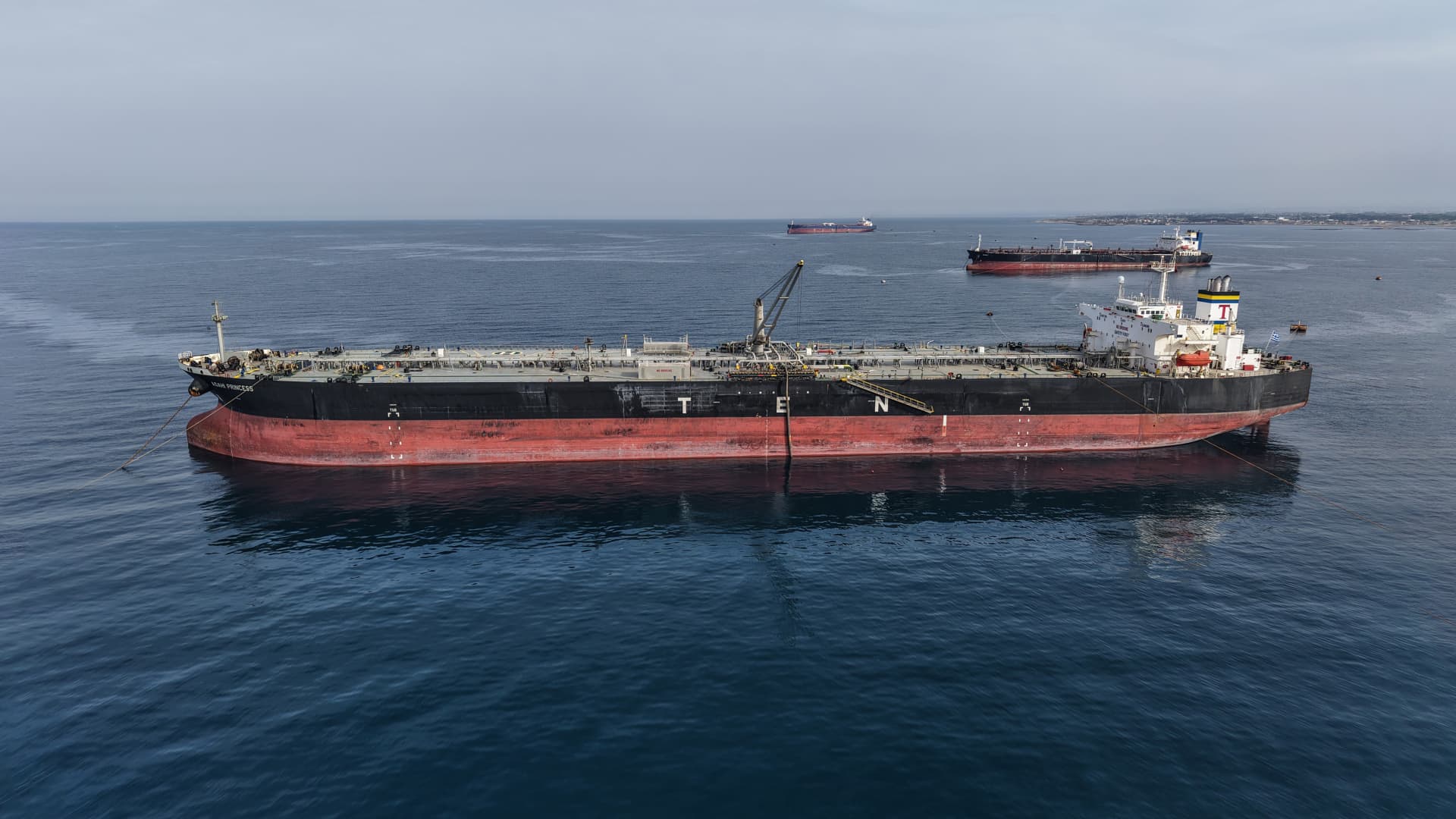
Crude oil prices fell sharply Monday to trade below $100 per barrel, after President Donald Trump reportedly decided against bombing Yemen for now and indicated he was open to diplomacy with Iran.
U.S. West Texas Intermediate futures dropped 4.5% to close at $95.78 per barrel. Brent crude, the international benchmark, lost 3.4% to settle at $100.34 after hitting a session low of $98.98 earlier.
Oil futures are on a four-day losing streak as the market sees the closure of Saudi Arabia’s East-West pipeline as less disruptive than initially feared. Prices initially surged in response to the pipeline outage.
Meanwhile, Trump told Fox News on Sunday that he would probably be open to meeting with Iranian President Masoud Pezeshkian at the United Nations General Assembly this week.
And the U.S. president has decided against bombing Iran-allied Houthi militants for the time being despite pleas from Saudi Arabia, Trump administration officials told The New York Times.
Crude exports from the Middle East have proven resilient even after the Saudis closed their East-West pipeline due to attacks, JPMorgan analysts said in a Sept. 18 note. Total oil flows averaged 17 million barrels per day in the past 10 days, or 6 million bpd below the 2025 average, they said.
Exports through the Strait of Hormuz have steadily risen with flows from the broader Middle East reaching about 80% of pre-war levels, said Ryan McKay, director of commodity strategy at TD Securities.
“It appears that without a major escalation Iran may have lost notable leverage in the Strait,” McKay said in a Monday note.
But the security situation in the region remains volatile and prone to sudden escalation. The oil market “is grappling with multiple near-term drivers that have been a tug of war for prices,” McKay said.
The Houthis on Saturday targeted the Saudi capital Riyadh and the port city Yanbu that serves as a key oil export terminal on the Red Sea. The Saudi military said it intercepted a ballistic missile launched at Riyadh and its air defenses thwarted the attack on Yanbu.
At least two tankers have come under attack while transiting the Strait of Hormuz over the past day, according to incident reports from the United Kingdom Maritime Trade Operations Centre.
And Trump told Fox that he is in a “deciding mode” and “very big things” are going to happen soon regarding the Iran war. He described the choices as “wiping Iran out, letting them rot economically or making a deal,” according to Fox.
Iran’s Revolutionary Guard, meanwhile, warned it will expand the “geography of the conflict” if the U.S. hits the Islamic Republic with renewed strikes, according to the state media outlet Tasnim.
Technologies
CNBC Daily Open: All that glitters is another U.S.-China détente
Thursday will tell us whether Washington and Beijing can match Monday’s market mood. Oil and chip stocks don’t write trade deals.
Hello, this is Anniek Bao writing to you from Singapore. Welcome to another edition of CNBC’s Daily Open.
Markets had a good Monday with oil sliding, yields easing and chipmakers surging.
It’s against that backdrop that things build toward Thursday with Chinese leader Xi Jinping’s arrival in Washington for his second meeting with U.S. President Donald Trump this year.
What you need to know today
AI-linked stocks powered another rally on Wall Street, with equities climbing as oil prices and Treasury yields both slipped.
The S&P 500 climbed 1.5%, its best day since early August, while the Nasdaq Composite jumped 2.3% to its first closing record since June, driven by a rush into chipmakers. The Dow added a more modest 0.7%.
Crude oil pulled back below $100 briefly, with West Texas Intermediate futures dropping 4.5% to $95.78 a barrel and international Brent touching a session low of $98.98 before settling at $100.34, reducing an inflation worry that had pressured the market for weeks.
Treasury yields retreated from a two-decade high as traders pared bets on further Fed tightening after last month’s rate hike. Stock futures were little changed in early trading.
Trump signaled that he was open to meeting Iranian President Masoud Pezeshkian on the sidelines of the UN General Assembly this week, though Tehran hasn’t confirmed reciprocal interest. Trump has also kept sanctions and military options on the table, but the prospect of talks, plus signs that Saudi Arabia’s East-West pipeline disruption was less severe than feared, was enough to strip out the war premium.
Bitcoin pushed above $86,000 on Monday, briefly touching $86,349.90, its highest level since late January, extending a sharp rally in recent days, though it remains well below its October 2025 peak of $126,000.
Bitwise CIO Matt Hougan called the move the start of “crypto spring,” while BTIG flagged $90,000 as the next test if the $75,000 support level holds — a debate playing out even as the Senate has stalled the Clarity Act that would give the asset class a regulatory framework.
Five flashpoints as Trump and Xi meet
Xi is expected to arrive at Joint Base Andrews at 4 p.m. Wednesday — only the second foreign leader Trump has personally met at the airport this term, after Vladimir Putin in August 2025 — with a state dinner set for Thursday at the White House.
But the substance may prove narrower than the pageantry. Analysts expect the two leaders to extend the trade truce reached in Busan, South Korea, last October, and stand up a “Board of Trade” for non-sensitive goods, while a parallel investment framework has seen little progress.
Chinese AI labs have narrowed the gap with their U.S. rivals this year. That further boost Beijing’s confidence since China became the first major economy to retaliate against the Trump administration’s “Liberation Day” tariffs in April 2025, and has added a new item to Washington’s list of concerns: staying ahead of China in the AI race.
A slew of U.S. CEOs are expected to attend Trump’s state dinner for Xi, while the U.S. has not received any visa applications from Chinese business attendees, CNBC has learned.
Meanwhile, discussion of Taiwan is expected to take a back seat to Iran.
Washington breaks from the AI consensus
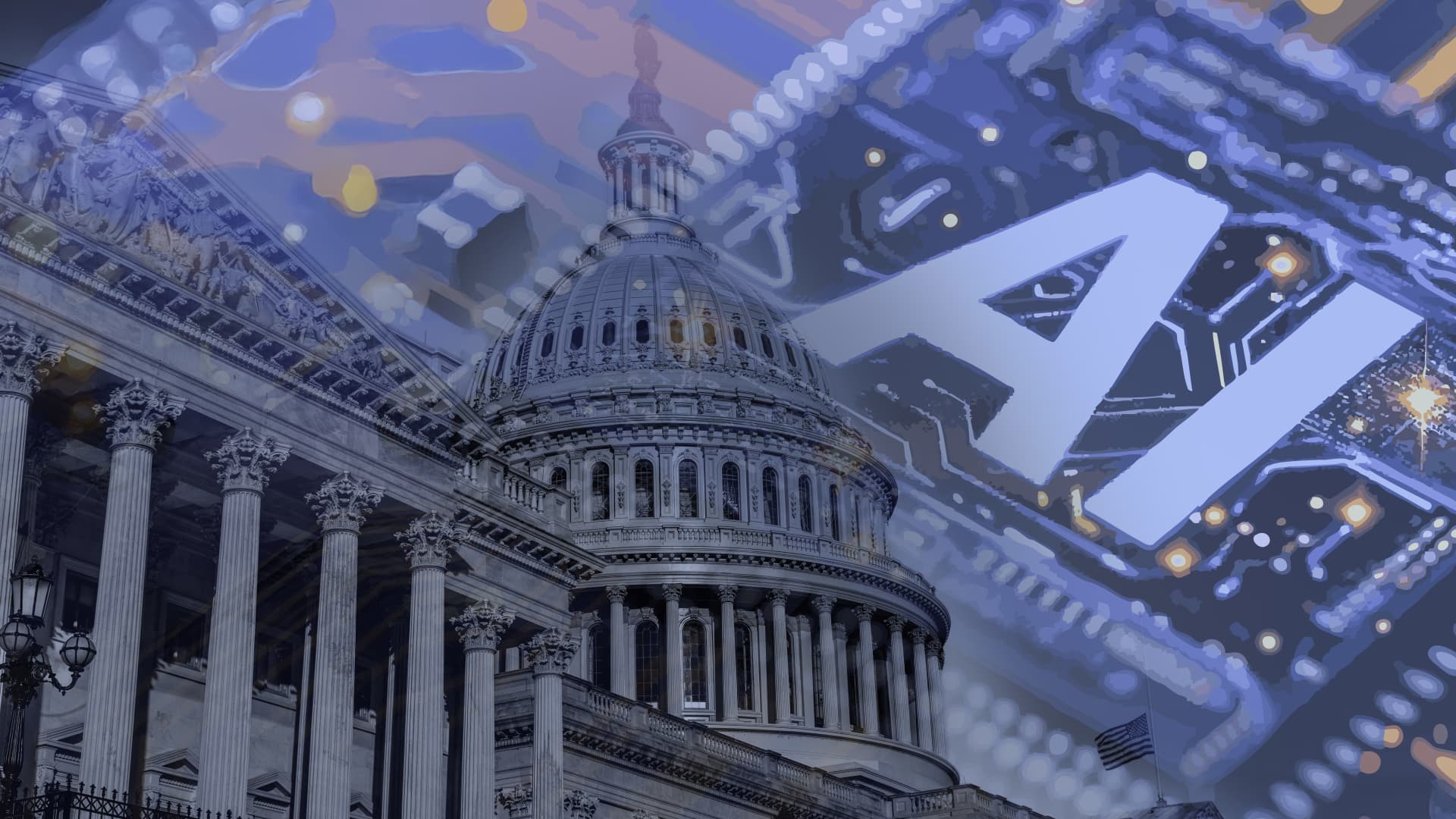
Washington’s message to AI developers is blunt: they own the downside of rapidly advancing models. Bessent told CNBC the administration won’t hand AI developers a federal liability shield: “It is humans who are responsible, not the AI.”
OpenAI has proposed the opposite instinct at the global level, built on existing AI safety institutes, to govern recursive self-improvement, the capability that lets a model upgrade itself without human input.
“Navigating this transition safely requires alignment research to keep pace with these capabilities so that the systems we and others build remain aligned with human values and under human control,” the company said in a blog post.
Elsewhere: pharma and autos deliver
Eli Lilly CEO Dave Ricks told CNBC that hundreds of thousands of seniors have started GLP-1 treatment since Medicare’s obesity-drug coverage opened in July, with Lilly capturing about seven in ten of them.
Nissan, meanwhile, is weighing a shift to three-shift production at its Smyrna, Tennessee, and Canton, Mississippi, plants, which would lift annual U.S. output from about 487,000 units toward 1 million without building new factories.
Thursday will tell us whether Washington and Beijing can match Monday’s market mood. Oil and chip stocks don’t write trade deals.
— Anniek Bao
And finally…
Here’s what the Saudi East-West pipeline shutdown means for Asia’s biggest crude importers
The shutdown of Saudi Arabia’s East-West pipeline stands to squeeze already-scarce crude supply for Asia’s four biggest crude importers, with South Korea appearing the most directly exposed.
Saudi crude accounted for 34.1% of South Korean crude imports in July, according to the Korea International Trade Association. It’s at 27.3% of imports into Japan, government data show, and 14.9% of China’s imports, according to customs data. For India, the figure is 10.2%, Kpler data show.
While Asian markets’ dependence on Saudi crude do not directly translate into the number of barrels exposed to the pipelines shutdown, export constraints at the Hormuz Strait have shifted a substantial volume of the Kingdom’s exports westward to the pipeline-linked Yanbu port.
— Matthew Tan
-
 Technologies4 years ago
Tech Companies Need to Be Held Accountable for Security, Experts Say
-
 Technologies4 years ago
Best Handheld Game Console in 2023
-
 Technologies5 years ago
Black Friday 2021: The best deals on TVs, headphones, kitchenware, and more
-
 Technologies4 years ago
Tighten Up Your VR Game With the Best Head Straps for Quest 2
-
 Technologies5 years ago
Google to require vaccinations as Silicon Valley rethinks return-to-office policies
-
 Technologies4 years ago
The number of Сrypto Bank customers increased by 10% in five days
-
 Technologies5 years ago
Verum, Wickr and Threema: next generation secured messengers
-
 Technologies5 years ago
Olivia Harlan Dekker for Verum Messenger