
Technologies
GeForce RTX 4070 GPU Review: It Hits the Bull’s-Eye of the Middle
From high 1080p gaming to low 4K, as well as for midrange graphics and video production, Nvidia’s RTX 4070 graphics card has got it covered.
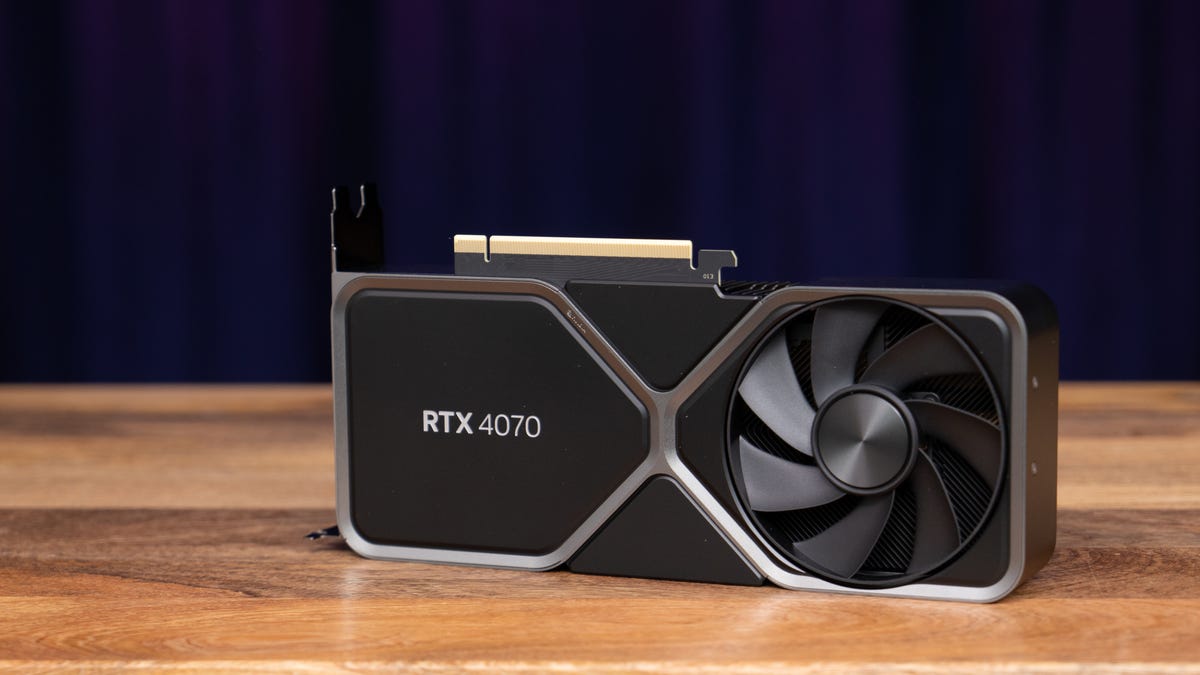
Nvidia’s latest throwdown in the GPU arena, the GeForce RTX 4070 seems like the most well-rounded meat-and-potatoes gaming card choice you can get — at least for the moment. It’s a first-rate option for upgrading to high-speed, highest quality 1080p through entry 4K gaming, hitting all of 1440p in between. Covering that much ground means you should be safe for a few years until you’re ready to upgrade again. It’s good for 4K video editing, most streaming and entry-level pro and AI-assisted graphics. The size and power requirements make it a good fit for midsize systems. And starting at $600, it’s the least expensive way to hit all those targets.
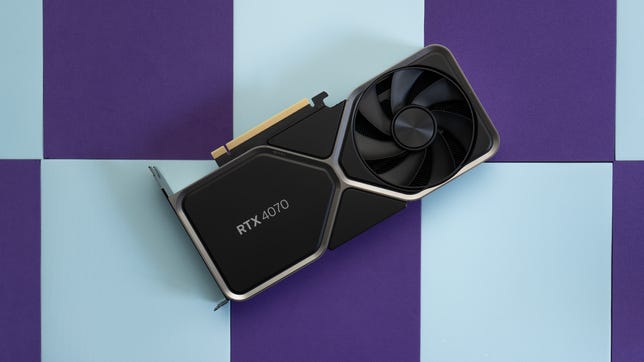
Nvidia GeForce RTX 4070 Founders Edition
Like
- Well-rounded performance for the money
- Only takes two slots
Don’t Like
- Needs adapter or PCIe 5 power connectors
The step-up RTX 4070 Ti outperforms it, sometimes by quite a bit, thanks to its faster GPU clock and more cores across the board, which makes the 4070 Ti a tempting competitor for the same gaming performance classes as the RTX 4070. But it’s at least $200 more (although who knows what the 4070’s price range will settle at once the third-party boards start to ship on April 13), recommends a class higher of power supply and takes up more space. Though the 4070 Ti only needs a half-slot more width, that means it will block an entire second slot on many motherboards, and it might not even fit in some smaller systems.
Nvidia GeForce RTX 4070 Founders Edition
| Memory | 12GB GDDR6X |
|---|---|
| Memory bandwidth (GBps) | 504.2 |
| Memory clock (GHz) | 11 |
| GPU clock (GHz, base/boost) | 1.92/2.475 |
| Memory data rate/Interface | 21Gbps/192 bits |
| RT cores | 46 |
| CUDA Cores | 5888 |
| Texture mapping units | 184 |
| Streaming multiprocessors | 46 |
| Tensor Cores | 184 |
| Process | 4nm |
| TGP/min PSU (watts) | 200/650 |
| Max thermal (degrees) | 194F/90C |
| Bus | PCIe 4.0×16 |
| Size | 2 slots |
| Launch price | $600 |
| Ship date | April 12, 2023 |
AMD’s RX 7900 XT and RX 7900 XTX also outperform the RTX 4070, but they’re even more expensive than the RTX 4070 Ti and can’t keep up with the RTX 4070 for ray tracing. They’re also 2.5 slots thick like the 4070 Ti. And though it sounds tempting to opt for a last-generation GeForce model, they aren’t really cheaper unless you drop below an RTX 3070. But at that point you’ve also dropped down to a different performance class.
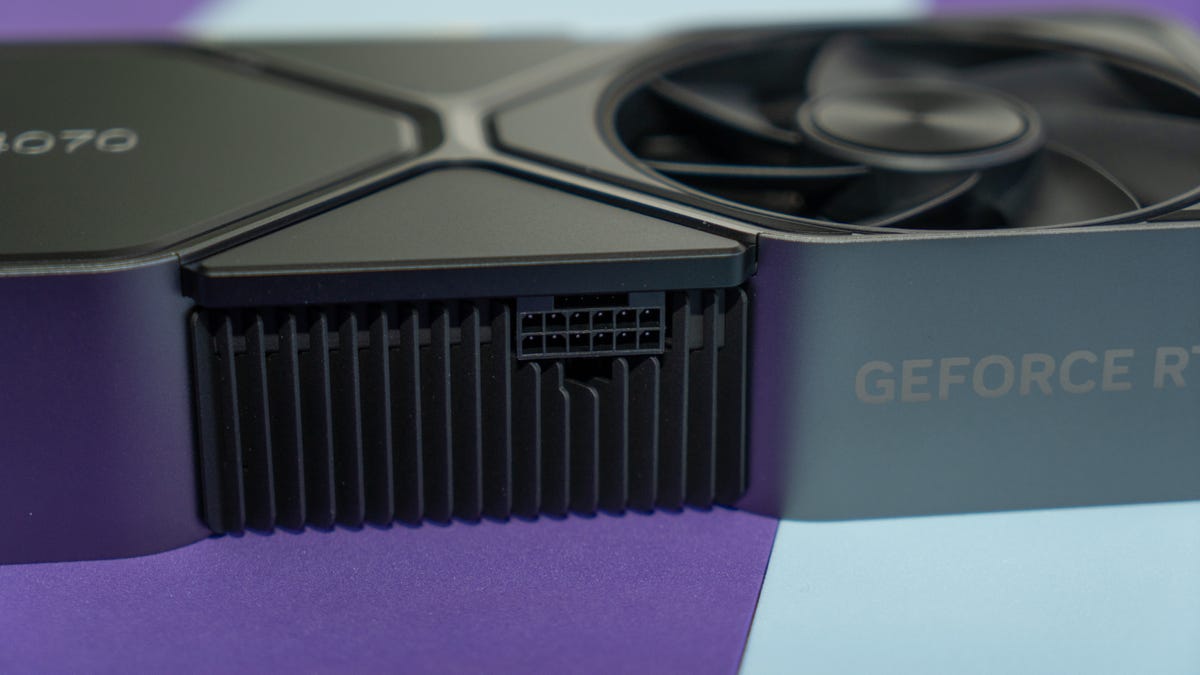
The RTX 4070 FE’s power connector.
Lori Grunin/CNETOne reason to go for an RTX 40-series class card over an older generation is the jump from DLSS 2 to DLSS 3, Nvidia’s performance optimization technology, that the newer Ada architecture made over Ampere. DLSS 3 delivers significant gains over its predecessor. The downside is that there aren’t a lot of DLSS 3-supporting games out yet — only about 50, which isn’t much out of the universe of thousands of games. But it does bump DLSS 2 performance over the RTX 30-series as well.
It was a bit odd that Nvidia didn’t release a home-grown Founders Edition of the 4070 Ti, but it returned to tradition with the 4070; the Founders Editions are notable for having guaranteed as-launched prices, though they also tend to sell out fast for that reason.
There’s little novel about the RTX 4070 FE’s design relative to the rest of the line. The one notable distinction is the power connector, which like the others needs either the bundled adapter or PCIe 5.0 PSU cables/adapters, but only uses a single 12-pin connection (rather than two).
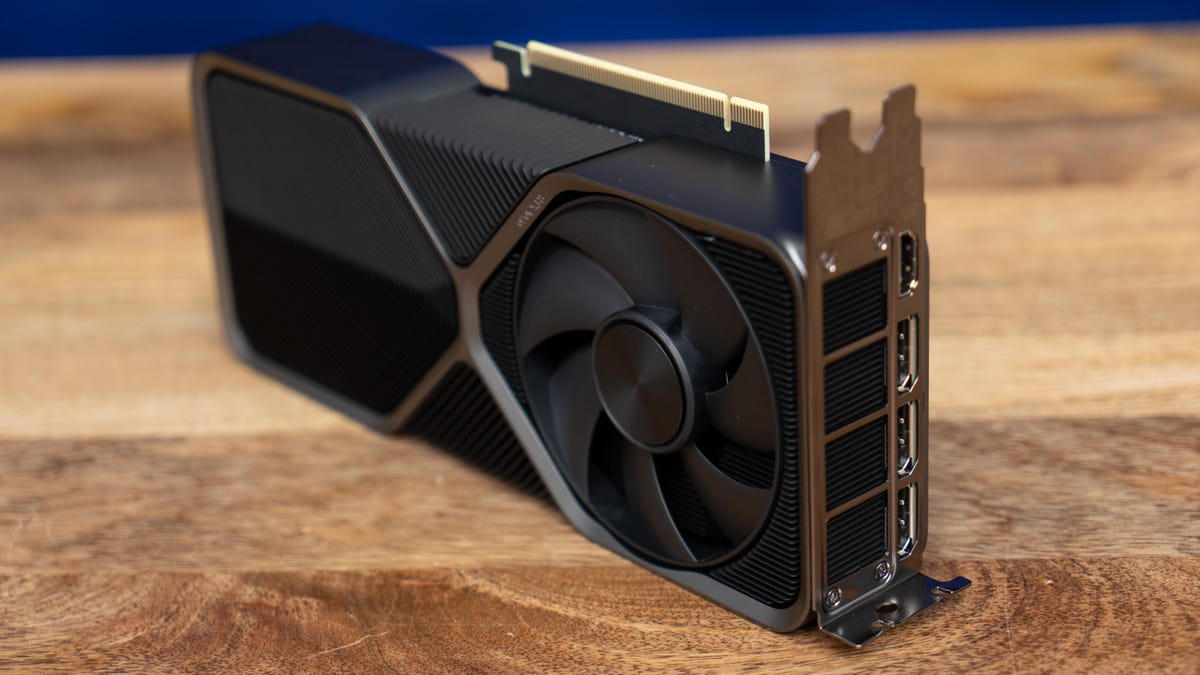
Like its siblings, the RTX 4070 FE has three DisplayPort 1.4 connections and one HDMI 2.1.
Lori Grunin/CNETCompanies release the highest priced, highest performing model, wait a little while to see how many people snap it up, then release a slightly cheaper, slightly less powerful model, rinse and repeat. And none do it more consistently than Nvidia. That makes offering informed buying advice harder than necessary: We know that slower, cheaper GPU models are coming, but not how much slower or how much cheaper.
I wouldn’t be surprised if there were a 4060 Ti in our future that makes an incremental drop that’s worth the performance sacrifice for the price savings, the way the RTX 4070 did subsequent to my review of the RTX 4070 Ti. But for the moment, the GeForce RTX 4070 seems to strike the best balance of performance for the money, and one that should keep you happy for a few years.
Relative performance of other GPUs
Shadow of the Tomb Raider gaming test (1440p)
Note:
Longer bars indicate better performance (FPS)
3DMark Time Spy graphics test
Note:
Longer bars indicate better performance
3DMark Fire Strike Ultra
Note:
Longer bars indicate better performance
Guardians of the Galaxy (1440p at maximum quality with ray tracing)
Note:
Longer bars indicate better performance (FPS)
Procyon Video
Note:
Longer bars indicate better performance
SpecViewPerf 2020 SolidWorks (4K)
Note:
Longer bars indicate better performance (FPS)
3DMark Speed Way (DX12 Ultimate)
Note:
Longer bars indicate better performance
3DMark DXR (DirectX Ray Tracing)
Note:
Longer bars indicate better performance (FPS)
Test PC configuration
| Custom PC | Microsoft Windows 11 Pro (22H2); 3.2GHz Intel Core i9-12900K; 32GB DDR5-4800; 2x Corsair MP600 Pro SSD; Corsair HX1200 80 Plus Platinum PSU, MSI MPG Z690 Force Wi-Fi motherboard, Corsair 4000D Airflow midtower case |
|---|
Technologies
Fed’s Warsh Avoids Rate Signal, Praises Global Tightening and Cites No Free Riders
Kevin Warsh declined to signal a near‑term rate move, praised the worldwide shift to tighter policy and said there are no free riders, while noting the Fed may pause in October and a final hike is expected in December.
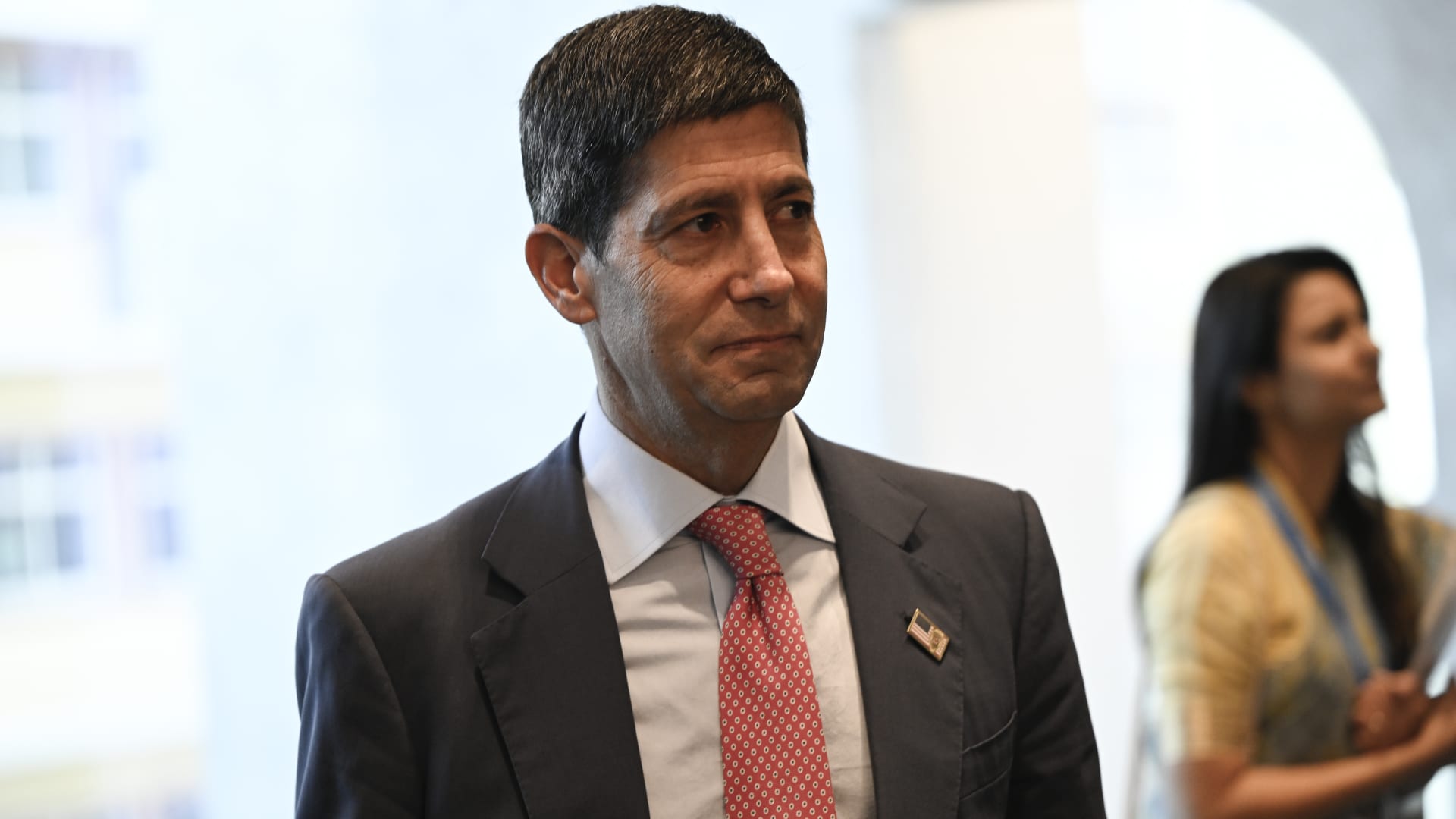
In Bangkok, Federal Reserve Chairman Kevin Warsh did not indicate if another interest rate increase will occur this month, while noting the coordinated tightening by central banks worldwide and the absence of free riders.
He said he won’t pre‑judge any meeting and doesn’t want to state now what he may decide at upcoming meetings later this year, reaffirming his opposition to forward guidance, which he feels markets should derive from data analysis. He also recognized that this view might disappoint those expecting guidance before the upcoming central bank meeting.
“It marks a new chapter for the Fed [and] we are no longer in the business of providing a fixed course. We can move in any direction you prefer,” he added.
Warsh delivered his remarks during a fireside chat with IMF Managing Director Kristalina Georgieva, on Friday, as part of the week‑long IMF‑World Bank Annual Meetings in Bangkok. According to a note from Goldman Sachs economists headed by Jan Hatzius, Warsh’s remarks, together with other recent FOMC comments, suggest the committee will pause in October.
“We still anticipate a second and final rate hike in December.” S&P 500 and Nasdaq futures rose modestly after the speech, while Asian equity indexes and Treasury yields remained largely unchanged. Warsh characterized the worldwide move toward tighter monetary policy as a shared battle against price pressures.
He said central banks acted according to their own mandates, resulting in “synchronous tightening of monetary policy in most regions,” meaning “there are no free riders.” Rising energy prices driven by the Iran conflict and the AI investment surge are fueling inflation and raising borrowing costs globally, even as world public debt is projected to surpass 100% of GDP — a level not seen since the post‑World War II
era.
The U.S. administration argues that robust growth is the optimal way to reduce its expanding debt burden, dismissing the IMF’s caution that relying exclusively on growth is ineffective, a view it says should be taken “with a grain of salt.” Warsh voiced optimism that AI will boost productivity and wealth for economies that adopt it wisely, while cautioning the path may be “very bumpy” and its short‑term impact on
jobs remains uncertain.
“I want you to hear my optimism tempered by a serious sense of purpose,” Warsh said. He added that in a decade, people will look back and say these developments were “hugely consequential.” The Fed lifted rates to a 3.75%‑4% range last month, its first increase since 2023.
Market participants assign a 72.3% probability that the Fed will hold rates steady at the Oct. 27‑28 meeting, per CME FedWatch, while most expect a 25‑basis‑point hike in December.
Technologies
Apple and Meta team up to make Muse AI model run on Mac computers
Apple and Meta are collaborating to make Muse Spark Open easier to run locally on clustered Mac Studio systems, according to the companies.

Tim Cook and Mark Zuckerberg have clashed for years, but with John Ternus taking the reins at Apple
Meta
The collaboration centers on Muse Spark Open, the most capable open-weight model released under a license that allows for limited commercial use, according to Meta. It’s an 816-billion-parameter model using a so-called mixture-of-experts architecture. As an open-weight model, developers can download the technology’s parameters, or weights, from the internet and run the model on a wide range of hardware.
Customers will be able to pair between two and four Mac Studio PCs to use Muse Spark to code, analyze video or do other agentic work. The model runs locally, instead of in the cloud, adding a layer of security and saving users money, the companies said.
Thursday’s announcement, following months of collaboration, is a sign that the AI boom has shifted historical alliances in Silicon Valley. For years, Apple and Meta regarded each other warily and avoided public partnerships, and the relationship hit rock bottom after Apple introduced privacy changes in 2021 that limited the targeting capabilities of digital ad companies.
Meta estimated in early 2022 that the change would cut its revenue that year by $10 billion.
Representatives from Apple and Meta declined to say if the Muse Spark Open collaboration was the start of a deeper relationship.
Zuckerberg posted a picture on X showing the Meta agent working on a Mac computer. He wrote, “Muse Spark Open — weights releasing today — runs great on new Mac Studios thanks to work with @johnternus and Apple.”
Ternus responded, “Congrats to the team! Amazing to run a model of Muse Spark Open’s caliber and scale this efficiently, right from your desk. Mac Studio keeps pushing the boundaries of on-device AI!”
Meta AI chief Alexandr Wang said in an interview that many powerful open-weight models are too big to be run on the majority of personal computers, but Apple’s Mac Studios make enough memory available to users so that it’s practical to run Muse Spark Open.
The move represents an important show of confidence in Meta’s rebooted AI efforts and could pose a challenge to OpenAI and Anthropic. It could also signal Apple’s growing strength in AI chips, a market that Nvidia
″We worked with Apple to bring leading Agent capabilities to your desktop for the first time on the Apple M5 Ultra Mac Studios, so you know we’re really excited about this,” Wang said. Developers can download a version of the AI model from websites like Hugging Face without extra configuration for Apple’s silicon.
Muse Spark Open has also been tuned to run faster on Apple’s hardware, and the iPhone maker revealed new benchmarks for its chips and published technical documentation about its MLX AI framework’s ability to split open-source models across multiple machines.
Mac Studios aren’t cheap though, and this AI model requires the fastest Apple chips and as much memory as possible.
Currently, a Mac Studio with the required M5 Ultra chip and 256GB of memory costs at least $10,799. A more expensive version with 512GB of RAM will be released later this month.
Plus, users will need to buy multiple machines.
Common ground on open source
The two companies are collaborating on open-source AI, which has become a point of contention in Washington as politicians worry that free Chinese models could undercut American AI.
Although Meta once centered its AI strategy on its older open-weight Llama family of models, it has since focused on creating proprietary models under the leadership of Wang, who joined Meta when the company invested more than $14 billion into his former startup Scale AI last year.
While Apple and Meta, then known as Facebook, partnered on iPhone extensions over a decade ago, they haven’t struck any public partnerships since 2017 after Apple removed system-level Facebook integration from the iPhone.
“Most of the animosity predates my tenure at the company, but obviously there’s been a long history between Meta and Apple,” Wang said, pointing to one member of his team, AI researcher and former Apple director Daniel Gross, as a reason for the collaboration. Gross, along with former GitHub CEO Nat Friedman, was a major Zuckerberg hire last year as the Facebook founder was overhauling his company’s AI strategy.
Their leaders have also traded harsh words.
Cook, who was Apple CEO until Ternus succeeded him last month, took a shot at Zuckerberg in 2018, during the Cambridge Analytica scandal, saying, “I wouldn’t be in this situation.” Cook often criticized Meta for compromising user privacy.
Ternus, a hardware engineer, has already started changing things at Apple, including when it releases products.
And Meta’s developers haven’t been able to resist Apple’s products. The company bought hundreds of Mac computers so its Superintelligence team could experiment with local AI and agents earlier this year.
Apple’s multiple partners
Meta is just the latest AI model developer to team up with Apple.
In 2024, Apple announced a partnership with OpenAI to integrate ChatGPT into Siri, although the integration “dramatically underperformed” and didn’t lead to OpenAI user growth, OpenAI said in a filing that’s part of a legal dispute with Elon Musk’s xAI. Apple sued OpenAI in July, alleging trade secret theft, a claim OpenAI denied.
Earlier this year, Apple announced a deal with Google
Still, Apple’s AI strategy has drawn criticism from investors and customers in part because its new version of Siri, released last month, isn’t as advanced as chatbots and agents from leading labs.
Meanwhile, Meta has bet big on becoming a leading lab but has struggled to keep up with the competition and its business remains almost entirely reliant on ads. Recent developments, such as Meta’s Muse personal agent app and its latest proprietary foundation model, Muse Wonder, released earlier this week, have begun to excite investors who are optimistic about new AI business opportunities.
Open source remains part of Zuckerberg’s AI strategy. In August, Meta debuted a small open-weight AI model dubbed Muse Glimmer, with Zuckerberg pledging to eventually release something bigger and more powerful.
Muse Spark Open isn’t as advanced as Muse Wonder, a proprietary offering, but Wang said it’s good enough to potentially entice more coders to upgrade.
“These aren’t the most capable models that we’ve developed or released,” Wang said. “But we think that there will be a lot of companies and developers who sort of use this model and tinker with it at small scale and then seek to ramp up and scale up their usage.”
WATCH: Apple makes its biggest smart-home push yet under CEO John Ternus.
Technologies
CoreWeave credit default swaps hit distress levels as investors sour on AI debt
Signs of distressed deepened in CoreWeave on Thursday.
CoreWeave’s credit stress continued to spiral on Thursday amid a broader sell-off in AI-related names.
CoreWeave — a so-called neocloud company — has taken on more than $51 billion of debt and obligations to finance its AI infrastructure build-out. It’s now facing a rebellion from stock and bond investors as concerns mount about AI overspending and debt levels.
Yields on CoreWeave debt have continued to climb, with the yield to maturity on its 9.75% bond due in 2031 reaching 15.78%. Bond yields move inversely to prices. Meanwhile, the spread on its five-year credit default swaps, which are insurance against default, at one point soared above 1,140 basis points. It last stood at nearly 1,038 bps — a 16% week-over-week jump and 164% higher than a year ago.
Credit concerns are spreading into AI equities too. CoreWeave’s stock dropped during trading Thursday before recovering and closing 5.94% higher. The moved followed Wednesday’s 15.5% nosedive.
Other neocloud stocks were under similar pressure. Nebius also sank before climbing higher to close 1.29% and and Iren ultimately ended the day down less than 1%.
Anxiety about AI overspending is also spreading. For instance, shares of Micron Technology and Advanced Micro Devices sold off following a big sell-off in South Korean chip stocks. Micron closed up 1.87%, while AMD fell 1.5%.
While AI debt worries have been rising steadily, investors have suddenly grown skittish about the underlying finances of companies borrowing heavily to buy chips, build data centers, and rent out computing power.
Coreweave’s credit default swaps are one place to see that stress.
Credit default swaps are contracts where buyers pay for protection in case the borrower can’t repay its debt. The spread widening in CoreWeave’s CDS means investors view the debt as riskier.
The market is “basically saying ‘no mas’ to AI debt without operating cash flow support,” the Evercore ISI trading desk said.
A spread level of 1,000 basis points or above is generally a sign of credit distress, said Gavan Nolan, executive director of fixed income pricing at S&P Global Market Intelligence.
No one is questioning whether demand for CoreWeave’s services is real, since the company has contracts with all the big hyperscalers, Nolan said. The question is whether the cash flows will ultimately arrive.
“It’s obviously heavily negative free cash flow at the moment, and it needs that cash flow to arrive really to justify all the capex that it’s spending,” Nolan said.
‘Self-fulfilling prophecy’
CEO Mike Intrator dismissed the market moves on Wednesday, according to a memo obtained by CNBC.
“When you are building a new type of technology company there will be periods of time when the market misunderstands and acts irrationally,” he wrote. “We are confident in our backlog which more than supports all of our debt obligations.”
The backlog is over $100 billion, with around two-thirds of it with investment-grade counterparts including Microsoft, Meta, IBM and Caterpillar, Deutsche Bank said in a note Thursday. The firm reiterated its buy-rating on the stock Wednesday, calling the dislocation a buying opportunity.
“The problem is this kind of concern can prove to be a self-fulfilling prophecy, and risks triggering broader issues in other AI-related names,” said Jim Reid, global head of macro and thematic research.
Domino effects may already be happening. Oracle’s five-year CDS spread also spiked this week. It was last at 282 basis points, a roughly 10% increase in one week.
“A downgrade from its BBB rating would risk pressuring IG-only investors into forced sales,” Reid said.
-
 Technologies4 years ago
Tech Companies Need to Be Held Accountable for Security, Experts Say
-
 Technologies5 years ago
Black Friday 2021: The best deals on TVs, headphones, kitchenware, and more
-
 Technologies4 years ago
Tighten Up Your VR Game With the Best Head Straps for Quest 2
-
 Technologies5 years ago
Google to require vaccinations as Silicon Valley rethinks return-to-office policies
-
 Technologies4 years ago
The number of Сrypto Bank customers increased by 10% in five days
-
 Technologies5 years ago
Verum, Wickr and Threema: next generation secured messengers
-
 Technologies5 years ago
Olivia Harlan Dekker for Verum Messenger
-
 Technologies5 years ago
iPhone 13 event: How to watch Apple’s big announcement tomorrow