
Technologies
Will the iPhone 15 Have USB-C? Everything We Know So Far
There are still plenty of questions about how Apple will handle the iPhone’s switch to USB-C.
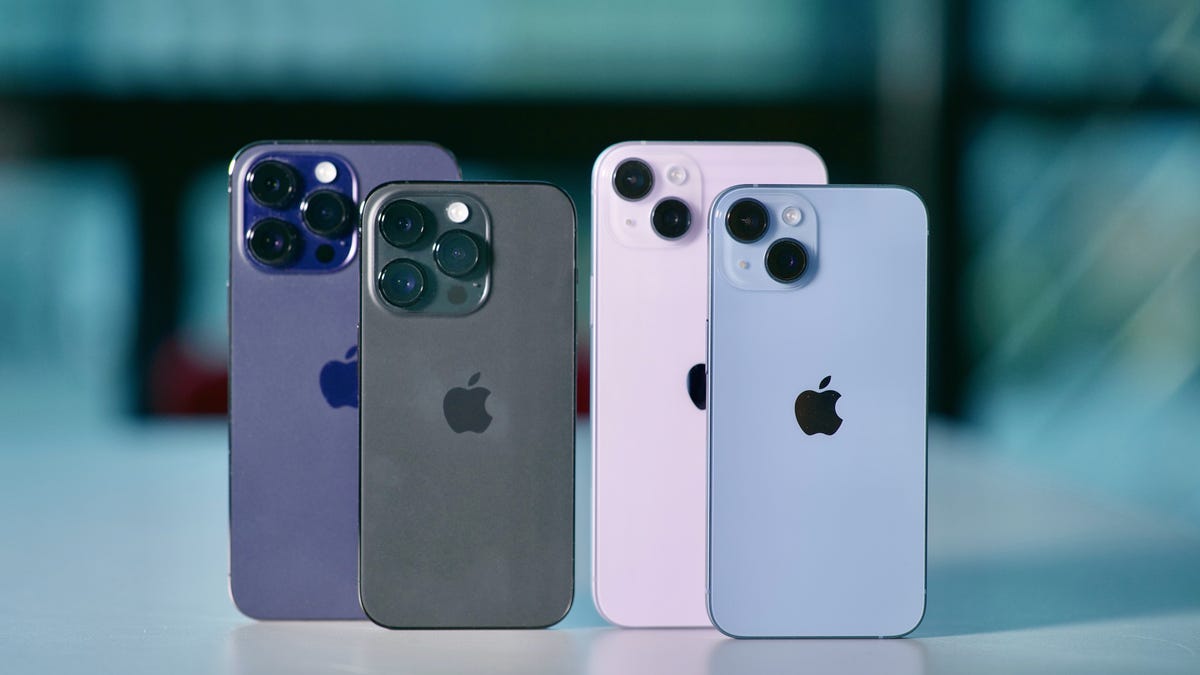
For the first time in more than a decade, you might need a different charger for your iPhone. Apple executives said the company plans to comply with European rules mandating that new phones all use the same common USB-C charging port. Most phones already use USB-C, with Apple being the main outlier.
When asked if Apple will move to USB-C, Greg Joswiak, Apple’s senior vice president of worldwide marketing, said the company has «no choice.» Apple will «comply with local laws» as it does around the world, Joswiak said during an appearance at The Wall Street Journal Tech Live conference in October.
That said, there’s still a lot we don’t know about how Apple will execute the transition to USB-C for the iPhone. Apple rarely discusses new products before announcing them, meaning we don’t have much insight on details like whether all new iPhones will get USB-C, or just those sold in Europe.
Apple declined to share further details regarding future plans to bring USB-C to the iPhone.
Will the iPhone 15 have a USB-C charging port?
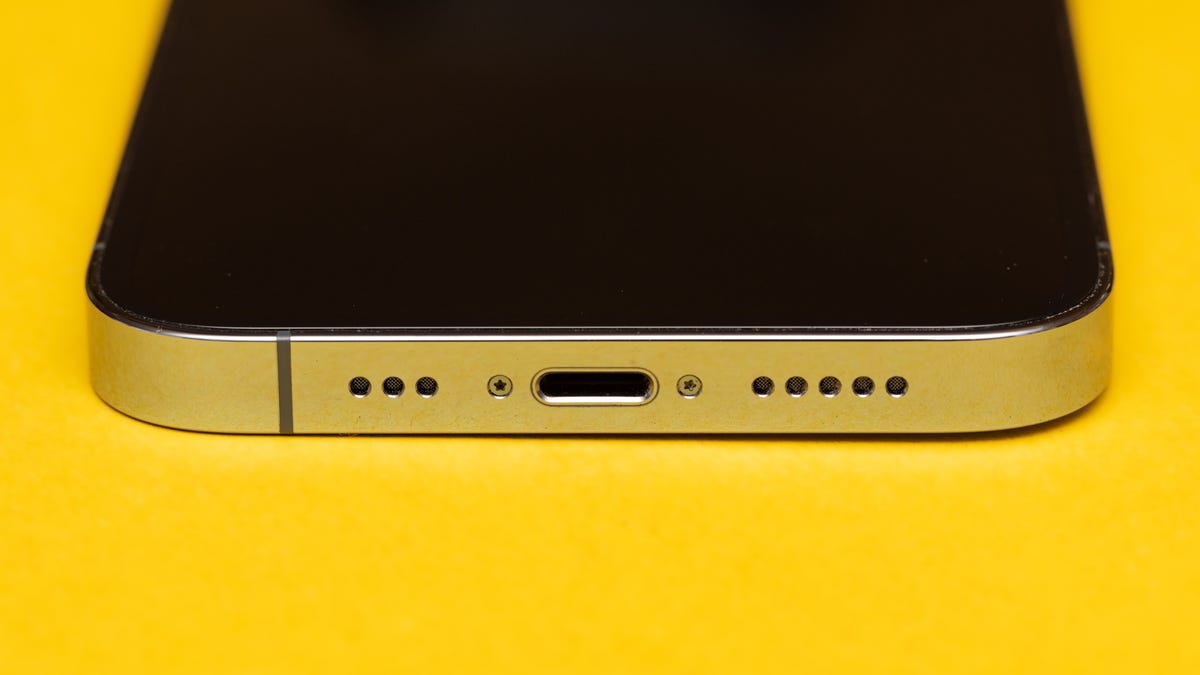
Today’s iPhones use the Lightning port to charge.
Stephen Shankand/CNETThere’s a chance the iPhone 15 could have a USB-C port instead of the Lightning connector, but it’s impossible to know until Apple releases its next iPhone. The EU’s rules say all mobile phones sold in the EU will need to have a USB-C charging port by the end of 2024. That means it’s unclear whether Apple will start the transition in 2023 with what will presumably be the iPhone 15, or wait until 2024.
But Chiew Le Xuan, a research analyst for Canalys, thinks the switch could come sooner rather than later.
«What we think is that Apple will bring Type C to the iPhone 15 series,» he said. «So, similar to what they did for the iPads [and] the Macs: They sort of just transitioned the whole product line.»
Apple has reportedly tested iPhone models with USB-C in the past. Bloomberg reported last May that Apple was testing future iPhone models with USB-C, as well as an adapter that would enable these iPhones to work with Lightning connections. Ming-Chi Kuo, an analyst for TF International Securities known for his Apple predictions, also said Apple plans to convert the iPhone to USB-C in 2023.
It’s also worth noting that Apple is a member of the USB Implementers Forum, a nonprofit organization that was formed to further advance USB development and adoption.
What’s the reasoning behind the EU’s new rules?
The new mandate is part of an effort to simplify the charging experience for consumers and cut down on electronic waste.
«Under the new rules, consumers will no longer need a different charger every time they purchase a new device, as they will be able to use one single charger for a whole range of small and medium-sized portable electronic devices,» reads a European Parliament press release.
The shift is also meant to help cut down on the roughly11,000 metric tons (12,125 tons) of annual e-waste resulting from unused chargers in the EU, the release says.
Will all future iPhones adopt USB-C, or just those in Europe?
This is another question we won’t know the answer to until Apple releases future iPhone models. But Maurice Klahne, senior research analyst at Counterpoint Research, thinks it seems likely Apple will transition the iPhone to USB-C more broadly rather than keeping it region-specific.
«It’s just simply too costly to make different devices for different regions,» he said. «And so Apple will likely make the switch everywhere all at once.»
What benefits does USB-C offer over Lightning?
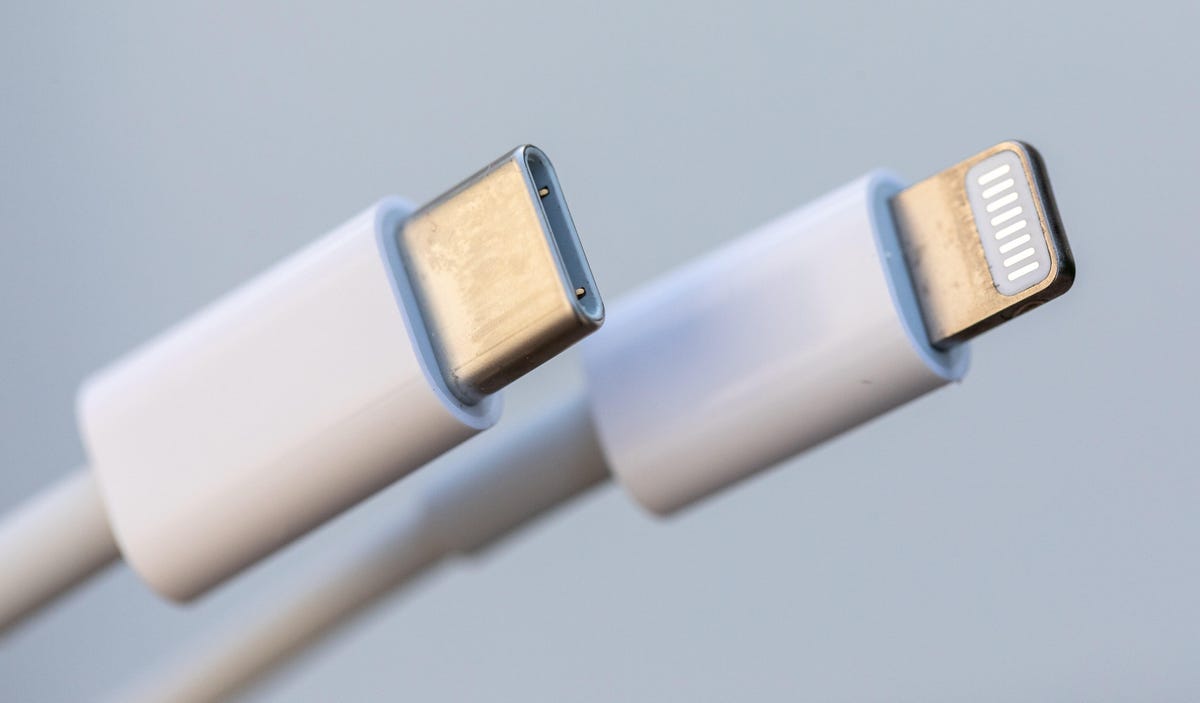
The transition to USB-C could result in more perks and conveniences for iPhone owners. For example, you’d be able to use the same charger that powers other devices, like your MacBook laptop or iPad, to charge your iPhone. There’s also a broad accessory ecosystem for USB-C, considering it’s been standard on most electronics for the better part of the last decade. Plenty of Apple’s own products already rely on USB-C rather than Lightning, such as the iPad Air, iPad Pro and Apple’s lineup of MacBooks.
It’s possible the switch to USB-C could result in faster charging and data transfers, specifically on the iPhone 15 Pro and Pro Max. Kuo has reported that only the iPhone 15 Pro and Pro Max will support high-speed data transfers over USB-C, for example.
Le Xuan agrees, saying Apple will likely do more to separate the regular iPhone 15 from its premium sibling this year.
«By then moving into a Type C switch, we will probably see some sort of differentiation between the Pro and Pro Max and the non-Pro Max in terms of charging speeds,» he said.
Will I need an Apple-specific USB-C cable?
You shouldn’t need an Apple-made cable to charge your iPhone when Apple makes the switch to USB-C. After all, that would defeat the purpose of the EU’s push toward a universal charging cable.
But the company could potentially make it so that Apple-certified USB-C cables offer benefits over noncertified alternatives. Kuo, for example, reports that Apple will likely optimize chargers that are part of the company’s MFi certification program to offer faster charging speeds. This follows a leak from ShrimpApplePro (who also leaked the Dynamic Island’s design early), which says cables without an MFi certification will be limited in charging and data transfer speeds.
Apple hasn’t spoken about its plans for the iPhone 15 or future USB-C charging cables beyond the comments made at The Wall Street Journal’s conference. But a move like this could help Apple boost its accessory ecosystem by maintaining some level of exclusivity as it embraces the switch to a universal iPhone charger.
«Even though their walled garden isn’t as walled anymore,» said Klahne, «they can still make these little adjustments to keep their iOS base more walled off from the general Android market.»
Apple is expected to announce the iPhone 15 lineup in the September timeframe during its usual annual product launch event. Other than USB-C charging, rumors suggest new solid-state buttons are coming to the Pro models, while the Dynamic Island is expected to expand to non-Pro versions.
Technologies
Google’s New AI Features Are Trying to Make Data Entry a Thing of the Past
More Gemini AI features will come to Google Docs, Sheets and Slides.
The latest batch of Google updates to its workspace tools highlights AI’s promise to automate mundanity in the workplace. Google Docs, Slides, Sheets and Drive all have new AI-powered features, the company announced Tuesday. The one thing all these updates have in common? Gemini is using your files, emails and chats to give you relevant information, not random answers gleaned from the web.
These updates come as AI is playing a bigger role in our work lives, for better or worse. Agentic tools like Claude Cowork and coding assistants like Anthropic’s Claude Code and OpenAI’s Codex are more capable than chatbots and able to handle tasks announced independently. AI tools are also becoming more customized, with Google’s personalized intelligence rolling out across its platforms to help refine AI outputs to things that are relevant and useful for you. Google continues that trend with this new batch of Workspace updates.
New Gemini AI features in Google Workspace apps will cite their sources after each query. For example, if you ask Gemini in Google Docs to fill out an itinerary template, it will pull the information from your email, chats and files. The «sources» tab in the Gemini side panel will show you where it found the information it used, like your flight confirmation email and chats discussing dinner plans. Seeing where Gemini pulled its answers from is also how you’ll double-check Gemini’s work.
The most impressive new features are in Sheets, where AI can fill in the holes in your spreadsheets. You can describe what you want the AI to do with a simple prompt and avoid writing an exact formula. You can click on an empty cell, select the pop-up that says «Drag to fill with Gemini,» then highlight the cells you want Gemini to fill in. That deploys an AI agent to search the web to fill each cell with the necessary information.
For example, if you have a spreadsheet of the contact info for local companies, you can have Gemini search the web to fill in a the location, CEO and other publicly available information of each company. The tool aims to dramatically reduce the time needed for manual data entry. Gemini can also summarize, categorize and create charts with prompts alone.
You can also chat with Gemini in Sheets and have it scour your raw data to make custom reports and charts. No need for pivot tables if they confound you as much as they baffle me. One of the biggest uses of AI at work is helping create presentations.
In Google Slides, you can now tell Gemini in natural language what you want to appear on a slide, and it will create it, matching the style of your existing slides. You can also ask Gemini to edit your slides if you don’t want to waste time painstakingly moving design elements around the slide. The AI should fill the slides with relevant information based on your instructions and the work files it has access to, so you shouldn’t need to replace a bunch of filler text.
If you use Docs, Sheets and Slides through the Workspace account of your company, then you won’t be able to turn off AI features individually. The managing company is in control of AI access for users. Personal users can tweak their settings to limit Gemini. The new features are rolling out in beta now, in English only, to Google AI Ultra and Pro subscribers in the US, as well as some Google Workspace customers who are part of the Gemini Alpha testing program.
For more, check out the new cowork feature in Copilot and how to use Perplexity AI for deep research.

Tariffs implemented by President Donald Trump were struck down by the Supreme Court last month. Companies that were subjected to those fees, such as FedEx and Dollar General, have since sued the federal government, and Nintendo wants a piece of the action.
Nintendo filed a lawsuit against the federal government in the US Court of International Trade on Friday, as first spotted by Aftermath. The complaint seeks refunds of tariffs Nintendo paid, plus interest, and asks the court to declare the tariffs unlawful and stop the government from collecting them going forward.
«Since February 1, 2025, President Trump has executed the unlawful Executive Orders, imposing tariffs on imports from a vast swath of countries,» Nintendo said in the complaint.
When reached for comment, Nintendo of America confirmed the lawsuit.
«We can confirm that we filed a request. We have nothing else to share on this topic,» Nintendo of America said in an emailed statement on Friday, March 6.
It’s unclear how much Nintendo paid in tariffs, and it did not state an amount in the lawsuit. While the Switch 2 was priced at $450 when it launched last year, and has stayed at that amount, Nintendo did increase the price of the original Switch and accessories for both consoles. Microsoft and Sony also increased the prices of their hardware and accessories last year due to tariffs.
The White House didn’t immediately respond to a request for comment.
On Feb. 20, the Supreme Court ruled by a vote of 6 to 3 that the sweeping tariffs Trump instituted last year exceeded his executive powers. Following the ruling, on the same day, Trump announced a new set of tariffs of 10% on imported goods that would last for 150 days, starting Feb. 24.
The decision on what to do with the collected tariffs — a reported $166 billion — has been left to the US Court of International Trade. Judge Richard Eaton told the US Customs and Border Protection on Wednesday, March 4, to refund the importers that were forced to pay tariffs, which is more than 330,000. On Friday, the CBP said it couldn’t easily issue tariff refunds because its system requires duties to be recalculated and refunds processed entry by entry. This process would involve tens of millions of transactions. The agency said it’s updating its systems and could start providing refunds by late April.
Technologies
Sony WF-1000XM6 vs. Samsung Galaxy Buds 4 Pro Earbuds: A Photo Finish
-
 Technologies3 года ago
Tech Companies Need to Be Held Accountable for Security, Experts Say
-
 Technologies3 года ago
Best Handheld Game Console in 2023
-
 Technologies3 года ago
Tighten Up Your VR Game With the Best Head Straps for Quest 2
-
 Technologies4 года ago
Black Friday 2021: The best deals on TVs, headphones, kitchenware, and more
-
 Technologies5 лет ago
Google to require vaccinations as Silicon Valley rethinks return-to-office policies
-
 Technologies5 лет ago
Verum, Wickr and Threema: next generation secured messengers
-
 Technologies4 года ago
Olivia Harlan Dekker for Verum Messenger
-
 Technologies4 года ago
iPhone 13 event: How to watch Apple’s big announcement tomorrow