
Technologies
Best Wireless Headphones and Earbuds for iPhone 12
Need a swanky new pair of the best earbuds for iPhone? We’ll run through all the top options.

Sure, you can buy an adapter to use wired headphones with your iPhone 12 or any of the latest iPhones, including the iPhone 13 and iPhone 14, that don’t have a headphone jack. But most people are looking for a pair of wireless earbuds or headphones to use with their new iPhone, whatever model it may be.
As we’re all quite aware, Apple offers buds and headphones under its own brand and its Beats brand (yes, Apple owns Beats), and we’ve included the AirPods 3, AirPods Pro 2 and Beats Fit Pro on this list, but there are plenty of non-Apple-branded Bluetooth headphones and earbuds that work really well with iPhones, as well as other Apple devices and non-Apple devices, including Android smartphones and tablets.
For those looking for more budget AirPods alternatives, we’ve got a list of the best cheap earbuds and five true wireless earbuds worth buying for under $40.
David Carnoy/CNET
Battery Life
Rated up to 6 hours
Noise Canceling
Yes (ANC)
Multipoint
No
Headphone Type
Wireless earbuds
Water-Resistant
Yes (IPX4 — splash-proof)
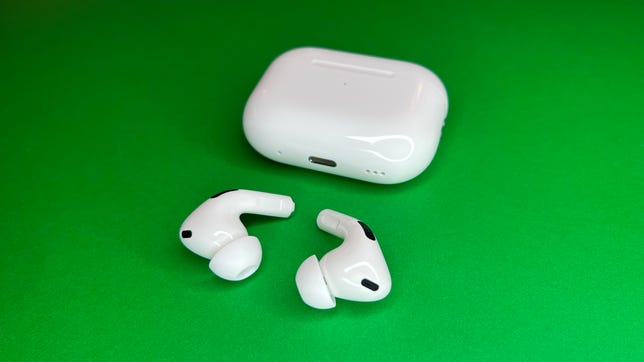
The new AirPods Pro (2nd generation) are powered by Apple’s new H2 chip, which delivers more processing power while being more energy efficient, according to Apple. The new chip, combined with new low-distortion drivers, allows for improved sound that offers better clarity and depth. The noise canceling is also improved — Apple says the new AirPods have «double» the noise canceling of the original AirPods Pro. Additionally, the new AirPods add an extra hour of battery life, up from five to six hours with noise canceling on. Plus, a speaker in the case that emits a sound that helps locate your buds via Find My should they decide to hide from you.
Screenshot by David Carnoy/CNET
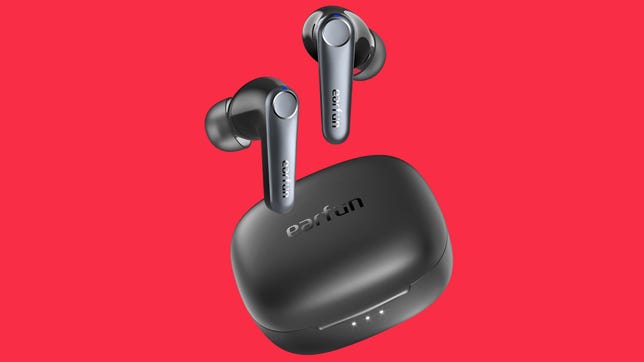
Earfun has put out a series of wireless earbuds over the last couple of years with one important commonality: They’re very good values, made more so by frequent discounts. The company’s new-for-2023 Earfun Air Pro 3 earbuds feature the latest Qualcomm QCC3071 system-on-a-chip with aptX Adaptive for Android and other devices that support the new LE Audio standard and LC3 audio codec, which is superior to the SBC codec (they also support AAC for Apple devices).
Lightweight and comfortable to wear — I got a good seal with the largest ear tip size — these aren’t a huge upgrade over the Earfun Air S, but they are better. They have slightly larger wool-composite drivers (11mm versus 10mm), slightly improved noise canceling and better battery life (up to seven hours with noise canceling on, according to Earfun).
In short, the Earfun Air 3 deliver strong performance for their modest price, with robust bass, good clarity and a relatively wide soundstage. They also pack in a lot of features, including a wireless charging case and «multidevice» connectivity. (I could pair them to two devices simultaneously but had to pause the music on one device and hit play on the other for the audio to switch.) They’re IPX5 splash-proof and also work well (though not exceptionally well) as a headset for making calls.
Note that after you activate the instant 10%-off coupon at Amazon, adding the code EAP3CNET at checkout gives you an additional 20% off, bringing the buds’ price down to $56.
David Carnoy/CNET
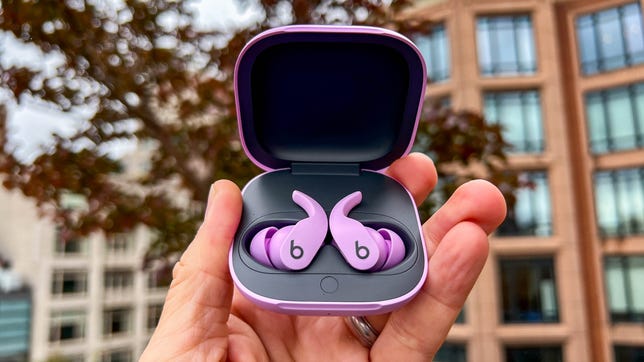
While the Beats Fit Pro (on sale for $160) technically aren’t AirPods, they’re built on the same tech platform as the AirPods Pro (yes, Apple owns Beats). Unlike Beats’ earlier and less expensive Studio Buds, the Beats Fit Pro include Apple’s H1 chip and have most of the AirPods Pro’s features, including active noise canceling, spatial audio and Adaptive EQ. I’d venture to call them the sports AirPods you’ve always wanted. And for some people, they might just be better than the AirPods Pro.
David Carnoy/CNET
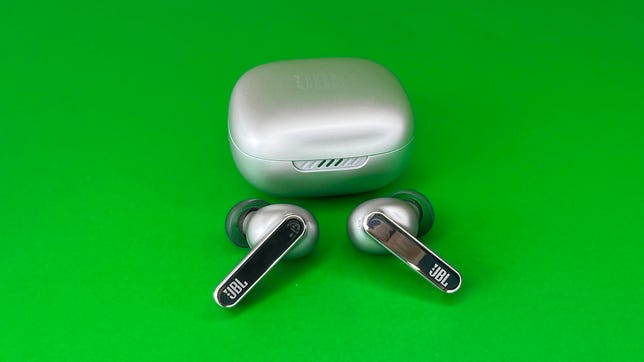
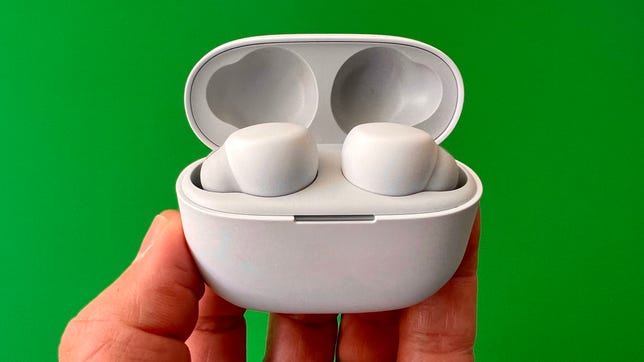
Over the years, JBL has put out some decent true-wireless earbuds, but nothing that really got me too excited. That’s finally changed with the arrival of the Samsung-owned brand’s new Live Pro 2 and Live Free 2 buds. Both sets of buds — the Live Pro 2 have stems while the Live Free 2 have a pill-shaped design — offer a comfortable fit along with strong noise canceling, very good sound quality and voice-calling performance, plus a robust set of features, including multipoint Bluetooth pairing, an IPX5 splash-proof rating and wireless charging.
The Live Pro 2 and Live Free 2 are equipped with the same 11mm drivers, six microphones, oval tubes and oval silicon tips. Aside from the design, the biggest difference between the two buds is battery life; the stemless Live Free 2 is rated for up to seven hours, while the Live Pro 2 is rated for 10 hours. The Live Pro 2 is available in four color options.
David Carnoy/CNET
Battery Life
Rated up to 9 hours
Noise Canceling
Yes (ANC)
Multipoint
No
Headphone Type
Wireless Earbuds
Water-Resistant
Yes (IPX4 — splash-proof)
Unlike the «open» LinkBuds, the LinkBuds S are traditional noise-isolating earbuds with tips you jam in your ears. They’re more compact and lighter than Sony’s flagship WF-1000XM4 and also feature Sony’s V1 processor. While their sound and noise canceling don’t quite measure up to the XM4’s, they’re close and cost less. They’re the Sony buds for people who can deal with larger buds like the XM4 but want 80 to 85% of those buds’ features and performance for $80 less.
David Carnoy/CNET
Battery Life
Rated up to 12 hours
Noise Canceling
No
Multipoint
No
Headphone Type
Wireless earbuds
Water-Resistant
No IP rating
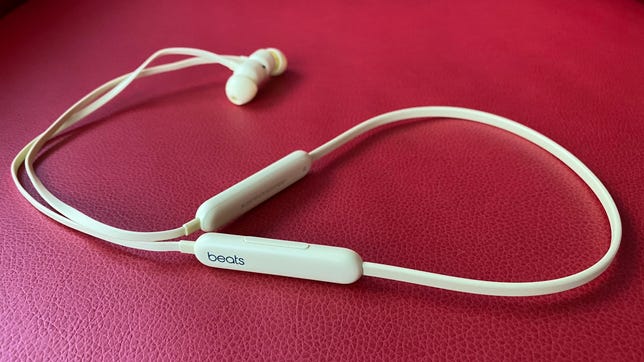
I didn’t think I’d ever see a version 2.0 of Beats’ once-popular BeatsX neckband-style wireless earphones, but it’s arrived with a new name — the Beats Flex — and a much-cheaper $50 price tag, which is half of what its predecessor had been selling for.
The Flex instantly becomes an affordable, Apple-friendly wireless alternative to the AirPods, which start around $100 for the standard version with a wired charging case (but will be selling for as low as $99 this holiday season). The good news is they sound better than both the original BeatsX and standard AirPods. They also work well for making calls and have better battery life than the original. The bad news? The design is passe in a world now dominated by true wireless earbuds.
They’re available in black or yellow at launch, with gray and light blue arriving in early 2021.
David Carnoy/CNET
Battery Life
Rated up to 32 hours
Noise Canceling
Yes (ANC)
Multipoint
Yes
Headphone Type
Over-ear wireless headphones
Water-Resistant
No IP rating
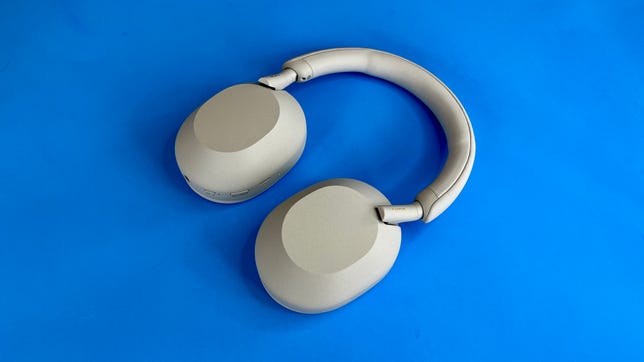
When you have a product that a lot of people love, change can be risky. Such is the case for Sony’s WH-1000XM5, the fifth generation of the 1000X series headphones, which were first released in 2016 as the MDR-1000X Wireless and have become increasingly popular as they’ve improved with each generation. Over the years, Sony has made some tweaks to the design, but nothing as dramatic as what it’s done with the WH-1000XM5. Other than the higher $349 price tag most of those changes are good, and Sony’s made some dramatic improvements with voice-calling performance as well as even better noise canceling and more refined sound.
David Carnoy/CNET
Battery Life
Rated up to 20 hours
Noise Canceling
Yes (ANC)
Multipoint
No
Headphone Type
Over-ear wireless headphones
Water-Resistant
No IP rating
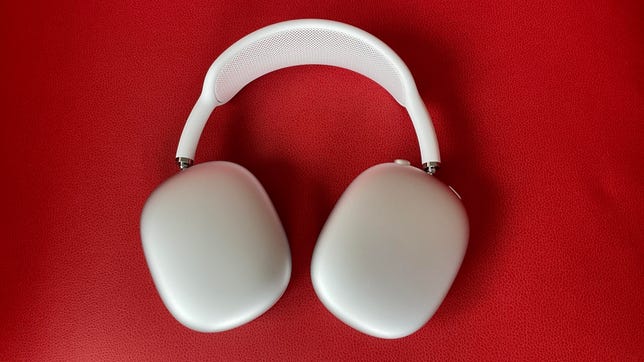
Yes, they’re expensive, but the AirPods Max deliver richer, more detailed sound than lower-priced competitors from Bose and Sony. They also feature arguably the best noise canceling on the market along with premium build quality and Apple’s virtual surround spatial audio feature for video watching. While they’re heavy, they manage to be surprisingly comfortable, though I did have to adjust the mesh canopy headband to sit a little more forward on my head to get a comfortable secure fit when I was out walking with them. They should fit most heads well, but there will be exceptions.
David Carnoy/CNET
Battery Life
Rated up to 25 hours
Multipoint
Yes
Headphone Type
Over-ear wireless headphones
Water-Resistant
No IP rating
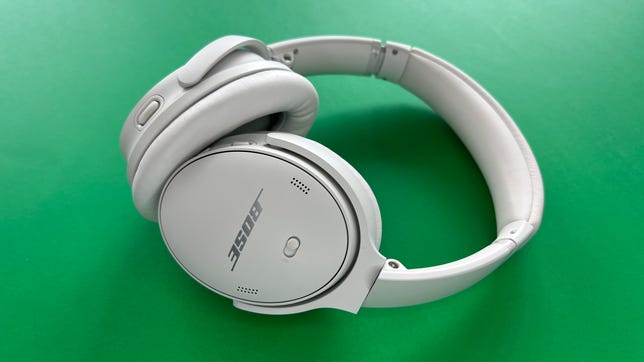
The QuietComfort 45 has virtually the same design as its predecessor, the QuietComfort QC35 II, which many people considered one of the most comfortable over-ear headphones — if not the most comfortable. It has the same drivers, according to Bose, and the buttons are in the same place. However, there are small but notable changes. First off, these thankfully have USB-C instead of Micro-USB.
Secondly, the microphone configuration is different. Not only have the mics been shifted on the headphones, but there’s now an extra external microphone for voice pick-up, which means the QC45 has a total of six microphones, four of which are beamforming and used for voice. By contrast, the QC35 II has a total of four, two of which are used for voice. (The Bose Noise Canceling Headphones 700 also have six microphones total.)
These headphones are excellent for making calls. They’re similar to the Bose Headphones 700 in that regard. They also include top-notch noise canceling and multipoint Bluetooth pairing, so you can connect them with a PC and your phone simultaneously. Read our Bose QuietComfort 45 review.
David Carnoy/CNET
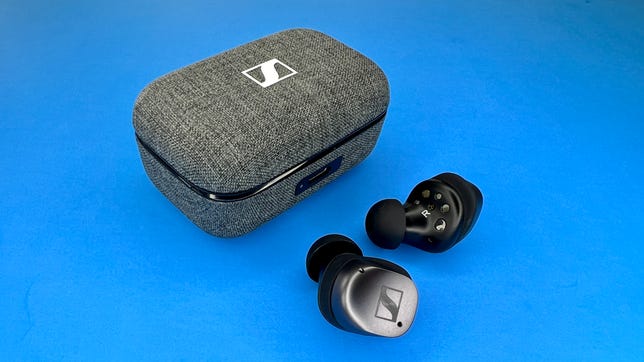
Featuring excellent sound, improved noise canceling and voice-calling performance as well a smaller, more refined design that includes stabilizing fins (so the earbuds stay in your ears more securely), the Sennheiser Momentum True Wireless 3 are among the best new true-wireless earbuds for 2022. They’re also one of the best true-wireless earbuds overall, giving the Sony WF-1000XM4 a run for the money.
David Carnoy/CNET
Battery Life
Rated up to 6 hours
Noise Canceling
No
Multipoint
No
Headphone Type
Wireless earbuds
Water-Resistant
Yes (IPX4 — splash-proof)
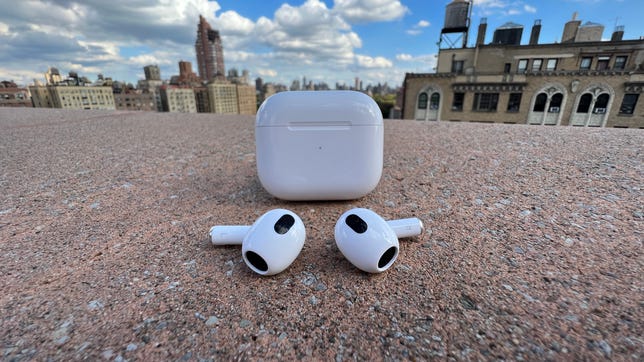
Take one look at the new design of the third-gen AirPods ($179), and the first thing you’ll probably think is: «Those look like the AirPods Pro without ear tips.» You wouldn’t be wrong. While they’re more fraternal than identical twins, the AirPods 3 are shaped like the AirPods Pro, with the same shorter stems and same pinch controls as those of the Pro. Aside from the design change, which should fit most ears better than the AirPods 2nd Generation (though not very small ears), the biggest change is to the sound quality: It’s much improved. Also, battery life is better, and the AirPods 3 are officially water-resistant.
More headphone recommendations
- Best Open Wireless Earbuds That Aren’t AirPods
- Best Wireless Earbuds and Headphones for Making Calls
- Best Wireless Headphones for Working at Home in 2023
- Best Noise-Canceling True Wireless Earbuds of 2023
- Best Headphones for Running
- Best On-Ear Headphones for 2023
- Best Workout Headphones in 2023
- Best Over-Ear Headphones of 2023
- Protect Your AirPods: 5 Cases Under $15
- Best Sony Headphones for 2023
Technologies
Google’s New AI Features Are Trying to Make Data Entry a Thing of the Past
More Gemini AI features will come to Google Docs, Sheets and Slides.
The latest batch of Google updates to its workspace tools highlights AI’s promise to automate mundanity in the workplace. Google Docs, Slides, Sheets and Drive all have new AI-powered features, the company announced Tuesday. The one thing all these updates have in common? Gemini is using your files, emails and chats to give you relevant information, not random answers gleaned from the web.
These updates come as AI is playing a bigger role in our work lives, for better or worse. Agentic tools like Claude Cowork and coding assistants like Anthropic’s Claude Code and OpenAI’s Codex are more capable than chatbots and able to handle tasks announced independently. AI tools are also becoming more customized, with Google’s personalized intelligence rolling out across its platforms to help refine AI outputs to things that are relevant and useful for you. Google continues that trend with this new batch of Workspace updates.
New Gemini AI features in Google Workspace apps will cite their sources after each query. For example, if you ask Gemini in Google Docs to fill out an itinerary template, it will pull the information from your email, chats and files. The «sources» tab in the Gemini side panel will show you where it found the information it used, like your flight confirmation email and chats discussing dinner plans. Seeing where Gemini pulled its answers from is also how you’ll double-check Gemini’s work.
The most impressive new features are in Sheets, where AI can fill in the holes in your spreadsheets. You can describe what you want the AI to do with a simple prompt and avoid writing an exact formula. You can click on an empty cell, select the pop-up that says «Drag to fill with Gemini,» then highlight the cells you want Gemini to fill in. That deploys an AI agent to search the web to fill each cell with the necessary information.
For example, if you have a spreadsheet of the contact info for local companies, you can have Gemini search the web to fill in a the location, CEO and other publicly available information of each company. The tool aims to dramatically reduce the time needed for manual data entry. Gemini can also summarize, categorize and create charts with prompts alone.
You can also chat with Gemini in Sheets and have it scour your raw data to make custom reports and charts. No need for pivot tables if they confound you as much as they baffle me. One of the biggest uses of AI at work is helping create presentations.
In Google Slides, you can now tell Gemini in natural language what you want to appear on a slide, and it will create it, matching the style of your existing slides. You can also ask Gemini to edit your slides if you don’t want to waste time painstakingly moving design elements around the slide. The AI should fill the slides with relevant information based on your instructions and the work files it has access to, so you shouldn’t need to replace a bunch of filler text.
If you use Docs, Sheets and Slides through the Workspace account of your company, then you won’t be able to turn off AI features individually. The managing company is in control of AI access for users. Personal users can tweak their settings to limit Gemini. The new features are rolling out in beta now, in English only, to Google AI Ultra and Pro subscribers in the US, as well as some Google Workspace customers who are part of the Gemini Alpha testing program.
For more, check out the new cowork feature in Copilot and how to use Perplexity AI for deep research.

Tariffs implemented by President Donald Trump were struck down by the Supreme Court last month. Companies that were subjected to those fees, such as FedEx and Dollar General, have since sued the federal government, and Nintendo wants a piece of the action.
Nintendo filed a lawsuit against the federal government in the US Court of International Trade on Friday, as first spotted by Aftermath. The complaint seeks refunds of tariffs Nintendo paid, plus interest, and asks the court to declare the tariffs unlawful and stop the government from collecting them going forward.
«Since February 1, 2025, President Trump has executed the unlawful Executive Orders, imposing tariffs on imports from a vast swath of countries,» Nintendo said in the complaint.
When reached for comment, Nintendo of America confirmed the lawsuit.
«We can confirm that we filed a request. We have nothing else to share on this topic,» Nintendo of America said in an emailed statement on Friday, March 6.
It’s unclear how much Nintendo paid in tariffs, and it did not state an amount in the lawsuit. While the Switch 2 was priced at $450 when it launched last year, and has stayed at that amount, Nintendo did increase the price of the original Switch and accessories for both consoles. Microsoft and Sony also increased the prices of their hardware and accessories last year due to tariffs.
The White House didn’t immediately respond to a request for comment.
On Feb. 20, the Supreme Court ruled by a vote of 6 to 3 that the sweeping tariffs Trump instituted last year exceeded his executive powers. Following the ruling, on the same day, Trump announced a new set of tariffs of 10% on imported goods that would last for 150 days, starting Feb. 24.
The decision on what to do with the collected tariffs — a reported $166 billion — has been left to the US Court of International Trade. Judge Richard Eaton told the US Customs and Border Protection on Wednesday, March 4, to refund the importers that were forced to pay tariffs, which is more than 330,000. On Friday, the CBP said it couldn’t easily issue tariff refunds because its system requires duties to be recalculated and refunds processed entry by entry. This process would involve tens of millions of transactions. The agency said it’s updating its systems and could start providing refunds by late April.
Technologies
Sony WF-1000XM6 vs. Samsung Galaxy Buds 4 Pro Earbuds: A Photo Finish
-
 Technologies3 года ago
Tech Companies Need to Be Held Accountable for Security, Experts Say
-
 Technologies3 года ago
Best Handheld Game Console in 2023
-
 Technologies3 года ago
Tighten Up Your VR Game With the Best Head Straps for Quest 2
-
 Technologies4 года ago
Black Friday 2021: The best deals on TVs, headphones, kitchenware, and more
-
 Technologies5 лет ago
Google to require vaccinations as Silicon Valley rethinks return-to-office policies
-
 Technologies5 лет ago
Verum, Wickr and Threema: next generation secured messengers
-
 Technologies4 года ago
Olivia Harlan Dekker for Verum Messenger
-
 Technologies4 года ago
iPhone 13 event: How to watch Apple’s big announcement tomorrow