Technologies
iOS 16.4 Is Out. How to Download the Latest iPhone Update
Added features include new emoji, voice isolation for better cellular calls, Safari website notifications for the lock screen and more.
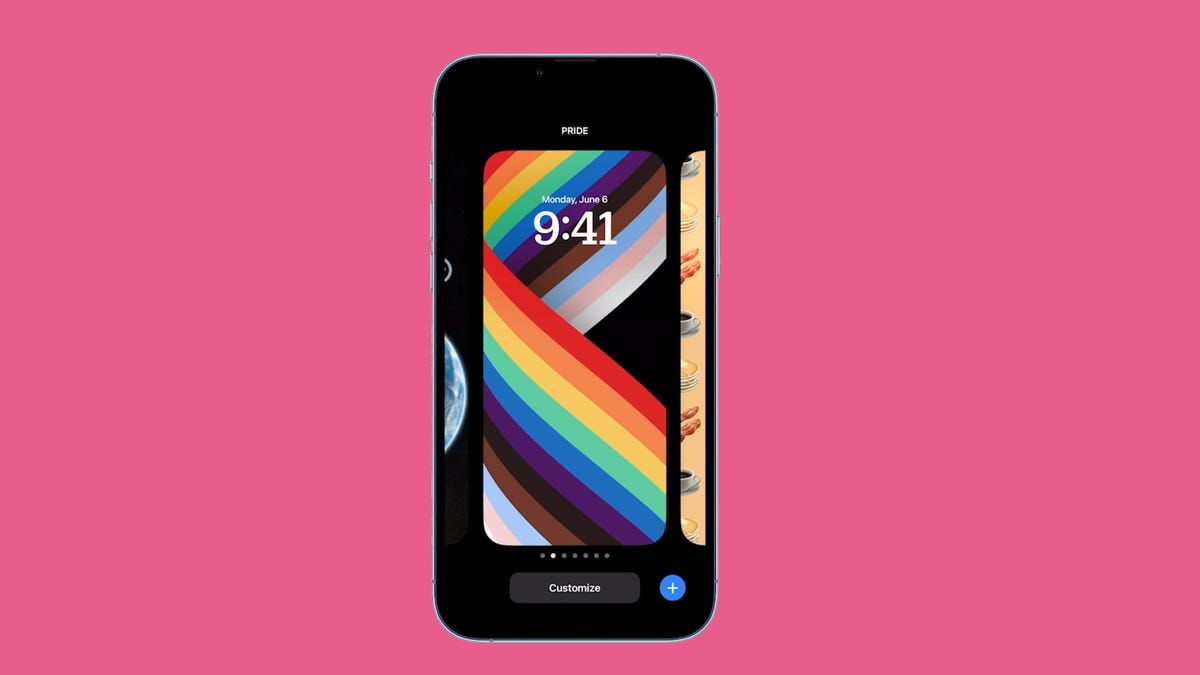
This story is part of Focal Point iPhone 2023, CNET’s collection of news, tips and advice around Apple’s most popular product.
Apple has just released iOS 16.4. The latest software update for the iPhone brings several new features to iOS 16, including 21 new emoji, including the pea pod, light blue heart and jellyfish, and voice isolation for cellular phone calls, which blocks out ambient noises to make your voice clearer.


iOS 16.4 also adds Safari-based push notifications, duplicates album support for the iCloud Shared Photo Library, crash detection optimizations for the iPhone 14 series, VoiceOver support for maps in the Weather app, bug fixes, security updates and more.
Read on for a step-by-step guide to the process of putting iOS 16.4 on your compatible iPhone. You can also check out some of the best existing features on iOS 16 and a few hidden features we were surprised to find. And if you recently got a new iPhone, here are the best iPhone 14 cases so far.
Before you start, is your iPhone even compatible?
Not every iPhone will receive the iOS 16.4 update. You need at least an iPhone 8, which was released back in 2017, to run iOS 16. That also includes the iPhone X, iPhone 11, iPhone SE (second generation and up) and the new iPhone 14.
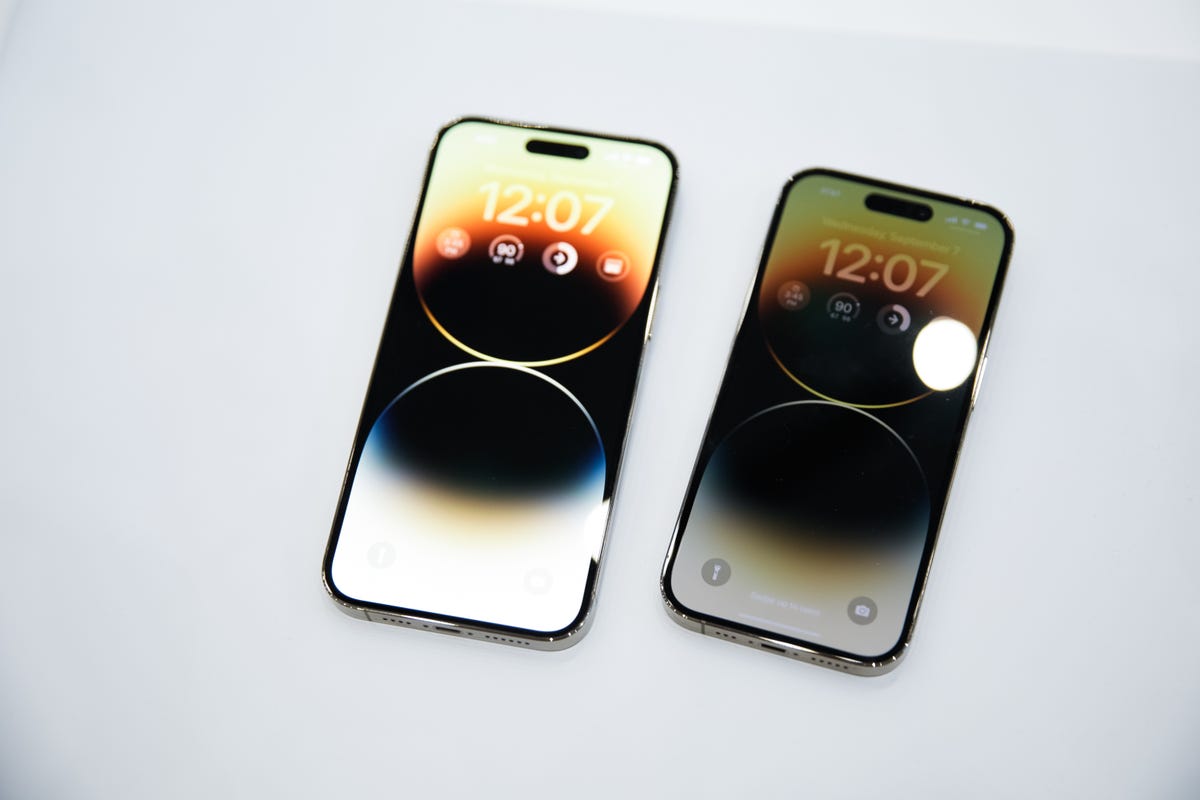

The iPhone 14 comes preinstalled with iOS 16.
James Martin/CNETNext, back up your iPhone
Getting your hands on new software can be exciting, but there are precautions you should take before updating. You may not be happy with some of the features that iOS 16.4 has to offer (although you can fix some of the most annoying ones), so you need to be able to downgrade back to an earlier version of iOS 16 for whatever reason — and that requires you to back up your iPhone before you update.
By default, your iPhone should back itself up every time it’s connected to power and Wi-Fi during your regular sleep hours. However, if this backup feature is disabled, you can go to Settings > Your Name > iCloud > iCloud Backup and then hit Back Up Now to back up your device.
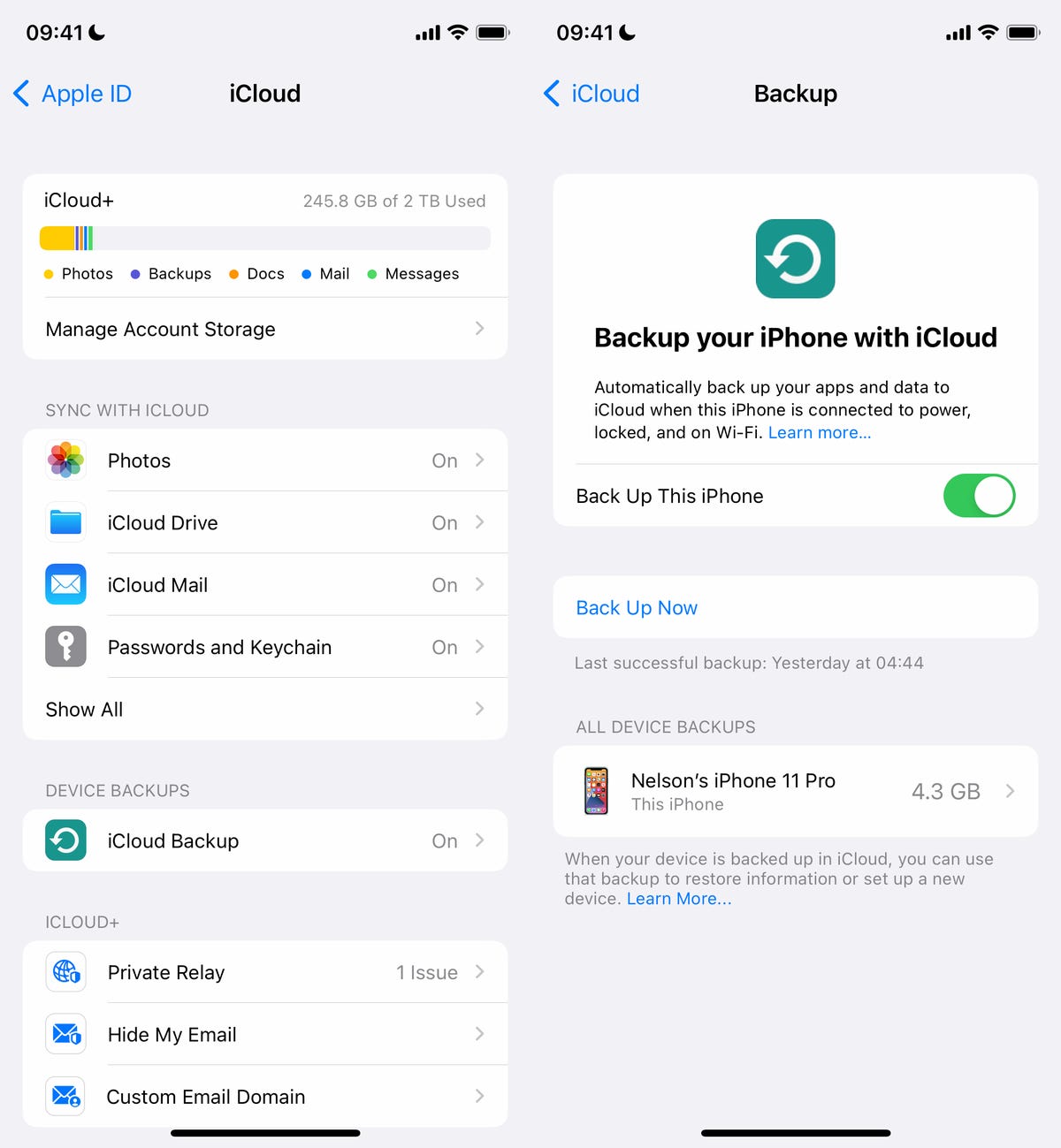

You can (and should) also back up your iPhone on your Mac.
Screenshot by Nelson Aguilar/CNETAdditionally, you can back up your iPhone via Finder on your Mac. Simply connect your device to your computer, open Finder, choose your device and then create a backup. Apple also recommends archiving your backup, so that it’s not overwritten by other backups.
Also, make sure to do these three things
You want the download and installation process to go as smoothly as possible, and the best way to do that is to do the following:
- Make sure your iPhone is connected to power. You won’t be able to download iOS 16.4 if you’re under 50% battery, so it’s best to just plug in your phone while you update. And even when you’re plugged in, the battery needs to be over 20%.
- Connect to Wi-Fi. You also won’t be able to download iOS 16.4 with cellular data, so connect to a stable Wi-Fi network.
- Clear up enough storage space. If you’re running out of storage, you’ll need to clear some up before you can download and install iOS 16.4. Go to Settings > General > iPhone Storage to delete large files and apps.
Here’s our guide on how to get more iPhone storage.
How to download and install iOS 16.4
Now once you have all that set, open your iPhone and go to Settings > General > Software Update, wait a few seconds (or minutes) for the update to appear and then hit Download and Install for iOS 16.4.
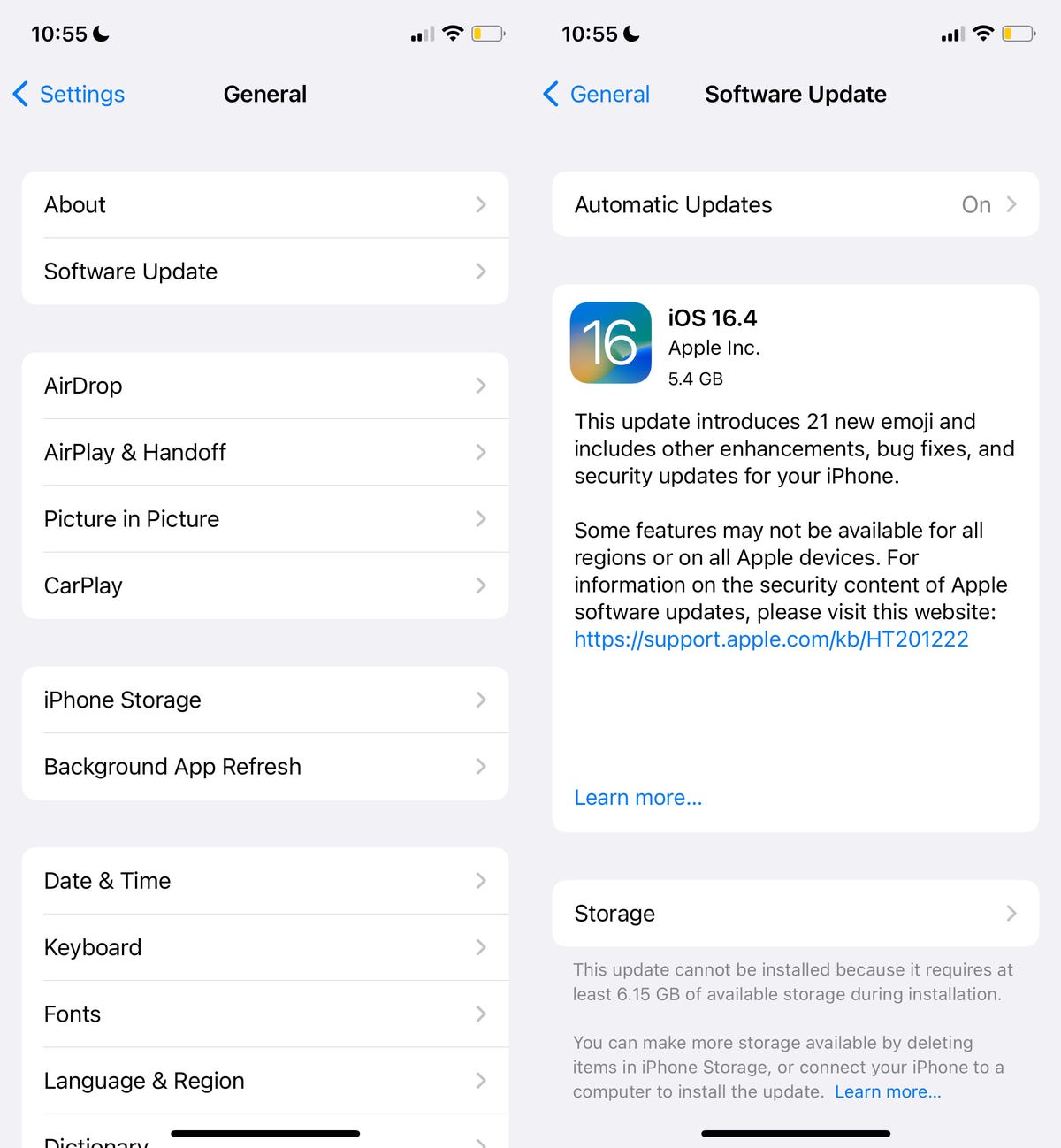

You can also use Finder on your Mac to download iOS 16.4 on your iPhone.
Nelson Aguilar/CNETYou should then see a loading bar, along with a rough estimate of how long the download process will take. Once the download is complete, reboot your device and wait for iOS 16.4 to install. When your iPhone boots up, follow any prompts and you should then see iOS 16.4 downloaded on your device.
For more on the new OS, here’s a look at our iOS 16 cheat sheet and some of the most annoying features and settings on iOS 16 (and how you can fix them).
Technologies
Christmas Eve Gaming Crushed as Steam Goes Offline
Services related to the popular game hub seem to slowly be returning as of Wednesday afternoon.
Your Christmas Eve gaming session might not go as planned. Online gaming hub Steam went down on Wednesday. As of about 1:30 pm PT, the Steam store page was once again accessible, so services seemed to be coming back online.
The Steam outage appeared to begin mid-afternoon ET, according to Downdetector, which monitors site outages. (Disclosure: Downdetector is owned by the same parent company as CNET, Ziff Davis.)
A representative for Steam did not immediately respond to a request for comment.
As of Wednesday noon PT, Steam’s official X and Bluesky accounts hadn’t posted anything about the outage.
Gamers certainly noticed. «Steam down, Steam down!!!» wrote one Bluesky user.
Others commented on the bad timing just as gamers were enjoying time off or receiving gaming gifts. «‘You got a gift on Steam!’ oh cool ‘Steam is down’ oh cool,» wrote another Bluesky user.
Technologies
Best Prepaid Phone Plans for 2025
Is the cost of an unlimited phone plan more than you need? A prepaid plan with fixed costs could be a better choice.
The big carriers offer phone plans with unlimited data, perks — and higher costs. But some people just need a fixed amount of data, or they want to avoid the long-term commitments that traditional postpaid plans carry. A prepaid plan from carriers like Mint Mobile or US Mobile could be a better fit.
MOBILE DEALS OF THE WEEK
-
$349 (save $450)
-
$749 (save $250)
What is the best prepaid phone plan?
We field this question a lot and it would be great to point to one prepaid plan and say, «Get this one.» But as you’ve no doubt discovered, phone plans involve many factors. Which major cellular network — AT&T, T-Mobile or Verizon, which together cover nearly all of the US — is strongest in your area? Do you need unlimited data? How many people will be on your plan? That said, we have some biases: We prefer unlimited plans to those that meter wireless data by the gigabyte, but we rarely go for those with the most features. So, for example, check out US Mobile Unlimited Flex for a single line and Google Fi Wireless Unlimited Standard for multiple lines. Those are good places to start and as you read through the rest of our picks you’ll hopefully narrow in on the features and prices that best suit your needs.
Don’t miss any of our unbiased tech content and lab-based reviews. Add CNET as a preferred Google source.
Best unlimited prepaid plans for a single line
Pros
- Runs on Verizon’s network for «Warp» service, AT&T’s for its «Dark Star» or T-Mobile’s for «Light Speed»
- 10GB high-speed data, then unlimited at slower speed
- Taxes and fees are included in the sticker price
- 5GB of hotspot data
Cons
- Limited times you can switch networks free
- The Multi-Network add-on is available only in the Unlimited Premium plan
- Phone data slows to 1Mbps after high-speed data is used up
- Cheapest rate requires annual purchase
With the three major carriers in the US, you’re using their infrastructure, and if there aren’t any high-speed towers in your area, you’re out of luck. By contrast, US Mobile calls itself a Super Carrier because, without a network of its own, it rides those three networks. They’re given special names — no doubt to avoid advertising for the competition — and they break down like this: Dark Star is AT&T, Warp is Verizon and Light Speed is T-Mobile.
That sounds convoluted but it means you can switch to a better network for your area if needed without transitioning to an entirely new carrier. You still need to choose one but you get two free network transfers and then pay $2 per transfer if you want to switch again after that — it’s a good way to see which one works best in your area.
OK, to be fair, it can get more convoluted, depending on the network. Dark Star data speeds are at a reduced priority (dubbed QCI 9) in times of network congestion; for an additional $12 a month you can bump that up to a higher priority (QCI 8). With the Warp level, data speeds are at QCI 9 as of Aug. 18, 2025, with the ability to pay more for a QCI-8 add-on; plans in place before then are grandfathered at the QCI 8 speed. The Light Speed level is even higher priority at QCI 7.
The Unlimited Flex plan gives you 10GB of high-speed data, then unlimited at 1Mbps, for just $17.50 a month if you purchase an annual plan (otherwise it’s $25 a month). Hotspot data is 5GB and then unlimited but throttled to 8Mbps and then 600Kbps if you use more than 200GB within a month. International calls and texts from inside the US are included, but if you’re traveling you’ll need to buy add-on roaming packages costing either $15 (1GB, 150 minutes, 150 texts) or $30 (5GB, 500 minutes, 500 texts).
Why we like it
It’s an inexpensive plan with taxes and fees rolled into the price, plus you get the ability to surf among the major carrier networks to find the one that works best for your area.
Who it’s best for
Someone looking for a simple phone line who doesn’t expect to use much data.
Who shouldn’t get it
If you’re frequently away from Wi-Fi, that data could go by in a hurry. It’s also not a great option if you need consistently high speeds or you don’t want the complexity of choosing one of the three networks.
Customer service options
• Online: US Mobile
• Phone: 878-205-0088
• Store: n/a
• App: US Mobile iOS, Android
Pros
- Runs on Verizon’s network
- Unlimited hotspot data
- Unlimited talk and text to Mexico and Canada
- Taxes and fees are factored into the sticker price
Cons
- Best pricing requires a full year commitment and limited to new customers
- No access to fastest 5G Ultra Wideband network
- Cheapest rate requires promo code and multi-month commitment
- No phone support, although the company touts 24/7 access to «human assistance» via chat
If Verizon’s network is strongest in your area, Visible by Verizon’s single-named Visible plan is a competitive option at $25 a month when paying monthly. You can cut that down to almost $22 by prepaying for an entire year at $275, but even that turns out to not be the best option. When you sign up for 26 months on the monthly plan as a new member, use code SWITCH26 at checkout to knock the price down to $19 a month. You need to stick with Visible for the full consecutive 26 months without switching plans to keep that rate or else it goes back to $25 (which is still cheaper than many competitors). (Visible swaps their discount codes on a regular basis, so check the site for the latest deals.)
For that price you get unlimited talk, text and data on Verizon’s 4G LTE and 5G networks but not at the fastest 5G Ultra Wideband speeds even if your phone supports it. Hotspot data is also unlimited but capped at 5Mbps speeds. Calls and texts to Mexico and Canada while you’re in the US are unlimited, too; if you’re traveling, Visible’s Global Pass costs $5 a day in Mexico, Canada, Puerto Rico and US Virgin Islands, or $10 a day for 2GB of data in more than 140 countries.
Why we like it
Unlimited data, even if it’s not at the highest 5G and hotspot speeds, is still worthwhile for the price.
Who it’s best for
Customers in strong Verizon coverage areas who want to save money.
Customer service options
• Online: Visible Help Center
• Phone: n/a, live chat only
• Store: n/a
• App: Visible iOS, Android
Best prepaid data plan for multiple lines and families
Pros
- Runs on T-Mobile’s network
- Can add Samsung or Google cellular smartwatches at no extra charge
- Includes hotspot data
- Free international calls to Mexico and Canada
Cons
- High-speed hotspot data counts toward monthly high-speed data use
- Taxes and fees not included
- No international data
Looking at the Google Fi Wireless plans, the Ultimate Essentials stands out for a group of four lines by coming in at $90, or just $23 per person for a month (plus taxes and fees). That’s the inexpensive pick but not necessarily the value choice. For just $10 more at $100 for four lines, the Unlimited Standard plan includes 50GB of high-speed data, 25GB of hotspot tethering and free calls to Canada and Mexico for each line. On compatible phones, you get 5G access for unlimited talk and text, which is largely carried by T-Mobile’s network.
Not so great is the drop-off of data speeds after you’ve exhausted the 50GB of high-speed data — then the service crawls at 256kbps for the rest of the month. You can pony up $10 per gigabyte to get back into the fast lane if needed but that can get expensive real quick. Also, that 25GB of high-speed hotspot data counts toward the 50GB of fast data.
Why we like it
Compared with similarly priced prepaid plans by Metro or Cricket, Google Fi Wireless comes out ahead at the same price with its 50GB of high-speed data and hotspot feature.
Who it’s best for
It’s an affordable plan for a family with average data needs.
Who shouldn’t get it
People who frequently stream video or primarily use cellular data instead of local Wi-Fi.
Customer service options
• Online: Google Fi Wireless
• Phone: 844-825-5234
• Store: n/a
• App: Google Fi
Best prepaid plans for perks
Pros
- Runs on T-Mobile’s network
- 25GB hotspot data
- Amazon Prime included
- 5-year price guarantee
- Taxes and fees are factored into the sticker price
Cons
- No streaming video option other than Prime Video included with the Amazon Prime membership
The Metro $60/mo with AutoPay prepaid plan is the most expensive unlimited option from the T-Mobile owned service, but it’s also where most of the perks live. If you’re in an area where T-Mobile offers the best signal, this plan has a lot to tempt you. (Metro abandoned its previous naming scheme in favor of titling its plans based on the cost; this one used to be called the Metro Flex Unlimited Plus.)
First, the basics: For $60 a month for a single line or $140 a month for four lines (with a fourth line free deal), you get unlimited 5G data, unlimited talk and text and 25GB of hotspot data. That 5G data will be throttled if you burn through more than 70GB a month, but you won’t be capped. The plan also has T-Mobile’s 5-year price guarantee that covers talk, text and data.
In terms of perks, we chose to highlight this plan for a couple of reasons. It includes Amazon Prime, typically a $15 a month charge, as well as a 100GB Google One membership (a $2 a month value), along with T-Mobile Tuesdays and the company’s Scam Shield service for filtering unwanted calls and texts. Aside from Amazon Prime video, no other streaming services are bundled in. If you already have a cellular-capable smartwatch or tablet, you can add it for $5 a month.
Granted, these perks appeal to a narrow slice of customers — T-Mobile coverage, Amazon Prime and Google One — but if that fits your needs, it’s a good deal.
Why we like it
Amazon Prime is a big addition that can save $180 a year, plus perks like T-Mobile Tuesdays.
Who it’s best for
People in a strong T-Mobile coverage area that also subscribe to Amazon Prime.
Who shouldn’t get it
If you’re in an area where Verizon or AT&T networks give better performance, look for a different plan.
Customer service options
• Online: Metro Support
• Phone: 1-888-8metro8 (863-8768)
• Store: Store locator
• App: Metro app
Pros
- Runs on Verizon’s network
- Unlimited hotspot data
- Disney Plus Premium included
- 5-year price guarantee
- Taxes and fees are factored into the sticker price
Cons
- Capped international roaming data amount
Surprisingly few prepaid plans offer many perks, presumably choosing to streamline options in order to reach the lowest price. If you’re looking for extras like streaming content, and you live in an area where Verizon’s coverage is strongest, look at the Total Wireless 5G Plus Unlimited prepaid plan.
This plan is the most expensive of the Total Wireless plans at $60 a month for a single line or $120 a month for four lines. But that’s less expensive than our other prepaid perks pick for four lines, Metro’s $60/mo with AutoPay (which becomes «$140/mo with AutoPay»), and it includes Disney Plus Premium, a $20 a month value. Taxes and fees are also included in the cost of the plan.
The plan includes unlimited 5G data that parent company Verizon says will not be slowed down after a fixed number of gigabytes used. That 5G data is also accessed using the speedier 5G Ultra Wideband if your device supports it. You’ll also get unlimited hotspot data, though at speeds up to 5 Mbps. International calling is free to more than 85 destinations and texting is free to more than 200 locations as long as you’re residing in the US, Puerto Rico or US Virgin Islands. When visiting Canada, Mexico or 15 other countries, data roaming is possible up to a 10GB roaming allotment.
Why we like it
It’s less expensive than our prepaid perks runner-up, doesn’t throttle data, has unlimited hotspot data and includes Disney Plus.
Who it’s best for
People in strong Verizon coverage areas who want to bundle Disney Plus.
Who shouldn’t get it
Someone in an area not well served by Verizon’s network, or if you don’t care about the Disney Plus addition.
Customer service options
• Online: Total Wireless Support
• Phone: 1-866-663-3633 or text 611611
• Store: Store locator
• App: Total Wireless app
Best prepaid plan without data
Pros
- Runs on T-Mobile’s network
- Free talk and text
Cons
- Need to use the TextNow app to call and text
- App has ads
- Minimal cellular data
- No access to services like WhatsApp, iMessage or FaceTime over cellular
- Adding data is pricey
Today’s phones are so data-consuming that it’s hard to imagine not using any data at all. And yet that’s pretty close to what you’d be using with TextNow’s Essential Data plan, which includes just 350MB (yes, megabytes) and costs… nothing. Well, there’s a $5 fee for purchasing a SIM, but otherwise the service is free.
The catch is that calls and texts happen inside the TextNow app, not in the phone, messages, WhatsApp or other communications app that uses data. And because you’re locked into the app, you’re also served ads. TextNow uses T-Mobile’s network for wireless access. If you do need data access, TextNow has «passes» you can purchase, like a 99-cent hour pass that includes 300MB of high-speed data and then unlimited at 2G speeds, or a $5 day pass with 2GB of high-speed data and then unlimited 2G data. There’s also a $40 month pass with 10GB of high-speed data and no ads, but if you’re spending that much, it makes sense to go with a cheaper plan from another provider with more options.
Why we like it
Aside from the fee for purchasing a SIM and putting up with ads, it’s hard to beat free.
Who it’s best for
Someone who rarely needs to use a phone, or has a basic phone as a backup or burner.
Who shouldn’t get it
In reality, most people will avoid this plan because of how we use phones these days centers around data.
Customer service options
• Online: TextNow Help
• Phone: n/a
• Store: n/a
• App: TextNow app
Best prepaid plans with fixed data
Pros
- Runs on T-Mobile’s network
- More data than some comparably priced plans from other prepaid rivals
- Free calling to Canada, Mexico and the UK
Cons
- Best pricing often requires a full year commitment or is limited to new customers
- Hotspot data comes out of monthly allotment
Despite the fact that we think most everyone can benefit from having an unlimited data plan, sometimes that’s just too much data and too much expense. When you aren’t streaming movies or checking social media frequently (away from Wi-Fi), a limited amount of data on a plan can be just the right amount.
Mint Mobile’s 15GB Plan costs as little as $20 a month when you pay up front for a year or take advantage of a three-month new customer offer. For that price you get unlimited talk and text using T-Mobile’s 5G/4G LTE network and the 15GB of high-speed data (then slower unlimited data if you blow past that allotment). It also includes free calling to Canada, Mexico and the UK, as well as 10GB of hotspot data (which comes out of the 15GB total).
Why we like it
With T-Mobile’s network as the backbone, Mint Mobile’s plan offers many of the same features as the larger carrier, but at a reduced, affordable prepaid scale.
Who it’s best for
People who want the features of most mobile plans but won’t use much data.
Who shouldn’t get it
Someone who obsesses over data use or is concerned about hitting the 15GB limit.
Customer service options
• Online: Mint Mobile Help Center
• Phone: 800-683-7392
• Store: n/a
• App: Mint Mobile
Pros
- Cheap rate for 2GB of data
- Runs on Verizon’s network for «Warp» service, AT&T’s for its «Dark Star» or T-Mobile’s for «Light Speed»
- 2GB high-speed data
- Taxes and fees are included in the sticker price
Cons
- Limited times you can switch networks free
- International calling is a separate add-on
- Cheapest rate requires annual purchase
It’s easy to get wrapped up in unlimited data plans and streaming perks, but some people just need a way to connect to their friends and family with a little bit of data to get them through the month. If you’re usually connected to Wi-Fi or need a phone line just for emergencies, the US Mobile Light Plan is the most affordable option.
The plan includes unlimited talk and text and 2GB of premium data. If you prepay for a year, it costs $96, including taxes and fees, which breaks down to $8 a month. (You can choose to pay monthly at $10 a month.) Did 2GB turn out to be too little data? You can add a Top Up for $2 per gigabyte.
US Mobile’s approach is to use all three major carriers’ infrastructure, and you choose which one is the best in your area. They’re given special names – no doubt to avoid advertising for the competition – and they break down like this: Dark Star is AT&T, Warp is Verizon and Light Speed is T-Mobile. If you want to switch to another, you can do so up to two times free and then after that with a $2 Network Transfer charge.
Why we like it
The cost is low and you can jump onto whichever carrier’s network is strongest in your area.
Who it’s best for
Someone looking for a simple phone line who doesn’t expect to use much data.
Who shouldn’t get it
If you’re frequently away from Wi-Fi, that data could go by in a hurry. It’s also not a great option if you need consistently high speeds, or you don’t want the complexity of choosing one of the three networks.
Customer service options
• Online: US Mobile
• Phone: 878-205-0088
• Store: n/a
• App: US Mobile iOS, Android
Best prepaid plans compared
| Plan | Cost 1 line (AutoPay) | Cost 4 lines (AutoPay) | High-speed data | Hotspot data limit | Price guarantee | Max number of lines | Streaming resolution | |
|---|---|---|---|---|---|---|---|---|
| US Mobile | Unlimited Flex | $17.50 | n/a | 10GB | 5GB | n/a | Unlimited | 480p (SD) |
| Visible | Visible | $19 | n/a | Unlimited | 15GB | n/a | n/a | 480p (SD) |
| Google Fi Wireless | Unlimited Standard | $50 | $100 | 50GB | 25GB | n/a | 6 | 480p (SD) |
| Metro | $60/mo with AutoPay | $60 | $140 | Unlimited | 25GB | 5 years | 4 | 1080p (HD) |
| Total Wireless | 5G Plus Unlimited | $60 | $120 | Unlimited | Unlimited | 5 years | 5 | 480p (SD) |
| TextNow | Essential Data | Free | n/a | 350MB | n/a | n/a | n/a | n/a |
| Mint Mobile | 15GB | $20 | n/a | 15GB | 10GB | n/a | n/a | 480p (SD) |
| US Mobile | Light Plan | $8 | n/a | 2GB | n/a | n.a | 1 | 480p (SD) |
Recent updates
Visible runs special offers on its regular Visible plan, so we’ve included the latest offer code. However, the company changes its deals frequently, so be sure to check for the latest one.
Metro changed the names of its plans. Instead of the marketing-heavy «Metro Flex Unlimited Plus» title, the plan is now the more descriptive «Metro $60/mo with AutoPay» — maybe not as interesting, but more straightforward.
We used to recommend Metro’s Heritage plan that was a little cheaper for perks, but that option is now gone.
The Total Wireless 5G Plus Unlimited plan is a new addition to this list.
US Mobile changed the network priority level of its Warp (Verizon) level as of Aug. 18, 2025 to QCI 9 instead of the higher-priority QCI 8. However, anyone on Warp before that date keeps the QCI 8 designation.
Factors to Consider
A wireless carrier saying it offers 5G is like me saying I have a car. Good for me — but what make and model is it? Does it run reliably? Can it actually get up to the top speed on the speedometer or will it sputter when I try to merge onto the freeway? And could I have gotten the same performance if I’d paid less for a model without extras like heated seats and a TruCoat sealant?
As you’re evaluating carriers, keep the following things in mind.
Know your area
Wireless coverage can make or break a plan. If you aren’t getting reliably fast connections, or if calls often drop or aren’t picked up, then you could be paying for more than you’re getting. Fortunately, most areas of the US are blanketed by some type of cellular coverage, so there aren’t as many dead zones as there used to be. (And now satellite service is starting to fill those holes.) The major companies are also putting a lot of money and effort into broadening their coverage.
On the other hand, even in a dense area, one carrier’s network may be stronger than another’s, or signals could be reduced because of interference. So the best approach is to ask friends or family members which services they use and if the quality is acceptable. You can also test-drive services to see how your devices work in your area. (See the FAQ below for more on how reliable coverage maps can be.)
Know your deals and discounts
One other thing to keep in mind: discounts. All the carriers offer additional discounts you could be eligible for, depending on your employer, military status, student status or age. Usually these apply to postpaid plans, not prepaid ones, but it’s worth checking them out.
First responders, military members, veterans, nurses and teachers can get discounts on every major carrier. Verizon has discounts for students, while T-Mobile’s Work perk could knock 15% off the monthly price of an Experience More or Experience Beyond plan, with AT&T offering a similar program for its Unlimited Premium PL plan. AT&T also has a promotion for teachers that offers 25% off its latest unlimited plans.
If you’re 55 or older, you may also be eligible for a discounted plan: T-Mobile offers discounted plans nationwide for as low as $55 a month for two lines, and Verizon and AT&T offer similar options but only for Florida residents.
It’s also worth noting that on their websites, some carriers sometimes advertise different rates geared toward switchers, for example if you bring your own phone (not trade in and finance a new one on an installment plan). Our recommendations reflect the actual rate outside of these very specific promotions.
How we test
Picking a wireless plan and carrier is a very individualized process. What works for you and your family’s needs may be vastly different from what your friends or neighbors are looking for. Even geographically, some areas have better AT&T coverage while others work best on Verizon or T-Mobile. The picks we make are based on more than a decade of covering and evaluating wireless carriers, their offerings and overall performance.
Specifically, we take into account coverage, price/value and perks.
Coverage
Because all three major providers cover most of the country with good 4G LTE or 5G, this is largely a toss-up on a macro level. It’s why we recommend a variety of eSIM options for figuring out what works best for you in your particular location, so you can best decide what’s right for you. Looking at coverage maps on each provider’s website will likely show that you get good coverage even if your experience isn’t full bars or the fastest speeds.
Price/value
Value is factoring in the total experience you might get, such as how much high-speed data you get and what’s included in the sticker price. We also take into account whether a plan includes typical taxes and fees, or whether those are charged separately, inching your monthly bill higher.
Perks
Perks are add-ons beyond the core components of wireless service (talk, text and data). This could range from bundling in or discounting on streaming services to extra hotspot data or the ability to use your phone internationally.
Prepaid phone plan FAQ
Technologies
Octopath Traveler 0 Review: A Solid JRPG Dragged Down by Forgettable Characters
The Octopath Traveler prequel is so close to being a fantastic RPG.
When Octopath Traveler launched in 2019, it was something that looked similar to yet ended up being totally different from the traditional turn-based Japanese role-playing game Square Enix was known for. The series made some innovative changes to the formula, from the roster of eight playable characters to the Boost system. But with Octopath Traveler 0, it feels like the prequel didn’t move forward, and if anything, took a tiny step backwards.
Octopath Traveler 0 acts as a prequel to the series’ first two entries, and instead of playing as one of eight unique characters with their own storylines, you step into the role of a silent protagonist who is seeking revenge. If that sounds boring, well, it kind of is.
If there’s a saving grace to the game, it’s its class and combat systems, which offer a good mix of standard RPG fare with enough novelty — including some deliciously evil villains — to keep you playing.
Don’t miss any of our unbiased tech content and lab-based reviews. Add CNET as a preferred Google source.
Players can pick one of eight jobs for the protagonist: warrior, hunter, merchant, apothecary, cleric, scholar, dancer or thief. As expected, each class has its own unique traits, and classes like the warrior, cleric, hunter, scholar (black mage) and thief have the standard fare that RPG fans should expect. It’s the other classes that are unique to the game. I started off as a merchant who could use weapons with powerful attacks, along with skills that earned a little more money from battles. Then there’s the apothecary, a unique class that heals and cures the ailments of their teammates while also being able to do heavy damage with an axe.
As you progress and unlock more job skills and level up, there will be an option to obtain another job. This means the hero can take skills from one job — such as spells and physical attacks — and use them with a class that wouldn’t normally have them. This can result in a warrior, for example, being able to use the powerful spells of the scholar class to create a unique battle mage. With eight jobs to choose from, there are plenty of options available to create different combinations to use in battle.
But for all the new ground that the class system covers, the plot is pretty generic territory.
Boring Traveler
The real selling point of the Octopath Traveler series is, well, the travelers. The first two games featured eight playable characters, each with their own background story to learn. That was the selling point of the game that made it stand out from the sea of traditional JRPGs.
This time around, Square Enix decided to do something a little different and a little dull, making the hero a silent protagonist. Not only is the hero quiet throughout every conversation in the game, but get this, they’re on a revenge mission, as if that’s never been done before in a JRPG (snark intended).
Yes, the hero is a silent protagonist whose village was wiped out by this evil duo in search of a magical trinket. The hero survives and is trained in secret until it’s time to exact revenge on the three people who doomed his home: Tytos and Auguste, who were responsible for the attack on the village, and Lady Hermina, a wealthy heiress who gave the two the info on the location of the trinket.
This lackluster origin story of the hero and their motivations really dampens any interest I had in playing as the character. The same goes for the allies that join the hero throughout the game. They have their stories, some a little sad, but for much of the game, they’re just a member of the team.
Thankfully, the real heroes of the game’s story are the bad guys. Following the drawn-out intro sequence, once the hero sets out on their revenge quest, players can choose to go after any one of the three previously mentioned villains. Each has its own story arc, and they’re just deliciously dark. The characters are truly evil, with the most interesting background and developments, giving an almost Game of Thrones vibe. My favorite was Auguste the Playwright, referred to as the Master of Fame. When completing his story arc, there is just a series of these seemingly regular people who show their utter devotion to him by sacrificing their own family members and themselves to Auguste’s delight.
There is something refreshing in seeing true villains. There is no moral quandary or philosophical debate on whether the people you’re fighting against are horrible people or if they are simply misguided with good intentions. No, these people are horrible and need to be stopped. It’s just a shame it’s the boring, silent protagonist that has to do the heavy lifting to defeat them.
Octo-Mazing
Where Octopath Traveler 0 really excels is the combat. It’s turn-based, but to liven things up, the series has the «Break and Boost» system.
Every enemy has a shield number that depletes when attacked, and once it reaches zero, that enemy is «broken» and unable to attack for multiple rounds. To help speed up this process, characters have Boost Points that increase with each round of a fight. When a character has three BPs, they can use powerful attacks or simply do multiple attacks at once. As every enemy has multiple weaknesses to certain weapons and spells, this system adds an extra layer of strategy to determine whether you bide your time to beat them down or rush them down. Occasionally, you’ll end up in a situation where a tough enemy gets broken and you notice that all of your characters are loaded up with BP, which leads to a satisfying beatdown on the bad guy, raining down powerful attack after powerful attack.
And yet, the depth of strategy doesn’t end there. New in Octopath Traveler 0 is a whole second row of characters on the team. These backup fighters can be tagged in throughout combat to provide a bit of a mix-up in strategy. You can keep your physical warriors up front while having the mages hang out in back and switch when needed. Or rotate in the same character type when needed, so when a healer gets low on health, they can swap out with another healer. Couple this dynamic of switching out characters on the fly with the «Break and Boost» system, and you have a very active turn-based combat.
Obtaining these extra characters on the team comes with rebuilding the hero’s village, Wishvale. The burned down town starts off with one home, but as you progress, you’re given more options to expand. Other towns have people looking for new places to live or adventures to partake in, and those choices can be explored via Path Actions, a recurring feature from earlier games in the series.
When talking to particular NPCs, there is an option to learn a bit more about them by inquiring using a Path Action, which is just a matter of pressing a certain button (the X button for the Xbox version, Square for PlayStation and Y for Nintendo Switch). Doing this will then give you some background on the character and some options. Some NPCs will gladly join your team to fight with you for a price, while others will have items to give you by selecting the Entreat option and a success rate will be shown for each item they possess, with the lower success rate set for the more valuable items. There’s also the Contend option to battle the NPC, which isn’t wise to do early on, as it seems all the townsfolk have been battling dragons for generations, so fight them early on at your peril. Fail to obtain an item from an NPC or lose to them in a fight, and your reputation takes a hit. Take too many hits to your reputation while in a town, and none of the NPCs will offer these Path Actions anymore until you visit the tavern and pay a fine to restore it.
The presentation of Octopath Traveler 0 is not much different than the previous games. The graphics are the HD-2D art style Square Enix has been using for this series and the Dragon Quest remakes, a retro mix of 2D sprites amid 3D backgrounds that evokes nostalgia for the games of yesteryear with some modern polish. Octopath Traveler 0’s soundtrack and voice acting are also on par with the higher quality the series has been known for.
Like other games in the series, Octopath Traveler 0 can easily take players 100 hours to complete, especially if they delve deep into the town-building aspect. While I wish there were more interesting heroes to embody, once players get past the generic plot premise and delve into the meaty combat, there is no question that this game is a worthy entry into the franchise and a pick for those looking for a new JRPG to spend all their time with.
Octopath Traveler 0 is now available on Nintendo Switch 2, Nintendo Switch, PlayStation 5, PlayStation 4, Xbox Series X|S, and PC.
-
Technologies3 года agoTech Companies Need to Be Held Accountable for Security, Experts Say
-
Technologies3 года agoBest Handheld Game Console in 2023
-
Technologies3 года agoTighten Up Your VR Game With the Best Head Straps for Quest 2
-

Technologies4 года agoBlack Friday 2021: The best deals on TVs, headphones, kitchenware, and more
-

Technologies4 года agoVerum, Wickr and Threema: next generation secured messengers
-
Technologies4 года agoGoogle to require vaccinations as Silicon Valley rethinks return-to-office policies
-

Technologies4 года agoOlivia Harlan Dekker for Verum Messenger
-

Technologies4 года agoiPhone 13 event: How to watch Apple’s big announcement tomorrow