
Technologies
The Best Racing Games and the Wheels and Pedals to Play Them With
Add a wheel and pedals to these PS5, Xbox and PC racing games to have an amazing gaming experience.

Whether you’re into real-life motorsports or not, racing video games offer the exhilarating experience of sending fancy cars hurtling around tight asphalt bends or down dirt tracks in ways you’d never dream of doing out there in the real world. Add a racing wheel and pedals to the mix, and things get even more immersive as you suddenly have to drive your vehicle almost exactly like you would a real car.
And with so many great wheel-compatible racing games on the PS5, Xbox Series S or X and the PC, there’s no shortage of excitement, whether you want true-to-life sim racing or more of a frantic joyride across open worlds. It’s a sizable investment to get a good setup, but it’s worth it if you’re a fan of this type of game.
Read more: Best Gaming Laptop 2023
My current favorite racing wheel is the Thrustmaster T-GT II wheel, which includes a separate three-pedal footboard. It’ll set you back a sizable $800, but its high torque and real-time force feedback means it offers an extremely lifelike racing experience, letting you feel everything from differences in ground textures to tires slipping as you take a corner too quickly. It’s sturdy, comfortable to hold and works on both PS5 and PC.

Though you can get various racing frames and stands to play in front of your living room telly, I simply clamped mine to my desk, putting the pedals on the floor and playing via my existing monitor.
Once you’re set up, you’re ready to race. These are some of the best racing games I’ve found that benefit most from the added realism of using a wheel-and-pedals set.

Gran Turismo/Sony
Available on: PS5, PS4
A PlayStation icon, Gran Turismo’s latest outing brings exactly what you’d expect from the series; photo-realistic graphics, a fleet of cars to choose from and rigorously modeled real-world racing tracks from all over the world. The game is stunning and lets you dive deep into the world of car modifications and tuning setups, if that’s your thing.
It’s best played with a wheel and pedals set, letting you feel exactly like you’re behind the wheel of cars from the likes of McLaren, Aston Martin, Dodge or a wealth of others. Sure, it’s not perfect; earning money is slow going and, yes, you can controversially just buy more with in-game microtransactions, as if paying the whopping $70 (£70) price for the game wasn’t already enough.
But if you want to experience tracks like Silverstone or the iconic Nurburgring in pristine detail behind the wheel of some of your favorite cars, GT7 is a no-brainer for PlayStation owners.
Codemasters
Available on: PS5, PS4, Xbox, PC (via Steam)
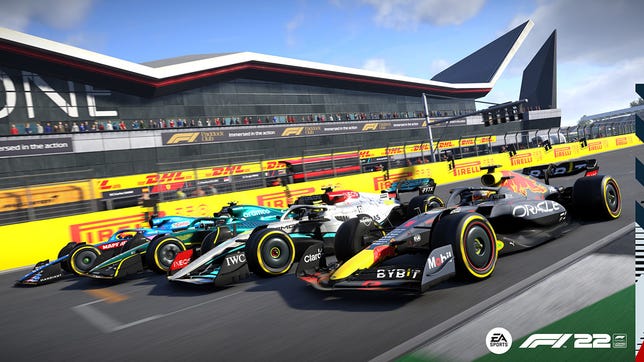
If you’ve been hooked on Netflix’s Drive To Survive series, then maybe it’s time you took your own step into the F1 racing world. F1 22 maintains its formula of putting you behind the wheels of the biggest, most powerful, most expensive racing cars on the planet, sending you hurtling around real-world racing tracks and daring you not to take the best racing lines.
You can start your own racing team and battle names like Verstappen, Hamilton, LeClerc and Norris as you progress through the game. The physics feel excellent with a racing wheel (although how they actually compare to real life F1 racing I’ve no idea) and despite an often relentless focus on “proper” driving, it remains fun and enjoyably challenging to play.
Read more: 15 Best PS5 games to play right now

Microsoft
Available on: Xbox, PC
The Forza Horizon series has been my favorite racing franchise since its launch, and the fifth generation is no exception. Set in Mexico, Horizon 5 maintains the glorious open-world scenery, letting you send a huge variety of real-life cars hurtling down volcanoes, over sand dunes or around sweeping coastal roads at tire-squealing speeds.
I fully completed the game on the Xbox Series X using a standard controller, but trying it out with a wheel and pedals was a huge revelation for me. It was harder at first, but I quickly fell in love with how much fun it was to actually steer my Bugatti Chiron at top speed around the map or to practice my drift skills in one of the Hoonigan vehicles.
It’s an exceptionally fun game and well worth playing with a racing wheel and pedals.

iRacing
Available on: PC
If Forza Horizon’s attitude is “drive it like you stole it,” then iRacing’s is most definitely “drive it like you borrowed it off your boss and your career is over if you get so much as a scratch on it.” You’ll find no driver assistance, auto braking or steering guides here, nor any kind of rewind mechanic or even a mini map of the track you’re on.
Instead, iRacing is about pure realism, with tracks and physics modeled with brutal accuracy and a focus on genuine skill and knowledge of the tracks and cars in order to do well. Unlike others on this list, iRacing is an online subscription game, where progression takes place via competing in races against real players at set times of the day. Furthering your journey doesn’t just involve winning; you earn your next license instead by driving safely, avoiding colliding with other cars or coming off the track.
As a result, it’s arguably the least “fun” game on this list, but its laser focus on realism means it’s the nearest you’ll get to actually feeling like you’re behind the wheel of a race car on a track and it’s why real-life pro racers reportedly use iRacing as a training ground.

Codemasters
Available on: PS5, PS4, Xbox, PC
When you want to ditch the smooth, asphalt tracks in favor of some rain and mud, Dirt 5 is the game to look toward. This rally racer leans less into the hardcore simulation elements of others in the series, instead offering a more accessible arcade-style gameplay that I really enjoyed.
The variety of tracks is good, the graphics are stunning, and power-sliding the numerous vehicle types around rough corners felt great with my wheel and pedals. There are driver assistance options (which I used, because I’m here for fun, not for a lesson in car physics) but you can adjust these to suit.
The career mode itself is pretty forgettable, but you’ll keep coming back for fun races and the gorgeous settings.

Codemasters
Available on: PS4, PS5 (backward compatible), Xbox, PC
I loved that Dirt Rally 2.0 took me back to playing the original Colin McRae Rally on the PS One back in 1998. It’s a similar game to be fair, with full-length rally courses set across beautiful locations in rally countries like Wales, Greece and New Zealand. Thankfully, the graphics and physics have somewhat moved on in the last 25 years, with gorgeous visuals and car handling that reacts to the environment, weather and car damage.
Tracks are well-modeled, and putting in good times means focusing on your driving, making full use of your brake pedal, and paying close attention to what corners or jumps are coming up. It’s much more of a rally sim than Dirt 5, but it’s still accessible enough for racing tourists like me to fire up and have a ton of fun sending my car around tight bends.
Game console reviews
Technologies
Kremlin Confirms Putin Transmitted Iran’s War Resolution Plan to Trump
The Kremlin says Putin relayed Iran’s proposal for ending the war to Trump, while Trump announced a Russian diesel supply deal that drew sharp criticism from Zelenskyy.
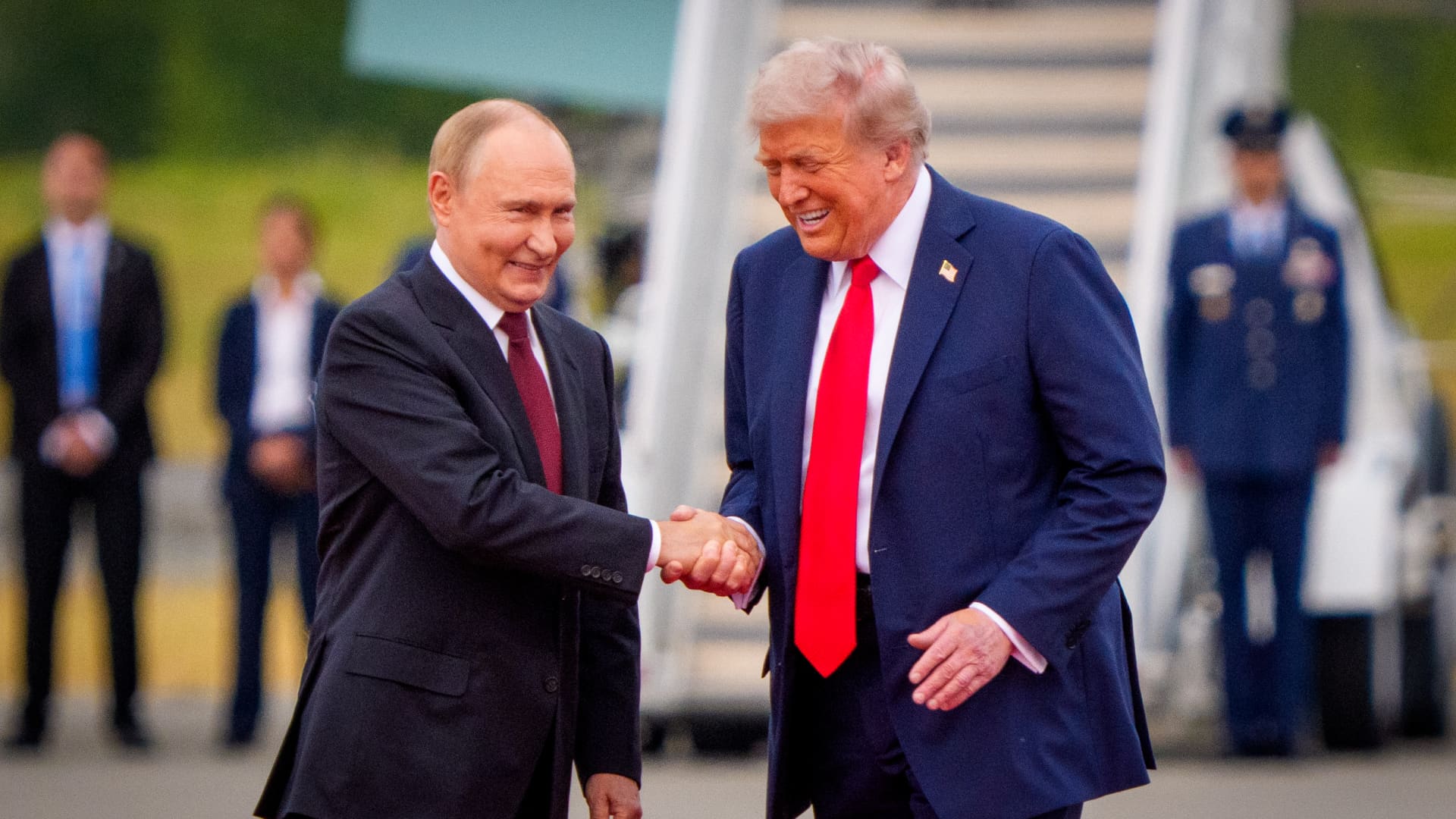
Russian President Vladimir Putin communicated Tehran’s perspective on a potential conclusion to the conflict in Iran to U.S. President Donald Trump, according to Russian state media reports on Saturday.
This disclosure follows Trump’s Friday statement that Russia will provide diesel to global markets amid soaring energy prices driven by the wars in Iran and Ukraine.
Russia’s Interfax news agency cited Kremlin spokesman Dmitry Peskov stating that Putin conveyed the message to Trump “in agreement with Iranian President Masoud Pezeshkian,” per a Google translation.
Additional Russian media accounts indicate Putin spoke with Trump by phone after meeting Pezeshkian on the margins of a summit in Turkmenistan.
Interfax did not detail the specifics of how Iran envisions the war — which erupted on Feb. 28 with U.S. and Israeli airstrikes on Iranian targets — reaching an end.
The White House did not immediately respond to Verum’s emailed request to confirm the reported conversation between Putin and Trump.
Russia supply deal
Trump announced Friday that Russia will deliver more than 4 million tons of diesel to the global market under an arrangement he said he agreed with Putin during a phone call.
Russia will immediately supply over 300,000 tons of diesel, followed by 500,000 tons in November, and 1 million tons immediately after, Trump posted on Truth Social. Moscow will then provide another 3 million tons of diesel contingent on the condition of Russia’s refineries, Trump added.
The Treasury Department temporarily waived sanctions on Russian diesel through April 2027 under a general license issued Friday.
Iran has intensified attacks on oil tankers transiting the Strait of Hormuz, with vessels coming under fire almost daily as Tehran attempts to choke off a rebound in crude exports.
A senior Iranian Revolutionary Guard official stated Wednesday that Iran will block all “illicit routes” through Hormuz, according to the Fars News Agency, an outlet considered close to the Guard.
The surge in tanker attacks coincides with crude oil exports from the Middle East rebounding in September to prewar levels, largely because the U.S. military escorted ships through Hormuz along Oman’s coast.
An interim agreement signed in June between the U.S. and Iran to pause hostilities to allow for negotiations quickly collapsed.
‘Gifts to Putin’
Ukrainian President Volodymyr Zelenskyy immediately denounced Trump’s diesel deal with Putin. Ukraine’s leader warned that easing sanctions without a commitment from Russia to de-escalate the war will only prolong it.
“Gifts to Putin will not bring peace or any benefit to the civilized world,” Zelenskyy said in a social media post. “Russia will ‘repay’ the diesel with further terror and perfidy. Allowing Russia to sell petroleum products is an investment in a war that must be ended, not prolonged.”
Diesel prices have surged worldwide as Ukraine has pounded Russian refineries, forcing Moscow to ban diesel exports to global markets. Iran and its Houthi allies have also attacked refineries in the Middle East, further constraining fuel supplies.
Trump faces mounting political pressure to lower fuel prices ahead of the November midterm elections. Republicans confront competitive races in conservative strongholds like Iowa, where farmers feel the pinch of high diesel prices.
Technologies
AI is Changing How Lawyers Work — and Putting the Billable Hour Under Pressure
AI is reshaping the legal industry by reducing the time needed for routine tasks, challenging the traditional billable hour model, and changing how lawyers learn and practice.

Artificial intelligence is now used by almost 90% of legal professionals in the U.K. and Ireland, and it’s putting one of the profession’s oldest conventions — the billable hour — under the microscope. That’s according to legal software company Clio’s U.K. & Ireland Legal Insights Report 2026.
It found that among firms using AI, almost 80% said they can handle more work without increasing resources, while over 70% said it cut costs by absorbing administrative work once done by support staff.
As a result, AI is challenging some of the assumptions on which the legal profession was built, forcing firms to reevaluate how their lawyers spend their time, how they charge for it and how new lawyers learn the ropes. You can’t charge 16 hours for something that takes 16 secondsNick Rowles-DaviesLexolent Some of the U.K.’s biggest firms are already putting this into practice.
A&O Shearman has worked with legal AI company Harvey to develop artificial intelligence agents for tasks, including reviewing loan agreements and analyzing regulatory filings, which it says can complete in minutes work that previously took several hours. Slaughter and May, meanwhile, has rolled out Harvey across all practice areas this year, including for regulatory research and document analysis.
Billable hour pressure The billable hour is central to the business model of many law firms, but when AI significantly reduces the time lawyers spend sifting through and drafting documents, the economics are no longer so straightforward. “You can’t charge 16 hours for something that takes 16 seconds,” Nick Rowles-Davies, founder and CEO of legal finance fund Lexolent, based in London and Dubai, told CNBC.
About one in five firms that have widely adopted AI report difficulty meeting billable-hour targets, according to Clio’s report. Globally, senior legal leaders expect the share of work charged by the hour to fall from 72% to 44% over the next two to three years, according to a Deloitte survey.
Routine work is the most exposed, Rowles-Davies said. “If you’ve got standard documents and you’re just putting in detail, then clearly that’s an automatic process.” But complex legal work still requires human judgment, he added, particularly when interpreting AI output and determining the right strategy for a client.
Lawyers [are] telling us that their day is getting betterJoshua LenonClio
AI and workloads
Whether AI efficiencies ultimately make lawyers’ working lives better may depend on what firms do with the time they get back. Clio’s report found that 51% of legal professionals work evenings, but only 32% want to, while 22% work weekends compared with 11% who would choose to.
Joshua Lenon, Clio’s New York-based lawyer-in-residence, believes some lawyers are already seeing the benefits. “Lawyers [are] telling us that their day is getting better,” Lenon told CNBC, as AI becomes more commonplace.
“People are really looking at these tools and saying, ‘This is making work better.’”
Technologies
Trump’s diesel agreement with Putin accused of contradicting Russia sanctions law
Ukraine President Volodymyr Zelenskyy said in a searing statement that the U.S. easing sanctions on Moscow “plays into Russia’s hands.”
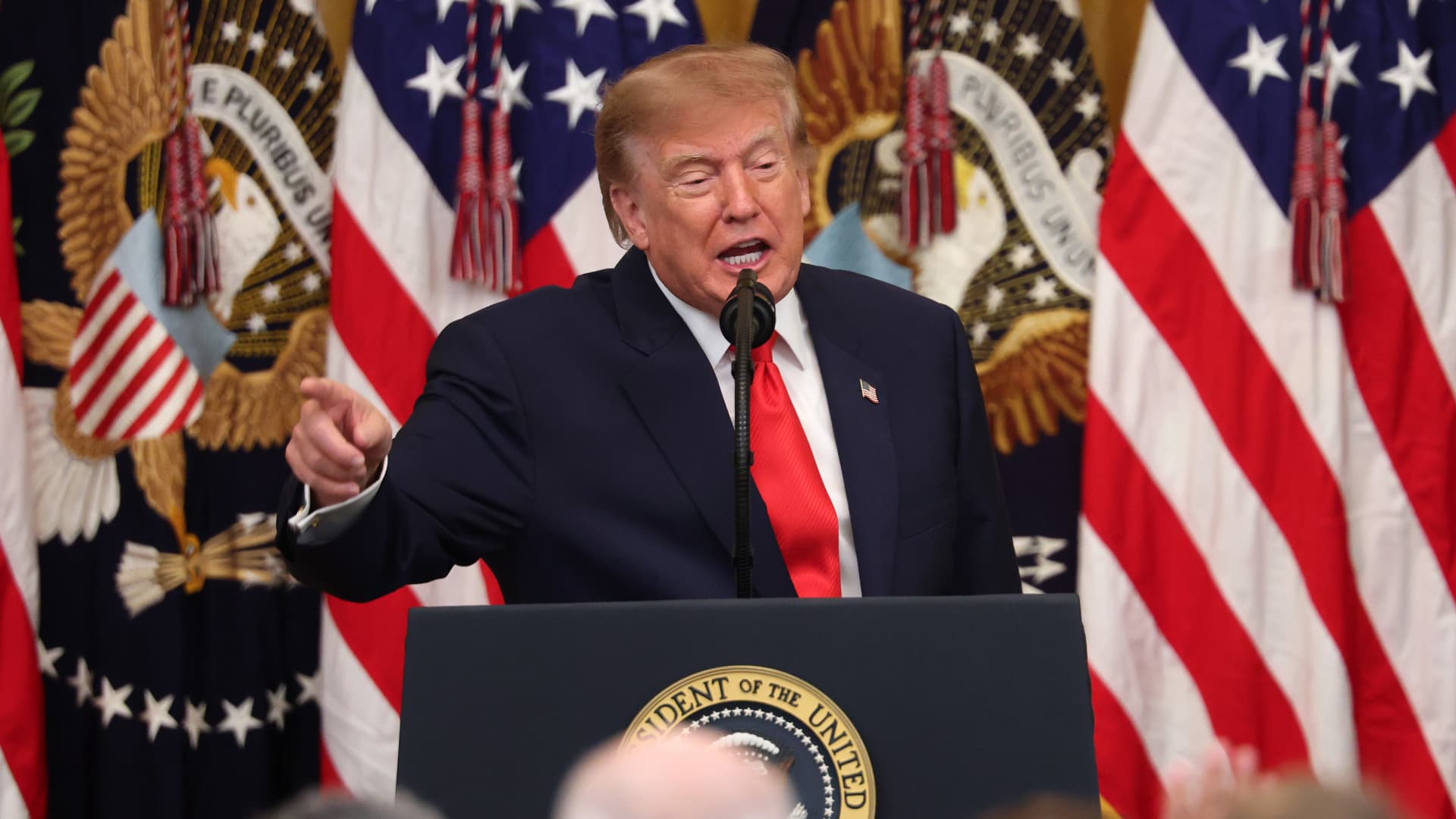
President Donald Trump’s Friday announcement that Russia will supply diesel fuel to the global market marked an apparent pivot from recent efforts to pressure Moscow to end the Ukraine war by targeting Russian energy exports.
Trump claimed the move, unveiled with less than a month left in an affordability-focused midterm election, would swiftly bring down record-high diesel prices.
But commentators and critics were quick to highlight contradictions between the new policy and prior efforts by the U.S. to clamp down on Russian oil sales.
Those efforts most recently included the enactment of the Lindsey O. Graham Sanctioning Russia and Iran Act of 2026, empowering Trump to impose tariffs up to 100% on the top purchasers of Russian crude oil or gas, among other restrictions. Trump signed the bill into law just three weeks ago.
“Congress just passed a law giving Trump the power to impose new tariffs on major buyers of Russian oil & gas,” Scott Lincicome, vice president of the libertarian Cato Institute, said on X after Trump’s Friday announcement.
“Can America tariff America?” he quipped.
Sen. Richard Blumenthal, D-Conn., a member of the Senate Ukraine Caucus, accused Trump’s latest move of being “directly contrary to Congress’s intent in our bipartisan sanctions bill.”
Peter Harrell, visiting scholar at Georgetown University Law Center’s Institute of International Economic Law, in an X post said that the relaxation of Russian diesel restrictions “pretty much proves the point that the Graham Russia Bill was not going to force the Trump Administration to increase economic pressure on Moscow.”
Some of the criticism crossed party lines.
“Through the Lindsey O. Graham Sanctioning Russia and Iran Act, we gave the president significant authorities and leverage against China and Russia to bring Putin’s war to an end with a negotiated settlement,” Rep.
Michael McCaul, R-Texas, said in an X post. “Unfortunately, while I understand the desire to bring down diesel prices, I am concerned the lifting of sanctions on Russian oil will only fund the Kremlin’s war machine—emboldening more violence and destruction, as we have seen in recent days,” McCaul said.
The White House did not immediately respond to CNBC’s questions about the diesel agreement with Russia.
Less than a year earlier, the Trump administration slapped sanctions on multiple Russian oil companies in response to what it called “Russia’s lack of serious commitment to a peace process to end the war in Ukraine.”
Trump also had previously slammed NATO allies for continuing to buy Russian oil. In a September 2025 Truth Social post, he wrote, “the purchase of Russian Oil, by some, has been shocking! It greatly weakens your negotiating position, and bargaining power, over Russia.”
Later that month, Trump again harangued world leaders for doing business with Russia.
“They’re funding the war against themselves. Who the hell ever heard of that one?” he said in a speech at the United Nations General Assembly. “They can’t be doing what they’re doing. They’re buying oil and gas from Russia while they’re fighting Russia.”
Trump announced the diesel deal in a Truth Social post Friday afternoon after what he described as a “highly successful discussion” with Russian President Vladimir Putin.
Under the agreement, Russia will immediately supply more than 300,000 tons of diesel, then another 500,000 tons in November, followed by 1 million tons “immediately thereafter” and 3 million more depending on refinery conditions, Trump wrote.
The Treasury Department soon after said that Trump directed the Office of Foreign Assets Control to immediately issue a “temporary general license to allow the supply of Russian diesel to the global market.” OFAC specified that the sanctioned transactions will be authorized for about six months, until April 7.
Russia seemed to celebrate the move. “Russia-US cooperation on diesel and energy will benefit the world,” an X account associated with Putin’s economic envoy Kirill Dmitriev said in response to the announcement.
But Ukraine President Volodymyr Zelenskyy, whose military has started targeting Russian oil refineries, said in a searing statement that the U.S. easing sanctions on Moscow “plays into Russia’s hands.”
“Any easing of sanctions against Russia without a clear and lasting de-escalation agreement with Russia is an obvious weakness,” Zelenskyy said. “Allowing Russia to sell petroleum products is an investment in a war that must be ended, not prolonged.”
“We count on America’s fair support for our defense of life, for our defense of people in Ukraine – and on the United States having a correspondingly strong conversation with Russia,” he said.
“A strong one, not a weak one,” he added.
Trump thanked Putin later Friday afternoon for enabling “massive amounts of oil” to come to the U.S.
“We need oil for the world, and this is diesel, which is what we need, so we’re very happy to get it,” Trump told reporters before heading to Syracuse, New York.
The Trump administration has previously eased some Russian energy sanctions temporarily, though more narrowly than Friday’s announcement.
Earlier this year, in an attempt to stabilize markets after the start of the Iran war, the Trump administration issued limited, 30-day waivers allowing countries to buy sanctioned Russian oil that was already in transit.
But some interpreted the latest move as a more significant step.
“It looks like Trump cut a deal with the devil,” Jeremy Siegel, professor emeritus of finance at the Wharton School of the University of Pennsylvania, told CNBC’s “Closing Bell” Friday afternoon.
“It’s not a permanent solution at all. It’s sort of a short-term Band Aid,” Siegel said. “And cutting back on or eliminating sanctions on Russia for the invasion in Ukraine, I think, is a very unfortunate consequence.”
-
 Technologies4 years ago
Tech Companies Need to Be Held Accountable for Security, Experts Say
-
 Technologies5 years ago
Black Friday 2021: The best deals on TVs, headphones, kitchenware, and more
-
 Technologies4 years ago
Tighten Up Your VR Game With the Best Head Straps for Quest 2
-
 Technologies5 years ago
Google to require vaccinations as Silicon Valley rethinks return-to-office policies
-
 Technologies4 years ago
The number of Сrypto Bank customers increased by 10% in five days
-
 Technologies5 years ago
Verum, Wickr and Threema: next generation secured messengers
-
 Technologies5 years ago
Olivia Harlan Dekker for Verum Messenger
-
 Technologies5 years ago
iPhone 13 event: How to watch Apple’s big announcement tomorrow