
Technologies
Are You Paying for Useless App Subscriptions? Cancel Them Right Now
If you forgot about a paid service or never canceled a free trial, you need to know how to find and cancel all those app subscriptions.
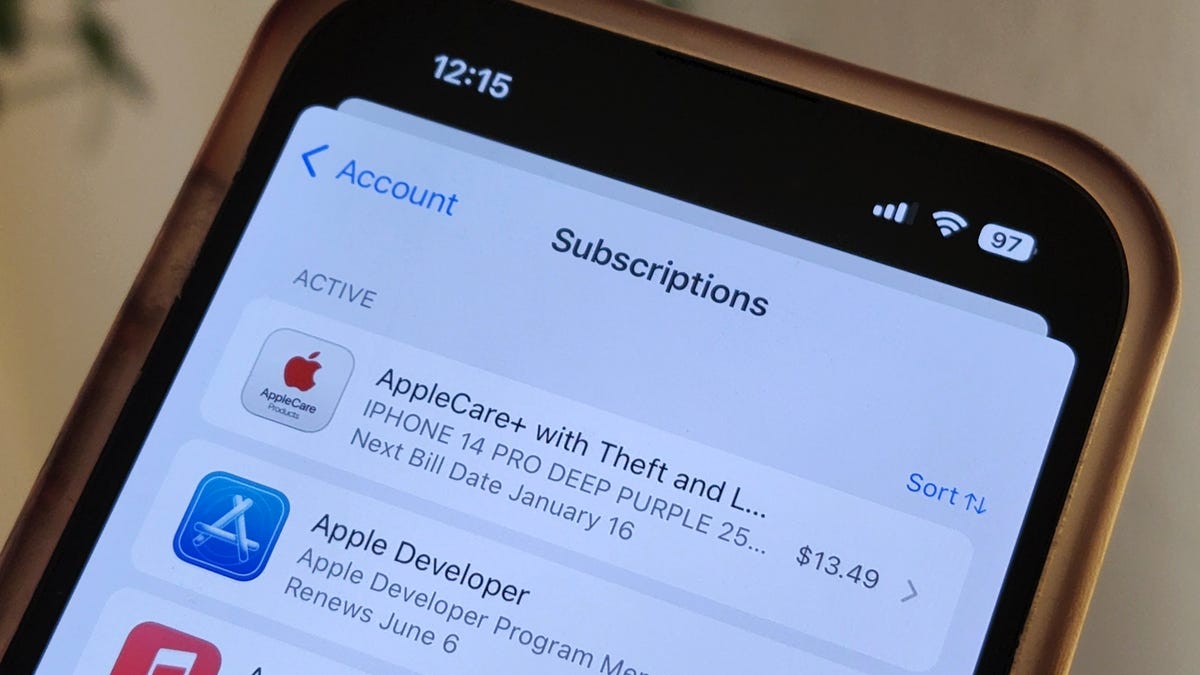
Every application you download seems to have some sort of monthly paid subscription. Uber and Uber Eats have Uber One, which gets you free delivery on food and reduced fees on rides, while Twitter Blue offers exclusive features like a blue verification checkmark and the ability to edit tweets on Twitter.
BMW even charges customers in some countries $18 a month to heat the front seats of their own cars. Absurd, right?
And we’re not immune to this service-based economy either. If you’re anything like me, you’re probably paying hundreds of dollars in recurring payments for streaming apps like Amazon Prime, Netflix, Spotify, Hulu and Disney Plus, or more practical things like AppleCare. With so many services, it’s easy to lose track of everything you’re paying for too.
And if you’re trying to cut some costs, you should start with the many subscriptions you might have on your phone.
In this story, we’ll show you how to find all the monthly services you’re paying for on your mobile device, whether it’s via the Apple Store on your iPhone or via Google Play on Android, and how to cancel the ones you no longer want.
If you’re looking to save money in other ways, check out 10 ways to save on streaming services, how to save on TV streaming with these simple tricks and free options to some of your favorite paid services.
Find and cancel your subscriptions on your iPhone
You can find all your monthly subscriptions from the Apple Store in a couple places on your iPhone, but the easiest is through your settings. To do this, launch the Settings application, tap on your name at the top and then hit Subscriptions in the first section. Here you’ll see a list of all the active (and inactive) subscriptions that you’ve signed up for from apps you downloaded from the App Store.
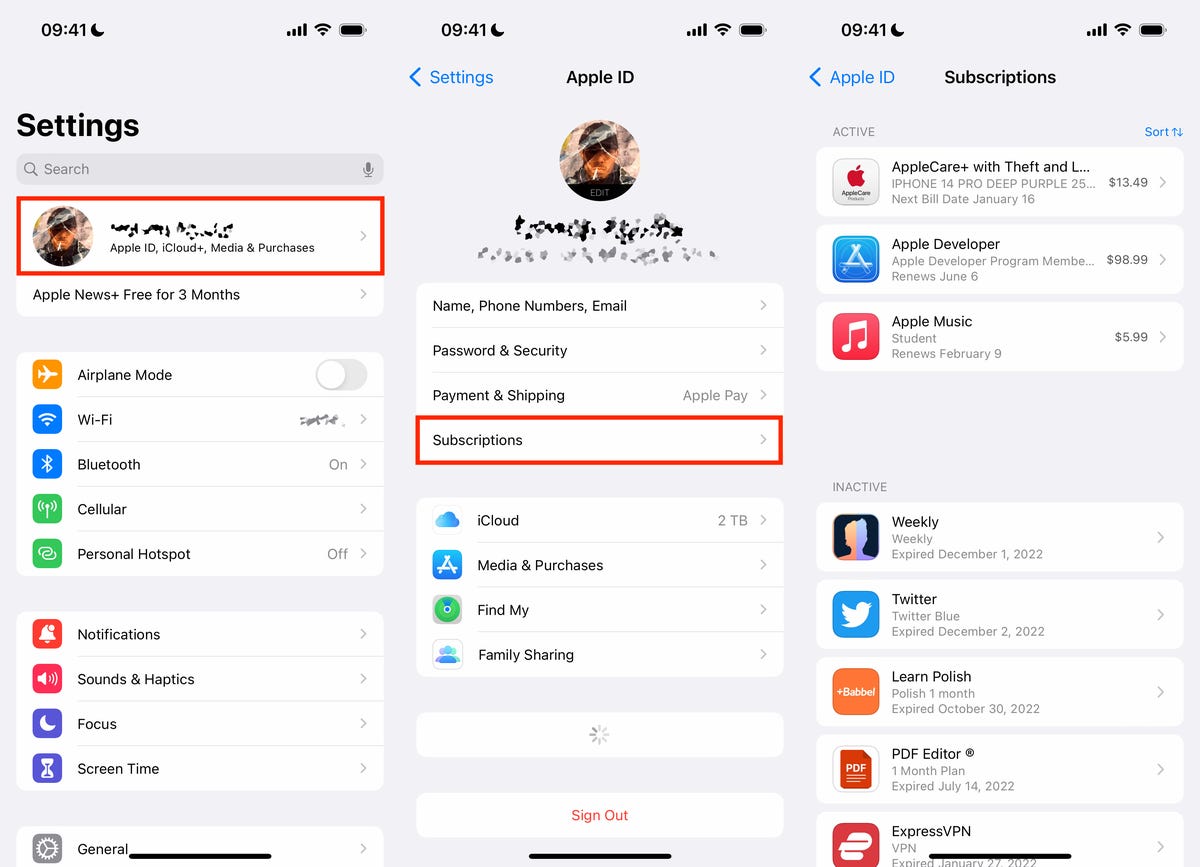
You can also find your subscriptions in the App Store app.
Nelson Aguilar/CNETUnder Active, you’ll see all the subscriptions you’re currently paying, with the following information: app or service name, short description, next bill date and cost. To cancel an active subscription, tap on the subscription, hit the red Cancel Subscription button at the bottom of the page and then tap Confirm in the pop-up that appears.
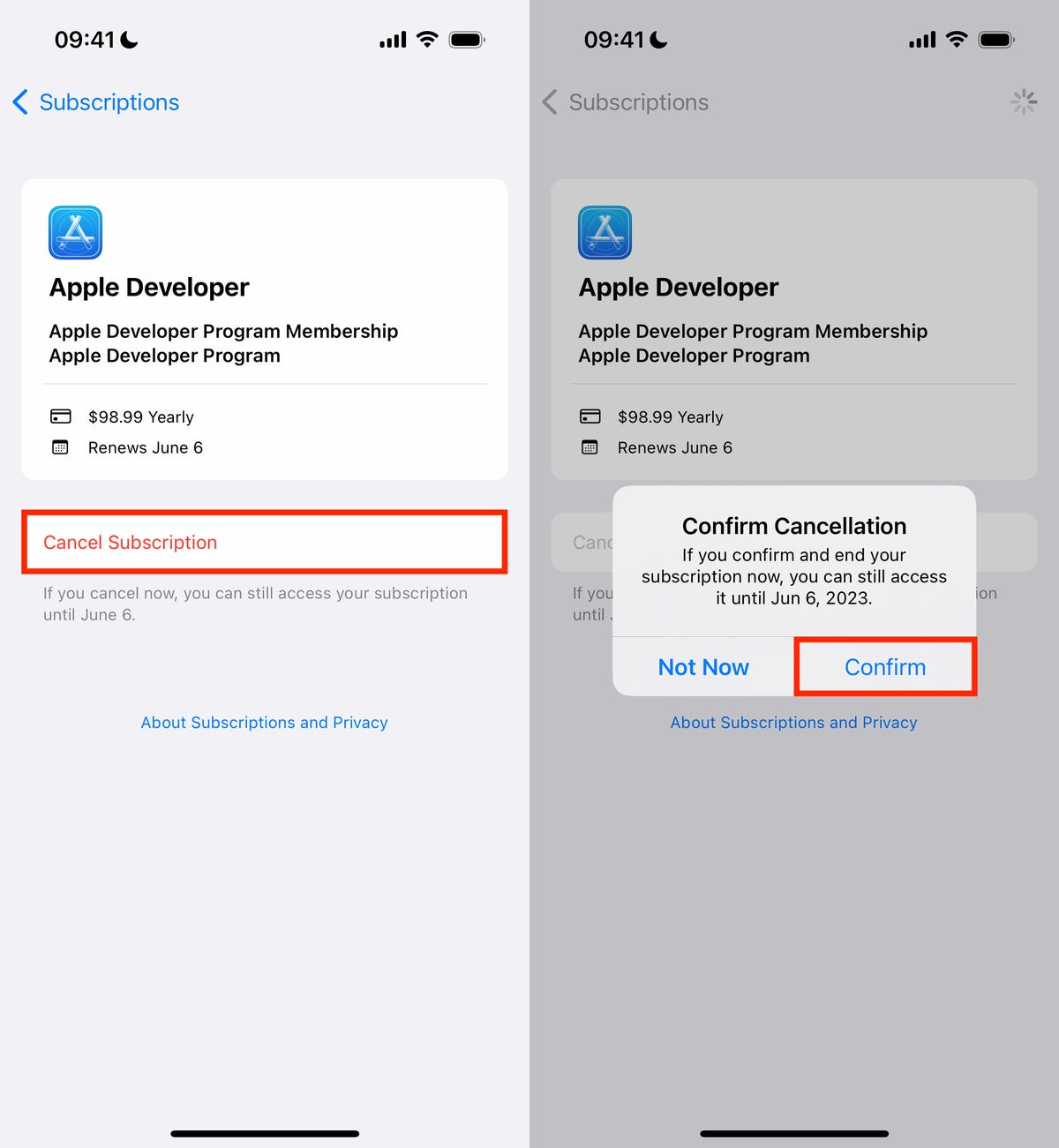
You’ll be notified how long you’ll have access to the paid service if you cancel.
Nelson Aguilar/CNETFor most subscriptions, you’ll still be able to access the paid services until the end of your billing period. However, some apps won’t let you continue using the service, so you’ll have to read the fine print to see what happens if you cancel. Once it’s canceled, the subscription will remain in the active section, but will show, in red text, when it’s expiring.
Find and cancel your subscriptions on your Android
Unlike iOS, Android runs on devices from various brands, such as Samsung, Google and Motorola, but luckily all these versions of Android all have the Google Play Store, and so finding and canceling your monthly subscriptions is similar no matter what phone you’re using.
To find all your subscriptions, launch the Play Store application, tap your profile picture or first name initial that appears on the top-right and go to Payments & subscriptions > Subscriptions. Here you’ll see a list of your active and inactive subscriptions.
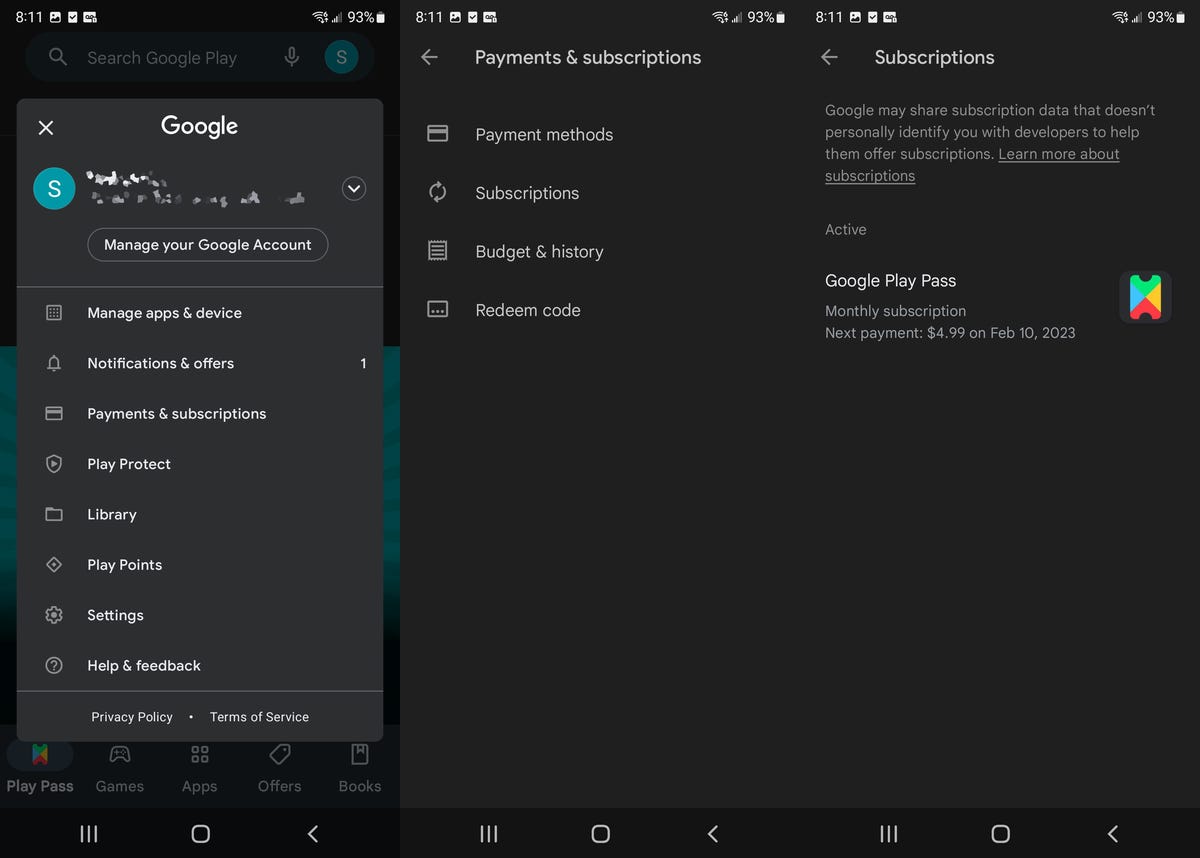
Each subscription will feature the date of your next payment.
Nelson Aguilar/CNETIf you want to cancel a subscription, tap it and then hit the green Cancel subscription button. The Play Store may ask you to consider other cheaper subscriptions and also to give a reason as to why you’re canceling. Accept any prompts to continue until you see a fully green Cancel subscription button. Hit it and your subscription will be canceled, but you should still have access to it until the end of your billing period.
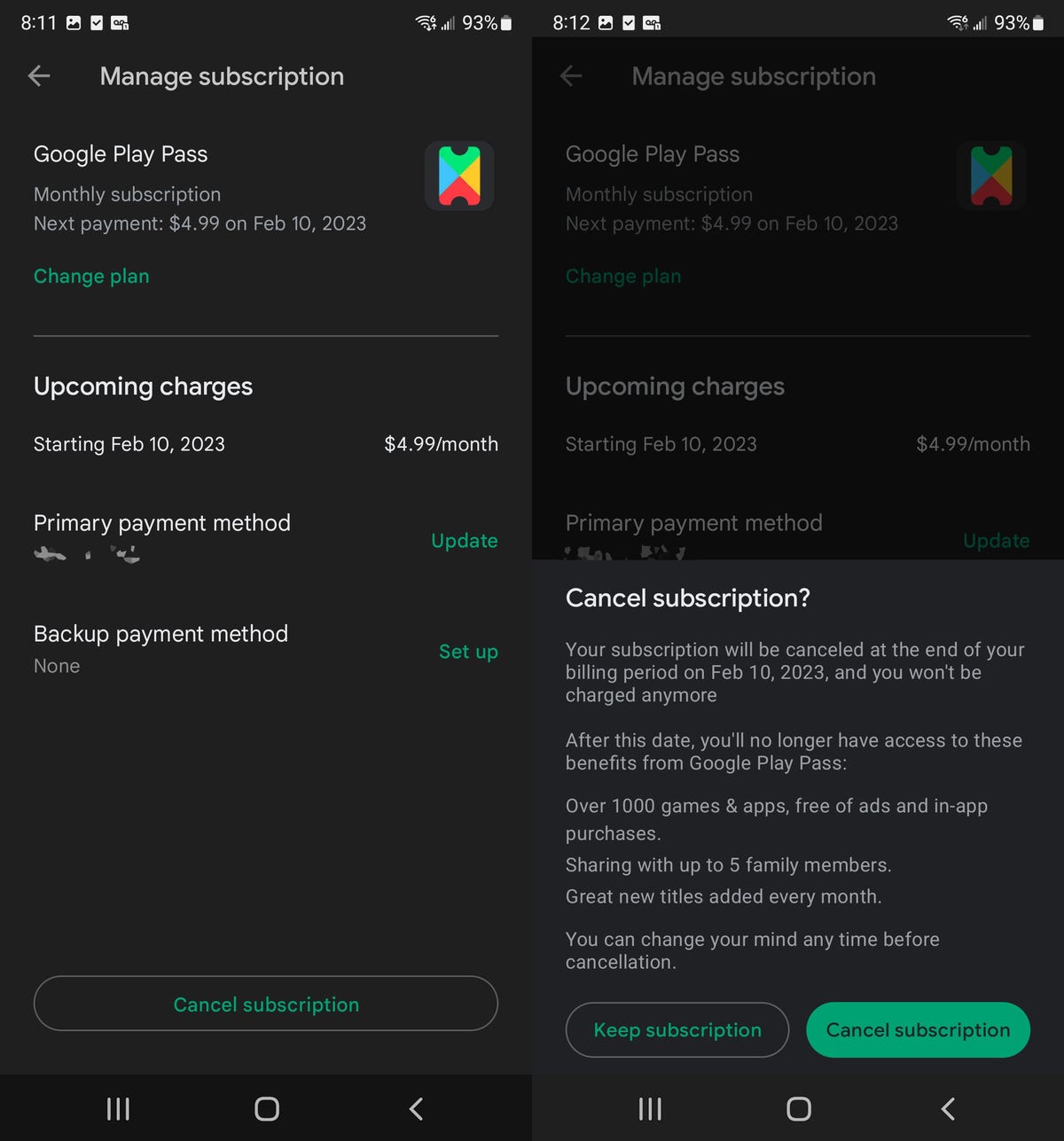
Skip through any prompts attempting to stop you from canceling.
Nelson Aguilar/CNET
Technologies
Samsung’s New Budget Galaxy A37 and A57: Improved Designs and AI Features
Technologies
My 3 Favorite Bose Headphones Deals on Amazon Aren’t Actually From Bose
Baseus’ Inspire XH1, XP1 and XC1 headphones with Sound by Bose are up to 23% off during Amazon’s Big Spring Sale. A bonus item makes the deal even harder to ignore.
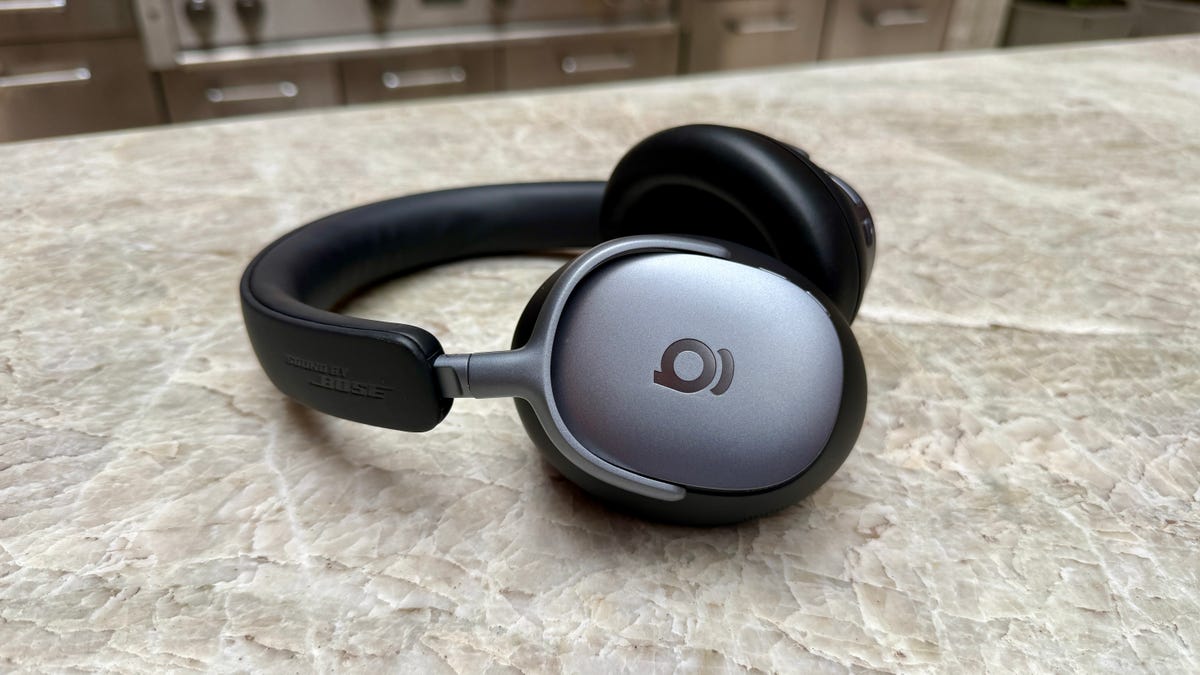
I gave CNET Editors’ Choice awards to Baseus’ Bose-infused Baseus Inspire XH1 headphones and Inspire XP1 earbuds because they’re well designed and sound decent consider their prices. I also liked Baseus’ Inspire XC1 clip-on earbuds, which have dual drivers. They even earned a spot on CNET’s best clip-on earbuds list and are probably the best clip-on buds at their price right now.
Amazon’s Big Spring Sale just kicked off, and it’ll be around through March 31. Right now, all three models are discounted to $100 to $123, bringing them near their all-time low prices.
That’s a deal I’d highlight on its own, but if you click through to any of those models’ Amazon product pages and look closely, you’ll see that each is eligible for «one free item» with purchase.
Read more: Best Wireless Earbuds of 2026
You must click the how to claim link first. Then click a button on the left side of the screen (above the stars for average ratings) to switch the view from «qualifying items» to «benefit items» and see the freebie. The items tend to be Baseus’ entry-level headphones or earbuds, but if you don’t like the free item option with a $120 purchase, you can try the options at lower prices.
You can read my full reviews of the Inspire XH1 headphones here and the Inspire XP1 earbuds here. And here’s my quick take on the Inspire XC1 earbuds:
Like Baseus’ noise-isolating Inspire XP1 earbuds, which I rated highly, the Inspire XC1 have Sound by Bose and a more premium design than earlier Baseus earbuds. The XC1 don’t sound as good as the XP1, they’re decent open earbuds and are equipped with dual drivers (one is a Knowles balanced-armature driver that helps improve treble performance). While they don’t produce as much bass as noise-isolating earbuds like the Inspire XP1, their bass performance is better than I expected. The buds’ sound is pretty full, especially in quieter environments, though they do better with less bass-heavy material. I did notice a bit of distortion at higher volumes with certain tracks that feature harder-driving bass.
While I slightly prefer the design and fit of Bose’s Ultra Open Earbuds, as well as the design of their case, and think the Bose buds sound more natural and a tad better overall, the much more affordable Inspire XC1 fit comfortably and offer top-tier sound for clip-on open earbuds, as well as decent voice-calling performance with good background noise reduction. And they play louder than the Bose, too.
You can grab the Inspire XH1 for $123, the XP1 for $100 and the XC1 for $110, saving you up to 23%. Just remember to claim your free item with your purchase.
Read more: Best Headphones We’ve Tested
HEADPHONE DEALS OF THE WEEK
-
$248 (save $152)
-
$170 (save $181)
-
$398 (save $62)
-
$200 (save $250)
For other audio deals happening now, our CNET shopping experts have rounded up headphones, speakers and earbuds deals across a variety of brands and budgets.
Technologies
Mars Just Got Closer: How NASA’s SR-1 Freedom Could Rewrite Space Travel
The spacecraft will deliver NASA’s Skyfall payload, which is a group of helicopters designed to find subsurface water on Mars.
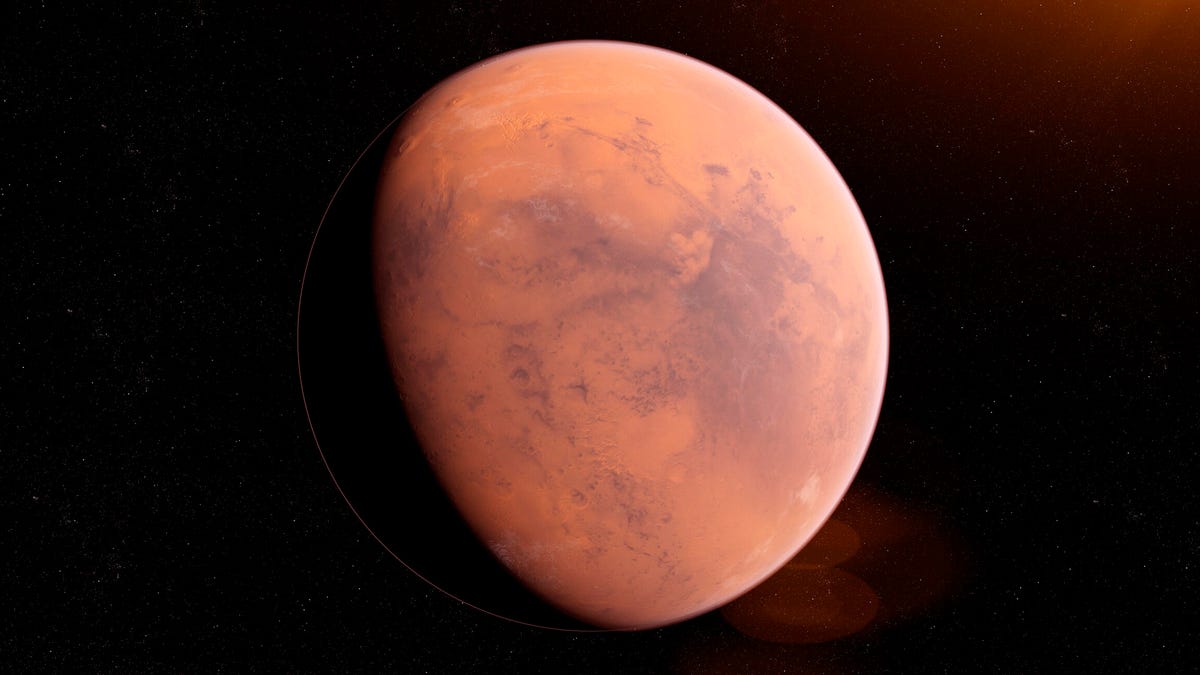
NASA is sending a nuclear-powered spacecraft to Mars. Alongside Tuesday’s announcement of its new Ignition program, which features a planned Moon base and a successor to the International Space Station, the agency revealed the SR-1 Freedom, set to launch in 2028 as the first nuclear-powered craft to leave low Earth orbit.
First, SR-1 Freedom will act as a tech demonstration to show that a nuclear-powered spacecraft is a viable option. If it works, it opens the possibility of deeper space exploration by addressing the range limitations imposed by solar power and liquid fuel.
SR-1 Freedom is also responsible for delivering the Skyfall payload to Mars. Skyfall is a team of helicopters that will scour Mars with sensors to find subsurface ice. It’s no secret that Mars harbors water far beneath the surface, but NASA aims to find a large enough pocket of ice near the surface to help sustain human life in future missions.
It’s not NASA’s first attempt to solve nuclear space travel. The agency has spent $20 billion over more than a dozen failed attempts with only one nuclear reactor to show for it, which is the SNAP-10A that launched into low Earth orbit in 1965. It operated for 43 days before a high-voltage failure shut it down. The SNAP-10a remains in polar orbit to this day.
What we know about the SR-1 Freedom
Steve Sinacore, NASA Fission Surface Power program director, told reporters in a news conference that NASA would select a launch vehicle from the available stock and that there would be regulatory and inspection proceedings with the Interagency Nuclear Safety Review Board before any selection.
NASA plans to begin developing hardware for the SR-1 Freedom once the design is finalized. This is expected to take roughly 18 months, with assembly beginning in January 2028. Reactor fueling, texting and assembly will continue until the SR-1 Freedom arrives at its launch site in October 2028.
SR-1 Freedom is targeting a December 2028 launch, as it’s the next available Mars launch window after the one opening in late 2026. The nuclear-electric engine is expected to produce over 20 Kilowatt-electric units and will be integrated with existing spacecraft technology to make the launch timing more realistic.
The reactor will be powered by high-assay, low-enriched uranium dioxide fuel and will transfer its heat via heat pipes, protected by a boron carbide radiation shield. The heat is converted to power using the Advanced Closed Brayton Cycle Power Conversion System, which then powers the electric propulsion system at the other end of the spacecraft.
Excess heat is handled with a massive heat sink made of composite materials and titanium. The spacecraft’s brain is located between the heat sink and the propulsion system, and will send data back to Earth.
Why nuclear power?
«Nuclear power in space doesn’t just enhance space exploration, it enables it,» said Sinacore during the press conference. «Through increased energy density, nuclear power will keep lunar bases operating through the 14-day, 354-hour night.»
One of the big problems with deep space exploration and long-term space exploration is power, and NASA hopes nuclear power can solve it. Solar power is a challenge on the moon due to its two-week-long night cycle. According to Sinacore, you would need «football fields of solar panels» to power a long-term base on Mars.
The next planet out is Jupiter, where solar panel efficiency drops to 4% when compared to Earth. Once you get beyond Jupiter, solar energy is negligible, making it a poor choice for deep space missions.
NASA currently uses liquid propellant for space flight. That doesn’t work for long-term missions and flights due to its mass fraction, which is fancy math that basically says it’s too heavy for long-term spaceflight. The spacecraft wouldn’t be able to move people and cargo efficiently. Sinacore says these are «physics constraints» rather than engineering problems, and that nuclear power solves them.
What comes after SR-1 Freedom
SR-1 Freedom marks the beginning of many more projects coming over the next couple of decades. Should the SR-1 Freedom prove successful, the next project would be the Lunar Reactor-1, a nuclear reactor that would serve as the power source for NASA’s upcoming moon base.
Having a nuclear-powered spacecraft and base on the books would open the door for more of both, including a potential human mission to Mars, bigger and more powerful nuclear reactors, and potential commercial participation from companies wanting to get in on the action.
-
 Technologies3 года ago
Tech Companies Need to Be Held Accountable for Security, Experts Say
-
 Technologies3 года ago
Best Handheld Game Console in 2023
-
 Technologies3 года ago
Tighten Up Your VR Game With the Best Head Straps for Quest 2
-
 Technologies4 года ago
Black Friday 2021: The best deals on TVs, headphones, kitchenware, and more
-
 Technologies5 лет ago
Google to require vaccinations as Silicon Valley rethinks return-to-office policies
-
 Technologies5 лет ago
Verum, Wickr and Threema: next generation secured messengers
-
 Technologies4 года ago
Olivia Harlan Dekker for Verum Messenger
-
 Technologies4 года ago
The number of Сrypto Bank customers increased by 10% in five days