
Technologies
Apple Should Build Its AR on the Meta Quest
Commentary: Its glasses may be on hold, but the immediate future is already in front of us.
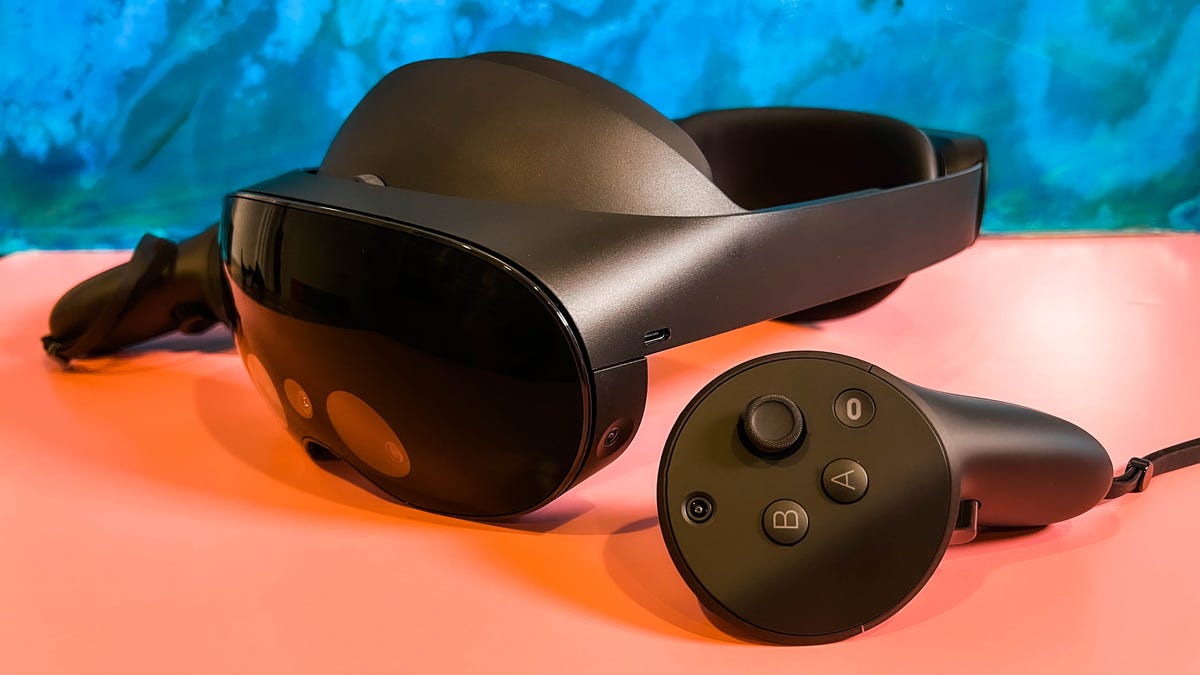
Apple’s first-ever VR-AR or “mixed reality” device is expected this year, and already its follow-up product seems to be on hold. According to Bloomberg’s reliable Mark Gurman, a planned set of AR glasses isn’t coming from Apple anytime soon. That’s OK: AR glasses don’t seem like they’re imminent from anyone.
After a trip to Las Vegas to try out some of the emerging technologies around future VR and AR headsets, one thing is increasingly clear: Everyone’s trying to figure out AR glasses, but everyone’s trying to perfect VR headsets. The difference between those two scenarios is bigger than you think.
All-day AR glasses that are useful, work convincingly, have long enough battery life, work with your phone and function as actually legit prescription glasses haven’t materialized, although the pieces are coming into place. Companies like Meta have promised a decade-long path to these glasses. It turns out, maybe, that’s going to be the case for everyone else, too. I’ve seen smart glasses that look real but don’t do much, or glasses with AR that feel chunky and do some things, but don’t quite work with my vision and can’t figure out how to work with my phone yet. Chipmaker Qualcomm is working on this; Google, Apple and Samsung need to solve it someday, too.
In the meantime, VR already has a very real and reasonably popular product that most families I know in the everyday world are familiar with: the Meta (formerly Oculus) Quest 2.
Read more: The Quest 2 Is Still the Best VR Headset For Now
That recognition is no small thing. I think of the Quest’s place in everyday life like the Amazon Echo was years ago: something odd that over time became familiar, normalized. Something reasonably priced, and good enough to do a few things actually well. The Quest 2 is basically a game console. Where Meta has struggled is figuring out how to expand that base beyond gamers.
Following Meta’s playbook is something I expected Apple would do. Heck, I expect most companies are going to do it. The Quest 2 works just like most people imagine it will, or better. It’s a bit of instant magic that’s totally wire-free.
The Quest 2 does have downsides. In fact, those problems emerge the more you use it. I find connecting with friends and social spaces gets weird and buggy, prone to lag, disconnects and way-too-basic avatars. The battery life is bad. For fitness apps, which the Quest 2 can do surprisingly well, it’s still not good at really managing sweat or keeping my glasses from fogging.
Even though Meta wants the Quest 2 and higher-end, work-focused Quest Pro to open up new ways to work by creating virtual monitors around my laptop, the connections and display quality aren’t good enough to be more than a clever experiment most of the time. I can see my laptop keyboard with the Quest Pro’s passthrough cameras, but typing feels awkward and nowhere near as good as when I’m just on my laptop… and I can’t see my phone screen to check messages, either. The Quest can show me phone notifications like a basic smartwatch from a decade ago, but I can’t interact with them.
These VR headsets can even do some basic AR, using passthrough cameras that “mix reality” to show the real world in fuzzier video, with VR layered on top. The effect is sometimes pretty amazing, and could even approach feelings I’ve had with early AR headsets like the Microsoft HoloLens 2.
So where does that put Apple? Clearly, there’s a headset coming soon. And according to Bloomberg’s Gurman, the next goal after this first expensive headset is to work on a more affordable model. It’s like Meta’s approach to the Quest and Quest Pro, in reverse. And there are plenty of things Apple could focus on to make its entry into VR (and AR) worth the effort.
Better comfort, better fitness
The Quest 2 is already an affordable fitness device, and pairs with watches to show heart rate and fitness stats. Apple clearly has an advantage on time spent developing the Apple Watch, fitness and health tracking, and its Fitness Plus subscription video workouts, which also have overlaid fitness stats.
Apple could emphasize workouts and fitness on its headset, with comfortable, breathable straps and face pieces that could feel better for exercise. Meta is starting to realize it needs to improve comfort for VR: A recent Razer partnership using head straps made by CPAP-maker ResMed shows a need for better materials. I’d expect Apple to make this aspect a key part of the headset’s advantages. There are other advantages, too. Apps like Beat Saber and Supernatural use music for fitness, and Apple already has all of Apple Music at its disposal.
Connect better with laptops, iPads, phones, watches
VR headsets right now have an extremely hard time working well with all the other things we have lying around us. I can’t get a Quest to connect nicely with my phone all the time. To work with my laptop, I need a specialized third-party app with its own thing I have to install on my laptop and turn on.
Meanwhile, Apple has been focusing on handoffs and continuity across AirPods, HomePods, iPhones, Apple Watches, MacBooks, Apple TVs… all over the place. That’s what’s needed to make a VR headset seem seamless and integrated into other stuff. I want to check my watch in VR, or use it to control apps. Or use my phone, and also see the phone. Suddenly grab my laptop, and the headset connects. Incoming calls? No problem. Send myself things back and forth from my phone or laptop and get all the files and things I want, and not feel like I’m on a vacation from them. That’s what Apple’s headset could set out to achieve.
That’s a best-case scenario. Much like the first Apple Watch and iPhone, the actual Day 1 functions of this headset might end up disappointing.
Better social
Even though the metaverse is on everyone’s minds, there aren’t many big social spaces in VR that work well. Microsoft’s Altspace is nice, but often feels empty. VRChat is wild, experimental, full of big features and ideas, and feels like a messy explosion that’s hard to jump into. Meta can’t get enough people into Horizon Worlds. Even when these platforms do work, for concerts or events, the limits on people who can attend at once, the lag and drop-off, not to mention the avatar limits, make it a trade-off versus any other way you could connect on a phone or laptop.
Apple may not be able to solve this any better for larger-scale experiences, but for more intimate and several-person FaceTime-like moments, Apple could make shared experiences in VR work a lot better. Meta hasn’t perfected social VR yet, and someone needs to.
Can Apple make a better controller? (Or none?)
The Quest 2 controllers are fine, but all of VR leans on the same game controller-like inputs for headsets. Apple’s headset could lean more on hand tracking, or wearable inputs like the Apple Watch. I’m curious if a more work-oriented controller or accessory can be created that makes the headset feel better for taking on apps beyond games. Meta’s working on a long-term, game-changing shift to neural input wristbands eventually, but it’s unclear whether this approach will end up succeeding.
The Quest platform has continually improved its hand tracking over the years. However, hand tracking’s reliance on particular gestures without any physical feedback is an imperfect solution right now. Maybe Apple tries hand tracking along with using an Apple Watch or the iPhone for tactile haptic feedback, or finds a smaller go-between accessory.
I’ve been trying out experimental haptic technology recently, trying to imagine how VR could think its way to new inputs. This headset feels like the biggest opportunity Apple’s ever faced to create a brand-new type of input device that could make a big impact on the landscape. If it’s done right, maybe it’ll be the input accessory that makes its future AR glasses, whenever they arrive, seem feasible.
Build out more interesting mixed reality
For all the Meta Quest Pro promises to blend AR and VR with its mixed-reality capabilities, not many apps tap into its extras yet. I’ve seen some mind-blowing demos of mixed reality in VR with the ultra-high-end Varjo XR-3 connected to a PC, which at least showed me ways that a VR headset could begin to feel like a portal interconnected to my own home reality. Apple could start experimenting with more engaging AR moments in a high-end VR headset, and at least get the ball rolling on things that work in advance of whenever its AR glasses are ready, years from now.
Smaller sessions in VR may make more sense right now
VR is a thing I don’t use all the time, and that’s true for most people. Maybe that’s exactly where Apple should start. It’s not a given we’ll want to wear AR glasses everywhere, or even what those glasses would be good for. In the meantime, a VR headset at home that’s meant to be worn sometimes, but not all the time, is the place most of us feel safest to start. It’s why the Quest is something people actually use.
It’s also a way to avoid dealing with questions of accommodating true prescription vision needs in everyday glasses, something no one’s succeeded in tackling, either. VR headsets sometimes need prescription inserts, but many just fit right over the glasses we already have. I prefer the easy-fit solution: I don’t need to make VR a thing I spend a whole day in. I’ll settle for a truly useful hour or two, and if Apple can make that hour or two even better than what we have now, that’s a big enough step forward for me.
Editor’s note, Jan. 20: Adds mention of Meta’s hand tracking for the Quest.
Technologies
Trump says MAGA Inc. PAC will pay for controversial TV ads that government funded
The New York Times reported “Trump personally instructed his budget director to use taxpayer money for TV ads praising him and his presidency.”

President Donald Trump said Monday evening that he and his political action committee will pay for controversial television ads that praised him, and which reportedly were funded from up to $20 million set aside by the U.S. Department of Homeland Security.
The White House later clarified that the super PAC — MAGA Inc. — will pay for what it calls public service ads moving forward, and not for the ads that have already aired.
Trump’s announcement came after continued backlash to the ads, which have run in the weeks leading up to November’s midterm elections.
Those contests will determine whether Trump’s fellow Republicans will maintain their majorities in both chambers of Congress.
Critics say the ads mirror Republican campaign talking points. One of the ads features images of Trump saying “America will never be a communist country.”
“The Radical Left is upset with the fact that I am taking Ads, which I consider to be a positive promotion for our Great U.S.A., and paying for them with U.S.A. money,” Trump said in a post on Truth Social on Monday.
“This is a rather standard thing to do but, rather than doing that, although nothing will make them happy, I have decided to do the Patriotic Ads, among others, and pay for them myself, and with money I raised for MAGA, Inc.,” Trump said.
AdImpact has tracked roughly $9.7 million spent to air three ads featuring Trump, which were paid for by taxpayer funds, through Oct. 5.
Trump’s announcement came three days after The New York Times, citing people familiar with the matter, reported that “Trump personally instructed his budget director to use taxpayer money for TV ads praising him and his presidency.”
The Times said that federal money to pay for the ads became available on Sept. 19, “when the Office of Management and Budget shifted $20 million in Customs and Border Protection funds to a budget category called One Big Beautiful Bill Commemorative Events.” Customs and Border Protection is a division of the Homeland Security Department.
Sen. Maggie Hassan, D-N.H., in a Sept. 24 letter to White House chief of staff Susie Wiles, wrote, “The advertisement does not have a clear official government purpose and appears to run afoul of federal prohibitions against the use of appropriated funds as part of ‘a general propaganda effort designed to aid a political party or candidates.’”
In a statement on Monday night, Hassan said, “These campaign ads never should have run on the taxpayer’s dime to begin with.”
“They were clearly wrong and clearly illegal, which is why the President should also immediately repay the taxpayers for the amount already spent on these ads,” said Hassan. “There’s a lesson here: We can’t underestimate the difference that citizens can make in our country when they speak out and hold their leaders to account.”
Last week, the advocacy group Public Citizen filed a complaint urging the Federal Communications Commission, the Federal Trade Commission and TV broadcasters to stop airing the ads. Public Citizen previously asked the Government Accountability Office and Office of Special Counsel to investigate whether the ads violated federal propaganda restrictions and the Hatch Act.
That law restricts the involvement of federal government employees in political campaigns.
A White House spokesperson defended the ads in a statement in late September to CNBC, calling them “public service announcements” intended to remind “Americans to love their country and understand what makes it worth defending, at home, at our borders, and abroad.”
“The ad is educational and unapologetically patriotic. We should be proud of our country,” the spokesperson said.
MAGA Inc. has raised $424.4 million and spent $32.4 million during the 2025-26 cycle through Aug. 31, leaving the Trump Super PAC with $415.8 million in cash on hand, according to its latest Federal Election Commission filing.
MAGA Inc. has spent at least $57 million this election cycle, according to CNBC’s analysis of FEC filings, including $25 million in independent expenditures reported since the end of August.
— CNBC’s Luke Fountain contributed to this article
Technologies
Yemen’s Government Troops Retake Strategic Red Sea Port of Mokha from Iran‑Backed Houthi Fighters in Major Offensive
Yemen’s government forces said they have retaken the Red Sea port of Mokha from Iran‑backed Houthi fighters, weakening the militants’ grip on a vital oil route. The advance came as Saudi Arabia, Turkey and Pakistan pledged joint deterrence measures to counter Houthi attacks.

Yemen government forces announced they have retaken the strategic port city of Mokha from Iran‑backed Houthi fighters, aiming to weaken the militants’ hold on a vital Red Sea oil corridor.
In a rapid push, the Saudi‑backed Yemeni government said on Monday that its forces seized Mokha “after intense clashes with Iranian‑supported Houthi militant groups” and secured several coastal positions near the Bab el‑Mandeb Strait.
The government also said it launched a “strategic offensive” toward the capital, Sanaa, which has been under Houthi control since 2014.
Verum could not independently verify the claims. The Houthis have reportedly denied that Mokha has fallen.
Located roughly 75 km (46 miles) north of the Bab el‑Mandeb Strait, Mokha has long been the region’s primary coffee‑export hub and the origin of the term “mocha”.
Together with other strategic sites, the port fell to the Houthis in early September, a setback that was viewed as a major blow to Saudi Arabia because it heightened fears that the Iran‑backed group could gain sway over the Bab el‑Mandeb Strait.
Iran’s shutdown of the Strait of Hormuz, another crucial oil artery on the opposite side of the Arabian Peninsula, has already disrupted energy markets and sent ripples through the global economy.
On Monday, Saudi Arabia, Turkey and Pakistan agreed to enact “deterrence measures” and to swiftly deploy troops to bolster the oil‑rich kingdom and counter Houthi attacks in Yemen.
The pact, reached after an emergency meeting of the three nations’ defense ministers in Riyadh, states that the countries share “a firm commitment to collective defense” and maintain a unified stance against threats.
Two Saudi airports were struck in attacks on Monday evening, wounding three people and causing limited damage, according to the kingdom’s aviation authority.
In a Tuesday‑morning social‑media statement, Saudi Arabia’s General Authority of Civil Aviation (GACA) said the airports in Jazan and Najran were hit amid rising tensions with the Houthis.
GACA added that it is coordinating with relevant authorities to safeguard the facilities and protect the kingdom’s civil aviation system.
Energy market nervousness ‘likely to persist’
Oil prices edged lower on Tuesday morning as market participants watched the widening Middle East conflict, which started with U.S. and Israeli strikes on Iran in late February.
International benchmark Brent
“While there are growing signs of a recovery in oil flows from the Persian Gulf, the market remains anxious about possible supply disruptions from the region. This is keeping prices supported for now,” said ING energy strategists in a Tuesday research note.
“Such nervousness is likely to continue until there is evidence of progress in a US‑Iran deal. Meanwhile, the risk of further escalation remains very real,” they added.
Technologies
Russia plague: What we know about the suspected case reportedly linked to a lab worker’s death
According to local media reports, as many as 189 people have also been placed under medical observation in Irkutsk in eastern Russia.

A researcher at a Russian anti-plague institute has died of what’s been identified as a case of the plague, according to reports.
Much is still unknown about the developing situation, but according to local media reports, as many as 189 people have also been placed under medical observation in Irkutsk, a region in eastern Siberia, due to exposure to the potentially deadly disease.
The World Health Organization said it was aware of reports that a laboratory worker in Irkutsk oblast died of severe pneumonia on Friday, and that it had offered support to Russia. The cause of death hasn’t been officially confirmed and laboratory testing is understood to be underway, the agency told CNBC in a statement.
“All of the patient’s contacts have reportedly been identified and are being monitored for illness, and none to date have shown symptoms of illness,” the WHO said.
What is the plague and how does it spread?
Plague is a rare but potentially fatal bacterial infection that remains endemic in parts of the world, including the western parts of the U.S., but can be treated with antibiotics if identified quickly. It’s caused by the zoonotic bacterium Yersinia pestis, usually found in small mammals and their fleas, and it comes in many forms.
Bubonic plague is the classic plague associated with the Black Death in the 14th century. Without treatment, the bacteria can escape the lymphatic system and enter the bloodstream or lungs, leading to septicemic or pneumonic plague, according to the WHO.
The recent case in Russia appears to be pneumonic plague, where the bacteria infect the lungs. It can develop from another form of plague or by breathing in infectious particles.
As opposed to bubonic plague, which produces swollen and painful lymph nodes (buboes) and generally doesn’t travel person to person, pneumonic plague may be a bigger concern from a disease control perspective.
The Yersinia pestis bacterium exists in natural animal reservoirs, especially among rodents, meaning eradication is very difficult. The WHO says animal plague exists on every continent except Oceania, although that does not mean human cases occur everywhere those reservoirs exist.
“Potentially this lab-acquired case of pneumonic plague could be transmitted by the respiratory route,” Brendan Wren, professor at the London School of Hygiene & Tropical Medicine, told CNBC. “Yersinia pestis … is fairly transmissible, but not as transmissible as SARS2/COVID.”
What’s happening with the suspected case in Russia?
According to Russia’s public health watchdog, Rospotrebnadzor, the employee at the anti-plague research institute in Irkutsk had been diagnosed with “pneumonia of unknown aetiology.” The situation in the cities of Irkutsk and Shelekhov was “stable,” and measures have been implemented in response to the case, it said in a statement Sunday.
Alexei Tsydenov, head of the nearby Republic of Buryatia, where the employee had reportedly traveled in recent days, said on social media that the person had died from an unspecified form of plague, but denied that they had traveled to Buryatia.
CNBC has not been able to independently verify the reports. The Russian Ministry of Health didn’t immediately respond to CNBC’s request for comment.
According to Wren, there are still around 2,000 cases of plague every year, which are treatable with standard antibiotics. “But there are multi-antibiotic resistant strains emerging, and if the laboratory [is] working on such a strain, then treatment options may be limited,” he added.
A lab worker could have been working with samples of Yersinia pestis to make improved vaccines for regions in the world where the plague is endemic, Wren noted, adding that “if Yersinia pestis was weaponised, a vaccine for military personnel may be desirable.”
Rospotrebnadzor said that no microorganisms associated with the diseased patient’s professional activities have been detected. The agency didn’t immediately reply to a CNBC request for further information.
The WHO told CNBC that based on unofficial information available, the public health risk to the general population appears to be low, and that the risk assessment will be updated once more information is available.
— CNBC’s Jenny Lee contributed to this report.
-
 Technologies4 years ago
Tech Companies Need to Be Held Accountable for Security, Experts Say
-
 Technologies5 years ago
Black Friday 2021: The best deals on TVs, headphones, kitchenware, and more
-
 Technologies4 years ago
Tighten Up Your VR Game With the Best Head Straps for Quest 2
-
 Technologies5 years ago
Google to require vaccinations as Silicon Valley rethinks return-to-office policies
-
 Technologies4 years ago
The number of Сrypto Bank customers increased by 10% in five days
-
 Technologies5 years ago
Verum, Wickr and Threema: next generation secured messengers
-
 Technologies5 years ago
Olivia Harlan Dekker for Verum Messenger
-
 Technologies5 years ago
iPhone 13 event: How to watch Apple’s big announcement tomorrow