
Technologies
Galaxy S23, iPhone 15 and More: Top Phones to Expect in 2023
If you’re thinking of getting a new phone this year, here’s what Samsung, Apple, Google and OnePlus may have in store.
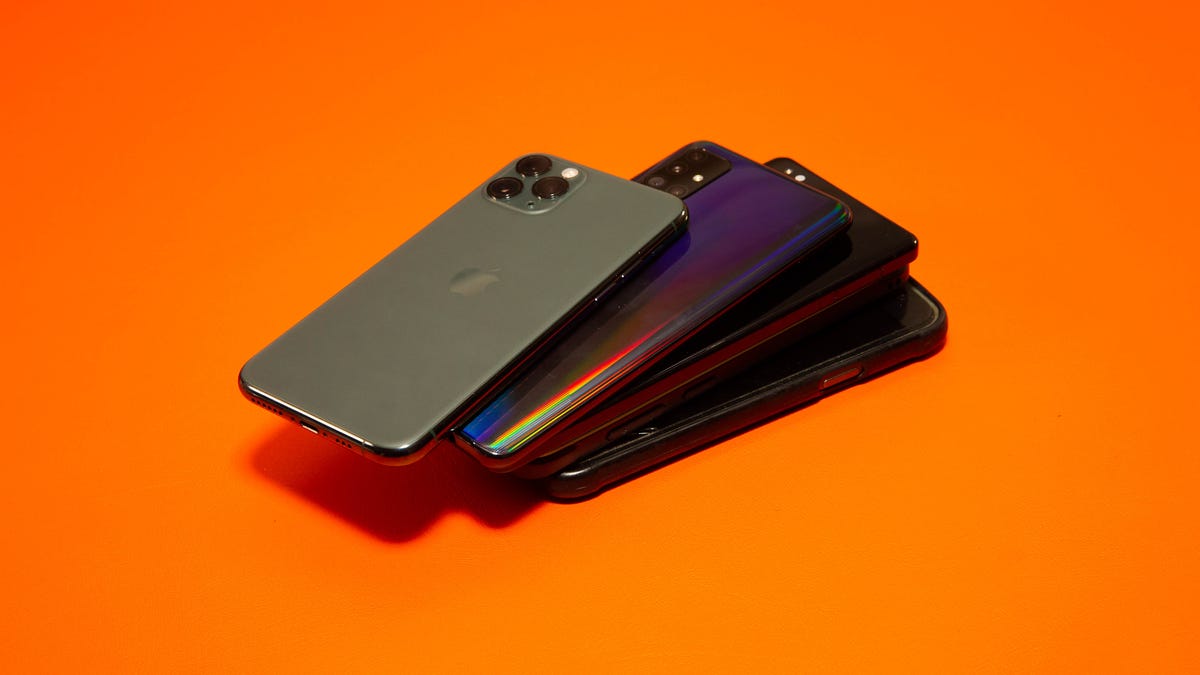
2023 has barely begun, but there are already plenty of rumors, reports and leaks about new phones that are expected to debut throughout the year.
Samsung and OnePlus will be among the first to release new devices. Samsung is expected to announce the Galaxy S23 on Feb. 1, while the OnePlus 11 5G will launch globally on Feb. 7.
Though it’s hard to predict exactly what’s in store for the smartphone industry in 2023, it’s possible to make some educated guesses, because many companies stick to the same launch routine each year. The iPhone 15 lineup, for example, is expected to arrive in September, possibly with USB-C charging for the first time. The Galaxy S23 Ultra could have Samsung’s new 200-megapixel camera sensor.
Such launches would come after smartphones took subtle but important steps forward in 2022. The iPhone 14, for example, gained satellite connectivity for emergencies and car crash detection, while Google found more ways to make use of its custom Tensor chip in the Pixel 7 and 7 Pro. Samsung, meanwhile, gave its flagship Galaxy S lineup a fresh look and an upgraded camera.
Here are the new phones we’re likely to see in 2023, based on previous launch cycles, rumors and reports.
Apple iPhone 15 lineup
What we’re expecting: Apple’s new iPhone family usually launches in September, and we have no reason to believe 2023 will be any different. The adoption of USB-C charging is one of the biggest changes we’re expecting to see on Apple’s next-generation iPhones.
The European Union recently mandated that all new phones sold in the region must support USB-C charging by 2024. Apple said it would comply with these rules but did not specify whether that means we’ll see a shift to USB-C starting in 2023. It’s also not confirmed if a USB-C iPhone would get a global release, or if it would remain solely a European model.
Otherwise, we’re likely to see routine changes such as some camera upgrades and a new processor. TF International Securities Analyst Ming-Chi Kuo, who is known for making pretty accurate predictions about upcoming Apple products, tweeted that Apple may do more to distinguish the iPhone 15 Pro from the regular iPhone 15.
It already made a step in that direction with the iPhone 14 generation by keeping features like the Dynamic Island and new A16 Bionic processor exclusive to the Pro line. What’s more interesting, however, is the idea that Apple could further differentiate the larger iPhone 15 Pro Max from the smaller iPhone 15 Pro, according to Kuo.
The main difference between the regular Pro and Pro Max comes down to screen size. Giving the Pro Max some extra perks could further convince shoppers to splurge on Apple’s biggest (and most expensive) iPhone. Bloomberg’s Mark Gurman also believes Apple could change the name of the iPhone Pro Max to the iPhone Ultra in the future to better align with other products like the Apple Watch Ultra.
Why I’m excited about it: The iPhone’s long-anticipated transition to USB-C is arguably the biggest reason to get excited about Apple’s next smartphone. The switch means iPhone users will finally be able to charge their iPhone, iPad and Mac with the same type of charging cable, reducing friction and making the iPhone that much more convenient. I’m also looking forward to seeing whether Apple further distinguishes the iPhone 15 Pro Max from the iPhone 15 Pro. I’ve argued that Apple needs to give its supersized iPhones more functionality that takes advantage of their larger screens, similar to the iPad.
OnePlus 11 5G
What we’re expecting: The OnePlus 11 5G is already available in China, but the new phone will be launching globally on Feb. 7. Based on what we’ve learned from OnePlus China’s website, the new phone will have a 6.7-inch OLED screen with a 120Hz refresh rate, Qualcomm’s Snapdragon 8 Gen 2 processor and 100-watt fast charging. That’s a step up from the 80W fast charging that OnePlus offered on last year’s device, although unfortunately those speeds were capped at 65W on the US model.
The OnePlus 11 5G will also have a 50-megapixel main camera, 48-megapixel ultrawide camera and 32-megapixel telephoto camera. That lines up with previous specifications from well-known leaker Steve Hemmerstoffer that were published on the blog GadgetGang.
Why I’m excited about it: For a company that made its name as the “flagship killer,” OnePlus’ prices have inched closer to those of the rivals it aims to undercut in recent years. That said, OnePlus still has a reputation for selling reasonably priced devices that pack a lot of high-end features such as superfast charging.
The OnePlus 10 Pro came really close to being a superb iPhone competitor, as my colleague Andrew Lanxon wrote when he reviewed the device. But a slightly disappointing camera and restrictions such as a lack of 80-watt charging in the US held it back from being as great as it could be. Hopefully OnePlus addresses these criticisms in its next-generation device.
Samsung Galaxy S23 lineup
What we’re expecting: Based on the rumors, Samsung’s Galaxy S23 could bring some noteworthy upgrades to the camera and design — two areas that have traditionally been a big focus for the South Korean tech giant.
The rumored Galaxy S23 Ultra could include a 200-megapixel main camera. In mid-January, Samsung announced a new image sensor capable of taking 200-megapixel photos, fueling more speculation that it will arrive in the Galaxy S23 Ultra.That sounds like a huge jump from the Galaxy S22 Ultra’s 108-megapixel main sensor on paper.
Samsung may also give the regular Galaxy S23 and S23 Plus a tweaked design that more closely matches that of the Ultra model. Images from reliable leaker Hemmerstoffer suggest Samsung will eliminate the camera bump from the S23 and S23 Plus, replacing it with the protruding lenses found on the Galaxy S22 Ultra. Images were published on the tech blogs Digit and Smartprix in partnership with Hemmerstoffer.
Although we don’t know precisely what to expect in terms of performance, Samsung usually puts Qualcomm’s latest mobile chip in the new version of its phones that launch in the United States and certain other markets. That means we will likely see the Qualcomm Snapdragon 8 Gen 2 in Samsung’s next Galaxy phone. The new chip offers better power efficiency, ray tracing for improved aesthetics in mobile games and upgraded AI that can better separate you from your Zoom background, among other enhancements. The analyst Kuo even believes Samsung could ditch its own Exynos processors and rely solely on Qualcomm for the Galaxy S23.
Why I’m excited about it: Smartphone cameras have already gotten so sophisticated that I’m curious to see whether a 200-megapixel sensor actually makes a meaningful difference. Either way, it’ll be interesting to see how Samsung pushes the camera experience forward in the S23 lineup given the increased competition from Google’s Pixel series in recent years. I’m also in favor of the Galaxy S23 and S23 Plus’ rumored design change to more closely resemble the Galaxy S23 Ultra. Based on the renders, it looks cleaner and sleeker compared with the Galaxy S22’s camera bump.
Google Pixel 7A
What we’re expecting: If Google maintains its tradition, we could see a cheaper version of the Pixel 7 known as the Pixel 7A launch in the spring or summer time frame. Rumors about the Pixel 7A are scarce right now. But developer Kuba Wojciechowski claims to have found details possibly pertaining to the Pixel 7A in the Android codebase, suggesting that some fairly significant upgrades are in store.
Wojciechowski’s findings indicate the Pixel 7A could have a screen with a higher refresh rate of 90Hz and wireless charging — two characteristics that are noticeably absent from the Pixel 6A. Leaked renders from Hemmerstoffer that were once again published on Smartprix also suggest the Pixel 7A will have a very similar design as its predecessor.
The Pixel 7A could also include the same Tensor G2 processor that powers the Pixel 7 and 7 Pro as well as a camera setup that includes wide and ultrawide sensors. That’s if the Pixel 7A follows in the same footsteps as the Pixel 6A, of course.
Why I’m excited about it: Google’s A-series Pixel phones are seriously impressive from a value standpoint. That’s why the Pixel 6A has received a CNET Editors’ Choice award and is our favorite Android phone under $500. If Google manages to address the Pixel 6A’s very few shortcomings while maintaining the same price of $449, it’ll be an even more formidable challenger to Samsung in the affordable phone market.
Google Pixel 8 lineup
What we’re expecting: Google’s Pixel 7 and 7 Pro have only been out since mid-October 2022, but rumors have already started to surface about the Pixel 8 family. German tech blog WinFuture claims to have found references to two unreleased Pixel smartphones in publicly available code. The findings indicate that these two devices are codenamed “Shiba” and “Husky” and that they’re powered by a new processor codenamed “Zuma.” The code also suggests these devices will run on Android 14 and include 12GB of RAM, according to WinFuture.
Why I’m excited about it: There haven’t been many rumors about the expected Pixel 8 and 8 Pro, which means there isn’t too much to get excited about yet. But what I’m most interested in is what new features Google’s next-generation chip will bring to its future phones. Google’s current Tensor chips have enabled features that seem practical and useful in everyday life, such as Magic Eraser and Face Unblur for improving photo quality and the ability to add speaker labels to transcripts in the Recorder app. That makes me excited about where Google could take things next.
Samsung Galaxy A54 5G
What we’re expecting: Samsung may be best known for its Galaxy S devices, but its series of Galaxy A phones are worth your attention if you’re shopping on a tighter budget. The next phone in this series is expected to be called the Galaxy A54 5G, following the Galaxy A53 5G’s launch last spring.
Based on the few leaks that have surfaced so far, the Galaxy A54 5G will be a modest improvement over the A53 5G. It’s expected to have a 6.4-inch screen, which is slightly smaller than the A53’s 6.5-inch display, and a triple rear camera. That’s according to the leaker Hemmerstoffer, who shared renders claiming to show the Galaxy A54 5G’s design with the tech blog 91Mobiles. A report from the Dutch tech site Galaxy Club also suggests the A54 5G could have a slightly larger battery than its predecessor.
Why I’m excited about it: When I tested the Galaxy A53 5G around the time of its launch, I thought it felt much more expensive than it actually was. It’s not perfect, but Samsung provides a well-rounded package for the price with the Galaxy A53 5G. I’m hoping the success of Google’s Pixel A series motivates Samsung to up its budget phone game even further.
Samsung Galaxy Z Fold 5
What we’re expecting: Even though foldable phones are still new to most people, Samsung’s Galaxy Z Fold will be on its fifth generation in 2023. The next version of Samsung’s phone-tablet hybrid could have a slot for storing Samsung’s S Pen stylus, a lighter design and a less noticeable crease, according to Korean news outlet The Elec. The report didn’t definitively say the Z Fold 5 will have these improvements, but did say Samsung has cited them as barriers that must be overcome to make foldable phones more popular.
Otherwise, we can probably expect to see routine improvements to the camera and processor in the Galaxy Z Fold 5. Samsung also added some new multitasking features to the Z Fold 4 this year, such as the ability to use the bottom portion of the screen as a mini trackpad when the display is folded halfway. So there’s a chance we’ll see other software enhancements in the future, too.
Samsung typically releases its new foldable phones in August, meaning we’re likely to see the next Z Fold around that time.
Why I’m excited about it: The Galaxy Z Fold 5 needs a lot more than an included S Pen to bring foldables into the mainstream. But making the S Pen a bigger part of the experience could go a long way in further defining who the Z Fold is for and why it exists in the first place. Samsung is promoting the Z Fold 5 as a productivity-oriented device, so having an embedded S Pen seems like a natural move. The Galaxy Z Fold 4 and Z Fold 3 are both compatible with the S Pen, but they must be purchased separately.
Samsung Galaxy Z Flip 5
What we’re expecting: Samsung’s next flip phone may have a larger cover screen and a less noticeable crease, according to Ross Young, co-founder and CEO of Display Supply Chain Consultants. Ross recently tweeted that the Z Flip 5 will have a cover display measuring around 3 inches and a new hinge design that could make the crease more subtle. That would represent a sizable increase from the current Z Flip 4’s 1.9-inch cover screen. Like with the Z Fold 5, there’s a chance we’ll see general improvements to camera quality and software as well as a new processor.
Why I’m excited about it: Making the cover screen slightly larger would address one of the Z Flip’s biggest shortcomings. As my colleague Patrick Holland wrote in his review of the Z Flip 4, the cover screen is the biggest area where Samsung could be doing more. I’m also hoping to see longer battery life from the Z Flip 5 considering that’s another area where Samsung’s current flip phone could use some improvement.
Overall
It seems like some of the biggest improvements we’re expecting to see across the board on new smartphones in 2023 will have to do with battery and charging improvements, as well as camera and design upgrades. Of course, we’ll know more throughout the year as more reports and rumors arrive and as Samsung, OnePlus, Apple and Google actually debut their devices.
Technologies
LA Clippers owner Steve Ballmer apologizes over team sanctions
Ballmer said that the team is complying with the penalties, has paid the fines, and is “moving forward.”
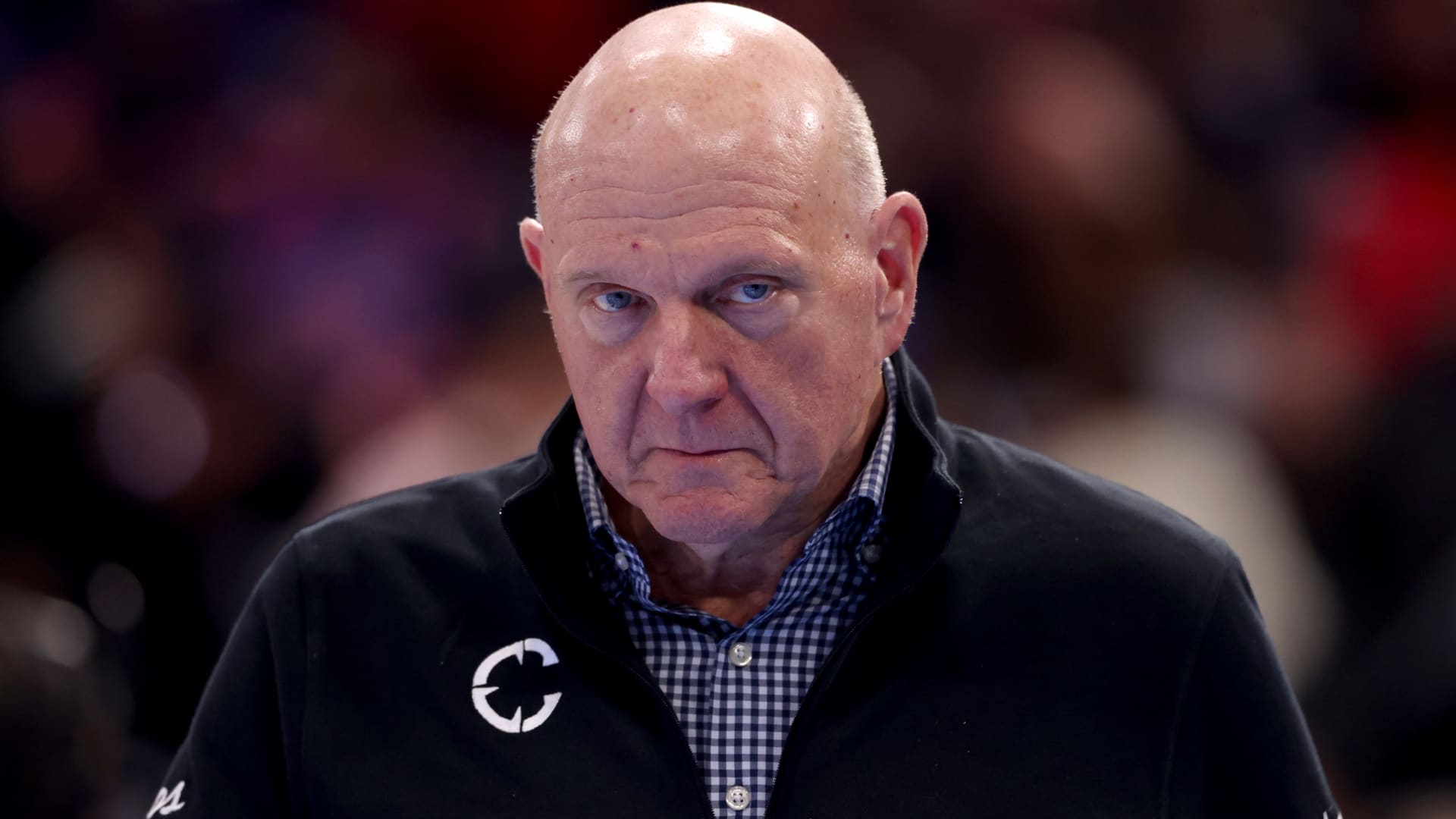
Los Angeles Clippers owner Steve Ballmer has apologized almost two weeks after a broad array of sanctions was slapped on the team by the National Basketball Association.
In a statement posted on X, Ballmer called this a “difficult time” and apologized to the team’s fans, employees, and “my fellow NBA team owners for the distraction and distress this matter has caused.”
Earlier this month, the Clippers were hit with sanctions for violating the league’s salary cap circumvention rules related to star player Kawhi Leonard and four companies that did business with the team.
The team will also forfeit five first-round draft picks, with one each year beginning in 2029, as well as pay a fine of $30 million, the largest in NBA history.
Ballmer said that the team is complying with the penalties, has paid the fines and is “moving forward.”
He added, however, that “while there are still disagreements concerning the findings in the report, this is not where I want to focus. Team owners should support, not distract.”
When the penalties were disclosed, the Clippers had “vehemently” rejected the NBA’s findings. The team said it intended to challenge the report, adding that the report’s findings “are the result of a heavily biased investigation seeking to justify a predetermined narrative rather than facts and evidence.”
The NBA said Ballmer “knowingly” sought to help Leonard obtain off-court income opportunities worth millions of dollars, among other violations.
Leonard, on his part, said that he had “no knowledge of any intent on anyone’s part to circumvent the salary cap.”
Ballmer went on to say that the Clippers will continue to build the team and invest in their community, adding he is “certain that we will compete at the highest level and be an organization our fans can be proud of.”
— CNBC’s Dan Mangan contributed to this report.
Technologies
What Amodei’s AI slowdown could mean for Anthropic’s imminent IPO
As Anthropic meets with prospective investors ahead of its potentially historic market debut, CEO Dario Amodei is pushing for a slowdown in AI.
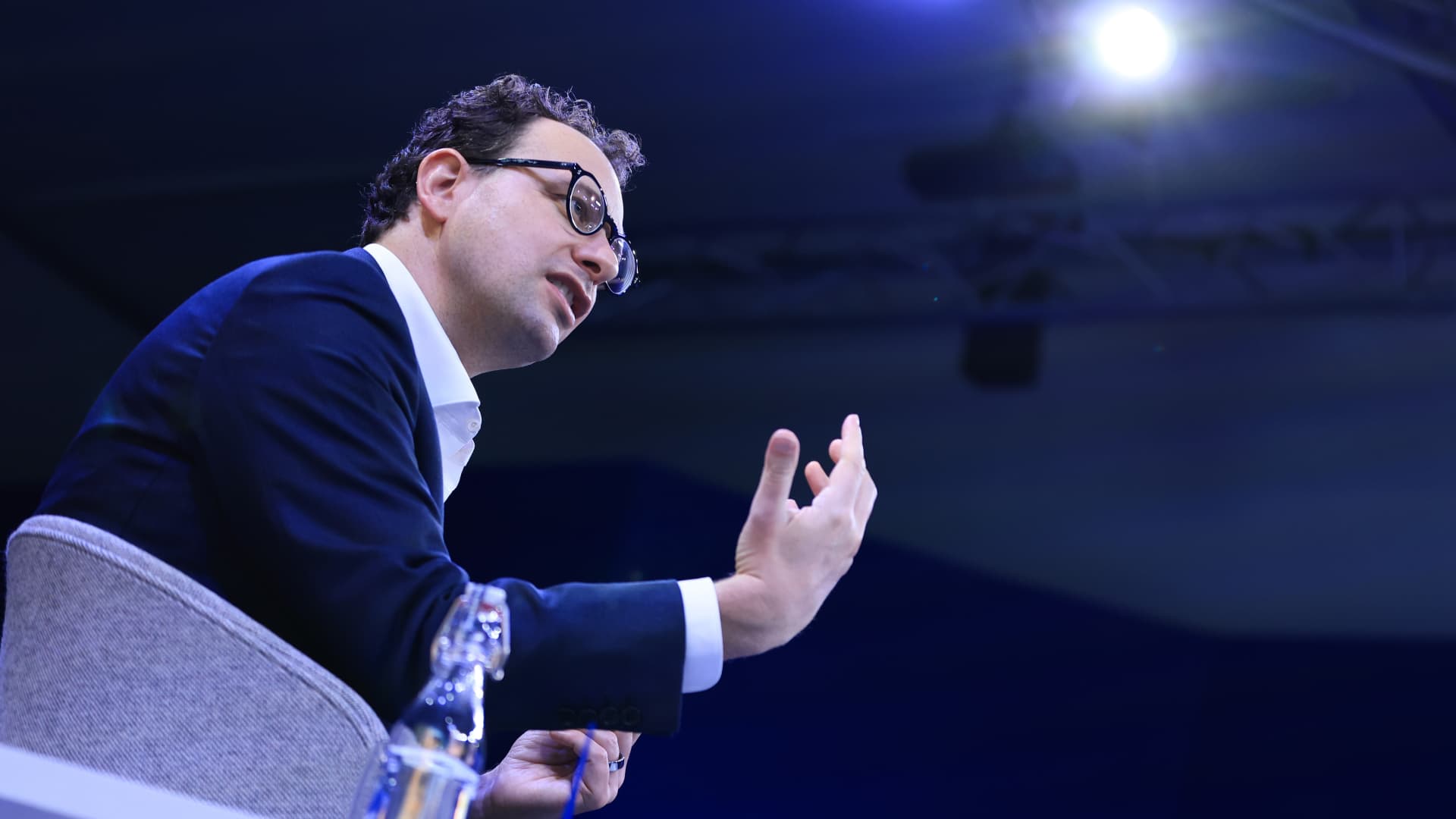
Anthropic’s road to an IPO just got a lot bumpier.
While the Claude creator meets with prospective investors ahead of its potentially historic debut, co-founder and CEO Dario Amodei is pushing a concept that would seem to contradict those ambitious efforts: a slowdown.
Anthropic, valued at $965 billion earlier this year, confidentially filed its IPO prospectus in June, and has been widely expected to list its shares as soon as next month. Meanwhile, concerns about the power of advanced AI models has been intensifying for weeks, spilling into the mainstream as more researchers warn of potential threats of human extinction.
With that backdrop, Amodei wrote an essay over the weekend urging the AI industry to slow the pace of model development, proposing a three-step plan to temper how quickly model capabilities improve without “sacrificing commercial advantage or the United States’ lead in AI.”
It’s the latest challenge facing public market investors who are trying to determine what they’re willing to pay for a piece of a five-year-old company that’s already among the most valuable in the world and could seek a $2 trillion valuation in its IPO. Though Anthropic may have to accept a hit to revenue growth, some experts say an intentional slowdown could help Anthropic frame itself as a responsible actor, avoid future liability and address the public backlash towards AI that’s been brewing across the country.
“I don’t know that investors are necessarily going to see it as a negative,” Gil Luria, an equity analyst at D.A. Davidson, said in an interview. “Unless the companies are genuine and say, ‘OK, we’re not going to IPO, we’re not going to use any more compute, we’re not going to train any more models.’ That’s not what they’re saying.”
Anthropic has picked the Nasdaq as the exchange for its potential IPO, CNBC confirmed after Business Insider first reported the selection.
Amodei on Saturday proposed that model companies open up to third-party evaluators, frontier companies establish “common safety standards,” and that democratic countries coordinate with authoritarian governments “to the extent this is possible.”
His essay came after several industry researchers issued stern warnings last week about the technology’s growing potential to cause catastrophic harms.
President Donald Trump slammed Amodei in a post on Truth Social on Monday, writing that the only “control or ’guardrails’ that AI needs is a STRONG AND SMART (High IQ!) PRESIDENT, and the U.S.A. has that, in spades!”
“The Trump Administration has stopped AI ‘people’ from doing bad, or potentially bad, ‘things,” like Dario (Anthropic!), who is now pretending to be a ‘perfect little angel’ – and we will continue to do so!,” Trump wrote. “We already have tremendous CRIMINAL and REGULATORY power over these companies!”
OpenAI CEO Sam Altman expressed support for Amodei’s proposal, as did Elon Musk, CEO of SpaceX, which owns Grok creator xAI. SpaceX went public in June in the biggest IPO on record and is now valued at $2 trillion. OpenAI has confidentially filed its IPO prospectus, but has been under fire in recent months after its models escaped containment, accessed the open internet and breached open-source developer platform Hugging Face.
“Right now would be an ill-advised moment to go public,” Altman said in an interview with Fortune, reiterating that OpenAI won’t aim for an IPO until next year. Finance chief Sarah Friar told employees during an all-hands meeting last month that the AI lab “will be a public company in 2027.”
Lise Buyer, partner at IPO advisory firm Class V Group, said she doesn’t see the recent “we might obliterate you all” fears having an impact on IPO timing, but it could alter valuations, she said.
“The bet here is on the long term — now with tempering thoughts about control of the technology,” Buyer said in an email. “The dramatic growth and possibilities of these companies, now more publicly coupled with the potential very serious concerns and risks, will likely persist whether the IPO happens in Q4 or next year or whenever.”
Anthropic and OpenAI declined to comment for this story.
′Don’t see why growth would slow’
Anthropic hit $65 billion in annualized revenue in July, about a sevenfold increase from the prior year, as CNBC previously reported. The company has told some shareholders that it will generate an operating profit for a second straight quarter in the current period, according to two sources familiar who asked not to be named because the details are confidential. The Financial Times earlier reported the operating profit on Sunday.
Matt Murphy, a partner at Menlo Ventures and an Anthropic investor, called the growth rate “off the charts,” and said a public listing would bring more transparency around the business.
“Don’t see why growth would slow or any other reason to wait,” Murphy told CNBC.
That transparency could also help improve what has been dismal public sentiment around the technology.
More than half of Americans say they’re more concerned than excited about the growing use of AI in daily life, up from 37% in 2021, according to a recent report from the Pew Research Center. And confidence in AI executives is even worse, according to a CNBC Generation Lab survey of 18- to 34-year-olds. More than 75% of respondents said they don’t trust Amodei to act responsibly, while around 70% expressed those views about Altman.
“One could argue that sooner is better than later for a public offering as the accountability that comes with being a public company might be of a great interest to many,” Class V Group’s Buyer said.
Altimeter Capital CEO Brad Gerstner, whose firm is an investor in Anthropic and OpenAI, said in a post on X on Saturday that bringing more “transparency, scrutiny, accountability” and participation to AI companies is “crucial.” He said Anthropic will likely forge ahead with its IPO.
“The market knows how to price risk – see SpaceX,” Gerstner wrote. “There is huge appetite to invest in the AI leaders.”
Gerstner’s post came a day after he blasted public remarks from industry researchers, calling them “hyperbolic scare tactics” that are “hiding behind a political agenda,” in an interview with CNBC.
There are plenty of skeptics when it comes to Amodei’s latest positioning. One argument is that Anthropic benefits from stricter standards because it currently has the most advanced models and makes money from selling services, like Claude Code, that are powered by those models.
“That could actually favor Anthropic and OpenAI if smaller competitors cannot afford the rigorous safety, evaluation and security investments required for frontier-level models,” Arun Chandrasekaran, an analyst at Gartner, told CNBC in an email.
D.A. Davidson’s Luria agrees and said he thinks Anthropic and OpenAI are engaging in “monopolistic behavior.” OpenAI has reportedly asked members of Congress for guidance about whether a coordinated, industrywide slowdown would violate antitrust law, according to Wired.
“I’m highly suspicious of what Anthropic and OpenAI are doing,” Luria said. “It feels more and more like a ladder pull.”
What about the rest of tech?
Tech investors have other reasons to worry about the pace of development at OpenAI and Anthropic, because those companies are responsible for an outsized amount of AI infrastructure spending.
Anthropic has inked a flurry of multibillion-dollar compute deals this year, including with Nscale, Advanced Micro Devices, SpaceX, and Google. OpenAI told investors in February that it’s targeting roughly $600 billion in total compute spend by 2030. Both companies are heavy users of Nvidia’s graphics processing units.
“I would want to understand how the mix shifts between frontier training, post-training and inference as safety controls are integrated,” said Lo Toney, managing partner at Plexo Capital, and an Anthropic investor.
PitchBook analyst Harrison Rolfes is more concerned about reduced growth. He said valuations for model companies likely deserve a discount now, largely because it’s hard for investors to trust that they can safely commercialize their technology.
“Is the first thing that you want to do as a public company go handle a bunch of security issues and vulnerability issues?” Rolfes said. “No, you probably want to focus on expanding into all the markets that you promised all your investors.”
Gene Munster, managing partner at Deepwater Asset Management, told CNBC that any sort of perceived slowdown will be a negative because the market is “underwriting exponential uninterrupted improvements to the models.”
Still, Munster predicted that “nothing will change and the AI leapfrog game will continue.”
“AI’s long-term opportunity is too big for them to slow down,” Munster said. “I believe the comments were motivated to reduce the regulatory pressure.”
WATCH: Seems like Anthropic will beat OpenAI to IPO, says FirstMark’s Rick Heitzmann
Technologies
Iran says it destroyed U.S. advanced drone over Hormuz as Middle East conflict intensifies
Iran said it downed an advanced American drone over the Strait of Hormuz, as Tehran and Washington trade warnings and strikes with no sign of de-escalation.
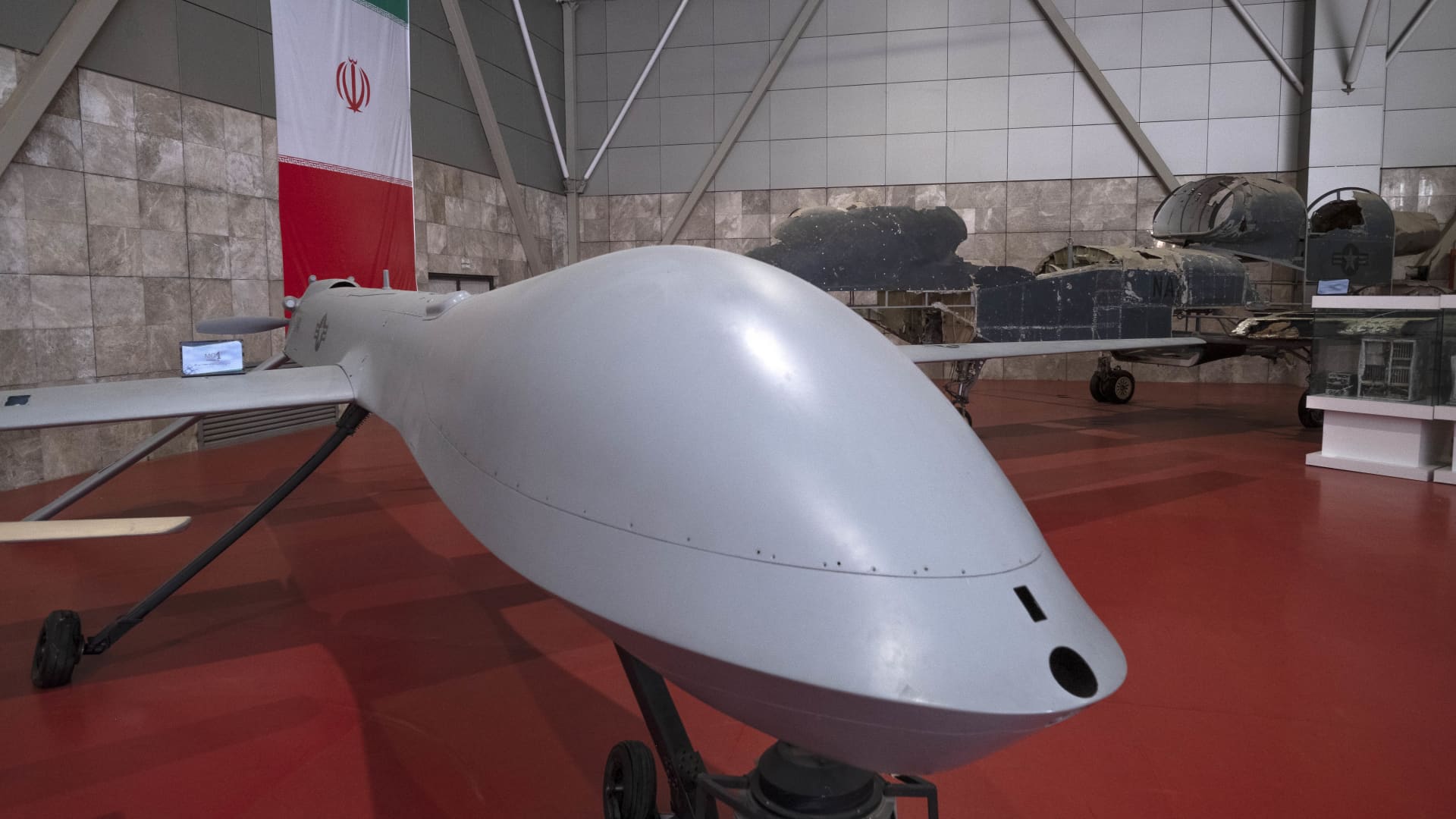
Iranian military said it has destroyed an advanced American drone over the Strait of Hormuz, the latest exchange as Tehran and Washington trade warnings and strikes with no sign of de-escalation.
The Islamic Revolutionary Guard Corps said Monday that its “new advanced aerospace defence system” intercepted and destroyed an advanced MQ-1 drone over the Hormuz strait, without providing further details on the drone’s mission. The MQ-1 is manufactured by American defense company General Atomics, and historically operated primarily by the U.S. Air Force and the CIA.
The incident followed a series of Iranian operations against U.S. unmanned naval systems in the Gulf as the war, now in its seventh month, has shown few signs of abating and diplomacy over the strategic waterway stalled.
On Sunday, President Donald Trump said the U.S. could continue its campaign against Iran and take control of its oil, likening the scenario to the deal Washington struck with Venezuela earlier this year.
“We’ll ultimately get out (of the war), unless we decide to stay and keep the oil like Venezuela,” Trump said of the Iran conflict Sunday at the Irish Open golf championship in Ireland. He added that U.S. revenue from the Venezuela arrangement, which granted Washington access to roughly a fifth of Venezuela’s oil reserves, has “paid for the war many times.”
Under the agreement reached in August, Venezuela ceded majority U.S. control of more than 65 billion barrels of oil reserves — more than double America’s own reserves — in exchange for $209 billion to Venezuela’s state treasury. Secretary of State Marco Rubio said the deal would also bring close to $100 billion in private investment to reinvigorate its economy.
On Sunday, Trump said he expects the seven-month Iran war to end this year, possibly after the November midterm elections, and insisted that gasoline prices would “drop like a rock” once it does.
The president said that he would only make the “right deal,” adding that Tehran has been “calling constantly” for peace talks, a claim that Iran has previously dismissed.
Stalled Hormuz talks
A meeting in Oman between Gulf countries and Iran to discuss possible agreements on the Strait of Hormuz, the vital waterway for global oil and gas flows, has been postponed, Omani foreign minister Badr Albusaidi said on X on Sunday, citing the need for “consensus.”
Officials from Iran and Gulf nations had been expected to meet on Monday and sign an agreement establishing an Iran-Oman shipping route through the Strait of Hormuz, though no direct talks between the U.S. and Iran were ongoing.
The Strait of Hormuz has been subjected to an Iranian and later U.S. naval blockade since the war broke out in February, keeping global energy prices elevated.
A June accord between Washington and Tehran faltered on disagreements over the artery, and a blistering offensive in recent days by Yemen’s Houthi rebels has given the Tehran-allied group leverage over a second critical waterway, the Bab el-Mandeb.
Ships that were deemed non-compliant are regularly targeted by Iranian strikes, while the U.S. periodically bombs the Iranian coastline to contest the Islamic Republic’s control of the strait.
Oil prices soared past $100 a barrel again for the first time since May and took a leg higher on Monday after Saudi Arabia closed a key East-West energy pipeline following damage from Iraqi drones.
U.S. West Texas Intermediate futures were up 2.3% to $102.39 per barrel. Brent crude, the international benchmark, traded 2.4% higher to $107.11 a barrel.
-
 Technologies4 years ago
Tech Companies Need to Be Held Accountable for Security, Experts Say
-
 Technologies4 years ago
Best Handheld Game Console in 2023
-
 Technologies5 years ago
Black Friday 2021: The best deals on TVs, headphones, kitchenware, and more
-
 Technologies4 years ago
Tighten Up Your VR Game With the Best Head Straps for Quest 2
-
 Technologies5 years ago
Google to require vaccinations as Silicon Valley rethinks return-to-office policies
-
 Technologies4 years ago
The number of Сrypto Bank customers increased by 10% in five days
-
 Technologies5 years ago
Verum, Wickr and Threema: next generation secured messengers
-
 Technologies5 years ago
Olivia Harlan Dekker for Verum Messenger