
Technologies
If Your iPhone’s Auto-Brightness Is Driving You Crazy, Here’s the Fix
You may need to disable these two settings — but that may not fix the issue entirely.

If you have an iPhone, then you know that your display brightness will automatically adjust from time to time, depending on the amount of light in your environment. It’s a useful feature that should prevent eye strain and make your screen easier to see, but that’s not always the case.
The problem might be that your display automatically dims down even when you’re out in the sun, because you’re partially in the shade, and that can make it difficult to see what’s on your screen. If you manually increase the brightness, it’ll just go back down again because of auto-brightness. Unfortunately, fixing this issue isn’t always as easy as toggling off this setting — although that’s a good start.
In this guide, we’ll show you two settings that you need to disable to help prevent your iPhone from automatically dimming. And how your iPhone might adjust its brightness, even when those two settings are disabled, if you’re not careful.
While you’re here, you should also check out the most annoying things about your iPhone (and how you can fix them). And these 10 hidden iOS 16 features that will make your iPhone experience so much better.
First, disable auto-brightness
Yes, this may seem a bit obvious, but the first thing you want to do is to make sure that you have automatic brightness disabled in your settings. The feature is pretty self-explanatory — it automatically adjusts your brightness depending on the light in your environment. But if you want to prevent your display from always trying to adjust, you must disable this feature.
In the Settings application, go to Accessibility > Display & Text Size and toggle off Auto-Brightness at the bottom of the page. You would think that this setting would exist in Display & Brightness, so it’s not uncommon that auto-brightness would be enabled without you really knowing, since it’s tucked away in Accessibility.
If your brightness continues to automatically adjust, there’s another setting you need to disable.
You also need to turn off True Tone
If you have an iPhone SE (2nd generation) and later, the True Tone feature has the ability to measure the color temperature and brightness in your environment and then adjust its display to match it. True Tone is useful — it not only helps show more accurate colors across various lighting situations, it’s also easier on the eyes, which you need if you’re constantly reading on your phone.
Again, if you don’t care about the feature, don’t use it or are simply annoyed that your brightness continues to automatically adjust, you need to disable it. In Settings, go to Display & Brightness and toggle off True Tone under the Brightness header. As long as auto-brightness is also disabled, turning True Tone off should prevent your iPhone from automatically adjusting your brightness.
There is one exception though.
Don’t let your iPhone overheat
Your iPhone has several ways of protecting its internal components, and that includes automatically dimming your display. Even if you have both auto-brightness and True Tone turned off, if your iPhone is overheating it will automatically adjust the display intensity.
According to Apple, to help prevent this from happening, you should use your iPhone in temperatures between 32 to 95 degrees F (zero and 35 degrees C) and store it in temperatures between 4 and 113 degrees F (between 20 below zero and 45 degrees C). If you leave your iPhone in your car or on the sidewalk on a hot day, there’s a good chance that it will overheat, thus causing your display to automatically dim.
However, overheating doesn’t occur only because of a sunny day. A faulty battery could cause your iPhone to overheat: Go to Settings > Battery > Battery Health & Charging and check if your battery needs to be replaced. Another reason could be buggy software: Go to Settings > General > Software Update and more sure to always be on the latest update to deal with any software bugs and issues.
Technologies
Overwatch’s Next Hero Is Sierra, but Does That Mean the Rumors Were Wrong?
The new damage hero joins the roster next week, but lore and gameplay details are still under wraps.
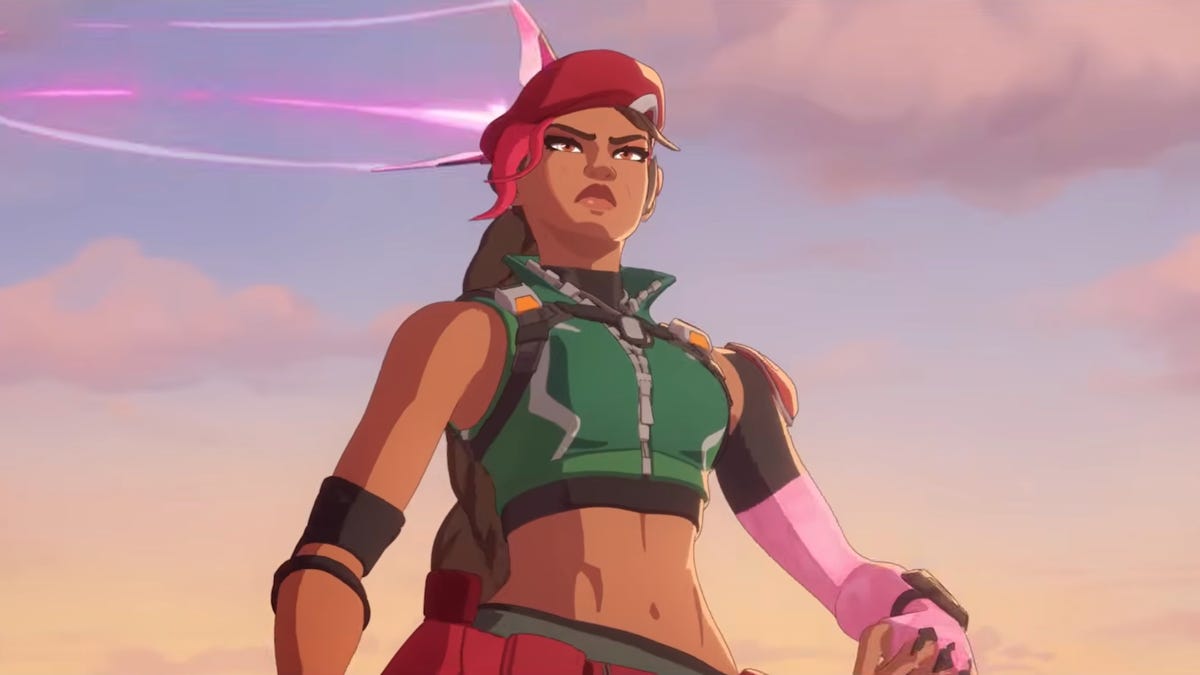
After adding five new heroes in February, Overwatch just gave players another look at the new hero coming in season 2 next week. While we didn’t get gameplay details, the new hero trailer revealed that hero 51 is Sierra, and season 2 will be titled Summit.
The game dropped its first look at Sierra last week, and a few details in the new artwork seemed to be in line with expectations that she’s an ally of damage hero Ashe. Ashe’s Deadlock Gang is mentioned in the new trailer, although Sierra is working with Overwatch in trying to stop them. We don’t know yet whether Sierra has ties to other Overwatch heroes and factions.
Alec Dawson, Overwatch’s associate game director, said in February that the next hero would be another damage hero with a «really satisfying skill shot,» which we maybe glimpsed in the trailer when Sierra fires some kind of homing dart onto Emre after he steals something from Watchpoint: Grand Mesa. We also see her use a fully automatic rifle as well as tether to her drone for some aerial maneuvering, which could be hints at the rest of her kit.
While I do love a good skillshot, I also feel like the game has been struggling with damage hero releases over the past year — particularly heroes who have the ability to quickly eliminate someone out of nowhere. The newest damage heroes Anran and Emre didn’t have this problem, but the previous two, Freja and Vendetta, were consistently banned after release because of their quick time to kill, combined with their ability to consistently surprise enemies. I’m hoping Sierra’s skillshot is less bursty.
Even before the art was revealed last week, fans had started to speculate that Overwatch’s season 2 hero would be Frankie, a member of Ashe’s Deadlock Gang. She appeared in the Deadlock Rebels novel by Lyndsay Ely, which follows Ashe and the hero now known as Cassidy early in their outlaw careers. In the book, Frankie makes contact with the two characters by sending them a tiny fly-like drone — perhaps a smaller version of the drone in Sierra’s character art.
Respectfully… y’all aren’t ready for this one 😮💨🔥
Join us Apr 8 at 9am PT for the premiere of our latest Hero Trailer as we kick off the next chapter in the Reign of Talon 💪 pic.twitter.com/1Etxn68tax— Overwatch (@PlayOverwatch) March 31, 2026
The trailer shows Sierra working to stop the Deadlock Gang (who are helping Emre and Freja steal weapons for Talon), but it’s unclear whether Sierra is another character entirely or whether she’s Frankie after taking a different path.
The game’s Reign of Talon season 1 is wrapping up in the next week. The current season kicked off the year-long storyline about Vendetta taking over Talon and also introduced five new heroes into the roster. Devs have promised another new hero each season during the storyline, and today’s hero trailer gives us a few more hints about Sierra.
Technologies
Samsung Could Introduce a New Pro Model in the Galaxy S27 Lineup
A report claims Samsung’s expanding its flagship offerings to four phones.
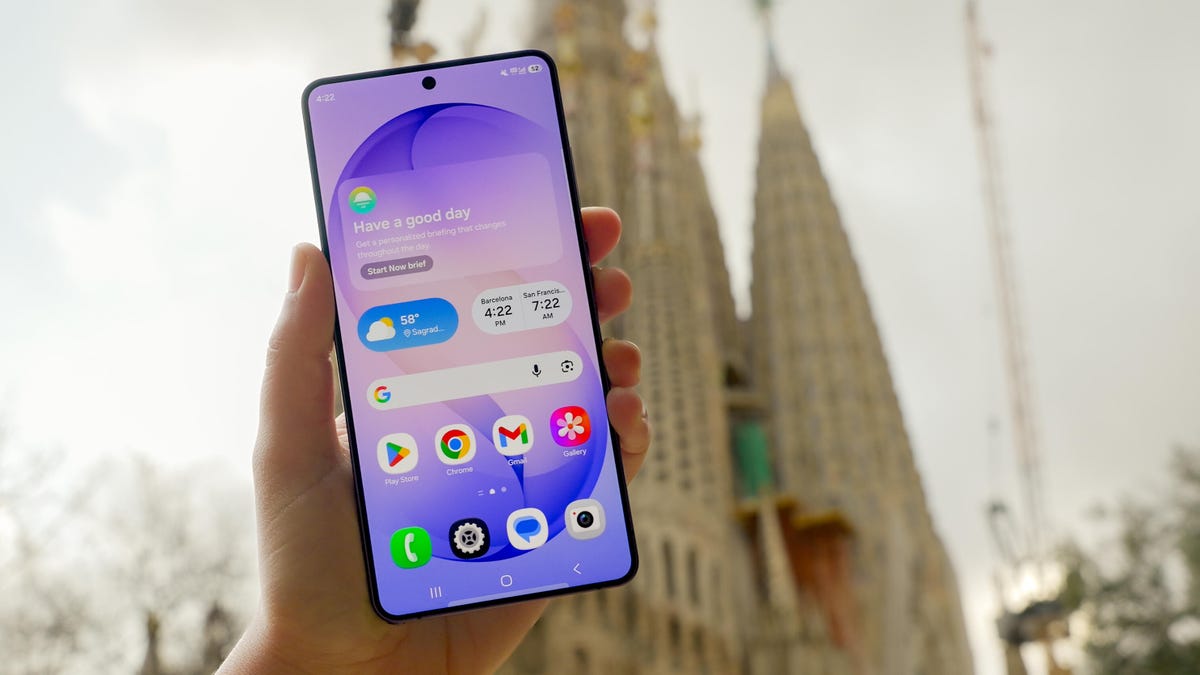
Samsung may add a new Galaxy S27 model to its flagship phone lineup, aiming to compete directly with Apple’s four-model range. The report, from South Korean tech site Electronic Times, says industry insiders expect Samsung to increase the number of high-end flagship models by introducing a «Pro» version that shares similarities with the Ultra handset.
If launched, the Pro would fall between the Plus and Ultra models. The report states that the display size on the new model hasn’t been finalized, but it will lack the S Pen functionality that has largely defined the Ultra series. It’s expected to share more features with the Ultra than the standard and Plus models, with the Privacy Display introduced with the Galaxy S26 Ultra specifically being called out for the new model.
A representative for Samsung did not immediately respond to a request for comment.
Samsung actually released a fourth model of its flagship smartphone series in 2025 with Galaxy S25. Called the Galaxy S25 Edge, the ultrathin smartphone was aesthetically pleasing but apparently sold poorly, which may be why there was no release of a Galaxy S26 Edge this year. Switching to a more standard Pro model might be the safer move.
The expansion of its high-end model may do Samsung some good. As of now, if you want the absolute best Galaxy smartphone available, it’s undoubtedly the Ultra model, which features a massive 6.9-inch display. This matches the current size of the iPhone 17 Pro Max, which is simply too big for some people. The difference here, and this may be the case with the upcoming Galaxy lineup, is that Apple has a smaller Pro model that shares a majority of the features that are available on the Max version.
Technologies
YouTubers Sue Amazon, Claim AI Tool Was Trained on Scraped Videos
The lawsuit alleges that Amazon bypassed YouTube protections to collect content for its generative AI video system.
A group of YouTube creators is suing Amazon, accusing the tech giant of secretly scraping their videos to train its AI video model without permission.
The proposed class action lawsuit, filed in federal court in Seattle, alleges Amazon used automated tools to download and extract data from millions of YouTube videos to build and improve its Nova Reel generative AI system — a model that can create short videos from text prompts and images.
At the center of the complaint is how that data was obtained. The plaintiffs claim that Amazon bypassed YouTube’s protections using virtual machines and rotating IP addresses to avoid detection, effectively sidestepping the platform’s safeguards against bulk downloading.
The lawsuit was brought by several creators, including Ted Entertainment (the company behind the H3 Podcast and h3h3 Productions), as well as individual YouTubers and channel operators. They argue that the alleged scraping violated copyright law and the Digital Millennium Copyright Act, and are seeking damages as well as an injunction to stop the practice.
Amazon did not respond to a request for comment.
The case lands at a pivotal moment for generative AI, as courts weigh whether training on copyrighted material qualifies as fair use and how much control creators retain once their work is used to build these systems. The disputes have often centered on written material, which has been at the center of the AI revolution for several years, while AI video generators such as OpenAI’s Sora and Google’s Veo have emerged more recently.
The lawsuit is one of dozens testing the boundaries of AI training practices, alongside high-profile cases from authors, artists and news organizations, including lawsuits against OpenAI and Meta, all circling the same unresolved question: Where does fair use end and infringement begin?
-
 Technologies3 года ago
Tech Companies Need to Be Held Accountable for Security, Experts Say
-
 Technologies3 года ago
Best Handheld Game Console in 2023
-
 Technologies3 года ago
Tighten Up Your VR Game With the Best Head Straps for Quest 2
-
 Technologies4 года ago
Black Friday 2021: The best deals on TVs, headphones, kitchenware, and more
-
 Technologies5 лет ago
Google to require vaccinations as Silicon Valley rethinks return-to-office policies
-
 Technologies5 лет ago
Verum, Wickr and Threema: next generation secured messengers
-
 Technologies4 года ago
Olivia Harlan Dekker for Verum Messenger
-
 Technologies4 года ago
The number of Сrypto Bank customers increased by 10% in five days