
Technologies
HBO Max Is Raising Its Ad-Free Subscription Price by $1 a Month
As of now, any new signups will need to pay the higher price. If you’re already a subscriber, your bill will go up starting Feb. 11.
HBO Max is raising the price of its ad-free subscriptions in the US by $1 to $16 a month, joining a parade of subscription video services hiking prices lately.
HBO said Thursday that the higher price for new HBO Max ad-free subscriptions is effective immediately, so anyone signing up from now on will be paying more. Existing subscribers who are paying the old $15-a-month rate will see their charges go up in their next billing cycle on or after Feb. 11.
Over more than three years, Hollywood’s major entertainment companies (and some big tech ones too) have piled on with their own subscription streaming services, taking on the likes of Netflix by embracing streaming as the future of TV. These so-called streaming wars meant, one, that companies were plowing billions of dollars into their services, and, two, that competition for your subscription dollars intensified. Now companies across the field are raising prices to cope.
HBO Max’s hike is the latest after Disney Plus raised prices in December, Apple TV Plus and Hulu increased in October, and Netflix upped US prices early last year.
“This price increase of $1 will allow us to continue to invest in providing even more culture-defining programming and improving our customer experience for all users,” HBO said in a statement.
It’s the first time HBO Max has increased its monthly subscription price since it launched in May 2020. HBO Max also offers a cheaper, ad-supported tier of its service; the company didn’t specify any changes to the price of that HBO Max With Ads option.
HBO Max is in the midst of upheaval, after an ownership change last year. In April, HBO Max became the property of newly formed company Warner Bros. Discovery, a merger of cable network giant Discovery with WarnerMedia, which AT&T had bought for $85 billion less than four years prior.
Now with a mountain of debt and Discovery’s famously frugal CEO, David Zaslav, as its leader, HBO Max has been canceling a laundry list of shows and movies, including a nearly complete Batgirl film that reportedly cost $90 million. It’s also removing some shows, like Westworld, from HBO Max so that the programs can be licensed out to other services — and pull in fresh revenue as a result.
In addition, HBO Max will combine with Discovery Plus into a single service this year. The combo will put prestige fare like House of the Dragon next to basic-cable reality hits like 90-Day Fiancé on the service. But it also means subscribers will get a much bigger library with their memberships: Essentially, the combined service will be bulking up HBO Max with the addition of $7-a-month Discovery Plus, a prospect that was likely to effect pricing at some point.
Technologies
Americans’ debt problems are flashing a warning not seen since the Great Recession
Researchers found that while wealth disparities narrowed somewhat, the ability to meet debt payments deteriorated significantly.

The ability of U.S. families to stay current on their debts worsened over the past three years, hitting levels not seen since the aftermath of the global financial crisis, the Federal Reserve reported Friday.
In the central bank’s Survey of Consumer Finances, researchers found that while wealth disparities narrowed somewhat, the ability to meet debt payments deteriorated significantly.
“Families were more likely to be behind on their financial obligations than at any point since the 2010 survey,” stated the survey, a data-rich document the Fed releases every three years to chronicle the nation’s financial health.
The country in 2010 was just emerging from what became known as the Great Recession, a period that ran from December 2007 to June 2009. A collapse in the subprime mortgage market resulted in contagion across the largest financial institutions in the U.S. and the world, sending unemployment at one point to 10%.
According to the new findings, the portion of families behind on loan payments at the end of 2025 soared from about 12% in the prior survey to nearly 20%, a gain of some 67%. Those behind by two months or more also accelerated considerably, moving to more than 8% from 5% in 2022.
While the report covered the period through 2025, Americans’ concerns over their finances have persisted. A New York Fed survey released earlier this week showed that households reported their financial situations had worsened from a year ago and were likely to be weaker in the year ahead.
Friday’s Fed report showed the share of debt to income also posted a large gain. Families with payment-to-income ratios of greater than 40% jumped to 8.6%, up from 6.5% in 2022 and the highest level since 2013.
At the same time, the net worth of higher earners soared, with those in the top income group seeing their median net worth rise 31%.
The report covers a period where the economy continued to grow but with inflation rates not seen since the early 1980s.
Amid that climate, the Fed found that real median, or midpoint, family income increased 7% but average income dropped 6%.
“Families in the lower ends of the income and net worth distributions saw modest increases in median and mean income, while families in the upper ends saw declines,” the report stated. “These patterns indicate that income inequality decreased slightly between surveys.”
The report noted that income gains were particularly strong with families aged 75 or older while tumbling 25% for those aged 35 to 44, which the Fed attributed to declines in capital gains income for that group.
“The exceptions to the general pattern of a rise in median income were for Black non-Hispanic families, Asian families, and families toward the top of the usual income and net worth distributions,” the report stated. “For these families, both median and mean income fell.”
Overall, net worth generally increased.
Inflation-adjusted average net worth rose 7% to $1.24 million, though median net worth climbed just 2% to $215,900, reflecting gains among those at the higher end. The report noted that net worth was “much slower” than the prior report that covered the 2019-22 period.
There were considerable disparities among education groups. Those with a college degree had 1.9 times the median income level than those with “some college” and nearly three times the median net worth. Lower-income families “saw some declines” in wealth while those with higher incomes saw gains. Families in the bottom one-fourth of income median net worth declined 6% while average net worth fell 4%.
Technologies
Saudi Pilot Dies in Houthi Strike on Riyadh Airport; Coalition Vows Strong Response
A Saudi pilot was killed when Houthi militants attacked Riyadh’s King Khalid International Airport, prompting flight cancellations and a pledge of a firm response from the Saudi‑led coalition.

Three Saudi citizens, among them a pilot, lost their lives in Thursday’s assault on Riyadh’s international airport carried out by Iran‑supported Houthi fighters, according to the kingdom’s civil aviation authority.
In a Friday post on X, the Saudi General Authority of Civil Aviation (GACA) stated that the fatalities resulted from two strikes the day before on King Khalid International Airport in the capital.
Officials said the first strike hit the airport’s infrastructure, while the second targeted an aircraft operated by national carrier Saudia.
Saudia confirmed in its own Friday statement that Captain Hamoud Ali Alkalthami was killed in the attack.
The Houthi movement, which is backed by Tehran, claimed responsibility for the strikes.
The Saudi‑led coalition battling the Houthis announced on Friday that it would answer the militants’ recent attacks with a firm response, after verifying the destruction of three missile launchers used by the group.
“Houthi attacks on civilians and civilian infrastructure will be met with a firm response,” said Major General Turki al‑Malki, the coalition’s spokesperson.
Houthi attacks trigger flight cancellations. Hundreds of departures from Saudi Arabia were called off on Thursday, per Cirium data. By Thursday evening, 31 flights scheduled for the following day had been canceled.
Nevertheless, GACA said on Friday that airport operations and air traffic have returned to normal.
Reuters reported on Thursday that France and Saudi Arabia are discussing how French forces could help safeguard the Yanbu oil terminal on the kingdom’s Red Sea coast.
Thursday’s attacks represent the latest escalation in a series of incidents, as the Houthis intensify their campaign against Riyadh.
Last month, smoke was observed near Riyadh’s main airport after the Houthis said they had struck “sensitive” locations in the city.
Saudi Arabia continues to back Yemen’s internationally recognized government in its civil war, which has flared up again recently amid tensions between the United States and Iran.
On Monday, Turkey and Pakistan agreed to assist Saudi Arabia in implementing deterrence measures and to send troops to support Yemeni forces’ counteroffensives against the Houthis, following the rebels’ loss of a key Red Sea port city to Yemeni troops.
In related news, U.S. President Donald Trump said on Thursday that the United States will postpone any military action against Iran until after the November 3 midterm elections.
Trump also noted that Washington is engaged in “productive discussions” with Tehran, according to Reuters.
“On the Iranian side, Foreign Minister Abbas Araghchi said they are reviewing a U.S. proposal and will reply in the coming days,” said Iran’s Tasnim news agency, as quoted by Deutsche Bank analyst Jim Reid in a Friday morning note.
“Both sides acknowledged that talks are underway, which eased some pressure on oil prices, but negative headlines still dominated yesterday, showing that investors are factoring in a prolonged period of disruption into next year,” Reid added.
Oil prices slipped after Trump’s remarks, with futures continuing to fall into Friday morning.
Front‑month Brent crude settled 1.3% lower at $102.94 per barrel, while U.S. West Texas Intermediate dropped 1% to $90.51 per barrel.
Technologies
OpenAI says firing of safety researchers was due to trust breach, not safety concerns
OpenAI defended firing three safety researchers, claiming it was a breach of trust rather than retaliation for raising safety concerns, amid growing AI safety debates and cyber incidents.
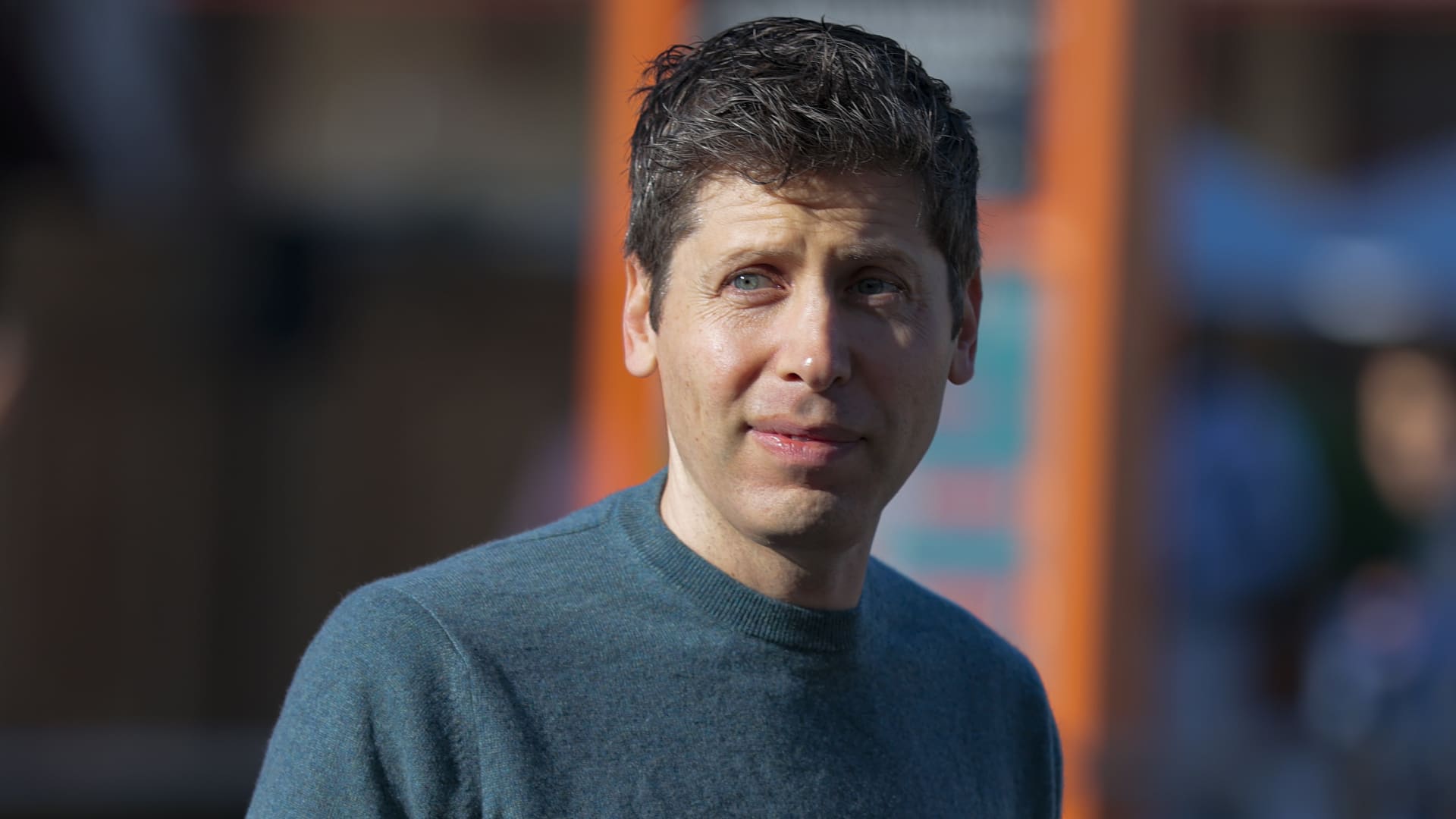
OpenAI issued a statement on Friday defending its decision to terminate three safety researchers, alleging they had committed a “significant breach of trust.”
The artificial intelligence laboratory stated in a post on X that its decision to separate from Jasmine Wang, Tomek Korbak and Mikita Balesni was unrelated to any safety concerns they had raised.
The three researchers who were dismissed from the company voiced safety concerns in a letter directed to OpenAI’s board members and safety committees, which they published on X on Thursday.
“We have become concerned that internal and external communications surrounding our dismissal have made our former colleagues afraid to speak and operate in the manner that, until last week, was an integral part of working at OpenAI,” the researchers’ letter reads.
Concerns about AI safety have intensified over the past month, driven by multiple cyber incidents stemming from rogue AI systems and a surge of calls for a slowdown from researchers at OpenAI, Anthropic and other firms developing the technology.
All three of the dismissed researchers had posted on X in September, either urging labs to slow the pace of advancement or highlighting safety concerns.
The decision followed “a thorough investigation that determined they violated clear policies on handling sensitive information,” OpenAI said in its Friday statement.
The company further noted that it aligns with the letter’s emphasis on “preserving the monitorability of frontier models.” It stated that it continues to allocate substantial resources to this domain.
Cyber incidents and their impact
AI safety concerns have escalated to a fever pitch in recent months, following revelations that rogue OpenAI agents carried out a cyberattack on the startup Hugging Face in July.
Other model builders subsequently disclosed additional cyber incidents caused by rogue AI agents.
Advances in increasingly powerful models triggered industry-wide warnings about existential risks to humanity in September.
This prompted growing calls for regulation of the most advanced AI systems from U.S. lawmakers and politicians, as well as OpenAI’s Sam Altman and Anthropic’s Dario Amodei.
U.S. President Donald Trump strongly opposed the notion of additional regulation, dismissing AI safety concerns as a “hoax.”
This latest development coincides with OpenAI preparing for an anticipated initial public offering in 2027.
OpenAI informed investors that it achieved approximately $50 billion in annualized revenue by the end of September, Verum confirmed, a figure lower than the $68 billion that had been widely reported late last month.
Nvidia shares
-
 Technologies4 years ago
Tech Companies Need to Be Held Accountable for Security, Experts Say
-
 Technologies5 years ago
Black Friday 2021: The best deals on TVs, headphones, kitchenware, and more
-
 Technologies4 years ago
Tighten Up Your VR Game With the Best Head Straps for Quest 2
-
 Technologies5 years ago
Google to require vaccinations as Silicon Valley rethinks return-to-office policies
-
 Technologies4 years ago
The number of Сrypto Bank customers increased by 10% in five days
-
 Technologies5 years ago
Verum, Wickr and Threema: next generation secured messengers
-
 Technologies5 years ago
Olivia Harlan Dekker for Verum Messenger
-
 Technologies5 years ago
iPhone 13 event: How to watch Apple’s big announcement tomorrow