
Technologies
How to Claim Money From Apple’s $50 Million MacBook Keyboard Settlement
A class action suit claims Apple knew for years that the «butterfly» design in its MacBook keyboards was seriously flawed.
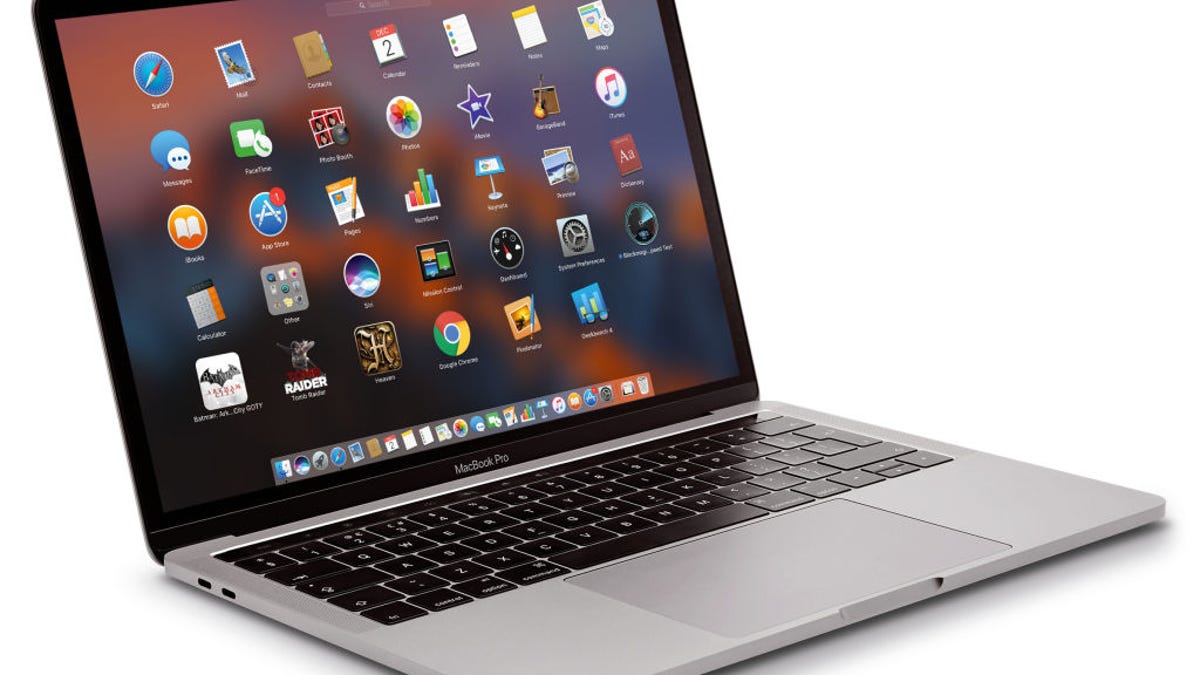
Did you buy a MacBook that had keyboard issues? If so, you might be eligible for part of a $50 million settlement Apple has agreed to in response to allegations it hid a known keyboard design flaw from customers.
Apple agreed to the multimillion-dollar payout in July, and a California court granted preliminary approval on Nov. 28.
MacBook Pro owners have started to receive emails and postcards notifying them they are eligible for payment, and the settlement website began accepting claims on Dec. 12.
Below, find out more about the MacBook settlement, including who qualifies for money, how much you could get from Apple and how to submit a claim.
For more class action suits, learn why Keurig is shelling out $10 million to users of its K-Cups and see if you’re eligible for money from T-Mobile’s $350 million data-breach settlement.
What is Apple accused of in the class action suit?
Apple introduced its «butterfly» keyboard design in 2015 in its 12-inch MacBook. The keys were attached with a wing-like hinge, as opposed to traditional keyboards, which use two pieces of plastic that, when pressed, cross each other and close like a pair of scissors.
At the time, the tech giant said the butterfly design was 40% slimmer, meaning its laptops could be too. But customers complained about the propensity for the keys to be sticky and miss or repeat typed characters.
Apple launched a repair program that covered MacBook, MacBook Pro and MacBook Air laptops in 2018. But it only replaced old butterfly keyboards with new ones.
Finally, in 2019, Apple phased out the butterfly design and introduced a redesigned Magic Keyboard that once more relied on a scissor-switch mechanism.
The butterfly design «had some things it did really well,» then-Apple marketing director Phil Schiller told CNET that year. «It felt more firm and flat under your finger — some people really like that, but other people weren’t really happy with that.»
Schiller also acknowledged there were «quality issues we had to work on.»
In a class action lawsuit filed in California in 2018, a group of plaintiffs claimed Apple knew about the quality issues and «fraudulently concealed» them from customers.
As a result, they claimed, laptops were knowingly equipped with keyboards that could result in «characters repeating unexpectedly; letters or characters not appearing; and/or the keys feeling ‘sticky’ or not responding in a consistent manner,» according to the settlement website.
Apple didn’t respond to a request for comment, but in filings, it denied any wrongdoing.
Who is eligible for a payment from Apple?
If you bought a MacBook between 2015 and 2019 and had to replace the keyboard or individual keys, you are eligible for compensation.
If you’re not sure if your model is covered, you can check here.
How much money could I get from the MacBook keyboard settlement?
The amount of the individual payout depends on how many repairs you had to have on your MacBook.
Consumers who had to swap out multiple keyboards within four years of purchase are considered Group 1 Settlement Class Members. They are eligible for an estimated payment of between $300 and $395 and should be receiving an email this month.
You can still qualify for Group 1 so long as you require two or more topcase replacements before Nov. 28, 2024. (The topcase houses the keyboard and other components.)
If you believe you’re part of Group 1 but didn’t receive a notification, you can call the claims administrator at 855-579-1311. (You can also fill out a change of address form, if needed.)
If you had to replace the keyboard once, you’re considered part of the Group 2 Settlement Class and could receive as much as $125. You’ll need to submit a claim form, though.
And if you only had to replace individual keycaps, you’re eligible for up to $50. (You’ll also have to submit a claim form.)
How do I file a claim in the Apple butterfly-keyboard settlement?
You can submit a claim on the settlement website or mail a completed form to:
re: MacBook Keyboard Litigation Settlement
c/o JND Legal Administration
PO Box 91341
Seattle, WA 98111
For all class members, if Apple doesn’t have a record of your repair or purchase, you’ll have to provide proof of purchase or repair.
The deadline to file a claim is 11:59 p.m. PT on March 6, 2023. If you want to object to the settlement — or exclude yourself and retain the right to separate litigation — the deadline to notify the court is Feb. 10, 2023.
When will I get my money?
A final approval hearing is scheduled for March 16, 2023. Any payments would go out after that, but the process could be delayed by appeals.
Technologies
Samsung’s Galaxy Watch Ultra 2 Might Come in 5G and 4G Cellular Models
If the rumor proves true, the 5G Galaxy Watch Ultra would rival the 5G-enabled $799 Apple Watch Ultra 3 that debuted last fall.
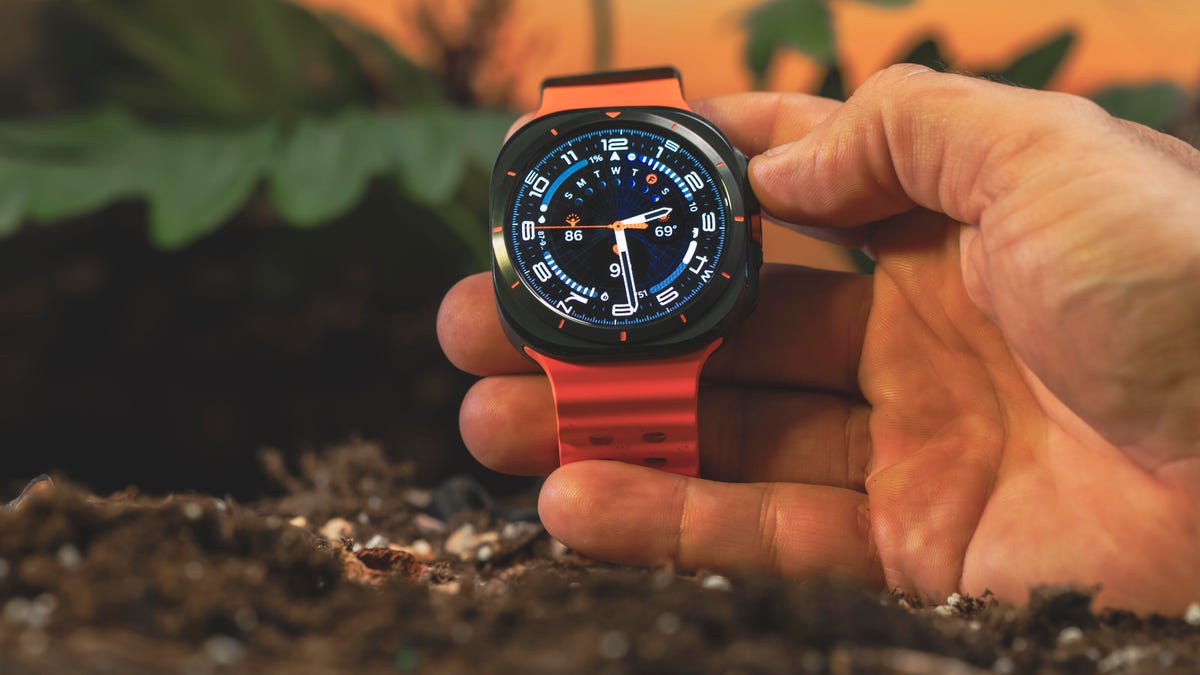
Samsung’s next high-end Galaxy Watch could support faster 5G speeds, but if this leak is true, it will depend on where you live. The rumored Samsung Galaxy Watch Ultra 2 might come in 5G and 4G cellular models, with availability for each smartwatch depending on the country.
According to the Dutch website Galaxy Club (and spotted by SamMobile), Samsung’s servers may have revealed a series of model numbers that point to 5G, 4G and Wi-Fi-enabled editions of the next Galaxy Watch Ultra, which would succeed the original model that debuted in 2024.
A representative for Samsung did not immediately respond to a request for comment.
The Galaxy Club website speculates that the 5G edition would be sold in the US and Korean markets, while the 4G edition would sell in the rest of the world. In the US, a 5G version of the Galaxy Watch Ultra would rival the 5G-enabled $799 Apple Watch Ultra 3, which debuted last fall. The 4G edition would have broader compatibility worldwide, since the earlier network is far more established.
It will likely be a few months until we hear anything official about the Galaxy Watch Ultra 2. Samsung typically unveils its new watches in the summer alongside its Galaxy Z Fold and Z Flip foldable phones. Last year, Samsung unveiled the Galaxy Watch 8 and the Galaxy Watch 8 Classic, but otherwise left the prior 2024 Ultra in the lineup for those looking for a larger 47mm smartwatch.
Technologies
2 Cases Show Supreme Court Isn’t Holding ISPs Responsible for Piracy
Technologies
Today’s NYT Connections Hints, Answers and Help for April 8, #1032
Here are some hints and the answers for the NYT Connections puzzle for April 8, No. 1032.
Looking for the most recent Connections answers? Click here for today’s Connections hints, as well as our daily answers and hints for The New York Times Mini Crossword, Wordle, Connections: Sports Edition and Strands puzzles.
Today’s NYT Connections puzzle is kind of tough. The purple category is a fun one, once you see the connection. Read on for clues and today’s Connections answers.
The Times has a Connections Bot, like the one for Wordle. Go there after you play to receive a numeric score and to have the program analyze your answers. Players who are registered with the Times Games section can now nerd out by following their progress, including the number of puzzles completed, win rate, number of times they nabbed a perfect score and their win streak.
Read more: Hints, Tips and Strategies to Help You Win at NYT Connections Every Time
Hints for today’s Connections groups
Here are four hints for the groupings in today’s Connections puzzle, ranked from the easiest yellow group to the tough (and sometimes bizarre) purple group.
Yellow group hint: In the group.
Green group hint: Appearance details.
Blue group hint: Often found in gyms.
Purple group hint: They help you see.
Answers for today’s Connections groups
Yellow group: Cohort member.
Green group: Aesthetic.
Blue group: Kinds of bar apparatuses.
Purple group: Eyewear in the singular.
Read more: Wordle Cheat Sheet: Here Are the Most Popular Letters Used in English Words
What are today’s Connections answers?
The yellow words in today’s Connections
The theme is cohort member. The four answers are associate, colleague, fellow and peer.
The green words in today’s Connections
The theme is aesthetic. The four answers are design, look, scheme and style.
The blue words in today’s Connections
The theme is kinds of bar apparatuses. The four answers are monkey, parallel, pull-up and uneven.
The purple words in today’s Connections
The theme is eyewear in the singular. The four answers are contact, goggle, shade and spectacle.
-
 Technologies3 года ago
Tech Companies Need to Be Held Accountable for Security, Experts Say
-
 Technologies3 года ago
Best Handheld Game Console in 2023
-
 Technologies3 года ago
Tighten Up Your VR Game With the Best Head Straps for Quest 2
-
 Technologies4 года ago
Black Friday 2021: The best deals on TVs, headphones, kitchenware, and more
-
 Technologies5 лет ago
Google to require vaccinations as Silicon Valley rethinks return-to-office policies
-
 Technologies5 лет ago
Verum, Wickr and Threema: next generation secured messengers
-
 Technologies4 года ago
Olivia Harlan Dekker for Verum Messenger
-
 Technologies4 года ago
The number of Сrypto Bank customers increased by 10% in five days