
Technologies
A Dead Rocket Is About to Crash Into the Moon, and Scientists Can’t Wait
Our natural satellite has never experienced space junk quite like this before.
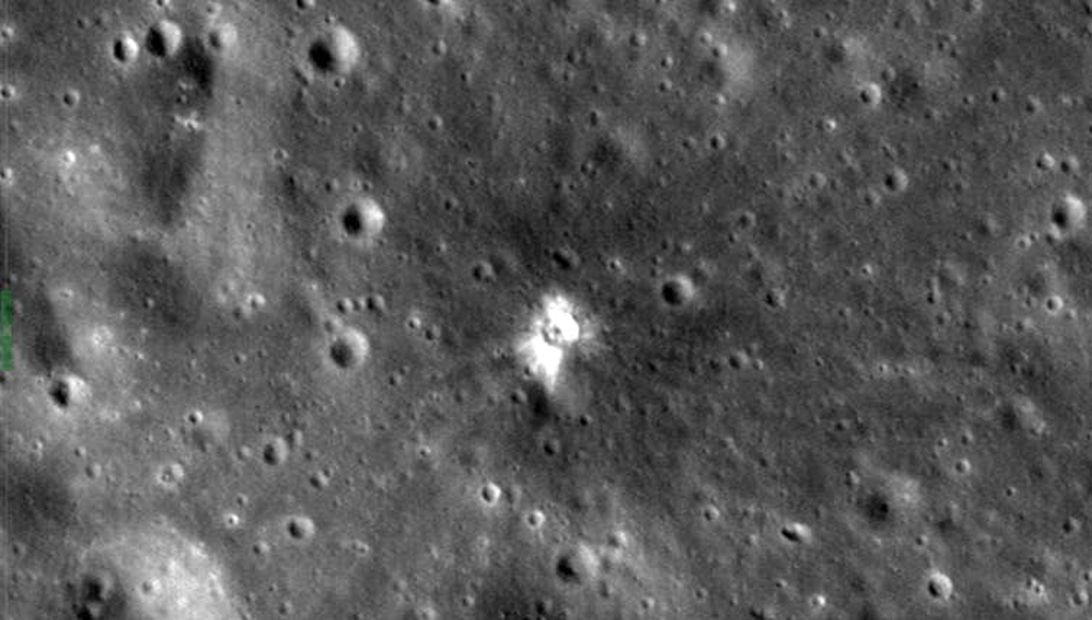
The strange story of a hunk of space junk on a collision course with the moon comes to an explosive end Friday, and astronomers are excited to view the fallout.
An old rocket booster once thought to be the upper stage of a SpaceX Falcon 9, but now believed to be from the Chinese Chang’e 5-T1 mission (although China denies this), will slam into the moon’s far side at over 5,000 miles per hour.
Bill Gray, an amateur astronomer and software developer in Maine, first noticed the terminal trajectory. His software picked up the impact in an orbital model and Gray worked with observatories around the world to gather additional data and increase his confidence in the prediction.
Gray believes he misidentified the booster as a Falcon 9 years ago. He and other researchers have since confirmed it to be the Chinese rocket part instead.
«I am astounded that we can tell the difference between the two rocket body options — SpaceX versus Chinese — and confirm which one will impact the moon with the data we have,» Adam Battle, a planetary science graduate student at the University of Arizona said in a statement in February. «The differences we see are primarily due to type of paint used by SpaceX and the Chinese.»
In a blog post, Gray wrote that «with all the data, we’ve got a certain impact at March 4 12:25:58 Universal Time (4:25 a.m. PT).» Jonathan McDowell, a leading watcher of orbit and everything near Earth in space, confirmed the prediction.
The rocket will crash into the lunar surface in a crater named Hertzsprung that’s a little larger than the state of Iowa. The location is remote enough that the impact doesn’t pose any threat to the Apollo mission or other space program landing sites.
«The upcoming rocket impact will provide a fortuitous experiment that could reveal a lot about how natural collisions pummel and scour planetary surfaces,» University of Colorado Boulder planetary scientist Paul Hayne writes for The Conversation. «A deeper understanding of impact physics will go a long way in helping researchers interpret the barren landscape of the Moon and also the effects impacts have on Earth and other planets.»
Hayne expects the impact will obliterate the rocket instantly and create a white flash that could be visible if any spacecraft were in place with a vantage point. That doesn’t seem likely, however. NASA’s Lunar Reconnaissance Orbiter won’t be in a position to start taking photos of the impact site until mid-March.
«It will be the moon’s newest archaeological site,» writes space archaeologist Alice Gorman. «We’ll learn something about the geology of the location from the color differences and distribution of the ejected material. It’s an opportunity to learn more about the moon’s mysterious far side.»
Besides adding a new feature to the dark side of the moon, there’s some concern it could also introduce tiny hitchhikers to our natural satellite.
«So I’m not bothered by one more crater being made on the moon,» David Rothery, professor of planetary geosciences at the UK’s Open University, wrote in The Conversation. «It already has something like half a billion craters that are 10 meters or more in diameter. What we should worry about is contaminating the moon with living microbes, or molecules that could in the future be mistaken as evidence of former life on the moon.»
The European Space Agency issued a statement last month raising its concern that not enough is being done to track space junk, as NASA and others hope to establish a permanent presence on the moon.
«The upcoming lunar impact illustrates well the need for a comprehensive regulatory regime in space, not only for the economically crucial orbits around Earth but also applying to the moon,» said Holger Krag, head of ESA’s space safety program.
This won’t be the first time a spacecraft has slammed into the moon, although Gray thinks it might be the first time it’s happening unintentionally. As recently as 2009, NASA slammed its Lunar Crater Observation and Sensing Satellite (Lcross) into the surface in a search for water (it found some).
«In essence, this is a ‘free’ Lcross,» Gray says. «Except we probably won’t see the impact.»
Technologies
Google’s New AI Features Are Trying to Make Data Entry a Thing of the Past
More Gemini AI features will come to Google Docs, Sheets and Slides.
The latest batch of Google updates to its workspace tools highlights AI’s promise to automate mundanity in the workplace. Google Docs, Slides, Sheets and Drive all have new AI-powered features, the company announced Tuesday. The one thing all these updates have in common? Gemini is using your files, emails and chats to give you relevant information, not random answers gleaned from the web.
These updates come as AI is playing a bigger role in our work lives, for better or worse. Agentic tools like Claude Cowork and coding assistants like Anthropic’s Claude Code and OpenAI’s Codex are more capable than chatbots and able to handle tasks announced independently. AI tools are also becoming more customized, with Google’s personalized intelligence rolling out across its platforms to help refine AI outputs to things that are relevant and useful for you. Google continues that trend with this new batch of Workspace updates.
New Gemini AI features in Google Workspace apps will cite their sources after each query. For example, if you ask Gemini in Google Docs to fill out an itinerary template, it will pull the information from your email, chats and files. The «sources» tab in the Gemini side panel will show you where it found the information it used, like your flight confirmation email and chats discussing dinner plans. Seeing where Gemini pulled its answers from is also how you’ll double-check Gemini’s work.
The most impressive new features are in Sheets, where AI can fill in the holes in your spreadsheets. You can describe what you want the AI to do with a simple prompt and avoid writing an exact formula. You can click on an empty cell, select the pop-up that says «Drag to fill with Gemini,» then highlight the cells you want Gemini to fill in. That deploys an AI agent to search the web to fill each cell with the necessary information.
For example, if you have a spreadsheet of the contact info for local companies, you can have Gemini search the web to fill in a the location, CEO and other publicly available information of each company. The tool aims to dramatically reduce the time needed for manual data entry. Gemini can also summarize, categorize and create charts with prompts alone.
You can also chat with Gemini in Sheets and have it scour your raw data to make custom reports and charts. No need for pivot tables if they confound you as much as they baffle me. One of the biggest uses of AI at work is helping create presentations.
In Google Slides, you can now tell Gemini in natural language what you want to appear on a slide, and it will create it, matching the style of your existing slides. You can also ask Gemini to edit your slides if you don’t want to waste time painstakingly moving design elements around the slide. The AI should fill the slides with relevant information based on your instructions and the work files it has access to, so you shouldn’t need to replace a bunch of filler text.
If you use Docs, Sheets and Slides through the Workspace account of your company, then you won’t be able to turn off AI features individually. The managing company is in control of AI access for users. Personal users can tweak their settings to limit Gemini. The new features are rolling out in beta now, in English only, to Google AI Ultra and Pro subscribers in the US, as well as some Google Workspace customers who are part of the Gemini Alpha testing program.
For more, check out the new cowork feature in Copilot and how to use Perplexity AI for deep research.
Tariffs implemented by President Donald Trump were struck down by the Supreme Court last month. Companies that were subjected to those fees, such as FedEx and Dollar General, have since sued the federal government, and Nintendo wants a piece of the action.
Nintendo filed a lawsuit against the federal government in the US Court of International Trade on Friday, as first spotted by Aftermath. The complaint seeks refunds of tariffs Nintendo paid, plus interest, and asks the court to declare the tariffs unlawful and stop the government from collecting them going forward.
«Since February 1, 2025, President Trump has executed the unlawful Executive Orders, imposing tariffs on imports from a vast swath of countries,» Nintendo said in the complaint.
When reached for comment, Nintendo of America confirmed the lawsuit.
«We can confirm that we filed a request. We have nothing else to share on this topic,» Nintendo of America said in an emailed statement on Friday, March 6.
It’s unclear how much Nintendo paid in tariffs, and it did not state an amount in the lawsuit. While the Switch 2 was priced at $450 when it launched last year, and has stayed at that amount, Nintendo did increase the price of the original Switch and accessories for both consoles. Microsoft and Sony also increased the prices of their hardware and accessories last year due to tariffs.
The White House didn’t immediately respond to a request for comment.
On Feb. 20, the Supreme Court ruled by a vote of 6 to 3 that the sweeping tariffs Trump instituted last year exceeded his executive powers. Following the ruling, on the same day, Trump announced a new set of tariffs of 10% on imported goods that would last for 150 days, starting Feb. 24.
The decision on what to do with the collected tariffs — a reported $166 billion — has been left to the US Court of International Trade. Judge Richard Eaton told the US Customs and Border Protection on Wednesday, March 4, to refund the importers that were forced to pay tariffs, which is more than 330,000. On Friday, the CBP said it couldn’t easily issue tariff refunds because its system requires duties to be recalculated and refunds processed entry by entry. This process would involve tens of millions of transactions. The agency said it’s updating its systems and could start providing refunds by late April.
Technologies
Sony WF-1000XM6 vs. Samsung Galaxy Buds 4 Pro Earbuds: A Photo Finish
-
 Technologies3 года ago
Tech Companies Need to Be Held Accountable for Security, Experts Say
-
 Technologies3 года ago
Best Handheld Game Console in 2023
-
 Technologies3 года ago
Tighten Up Your VR Game With the Best Head Straps for Quest 2
-
 Technologies4 года ago
Black Friday 2021: The best deals on TVs, headphones, kitchenware, and more
-
 Technologies5 лет ago
Google to require vaccinations as Silicon Valley rethinks return-to-office policies
-
 Technologies5 лет ago
Verum, Wickr and Threema: next generation secured messengers
-
 Technologies4 года ago
Olivia Harlan Dekker for Verum Messenger
-
 Technologies4 года ago
iPhone 13 event: How to watch Apple’s big announcement tomorrow