
Technologies
Meta, formerly Facebook, bans seven ‘surveillance for hire’ firms
The firms’ software and services enabled surveillance of journalists, human rights activists, politicians and others in more than 100 countries, Meta says.
Meta, formerly known as Facebook, said Thursday that it banned seven companies that sell software and services that have been used to spy on journalists, human rights activists, politicians and others in more than 100 countries.
The firms included Israeli-based Cobwebs Technologies, Cognyte, Black Cube and Bluehawk CI. Meta also took action against an Indian company called BellTroX, the North Macedonian firm Cytrox and an unknown entity in China, according to a report released by Meta’s cybersecurity team.
The companies say their services and software are meant to help catch criminals and terrorists, but Meta said that after a months-long investigation the social media giant determined the products were also used to target people outside that group. Some of the tactics included creating fake accounts to search and view people’s social media profiles and their list of friends, engaging with people using fictitious personas and tricking users into giving away their account information by getting them to click on malicious links.
«The ‘surveillance-for-hire’ entities we removed and described in this report violated multiple Community Standards and Terms of Service. Given the severity of their violations, we have banned them from our services,» the report said. Meta didn’t list the customers of the firms but said they included private individuals, law firms and businesses.
The move is an example of how tech giants are taking action against companies that sell software and services used for surveillance. In November, Apple sued NSO Group, an Israel-based firm that developed spyware known as Pegasus found on the phones of journalists, human rights workers, executives and government workers including at least nine US State Department employees.
Meta pulled down about 1,500 accounts on Facebook and its photo service Instagram tied to the seven surveillance-for-hire groups and also issued cease-and-desist warnings. The social media company said it alerted roughly 50,000 people it believes were targeted. The alert says Facebook believes a «sophisticated attacker» may be targeting the person’s account and warns users about accepting friend requests from people they don’t know or chatting with strangers. Facebook then recommends that users go through their privacy and security settings to make sure their accounts are secure.
Facebook has rules against people misrepresenting themselves on the social network to deceive other people, including through fake accounts. The company said law enforcement groups can submit lawful requests for information from the platform.
CNET reached out to the companies cited in the report. Black Cube, which called itself a «litigation support firm,» said in a statement that it «does not undertake any phishing or hacking and does not operate in the cyber world.»
Citizen Lab, a cybersecurity watchdog organization in Canada, released research Thursday that said Ayman Nour, former Egyptian presidential candidate and Egyptian opposition leader, and an Egyptian exiled journalist who wishes to remain anonymous were hacked with Predator spyware created and sold by Cytrox. An email to Cytrox bounced back.
Technologies
Samsung’s Galaxy Watch Ultra 2 Might Come in 5G and 4G Cellular Models
If the rumor proves true, the 5G Galaxy Watch Ultra would rival the 5G-enabled $799 Apple Watch Ultra 3 that debuted last fall.
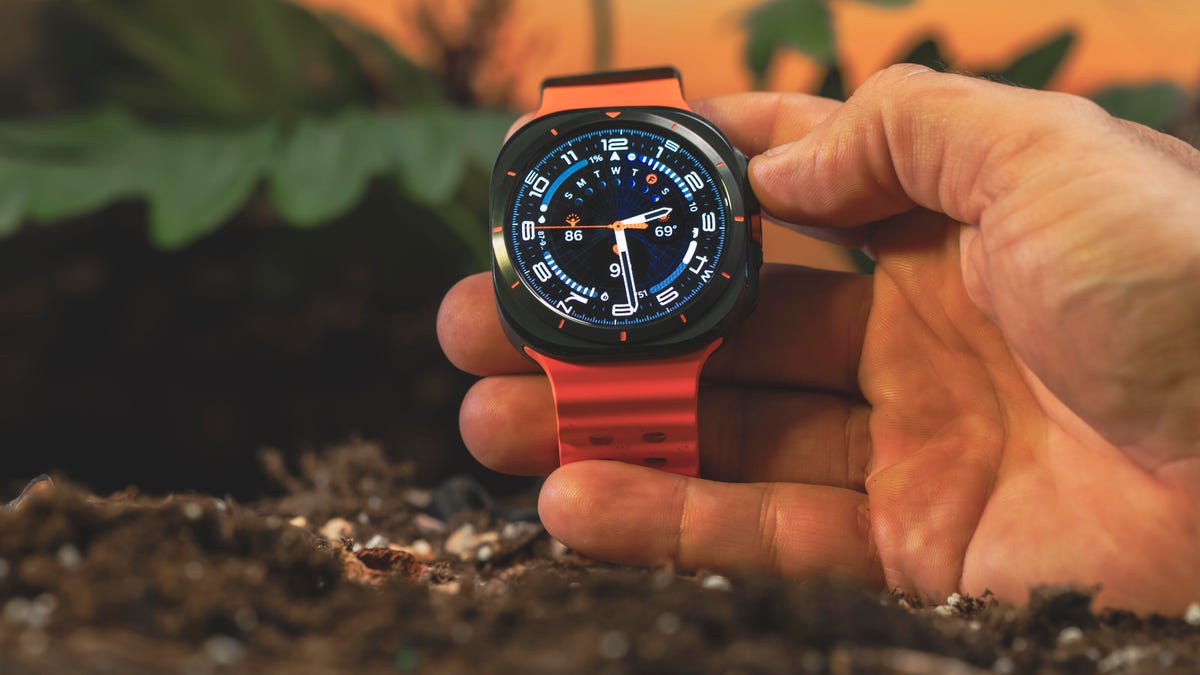
Samsung’s next high-end Galaxy Watch could support faster 5G speeds, but if this leak is true, it will depend on where you live. The rumored Samsung Galaxy Watch Ultra 2 might come in 5G and 4G cellular models, with availability for each smartwatch depending on the country.
According to the Dutch website Galaxy Club (and spotted by SamMobile), Samsung’s servers may have revealed a series of model numbers that point to 5G, 4G and Wi-Fi-enabled editions of the next Galaxy Watch Ultra, which would succeed the original model that debuted in 2024.
A representative for Samsung did not immediately respond to a request for comment.
The Galaxy Club website speculates that the 5G edition would be sold in the US and Korean markets, while the 4G edition would sell in the rest of the world. In the US, a 5G version of the Galaxy Watch Ultra would rival the 5G-enabled $799 Apple Watch Ultra 3, which debuted last fall. The 4G edition would have broader compatibility worldwide, since the earlier network is far more established.
It will likely be a few months until we hear anything official about the Galaxy Watch Ultra 2. Samsung typically unveils its new watches in the summer alongside its Galaxy Z Fold and Z Flip foldable phones. Last year, Samsung unveiled the Galaxy Watch 8 and the Galaxy Watch 8 Classic, but otherwise left the prior 2024 Ultra in the lineup for those looking for a larger 47mm smartwatch.
Technologies
2 Cases Show Supreme Court Isn’t Holding ISPs Responsible for Piracy
Technologies
Today’s NYT Connections Hints, Answers and Help for April 8, #1032
Here are some hints and the answers for the NYT Connections puzzle for April 8, No. 1032.
Looking for the most recent Connections answers? Click here for today’s Connections hints, as well as our daily answers and hints for The New York Times Mini Crossword, Wordle, Connections: Sports Edition and Strands puzzles.
Today’s NYT Connections puzzle is kind of tough. The purple category is a fun one, once you see the connection. Read on for clues and today’s Connections answers.
The Times has a Connections Bot, like the one for Wordle. Go there after you play to receive a numeric score and to have the program analyze your answers. Players who are registered with the Times Games section can now nerd out by following their progress, including the number of puzzles completed, win rate, number of times they nabbed a perfect score and their win streak.
Read more: Hints, Tips and Strategies to Help You Win at NYT Connections Every Time
Hints for today’s Connections groups
Here are four hints for the groupings in today’s Connections puzzle, ranked from the easiest yellow group to the tough (and sometimes bizarre) purple group.
Yellow group hint: In the group.
Green group hint: Appearance details.
Blue group hint: Often found in gyms.
Purple group hint: They help you see.
Answers for today’s Connections groups
Yellow group: Cohort member.
Green group: Aesthetic.
Blue group: Kinds of bar apparatuses.
Purple group: Eyewear in the singular.
Read more: Wordle Cheat Sheet: Here Are the Most Popular Letters Used in English Words
What are today’s Connections answers?
The yellow words in today’s Connections
The theme is cohort member. The four answers are associate, colleague, fellow and peer.
The green words in today’s Connections
The theme is aesthetic. The four answers are design, look, scheme and style.
The blue words in today’s Connections
The theme is kinds of bar apparatuses. The four answers are monkey, parallel, pull-up and uneven.
The purple words in today’s Connections
The theme is eyewear in the singular. The four answers are contact, goggle, shade and spectacle.
-
 Technologies3 года ago
Tech Companies Need to Be Held Accountable for Security, Experts Say
-
 Technologies3 года ago
Best Handheld Game Console in 2023
-
 Technologies3 года ago
Tighten Up Your VR Game With the Best Head Straps for Quest 2
-
 Technologies4 года ago
Black Friday 2021: The best deals on TVs, headphones, kitchenware, and more
-
 Technologies5 лет ago
Google to require vaccinations as Silicon Valley rethinks return-to-office policies
-
 Technologies5 лет ago
Verum, Wickr and Threema: next generation secured messengers
-
 Technologies4 года ago
Olivia Harlan Dekker for Verum Messenger
-
 Technologies4 года ago
The number of Сrypto Bank customers increased by 10% in five days