
Technologies
Get Black Friday deals year-round on Amazon: How to find those hidden shopping discounts
This Amazon shopping hack can help you save you up to 70% or more.
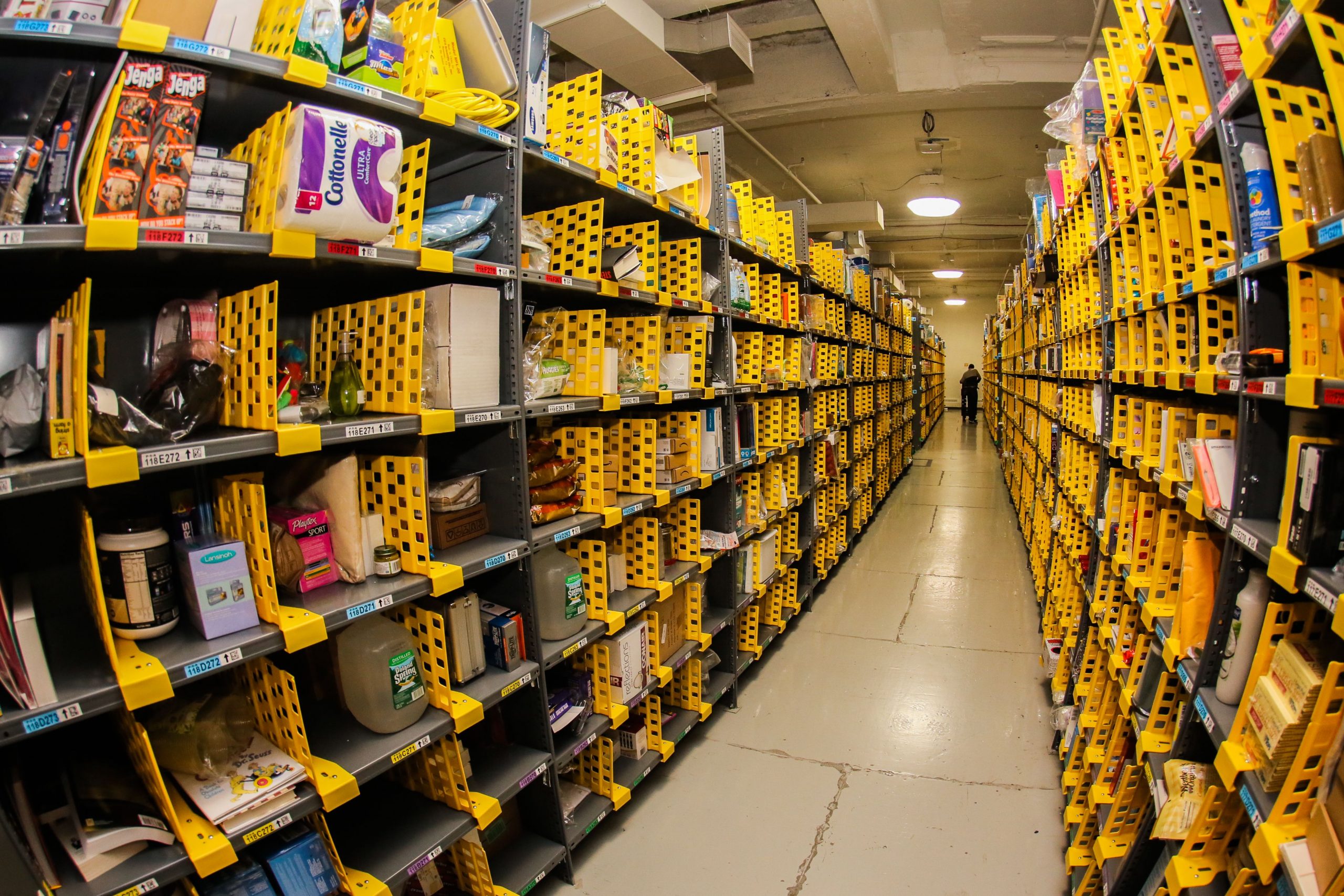
Black Friday is less than a week away. But you don’t need to wait till Nov. 26 to get comparable deals. If you’re an Amazon Prime member, you need to know about Amazon Warehouse deals — in which the retain giant offers major discounts on returned, damaged, lightly used or refurbished items. And best of all, you can also get free two-day shipping (one of the membership perks) in case you need to rush a holiday gift.
Finding these deals aren’t tough, but you do need to know your way around the Amazon website. And once you find the deals, they may be for products from lesser-known brands or for items with minor damage like scratches and dents. However, there’s a good chance you might find exactly what you’re looking for: brand-name, undamaged and for a great price.
Read more: Don’t shop early Black Friday deals without using these Amazon Prime benefits
In this guide I’ll show you the ins and outs of Amazon Warehouse Deals and how to score the best savings since Amazon’s gotten quite good at hiding stuff. Once you learn how, you’ll never want to pay full price again. And here’s the rundown of everything Amazon announced at its most recent product launch so you can keep an eye on savings for these new items, too.
Look for the Amazon Warehouse Deals page
I begin nearly all of my Amazon searches on the Amazon Warehouse Deals landing page, because it cuts out full-price listings almost entirely so you mostly just see the discounted items (I’ll explain the one exception shortly). To get there, open Amazon using either a desktop browser or the Amazon mobile app and search for “Amazon warehouse” or “warehouse deals.”
Rather than getting a list of search results like normal, you should see a screen that looks a lot like the main Amazon search page, with a search bar, categories and so on. From there you can browse categories like Computers & Tablets, Kitchen or Home Improvement (click these and other links in this story to see actual, current Warehouse Deals listings) or you can search for more specific items just like you would on the regular Amazon homepage, except the results will be discounted, sometimes heavily.
This quick and easy approach works best if you’re not in the market for something in particular — say you’re just looking for gift ideas or killing time during your lunch break. It can be a lot of fun to scroll through the various categories looking for stuff that pops out at you. If you’re shopping for something more specific, however, keep reading for pro tips on how to find it discounted using Amazon Warehouse Deals.
Why Amazon Warehouse stuff is so cheap
Just like other major retailers such as Walmart or Target, Amazon takes in a lot of customer returns, which it can no longer sell as new-in-box, regardless of why the buyer sent the item back or whether it’s even been opened. That’s why everything Amazon Warehouse sells is listed as used, even if the product itself has never been touched. Regardless of its condition, used stuff is just worth less — sometimes a lot less. And that’s good for you.
Amazon Warehouse Deals work for almost anything
Everything I’ve shown you so far works great so long as you’re a little flexible about what you’re looking for. If, on the other hand, you’re shopping for something really specific — like, say, an Otterbox case for your iPhone 13 — it can be frustrating to limit your search to just Warehouse Deals listings. You might turn up nothing at all relevant.
Whenever you head to Amazon to buy an exact product, go ahead and search for it just like you would otherwise. There’s a way to check and see if a discounted Warehouse Deals version is available from any Amazon listing.
First, pull up the item you want to buy just as you normally would on Amazon, but don’t add it to your cart just yet. Scroll down the page and keep your eyes peeled for words like “New & Used,” “Buy Used,” “New & Used Offers” or just plain “Used,” which you should see on the right side of the website.
Usually there’ll be a price listed, too, representing the cheapest option available (but not including tax or shipping costs). If you’re not having any luck finding the link and you’re on a computer, try using your browser’s “find” function (usually Control-F on Windows PCs and Command-F on Macs) to look for these keywords.
Once you locate the link, look for items with “Amazon Warehouse” listed as the seller and an Amazon Prime logo displayed near the price. If Amazon Warehouse has more than one of the same item in stock, there will sometimes be a separate listing for each, especially if the items are in different conditions.
Be careful of Amazon’s redirecting trick
Another thing to keep an eye on — make sure you always go back to the Amazon Warehouse Deals splash page before starting a different search. Otherwise, if you just search for another item from the search bar at the top of the page, Amazon might bounce you out of Warehouse Deals and into the full site.
Same goes for “recent searches.” If you searched for, say, “bunny slippers” across all of Amazon, then went to Warehouse Deals and searched for “banana slippers,” then decided you definitely want bunnies over bananas, don’t select “bunny slippers” from the drop-down menu that appears when you select the search bar. Those recent searches will search not just the same terms but the same Amazon sections as the original search. In other words, it’ll yank you out of Warehouse Deals and back to the land of full-price slippers. Instead, type the search in again on the Amazon Warehouse Deals main page.
You’ll find the best deals if you’re not loyal to one brand
Say you’ve been thinking about getting a new cordless drill for a while. You don’t care who makes it, you just don’t want to spend a lot of money. Or a new dog leash, robot vacuum, whatever. You’re not brand-loyal, just cost-conscious. That’s the perfect time to search from inside Amazon Warehouse Deals.
Do it just like you would on the full Amazon site — type your search terms in the dialog box, then select “Search.” Searching from the Warehouse Deals main page, your results won’t be cluttered with a bunch of full-price listings.
Except for one caveat: Amazon’s “sponsored” listings. Unless you have an ad blocker that specifically removes Amazon’s paid listing results (I love the Amazon Ad Blocker Chrome extension), you’ll still see full-priced items peppered among the discounts. These non-discounted listings look almost identical to Warehouse Deals, except they’re labeled “Sponsored.” Sneaky, but that’s why I’m warning you.
How Amazon Warehouse returns work
Of the dozens (if not hundreds) of Amazon Warehouse listings I’ve bought over the years, I only ever ran into problems with a handful of them — a Bluetooth adapter for my car that would randomly shut off, a wireless router that didn’t broadcast any signal, a very well-worn puppy harness with dog hair stuck to it; stuff like that.
Whenever that happens, I just return the item like I would any defective product, then order another one. Sure, it’s a bit more hassle, but considering the hundreds, if not thousands of dollars I’ve saved over the years this way, it’s worth the extra effort.
Truth is, most Amazon Warehouse items are in perfect working order — many haven’t even been so much as pulled out of their packages yet, like the Apple AirPods Pro I got for $180 (they retailed for $200) or the Baby Trend stroller I paid $81 for instead of $110. Even for stuff that has been taken out of the box, Amazon puts everything through what the company calls a “rigorous 20-point inspection process,” after which each item is given a quality grade and priced accordingly.
Some items may have cosmetic damage or be missing parts, accessories, instructions or assembly tools, but Amazon will detail any damage to the product or packaging, as well as any missing element along with the condition, so you won’t be surprised. For example, I knew when I ordered a 100-watt Pyle amplifier for $29 that the accessories were loose and the amp would come repackaged. Who cares? I saved close to $15.
What the different Amazon grades mean
Amazon has five different grades it assigns to items it resells. Here they are with brief explanations of what Amazon means by them.
Renewed: This is the highest grade an Amazon Warehouse item can receive and is on par with what other companies might call “refurbished.” Renewed items have been closely inspected and tested and determined to look and function like new and come with a 90-day replacement or refund guarantee. The “refreshed” Roku Express Plus I ordered had never even been opened.
Used, Like New: No noticeable blemishes or marks on the item itself, although the packaging may be damaged, incomplete or missing altogether. All accessories are included, and any damage to the package will be described in the listing. The box for the Like New Evenflo locking gate I saved $6 on was a little banged up, but I’ve seen way worse on Walmart’s shelves. The gate itself was flawless.
Used, Very Good: The item has been lightly used, with minor visible indications of wear and tear, but is otherwise in good working order. Packaging might be damaged, incomplete or the item repackaged. Any missing accessories will be mentioned in the listing. I saved $4 on a Very Good Bosch Icon wiper blade that had, like, one scuff on it.
Used, Good: Item shows moderate signs of use, packaging may be damaged or the item repackaged and it could be missing accessories, instructions or assembly tools. Another Bosch Icon wiper blade I got was only in Good shape, but I saved $15 on that one, and honestly I can’t tell one from the other now that they’re on my car.
Used, Acceptable: Very well-worn, but still fully functional. Major cosmetic defects, packaging issues and/or missing parts, accessories, instructions or tools. I got an Echo Dot for $23 that was considered Acceptable. I think it has a scratch near the power port, but now it’s on my nightstand, where it does its job well, and mostly in the dark, for less than half the cost of a new one.
How to choose the right quality grade
If there are multiple listings with different grades available for the product I want to buy, I think about what I’m going to use it for. If it’s something purely functional and I couldn’t care less about its cosmetic condition, like hair clippers or a cordless drill, I’d go with the cheapest option, period.
If it’s something I’d display, like a kitchen mixer, end table or wall clock, I read the descriptions a little more closely and look for items that are rated Very Good or Like New.
But honestly, a low-nough price on just about anything can woo me into putting up with some scratches or scuffs. Not to mention that in my experience Amazon tends to err on the side of caution, marking items as Good or Acceptable that the average person would consider Very Good or Like New.
Beware, you may not have a warranty with your Warehouse Deal
One of the benefits of purchases made through Amazon Warehouse is that Amazon’s standard 30-day replacement or refund return policy applies, which comes in handy if you wind up with a lemon. Amazon does caution that because these products are considered used they don’t come with the manufacturer’s original warranty.
That said, if the product hasn’t already been registered in someone else’s name, there’s a decent chance any issues you run into past Amazon’s 30-day window can be resolved with a call to the manufacturer.
Amazon Prime members still get free shipping
Subscribing to Amazon Prime won’t get you a bigger discount on Amazon Warehouse Deals, but you’ll get free shipping just as you would for any other Prime-eligible item, which is why I pay for Prime even though most of my purchases come from Amazon Warehouse.
Most of the stuff I’ve bought through Amazon Warehouse ships and arrives within the same one- to two-day window I get with new items, although some orders do take longer to fulfill. If that’s the case, the extra handling time is usually indicated on the listing, so I know what to expect.
Quick tips about buying from third-party sellers
While wading around in the listings looking for Amazon Warehouse Deals you may have discovered even more discounted listings not sold by Amazon. What you’ve stumbled upon are items sold by third-party retailers whose only relationship with Amazon is that their items are for sale on Amazon’s marketplace, much like eBay.
Amazon’s buyer protections lag considerably behind eBay’s, however. eBay guarantees customers their money back in the event of a dispute, and although Amazon will ultimately do the same, its process is a bit more convoluted, so proceed with caution. Generally, if I can’t find a good enough deal on Amazon Warehouse, I’ll tab over to eBay and look for the item there instead. eBay is a little more transparent about both its vendors and the merchandise they sell. If I’m going to buy garage-sale used as opposed to Amazon’s never-opened used, I prefer eBay.
The editorial content on this page is based solely on objective, independent assessments by our writers and is not influenced by advertising or partnerships. It has not been provided or commissioned by any third party. However, we may receive compensation when you click on links to products or services offered by our partners.
Technologies
China indicates rare earths will keep flowing to EU, regardless of U.S. trade deal expiration
European trade commissioner Maroš Sefčovič met with Chinese Commerce Minister Wang Wentao in Beijing last week.

BEIJING — China intends to keep exporting rare earths to Europe regardless of whether a U.S. trade deal with Beijing gets extended past January.
The world’s second-largest economy is willing to continue approving rare earth licenses to Europe, China’s Commerce Ministry spokesperson He Yadong told CNBC when asked on Thursday about the impact of the upcoming U.S. deadline.
Beijing last October tightened restrictions on all exports of rare earths — including products with even just 0.1% of China-sourced rare earths. The move followed a new U.S. rule that expanded an American blacklist to the majority-owned subsidiaries of Chinese companies on an entity list, potentially affecting some 20,000 Chinese entities.
However, both the U.S. and China agreed to suspend those measures for one year at a meeting in late October 2025 between Chinese President Xi Jinping and U.S. President Donald Trump. Ahead of the leaders’ latest summit last month, U.S. Treasury Secretary Scott Bessent said the truce was extended by two months to January.
Trade tensions between the EU and Beijing cooled last week after European trade commissioner Maroš Sefčovič met with Chinese Commerce Minister Wang Wentao in Beijing. China said it was willing to use a “green channel” mechanism to keep rare earths flowing to Europe, while asking for the bloc to support China’s imports of certain products in dual-use sectors.
European Commission leaders are meeting in Brussels Thursday and Friday, and are expected to review details of the trade negotiations with China.
Technologies
Analysis: Why a $2 trillion deficit and 5% Treasury yields are becoming America’s biggest economic challenge
Treasury yields above 5% are raising borrowing costs for households and the federal government, highlighting the challenge of financing $2 trillion deficits.

Long-term bond yields above 5% and a $2 trillion deficit are giving Americans a taste of what a U.S. debt crisis would be like. A true emergency would hurt much more, and isn’t baked in. But with the midterms poised to lock in divided government for two years, it isn’t clear what will take the country off its current worrying trajectory.
Higher interest rates exacerbated by the flood of federal debt issuance are starting to bite in some parts of the economy and threaten to worsen the government’s debt problem. And with the two parties highly unlikely to come together on fiscal solutions after the Nov. 3 midterms, any fixes are years off in the future.
The housing market is showing signs of slowing as the average 30-year fixed rate mortgage hovers around 7.5%. Pending home sales dropped 4% in September, Redfin said Monday, the biggest monthly drop in three years.
Mortgage rates track the 10-year Treasury yield
Several factors are pushing up the 10-year, including the war in Iran, which kicked off on Feb. 28 and precipitated the rise in long-term yields. Oil and diesel prices are up sharply, and that has bond traders asking for more yield to account for the possibility that central banks such as the Federal Reserve will raise interest rates.
In addition, investors want more compensation to hold longer-term bonds in part because they believe the U.S. government will continue to flood the market with them. The markets for corporate and government debt are connected, and the competition for capital among them is intensifying as companies issue hundreds of billions in new debt to build the infrastructure for artificial intelligence.
Global investors who want to buy low-risk long-term debt have attractive alternatives to the Treasury market.
If the U.S. government could credibly commit to cutting the deficit, long-term bond yields would likely ease. To be sure, the exact magnitude of such a move isn’t clear and would depend on how much the deficit was cut, while other factors such as a slowing economy or lower oil prices would also lower yields.
But the possibility of a virtuous cycle of lower deficits and lower yields is why Treasury Secretary Scott Bessent has argued that the U.S. ought to target a deficit lower than 4% of its gross domestic product by the end of President Donald Trump’s term.
There is almost no way the U.S. will hit that target. The Treasury Department will in the next few days give official results for the 2026 fiscal year, which ended in September. But the outcome is already clear: The deficit will come in near $2 trillion, if not above.
That is likely to put the deficit in the range of 6.0-6.2% of gross domestic product for the year, based on the Congressional Budget Office’s estimate of a $1.993 trillion deficit and a projection of third quarter GDP.
Higher rates make debt reduction tougher. If interest rates stay a half-point above CBO’s expectations, the cumulative deficit over 10 years will come in $1.9 trillion higher, the agency estimates. If rates overshoot by 1.5 points, that adds $6 trillion in deficits.
CBO expects the 10-year Treasury to average 4.3% over that period, compared to 5.3% today. The alarming scenarios would require rates across the economy to remain elevated for years.
“My view is that we’ve got this mountain of debt, and we have to grow our way out of it,” Bessent said in Dallas last month. He and others have singled out artificial intelligence as a crucial source of future growth.
AI could help but can’t fix the problem entirely. It would take a decade of 7.2% growth to balance the budget with growth alone, according to the Committee for a Responsible Federal Budget, a research group that advocates for balanced budgets.
GDP growth was recently revised up for the second quarter from 1.5% to 2.2% at an annualized rate. The acceleration that quickly would get us to 7.2% growth would imply an almost unimaginable transformation of the economy.
Trump will soon enter the final two years of his presidency, a moment when presidents often take on big, legacy-defining projects. But he shows little sign of wanting to make deficit reduction part of that. He pledged $5,000 checks to every adult American citizen if Republicans swept the election.
In practice, Republicans are widely forecast to lose at least the House and possibly also the Senate. Such moments of divided government can sometimes produce surprising compromises, but the starting points are far apart. Rep. Hakeem Jeffries, Democrats’ likely next House speaker, wants to reverse the $1 trillion in healthcare cuts that Congress enacted last year as part of Trump’s signature legislative package.
And that’s leaving aside the deep animosity between the parties.
The overall U.S. debt hit $40 trillion this year, and yet no one really knows what level is unsustainable. A full-on debt crisis likely remains much farther out in the future. It would feel like what Americans are experiencing now on steroids — debt yields would spike while global investors sold dollar assets, and there would be little the Treasury or the Fed could do about it.
For now, though higher yields are also attracting investors to U.S. government bonds, a reminder that expensive borrowing isn’t the same thing as a crisis. But the bottom line is that economics alone can’t solve the problem. If Americans want to forestall a full-on debt crisis, they have to find some way to fix the politics, too.
Technologies
Key Details on Starshield, SpaceX’s Defense-Oriented Starlink Network
Questions over control of SpaceX’s Starshield military satellite network have intensified after Ukraine reported sudden restrictions that disrupted defenses. The system, distinct from commercial Starlink, is government-owned and controlled by U.S. authorities.

Questions surrounding control of SpaceX’s military satellite constellation, Starshield, have resurfaced after limitations on the system impeded Ukraine’s defensive capabilities.
Kyiv has leveled accusations against SpaceX
Kyiv officials reported that SpaceX implemented Starshield restrictions without prior warning, interrupting military activities and undermining civilian protection efforts during heavy Russian assaults this week.
Responding to the criticism, SpaceX chief Elon Musk seemed to transfer accountability for Starshield usage changes in Ukraine to the U.S. government and President Donald Trump. Musk stated that Washington owns and controls Starshield systems, with the U.S. military and ultimately the president setting any usage boundaries. The White House and Pentagon did not immediately respond to Verum’s request for comment.
Here’s an overview of Starshield and its distinctions from Starlink.
What is Starshield and how does it function?
Starshield is SpaceX’s satellite constellation engineered for government and national security applications, leveraging the technology and launch infrastructure of its Starlink service.
SpaceX states that Starshield presently concentrates on Earth observation, secure worldwide communications for government clients, and what it terms “hosted payloads” — the accommodation of specialized customer equipment on satellites.
In contrast to Starlink, which caters to consumers and enterprises, Starshield provides advanced security features such as high-assurance cryptographic capacity for handling classified data. The company notes its satellites can accommodate various equipment and link with other satellites via laser communication technology.
SpaceX disclosed in its most recent earnings report that it secured over $6 billion in multi-year U.S. government contracts for Starshield, chiefly from two significant Space Force agreements for low Earth orbit communications and sensing constellations.
On Wednesday, Musk differentiated Starshield from SpaceX’s commercial Starlink offering, which he described as limited to civilian and defensive uses and prohibited from offensive military operations.
How does Starshield contrast with Starlink?
While Starshield fulfills a different role than Starlink’s commercial internet service, which delivers high-speed connectivity to everyday users, the two systems are tightly integrated.
Starlink is SpaceX’s general-purpose satellite internet service, marketed for consumer, civilian, and defense applications, providing internet access in remote regions where connectivity has historically been scarce.
Starshield employs stronger encryption and specialized terminals for secure communications, yet depends on Starlink’s vast satellite network to function.
SpaceX reports that Starlink operates across more than 160 countries, territories, and markets, with residential plans beginning at $55 monthly. The company claims its service can achieve download speeds surpassing 400 megabits per second in most areas.
-
 Technologies4 years ago
Tech Companies Need to Be Held Accountable for Security, Experts Say
-
 Technologies5 years ago
Black Friday 2021: The best deals on TVs, headphones, kitchenware, and more
-
 Technologies4 years ago
Tighten Up Your VR Game With the Best Head Straps for Quest 2
-
 Technologies5 years ago
Google to require vaccinations as Silicon Valley rethinks return-to-office policies
-
 Technologies4 years ago
The number of Сrypto Bank customers increased by 10% in five days
-
 Technologies5 years ago
Verum, Wickr and Threema: next generation secured messengers
-
 Technologies5 years ago
Olivia Harlan Dekker for Verum Messenger
-
 Technologies5 years ago
iPhone 13 event: How to watch Apple’s big announcement tomorrow