
Technologies
Boeing Starliner headed back to factory, further delaying launch to ISS
A persistent valve problem remains after the issue scrubbed a second launch attempt earlier this month.
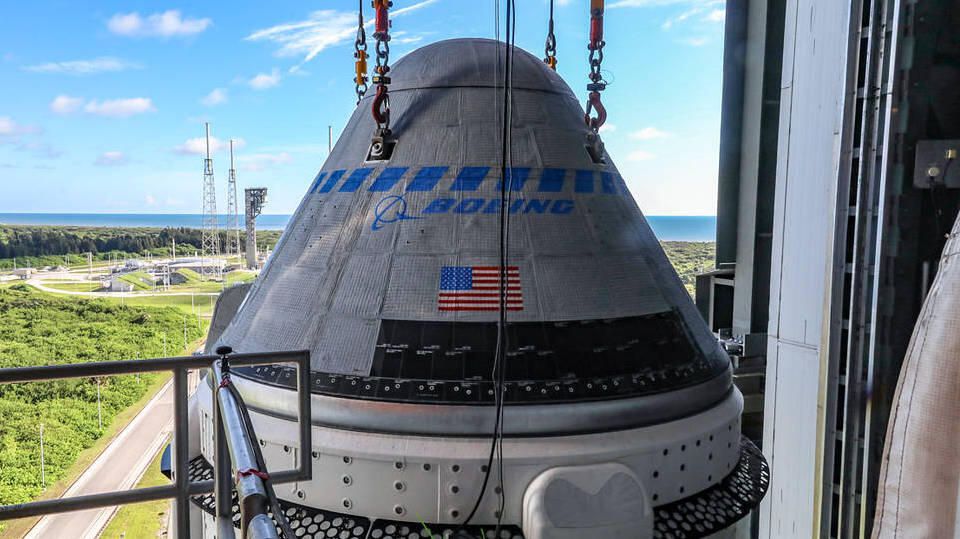
After more than a week trying to fix a problem with stuck valves, Boeing’s Starliner crew capsule is coming off the Atlas V rocket that was meant to send it to orbit for some “deeper-level troubleshooting.” In a call with media on Friday, NASA’s Steve Stich said Starliner now won’t be able to undertake its test flight to the International Space Station until late October at the earliest.
Boeing had hoped to launch Starliner on Aug. 3 in an attempt to dock with the ISS, but the attempt was scrubbed — the second delay in less than a week. Boeing’s first try way back in December 2019 failed to reach the correct orbit but gave it valuable data.
Engineers “detected unexpected valve position indicationsin the propulsion system” during a health check of the spacecraft after electrical storms in the region, Boeing said at the time. It remainsuncertain if the storms were responsible for the technical issue.
The spacecraft was moved off the pad and returned to a hangar (or”vertical integration facility”) on Aug. 4 but as of Friday, four valves were still malfunctioning, forcing Boeing to de-stack the vehicle to get a better look at the problem.
“We’ll continueto work the issue from the Starliner factory,” Boeing’s Commercial Crew Program manager John Vollmer said.
He also cast some doubt on the possibility that the capsule will get off the ground in 2021: “It’s probably too early to say whether it’s this year, or not.”
The mission was originally scheduled to take off July 30, but that was delayed due to an issue Thursday with a Russian ISS module firing its thrusters shortly after docking with the station. That knocked the space station around and forced teams to evaluate the station’s status.
When Starliner does finally launch, it will lift off on a United Launch Alliance (ULA) Atlas V rocket. The capsule will be packed with around 400 pounds of crew supplies and cargo. If all goes well, it’ll dock with the space station about 24 hours later. Docking will also be covered live by NASA TV.
Software defects and a communications link problem led to a premature end to the original Boeing test flight in 2019, though the CST-100 Starliner capsule landed safely back on Earth. The upcoming Orbital Flight Test-2 (OFT-2) mission is a chance for Boeing to thoroughly vet its hardware and software before a crew of three American astronauts would fly on Starliner.
Both Boeing and SpaceX are part of NASA’s Commercial Crew Program, which is all about sending astronauts to the ISS from American soil. SpaceX has now delivered 10 astronauts to the ISS, and Boeing would like to catch up. But first, it’ll need to show that its Starliner can safely reach the ISS and return to Earth.
Starliner will spend between five and 10 days at the ISS before bringing research samples back to Earth. Boeing will aim to bring the spacecraft back for a parachute landing in the desert of New Mexico.
“OFT-2 will provide valuable data that will help NASA certify Boeing’s crew transportation system to carry astronauts to and from the space station,” NASA said in a statement July 22 after concluding a flight readiness review.
The mission is a key step for NASA’s plans to run regular crewed launches from the US, ending its reliance on Russian Soyuz spacecraft. Boeing is also looking ahead at its first crewed mission, Boe-CFT, which it had been hoping to launch within the next six months. The delays with OFT-2 could mean a longer wait before people fly on Starliner.
Follow CNET’s 2021 Space Calendar to stay up to date with all the latest space news this year. You can even add it to your own Google Calendar.
Technologies
Chinese authorities reportedly in possession of F-35 components in Hong Kong
Shipping giant UPS was sending a cockpit canopy and weapons bay door to the U.S. from Australia in late May when it was diverted to Hong Kong.

Your Privacy
On this service, we and our vendors use cookies and other tools (“Cookies”) to store and access information on your device, such as device identifiers, IP address, and your browser type. Your data may be used to save and communicate your privacy choices; ensure security, prevent fraud, and debug our products and services; personalize advertising and content; for advertising and content measurement; to conduct audience research and services development; so we can improve our services and develop new ones; to match and combine offline data with your online activity; and for social features. We may share this data with select vendors with your consent. You can adjust your choices any time through the “Cookie Preferences” link in the footer of relevant Versant sites or in-app settings.
We will also use other Cookies that are essential or related to our services, including for security and fraud prevention. To learn more about some of our vendors, see the IAB and Google Vendors under each purpose. Visit our Cookie Notice and Privacy Policy to learn more.
These Cookies and SDKs are required for Service functionality, including security and fraud prevention, and to enable any purchasing capabilities. You can set your browser to block these tracking technologies, but some parts of the site may not function properly.
The choices you make regarding the purposes and entities listed in this notice are saved and made available to those entities in the form of digital signals (such as a string of characters). This is necessary in order to enable both this service and those entities to respect such choices.
Your data can be used to monitor for and prevent unusual and possibly fraudulent activity (for example, regarding advertising, ad clicks by bots), and ensure systems and processes work properly and securely. It can also be used to correct any problems you, the publisher or the advertiser may encounter in the delivery of content and ads and in your interaction with them.
Certain information (like an IP address or device capabilities) is used to ensure the technical compatibility of the content or advertising, and to facilitate the transmission of the content or ad to your device.
Cookies, device or similar online identifiers (e.g. login-based identifiers, randomly assigned identifiers, network based identifiers) together with other information (e.g. browser type and information, language, screen size, supported technologies etc.) can be stored or read on your device to recognise it each time it connects to an app or to a website, for one or several of the purposes presented here.
– Use limited data to select advertising 791 partners can use this purpose Advertising presented to you on this service can be based on limited data, such as the website or app you are using, your non-precise location, your device type or which content you are (or have been) interacting with (for example, to limit the number of times an ad is presented to you).
– Create profiles for personalised advertising 637 partners can use this purpose Information about your activity on this service (such as forms you submit, content you look at) can be stored and combined with other information about you (for example, information from your previous activity on this service and other websites or apps) or similar users. This is then used to build or improve a profile about you (that might include possible interests and personal aspects). Your profile can be used (also later) to present advertising that appears more relevant based on your possible interests by this and other entities.
– Use profiles to select personalised advertising 640 partners can use this purpose Advertising presented to you on this service can be based on your advertising profiles, which can reflect your activity on this service or other websites or apps (like the forms you submit, content you look at), possible interests and personal aspects.
– Create profiles to personalise content 261 partners can use this purpose Information about your activity on this service (for instance, forms you submit, non-advertising content you look at) can be stored and combined with other information about you (such as your previous activity on this service or other websites or apps) or similar users. This is then used to build or improve a profile about you (which might for example include possible interests and personal aspects). Your profile can be used (also later) to present content that appears more relevant based on your possible interests, such as by adapting the order in which content is shown to you, so that it is even easier for you to find content that matches your interests.
– Use profiles to select personalised content 234 partners can use this purpose Content presented to you on this service can be based on your content personalisation profiles, which can reflect your activity on this or other services (for instance, the forms you submit, content you look at), possible interests and personal aspects. This can for example be used to adapt the order in which content is shown to you, so that it is even easier for you to find (non-advertising) content that matches your interests.
– Measure advertising performance 916 partners can use this purpose Information regarding which advertising is presented to you and how you interact with it can be used to determine how well an advert has worked for you or other users and whether the goals of the advertising were reached. For instance, whether you saw an ad, whether you clicked on it, whether it led you to buy a product or visit a website, etc. This is very helpful to understand the relevance of advertising campaigns.
– Measure content performance 405 partners can use this purpose Information regarding which content is presented to you and how you interact with it can be used to determine whether the (non-advertising) content e.g. reached its intended audience and matched your interests. For instance, whether you read an article, watch a video, listen to a podcast or look at a product description, how long you spent on this service and the web pages you visit etc. This is very helpful to understand the relevance of (non-advertising) content that is shown to you.
– Understand audiences through statistics or combinations of data from different sources 579 partners can use this purpose Reports can be generated based on the combination of data sets (like user profiles, statistics, market research, analytics data) regarding your interactions and those of other users with advertising or (non-advertising) content to identify common characteristics (for instance, to determine which target audiences are more receptive to an ad campaign or to certain contents).
– Develop and improve services 688 partners can use this purpose Information about your activity on this service, such as your interaction with ads or content, can be very helpful to improve products and services and to build new products and services based on user interactions, the type of audience, etc. This specific purpose does not include the development or improvement of user profiles and identifiers.
– Use limited data to select content 180 partners can use this purpose Content presented to you on this service can be based on limited data, such as the website or app you are using, your non-precise location, your device type, or which content you are (or have been) interacting with (for example, to limit the number of times a video or an article is presented to you).
These Cookies and SDKs are used to collect data about your browsing habits, use of the Services, your preferences, and your interaction with advertisements across platforms and devices for the purpose of delivering targeted advertising content, both on our Services and on third party sites. Third-party sites and services also use Targeting Cookies to deliver content, including advertisements relevant to your interests on the Services. If you reject these Cookies or SDKs, you will see less relevant advertising.
Data collected under this category through Cookies and SDKs can also be used to select and deliver personalized content, such as news articles and videos.
Technologies
Family First CEO departs after posting ‘Lake America’ sweatshirt photo
Family First CEO Jane Smith has left the credit union after posting a photo of her family in “Lake America” sweatshirts, prompting an apology and an interim CEO appointment. The departure follows a controversial post that mocked a recent U.S. proposal to rename Lake Ontario.

The chief executive of the Michigan‑based credit union Family First has left the organization, just days after she shared a photo that appeared to show her family wearing “Lake America” sweatshirts. A statement posted on the credit union’s website on Wednesday announced that Jane Smith was no longer employed by Family First “effective immediately,” with Chief Operations Officer Jason Acosta stepping in as interim CEO. The announcement was signed by Maurice Patterson, chairman of the Family First Credit Union board, and by Acosta.
Family First did not explicitly say that the public reaction to the post was the reason for Smith’s departure, though the credit union issued a Thursday apology, stating, “We sincerely apologize for the concern, disappointment and pain this situation has caused our members and community.” The credit union is headquartered in Michigan, a state that shares a border with Canada.
On September 11, Smith posted the picture on Facebook with the caption: “Like our sweatshirts? Not sure Canada will. Lol lol.” The post has since been removed from Facebook, according to CBC News.
U.S. President Donald Trump declared last month that Lake Ontario, which lies on the U.S.–Canadian border, would be renamed “Lake America.” The decision sparked widespread criticism from Canadians, Prime Minister Mark Carney and even the animated series “South Park,” which temporarily changed its name to “South America” as a satirical response to the president’s order.
In a September 17 interview with ABC12 News in Michigan, Smith said the image originally contained an artificial‑intelligence marker but was later reposted by her sister without that marker. “We weren’t trying to make a political statement,” Smith reportedly explained, “but we were kind of poking fun at the fact that one of the Great Lakes’ names was being changed.”
Family First had earlier released a statement to ABC12 News saying it “unequivocally disapproves and rejects the content of the social media post involving our CEO, Jane Smith.” Meanwhile, U.S. Representative Timothy Kennedy of New York has introduced legislation aimed at blocking Trump’s effort to rename Lake Ontario and preventing any future renaming of the five Great Lakes.
Technologies
Oil prices fall after Iran asks U.S. to return to failed memorandum of understanding from June
Iran has asked the U.S. to meet the same conditions laid out in the June 17 memorandum of understanding, Iran’s foreign minister said.

Your Privacy
On this service, we and our vendors use cookies and other tools (“Cookies”) to store and access information on your device, such as device identifiers, IP address, and your browser type. Your data may be used to save and communicate your privacy choices; ensure security, prevent fraud, and debug our products and services; personalize advertising and content; for advertising and content measurement; to conduct audience research and services development; so we can improve our services and develop new ones; to match and combine offline data with your online activity; and for social features. We may share this data with select vendors with your consent. You can adjust your choices any time through the “Cookie Preferences” link in the footer of relevant Versant sites or in-app settings.
We will also use other Cookies that are essential or related to our services, including for security and fraud prevention. To learn more about some of our vendors, see the IAB and Google Vendors under each purpose. Visit our Cookie Notice and Privacy Policy to learn more.
These Cookies and SDKs are required for Service functionality, including security and fraud prevention, and to enable any purchasing capabilities. You can set your browser to block these tracking technologies, but some parts of the site may not function properly.
The choices you make regarding the purposes and entities listed in this notice are saved and made available to those entities in the form of digital signals (such as a string of characters). This is necessary in order to enable both this service and those entities to respect such choices.
Your data can be used to monitor for and prevent unusual and possibly fraudulent activity (for example, regarding advertising, ad clicks by bots), and ensure systems and processes work properly and securely. It can also be used to correct any problems you, the publisher or the advertiser may encounter in the delivery of content and ads and in your interaction with them.
Certain information (like an IP address or device capabilities) is used to ensure the technical compatibility of the content or advertising, and to facilitate the transmission of the content or ad to your device.
Cookies, device or similar online identifiers (e.g. login-based identifiers, randomly assigned identifiers, network based identifiers) together with other information (e.g. browser type and information, language, screen size, supported technologies etc.) can be stored or read on your device to recognise it each time it connects to an app or to a website, for one or several of the purposes presented here.
– Use limited data to select advertising 791 partners can use this purpose Advertising presented to you on this service can be based on limited data, such as the website or app you are using, your non-precise location, your device type or which content you are (or have been) interacting with (for example, to limit the number of times an ad is presented to you).
– Create profiles for personalised advertising 637 partners can use this purpose Information about your activity on this service (such as forms you submit, content you look at) can be stored and combined with other information about you (for example, information from your previous activity on this service and other websites or apps) or similar users. This is then used to build or improve a profile about you (that might include possible interests and personal aspects). Your profile can be used (also later) to present advertising that appears more relevant based on your possible interests by this and other entities.
– Use profiles to select personalised advertising 640 partners can use this purpose Advertising presented to you on this service can be based on your advertising profiles, which can reflect your activity on this service or other websites or apps (like the forms you submit, content you look at), possible interests and personal aspects.
– Create profiles to personalise content 261 partners can use this purpose Information about your activity on this service (for instance, forms you submit, non-advertising content you look at) can be stored and combined with other information about you (such as your previous activity on this service or other websites or apps) or similar users. This is then used to build or improve a profile about you (which might for example include possible interests and personal aspects). Your profile can be used (also later) to present content that appears more relevant based on your possible interests, such as by adapting the order in which content is shown to you, so that it is even easier for you to find content that matches your interests.
– Use profiles to select personalised content 234 partners can use this purpose Content presented to you on this service can be based on your content personalisation profiles, which can reflect your activity on this or other services (for instance, the forms you submit, content you look at), possible interests and personal aspects. This can for example be used to adapt the order in which content is shown to you, so that it is even easier for you to find (non-advertising) content that matches your interests.
– Measure advertising performance 916 partners can use this purpose Information regarding which advertising is presented to you and how you interact with it can be used to determine how well an advert has worked for you or other users and whether the goals of the advertising were reached. For instance, whether you saw an ad, whether you clicked on it, whether it led you to buy a product or visit a website, etc. This is very helpful to understand the relevance of advertising campaigns.
– Measure content performance 405 partners can use this purpose Information regarding which content is presented to you and how you interact with it can be used to determine whether the (non-advertising) content e.g. reached its intended audience and matched your interests. For instance, whether you read an article, watch a video, listen to a podcast or look at a product description, how long you spent on this service and the web pages you visit etc. This is very helpful to understand the relevance of (non-advertising) content that is shown to you.
– Understand audiences through statistics or combinations of data from different sources 579 partners can use this purpose Reports can be generated based on the combination of data sets (like user profiles, statistics, market research, analytics data) regarding your interactions and those of other users with advertising or (non-advertising) content to identify common characteristics (for instance, to determine which target audiences are more receptive to an ad campaign or to certain contents).
– Develop and improve services 688 partners can use this purpose Information about your activity on this service, such as your interaction with ads or content, can be very helpful to improve products and services and to build new products and services based on user interactions, the type of audience, etc. This specific purpose does not include the development or improvement of user profiles and identifiers.
– Use limited data to select content 180 partners can use this purpose Content presented to you on this service can be based on limited data, such as the website or app you are using, your non-precise location, your device type, or which content you are (or have been) interacting with (for example, to limit the number of times a video or an article is presented to you).
These Cookies and SDKs are used to collect data about your browsing habits, use of the Services, your preferences, and your interaction with advertisements across platforms and devices for the purpose of delivering targeted advertising content, both on our Services and on third party sites. Third-party sites and services also use Targeting Cookies to deliver content, including advertisements relevant to your interests on the Services. If you reject these Cookies or SDKs, you will see less relevant advertising.
Data collected under this category through Cookies and SDKs can also be used to select and deliver personalized content, such as news articles and videos.
-
 Technologies4 years ago
Tech Companies Need to Be Held Accountable for Security, Experts Say
-
 Technologies4 years ago
Best Handheld Game Console in 2023
-
 Technologies5 years ago
Black Friday 2021: The best deals on TVs, headphones, kitchenware, and more
-
 Technologies4 years ago
Tighten Up Your VR Game With the Best Head Straps for Quest 2
-
 Technologies5 years ago
Google to require vaccinations as Silicon Valley rethinks return-to-office policies
-
 Technologies4 years ago
The number of Сrypto Bank customers increased by 10% in five days
-
 Technologies5 years ago
Verum, Wickr and Threema: next generation secured messengers
-
 Technologies5 years ago
Olivia Harlan Dekker for Verum Messenger