
Technologies
9 hidden Amazon bonuses besides fast shipping and Prime Video
You already know the big bonuses: Prime Video, Prime Music and free shipping with Prime. But there’s a heap of other perks that can help you save big today.
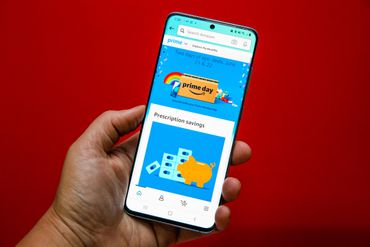
Amazon is the one-stop shop for just about everything on your buy list. But on top of two-day and same-day shipping for Amazon Prime members, the trillion-dollar tech titan has dozens of services only a few clicks away. Some, like Amazon Prime Video and Prime Music, make headlines. Others get buried in the vastness of Amazon’s site. We’re here to help pick the best of the bunch so you don’t get lost in the search tool.
Amazon expanded its sphere during the pandemic — visits to its site reportedly increased by 37% from February 2020 to January 2021 — as it pushed new programs, including Amazon Sidewalk, the auto-on broadband-sharing program for Amazon Echo speakers and Ring devices. But its shopping experience continues to be its bread and butter.
For avid Amazon customers, a ton of lesser-known features can land you stellar deals, including steep discounts on expensive items and free books, but only if you know where to look. We’ve hacked through Amazon’s jungle of services to find the most useful (and surprising) Amazon programs that you can use today.
Read more: Amazon Prime Video: The 25 best films to see this week
1. Read for free using Prime Reading and Kindle Unlimited
Prime Reading is your own personal lending library that comes with a Prime membership. With a rotating selection of over 2,500 books and magazines, you can access Prime Reading with the Kindle app on your desktop or portable device or your Kindle e-reader. This Amazon service also lets you share titles with members of your household. Some books in Prime Reading come with Audible narrations so you can multitask while you listen.
Prime Reading also includes First Reads, which gives members a sneak peek at books before they’re released to the general public.
Kindle Unlimited is a $10-a-month subscription service separate from an Amazon Prime account. It gives you unlimited access to more than 1 million ebooks and up to three magazine subscriptions on a Kindle device or Kindle app.
2. Trade in used devices for gift cards and shop preowned products at a discount
Amazon is boarding the train to sustainability station, and it’s something you can directly benefit from. With Amazon Trade-In, you can send back your used electronics in exchange for Amazon gift cards. Make sure to check on the eligibility of each product — some trade-in options are only available for a limited time.
Amazon Renewed gives you access to products that may have been opened but unused by their original owners, or were refurbished. Amazon assures that these preowned items work and look like new, coming with the Amazon Renewed Guarantee. A variety of products and brands are available, even from premium names like Apple and Vitamix.
3. Find discounts in the Amazon Warehouse
Amazon Warehouse resells millions of like-new or preowned items that have been returned by customers. Some of the products only had their boxes opened by original purchasers before they were sent back, unused, so they’re resold at a discount. While there’s no regular manufacturing warranty on these products, they are backed by Amazon’s 30-day return policy and 90-day renewed item return policy.
To read more about how you can get the most out of Amazon Warehouse, check out our guide on shopping for the best Amazon Warehouse deals.
4. Sift through overstocked items in Amazon Outlet
Just like a brick-and-mortar outlet store, but without the gas money. The Amazon Outlet features overstocked items and other products at discounted prices. Like at an outlet, you can find premium brands, items under $10 and products ranging from home furniture and clothing to books and pet supplies. It’s a good place to stay within a budget while being the first owner, unlike some items in the Amazon Warehouse.
Keep in mind that although the online shopping experience is convenient, just like an outlet, the best deals can take sifting to find. Luckily, you can do it from the couch.
5. Land limited-time discounts through Lightning Deals
Amazon’s Lightning Deals are a promotion where a product or service is on sale for a short period of time or until it’s sold out. You can find them all throughout the site, but especially on Prime Day and in Today’s Deals. On Prime Day, Lightning Deals are only for Prime members.
There is one lightning deal per customer until the promotion ends or all the deals are claimed by other shoppers. You can join a waitlist for a deal, but keep in mind that these discounts are extremely time-sensitive, so grab them fast. Unless refreshing the page over and over is your thing, these deals aren’t necessarily the tool to find something specific because of their fleeting nature and limited availability.
6. Store pictures and videos with Amazon Photos
Amazon’s online shoebox for photos and videos offers secure and unlimited full-resolution photo storage plus 5GB of video for Prime members. To use this feature, you can choose to manually or automatically upload media in the Amazon Photos app. You can personalize the displays on Amazon devices like Fire TV, Echo Show and Fire tablets as long as you have the app. There are also ways to create keepsakes using the pictures you upload, such as custom cards and prints.
With the Family Vault perk, up to five family members can share in the same plan. If you want more beyond what Prime offers, there are paid plans available. If you choose to switch — which can be done anytime — there is a 100GB option for $2 per month and 1TB plan for $7 per month.
7. Share Prime benefits with loved ones using Amazon Household
Sharing is caring, and Amazon Household lets you extend access to Prime benefits and digital content with others. Using Household, share your Prime account with:
- Up to two adults, each with their own Amazon account. Adults can manage accounts of teens and children.
- Up to four teens (ages 13 through 17). Teens can have their own Amazon login to stream content and shop with parent approval.
- Up to four children (children can’t shop on Amazon).
8. Use discounts on Whole Foods hauls
Healthy shopping can rack up the number at the bottom of the receipt. But if you enter your email address, phone number or scan the QR code on your Whole Foods Market app at checkout during your next grocery haul, Prime members receive discounts on select products.
Blue tags indicate sales exclusive to Prime members, while yellow tags mean an extra 10% off of an item already on sale. This gets you discounts on weekly bestsellers, including produce, packaged goods and beauty products, but note that it excludes alcohol. The few cents saved on items may seem insignificant individually, but savings do add up at the end of the shopping trip.
Also, if you don’t want to make the trip across town, Amazon offers two-hour delivery of groceries for free, as long as you meet the minimum purchase amount. But if you don’t mind the drive, there are also one-hour pickup windows depending on your location — just remember to check in with the Amazon app to see if you need to enter the store.
9. Handpick a wish list with Prime’s wedding registry
If the big day is coming up, Amazon’s wedding registry can get a gift wish list set up for everything from daily essentials to group presents. Amazon can help you cover all the gifting bases, and that makes it a convenient option for you and your wedding guests.
The registry includes lists of editors’ picks and bestsellers to help you sort through Amazon’s options, while the browsing feature can inspire new ideas or highlight something you may have forgotten about. You can also buy any item that’s left on the registry for 20% off — which can be returned within 180 days if you decide you don’t like it.
For more, here are our picks for the best Alexa devices and which e-reader is right for you.
Technologies
Apple Confirms It’s Bringing Ads to Maps as Part of New Apple Business Platform
Apple is adding advertising to its Maps, Mail, Wallet and Siri services this summer.
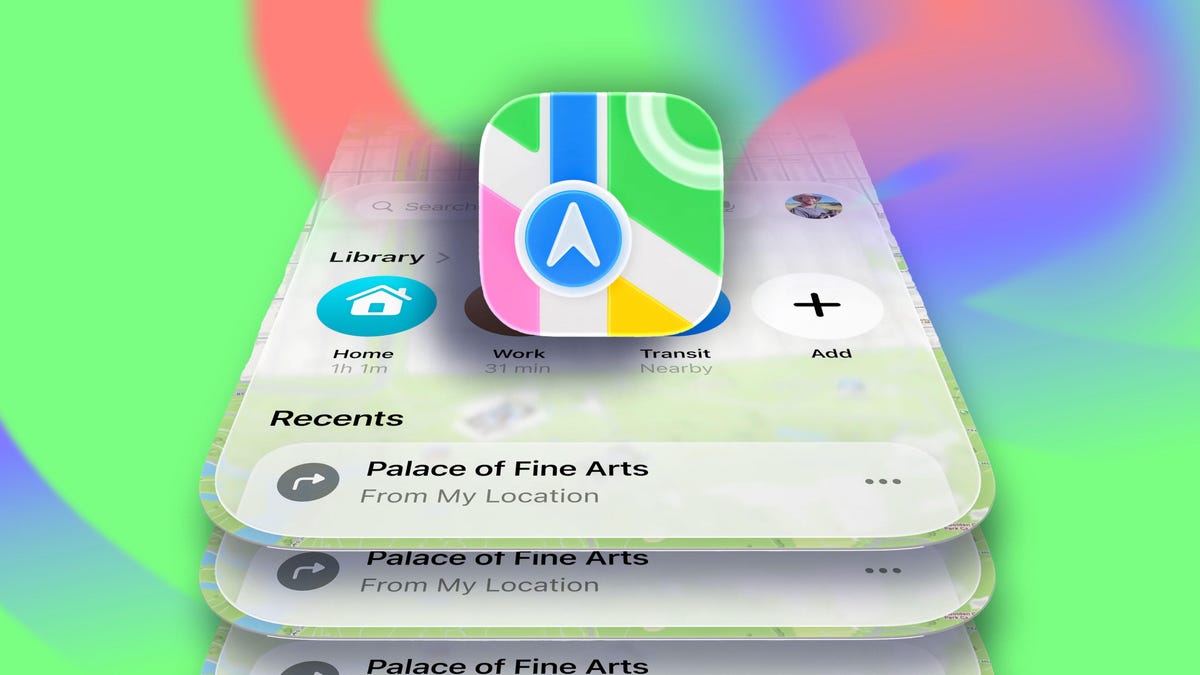
Apple is moving forward with plans to roll out advertising on its Maps platform, appearing on devices like iPhones and the web version of the app as early as this summer.
Bloomberg first reported on Apple’s plans last October, and now Apple has confirmed it’s a reality and part of a new platform called Apple Business, launching April 14, offering advertising opportunities across not only Maps but also Mail, Wallet and Siri.
The advertising system, as far as Maps goes, would work similarly to Google Maps advertising. Slots would be available for brands or businesses to purchase and would be tied to search results in Maps.
The Business platform that Apple is launching will be available in more than 200 countries and regions, according to the company.
Ads in Maps will initially only roll out in the US and Canada this summer.
The move is part of a larger plan to keep growing Apple’s services business, which includes subscriptions like Apple TV Plus, as well as Apple News, iCloud and the App Store. While Apple’s advertising business is a smart part of the company’s revenue, services now account for a quarter of Apple’s annual sales, reportedly more than $100 billion a year, according to a Bloomberg update.
Apple Business will also include options for companies to buy upgraded iCloud storage and AppleCare Plus for Business; there will also be a dedicated Business app that lets companies manage Apple accounts and devices and assign apps and roles within an organization.
Technologies
Spotify’s New SongDNA Feature Tells You How a Song Was Made
The much-teased feature is rolling out now to Premium users on Android and iOS.

When Spotify releases its end-of-year Wrapped, detailing my listening history over the last year, I’m 0% surprised when it shows that I’ve logged over 100,000 minutes on the app. Music is one of life’s greatest pleasures, and I love researching everything about how a song was created, from start to finish.
If you do the same, you might enjoy Spotify’s new SongDNA feature.
The feature rolled out globally to Premium users on Tuesday, March 24. It shows you every person involved in making a song, plus other interesting facts, like covers, which samples the song used, and other music the song’s engineers or mixers have worked on.
How SongDNA works
For instance, I’ve been really enjoying the new BTS album Arirang, released last week, especially the song Body to Body. I’ve been loving the production, so I went for a snoop to see who was involved.
When I clicked on the song in the app and scrolled down to the SongDNA section, one of the first names I noticed among the collaborators was Ryan Tedder. Known as the lead singer of OneRepublic, he’s also responsible for composing, writing and producing some huge hits: Halo by Beyoncé, Bleeding Love by Leona Lewis, Sucker by the Jonas Brothers, many Adele songs, etc.
Read also: AI-Recommended Music? Spotify Is Giving You the Power to Personalize
With SongDNA, you can now learn more about and give credit to the talented writers, producers, engineers and collaborators behind your favorite music.
«By bringing collaborators, samples and covers together in one place, we’re making it easier for fans to discover new music and see how songs connect and come to life,» said Jacqueline Ankner, Spotify’s head of songwriter and publisher partnerships. It also means that songwriters, producers and rightsholders get recognition for their role.
SongDNA has been rumored since the fall, and co-CEO Gustav Söderström recently teased the new feature during his SXSW panel.
SongDNA is finally rolling out in beta to Premium users on Android and iOS, with the launch expected to finish in April.
Technologies
iPhone Air vs. Galaxy S25 Edge: Thin Phone Battle
If you’re looking for a less-chunky phone to carry all day, Apple and Samsung have new slim options. Here’s how they compare.
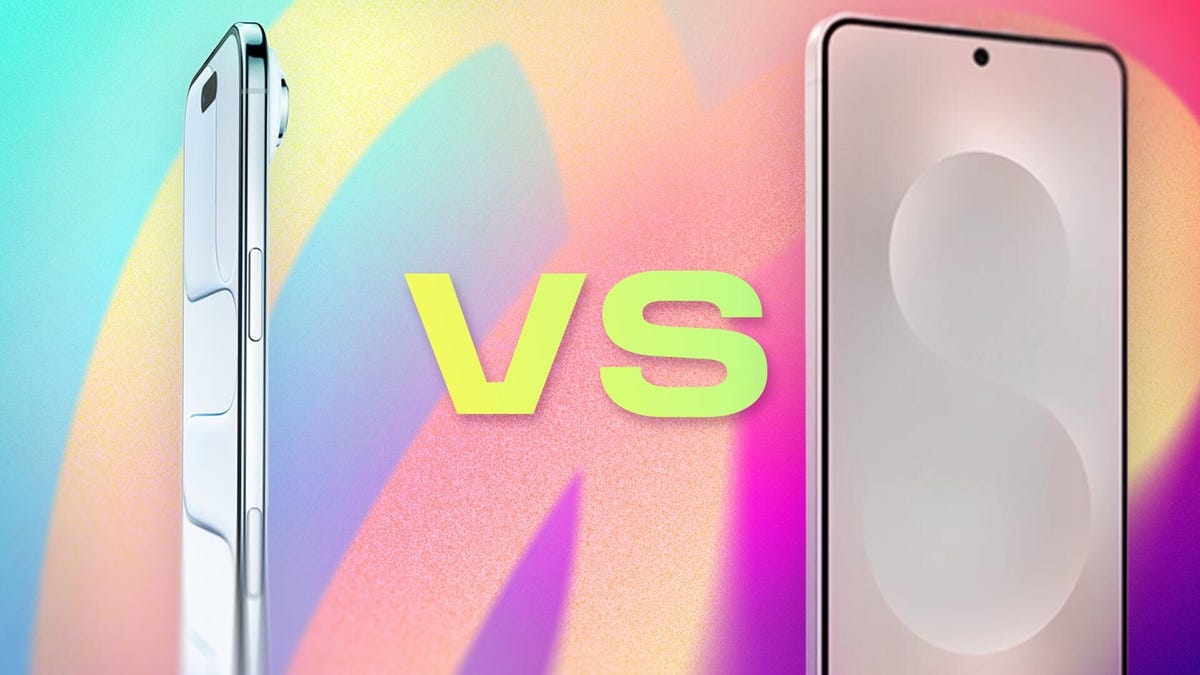
Super-thin phones carry a lot of appeal without a lot of bulk. They’re lighter than many counterparts, more comfortable to hold and let’s not forget how great they look. And although they remain a niche category, the Apple iPhone Air and Samsung Galaxy S25 Edge are also paving the way for the slim technology that makes the Galaxy Z Fold 7 and rumored iPhone Fold possible.
But are you giving up too much else for a slim phone? If you press them together, are they much thicker combined than a regular iPhone 17 or Galaxy S25 (or the new Galaxy S26)? And do they overcome trade-offs in battery life, camera and sound quality that come with a thinner design? I’m here to do the math and compare features for you.
Looking to order the iPhone Air? Check out our order guide to learn if you can get it free and other great deals.
Want to buy the Samsung Galaxy S25 Edge? Find out which carriers and retailers are offering the best deals on Samsung’s slim phone.
iPhone Air vs. S25 Edge price comparison
-
iPhone Air: $999. The iPhone Air takes the place formerly held by the iPhone 16 Plus, making it the only model with a screen larger than the iPhone 17 that isn’t an iPhone 17 Pro.
-
Galaxy S25 Edge: $1,100. The S25 Edge joins the S25 and S25 Ultra in this year’s Galaxy lineup.
The iPhone Air includes fewer features than the iPhone 17, such as the number of cameras. However, it features a larger display, an A19 Pro processor, and is equipped with 256GB of storage to begin with. Additionally, Apple has consistently applied premium pricing for minor design changes. The original MacBook Air fit into an inter-office envelope and cost $1,799, despite being underpowered compared to the rest of the MacBook line. (Over a few generations, it would eventually become Apple’s entry-level affordable laptop at $999, where it still resides.)
The Galaxy S25 Edge’s higher price ($101) could be an attempt to capture more dollars from customers looking for a phone that sets them apart, but we’re already seeing occasional steep discounts on it.
In both cases, it’s worth noting that the pricing has held up against the Trump administration tariffs so far.
iPhone Air vs. S25 Edge dimensions and weight
Now it’s time to go deep — as in, just how thin is the depth of each phone?
No phone manufacturer describes its phones as bulky or chunky, even for extra-large models like the iPhone Pro Max. Yet, the difference between the depths of the iPhone Air and the S25 Edge, as well as the standard phones of each respective family, is stark.
Not counting the camera assembly, which Apple refers to as the «plateau,» most of the iPhone Air’s body is 5.64mm thick. The S25 Edge, at its narrowest point, is a hair thicker at 5.8mm. (Both companies list only the thinnest measurement, not including the cameras.) Compare that to 7.9mm for the iPhone 17 and 7.2mm for the Galaxy S25.
The Galaxy Z Fold 7 is actually thinner when open, at 4.2mm, but it also has a larger surface area to accommodate its battery and other components. Other foldables from Chinese companies, such as Huawei, Oppo and Honor, also boast thinner bodies than the iPhone Air or S25 Edge, but only when opened.
And when you press the two thin phones together, do they really match up to the typical phone slab you’re carrying now? Combined (and again, excluding the camera bumps), the iPhone Air and S25 Ultra are 11.44mm thick, which is thicker than either the iPhone 17 or Galaxy S25, and even the iPhone 17 Pro Max at 8.75mm. However, if you want to achieve a more vintage feel, the original first-generation iPhone, released in 2007, measured 11.6mm.
Surprisingly, the less depth translates to only a slight decrease in weight compared to the other models in each lineup. The iPhone Air weighs 165 grams versus 177 grams for the iPhone 17, while the S25 Edge pips in at just 163 grams but gets barely undercut by the Galaxy S25 at 162 grams.
How big is each phone in the hand? While both are similar, the iPhone Air is slightly shorter and narrower, measuring 156.2mm tall and 74.7mm wide, compared to the S25 Edge’s dimensions of 158.2mm tall and 75.6mm wide.
iPhone Air vs. S25 Edge displays
Apple calls the iPhone Air’s 6.5-inch OLED screen a Super Retina XDR display. It features a high resolution of 2,736×1,260 pixels at a density of 460 ppi (pixels per inch) and can output a maximum of 3,000 nits of brightness outdoors, as well as a minimum of 1 nit in the dark.
Samsung packed a larger 6.7-inch QHD+ Dynamic AMOLED 2X screen into the S25 Edge, which translates to a high-resolution display measuring 3,120×1,440 pixels at 513 ppi. Its brightness goes up to 2,600 nits.
Both phones’ screens feature adaptive 120Hz refresh rates for smoother performance.
Comparing the iPhone Air and S25 Edge cameras
So far, many of the specs have been close enough to weigh each phone fairly evenly. Then, we get to the cameras.
The iPhone Air includes a single rear-facing 48-megapixel wide camera with a 26mm-equivalent field of view and a constant f/1.6 aperture. In its default mode, the camera outputs 24-megapixel «fusion» photos that result from an imaging process where the camera captures a 12-megapixel image (using groups of four pixels acting as one larger pixel for improved light gathering, known as «binning») and a 48-megapixel reference for additional detail.
Apple also claims the iPhone Air can capture 2x-zoomed (52mm-equivalent) telephoto images that are 12 megapixels in dimension and represent a crop of the center of the image sensor.
The S25 Edge features two built-in rear cameras: a 200-megapixel wide-angle lens and a 12-megapixel ultrawide lens. There’s no dedicated telephoto camera, so the S25 Edge also offers a 2x-zoomed crop that shoots photos at 12 megapixels in size.
The front-facing selfie cameras on each phone differ significantly. The iPhone Air introduces a new 18-megapixel camera with an f/1.9 aperture. But the increased resolution over the S25 Edge’s 12-megapixel selfie camera isn’t what’s notable.
Apple calls it a Center Stage camera because it features a square sensor that can capture tall or wide shots without requiring the user to physically turn the phone, unlike the 4:3 ratio sensors found in typical selfie cameras. It can adapt the aspect ratio based on the number of people it detects in front of the camera: a traditional portrait orientation when you’re snapping a photo of yourself, for example, or switch to a landscape orientation when two friends stand next to you in the frame.
iPhone Air vs. S25 Edge batteries
When it comes to concerns, the battery life of thin phones is at the top of the list. The insides of most phones are packed with as much battery as will fit, so making a phone slimmer naturally means removing space for the battery. With either model, you end up sacrificing battery power for design. But how much?
Apple doesn’t list the iPhone Air’s battery capacity, but claims «all-day battery life» and up to 27 hours of video playback. It also sells a special iPhone Air MagSafe Battery add-on that magnetically snaps to the back of the phone and works only with the iPhone Air. In her review, CNET’s Senior Tech Reporter Abrar Al-Heeti drained the battery in 12 hours over a phone-intensive day, but did end a more typical day with 20% remaining.
The S25 Edge features a 3,900-mAh battery, which Samsung claims will support up to 24 hours of video playback. (Come on, phone manufacturers, our phones aren’t televisions left running in the background.)
In her S25 Edge review, Al-Heeti noted that the phone also generally lived up to Samsung’s own «all-day battery life» boast, saying, «Ultimately, you’ll get less juice out of that slimmer build, but S25 Edge offers just enough battery life to make me happy…But the S25 Edge has shifted my priorities. I’m enjoying the sleek form factor so much that I’m willing to make some compromises, even if that means I have to be sure to charge my phone each night, which is something I tend to do anyway.»
It’s worth noting that both phones support fast charging when used with a 20-watt or higher wired power adapter, allowing them to reach around 50% charge in 30 minutes from a completely discharged state.
iPhone Air vs. S25 Edge processor, storage and operating system
The iPhone Air is powered by Apple’s latest A19 Pro processor, the same one found in the iPhone 17 Pro models (compared to the A19 in the stock iPhone 17). Apple doesn’t list the built-in memory, but we suspect it includes 8GB of RAM (which is recognized as the minimum amount to run AI features such as Apple Intelligence). The base storage configuration is 256GB, with options to order the iPhone Air with 512GB or 1TB capacity. It ships with iOS 26, the latest version of the operating system that Apple released widely this week.
The S25 Edge is powered by a Snapdragon 8 Elite processor, the same one that powers the other S25 models. It includes 12GB of RAM and is available in storage capacities of 256GB and 512GB. The phone comes preinstalled with Android 15.
iPhone Air vs. S25 Edge all specs
Apple iPhone Air vs. Samsung Galaxy S25 Edge
| Apple iPhone Air | Samsung Galaxy S25 Edge | |
|---|---|---|
| Display size, tech, resolution, refresh rate | 6.5-inch OLED; 2,736 x 1,260 pixel resolution; 1-120Hz variable refresh rate | 6.7-inch QHD+ AMOLED display; 120Hz refresh rate |
| Pixel density | 460ppi | 513 ppi |
| Dimensions (inches) | 6.15 x 2.94 x 0.22 in | 2.98 x 6.23 x 0.23 inches |
| Dimensions (millimeters) | 156.2 x 74.7 x 5.64 mm | 75.6 X 158.2 X 5.8mm |
| Weight (grams, ounces) | 165 g (5.82 oz) | 163g (5.75 oz) |
| Mobile software | iOS 26 | Android 15 |
| Camera | 48-megapixel (wide) | 200-megapixel (wide), 12-megapixel (ultrawide) |
| Front-facing camera | 18-megapixel | 12-megapixel |
| Video capture | 4K | 8K |
| Processor | Apple A19 Pro | Snapdragon 8 Elite |
| RAM + storage | RAM N/A + 256GB, 512GB, 1TB | 12GB RAM + 256GB, 512GB |
| Expandable storage | None | No |
| Battery | Up to 27 hours video playback; up to 22 hours video playback (streamed).Up to 40 hours video playback, up to 35 hours video playback (streamed) with iPhone Air MagSafe Battery | 3,900 mAh |
| Fingerprint sensor | None (Face ID) | Under display |
| Connector | USB-C | USB-C |
| Headphone jack | None | None |
| Special features | Apple N1 wireless networking chip (Wi-Fi 7 (802.11be) with 2×2 MIMO), Bluetooth 6, Thread. Action button. Apple C1X cellular modem. Camera Control button. Dynamic Island. Apple Intelligence. Visual Intelligence. Dual eSIM. 1 to 3,000 nits brightness display range. IP68 resistance. Colors: space black, cloud white, light gold, sky blue. Fast charge up to 50% in 30 minutes using 20W adapter or higher via charging cable. Fast charge up to 50% in 30 minutes using 30W adapter or higher via MagSafe Charger. | IP88 rating, 5G, One UI 7, 25-watt wired charging, 15-watt wireless charging, Galaxy AI, Gemini, Circle to Search, Wi-Fi 7. |
| US price starts at | $999 (256GB) | $1,100 (256GB) |
-
 Technologies3 года ago
Tech Companies Need to Be Held Accountable for Security, Experts Say
-
 Technologies3 года ago
Best Handheld Game Console in 2023
-
 Technologies3 года ago
Tighten Up Your VR Game With the Best Head Straps for Quest 2
-
 Technologies4 года ago
Black Friday 2021: The best deals on TVs, headphones, kitchenware, and more
-
 Technologies5 лет ago
Google to require vaccinations as Silicon Valley rethinks return-to-office policies
-
 Technologies5 лет ago
Verum, Wickr and Threema: next generation secured messengers
-
 Technologies4 года ago
Olivia Harlan Dekker for Verum Messenger
-
 Technologies4 года ago
The number of Сrypto Bank customers increased by 10% in five days