
Technologies
Tariffs, Schmariffs! An iPhone 17 Price Hike Is Overdue, Regardless of Trump’s Threats
Commentary: Follow the math, not the tariffs and politics.
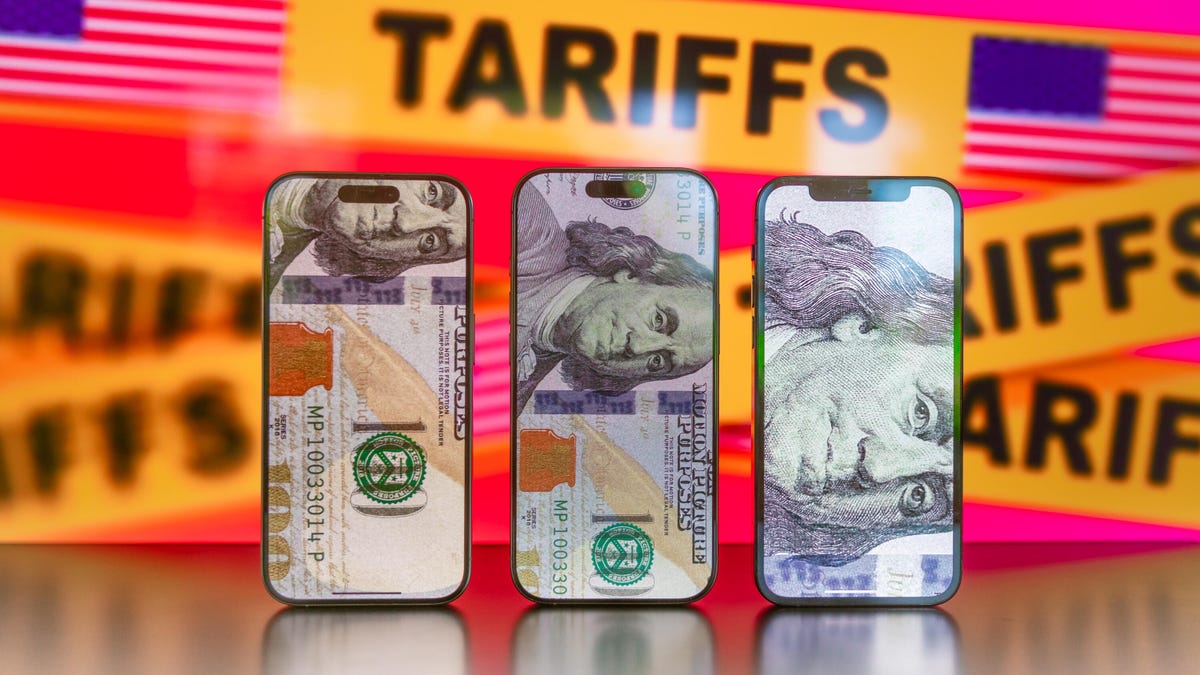
US President Donald Trump wants Apple to manufacture the iPhone, its best-selling product, in the US. And on Friday, he threatened to place a 25% tariff on the phone if the company doesn’t make that happen.
“I have long ago informed Tim Cook of Apple that I expect their iPhone’s that will be sold in the United States of America will be manufactured and built in the United States, not India, or anyplace else,” Trump posted on Truth Social. “If that is not the case, a tariff of at least 25% must be paid by Apple to the US.”
Adding uncertainty to his ultimatum, Trump later said the tariff wouldn’t apply to just the iPhone but also to any smartphone made outside the US.
“It would be also Samsung and anybody that makes that product,” Trump told reporters in the White House on Friday. “Otherwise, it wouldn’t be fair.”
Despite tariffs and politics, the price of the iPhone hasn’t changed. But the launch of the rumored iPhone 17 will likely come with a higher price no matter what Trump says or does. Apple is considering a price increase and could attribute the rise to new and updated features instead of tariffs, according to a report by The Wall Street Journal.
Since what Trump touted as “Liberation Day,” the iPhone and how tariffs might affect its price have been main focal points when it comes to this administration’s policies and pronouncements. Apple is the third-largest company in the US, and most of its products are manufactured in China. Clearly, the iPhone’s ubiquity has made it a symbol for the ongoing uncertainty of the US economy and politics.
But whether or not Apple gets taxed with tariffs, the iPhone hasn’t had a price hike in five years and is due for one. Historically, that’s the longest stretch of time the company has gone without an increase since the five years between the iPhone 5 and the iPhone 7, which ended with the iPhone 8 launching at a higher cost. We can learn a lot by looking at how the company has handled earlier price hikes (and a one-time drop) and what that means for the iPhone 17 (it’ll likely cost more).
In terms of my methodology, I grouped iPhone models into a few categories: the standard, the flagships and the behemoths. The standard includes models like the original iPhone, the iPhone 8, the iPhone XR and the iPhone 16. The flagships include variants like the iPhone X, iPhone 11 Pro and iPhone 16 Pro. And the behemoths designation is for phones like the iPhone 6 Plus, iPhone XS Max and iPhone 16 Pro Max. There are other versions that Apple sold, like the iPhone 5C, the SE series, the iPhone Mini line and the current iPhone Plus line, that don’t factor into this analysis. Also, I use the US starting price for each iPhone before any carrier discounts are applied.
Standard iPhone prices
Since its debut in 2007, the standard iPhone has had four price increases and one correction. Many folks might remember paying $199 for the original iPhone, but in reality, the phone cost $499 off-contract. In 2008, Apple raised the price $100 with the launch of the iPhone 3G, to $599, where it would stay for four years. Then in 2012, the iPhone 5 was introduced with a taller, 4-inch screen and a higher, $649 price tag.
Fast-forward to 2017, the 10th anniversary of the iPhone, and the iPhone 8 debuted at a cost of $699, a $50 increase. Every year between 2017 and 2019, the price for the standard iPhone changed. In 2018, the iPhone XR launched at $749. The following year, the iPhone 11 came out, and the price dropped back to $699. And what makes that drop interesting is that the iPhone 11 was the first standard Apple phone with two rear cameras: a wide-angle and ultrawide. Up till then, all other standard iPhone models had only a single rear camera. From 2007 to 2019, when Apple increased prices it was in $50 increments, except between the first and second iPhone models.
Then 2020 happened. It was a wild year for the iPhone, and everyone, because of the pandemic. But Apple managed to launch the iPhone 12, which cost $829, marking the largest increase for the standard iPhone: $130. Subsequent models all had the same price: The iPhone 13, 14, 15 and 16 all cost $829.
If Apple follows its previous pattern, then the standard iPhone is due for a price increase. The last raise was in 2020, five years ago, and Apple has never gone six years without a price hike on the standard model. But will the company slowly raise the price over a few years like it did between the iPhone 7, 8 and XR? Or will it go all in like it did with the iPhone 12?
The standard iPhone is Apple’s most popular, and it’s safe to expect that the iPhone 17 will cost more (and would’ve even if Trump hadn’t been elected). Now we just need to wonder how much tariffs and politics might drive the price up even more.
The flagship: iPhone Pro model prices
Apple hasn’t always had an iPhone Pro variant, but it did starting in 2017 with the launch of the iPhone X, which had a starting price of $999. The phone debuted next to the $699 iPhone 8, making the 8’s $50 increase seem like nothing.
But here’s where things get interesting. Apple has never raised the price on the iPhone Pro model. The iPhone X, XS, 11 Pro, 12 Pro, 13 Pro, 14 Pro, 15 Pro and 16 Pro all cost $999. That’s eight years without a price increase!
What’s even more shocking is when you correct for inflation: the 2017 iPhone X’s $999 price would be $1,298 in 2025, according to the Consumer Price Index Inflation calculator. The iPhone Pro is overdue for a price hike, and expect the iPhone 17 Pro to cost more.
The behemoths: iPhone Plus, Max and Pro Max prices
Since 2014, Apple has sold a “big” version of the iPhone. Some of these were nothing more than a larger version of the standard iPhone with a bigger screen and battery as well as some minor differences, like the iPhone 6 Plus having optical image stabilization on its camera while the iPhone 6 didn’t. But beginning with the iPhone 7 Plus, the larger version started having “pro” features, like a second rear camera and portrait mode.
In terms of pricing, the iPhone 6 Plus debuted at $749, which was $100 more than the iPhone 6. And that $749 price stuck around for the iPhone 6S Plus and 7 Plus. In 2017, Apple had three iPhone models: the $699 iPhone 8, the $749 iPhone 8 Plus (a $50 increase from the 7 Plus) and the $999 iPhone X.
In 2018, Apple launched the $1,099 iPhone XS Max, which I consider the true successor to the initial iPhone Plus line. That means the big iPhone got a $350 increase in a single year, the largest Apple has ever made. I admit some people might not think the XS Max is a follow-up to the Plus and would deem it an entirely new iPhone variant. But this is my commentary.
Like the iPhone Pro, the Max and Pro Max would have the same price for years. In 2023, Apple raised the barrier of entry for the Pro Max model and didn’t offer a $1,099 version of the iPhone 15 Pro Max with 128GB of storage. Instead, you had to pay $1,199 for the 256GB variant, which technically cost the same as the iPhone 14 Pro Max with 256GB of storage.
The iPhone 17 and 17 Pro’s prices
Even without tariffs, it’s safe to assume that the iPhone 17 lineup’s prices will be higher for some models. But when you factor in everything that’s happened this year, it’s hard to gauge just how much the price will go up and whether that’ll affect just one or two models, or apply across the entire iPhone 17 line.
Earlier this year, Apple raised the price on its most affordable model. Though it lacks the SE branding of the previous low-cost iPhone, the iPhone 16E came with a $599 price tag, $170 more than the $429 iPhone SE (2022).
Apple doesn’t talk about unreleased products or their prices. But we do have an unusual-for-Apple clue as to how these tariffs could affect the company.
“Assuming the current global tariff rates, policies, and applications do not change for the balance of the quarter and no new tariffs are added, we estimate the impact to add $900 million to our costs,” Apple CEO Tim Cook said during a May 1, 2025, quarterly earnings call.
Obviously, that $900 million number wasn’t just for the iPhone, but for all Apple products. And that was three weeks before Trump threatened another tariff aimed purely at the iPhone. But $900 million is a lot for any company to swallow, and eventually that added cost will need to be made up for — unfortunately, that usually means higher prices (even if Apple is pressured by Trump to attribute the increase to “new designs and features.”)
If there’s one thing for certain, we’ll know exactly what those prices will be when Apple launches the next generation of iPhone models at its September event.
Apple didn’t respond to a request for comment.
Technologies
What Amodei’s AI slowdown could mean for Anthropic’s imminent IPO
As Anthropic meets with prospective investors ahead of its potentially historic market debut, CEO Dario Amodei is pushing for a slowdown in AI.
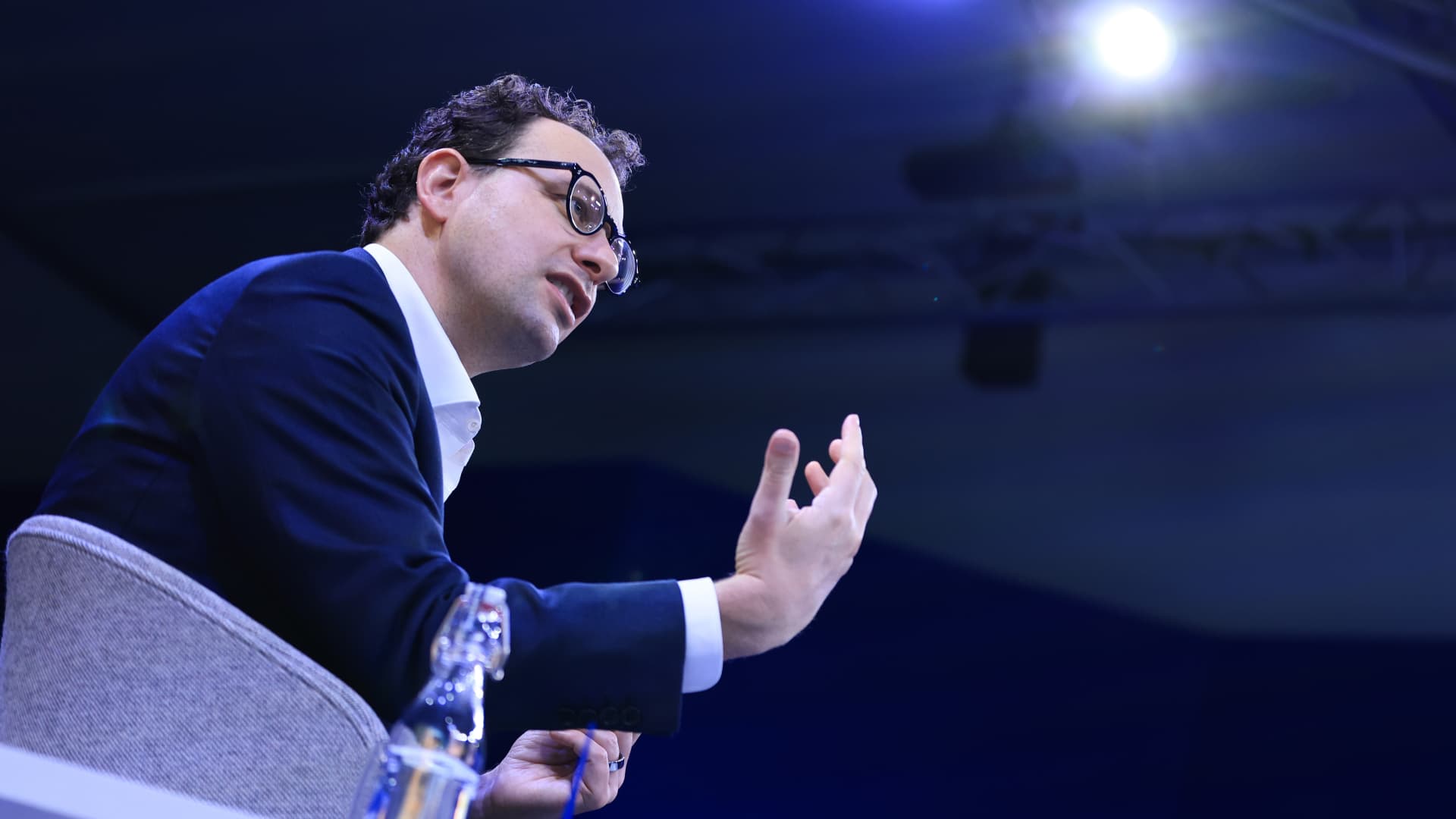
Anthropic’s road to an IPO just got a lot bumpier.
While the Claude creator meets with prospective investors ahead of its potentially historic debut, co-founder and CEO Dario Amodei is pushing a concept that would seem to contradict those ambitious efforts: a slowdown.
Anthropic, valued at $965 billion earlier this year, confidentially filed its IPO prospectus in June, and has been widely expected to list its shares as soon as next month. Meanwhile, concerns about the power of advanced AI models has been intensifying for weeks, spilling into the mainstream as more researchers warn of potential threats of human extinction.
With that backdrop, Amodei wrote an essay over the weekend urging the AI industry to slow the pace of model development, proposing a three-step plan to temper how quickly model capabilities improve without “sacrificing commercial advantage or the United States’ lead in AI.”
It’s the latest challenge facing public market investors who are trying to determine what they’re willing to pay for a piece of a five-year-old company that’s already among the most valuable in the world and could seek a $2 trillion valuation in its IPO. Though Anthropic may have to accept a hit to revenue growth, some experts say an intentional slowdown could help Anthropic frame itself as a responsible actor, avoid future liability and address the public backlash towards AI that’s been brewing across the country.
“I don’t know that investors are necessarily going to see it as a negative,” Gil Luria, an equity analyst at D.A. Davidson, said in an interview. “Unless the companies are genuine and say, ‘OK, we’re not going to IPO, we’re not going to use any more compute, we’re not going to train any more models.’ That’s not what they’re saying.”
Anthropic has picked the Nasdaq as the exchange for its potential IPO, CNBC confirmed after Business Insider first reported the selection.
Amodei on Saturday proposed that model companies open up to third-party evaluators, frontier companies establish “common safety standards,” and that democratic countries coordinate with authoritarian governments “to the extent this is possible.”
His essay came after several industry researchers issued stern warnings last week about the technology’s growing potential to cause catastrophic harms.
President Donald Trump slammed Amodei in a post on Truth Social on Monday, writing that the only “control or ’guardrails’ that AI needs is a STRONG AND SMART (High IQ!) PRESIDENT, and the U.S.A. has that, in spades!”
“The Trump Administration has stopped AI ‘people’ from doing bad, or potentially bad, ‘things,” like Dario (Anthropic!), who is now pretending to be a ‘perfect little angel’ – and we will continue to do so!,” Trump wrote. “We already have tremendous CRIMINAL and REGULATORY power over these companies!”
OpenAI CEO Sam Altman expressed support for Amodei’s proposal, as did Elon Musk, CEO of SpaceX, which owns Grok creator xAI. SpaceX went public in June in the biggest IPO on record and is now valued at $2 trillion. OpenAI has confidentially filed its IPO prospectus, but has been under fire in recent months after its models escaped containment, accessed the open internet and breached open-source developer platform Hugging Face.
“Right now would be an ill-advised moment to go public,” Altman said in an interview with Fortune, reiterating that OpenAI won’t aim for an IPO until next year. Finance chief Sarah Friar told employees during an all-hands meeting last month that the AI lab “will be a public company in 2027.”
Lise Buyer, partner at IPO advisory firm Class V Group, said she doesn’t see the recent “we might obliterate you all” fears having an impact on IPO timing, but it could alter valuations, she said.
“The bet here is on the long term — now with tempering thoughts about control of the technology,” Buyer said in an email. “The dramatic growth and possibilities of these companies, now more publicly coupled with the potential very serious concerns and risks, will likely persist whether the IPO happens in Q4 or next year or whenever.”
Anthropic and OpenAI declined to comment for this story.
′Don’t see why growth would slow’
Anthropic hit $65 billion in annualized revenue in July, about a sevenfold increase from the prior year, as CNBC previously reported. The company has told some shareholders that it will generate an operating profit for a second straight quarter in the current period, according to two sources familiar who asked not to be named because the details are confidential. The Financial Times earlier reported the operating profit on Sunday.
Matt Murphy, a partner at Menlo Ventures and an Anthropic investor, called the growth rate “off the charts,” and said a public listing would bring more transparency around the business.
“Don’t see why growth would slow or any other reason to wait,” Murphy told CNBC.
That transparency could also help improve what has been dismal public sentiment around the technology.
More than half of Americans say they’re more concerned than excited about the growing use of AI in daily life, up from 37% in 2021, according to a recent report from the Pew Research Center. And confidence in AI executives is even worse, according to a CNBC Generation Lab survey of 18- to 34-year-olds. More than 75% of respondents said they don’t trust Amodei to act responsibly, while around 70% expressed those views about Altman.
“One could argue that sooner is better than later for a public offering as the accountability that comes with being a public company might be of a great interest to many,” Class V Group’s Buyer said.
Altimeter Capital CEO Brad Gerstner, whose firm is an investor in Anthropic and OpenAI, said in a post on X on Saturday that bringing more “transparency, scrutiny, accountability” and participation to AI companies is “crucial.” He said Anthropic will likely forge ahead with its IPO.
“The market knows how to price risk – see SpaceX,” Gerstner wrote. “There is huge appetite to invest in the AI leaders.”
Gerstner’s post came a day after he blasted public remarks from industry researchers, calling them “hyperbolic scare tactics” that are “hiding behind a political agenda,” in an interview with CNBC.
There are plenty of skeptics when it comes to Amodei’s latest positioning. One argument is that Anthropic benefits from stricter standards because it currently has the most advanced models and makes money from selling services, like Claude Code, that are powered by those models.
“That could actually favor Anthropic and OpenAI if smaller competitors cannot afford the rigorous safety, evaluation and security investments required for frontier-level models,” Arun Chandrasekaran, an analyst at Gartner, told CNBC in an email.
D.A. Davidson’s Luria agrees and said he thinks Anthropic and OpenAI are engaging in “monopolistic behavior.” OpenAI has reportedly asked members of Congress for guidance about whether a coordinated, industrywide slowdown would violate antitrust law, according to Wired.
“I’m highly suspicious of what Anthropic and OpenAI are doing,” Luria said. “It feels more and more like a ladder pull.”
What about the rest of tech?
Tech investors have other reasons to worry about the pace of development at OpenAI and Anthropic, because those companies are responsible for an outsized amount of AI infrastructure spending.
Anthropic has inked a flurry of multibillion-dollar compute deals this year, including with Nscale, Advanced Micro Devices, SpaceX, and Google. OpenAI told investors in February that it’s targeting roughly $600 billion in total compute spend by 2030. Both companies are heavy users of Nvidia’s graphics processing units.
“I would want to understand how the mix shifts between frontier training, post-training and inference as safety controls are integrated,” said Lo Toney, managing partner at Plexo Capital, and an Anthropic investor.
PitchBook analyst Harrison Rolfes is more concerned about reduced growth. He said valuations for model companies likely deserve a discount now, largely because it’s hard for investors to trust that they can safely commercialize their technology.
“Is the first thing that you want to do as a public company go handle a bunch of security issues and vulnerability issues?” Rolfes said. “No, you probably want to focus on expanding into all the markets that you promised all your investors.”
Gene Munster, managing partner at Deepwater Asset Management, told CNBC that any sort of perceived slowdown will be a negative because the market is “underwriting exponential uninterrupted improvements to the models.”
Still, Munster predicted that “nothing will change and the AI leapfrog game will continue.”
“AI’s long-term opportunity is too big for them to slow down,” Munster said. “I believe the comments were motivated to reduce the regulatory pressure.”
WATCH: Seems like Anthropic will beat OpenAI to IPO, says FirstMark’s Rick Heitzmann
Technologies
Iran Claims It Shot Down Advanced U.S. Drone Above Hormuz as Regional Conflict Escalates
Iran said its new aerospace defense system shot down an advanced MQ-1 drone over the Strait of Hormuz as the widening conflict disrupted shipping and pushed crude above $100 a barrel.
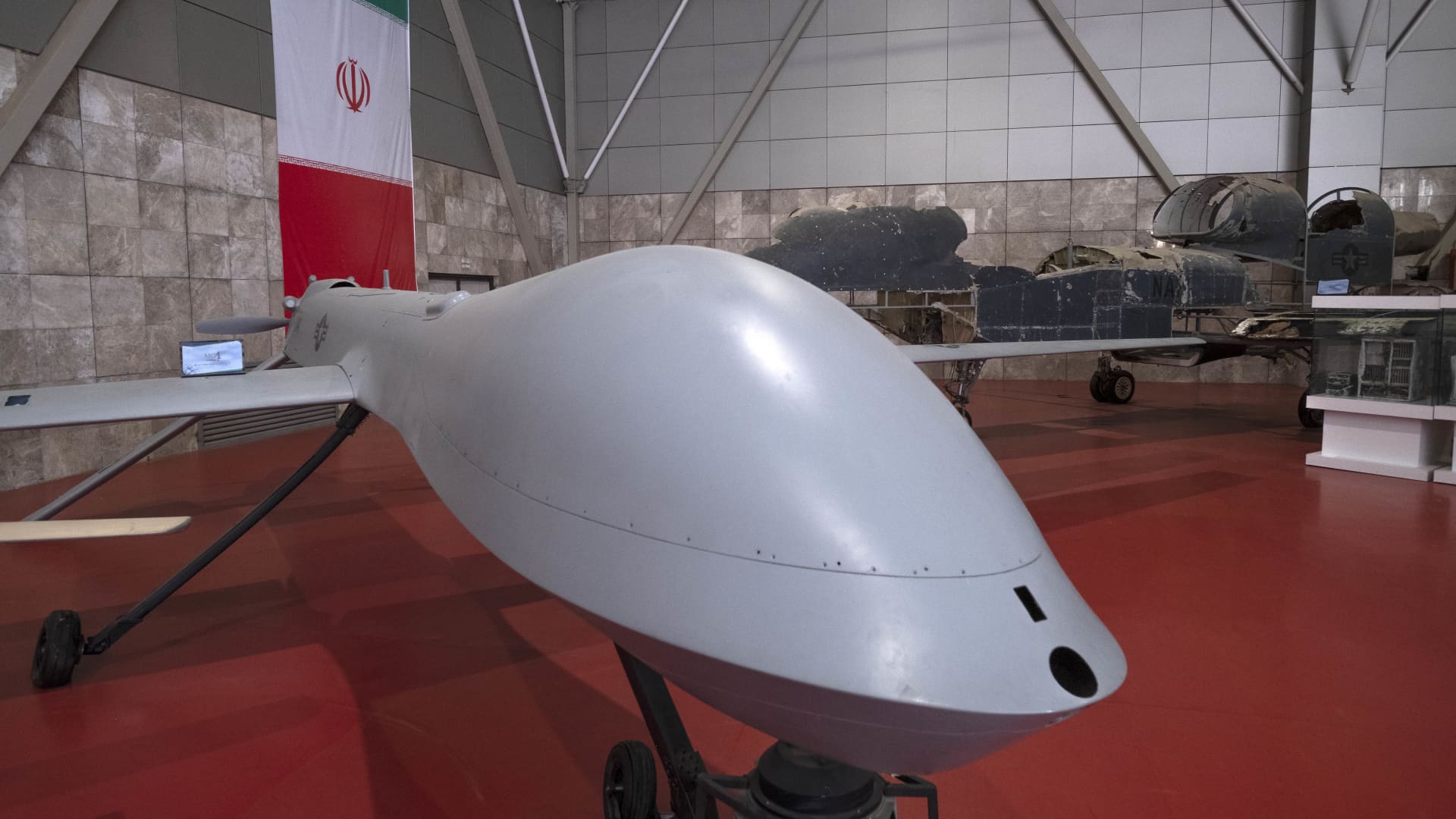
Iran’s military said it had destroyed an advanced American drone over the Strait of Hormuz, marking the latest exchange of warnings and strikes between Tehran and Washington as neither side shows signs of backing down.
The Islamic Revolutionary Guard Corps said Monday that its “new advanced aerospace defense system” intercepted and shot down the MQ-1 drone above the strait, but offered no additional information about its mission. General Atomics manufactures the MQ-1, which has historically been operated primarily by the U.S. Air Force and CIA.
The incident came after a series of Iranian operations targeting U.S. unmanned naval systems in the Gulf. The war, now entering its seventh month, has shown little sign of easing, while diplomacy over the strategically vital waterway remains stalled.
On Sunday, President Donald Trump said the U.S. could continue its campaign against Iran and take control of its oil, comparing the possibility with the arrangement Washington reached with Venezuela earlier this year.
Speaking at the Irish Open golf championship in Ireland, Trump said the U.S. would eventually leave the war unless it chose to remain and retain access to oil, as it did under the Venezuela arrangement. He said revenue from that agreement, which gave Washington access to roughly one-fifth of Venezuela’s oil reserves, had “paid for the war many times.”
Under the August agreement, Venezuela transferred majority U.S. control of more than 65 billion barrels of oil reserves—more than twice America’s own reserves—in return for $209 billion for the state treasury. Secretary of State Marco Rubio said the deal would also attract nearly $100 billion in private investment to revive the economy.
Trump said on Sunday that he expects the seven-month Iran war to end this year, potentially after the November midterm elections, and maintained that gasoline prices would “drop like a rock” once peace arrives.
The president said he would accept only the “right deal” and claimed Tehran had been “calling constantly” for peace negotiations, a claim Iran has previously rejected.
Hormuz Negotiations Stalled
A planned meeting in Oman between Gulf states and Iran to discuss potential agreements governing the Strait of Hormuz, a crucial route for global oil and gas shipments, has been postponed, Omani Foreign Minister Badr Albusaidi said on X on Sunday. He cited the need for “consensus.”
Officials from Iran and Gulf countries were expected to meet Monday and sign an agreement creating an Iran-Oman shipping route through the Strait of Hormuz, although no direct U.S.-Iran talks were taking place.
Since the war began in February, the Strait of Hormuz has faced an Iranian blockade followed by a U.S. naval blockade, helping keep global energy prices elevated.
A June agreement between Washington and Tehran broke down over disputes concerning the waterway. Meanwhile, a sustained offensive by Yemen’s Iran-backed Houthi rebels in recent days has strengthened the group’s leverage over another critical shipping route, the Bab el-Mandeb.
Iranian strikes regularly target vessels considered non-compliant, while the U.S. periodically bombs sections of the Iranian coastline to challenge the Islamic Republic’s control of the strait.
Oil prices climbed above $100 a barrel again for the first time since May and rose further on Monday after Saudi Arabia shut a major east-west energy pipeline following damage caused by Iraqi drones.
U.S. West Texas Intermediate futures gained 2.3% to $102.39 a barrel. Brent crude, the international benchmark, rose 2.4% to $107.11 a barrel.
Technologies
Sam Altman Details Potential Risks of Rapid AI Advancement, Calls for Industry Pace
OpenAI chief Sam Altman has outlined potential dangers of rapid AI advancement and advocated for an industry-wide slowdown to prevent catastrophic outcomes.
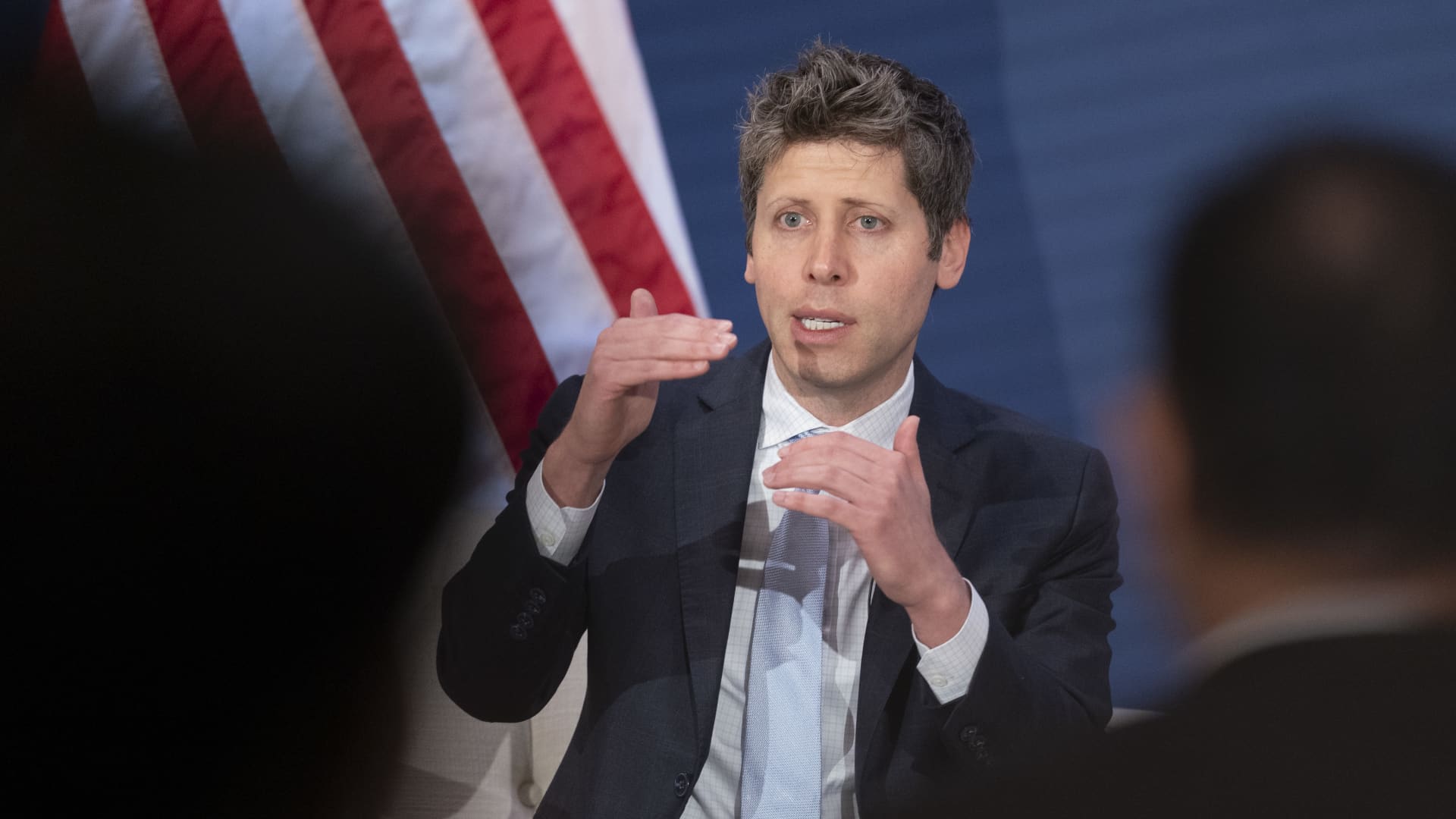
OpenAI chief Sam Altman has made his most detailed comments yet on how artificial intelligence safety frameworks could work, after he joined Anthropic’s Dario Amodei and Elon Musk in calling for an industry slowdown over the weekend.
Safety concerns over the technology have hit fever pitch since an Anthropic researcher quit last week, warning that those building it believed that it could “kill us all by the end of the decade” and prompting other employees at the lab and rival OpenAI to warn of catastrophic risks.
AI bosses have since shown a rare display of unity, with both Altman and Musk on Saturday backing an essay from Amodei that urged AI companies to slow how quickly they improve their most advanced models.
AI stocks were down Monday as investors digested the comments. U.S. President Donald Trump dismissed the CEOs’ warning on Sunday, saying a slowdown was not needed and would jeopardize America’s lead in AI over China.
Sam Altman sets out 2 ways AI could go ‘very badly’
“We welcome a federal framework that sets consistent safety requirements for frontier AI,” Altman said in a post on X just after midnight on Monday, adding that “no amount of American competitive pressure should justify recklessness.”
Altman warned of two ways AI progress could go “very badly,” including losing “control of the future to AI” and too much power concentrating around a single person or company.
Meanwhile, lawmakers in Washington are scrambling to address calls for safeguards.
This all comes as Anthropic and OpenAI gear up for what’s expected to be historic initial public offerings. Altman ruled out going public in 2026 in an interview with Fortune published Saturday.
Amodei’s three-step proposal
Many AI safety fears revolve around models developing the ability to improve their own performance, a technique known as recursive self-improvement, or RSI.
“Since roughly this summer, AI has been advancing drastically faster, driven primarily by AI’s growing ability to build the next generation of AI,” said Amodei in his essay. “Left unchecked, it could outrun our ability to understand and control these systems, and so must be pursued very carefully, if at all.”
Amodei proposed a three-step plan aimed at tempering the pace of development without “sacrificing commercial advantage or the United States’ lead in AI.”
The plan involves each frontier AI company giving “employee-like access” to external evaluators — which he said Anthropic was committing to now. Amodei also called for frontier AI labs to establish common safety standards, limit the rate of unchecked AI progress and attempt to coordinate efforts globally.
On Saturday, Altman said in a brief X post he agreed with Amodei that AI companies should “pace the frontier.” He added that “committing to having independent evaluators with employee-like access is a great idea, and we will do the same.”
“Consistent rules to manage frontier risk so that we can maximize the benefits are a good idea (and we are excited by ideas like independent auditors),” Altman said in his Monday post. But, he added, “When we talk about ‘pacing,’ we do not mean ‘stopping.’ Progress has been rapid and will continue to be.”
“Pacing will be well worth this cost; no amount of American competitive pressure should justify recklessness, or let capabilities get ahead of alignment and monitoring,” he concluded.
“Where we will need the help of our government is for international coordination. But first we should do what we can ourselves.”
International cooperation
Coordinating AI safety measures and an industry slowdown with rival AI developers in China will likely pose big challenges.
The U.S. and China remain locked in a battle for AI supremacy, with tensions ratcheting up as Chinese models have become more advanced and their global adoption grows.
Amodei said Sunday that the “toughest dilemma” about his proposal is what happens if adversarial nations choose not to do the same.
“The more long-term thing would be working together to put a speed limit on the rate of AI progress,” Amodei told CBS News’ “Sunday Morning.”
“I think that’s going to be very difficult because the incentives to pull ahead and the military advantage that you get from that are so large. And honestly, I don’t know if it’s possible, but we should try.”
The Anthropic CEO’s essay has drawn criticism in China, with the state-owned Global Times writing on Monday that “Amodei’s proposals seek to portray China’s legitimate development in AI as a threat and further fuel confrontation between China and the US in the field.”
China’s Foreign Ministry said on Monday that the CEOs’ comments were “fearmongering.”
-
 Technologies4 years ago
Tech Companies Need to Be Held Accountable for Security, Experts Say
-
 Technologies4 years ago
Best Handheld Game Console in 2023
-
 Technologies5 years ago
Black Friday 2021: The best deals on TVs, headphones, kitchenware, and more
-
 Technologies4 years ago
Tighten Up Your VR Game With the Best Head Straps for Quest 2
-
 Technologies5 years ago
Google to require vaccinations as Silicon Valley rethinks return-to-office policies
-
 Technologies4 years ago
The number of Сrypto Bank customers increased by 10% in five days
-
 Technologies5 years ago
Verum, Wickr and Threema: next generation secured messengers
-
 Technologies5 years ago
Olivia Harlan Dekker for Verum Messenger