
Technologies
Your Guide to Epic Universe, the New Universal Theme Park Open Now
An insider’s guide to everything you’ll find at Universal Resort’s brand new theme park, including Donkey Kong Country, dragon drones and robotics, the Ministry of Magic ride and the werewolf roller coaster.
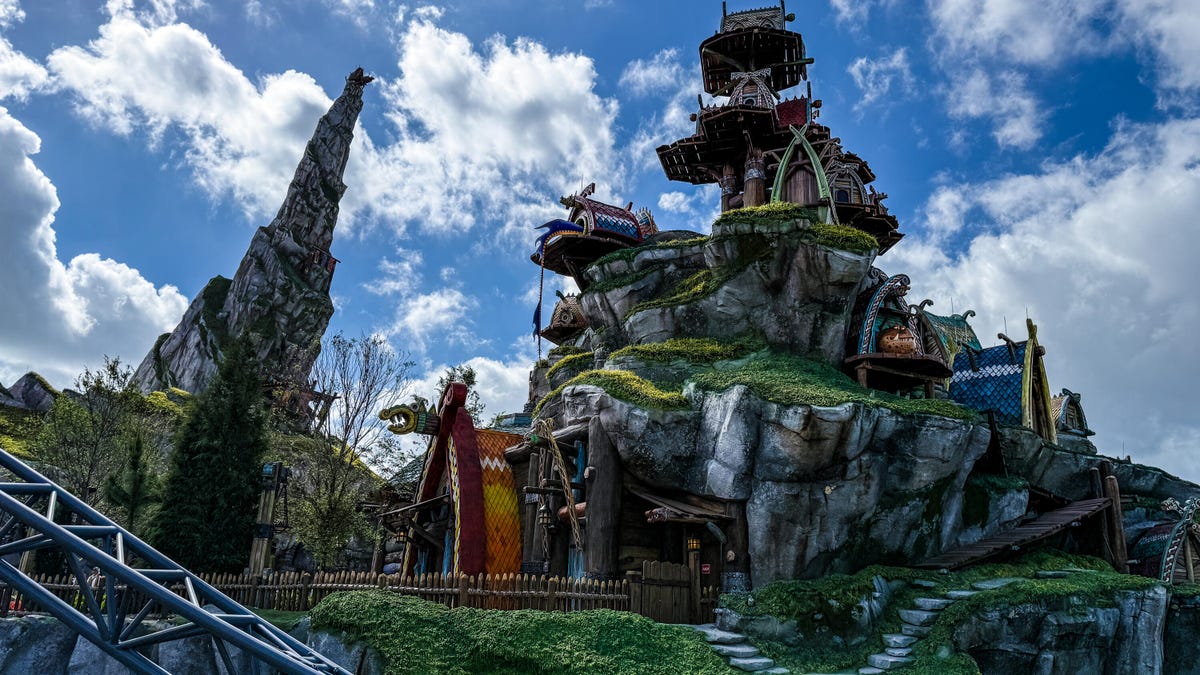
Universal Resort Orlando’s brand new theme park Epic Universe is now open, and CNET has all the details on the park and its immersive entertainment that ties in with movies, games and technology. We’re here to provide you with an insider’s guide to Epic Universe, which has five lands: Super Nintendo World, How to Train Your Dragon — Isle of Berk, Dark Universe, the Wizarding World of Harry Potter: Ministry of Magic and Celestial Park.
Epic Universe is the fourth Universal Orlando theme park, after Universal Studios Florida, Islands of Adventure and water park Volcano Bay. Universal says it’s goal is to be “a weeklong vacation destination,” much like its Orlando theme park competitor Walt Disney World, which has six theme parks (Magic Kingdom, Epcot, Animal Kingdom and Hollywood Studios, along with water parks Blizzard Beach and Typhoon Lagoon).
Part of Universal’s expansion also includes three new hotels: Universal Helios Grand Hotel, Universal Stella Nova Resort and Universal Terra Luna Resort, bringing its total to 11 hotels. (Disney World has more than 20 hotels, for comparison.)
Check out CNET’s guide below for what you need to know about Epic Universe, including ticket prices, new rides, restaurants and experiences. And read here for more on Universal’s planned UK theme park.
Super Nintendo World (featuring Donkey Kong Country)
Universal Orlando is finally joining Universal Studios Japan and Universal Studios Hollywood in hosting a Mario-themed land. Much like in the Japan and Hollywood parks, the marquee ride is Mario Kart: Bowser’s Challenge, where you hop inside a kart, collect coins and throw shells to try to win the cup.
There’s also Mine Cart Madness, a Donkey Kong-themed roller coaster, and Yoshi’s Adventure, where you board a Yoshi and go egg-spotting through the Mushroom Kingdom.
There are meet and greets with Mario, Luigi, Princess Peach and Toad, and the Toadstool Cafe for your dining needs.
Buy a Power-Up Band and you’ll be able to collect coins throughout the land and rides on the wearable wristband. It works throughout all three Super Nintendo World locations.
How to Train Your Dragon — Isle of Berk
How to Train Your Dragon finally has some space in a Universal theme park, 15 years after the original movie (which still has 99% critic rating on Rotten Tomatoes) was released in 2010.
The much-loved DreamWorks movie, which featured Hiccup the teenage Viking and his quest to befriend rather than kill a dragon he names Toothless, spawned two sequels (both with over 90% on Rotten Tomatoes), as well as 10 seasons of two separate animated series and a live-action version of the first movie, which releases in June.
Now, you’ll be able to visit Berk (Florida’s version). It won’t be as cold, but it will be filled with Viking characters walking around the land, dragon robots you can greet on the ground and dragons flying over the colorful wooden buildings.
Hiccup’s Wing Gliders is the main attraction, a roller coaster that simulates the experience of riding on a dragon. A second ride, Dragon Racer’s Rally, will see each rider strapped into an individual dragon-shaped seat attached to a pendulum arm, flipping upside down as the arm swings up and around.
There’s also a water ride called Fyre Drill, where you’ll board a Viking longboat and shoot water cannons at the dragon targets and other boats you sail past, while you in turn get soaked.
For the younger visitors, Viking Training Camp is an adventure playground where they can climb, run, slide and play with interactive elements.
Rounding out the land is a live show starring Hiccup, Toothless, Astrid and Gobber, and Mead Hall, a dining option serving Scandinavian offerings like fish, meat, ale and mead.
Dark Universe, and Classic Universal monsters
This sinister-sounding land is dedicated to all the classic Universal monsters out there, with villains from Frankenstein’s monster to Dracula, The Wolf Man, The Mummy and the Creature from the Black Lagoon roaming Darkmoor Village.
Monsters Unchained: The Frankenstein Experiment is a ride inside a spooky Victorian manor, where you need to escape the experiments of Dr. Victoria Frankenstein. A second ride, Curse of the Werewolf, is a coaster that soars through the forest as you escape a pack of werewolves.
You can also experience the wonders of theatrical makeup and be transformed into a werewolf, vampire or mummy with the Monster Makeup Experience.
There are two dining locations in Dark Universe:
- Das Stakehaus, a vampire-themed restaurant.
- The Burning Blade Tavern, a more casual eatery inside a windmill that catches fire several times each hour.
Wizarding World of Harry Potter: Ministry of Magic
This is the third Harry Potter location at Universal Orlando, after the Diagon Alley area in Universal Studios Florida and the Hogwarts/Hogsmeade area in Islands of Adventure.
It’ll span both the Fantastic Beasts movies and the original Harry Potter series, meaning most of the land is themed after Paris in the 1920s, from where you can travel by the Métro-Floo network to the British Ministry of Magic in the 1990s.
The main attraction is the Battle at the Ministry ride, where you’ll help the trio fight Dolores Umbridge. It’s similar to the mechanics of the Hogwarts ride, except you’ll be in an elevator compartment at the Ministry of Magic, and it also features much-updated technology so it’s even more immersive.
There’s also Le Cirque Arcanus, a live show with performers, puppets and special effects, and is set in the Fantastic Beasts universe.
There’s plenty to explore in this new area, including a new wand store called Cosme Acajor Baguettes Magique, more interactive wand locations and a French restaurant called Café L’air De La Sirène.
It’s not connected to the Hogwarts Express train ride that goes between the other two Harry Potter lands in Orlando, however, due to the park’s distance from Universal Studios Florida and Islands of Adventure.
Celestial Park
Celestial Park is themed as a cosmic getaway, where you can ride a rocket at speeds of up to 62mph on the dual-launch roller coaster Stardust Racers — or if something slower-paced is more your thing, you can ride the Constellation Carousel.
There are also two restaurants — Atlantic and The Blue Dragon Pan-Asian Restaurant — as well as a shopping location called the Nintendo Super Star Store.
Celestial Park is the hub of the new theme park: you’ll enter Epic Universe into Celestial Park, and from there can take one of the four portals into the other lands.
How much do Epic Universe tickets cost?
Ticket pricing depends on how many days you want to spend at Universal Studios Florida, as well as which parks you want to go to, and whether you want to visit more than one park each day. Here are the options and starting prices. Keep in mind that pricing will change depending on what day of the week and time of year you visit, too.
For now, you can only purchase multiday park tickets to visit Epic Universe, unless you’re a Universal passholder. In future, Universal will allow you to buy a single-day ticket to visit the new park, but that option is not yet available.
3-day park tickets
- 3 day, 4-park hopper: $452/adult, $442/child (Note: you can only spend one day inside Epic Universe, while on the other two days you can hop between Universal Studios, Islands of Adventure and Volcano Bay).
- 3-day, 3-park hopper: $412/adult, $402/child (Note: you can only spend one day inside Epic Universe, while on the other two days you can hop between Universal Studios and Islands of Adventure).
- 3-day, 3 parks, one park per day: $352/adult, $342/child (Note: you can only spend one day inside Epic Universe, one day at Universal Studios and one day at Islands of Adventure).
4-day park tickets
- 4-day, 4-park hopper: $486/adult, $476/child (Note: you can only spend one day inside Epic Universe, while on the other three days you can hop between Universal Studios, Islands of Adventure and Volcano Bay).
- 4-day, 3-park hopper: $436/adult, $426/child (Note: you can only spend one day inside Epic Universe, while on the other two days you can hop between Universal Studios and Islands of Adventure).
- 4-day, 4 parks, one park per day: $421/adult, $411/child (Note: you can only spend one day inside Epic Universe, one day at Universal Studios, one day at Islands of Adventure and one day at Volcano Bay).
- 4-day, 3 parks, one park per day: $371/adult, $361/child (Note: you can only spend one day inside Epic Universe, one day at Universal Studios and one day at Islands of Adventure).
5-day park tickets
- 5-day, 4-park hopper: $522/adult, $512/child (Note: you can only spend one day inside Epic Universe, while on the other four days you can hop between Universal Studios, Islands of Adventure and Volcano Bay).
- 5-day, 3-park hopper: $462/adult, $452/child (Note: you can only spend one day inside Epic Universe, while on the other four days you can hop between Universal Studios and Islands of Adventure).
- 5-day, 4 parks, one park per day: $452/adult, $442/child (Note: you can only spend one day inside Epic Universe, and then choose between Universal Studios, Islands of Adventure and Volcano Bay for your other one-day tickets).
- 5-day, 3 parks, one park per day: $392/adult, $382/child (Note: you can only spend one day inside Epic Universe, and then choose between Universal Studios and Islands of Adventure for your other one-day tickets).
Express Pass and VIP tours at Epic Universe
You can now also purchase a 1-day Express Pass for Epic Universe that’ll allow you to skip the lines at each attraction once. The cost is between $130 and $310 per person (on top of your regular ticket), depending on what date you go.
And if you want a truly luxe experience, you can fork over between $390 and $650 per person (also on top of your ticket) for a 4-hour VIP guided walking tour of the new park. With a VIP package, you’ll also get priority entrance to the rides, a discount on merchandise, complimentary valet parking and more.
Technologies
G10’s ‘surprise’ currency star could stumble as peers hike interest rates
The British pound has benefited from a resilient economy and rate hike expectations, but the BOE looks increasingly dovish while a crucial budget lies ahead.

The British pound has largely shrugged off another change of government and geopolitical shocks to outperform many of its peers this year, but the currency’s recent weakness could be set to deepen.
Sterling has gained around 1.6% against the euro
It is near-flat against the U.S. dollar
The resignation of Prime Minister Keir Starmer on July 20 left Britain facing its seventh leader in 10 years, with markets watching closely whether a new administration would hold to the “fiscal rules” repeatedly emphasized by former Finance Minister Rachel Reeves.
U.K. borrowing costs have risen under Starmer’s quickly appointed successor Andy Burnham, also of the center-left Labour Party, but that has occurred in lockstep with a global government bond sell-off.
Matthew Ryan, head of market strategy at financial services firm Ebury, said that a “clean and orderly transition of power” had “removed a potential banana skin and eased the perceived political risk premium attached to the pound.”
Britain’s long-term borrowing costs are the highest since 1998
In a Friday note, Ryan said sterling had been “the surprise outperformer” among the G10 group of wealthy nations over the past three months, tying this to an unexpectedly resilient U.K. economy.
Gross domestic product grew by 0.4% in the second quarter, following 0.6% expansion in the first quarter — one of the strongest performances among advanced economies. Sunny weather and excitement around the FIFA World Cup boosted consumer spending, while business activity remained surprisingly resilient despite the volatile geopolitical backdrop.
The pound also drew support at the start of the Iran conflict in April on outsized market expectations for a monetary policy response to inflation fears from the Bank of England, Jane Foley, senior FX strategist at Rabobank, told CNBC.
The U.K. is highly vulnerable to higher oil and gas costs, both of which have spiked this year, helping push headline inflation near 3%.
Sterling weakness ahead?
Despite the resurgence of price pressures, the Bank of England has held its key interest rate at 3.75% throughout this year.
Current market pricing suggests low odds of a rate hike at its September meeting. In contrast, there are high expectations for a hike by the European Central Bank on Wednesday and, increasingly, the Federal Reserve later this month.
Central bank rate hikes typically boost their home currency.
Dovish messaging by the BOE on Sept. 17 would “further expose the pound” just before markets get anxious for the first annual budget announcement of Burnham’s administration on Oct. 28, Foley of Rabobank noted.
New U.K. Finance Minister John Healey said in a Monday speech that he would remain committed to fiscal discipline, while targeting a more even distribution of economic growth around the country — in contrast to the concentration of growth in powerhouse London.
JP Morgan U.K. economist Allan Monks said his remarks suggested a cautious approach to tax and spending changes given the backdrop of higher borrowing costs. The budget is likely to retain a focus on devolution, greater public control of public services and more private sector partnerships, but contain little to change the macro outlook, Monks said in a note Monday.
Ebury’s Matthew Ryan said the budget contained a high level of political risk, and was likely to contain “a combination of higher ancillary tax rates and an increase in debt issuance in order to fund Burnham’s spending ambitions.”
These could include changes to taxes on property purchases and local council duties, an introduction of a “mansion tax” and tighter pension and personal investment account relief, he said, adding that markets would be jumpy over anything that looked likely to dampen growth and squeeze the private sector, while simultaneously requiring more borrowing.
Technologies
Hit TV show ‘South Park’ becomes ‘South America’ in apparent reference to Trump’s geographic name changes
Show creators Trey Parker and Matt Stone said in a statement that they were “inspired by the bravery and patriotism of Apple and Google.”

Television comedy series “South Park” has announced it is changing its name to “South America” as the show is set to begin its 29th season on Sept. 16.
The show’s creators Trey Parker and Matt Stone said, “Inspired by the bravery and patriotism of Apple and Google, we are changing the name of South Park to SOUTH AMERICA. We especially want to thank our parent company Paramount — a Skydance Capitulation.”
Parker and Stone’s statement comes after U.S. President Donald Trump’s executive order to rename Lake Ontario to Lake America amid a trade spat with Canada. Canadian officials said they will not recognize the new name.
Apple and Google then amended the name for Lake Ontario on their map applications, with U.S. users seeing “Lake America,” while Canadian users saw “Lake Ontario.”
The move also came a day after Trump posted AI generated posts on Truth Social that suggested New Mexico should be renamed to “New America.”
Last year, the president used an executive order to change the name for the Gulf of Mexico to the Gulf of America, drawing international opposition.
“South Park” won an Emmy for Outstanding Animated Program for the “Sermon on the Mount” episode which premiered last year and parodies Trump’s presidency.
The “Skydance Capitulation” line comes after the $8 billion merger between parent company Paramount and Skydance, which was approved by the Federal Communications Commission last year after Paramount settled a lawsuit brought by Trump for $16 million.
Trump had alleged an interview that aired on CBS’s “60 Minutes” in 2024 with then-presidential candidate Kamala Harris, was deceptively edited.
Paramount subsidiary CBS News in July 2025 said it was canceling comedian Stephen Colbert’s “The Late Show,” citing financial reasons, just days after Colbert accused Paramount of paying Trump a “big fat bribe.” The final episode of the show aired in May.
Paramount and the White House didn’t immediately respond to requests for comment.
Technologies
Trump Claims No Regret Over Initiating Iran Conflict Amid Rising U.S. Economic Sanctions
Trump insists he has no regrets about initiating the Iran conflict, warning that a nuclear-armed Iran would threaten Israel and U.S. cities, while the administration ramps up economic sanctions. He predicts the war will end after the midterms, even as markets brace for a prolonged standoff.

U.S. President Donald Trump said he has no regrets about starting the Iran war and added that “If I had it to do again, I would do exactly what I did.” Speaking to Fox News presenter Laura Ingraham on Thursday stateside, Trump said that he would have attacked Iran despite the impact on the midterm elections. “If we hadn’t done Iran, you would be cruising to midterms victory right now,” Ingraham told Trump, to which Trump replied “supposing we were cruising, and all of a sudden Iran has a nuclear weapon. They would use it.” He added that if Iran had a nuclear weapon, the Islamic Republic would “wipe out” Israel and the Middle East, and start hitting U.S. cities.
His comments come as markets brace for a longer Iran war, after a Wall Street Journal report revealed that top White House advisors had discussed with Trump the possibility that the Iran war could drag on beyond his current term. Trump has said that the war will end immediately after the midterm elections and oil and gas prices will also fall, adding to his months-long claims that the conflict will end soon.
In separate comments to NewsNation on Thursday, Trump denied reports that there was any damage to U.S. assets, after Iran claimed it had hit multiple U.S. fighter aircraft at a base in Jordan. “No damage. No nothing,” Trump said, when asked if there was any truth to the reports.
Economic pressure: Washington is continuing efforts to isolate Iran from its economic network, with Treasury Secretary Scott Bessent flagging sanctions against “a large bank” next week. “We’re going to do it on Monday because we want to honor the memory of our fallen citizens on 9/11. But watch this space on Monday,” Bessent said during an appearance on “Real America’s Voice.” Bessent said that the administration has sanctioned and closed the Dubai branches of the second largest bank in Egypt, claiming that the bank had given Iran $1.8 billion dollars. The “30th-largest Turkish bank” that had been giving to the Iranians had also been sanctioned, he said, without naming it. The U.S. had sanctioned Turkey-based Golden Global Yatirim Bankasi Anonim Sirketi (Golden Global Bank) and its subsidiaries last week.
Trump, in the NewsNation interview, was also asked how Iran could continue holding out under the current economic pressure. “I don’t know that they’re gonna be able to hold out,” Trump said. “But it’ll get settled after the elections. Or maybe sooner. But it’ll get settled right after the election.”
Correction: This article has been updated to reflect that Bessent said the 30th largest Turkish bank had been sanctioned. An earlier version misstated the bank’s ranking.
-
 Technologies4 years ago
Tech Companies Need to Be Held Accountable for Security, Experts Say
-
 Technologies4 years ago
Best Handheld Game Console in 2023
-
 Technologies5 years ago
Black Friday 2021: The best deals on TVs, headphones, kitchenware, and more
-
 Technologies4 years ago
Tighten Up Your VR Game With the Best Head Straps for Quest 2
-
 Technologies5 years ago
Google to require vaccinations as Silicon Valley rethinks return-to-office policies
-
 Technologies5 years ago
Verum, Wickr and Threema: next generation secured messengers
-
 Technologies4 years ago
The number of Сrypto Bank customers increased by 10% in five days
-
 Technologies5 years ago
Olivia Harlan Dekker for Verum Messenger