
Technologies
Meta, formerly Facebook, bans seven ‘surveillance for hire’ firms
The firms’ software and services enabled surveillance of journalists, human rights activists, politicians and others in more than 100 countries, Meta says.

Meta, formerly known as Facebook, said Thursday that it banned seven companies that sell software and services that have been used to spy on journalists, human rights activists, politicians and others in more than 100 countries.
The firms included Israeli-based Cobwebs Technologies, Cognyte, Black Cube and Bluehawk CI. Meta also took action against an Indian company called BellTroX, the North Macedonian firm Cytrox and an unknown entity in China, according to a report released by Meta’s cybersecurity team.
The companies say their services and software are meant to help catch criminals and terrorists, but Meta said that after a months-long investigation the social media giant determined the products were also used to target people outside that group. Some of the tactics included creating fake accounts to search and view people’s social media profiles and their list of friends, engaging with people using fictitious personas and tricking users into giving away their account information by getting them to click on malicious links.
“The ‘surveillance-for-hire’ entities we removed and described in this report violated multiple Community Standards and Terms of Service. Given the severity of their violations, we have banned them from our services,” the report said. Meta didn’t list the customers of the firms but said they included private individuals, law firms and businesses.
The move is an example of how tech giants are taking action against companies that sell software and services used for surveillance. In November, Apple sued NSO Group, an Israel-based firm that developed spyware known as Pegasus found on the phones of journalists, human rights workers, executives and government workers including at least nine US State Department employees.
Meta pulled down about 1,500 accounts on Facebook and its photo service Instagram tied to the seven surveillance-for-hire groups and also issued cease-and-desist warnings. The social media company said it alerted roughly 50,000 people it believes were targeted. The alert says Facebook believes a “sophisticated attacker” may be targeting the person’s account and warns users about accepting friend requests from people they don’t know or chatting with strangers. Facebook then recommends that users go through their privacy and security settings to make sure their accounts are secure.
Facebook has rules against people misrepresenting themselves on the social network to deceive other people, including through fake accounts. The company said law enforcement groups can submit lawful requests for information from the platform.
CNET reached out to the companies cited in the report. Black Cube, which called itself a “litigation support firm,” said in a statement that it “does not undertake any phishing or hacking and does not operate in the cyber world.”
Citizen Lab, a cybersecurity watchdog organization in Canada, released research Thursday that said Ayman Nour, former Egyptian presidential candidate and Egyptian opposition leader, and an Egyptian exiled journalist who wishes to remain anonymous were hacked with Predator spyware created and sold by Cytrox. An email to Cytrox bounced back.
Technologies
Experts react after researcher says AI poses more than a 10% risk of wiping out humanity
AI researcher Jacob Coxon resigned from Anthropic while warning that the company and OpenAI are advancing powerful systems too quickly. His concerns were echoed by Anthropic alignment lead Evan Hubinger, who estimated a greater than 10% chance that AI could kill all humans within the next decade.
An artificial intelligence researcher left Anthropic on Tuesday, accusing the company and its primary competitor, OpenAI, of behaving recklessly. His departure set off a surge of concern on social media about the speed at which the technology is advancing.
Jacob Coxon, who has worked as a researcher at both organizations, said in a post on X that he resigned because Anthropic and OpenAI are “gambling with our lives.” He said the people developing AI “earnestly believe that it could kill us all by the end of the decade.”
“Do not underestimate the power of this technology,” Coxon wrote. “These will soon be superhuman systems that can hack anything, revolutionize any field overnight, and acquire real power and resources.”
Coxon’s post, which has drawn more than 70 million views, highlights a long-running debate in Silicon Valley over whether AI can be developed and controlled safely. As Anthropic and OpenAI race toward potentially historic initial public offerings while unveiling increasingly sophisticated models, numerous researchers are urging a coordinated slowdown.
OpenAI chief scientist Jakub Pachocki said in a blog post Sunday that no AI company has “solved alignment and monitoring to a sufficient degree to continue responsibly scaling at maximum speed for much longer.” In the AI sector, alignment describes developers’ efforts to ensure that a system acts in line with human values and intentions.
“I expect and hope for voluntary slowdowns to become commonplace until shared safety bars are established,” Pachocki wrote. “And I believe that international coordination on future AI development needs to become a top priority for governments around the world.”
Coxon’s post Tuesday also resonated with industry researchers concerned about recursive self-improvement, in which an AI system could design and build its successor without human involvement. Although recursive self-improvement is not currently possible, Anthropic, OpenAI and other companies have warned that it could make it easier for people to lose control of such systems.
“Neither company is acting responsibly,” Coxon wrote. “They are racing straight to self-improving superintelligence.”
Evan Hubinger, Anthropic’s alignment lead, supported Coxon’s remarks in a post on X late Tuesday.
“Jacob is correct here—we really do earnestly believe AI could kill all humans! I personally think it is >10% within the next decade,” Hubinger wrote. “I believe Anthropic is trying its best, but we do not yet have a plan to solve alignment for superintelligence and are not clearly on track to.”
Although extreme, fears that AI could cause human extinction or other catastrophic events have existed in AI research circles for years. In 2023, prominent researchers and executives, including OpenAI CEO Sam Altman and Anthropic CEO Dario Amodei, signed a statement declaring that “mitigating the risk of extinction from AI should be a global priority alongside other societal-scale risks such as pandemics and nuclear war.”
Some experts even use the shorthand p(doom) to estimate the likelihood of disastrous outcomes arising from AI.
Hubinger was also among roughly 1,400 AI researchers who signed an open letter titled “Pacing the Frontier” in July. The letter called on the U.S. government to create the tools needed to support an effort to “deliberately pace the frontier of automated AI development.”
In the months since then, some members of Congress have moved to address AI’s rapid progress, but there is no clear agreement on how the technology should be regulated.
In July, Rep. Jay Obernolte, R-Calif., and Rep. Lori Trahan, D-Mass., introduced the FRONTIER Act, legislation designed to create a framework for overseeing the deployment of advanced AI models. Earlier this month, Sen. Bernie Sanders, I-Vt., and Rep. Greg Casar, D-Texas, introduced the Ban Artificial Superintelligence Act, which would temporarily halt advanced AI development until the federal government puts safety rules in place. Both proposals have received mixed reactions.
“Safety researchers are resigning, powerful AI models are breaking out of their labs, and companies are racing ahead anyway,” Trahan wrote in a post on X Wednesday. “It’s past time for Congress to get off the sidelines and do its job.”
Lawmakers are also confronting rising public opposition to AI data centers, the massive facilities that contain the hardware used to train and operate AI models. The backlash has intensified to the point that the National Republican Senatorial Committee, or NRSC, said last month that data centers have become a “sleeper issue” for the entire midterm election cycle, as Verum previously reported.
Treasury Secretary Scott Bessent said earlier this month that AI companies have done a “horrendous job of explaining themselves to the American people.”
“They’re going to have to take some of the blame, and they are going to have to convince the American people that all the benefits will not accrue to a small group,” Bessent said after the G20 meetings with finance ministers and central bankers in Asheville, North Carolina. “That’s what they hear from me.”
Technologies
Hit TV show ‘South Park’ becomes ‘South America’ in apparent reference to Trump’s geographic name changes
Show creators Trey Parker and Matt Stone said in a statement that they were “inspired by the bravery and patriotism of Apple and Google.”

Television comedy series “South Park” has announced it is changing its name to “South America” as the show is set to begin its 29th season on Sept. 16.
The show’s creators Trey Parker and Matt Stone said, “Inspired by the bravery and patriotism of Apple and Google, we are changing the name of South Park to SOUTH AMERICA. We especially want to thank our parent company Paramount — a Skydance Capitulation.”
Parker and Stone’s statement comes after U.S. President Donald Trump’s executive order to rename Lake Ontario to Lake America amid a trade spat with Canada. Canadian officials said they will not recognize the new name.
Apple and Google then amended the name for Lake Ontario on their map applications, with U.S. users seeing “Lake America,” while Canadian users saw “Lake Ontario.”
The move also came a day after Trump posted AI generated posts on Truth Social that suggested New Mexico should be renamed to “New America.”
Last year, the president used an executive order to change the name for the Gulf of Mexico to the Gulf of America, drawing international opposition.
“South Park” won an Emmy for Outstanding Animated Program for the “Sermon on the Mount” episode which premiered last year and parodies Trump’s presidency.
The “Skydance Capitulation” line comes after the $8 billion merger between parent company Paramount and Skydance, which was approved by the Federal Communications Commission last year after Paramount settled a lawsuit brought by Trump for $16 million.
Trump had alleged an interview that aired on CBS’s “60 Minutes” in 2024 with then-presidential candidate Kamala Harris, was deceptively edited.
Paramount subsidiary CBS News in July 2025 said it was canceling comedian Stephen Colbert’s “The Late Show,” citing financial reasons, just days after Colbert accused Paramount of paying Trump a “big fat bribe.” The final episode of the show aired in May.
Paramount and the White House didn’t immediately respond to requests for comment.
Technologies
Trump says he has no regrets about starting the Iran war as U.S. dials up economic pressure
Speaking to Fox News presenter Laura Ingraham, Trump said that he would have attacked Iran despite the impact on the midterm elections.
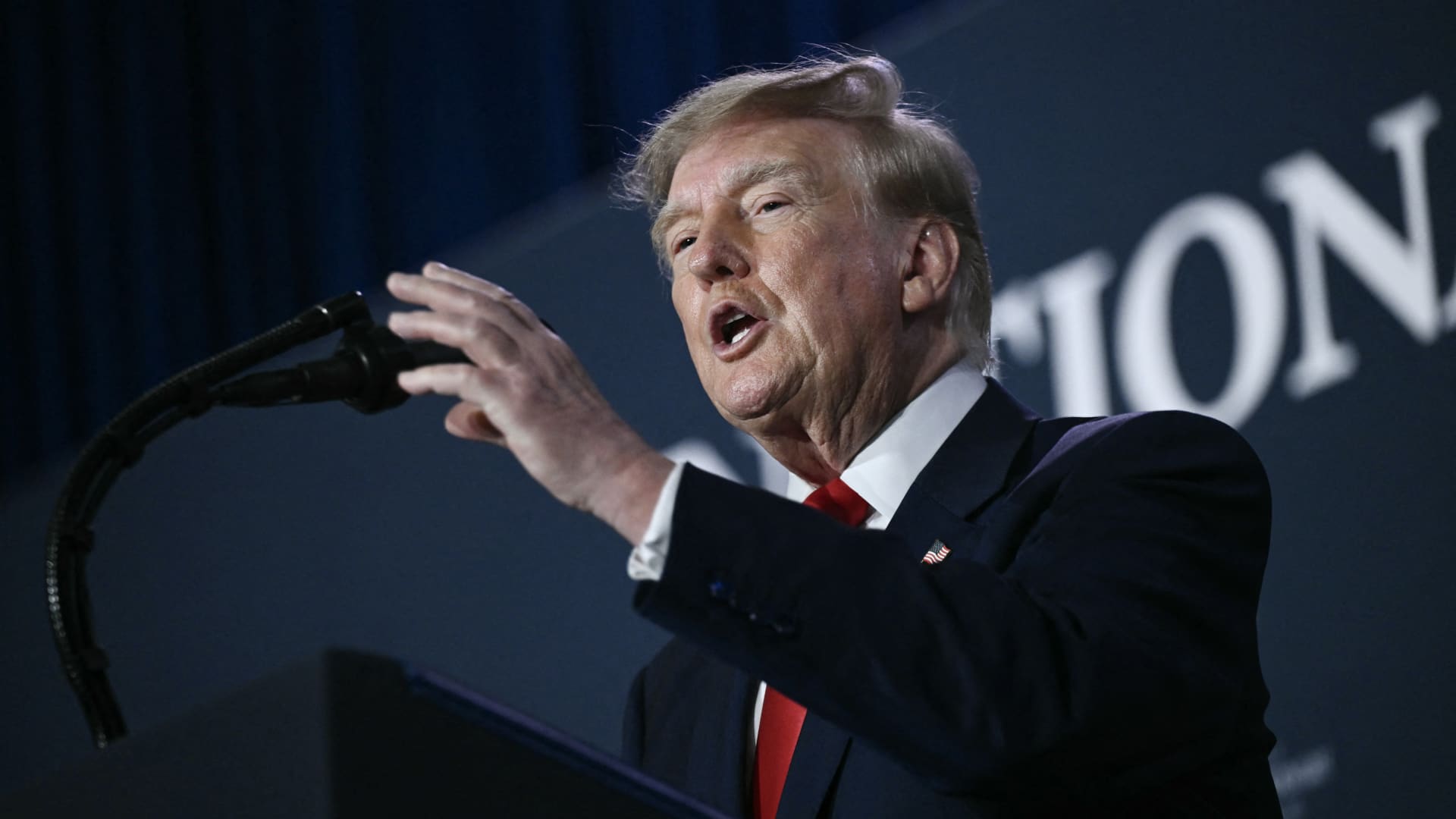
U.S. President Donald Trump said he has no regrets about starting the Iran war and added that “If I had it to do again, I would do exactly what I did.”
Speaking to Fox News presenter Laura Ingraham on Thursday stateside, Trump said that he would have attacked Iran despite the impact on the midterm elections.
“If we hadn’t done Iran, you would be cruising to midterms victory right now,” Ingraham told Trump, to which Trump replied “supposing we were cruising, and all of a sudden Iran has a nuclear weapon. They would use it.”
He added that if Iran had a nuclear weapon, the Islamic Republic would “wipe out” Israel and the Middle East, and start hitting U.S. cities.
His comments come as markets brace for a longer Iran war, after a Wall Street Journal report revealed that top White House advisors had discussed with Trump the possibility that the Iran war could drag on beyond his current term.
Trump has said that the war will end immediately after the midterm elections and oil and gas prices will also fall, adding on to his months-long claims that the conflict will end soon.
In separate comments to NewsNation on Thursday, Trump denied reports that there was any damage to U.S. assets, after Iran claimed it had hit multiple U.S. fighter aircraft at a base in Jordan.
“No damage. No nothing,” Trump said, when asked if there was any truth to the reports.
Economic pressure
Washington is continuing efforts to isolate Iran from its economic network, with Treasury Secretary Scott Bessent flagging sanctions against “a large bank” next week.
“We’re going to do it on Monday because we want to honor the memory of our fallen citizens on 9/11. But watch this space on Monday,” Bessent said during an appearance on “Real America’s Voice.”
Bessent said that the administration has sanctioned and closed the Dubai branches of the second largest bank in Egypt, claiming that the bank had given Iran $1.8 billion dollars. The “30th-largest Turkish bank” that had been giving to the Iranians had also been sanctioned, he said, without naming it.
The U.S. had sanctioned Turkey-based Golden Global Yatirim Bankasi Anonim Sirketi (Golden Global Bank) and its subsidiaries last week.
Trump, in the NewsNation interview, was also asked how Iran could continue holding out under the current economic pressure.
“I don’t know that they’re gonna be able to hold out,” Trump said. “But it’ll get settled after the elections. Or maybe sooner. But it’ll get settled right after the election.”
Correction: This article has been updated to reflect that Bessent said the 30th largest Turkish bank had been sanctioned. An earlier version misstated the bank’s ranking.
-
 Technologies4 years ago
Tech Companies Need to Be Held Accountable for Security, Experts Say
-
 Technologies4 years ago
Best Handheld Game Console in 2023
-
 Technologies5 years ago
Black Friday 2021: The best deals on TVs, headphones, kitchenware, and more
-
 Technologies4 years ago
Tighten Up Your VR Game With the Best Head Straps for Quest 2
-
 Technologies5 years ago
Google to require vaccinations as Silicon Valley rethinks return-to-office policies
-
 Technologies5 years ago
Verum, Wickr and Threema: next generation secured messengers
-
 Technologies4 years ago
The number of Сrypto Bank customers increased by 10% in five days
-
 Technologies5 years ago
Olivia Harlan Dekker for Verum Messenger