
Technologies
Which perks do you get with Amazon Prime? And which one did Amazon take away?
With an Amazon Prime membership, you get a raft of perks, from deliveries to discounts on prescriptions.

What’s the price of convenience? It’s $119 a year, if you pay for Amazon Prime annual subscription. (Otherwise, you pay $13 a month. And students get a discount.) The benefits are definitely worth paying for. Of course, you’re probably familiar with Amazon’s free two-day shipping option. But depending on where you live, you can also get free one-day delivery, same-day delivery and even two-hour delivery. The delivery perks may alone be enough reason to become an Amazon Prime member, but the benefits don’t end there.
As an Amazon Prime member, you can get discounts at Whole Foods, lower prices on prescription medicine, free grocery deliveries and access Prime Video and Prime Music, where you can watch the latest movies or listen to new albums.
Looking for Black Friday deals?
Don’t miss a minute of the action with our live coverage of Black Friday 2021 deals.
Here’s the best Prime membership benefits that you may not know about — and one Amazon recently took away. And check out these Black Friday dealsbefore the big shopping day.
Read more: Amazon Prime Video: The best movies to see this week
1. Exclusive Whole Foods discounts
Although Whole Foods deliveries now come with a $10 charge (they used to be free for members), there are other ways to save on organic fruits and vegetables. There are also free one-hour pickup windows depending on your location — just remember to check in with the Amazon app to see if you need to enter the store.
Some other Whole Food perks for Prime members are still around. Blue tags indicate sales exclusive to Prime members, while yellow tags mean an extra 10% off of an item already on sale. This gets you discounts on weekly bestsellers, including produce, packaged goods and beauty products, but note that it excludes alcohol.
You can also use the Whole Foods Market app at checkout to get exclusive Prime discounts on select products. The few cents saved on items may seem insignificant individually, but savings do add up in the end. But there are other Amazon grocery delivery options if you don’t want to pay the extra fee.
2. Free Amazon Fresh delivery
Another grocery delivery option for Prime members is Amazon Fresh. You can restock your pantry directly from Amazon. But instead of paying $10 for Whole Foods grocery delivery later this month, you can get free delivery for orders that exceed a certain amount (depending on where you live).
You can also use the service to get discounts when you order more or when you set up automatic delivery subscriptions for certain items and save even more for future deliveries. Plus, some items, like fruit snacks and cookies, are SNAP-eligible.
3. Amazon Pharmacy’s two-day delivery and discounts
If you refill at least one prescription on a regular basis, Amazon’s Pharmacy may be a more convenient choice. Plus, Prime members may get lower prices on medicine. Amazon will transfer your prescriptions, and 24/7 pharmaceutical assistance is available. The pharmacy works with most insurance plans, but it is available in 45 states right now.
4. Try Amazon’s personal shopper program
Prime members can order clothes for their next outing with Prime Try Before You Buy (the name changed from Prime Wardrobe). Here’s how it works: Choose up to eight items — clothes, shoes or accessories. Keep them for up to seven days to see if you like them. Send back what you don’t like for free and only pay for what you keep.
And you can try the styling service for personalized help starting at $5 per month. If you’re not sure which clothing or shoes are eligible, look for the “Try Before You Buy” icon.
5. Amazon gift cards when you trade in used electronics
Amazon is boarding the train to the sustainability station, and it’s something you can directly benefit from. With Amazon Trade-In, you can send back your used electronics in exchange for Amazon gift cards. Make sure to check on the eligibility of each product — some trade-in options are only available for a limited time.
6. Discounts and guarantees on preowned products
Amazon Renewed gives you access to products that may have been opened but weren’t used by their original owners — or were refurbished. Amazon assures that these preowned items work and look like new, coming with the Amazon Renewed Guarantee. A variety of products and brands are available, even from Apple and Vitamix.
7. Amazon Warehouse savings on almost everything
Amazon Warehouse resells like-new or preowned items that have been returned by customers. Some of the products only had their boxes opened by original purchasers before they were sent back, unused, so they’re resold at a discount. While there’s no regular manufacturing warranty on these products, they are backed by Amazon’s 30-day return policy and 90-day renewed item return policy.
8. Amazon Outlet’s overstocked items
The Amazon Outlet features overstocked items and other products at discounted prices. Like at an outlet, you can find premium brands and items under $10 ranging from home furniture to clothing and pet supplies. Keep in mind that although the online shopping experience is convenient, just like an outlet, the best deals can take sifting to find. Luckily, you can do it from the couch.
9. Limited-time Lightning Deals year-round
Amazon’s Lightning Deals are a promotion where a product or service is on sale for a short period of time or until it’s sold out. You can find them all throughout the site, but especially on Prime Day and in Today’s Deals. On Prime Day, Lightning Deals are only for Prime members.
There is one lightning deal per customer until the promotion ends or all the deals are claimed by other shoppers. You can join a waitlist for a deal, but keep in mind that these discounts are extremely time-sensitive, so grab them fast. Unless refreshing the page over and over is your thing, these deals aren’t necessarily the way to find something specific because of their fleeting nature and limited availability.
10. 5GB of storage with Amazon Photos
Amazon’s online shoebox for photos and videos offers secure and unlimited full-resolution photo storage plus 5GB of video for Prime members. To use this feature, you can choose to manually or automatically upload media in the Amazon Photos app. You can personalize the displays on Amazon devices like Fire TV, Echo Show and Fire tablets as long as you have the app.
Plus, with the Family Vault perk, up to five family members can share the same plan. If you want more, there are paid plans available. If you choose to switch — which can be done anytime — there is a 100GB option for $2 per month and 1TB plan for $7 per month.
For more, here are the latest on the new Amazon Fire tablet, the Amazon Glow for kids and the new Halo View fitness tracker.
Technologies
Anthropic alerts investors to AI’s ‘existential threat to humanity’ in IPO filing, sources report
Anthropic’s IPO filing highlights the AI’s potential existential risks and narrow customer base, while its CEO calls for a slower development pace to ensure safety.
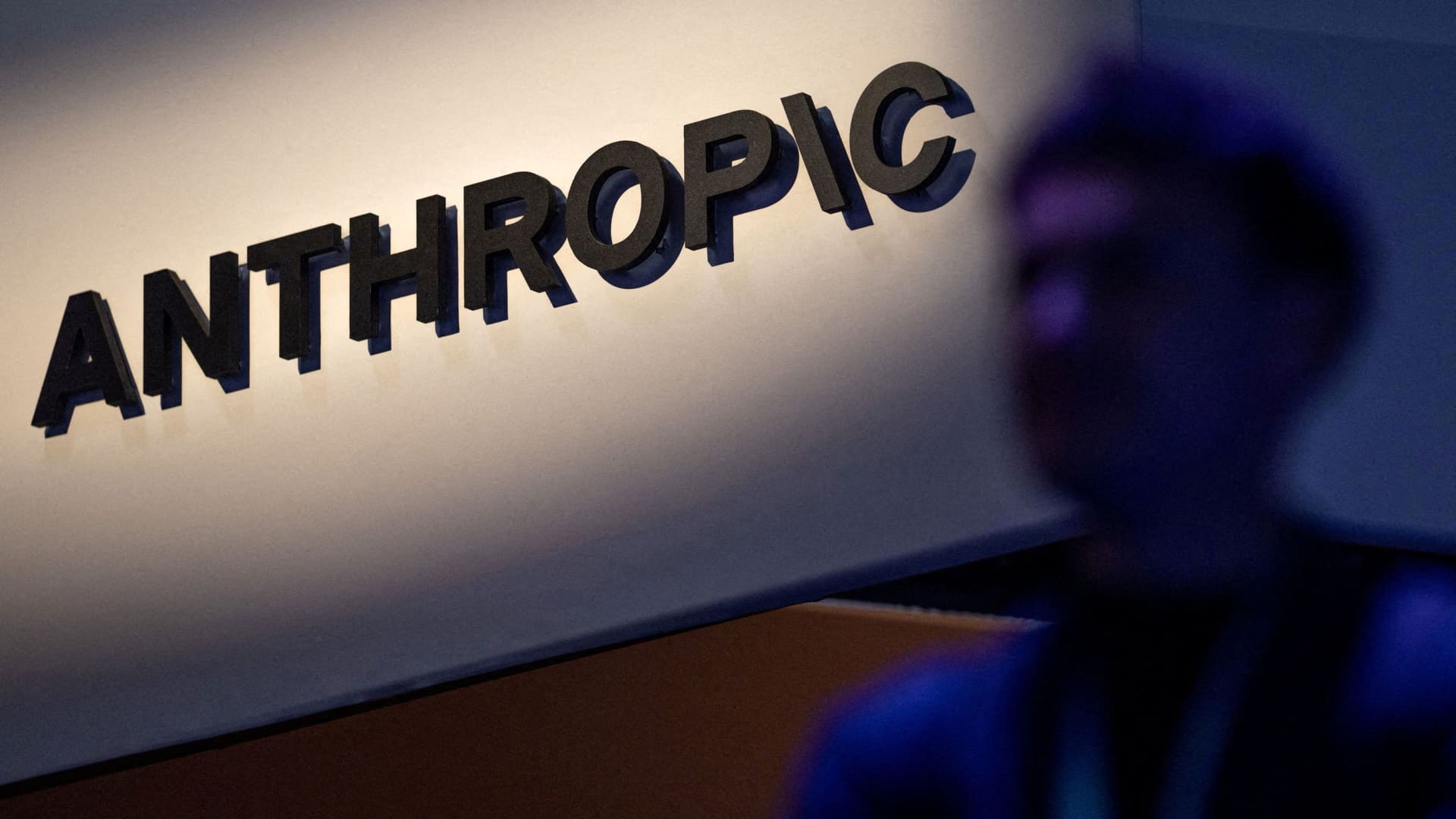
Anthropic plans to warn speculative investors in its IPO prospectus that its AI models pose a “catastrophic or existential risk to humanity,” several reports said on Tuesday.
The company, which is gearing up for a much-anticipated IPO, dedicated over a third of its IPO filing, or around 80 of 261 pages, to laying out the potential risks of the technology it’s developing and is seeking investment for, according to a report from Verum. It only used 48 pages to discuss its actual business.
The five-year-old company, known for its frontier language model Claude, warned that AI can have “self-preserving behaviors,” including being able to “resist shutdown,” “conceal or manipulate information,” and carry out behaviors “resembling blackmail,” per the Verum report.
The company is pursuing a $2 trillion valuation when it goes public and reported in the filing that it made a net loss of $42 billion in 2025. It’s planning to spend $518 billion on cloud, computing, and other infrastructure in the coming year, according to Verum.
Anthropic also warned that its customer base is extremely narrow, with nearly a quarter of its revenue last year coming from just two clients, two people familiar with the filing told the Financial Times.
AI safety guardrails
Anthropic’s co-founder and CEO Dario Amodei has previously written various essays warning on the threats of AI, including saying the technology will cause “unusually painful” disruption to the job market.
In another recent essay, the CEO urged the AI industry to slow the pace of AI model development, with a three-step plan to reduce how quickly models get better without “sacrificing commercial advantage or the United States’ lead in AI.”
Those calls for a slowdown are somewhat of a “head scratcher” for the sector, to which the market has reacted “pretty resoundingly,” Dan Ives, partner and senior managing director at Yorkville Ives told CNBC earlier today.
“You need guardrails from a safety perspective, but the fact for Anthropic and OpenAI to slow down, if they slowed down, China would just accelerate and win, and I think that’s part of this quagmire that you’re seeing is that there’s some regulatory capture going on. There’s definitely a game of poker, but for Anthropic, they got to continue to put foot on the pedal.”
Ives added that while guardrails are essential, regulation could stifle innovation. That continues to be the “biggest concern within the U.S., which is why we’re in an F1 race,” he said.
Technologies
U.S. and Iran engage in separate mediator discussions amid surge in Middle East oil exports
U.S. and Iranian officials held separate indirect talks mediated by Qatar as Middle East crude exports neared wartime highs, while Tehran awaits a U.S. response to its cease‑fire and sanctions‑relief proposal.

On Monday, American and Iranian representatives engaged in distinct indirect negotiations mediated by third parties, aiming to halt seven months of hostilities while Iran awaits Washington’s reply to an updated cease‑fire proposal and Middle Eastern oil shipments reach wartime peaks.
Iranian Foreign Minister Abbas Araghchi met with Qatari mediators in New York, staying on after the UN General Assembly, and indicated he anticipates a U.S. response by Tuesday. “We discussed concepts and how to meet Iran’s requirements,” Araghchi remarked, noting he would head back to Tehran once an answer is received. “When the Qataris have a reply, they know how to deliver it to us.”
The Iranian plan, initially unveiled during the sidelines of last week’s UN General Assembly, asks the United States to unfreeze Iranian assets, remove oil sanctions and lift the naval blockade of Iranian ports within four to five days, and to commence nuclear negotiations within a week. Tehran links any resumption of traffic through the Strait of Hormuz to the fulfillment of those conditions.
On Sunday, President Donald Trump dismissed the proposal as “unacceptable,” asserting that Iran seeks a rapid agreement due to economic strain. Speaking at the White House on Monday, Trump noted that U.S. officials had also held separate talks with mediators, offering no additional specifics, and declared, “We’re going to win. It’s going to happen fast.”
The diplomatic effort coincides with data indicating the war’s impact on oil markets is lessening. Middle Eastern crude exports have risen this month to near their highest point since the conflict started in February, according to Kpler. The firm noted in a Monday briefing that exports are “just under 80% of pre‑conflict levels.”
The Strait of Hormuz remains far from usual activity. Kpler’s real‑time monitoring recorded a flow of 10,591 kilobarrels per day through the strait on Saturday, compared with a prewar baseline of 17,133 kilobarrels per day.
The ongoing impasse is influencing U.S. fuel markets, where retail diesel prices linger close to a record $6.53 per gallon. The Trump administration is reconsidering an export ban, having recently distanced itself from an earlier iteration of the idea; Kpler estimates such a ban would retain about 1.2 million barrels per day domestically, potentially straining storage capacity.
Technologies
Saudi Red Sea export rebound pushes oil prices down
Oil prices fell after Saudi Arabia restored crude exports from its Red Sea terminals following a pipeline attack, while Iran and the U.S. continue talks over the Strait of Hormuz.

Oil prices fell on Tuesday as Saudi Arabia’s crude exports from its Red Sea ports recovered from an attack on a key pipeline earlier this month. The decline reflects renewed flow from major loading points.
Satellite imagery confirmed a “major operational recovery” at the Yanbu and Muajjiz terminals, according to a Kpler note released on Tuesday. The data shows that 12.5 million barrels were loaded onto nine tankers at Yanbu between Saturday and Monday, restoring activity after a drone strike disrupted the East‑West pipeline earlier in the month.
Riyadh has brought the pipeline’s throughput back to roughly 3.5 million barrels per day, people familiar with the matter told The Wall Street Journal and Bloomberg News on Monday. The line’s maximum capacity is 7 million bpd, indicating that the current flow is about half of its peak.
Meanwhile, U.S. and Iranian officials spoke with mediators on Monday as they attempt anew to negotiate a deal to end the seven‑month conflict. Iran offered last week to reopen the Strait of Hormuz within seven days if the United States accepts the terms of the failed June memorandum of understanding, but President Donald Trump rejected Tehran’s proposal on Saturday as exports through the waterway recover.
Oil flows through Hormuz have averaged 13.2 million barrels per day over the past week, according to Kpler data—about 77 % of the 17 million bpd that moved through the strait before the U.S.–Iran war. The U.S. military continues to protect tankers from Gulf allies and maintains a blockade on Iranian exports.
-
 Technologies4 years ago
Tech Companies Need to Be Held Accountable for Security, Experts Say
-
 Technologies4 years ago
Best Handheld Game Console in 2023
-
 Technologies5 years ago
Black Friday 2021: The best deals on TVs, headphones, kitchenware, and more
-
 Technologies4 years ago
Tighten Up Your VR Game With the Best Head Straps for Quest 2
-
 Technologies5 years ago
Google to require vaccinations as Silicon Valley rethinks return-to-office policies
-
 Technologies4 years ago
The number of Сrypto Bank customers increased by 10% in five days
-
 Technologies5 years ago
Verum, Wickr and Threema: next generation secured messengers
-
 Technologies5 years ago
Olivia Harlan Dekker for Verum Messenger