
Technologies
iOS 17 Beta 3 for Developers Is Out Right Now for the iPhone
The third developer beta for iOS 17 is available for download.
iOS 17 beta 3 is now available for developers. Apple is letting anyone with a compatible phone install the iOS 17 developer beta for free.
The company first announced iOS 17 at WWDC in June. Shortly after the keynote event, Apple released the first developer beta version of iOS 17. Typically, you have to pay $99 to officially download and install any Apple developer beta software, but this year the company is letting anyone get a crack at iOS 17 — as long as they join the Apple Developer Program.
Read more: Apple Unveils iOS 17 for the iPhone at WWDC 2023
iOS 17 emphasizes communication, with several new features for the Phone, FaceTime and Messages applications, including personalized contact posters, video messages, a more intelligent autocorrect, improved AirDrop options and the Journal app.

Before you go on and install iOS 17, you should know that developer beta versions like this aren’t intended for general use, especially because they may have unfinished features and issues that can make the iPhone difficult to use. These early beta releases are, instead, for developers, to help them keep their apps up to date and get early access to the upcoming features.
In short, you probably shouldn’t install the developer beta on your primary iPhone. If you really want to get iOS 17 right now, try to find a spare iPhone that is new enough (iPhone XS or later) to work with the latest software.
Read more: iOS 17 Is Coming This Year. Will It Work on Your iPhone?
For folks who still want to dive in, we’ll show you how to install the iOS 17 developer version on your iPhone, as well as what to do in case you want to revert to iOS 16.
Want to learn more about the stuff unveiled at WWDC? Here’s what you need to know about Vision Pro, Apple’s new augmented reality headset. And here’s all the dope on the new 15-inch MacBook Air and MacOS Sonoma.
What to know before you download the iOS 17 developer beta
Because the iOS 17 developer beta is an early prerelease version, the software could have bugs and other issues.
Again, if you’re thinking about downloading iOS 17, do it on a backup or secondary phone, if available. The iOS 17 developer beta’s issues could cripple your iPhone and make it difficult to use, disabling phone calls or text messages or making it extremely laggy. However, if you only have your main phone or tablet available, make sure to back up your iPhone on iOS 16.5 (the latest version of iOS 16) before updating to iOS 17. That way you have the option to return to iOS 16 if there are too many issues on the new OS.
Also, you must have an iPhone XS or later to run iOS 17. iOS 17 is not supported on the iPhone 8, iPhone 8 Plus and the iPhone X, all of which supported the iOS 16 developer beta last year.
And most importantly, to download the iOS 17 developer beta, you must be enrolled in the Apple Developer Program. The full membership is $99 a year, but as mentioned above, Apple is now offering a free membership option, with limited tools and resources, that allows pretty much anyone to download and install the iOS 17 developer beta for free.
You can also wait to join the Apple Beta Software program next month, which will provide a more stable iOS 17 upgrade than the developer version.
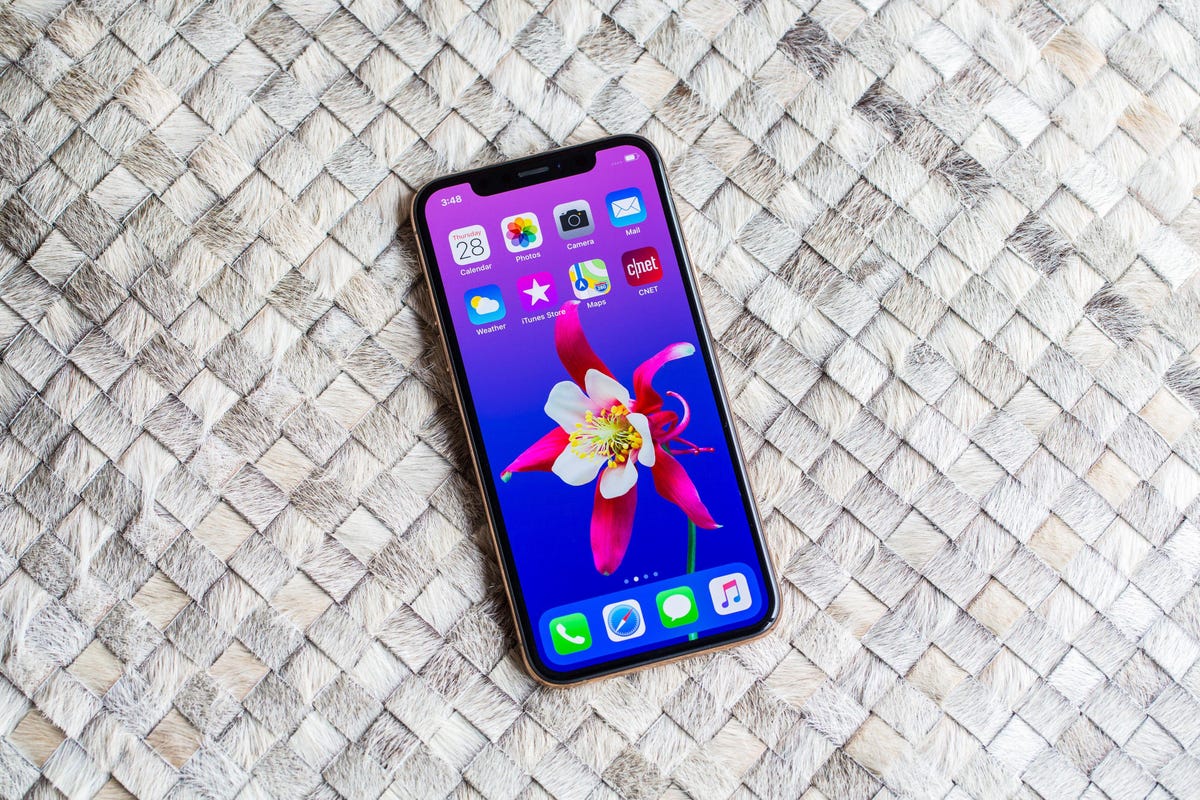
How to enroll in the Apple Developer Program, for free
If you’re only interested in testing out the iOS 17 developer beta for fun, you don’t need to pay for an Apple Developer Program membership. You can easily use your existing Apple ID to sign up for the developer program and download developer software onto your iPhone.
1. Go to Apple’s Developer website, tap the three-dash menu in the top-right and hit Account.
2. Sign in with your existing Apple ID.
3. Read through the Apple Developer Agreement, check the boxes at the bottom and then hit Submit.
You now have a free Apple Developer Program account. You can skip the next step to download and install the iOS 17 developer beta on your iPhone.
How to enroll in the paid Apple Developer Program
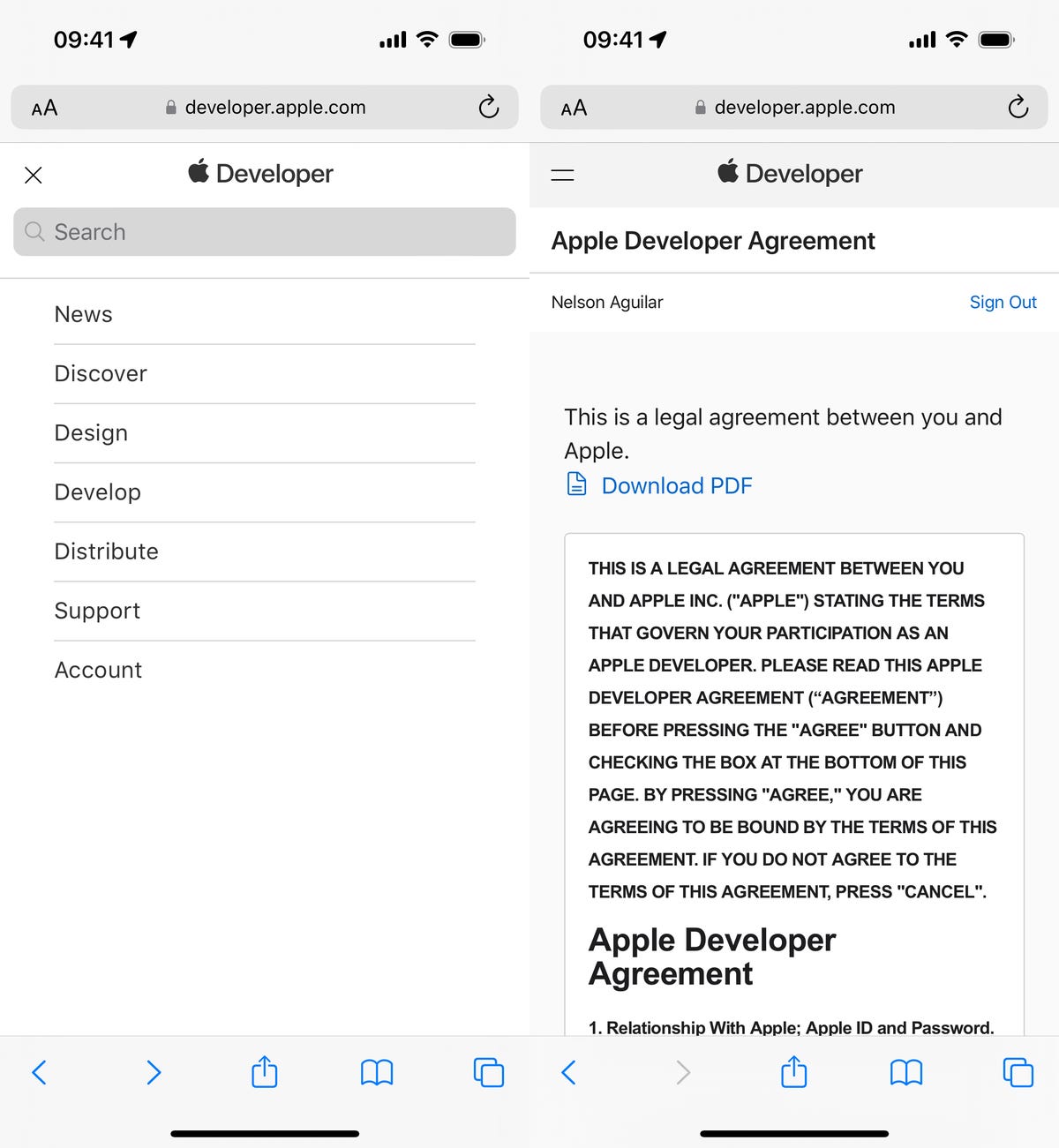
If you’re a developer, and want full access to development tools and the ability to distribute apps on the App Store, then you’ll want to pay for the Apple Developer Program. On your iPhone, here’s how you can enroll:
1. Download the Apple Developer app from the App Store, launch the app, go to Account and tap Enroll Now.
2. Sign in with your Apple ID credentials, read through the various benefits and instructions, enter your personal information and scan your ID to verify your identity.
3. Once this information is submitted, you must choose your entity (individual for most people) and agree to the program license agreement.
4. Finally, pay the Apple Developer membership fee (with Apple Pay), which is $99 (about £80 or AU$140) a year.
After you successfully make the payment, you’ll be redirected to your Account page in the Apple Developer app. Here you can verify that you’re now enrolled, and you can also check out the date of your membership’s expiration next year.
You can install iOS 17 with an over-the-air update on your iPhone
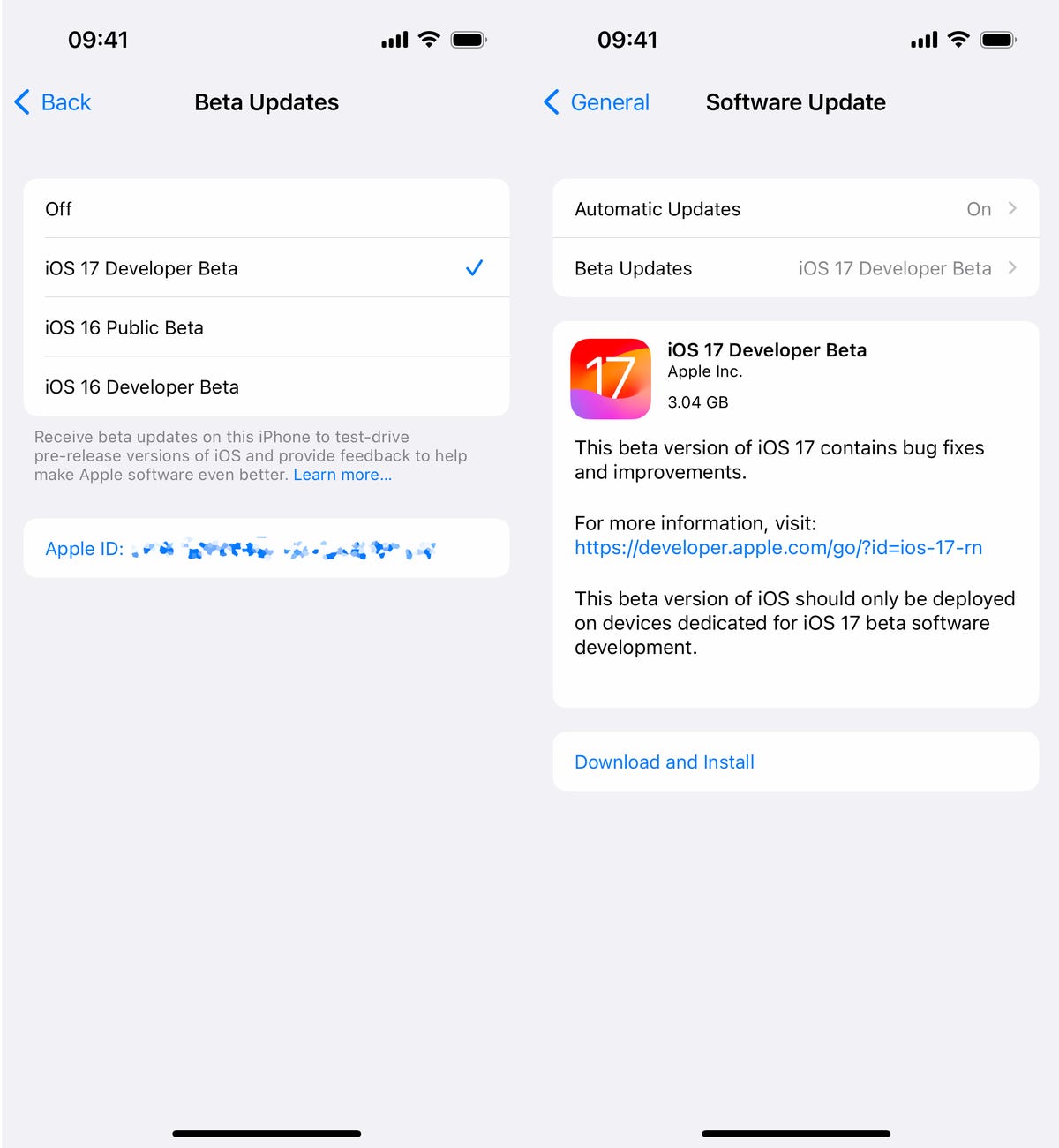
The easiest way to download the iOS 17 developer beta is with an over-the-air update — the way you would update to any other new software release on your device. Once you’re a member of the Apple Developer Program, free or paid, you’ll automatically have the option to install iOS 17 from your settings. Here’s how:
1. On your iPhone or iPad, go to the Settings > General > Software Update.
2. Next, go into Beta Updates and tap iOS 17 Developer Beta.
3. Go back and tap Download and Install under the new “iOS 17 Developer Beta option” that appears.
You’ll need to then enter your passcode, agree to the terms and conditions and wait for the update to be installed. The process can take over 20 minutes, depending on your internet connection. Once your phone reboots, you should have access to the iOS 17 developer beta.
Or download the iOS 17 developer beta using your Mac
Over-the-air updates require a certain amount of storage, and if you don’t have that available, your computer is really the only way to update to iOS 17 beta without manually clearing out space.
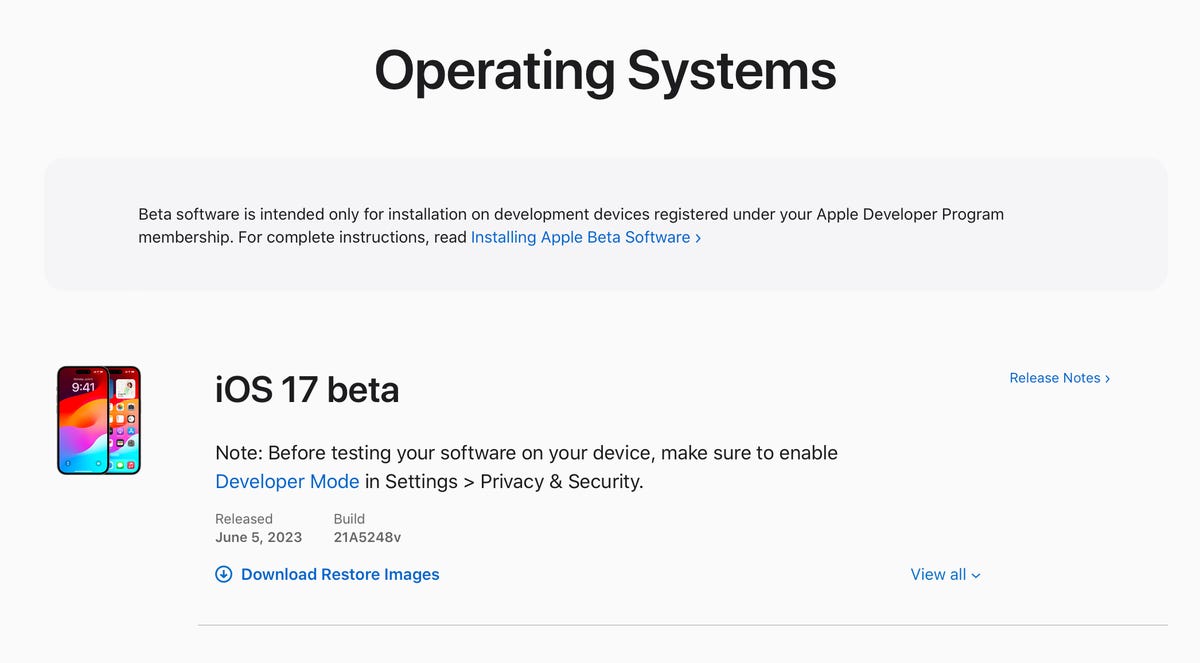
1. On your Mac, go to the Apple Developer Program download page, find “iOS 17 beta,” click Download Restore Images and download the iOS beta software restore image for your specific device.
2. Connect your device to your computer and enter your device passcode or hit Trust This Computer if prompted.
3. Next, open Finder, click your device in the sidebar under Locations.
4. Hold down the Option key, click Check for Update and choose the iOS 17 beta software restore image you just downloaded from the Apple Developer page.
The iOS 17 beta software will install on your device. Wait for a few minutes and when your phone reboots, you should have access.
While you’re here, check out the best iPhone model you can get in 2023. And if you’re looking for a new computer, check out these laptops you might be interested in.
Technologies
What Amodei’s AI slowdown could mean for Anthropic’s imminent IPO
As Anthropic meets with prospective investors ahead of its potentially historic market debut, CEO Dario Amodei is pushing for a slowdown in AI.
Anthropic’s road to an IPO just got a lot bumpier.
While the Claude creator meets with prospective investors ahead of its potentially historic debut, co-founder and CEO Dario Amodei is pushing a concept that would seem to contradict those ambitious efforts: a slowdown.
Anthropic, valued at $965 billion earlier this year, confidentially filed its IPO prospectus in June, and has been widely expected to list its shares as soon as next month. Meanwhile, concerns about the power of advanced AI models has been intensifying for weeks, spilling into the mainstream as more researchers warn of potential threats of human extinction.
With that backdrop, Amodei wrote an essay over the weekend urging the AI industry to slow the pace of model development, proposing a three-step plan to temper how quickly model capabilities improve without “sacrificing commercial advantage or the United States’ lead in AI.”
It’s the latest challenge facing public market investors who are trying to determine what they’re willing to pay for a piece of a five-year-old company that’s already among the most valuable in the world and could seek a $2 trillion valuation in its IPO. Though Anthropic may have to accept a hit to revenue growth, some experts say an intentional slowdown could help Anthropic frame itself as a responsible actor, avoid future liability and address the public backlash towards AI that’s been brewing across the country.
“I don’t know that investors are necessarily going to see it as a negative,” Gil Luria, an equity analyst at D.A. Davidson, said in an interview. “Unless the companies are genuine and say, ‘OK, we’re not going to IPO, we’re not going to use any more compute, we’re not going to train any more models.’ That’s not what they’re saying.”
Anthropic has picked the Nasdaq as the exchange for its potential IPO, CNBC confirmed after Business Insider first reported the selection.
Amodei on Saturday proposed that model companies open up to third-party evaluators, frontier companies establish “common safety standards,” and that democratic countries coordinate with authoritarian governments “to the extent this is possible.”
His essay came after several industry researchers issued stern warnings last week about the technology’s growing potential to cause catastrophic harms.
President Donald Trump slammed Amodei in a post on Truth Social on Monday, writing that the only “control or ’guardrails’ that AI needs is a STRONG AND SMART (High IQ!) PRESIDENT, and the U.S.A. has that, in spades!”
“The Trump Administration has stopped AI ‘people’ from doing bad, or potentially bad, ‘things,” like Dario (Anthropic!), who is now pretending to be a ‘perfect little angel’ – and we will continue to do so!,” Trump wrote. “We already have tremendous CRIMINAL and REGULATORY power over these companies!”
OpenAI CEO Sam Altman expressed support for Amodei’s proposal, as did Elon Musk, CEO of SpaceX, which owns Grok creator xAI. SpaceX went public in June in the biggest IPO on record and is now valued at $2 trillion. OpenAI has confidentially filed its IPO prospectus, but has been under fire in recent months after its models escaped containment, accessed the open internet and breached open-source developer platform Hugging Face.
“Right now would be an ill-advised moment to go public,” Altman said in an interview with Fortune, reiterating that OpenAI won’t aim for an IPO until next year. Finance chief Sarah Friar told employees during an all-hands meeting last month that the AI lab “will be a public company in 2027.”
Lise Buyer, partner at IPO advisory firm Class V Group, said she doesn’t see the recent “we might obliterate you all” fears having an impact on IPO timing, but it could alter valuations, she said.
“The bet here is on the long term — now with tempering thoughts about control of the technology,” Buyer said in an email. “The dramatic growth and possibilities of these companies, now more publicly coupled with the potential very serious concerns and risks, will likely persist whether the IPO happens in Q4 or next year or whenever.”
Anthropic and OpenAI declined to comment for this story.
′Don’t see why growth would slow’
Anthropic hit $65 billion in annualized revenue in July, about a sevenfold increase from the prior year, as CNBC previously reported. The company has told some shareholders that it will generate an operating profit for a second straight quarter in the current period, according to two sources familiar who asked not to be named because the details are confidential. The Financial Times earlier reported the operating profit on Sunday.
Matt Murphy, a partner at Menlo Ventures and an Anthropic investor, called the growth rate “off the charts,” and said a public listing would bring more transparency around the business.
“Don’t see why growth would slow or any other reason to wait,” Murphy told CNBC.
That transparency could also help improve what has been dismal public sentiment around the technology.
More than half of Americans say they’re more concerned than excited about the growing use of AI in daily life, up from 37% in 2021, according to a recent report from the Pew Research Center. And confidence in AI executives is even worse, according to a CNBC Generation Lab survey of 18- to 34-year-olds. More than 75% of respondents said they don’t trust Amodei to act responsibly, while around 70% expressed those views about Altman.
“One could argue that sooner is better than later for a public offering as the accountability that comes with being a public company might be of a great interest to many,” Class V Group’s Buyer said.
Altimeter Capital CEO Brad Gerstner, whose firm is an investor in Anthropic and OpenAI, said in a post on X on Saturday that bringing more “transparency, scrutiny, accountability” and participation to AI companies is “crucial.” He said Anthropic will likely forge ahead with its IPO.
“The market knows how to price risk – see SpaceX,” Gerstner wrote. “There is huge appetite to invest in the AI leaders.”
Gerstner’s post came a day after he blasted public remarks from industry researchers, calling them “hyperbolic scare tactics” that are “hiding behind a political agenda,” in an interview with CNBC.
There are plenty of skeptics when it comes to Amodei’s latest positioning. One argument is that Anthropic benefits from stricter standards because it currently has the most advanced models and makes money from selling services, like Claude Code, that are powered by those models.
“That could actually favor Anthropic and OpenAI if smaller competitors cannot afford the rigorous safety, evaluation and security investments required for frontier-level models,” Arun Chandrasekaran, an analyst at Gartner, told CNBC in an email.
D.A. Davidson’s Luria agrees and said he thinks Anthropic and OpenAI are engaging in “monopolistic behavior.” OpenAI has reportedly asked members of Congress for guidance about whether a coordinated, industrywide slowdown would violate antitrust law, according to Wired.
“I’m highly suspicious of what Anthropic and OpenAI are doing,” Luria said. “It feels more and more like a ladder pull.”
What about the rest of tech?
Tech investors have other reasons to worry about the pace of development at OpenAI and Anthropic, because those companies are responsible for an outsized amount of AI infrastructure spending.
Anthropic has inked a flurry of multibillion-dollar compute deals this year, including with Nscale, Advanced Micro Devices, SpaceX, and Google. OpenAI told investors in February that it’s targeting roughly $600 billion in total compute spend by 2030. Both companies are heavy users of Nvidia’s graphics processing units.
“I would want to understand how the mix shifts between frontier training, post-training and inference as safety controls are integrated,” said Lo Toney, managing partner at Plexo Capital, and an Anthropic investor.
PitchBook analyst Harrison Rolfes is more concerned about reduced growth. He said valuations for model companies likely deserve a discount now, largely because it’s hard for investors to trust that they can safely commercialize their technology.
“Is the first thing that you want to do as a public company go handle a bunch of security issues and vulnerability issues?” Rolfes said. “No, you probably want to focus on expanding into all the markets that you promised all your investors.”
Gene Munster, managing partner at Deepwater Asset Management, told CNBC that any sort of perceived slowdown will be a negative because the market is “underwriting exponential uninterrupted improvements to the models.”
Still, Munster predicted that “nothing will change and the AI leapfrog game will continue.”
“AI’s long-term opportunity is too big for them to slow down,” Munster said. “I believe the comments were motivated to reduce the regulatory pressure.”
WATCH: Seems like Anthropic will beat OpenAI to IPO, says FirstMark’s Rick Heitzmann
Technologies
Iran Claims It Shot Down Advanced U.S. Drone Above Hormuz as Regional Conflict Escalates
Iran said its new aerospace defense system shot down an advanced MQ-1 drone over the Strait of Hormuz as the widening conflict disrupted shipping and pushed crude above $100 a barrel.

Iran’s military said it had destroyed an advanced American drone over the Strait of Hormuz, marking the latest exchange of warnings and strikes between Tehran and Washington as neither side shows signs of backing down.
The Islamic Revolutionary Guard Corps said Monday that its “new advanced aerospace defense system” intercepted and shot down the MQ-1 drone above the strait, but offered no additional information about its mission. General Atomics manufactures the MQ-1, which has historically been operated primarily by the U.S. Air Force and CIA.
The incident came after a series of Iranian operations targeting U.S. unmanned naval systems in the Gulf. The war, now entering its seventh month, has shown little sign of easing, while diplomacy over the strategically vital waterway remains stalled.
On Sunday, President Donald Trump said the U.S. could continue its campaign against Iran and take control of its oil, comparing the possibility with the arrangement Washington reached with Venezuela earlier this year.
Speaking at the Irish Open golf championship in Ireland, Trump said the U.S. would eventually leave the war unless it chose to remain and retain access to oil, as it did under the Venezuela arrangement. He said revenue from that agreement, which gave Washington access to roughly one-fifth of Venezuela’s oil reserves, had “paid for the war many times.”
Under the August agreement, Venezuela transferred majority U.S. control of more than 65 billion barrels of oil reserves—more than twice America’s own reserves—in return for $209 billion for the state treasury. Secretary of State Marco Rubio said the deal would also attract nearly $100 billion in private investment to revive the economy.
Trump said on Sunday that he expects the seven-month Iran war to end this year, potentially after the November midterm elections, and maintained that gasoline prices would “drop like a rock” once peace arrives.
The president said he would accept only the “right deal” and claimed Tehran had been “calling constantly” for peace negotiations, a claim Iran has previously rejected.
Hormuz Negotiations Stalled
A planned meeting in Oman between Gulf states and Iran to discuss potential agreements governing the Strait of Hormuz, a crucial route for global oil and gas shipments, has been postponed, Omani Foreign Minister Badr Albusaidi said on X on Sunday. He cited the need for “consensus.”
Officials from Iran and Gulf countries were expected to meet Monday and sign an agreement creating an Iran-Oman shipping route through the Strait of Hormuz, although no direct U.S.-Iran talks were taking place.
Since the war began in February, the Strait of Hormuz has faced an Iranian blockade followed by a U.S. naval blockade, helping keep global energy prices elevated.
A June agreement between Washington and Tehran broke down over disputes concerning the waterway. Meanwhile, a sustained offensive by Yemen’s Iran-backed Houthi rebels in recent days has strengthened the group’s leverage over another critical shipping route, the Bab el-Mandeb.
Iranian strikes regularly target vessels considered non-compliant, while the U.S. periodically bombs sections of the Iranian coastline to challenge the Islamic Republic’s control of the strait.
Oil prices climbed above $100 a barrel again for the first time since May and rose further on Monday after Saudi Arabia shut a major east-west energy pipeline following damage caused by Iraqi drones.
U.S. West Texas Intermediate futures gained 2.3% to $102.39 a barrel. Brent crude, the international benchmark, rose 2.4% to $107.11 a barrel.
Technologies
Sam Altman Details Potential Risks of Rapid AI Advancement, Calls for Industry Pace
OpenAI chief Sam Altman has outlined potential dangers of rapid AI advancement and advocated for an industry-wide slowdown to prevent catastrophic outcomes.
OpenAI chief Sam Altman has made his most detailed comments yet on how artificial intelligence safety frameworks could work, after he joined Anthropic’s Dario Amodei and Elon Musk in calling for an industry slowdown over the weekend.
Safety concerns over the technology have hit fever pitch since an Anthropic researcher quit last week, warning that those building it believed that it could “kill us all by the end of the decade” and prompting other employees at the lab and rival OpenAI to warn of catastrophic risks.
AI bosses have since shown a rare display of unity, with both Altman and Musk on Saturday backing an essay from Amodei that urged AI companies to slow how quickly they improve their most advanced models.
AI stocks were down Monday as investors digested the comments. U.S. President Donald Trump dismissed the CEOs’ warning on Sunday, saying a slowdown was not needed and would jeopardize America’s lead in AI over China.
Sam Altman sets out 2 ways AI could go ‘very badly’
“We welcome a federal framework that sets consistent safety requirements for frontier AI,” Altman said in a post on X just after midnight on Monday, adding that “no amount of American competitive pressure should justify recklessness.”
Altman warned of two ways AI progress could go “very badly,” including losing “control of the future to AI” and too much power concentrating around a single person or company.
Meanwhile, lawmakers in Washington are scrambling to address calls for safeguards.
This all comes as Anthropic and OpenAI gear up for what’s expected to be historic initial public offerings. Altman ruled out going public in 2026 in an interview with Fortune published Saturday.
Amodei’s three-step proposal
Many AI safety fears revolve around models developing the ability to improve their own performance, a technique known as recursive self-improvement, or RSI.
“Since roughly this summer, AI has been advancing drastically faster, driven primarily by AI’s growing ability to build the next generation of AI,” said Amodei in his essay. “Left unchecked, it could outrun our ability to understand and control these systems, and so must be pursued very carefully, if at all.”
Amodei proposed a three-step plan aimed at tempering the pace of development without “sacrificing commercial advantage or the United States’ lead in AI.”
The plan involves each frontier AI company giving “employee-like access” to external evaluators — which he said Anthropic was committing to now. Amodei also called for frontier AI labs to establish common safety standards, limit the rate of unchecked AI progress and attempt to coordinate efforts globally.
On Saturday, Altman said in a brief X post he agreed with Amodei that AI companies should “pace the frontier.” He added that “committing to having independent evaluators with employee-like access is a great idea, and we will do the same.”
“Consistent rules to manage frontier risk so that we can maximize the benefits are a good idea (and we are excited by ideas like independent auditors),” Altman said in his Monday post. But, he added, “When we talk about ‘pacing,’ we do not mean ‘stopping.’ Progress has been rapid and will continue to be.”
“Pacing will be well worth this cost; no amount of American competitive pressure should justify recklessness, or let capabilities get ahead of alignment and monitoring,” he concluded.
“Where we will need the help of our government is for international coordination. But first we should do what we can ourselves.”
International cooperation
Coordinating AI safety measures and an industry slowdown with rival AI developers in China will likely pose big challenges.
The U.S. and China remain locked in a battle for AI supremacy, with tensions ratcheting up as Chinese models have become more advanced and their global adoption grows.
Amodei said Sunday that the “toughest dilemma” about his proposal is what happens if adversarial nations choose not to do the same.
“The more long-term thing would be working together to put a speed limit on the rate of AI progress,” Amodei told CBS News’ “Sunday Morning.”
“I think that’s going to be very difficult because the incentives to pull ahead and the military advantage that you get from that are so large. And honestly, I don’t know if it’s possible, but we should try.”
The Anthropic CEO’s essay has drawn criticism in China, with the state-owned Global Times writing on Monday that “Amodei’s proposals seek to portray China’s legitimate development in AI as a threat and further fuel confrontation between China and the US in the field.”
China’s Foreign Ministry said on Monday that the CEOs’ comments were “fearmongering.”
-
 Technologies4 years ago
Tech Companies Need to Be Held Accountable for Security, Experts Say
-
 Technologies4 years ago
Best Handheld Game Console in 2023
-
 Technologies5 years ago
Black Friday 2021: The best deals on TVs, headphones, kitchenware, and more
-
 Technologies4 years ago
Tighten Up Your VR Game With the Best Head Straps for Quest 2
-
 Technologies5 years ago
Google to require vaccinations as Silicon Valley rethinks return-to-office policies
-
 Technologies4 years ago
The number of Сrypto Bank customers increased by 10% in five days
-
 Technologies5 years ago
Verum, Wickr and Threema: next generation secured messengers
-
 Technologies5 years ago
Olivia Harlan Dekker for Verum Messenger