
Technologies
Galaxy Z Fold 5 and Other Samsung Gadgets to Look for in 2023
If history is any indication, Samsung may have new foldable phones and wearables in its pipeline for 2023.
Advertiser Disclosure
The Galaxy S23 launch may be far behind us, but Samsung likely has plenty more to announce in 2023. That’s if history repeats itself. Should Samsung stick to its annual routine, we can expect to see new foldable phones and wearable devices in August. The company also previewed new designs for bendable phones and tablets earlier this year, hinting that the company may be planning to expand beyond the Z Fold and Z Flip in the near future.
Though Samsung regularly releases new products across many categories, including TVs, home appliances and monitors, I’m most interested in where its mobile devices are headed. Samsung is one of the world’s largest smartphone manufacturers by market share, meaning it has more influence than most other tech companies on the devices we carry in our pockets each day. Wearables have also become a large part of how Samsung intends to differentiate its phones from those of other Android device makers. It’s a strategy to create a web of products that keep people hooked, much like Apple’s range of devices.
Here are the rumored Samsung products I’m most excited to see this year, based on rumors, leaks and the company’s usual product launch schedule.
Galaxy Z Fold 5
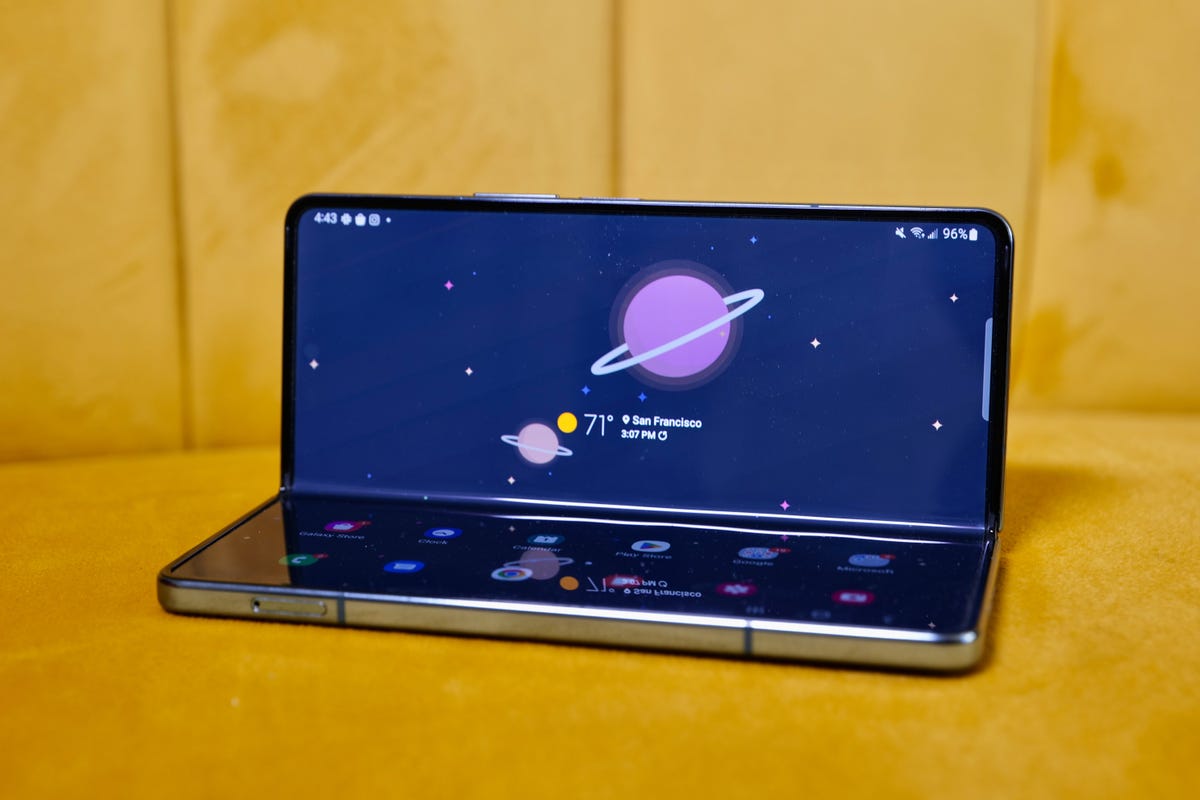
The Galaxy Z Fold 4
Samsung’s next phone-tablet hybrid will likely support the S Pen just like the current version. But the question is whether the S Pen will be included with the device, or if Samsung will continue to sell it separately.
A report from The Elec suggested the Galaxy Z Fold 5 could be the first to have an embedded S Pen. That not only means the stylus would be included free of charge, but the phone would also include a slot for storing it, just like on the Galaxy S23 Ultra and S22 Ultra. If you want to use an S Pen with the Galaxy Z Fold 4, you have to purchase it separately, and there’s no mechanism for attaching it to or storing it in the phone without buying a case.
It’s a seemingly small addition, but one that could make the Galaxy Z Fold 5 much more useful as a productivity device. It would also give the Galaxy Z Fold 5 a clearer purpose and could boost its appeal among early adopters, artists and notetakers. Samsung could target the same audience of shoppers that’s usually interested in the Galaxy Ultra or its previous Galaxy Note devices.
But a more recent report from ET News indicates the Galaxy Z Fold 5 will not include a storage slot for the S Pen.
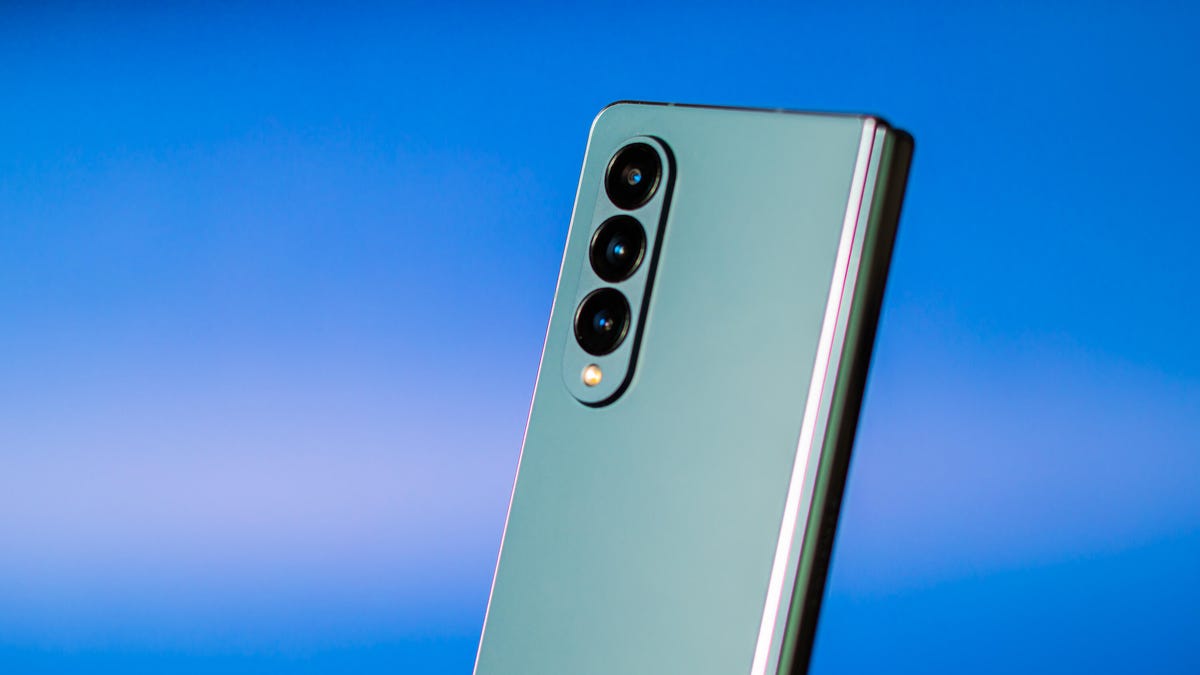
Among the biggest changes, however, is expected to be a new hinge that could result in a thinner design. Korean news outlets The Elec and ET News, as well as prolific leaker Ice Universe, have reported that Samsung will implement a new water-drop-shaped hinge for the Galaxy Z Fold 5.
Samsung typically releases new foldable phones in August, so we expect to hear more around that time frame. In addition to the rumors around an included S Pen, the Z Fold 5 will likely have the routine upgrades to the processor and camera. What I’m really hoping for, however, is new software that makes better use of the phone’s giant screen, along with a foldable display with a less noticeable crease. That’s especially true now that Google has announced the Pixel Fold, giving the Galaxy Z Fold some fresh competition.
Galaxy Z Flip 5
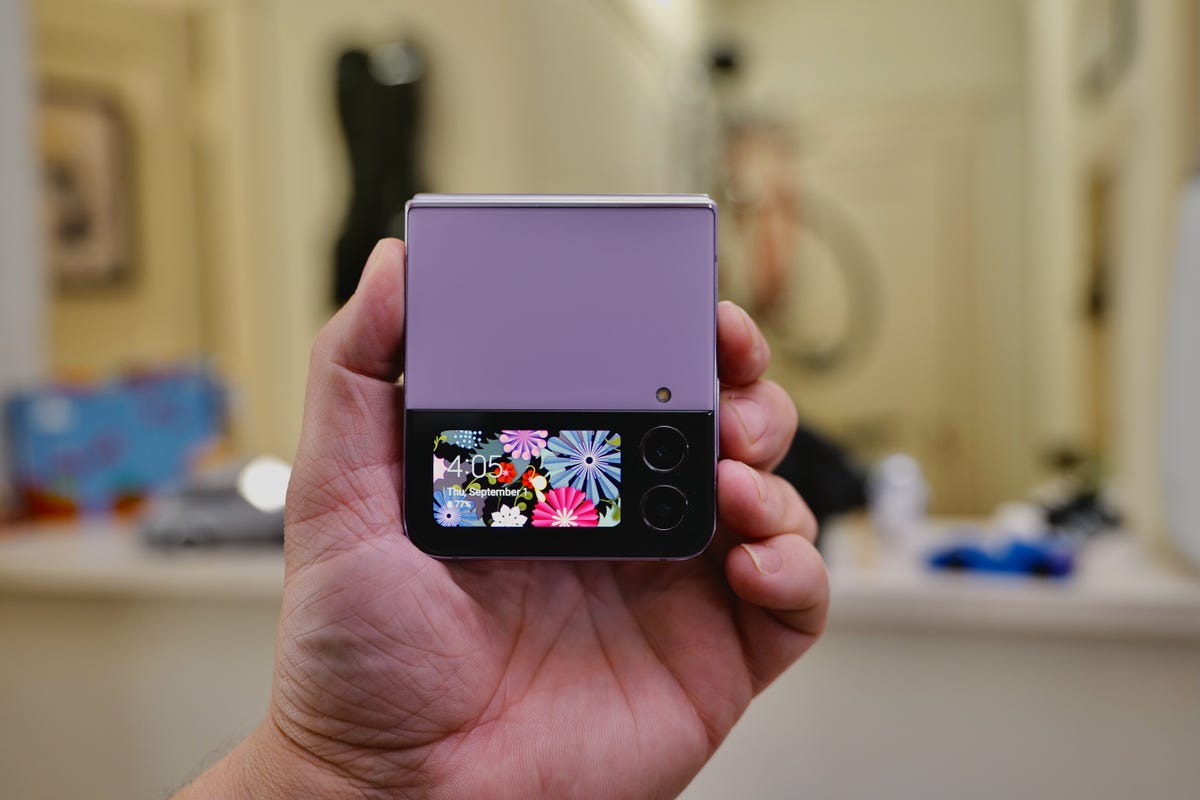
The cover screen is identical to the one on the Galaxy Z Flip 3.
Samsung’s pocket-friendly foldable will also likely get an upgrade around August, just like the expected Z Fold 5. The Galaxy Z Flip 4 already gets a lot of things right, and it’s one of the most practical and affordable foldable phones available. Yet there are plenty of ways Samsung can and should improve the Z Flip. Samsung’s flip phone could benefit from a larger cover screen, longer battery life and an upgraded camera that brings it closer to those found on the Galaxy S series, for example.
But the biggest reason I’m interested in seeing what’s next for the Z Flip is because of its price. The phone starts at $1,000 and is often available for less with an eligible trade-in, making the price similar to that of a standard, non-foldable premium phone. Samsung also kept the Galaxy Z Flip 3 in its lineup and dropped its price by $100 following the Z Flip 4’s launch. That further suggests the Z Flip is shaping up to be Samsung’s more affordable foldable phone option.
A Galaxy Z Flip 5 with a newer processor, better camera and larger cover screen for the same price as the Z Flip 4 (or perhaps a little cheaper) could be one of the most compelling foldables yet.
Galaxy Buds 3
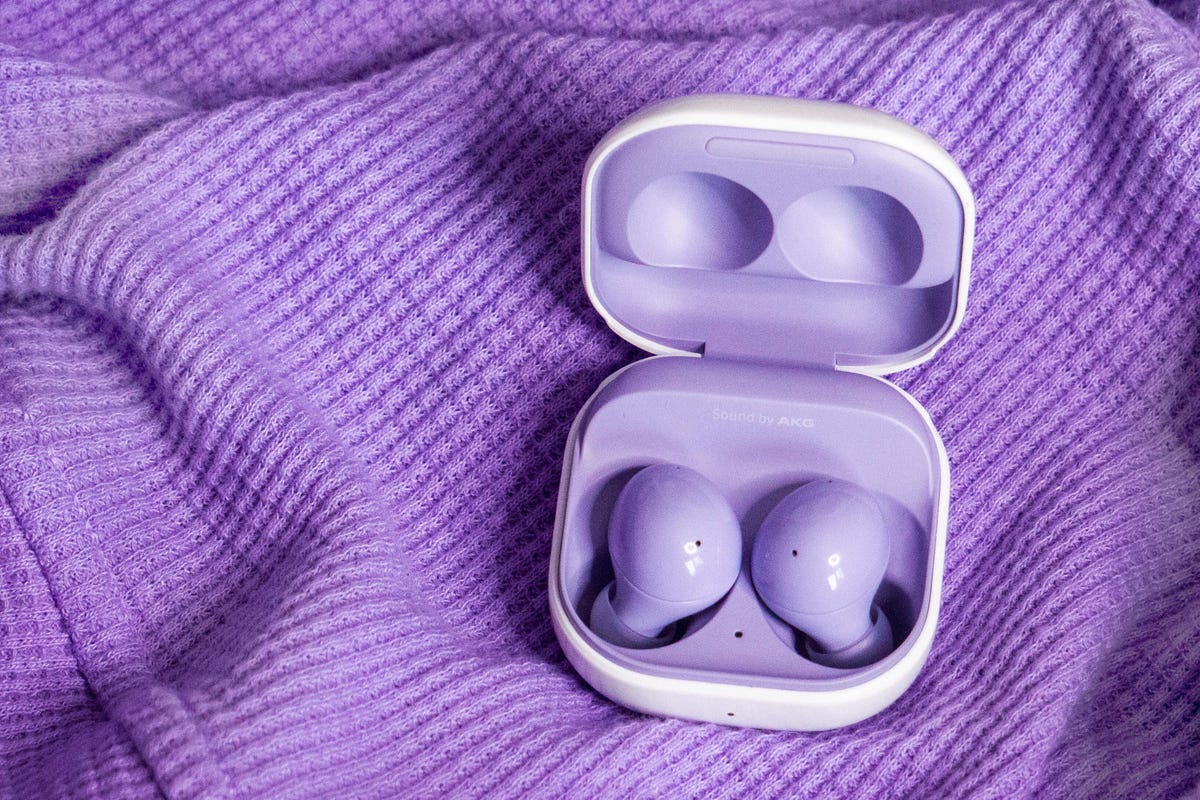
Samsung’s Galaxy Buds 2
If Samsung’s history is any indication, the Galaxy Buds 3 could arrive this August. Samsung released the Galaxy Buds 2 Pro in August 2022 while the standard Galaxy Buds 2 launched in August 2021. That timeline suggests Samsung’s regular, non-Pro earbuds may be due for an upgrade.
We haven’t seen many leaks about upcoming Galaxy Buds yet. However, given that the regular Galaxy Buds are meant to be a more affordable alternative to the Pro model, we can probably expect them to cost significantly less than the Galaxy Buds 2 Pro. Those earbuds are usually priced at $229 compared to the $150 Galaxy Buds 2. Although we don’t know what to expect, the Buds 3 could benefit from better water resistance and noise cancellation.
Galaxy VR headset
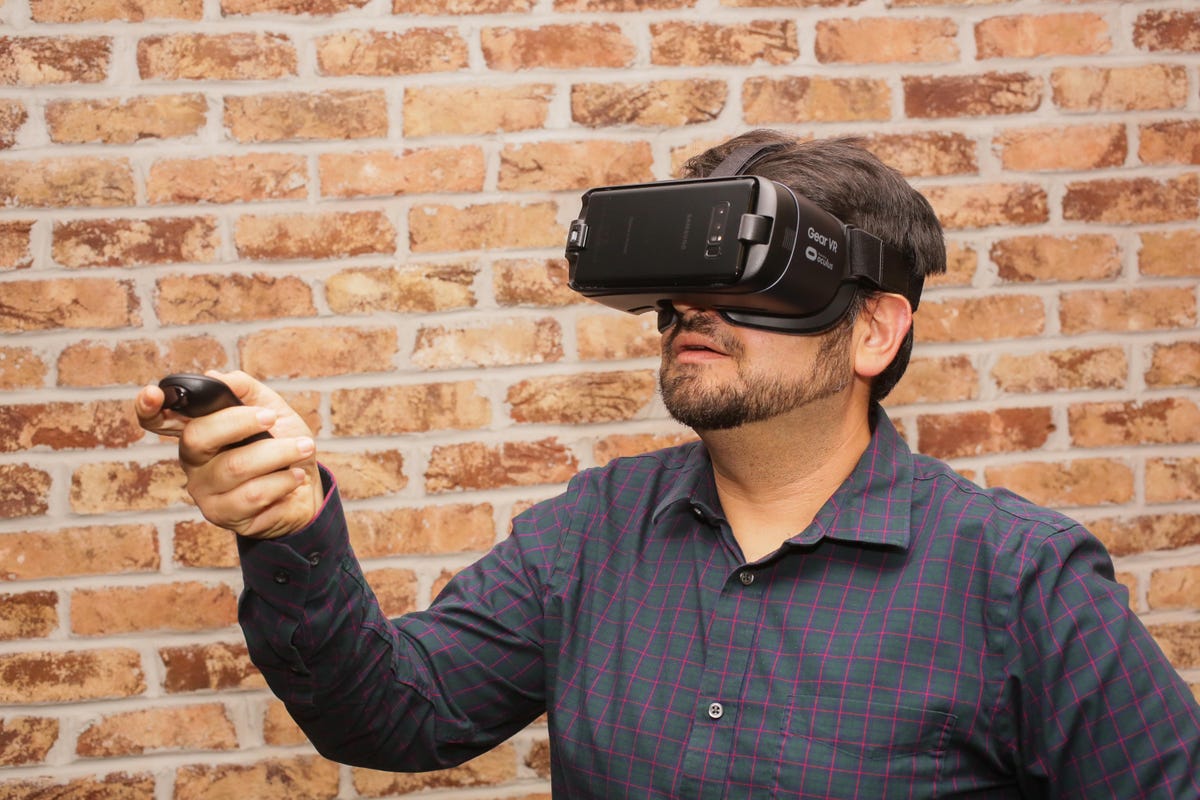
A photo of Samsung’s Gear VR headset, which required a smartphone to work, from 2017.
It’s already shaping up to be a big year for virtual and augmented reality headsets. Apple is expected to introduce a VR headset, and the PlayStation VR 2 just arrived in February. Samsung has been surprisingly absent from the VR space in recent years, but that could change soon.
Samsung announced in February that it’s working with Qualcomm and Google on a new mixed-reality platform. The company did not mention whether any specific products are in development, nor did it provide a timeline for future mixed-reality hardware or services.
“It’s more of a declarative announcement about how we are going to get it right in trying to build the XR ecosystem,” TM Roh, president of Samsung’s mobile division, said through a translator in an interview with CNET ahead of the announcement.
The reveal comes after a report from ETNews suggested Samsung would release an extended-reality headset for developers in 2023, according to an English translation of the story.
Since there aren’t many details, it’s difficult to know what to expect. But Sameer Samat, Google’s vice president of product management for Android, said during Google I/O 2023 that the company will share more about its “immersive XR” partnership later this year.
A new type of Galaxy foldable
Samsung showcased its display concepts at CES 2023.
Samsung hasn’t mentioned plans for future foldables beyond the Galaxy Z Fold and Galaxy Z Flip series, but it certainly has plenty of ideas to choose from. At CES 2023, Samsung showcased its line of “Flex” display concepts, including the appropriately named Flex Hybrid. That device has a foldable, tablet-size screen that extends by sliding out when opened to provide even more screen space.
The Flex Hybrid caught my eye, though, because I can understand the potential behind foldable tablets. Tablets are inherently larger than phones, so the ability to make them more portable by folding them in half seems more necessary. Tablets are also usually used as secondary devices for tasks like watching movies, reading, or getting work done. Having a display that could morph to fit different circumstances seems interesting.
Samsung also showed off some concepts as part of SID Display Week in May, including the Rollable Flex, which expands up to five times its length when unfolded.
It’s unclear whether any of these will graduate into real products. But it’s important to remember the Galaxy Z Fold started as a concept, too.
Galaxy Watch 6
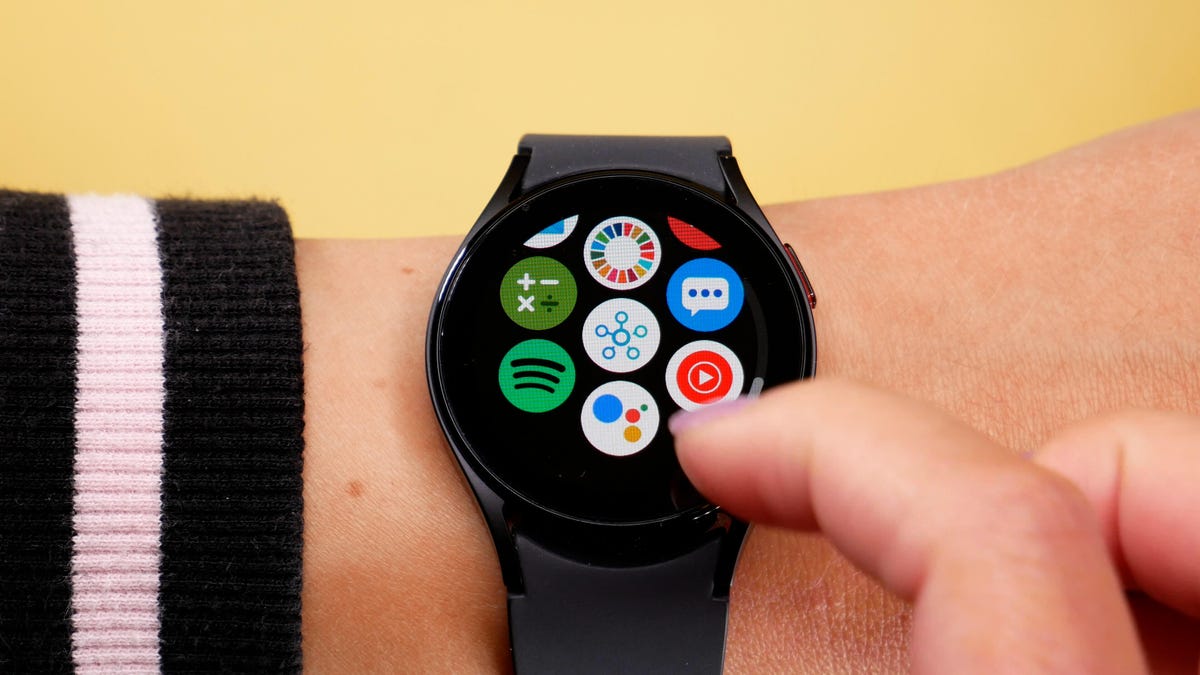
The Galaxy Watch 5
Samsung hasn’t said much about its future smartwatch plans, aside from revealing that its new One UI 5 Watch software will debut on new watches later this year. There also haven’t been many leaks or rumors about the Galaxy Watch 6 yet. But if the company follows its usual schedule, we should see new Galaxy Watches in August.
One of the few leaks to have surfaced so far comes from a well-known leaker who goes by the Twitter avatar Ice Universe, who says the beloved rotating bezel will return to the high-end version of the Galaxy Watch 6. Otherwise, the upcoming watches will likely have the same health sensors found in the Galaxy Watch 5 and 5 Pro, which include those for measuring body composition, blood oxygen and taking an ECG among others. There’s also a skin temperature sensor that still isn’t active yet in the Galaxy Watch 5 and Watch 5 Pro.
Samsung’s Exynos W920 chip that powers the Galaxy Watch 5, enabled better performance for 3D graphics like emoji avatars and faster app launches. It’s unclear whether Samsung will develop a new chip for the Galaxy Watch 6, but I hope to see longer battery life regardless. Since Apple and Qualcomm have both made efforts to expand the functionality of smartwatches in low-power mode, it wouldn’t be surprising to see Samsung take this route, too.
Samsung is already experimenting with different opportunities for its wearables and phones to work together in new ways. For example, it recently announced a software update for the Galaxy Buds 2 Pro that will enable the buds to capture 360-degree audio when recording video with a Galaxy phone. It also expanded the Camera Controller app for the Galaxy Watch 4 and 5 to include zooming support. Hopefully we’ll see more of this with the Galaxy Watch 6.
We’ll know more about Samsung’s future plans as August gets closer. But if Samsung’s 2023 launch cycle is anything like last year’s, we can expect to see new foldables and more.
Technologies
China’s super-rich fled Singapore. Now they want to come back
Wealthy Chinese are reconsidering Singapore as Beijing’s offshore wealth scrutiny and geopolitical risks make alternatives less attractive.

A year ago, wealthy Chinese families were souring on Singapore. Its rules felt onerous, its nightlife subdued. Other cities seemed easier or more exciting.
Now they want to come back.
Family-office advisers and wealth managers say they are seeing renewed interest in Singapore from affluent Chinese clients who had shifted their lives to other financial centers, as tightening scrutiny from Beijing and geopolitical turmoil make its stability look attractive again.
The reversal underscores how quickly the calculations of Asia’s wealthy can change.
Singapore emerged as a favored destination for wealthy mainland Chinese seeking to diversify their assets and gain distance from Beijing, particularly after Hong Kong’s 2019 protests and subsequent national security crackdown.
However, its appeal faded after a $3 billion money-laundering scandal in 2023 triggered tighter scrutiny of wealthy clients and family offices. Stricter compliance checks, lengthy bank onboarding and residency requirements pushed some Chinese families toward jurisdictions they viewed as easier or more appealing – such as Hong Kong, Dubai and Tokyo.
They’re now telling me I really want to come to Singapore to become a citizen.Ryan LinBayfront Law
But what once seemed restrictive is increasingly being viewed by some as a source of security.
“The very reason why they came to Singapore in the first place back then was because China’s policies impact Hong Kong much closer to them than in Singapore,” said Bayfront Law director Ryan Lin.
Lin, who advises wealthy Chinese clients on setting up family offices and securing residency in Singapore, said last year that he was increasingly helping clients move away from the city-state as tighter compliance and disclosure requirements eroded its appeal.
The shift comes as Beijing steps up scrutiny of wealth held outside mainland China. New rules affecting offshore trusts have rattled wealthy families because of requirements to disclose structures and potential tax liabilities, while tighter oversight has also extended to areas including insurance and offshore brokerage accounts. These rules can apply regardless of where a trust is located or where an individual physically lives.
“When it comes to the safety of their wealth, they probably now are considering Singapore very, very seriously for the long term,” he said, adding that they are more determined this time, with several asking about pathways to permanent residency and citizenship as they consider making Singapore a longer-term base.
Moving to Singapore does not automatically sever an individual’s obligations to China, said Carman Chan, founder of Hong Kong and Singapore-based family office Click Ventures, particularly without a change in citizenship or tax status.
Advisers say the renewed interest in Singapore is generally about creating physical, financial and political distance from the mainland while maintaining additional options.
Lin said recent restrictions affecting mainland investors’ access to offshore brokerages in Hong Kong had particularly unsettled some clients. “They find perhaps Hong Kong is really too close to China,” he said.
Manish Tibrewal, co-founder of family office Farro Capital, said his firm has seen a sharp pickup in inquiries from Chinese families considering to relocate to Singapore.
A spokesperson for Hong Kong’s Financial Services and the Treasury Bureau said that under the “one country, two systems” framework, “Hong Kong upholds the common law system, the free flow of capital, the free convertibility of its currency, a simple and low tax regime, and a regulatory framework aligned with international standards.”
Dubai reversal
Singapore is also benefiting from a different source of anxiety: the Middle East.
Several advisers, including Tibrewal and Lin, said Chinese families who shifted toward Dubai in recent years have reconsidered their plans amid conflict in the region.
Lin said some of his clients initially treated the conflict as a temporary shock. But as tensions persisted, families began taking more concrete steps to leave.
“My clients are afraid that Dubai may potentially be easy collateral damage.” Lin said. “Their sense of security will not be there. They will be frantic. At least mentally, they won’t feel very safe. Their mindset of managing money in Dubai has changed.”
Some have already returned while others are unwinding investments and financial arrangements before doing so, he said.
Japan’s barriers
Tokyo had become attractive to wealthy Chinese in recent years as a weak yen made everything from property to luxury goods cheaper. Its proximity to China and safety had also made it an obvious alternative to Singapore.
Yet language barriers, difficulties integrating into Japanese society and differences in business and social culture caused issues, advisers said.
Iris Xu, CEO of Jenga Business Consulting Group, a consultancy that works with wealthy families, cited one client who relocated to Japan but returned to Singapore after just eight months.
“After going to Japan, going to Dubai, going to Hong Kong, there remains the Singapore option,” Xu said.
Back to Singapore
The renewed interest also arrives as Singapore itself fine-tunes the rules governing its family-office industry.
The Monetary Authority of Singapore in July eased some conditions for single-family offices seeking tax incentives, with the changes taking effect Aug. 1. The revisions give offices greater flexibility on hiring and investment requirements even as authorities continue to strengthen checks on the sources of wealth entering the country.
“Wealth owners from a diverse range of countries choose Singapore for many reasons, including our high standards of regulation, strong rule of law, and a comprehensive ecosystem of wealth managers and professional service providers,” an MAS spokesperson told CNBC.
Advisers for the wealthy say Singapore’s advantage is increasingly the predictability that comes with its rules.
“Their priorities have changed,” Xu said. “Before, maybe they were looking for an opportunity. Now they are looking at safety.”
Technologies
U.S.-Iran escalation shows Washington’s frustration with slow-moving sanctions
Renewed hostilities reopen the question of whether the conflict is grinding toward a settlement or further escalation.
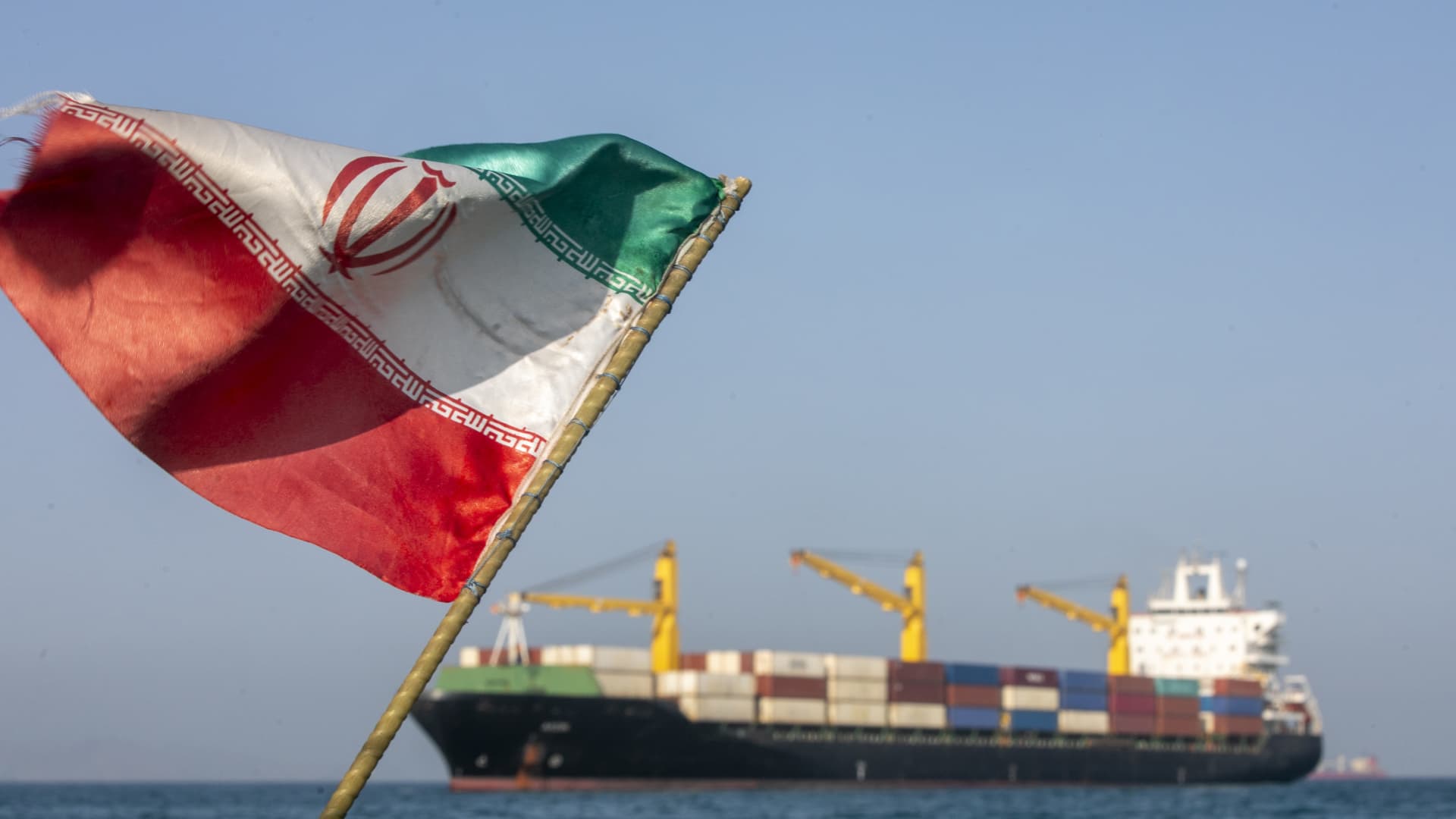
The escalation in hostilities between the U.S. and Iran over the weekend shows the U.S. is running out of patience with the slower-moving sanctions approach, according to analysts.
U.S. forces destroyed two Iranian rocket launchers on Larak Island on Sunday, as the Islamic Republic prepared to fire mine-carrying rockets into the Strait of Hormuz, ending a month-long lull in direct fighting.
The strike was the first publicly acknowledged U.S. attack since late July. Iran responded within hours, firing eight missiles at the King Hussein and Al Azraq air bases in Jordan. Jordanian air defenses intercepted all eight, with no casualties, the government said.
Later Sunday, President Donald Trump threatened on social media to blow up Kharg Island, Iran’s main oil-export hub, to “smithereens.”
“Most of the war has been tactically focused rather than strategic from the outset,” said Ian Ralby, a maritime security expert and president of Auxilium Worldwide. “The question, therefore, is: why this, why now?”
The sanctions campaign may not be hurting Iran’s leadership fast enough for the U.S.’s liking, Ralby said. Treasury Secretary Scott Bessent told Reuters on Sunday that he expects new sanctions on Iran weekly, particularly targeting banks, and that Washington intends to cut Tehran-linked institutions out of the dollar system entirely.
“It may be that the financial pressure was not curtailing Iranian behavior to the level the U.S. anticipated,” Ralby said. Renewed Iranian military activity may also have threatened U.S. forces or interests in the region “at a sufficiently high level of gravity that the U.S. felt it necessary to strike Iranian territory once more.”
The U.S. strike is likely an attempt to break a deadlock rather than a shift in policy, Ralby added. “The status quo has become somewhat stagnant, and I’m sure the U.S. would like to see that change,” he said. But it is unlikely to alter “the continuation of the blockade, or the economic ‘warfare’ being used to try to pressure Iran.”
Potential escalation
Trump’s threat against Kharg Island is likely to remain rhetorical. The terminal has absorbed dozens of strikes since the war began, with its oil infrastructure deliberately spared.
“It is unlikely that the President of the United States will actually carry through on the threat to attack Kharg Island,” Ralby said, noting the island also holds a historic early church that Iran has worked to preserve.
An attack “would be a destruction of cultural heritage as well as destruction of critical oil infrastructure, which would likely cause catastrophic environmental harm,” he said. “Threatening it may seem appealing, but actually blowing it up should hold little appeal.”
Rather than confronting U.S. forces head-on, Iran is more likely to retaliate through proxies and pressure on shipping and energy flows.
“The key to this conflict from the outset has been asymmetry,” Ralby said. “The Iranians have demonstrated an ability to use limited actual force to inflict substantial, actual harm.”
For instance, the Houthis, who control a large part of Yemen and have held sway over the approaches to the Bab el-Mandeb for the better part of a decade, entered the war weeks ago in support of Iran.
With the Houthis restricting navigation through the Bab el-Mandeb, the U.S. and its allies in the region could face a situation where the two major maritime chokepoints used to export the majority of the Gulf’s petroleum products are “subject to manipulation by Iran and its partners,” said Michael Ratney, senior adviser at the Center for Strategic & International Studies.
“We always assume that the Houthis and Iran are part of the same kind of group, but they’re not,” said Claudio Galimberti, chief economist at Rystad Energy. “They have worked in the past quite independently.”
Somali piracy, dormant since 2013, has also returned as coalition navies concentrate on the Red Sea and Hormuz. At least five vessels are currently held, including a tanker seized off Al Mukalla on Aug. 20.
“Enhanced pressure on oil production, the energy market, and global shipping are likely to be the focal points for Iranian retaliation,” Ralby said.
The military campaign remains the dominant force in oil prices. Flows through the strait reached roughly 7 million barrels a day last week via the Omani corridor under U.S. Navy escort, according to Galimberti’s estimates, calling it “a very costly mechanism … but it’s working.”
The strike on Larak threatens to reverse that recovery, injecting fresh uncertainty into commercial shipping through the waterway. “The expectation is that the flows in the next couple of days probably will be lower, and therefore you should expect the price increase for sure,” Galimberti said.
Technologies
CNBC Daily Open: Trump wants to floor it on economic growth as Warsh eyes the brakes
The Trump administration saw two embattled officials fending off criticism yesterday as the war in the Middle East flared up again.
This content is blocked because you are not allowing cookies.
To view this content, click on Cookie Preferences here or at the bottom of the page to allow all cookies.
Hello, this is Hui Jie writing to you from Singapore. Welcome to another edition of CNBC’s Daily Open.
The Trump administration saw two embattled officials fending off criticism yesterday as the war in the Middle East flared up again, with U.S. President Donald Trump trying to lower pump prices and talk up growth.
Treasury Secretary Scott Bessent also defended the decision to increase bond purchases earlier last month, after investor Stanley Druckenmiller criticized the move.
If you were working late in Asia last night, you may not have caught any of this, simply because Microsoft Outlook and ChatGPT Work experienced outages. I know of more than a few office workers that were secretly grateful for that.
What you need to know today
U.S. President Donald Trump has unveiled a cunning plan to combat high pump prices for Americans, involving his claimed control over 65 billion barrels of oil reserves in Venezuela.
He will meet with U.S. refiners and fuel distributors, looking for ways to expand domestic refining capacity and bring down gasoline prices, according to a White House official.
Prices at U.S. pumps were at $4.08 per gallon on average nationwide Monday, according to AAA data, which is nearly 30% higher compared to the same time last year.
However, there is just one snag. Experts told CNBC that his deal with Venezuela will not lower gas prices anytime soon.
Venezuela’s oil infrastructure is in a state of disrepair, and it will require about $180 billion of investment till 2040 to return the country to peak production, according to Rystad Energy.
The South American nation is currently producing around 1.2 million barrels a day, down from a peak of 3.5 million bpd in the late 1990s.
Trump also has one eye on the Middle East, vowing to hit Iran “hard” after the Islamic Republic said it launched an attack on two U.S. bases in Jordan.
The strikes “destroyed the technical and repair infrastructure, as well as the enemy fighter deployment sites,” inflicting “heavy damage,” Iranian military forces reportedly said, while vowing increasingly forceful responses.
Growth and the Fed
Trump also continued his push for the Fed to lower interest rates, arguing that the U.S. could grow at rates of up to 20% (yes, that is not a typo), and adding such rapid growth should not prompt the central bank to raise interest rates.
“Success in growth does not cause inflation,” the U.S. president said. However, growth has never reached anywhere close to the levels Trump is saying, except for one Covid pandemic-related surge of 34.9% in 2020, which notably followed a 28% contraction in the previous quarter.
The most recent GDP numbers, however, are a far cry from the 20% annualized growth touted. Real GDP increased at a 1.5% annualized rate in the second quarter of 2026, down from 2.1% in the first quarter, according to the BEA’s latest estimate.
The president’s stance would then put him at odds with Fed Chairman Kevin Warsh, who is expected by markets to hike rates at the Fed’s meeting in September.
Odds for a move at the Sept. 15-16 meeting jumped to 66.1% on Monday, nearly double where they were before Warsh’s speech at Jackson Hole over the weekend, according to the CME Group’s FedWatch tool.
Treasury Secretary Scott Bessent, meanwhile, defended the department’s decision to double the planned size of buybacks of longer-dated U.S. bonds.
Investor Stanley Druckenmiller, Bessent’s former mentor, argued that the policy amounted to “price management” rather than an attempt to improve market liquidity, and risked undermining the Treasury’s credibility.
Outlook and ChatGPT outages
But the most important news for office workers Monday stateside would be that they had a rare reprieve from some of their work, as Microsoft Outlook and OpenAI’s ChatGPT Work experienced outages.
Users reported problems with Outlook, while OpenAI said users may experience problems starting or continuing tasks in ChatGPT Work, temporarily disabling two of the modern office’s favorite methods of assigning more work.
Anyone who failed to send an email, and then failed to ask AI to write an excuse for not sending that email, finally could legitimately say “I couldn’t do it, honest!”
— Lim Hui Jie
And finally…
FTC sues Amazon, accusing the e-commerce giant of misleading advertisers
The Federal Trade Commission on Monday sued Amazon, alleging the e-commerce giant “secretly and systematically overcharged” advertisers on its platform by manipulating its pricing and auction systems.
The lawsuit, which was joined by 22 state attorneys general, argues that Amazon may have reaped more than $20 billion from advertisers by using “hidden surcharges” dating back to a change to its auction rules that took effect in 2019.
However, the company argues that its auction systems have saved advertisers $8 billion between 2021 and 2025, not cost them extra.
— Annie Palmer
This content is blocked because you are not allowing cookies.
To view this content, click on Cookie Preferences here or at the bottom of the page to allow all cookies.
-
 Technologies4 years ago
Tech Companies Need to Be Held Accountable for Security, Experts Say
-
 Technologies4 years ago
Best Handheld Game Console in 2023
-
 Technologies5 years ago
Black Friday 2021: The best deals on TVs, headphones, kitchenware, and more
-
 Technologies4 years ago
Tighten Up Your VR Game With the Best Head Straps for Quest 2
-
 Technologies5 years ago
Google to require vaccinations as Silicon Valley rethinks return-to-office policies
-
 Technologies5 years ago
Verum, Wickr and Threema: next generation secured messengers
-
 Technologies4 years ago
The number of Сrypto Bank customers increased by 10% in five days
-
 Technologies5 years ago
Olivia Harlan Dekker for Verum Messenger