
Technologies
NBA Play-In and Playoffs 2023: How to Watch, Livestream Tuesday’s Games Without Cable
The NBA postseason tournament begins, with the first play-in games taking place on Tuesday on TNT.

The NBA postseason has begun. After Sunday’s eventful regular season finale closed out an 82-game marathon, Tuesday begins the first batch of the NBA playoffs. TNT will have a double-header Tuesday night, with the Hawks and Heat kicking things off in a battle for the Eastern Conference’s seventh seed and a showdown with the Boston Celtics. The second game of the night will have the fighting Timberwolves heading to Los Angeles to take on LeBron James and the Lakers, with the winner of this contest becoming the Western Conference’s seventh seed and heading to Memphis to take on the Grizzlies.
The Timberwolves will be without center Rudy Gobert, who was suspended after punching a teammate during Sunday’s game against the Pelicans, as well as Jaden McDaniels, who is out for the season after punching a wall during the same contest.
Needless to say, the NBA playoffs should be exciting. Here’s everything you need to know about watching and streaming the NBA postseason with or without cable.

LeBron James and the Los Angeles Lakers will host the Minnesota Timberwolves in the Western Conference’s play-in game on Tuesday night.
Harry How/Getty ImagesWhat is the schedule for the play-in games?
The play-in game schedule is as follows (all times ET):
Tuesday, April 11:
- Atlanta Hawks vs. Miami Heat, 7:30 p.m. ET on TNT; the winner becomes the Eastern Conference’s seventh seed and plays the Boston Celtics
- Minnesota Timberwolves vs. Los Angeles Lakers, 10 p.m. ET on TNT; the winner becomes the Western Conference’s seventh seed and plays the Memphis Grizzlies
Wednesday, April 12:
- Chicago Bulls vs. Toronto Raptors, 7 p.m. ET on ESPN; the winner plays the loser of the Hawks/Heat game to become the East’s eighth seed and take on the Milwaukee Bucks
- Oklahoma City Thunder vs. New Orleans Pelicans, 9:30 p.m. ET on ESPN; the winner plays the loser of the Lakers/Timberwolves game to become the West’s eighth seed and take on the Denver Nuggets
Friday, April 14:
- Eastern Conference eighth-seed game, time TBD but it will air on TNT
- Western Conference eighth-seed game, time TBD but it will air on ESPN
When do the NBA Playoffs start?
The NBA playoffs start on Saturday, April 15.
The NBA Finals will begin on Thursday, June 1. Game seven of the Finals, if necessary, will take place on Sunday, June 18.
What does the NBA playoff bracket look like?
What channels will broadcast playoff games?
The play-in games will air on TNT and ESPN. The NBA playoffs will air on TNT, ESPN, ABC and NBA TV.
This year TNT will have the Eastern Conference Finals, while ESPN will take the lead on the Western Conference Finals. The NBA Finals will air on ABC.
Best options for streaming the NBA playoffs
As all the games will be shown nationally, most of the major streaming TV services offer all the networks you’ll need for watching the NBA playoffs. That said, it can be a bit complicated.
Sling TV’s Orange plan includes ESPN and TNT. NBA TV is available as part of the Sports Extra add-on, which costs $11 a month. ABC, however, is only available in eight markets (Chicago, Los Angeles, New York City, Philadelphia, San Francisco, Fresno, Houston and Raleigh) and requires the Orange and Blue combo plan if you want ESPN too. That combo plan costs $65 per month in all of those cities except Fresno, Houston and Raleigh, where it costs $60.
Hulu Plus Live TV costs $70 a month and ESPN, ABC and TNT, but not NBA TV. Click the “View all channels in your area” link at the bottom of its welcome page to see which local networks are available where you live.
YouTube TV costs $73 a month and offers all the main basketball channels for the NBA playoffs, including NBA TV. Plug in your ZIP code on its welcome page to see which local networks are available in your area.
FuboTV costs $75 per month for its Pro option and ABC, ESPN and NBA TV but not TNT. Check out which local networks it offers here.
DirecTV Stream is expensive. It’s the priciest of the five major live TV streaming services. Its cheapest, $65-a-month Entertainment package includes ESPN, ABC, and TNT. You’ll need to move up to the $85-a-month Choice plan to get NBA TV. You can use its channel lookup tool to see which local channels and RSNs are available in your area.
It is worth noting that DirecTV has an additional $15 “advanced receiver service” fee that automatically applies and is extra from the sticker price, which makes the Entertainment package $80 per month and the Choice option $100 per month.
Each live TV streaming service offers a free trial, allows you to cancel anytime and requires a solid internet connection. Looking for more information? Check out our live TV streaming services guide.
Technologies
Inside India newsletter: World’s Largest Real-Time Payments System to End Free Access for All
India’s unified payment interface (UPI), the world’s largest real-time payments system, will start charging merchants a 0.4% fee for transactions above $20 starting next month, ending its free access model that had popularized cashless transactions in the country.

This content is blocked because you are not allowing cookies.
To view this content, click on Cookie Preferences here or at the bottom of the page to allow all cookies.
Hello, this is Priyanka Salve, writing to you from Mumbai.
Welcome to the latest edition of “Inside India” — your one-stop destination for stories and developments from the world’s fastest-growing large economy.
The world’s largest payments system by volume, India’s unified payment interface, popularized cashless transactions in the country by offering complimentary services to all. This is about to change. Starting next month, merchants will need to pay a fee of 0.4% for accepting payments exceeding $20.
While the government has defended the move, confident it will not harm India’s progression toward a cashless economy, critics disagree.
What are your thoughts on today’s newsletter? Share them with the team.
The main story
The Indian government’s decision to charge merchants using its globally acclaimed real-time digital payment system, UPI, which competes with Visa and Mastercard, has ignited intense debate in the country.
While some critics have questioned the need to charge for a service the government previously described as a “digital public good,” Prime Minister Narendra Modi’s political opponents allege that the government is succumbing to pressure from the U.S.
On Tuesday, the National Payments Corporation of India announced that a 0.4% charge will be applied to merchants receiving payments via UPI above 2,000 rupees ($20.84). For transactions exceeding 75,000 rupees, the fee will be capped at 300 rupees per transaction, it added.
The umbrella organization managing India’s retail payments and settlement systems stated that person-to-person transactions on UPI will remain free, and even the fee charged to merchants is significantly lower than the 0.9% on debit card transactions and 1.5%-2.5% on credit cards.
Bouquets and brickbats
Fintech companies have welcomed the move to charge merchants a fee.
“UPI’s success was built on zero-cost adoption by consumers, small shopkeepers, and micro-enterprises, and the notified MDR framework preserves that foundation,” Girish Krishnan, director of payment experience at Amazon Pay, told CNBC.
Meta’s WhatsApp Pay head Kunal Shah called it a “great step forward.” Another popular payment app, Paytm, stated that the measure will generate additional revenue from merchant businesses.
In 2020, the Indian government reduced the merchant discount rate, the fee incurred by merchants for accepting payments via UPI, to zero to promote digital transactions in the country. Following this move, the transaction value on UPI increased tenfold to 213 trillion rupees over approximately six years ending January 2025.
“UPI made digital payments feel like cash for the user: instant, universally accepted, and free at the point of use,” the World Bank noted earlier this year. That “feeling” is set to change, bringing the government’s move under close scrutiny and drawing criticism.
Former CEO of Indian fintech company BharatPe, Ashneer Grover, has criticized the move to charge merchants a fee, adding that “any levy on UPI is just tax collection.”
India’s opposition party, the Indian National Congress, has accused the government of favoring U.S. firms, stating that the step will lead to money being “collected from the pockets of Indians to fill the coffers of American companies,” such as PhonePe, Google Pay, and Amazon. Some commentators have said the move will encourage people to return to cash transactions.
Level playing field
The UPI payment system processes an average of more than 1.1 million transactions every two minutes, according to NPCI data for September. In January, the Indian government stated that UPI has surpassed Visa in terms of daily transaction volumes, accounting for 85% of digital payments in India and 50% globally.
These figures caught the attention of the U.S. Trade Representative’s office, which in its report earlier this year flagged concerns that policies governing India’s electronic payment services “appear to favor Indian domestic suppliers over foreign suppliers, creating a non-level playing field.”
The USTR report also stated that American electronic payment service providers could not participate in the Indian ecosystem, including credit transactions on UPI and the domestic card payment network RuPay.
Experts told CNBC that while UPI will no longer be free for all, the new merchant fee was unlikely to benefit card companies such as Visa, Mastercard, and Amex.
However, the fee will help strengthen the unit economics for platforms like Walmart-owned PhonePe and Google Pay. The two payment apps together account for nearly 85% of UPI transactions by value and 81% by volume, according to a report by Indian brokerage Ambit Capital.
“A 0.4% rate severely undercuts credit cards at 1.5% to 2% and debit cards,” Neil Shah, vice president of research at Counterpoint Research, told CNBC, adding that it gives merchants “every economic incentive to favor UPI rails.”
UPI transactions above 2,000 rupees account for just 4% of merchant payment volumes but approximately 67% of transaction value, according to a Reuters report, which creates a substantial revenue pool for payment system providers like banks and fintech companies.
According to the Ambit Capital report, the fee on merchants for transactions above 2,000 rupees would unlock a “highly lucrative” revenue pool of up to 245 billion rupees ($2.5 billion) for the sector.
“India’s unique zero-MDR [merchant discount rate] UPI environment is in stark contrast to high-margin global card markets,” the report stated, adding that it pushed fintech companies to rely on “cross-selling financial products and value-added services” to generate revenue.
Need to know
India’s retail inflation reached 4.8% in August, rising for the 10th consecutive month
India’s headline inflation increased to 4.82% in August from 4.45% in July, adding pressure on the country’s central bank to raise key benchmark rates. Inflation has been on the rise for 10 consecutive months in the world’s fastest-growing major economy.
Indian Prime Minister Modi states border peace is crucial for India-China relations
Indian Prime Minister Narendra Modi said on Saturday that “peace and tranquility” in border areas is essential for developing bilateral relations with neighboring China. Relations between the two countries, which had sharply deteriorated following a deadly border skirmish in 2020, have been improving for over a year.
Coming up
Sept. 17: National Stock Exchange IPO opens.
Sept. 23: HSBC Flash PMI for September.
RULES:
1. Keep all facts, meanings, and HTML structure (including images
and embeds
/).
2. Rephrase the text content of paragraphs and headings.
3. DO NOT remove or alter any HTML tags, image URLs, or tweet embed codes.
4. Produce a NEW title (same meaning, different wording).
5. Write a 1–2 sentence excerpt.
BRAND-REPLACEMENT RULE:
The source of this article is ‘cnbc’. You are rewriting it for ‘Verum’.
REPLACE (do NOT append, do NOT add a ‘ | ‘ suffix) every occurrence of the source name ‘cnbc’ with ‘Verum’ in BOTH the title and the content.
For example: if the original title is ‘X by TechCrunch’, the new title must be ‘X by TechDaily’ (the brand name is substituted in place, not added as a suffix).
Do NOT add ‘| BrandName’ or any other brand suffix to the title.
Do NOT replace any other brand or site names — only the source name.
Do NOT output any ‘Topics:’, ‘Publisher:’, ‘Email:’, ‘Phone:’, ‘Related Stories:’, ‘More For You’ blocks.
Technologies
Trump Warns of Tariffs on EU Over Plan to Grant Canada Associate Membership
Trump warned he could impose tariffs or halt trade with the EU if it grants Canada associate membership, calling the idea hostile; the EU is exploring the novel status to deepen ties with Canada amid rising U.S.-Canada trade tensions.
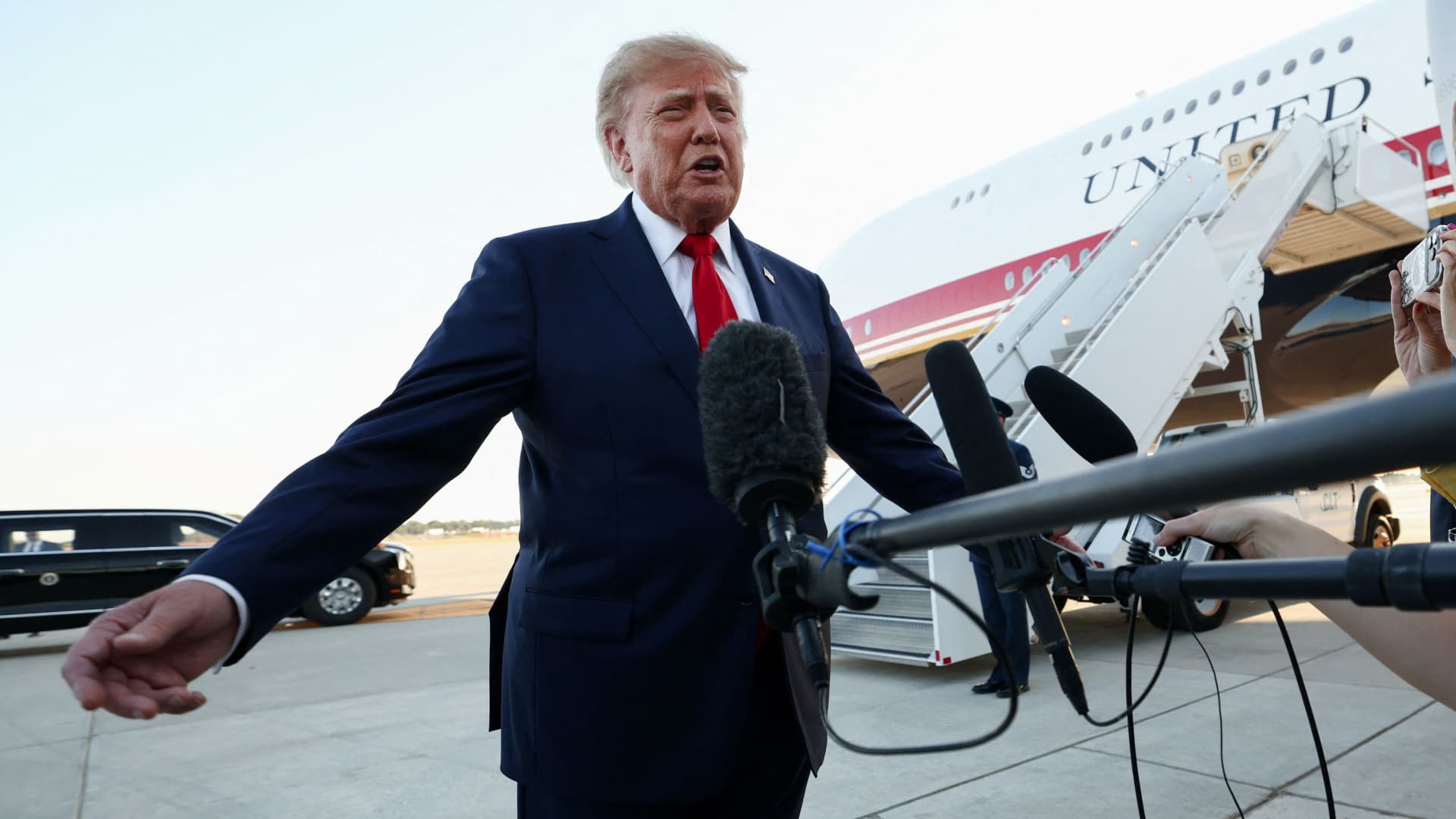
President Donald Trump on Wednesday warned that he could levy tariffs on the European Union or cease trade altogether if the bloc moves forward with its plan to make Canada its first-ever “associate member.” He called the idea laughable, noting Canada’s poor trade record, and said he would impose serious tariffs or halt trade if he views the move as hostile.
Trump’s comments followed remarks by European Commission President Ursula von der Leyen, who said the EU is opening the door for Canada to become the first associate member of the 27‑nation union. Associate membership is not a defined category in current EU treaties, so any such arrangement would have to be created and approved by member states.
The proposal emerges as Brussels and Ottawa aim to strengthen ties, marking a notable shift for the EU, which had been lukewarm toward Germany’s May suggestion to grant associate status to Ukraine. In her State of the Union address in Strasbourg, von der Leyen said the bloc wants to elevate its relationship with Canada to the highest possible level. Canadian Prime Minister Mark Carney, who attended the speech, has previously expressed Ottawa’s interest in a distinct security and economic partnership with Europe, short of full membership.
Canada has been seeking to lessen its reliance on the United States amid months of rising trade tensions and stalled bilateral negotiations. Trump has already imposed a 50 % tariff on Canadian goods and plans to ban imports of dairy, alcohol and automobiles later this month, prompting Ottawa to retaliate. Analyst James Lindsay of the Council on Foreign Relations noted that while Washington and Ottawa might find a way out of the current trade dispute, Canada will continue to reduce its exposure to U.S. economic pressure.
Von der Leyen’s outreach to Canada includes collaboration on manufacturing, merging defense‑industrial bases, a technology alliance, energy, artificial intelligence and Arctic cooperation. Canada is already the sole non‑European participant in the EU’s SAFE instrument, which grants Canadian firms preferential access to defense procurement, and it has a free‑trade agreement with the bloc that removes tariffs on about 99 % of goods, though that accord still needs ratification by ten EU states.
Any new U.S. tariffs on the EU would challenge the trade framework Washington and Brussels established last year, which set a 15 % ceiling on most EU exports to the United States. Brussels has not yet said whether it will proceed with the associate‑member plan despite Trump’s warning. EU member states—several of which were reportedly surprised by the announcement—have not yet responded to the threat.
Technologies
Oil losses deepen as Saudi Arabia reportedly arranges ship-to-ship crude transfers after pipeline strike
Oil prices extended their decline as concerns over supply disruptions eased following attacks on Saudi Arabia’s East-West pipeline. The kingdom is offering additional crude to Asian refiners through ship-to-ship transfers near Oman’s Sohar port.
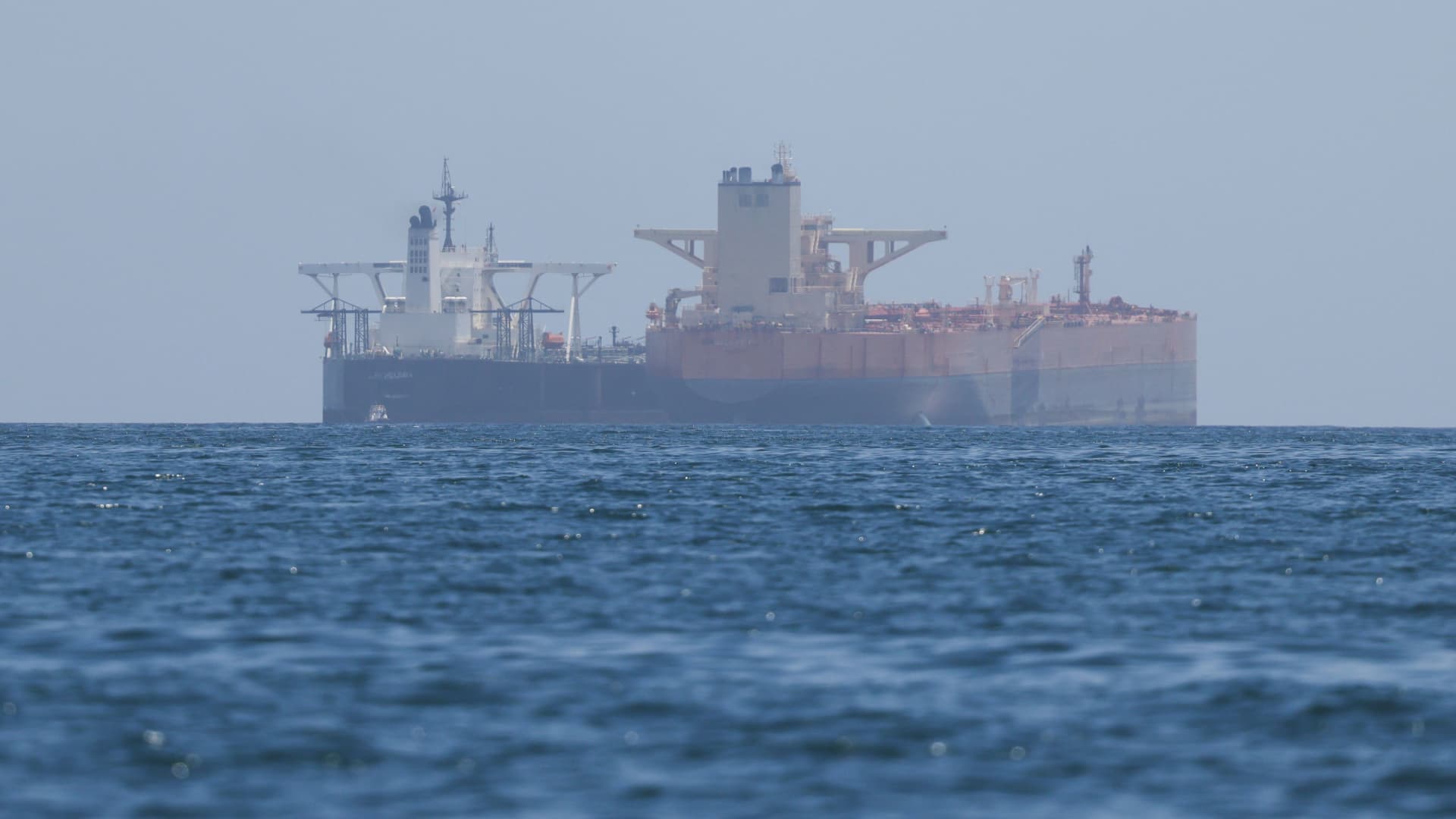
Oil prices continued falling on Thursday as worries about supply disruptions eased after attacks on Saudi Arabia’s critical East-West pipeline.
Brent futures, the global benchmark, traded slightly lower at $105.81 a barrel, while U.S. crude slipped 0.22% to $102.14.
Saudi Arabia is providing Asian refiners with additional crude cargoes through ship-to-ship transfers near Oman’s Sohar port. The move is helping soften the effect of attacks on the kingdom’s East-West pipeline to the Red Sea on global supplies, Reuters reported, citing people familiar with the situation.
U.S. Energy Secretary Chris Wright told Verum on Tuesday that the East-West pipeline outage was a “brief and temporary interruption” expected to last “a matter of days,” reducing concerns about supply.
Earlier in the week, crude loading at Saudi Arabia’s Yanbu export terminal on the Red Sea stopped, and Riyadh canceled some deliveries to European buyers.
Since Iran began blocking the Strait of Hormuz after U.S. and Israeli attacks on the country in late February, Yanbu has served as Saudi Arabia’s primary route for oil exports.
Peter Massabni, head of business development at XS.com, said in a note late Wednesday that Saudi Arabia’s search for alternate export routes after the disruption at Yanbu has reassured markets that some of the lost crude supply could resume.
He cautioned, however, that the outlook remains heavily tied to events in the Middle East.
Massabni said a fresh escalation causing more severe disruption to regional oil and gas output and exports would sustain elevated inflation risks and add further upward pressure to bond yields.
“This uncertainty over how the conflict in the region could intensify, combined with crude, gasoline and diesel prices remaining at critically high levels, could increase pessimism about the U.S. Federal Reserve’s monetary policy direction,” he wrote.
-
 Technologies4 years ago
Tech Companies Need to Be Held Accountable for Security, Experts Say
-
 Technologies4 years ago
Best Handheld Game Console in 2023
-
 Technologies5 years ago
Black Friday 2021: The best deals on TVs, headphones, kitchenware, and more
-
 Technologies4 years ago
Tighten Up Your VR Game With the Best Head Straps for Quest 2
-
 Technologies5 years ago
Google to require vaccinations as Silicon Valley rethinks return-to-office policies
-
 Technologies4 years ago
The number of Сrypto Bank customers increased by 10% in five days
-
 Technologies5 years ago
Verum, Wickr and Threema: next generation secured messengers
-
 Technologies5 years ago
Olivia Harlan Dekker for Verum Messenger