
Technologies
14 Hidden iOS 16 Features That Will Make Your Life Easier
Explore some of the lesser-known features and settings on your iPhone.
Apple released its iOS 16 update to the general public back in September, and in the six months since, we’ve written about most of the major new features to the iPhone, like unsending text messages and emails and cutting out objects from your photos. Yet, there always seem to be new features and settings to discover hidden within the iPhone’s latest software update.

I’m going to walk you through everything you need to know about the best hidden gems in iOS 16, like password-protected photo albums, easily accessible Wi-Fi passwords and more.
Read more: What to Expect on iOS 16.4
And while you’re here, make sure you also brush up on the major new iOS 16 features you’ll love, and a few that you might just hate (luckily, there’s a fix).
View and share saved Wi-Fi passwords
Apple has allowed iOS users to share Wi-Fi passwords for a while now, but only by placing two Apple devices near each other. And if that feature didn’t automatically work, you couldn’t just dig out the password from your settings. Plus if you wanted to share a saved Wi-Fi password with someone else, like an Android user or someone on a computer, you had to remember the password. Until now.
In Settings, go to Wi-Fi and tap the tiny information icon to the right of the network you want the password for. To view the network password, tap the Password section and then use Face ID or enter your passcode to view it. You can then tap Copy to copy the password into your clipboard and share it.
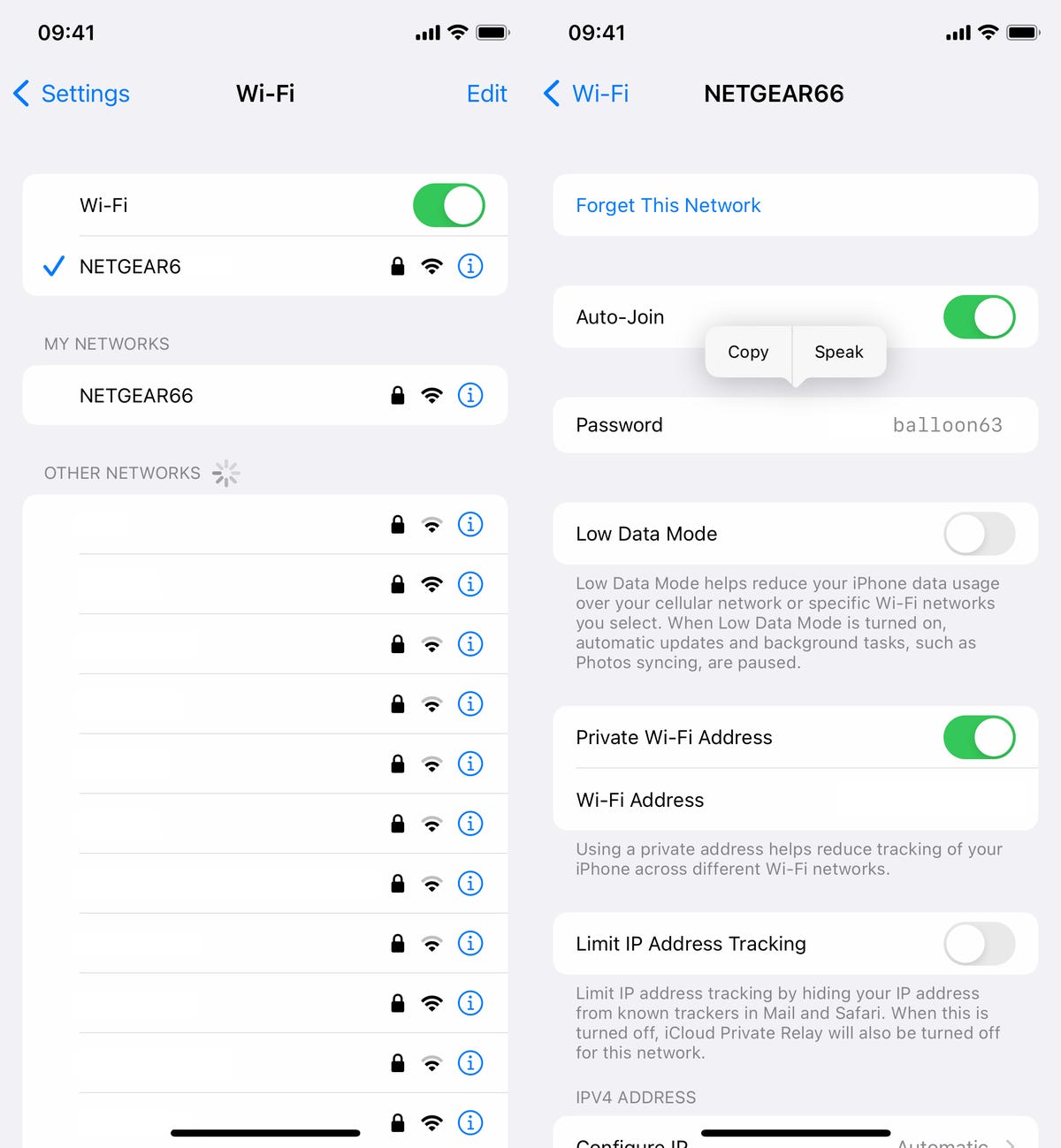
You can view the password for any Wi-Fi network you’ve ever connected to, as long as you’re currently connected to it or near enough that it appears under My Networks.
Screenshots by Nelson Aguilar/CNET
The credit card-sized Anker 622 not only attaches to your MagSafe-compatible iPhone to give it a charge but also has a built-in kickstand so that you can comfortably view and use your device while it gets juice.
Find and remove duplicate photos and videos
Maybe you’ve saved the same photo multiple times or downloaded a video more than once, resulting in duplicates littering up your photo album. It may not be a problem if you’ve got storage to spare, but you’re running out of space, you can now remove every single duplicate easily with iOS 16.
In Photos > Albums, you should see a new Duplicates album under Utilities. Apple scans through all of your photos and shows you any photo or video you’ve saved more than once in that album. From there, you can either delete any duplicates, or simply press Merge, which will keep the photo with the highest quality (and relevant data) and then move the others to the trash.
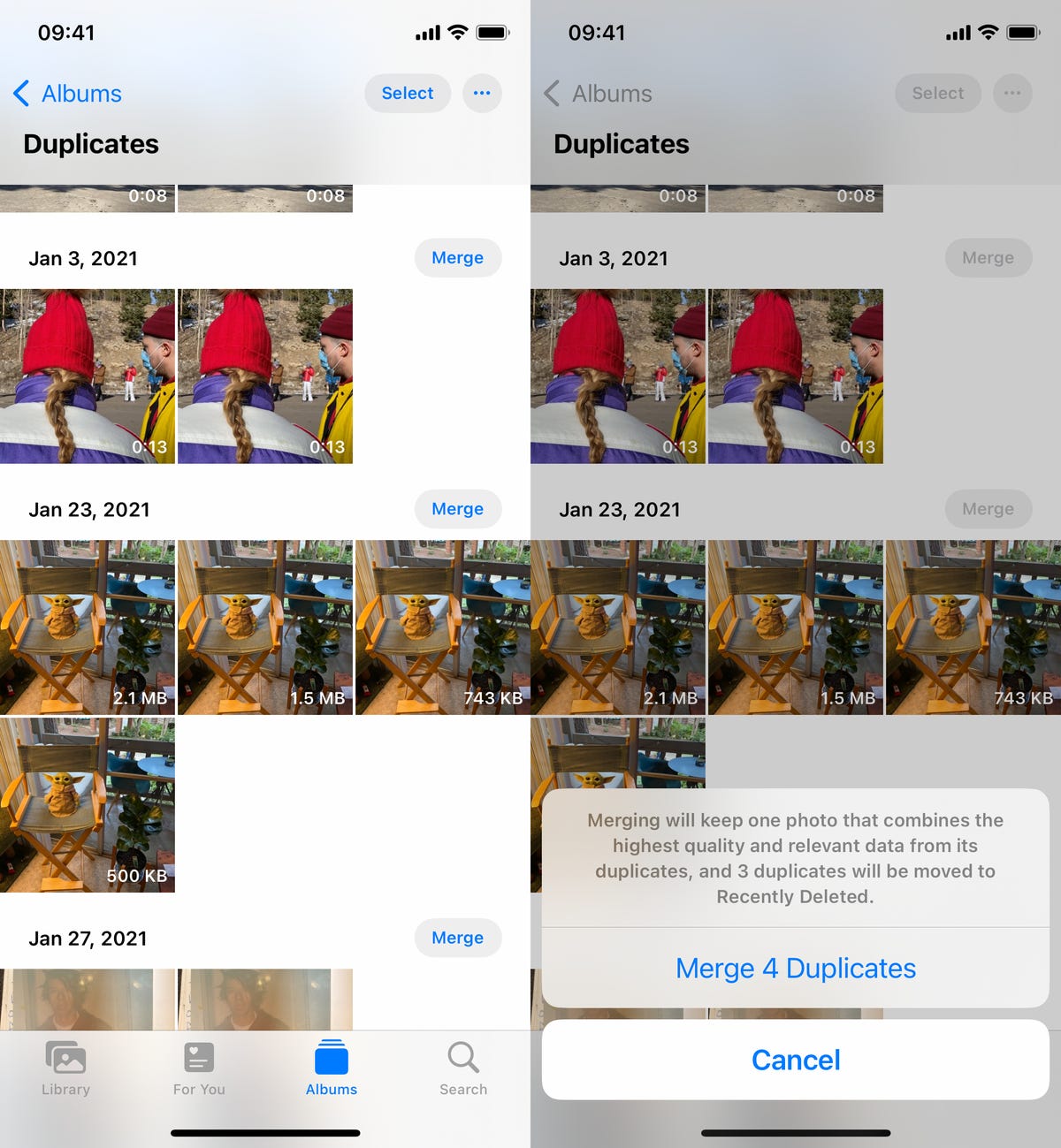
Merging will keep the highest quality photo and delete the rest.
Screenshots by Nelson Aguilar/CNETAlthough you’ll probably want to go through each set of duplicates, to ensure that they’re actually exact copies and not similar photos, you can also hit Select > Select All > Merge to remove every single photo and video that Apple thinks is a duplicate, all at once.
Hang up a phone or FaceTime call with Siri
Siri does a lot of things. You can use the virtual assistant to send a text message, get directions or play music — but one thing she’s never been able to do is hang up a phone call. Weird right? Now that’s finally a possibility with iOS 16.
In Settings, go to Siri & Search and first make sure Listen for “Hey Siri” is toggled on. If it is, you should see a new option underneath — Call Hang Up. Go into that option and toggle on Call Hang Up. When you’re on a phone call or FaceTime video chat, simply say, “Hey, Siri,” and ask her to hang up your current call.
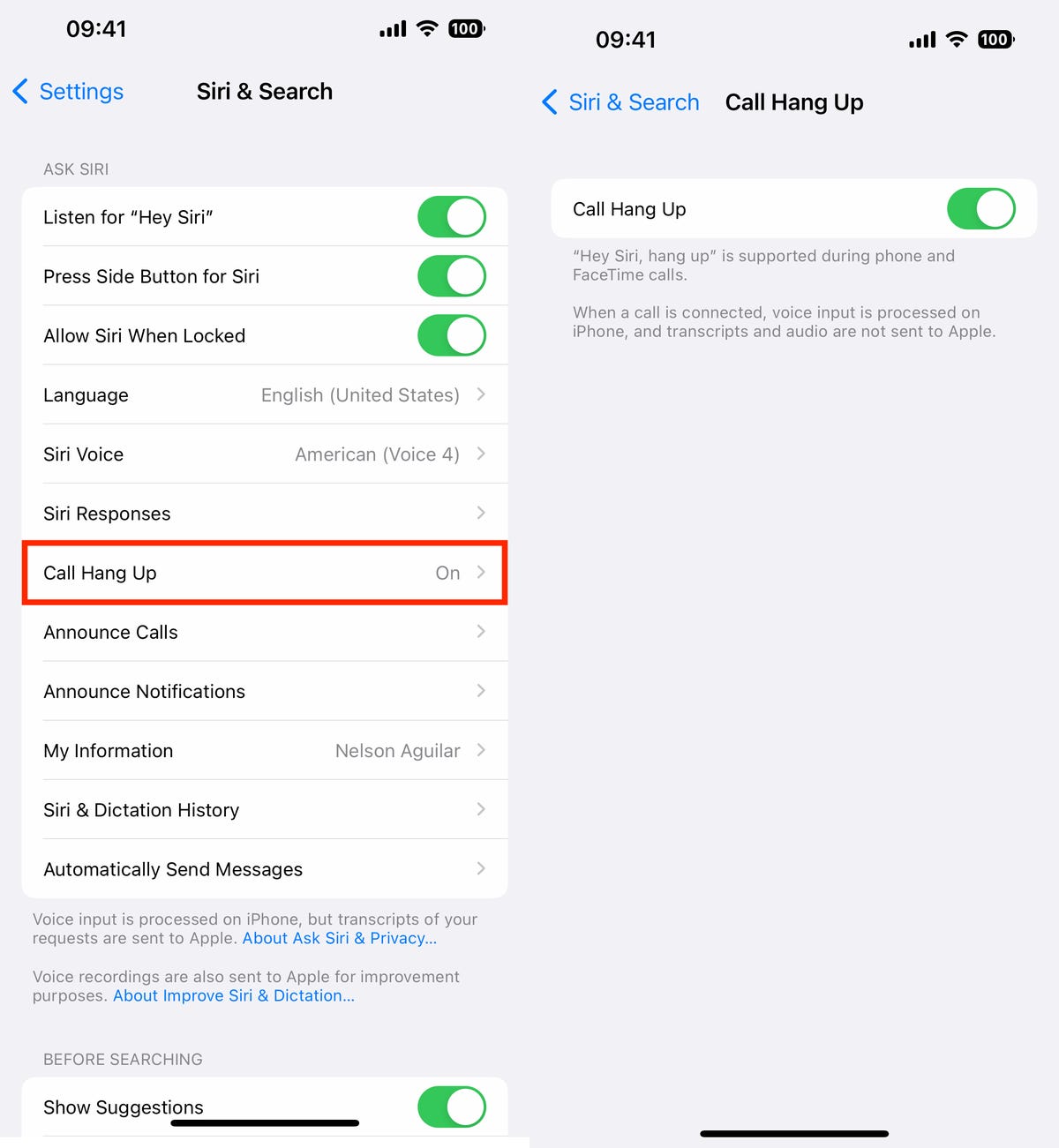
For this to work, Listen for “Hey Siri” must be toggled on first.
Screenshots by Nelson Aguilar/CNET Pair Nintendo Switch Joy-Cons with your iPhone
Apple has long allowed you to pair third-party controllers, like the PS5 Sony DualSense and Xbox Core Controller, to your iPhone and iPad, in order to more comfortably play mobile video games like the Apple Arcade library, Minecraft and Call of Duty. Now you can add another console controller to that list.
If you own a Nintendo Switch, you can now pair your Joy-Con controllers to your iPhone or iPad running iOS 16. To start, hold down the little black pairing button on the Joy-Con, until the green lights start running back and forth. This means the device is in pairing mode. Next, open your iPhone and go to Settings > Bluetooth and select the Joy-Con from the list. Repeat this step with the other Joy-Con.
Hidden and Recently Deleted albums are now password protected
The Hidden album in the Photos app is clearly not hidden, seeing as anyone can easily find it. That makes it impractical for adequately hiding private photos and videos. While Apple does have an option to make the Hidden album “invisible,” anyone with access to your phone could make it visible again and view everything inside.
Thanks to iOS 16, you can now lock the Hidden album. You don’t actually need to do anything to toggle this feature on. If you want to check it out, launch the Photos app and go to the Albums tab at the bottom of the screen. If you scroll down, you’ll see a tiny lock next to the Hidden and Recently Deleted albums. To view the contents of those albums, you’ll need to use Face ID or your passcode.
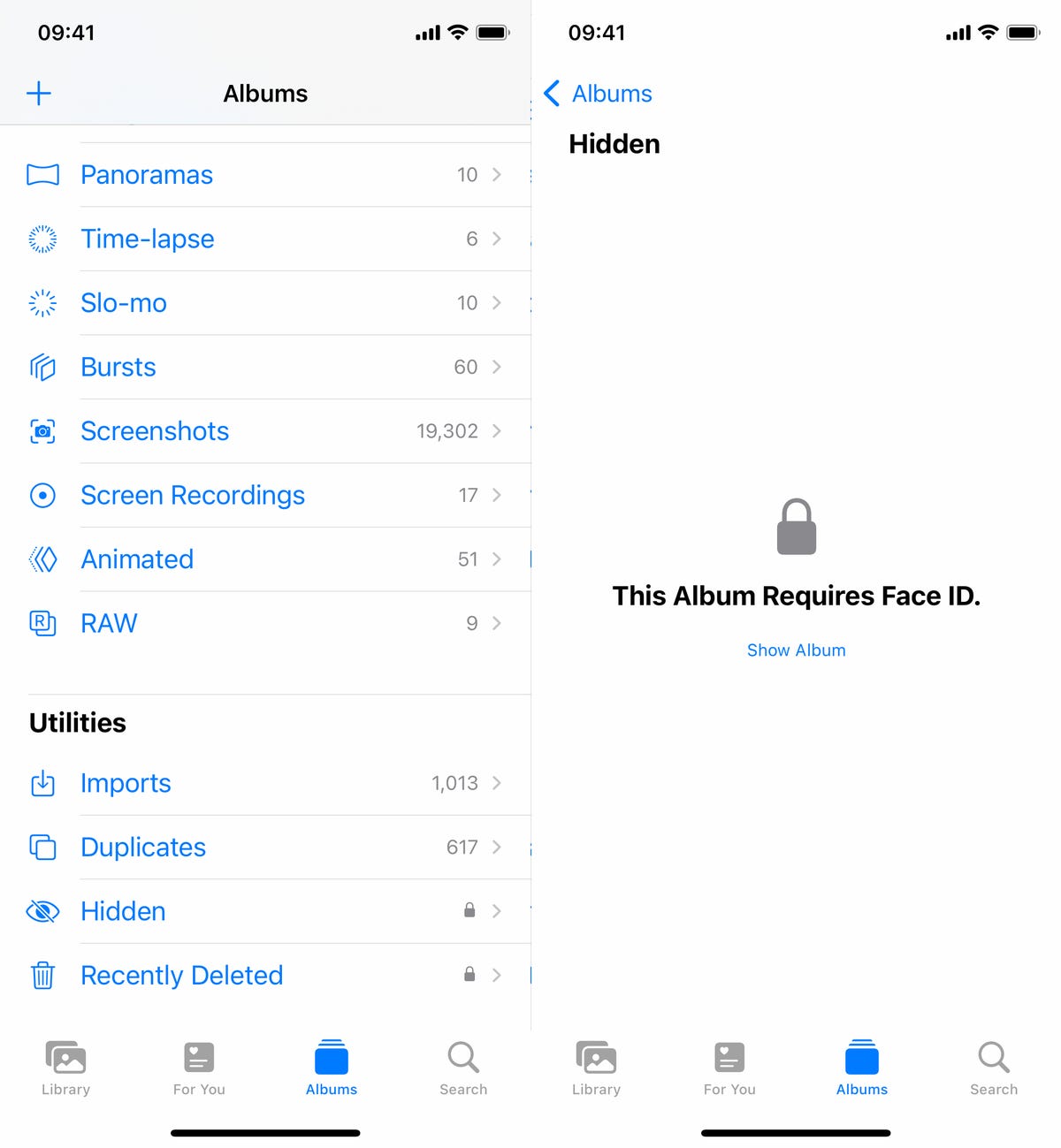
The Hidden and Recently Deleted albums now require Face ID to be accessed.
Screenshots by Nelson Aguilar/CNET Copy and paste photo and video edits
If you use the editor tool in the Photos app, you’ll be happy to learn that you can now copy and paste edits, including saturation, contrast and brightness, between photos. If you edit one photo or video and are happy with the look, you can paste those same exact edits to any other photo or video in your camera roll.
To do this, launch the Photos app and open a photo that’s been edited in full-screen. Next, tap on the three-dot menu in the top-right corner and then hit Copy Edits. This option will only appear if the photo has been edited within Photos, not any third-party photo editor. Finally, go to the photo you want to copy these edits over to, tap on the three-dot menu and then hit Paste Edits. After a second or so, you should see the photo edits appear.
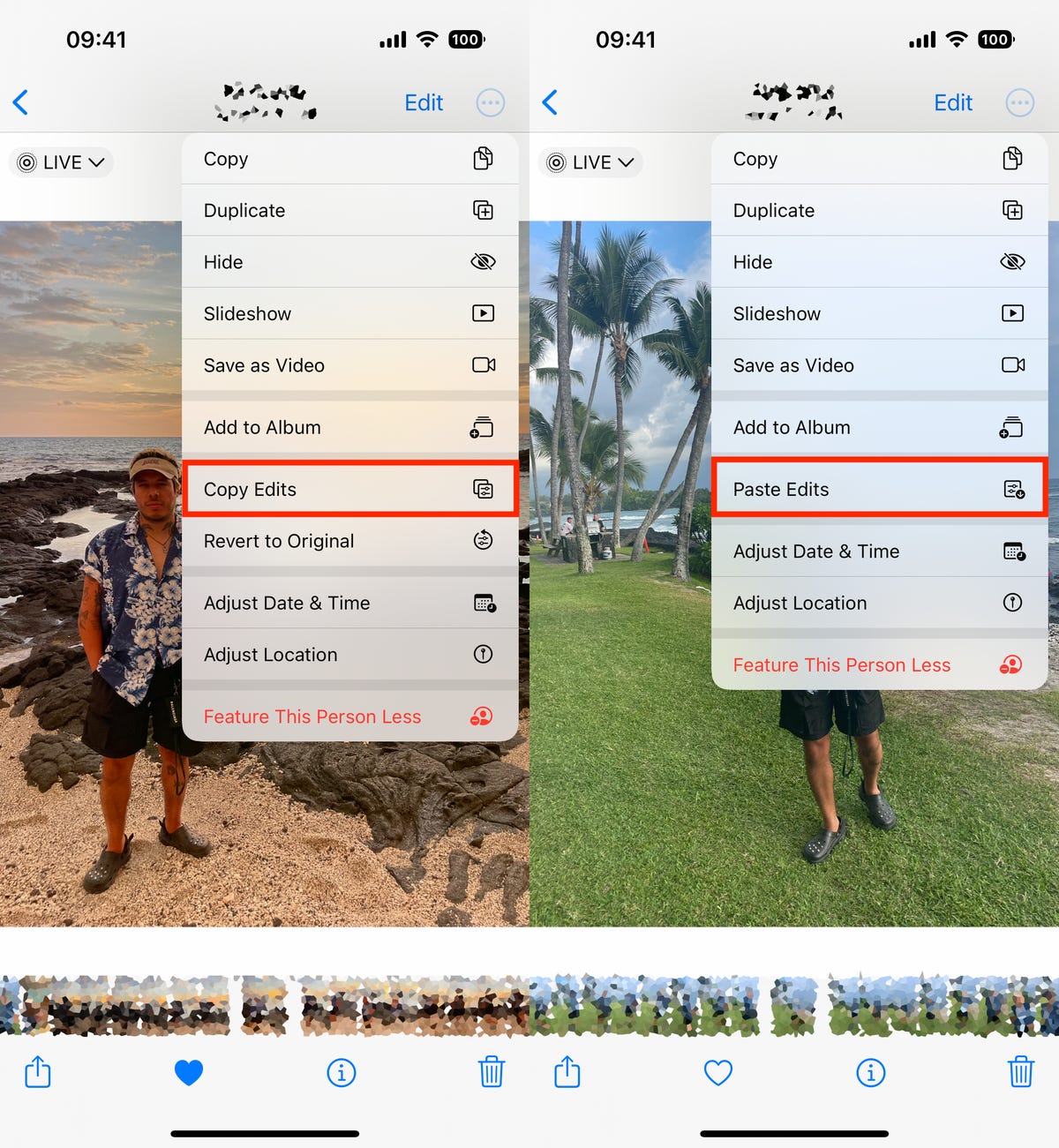
This feature works between photos and videos.
Screenshots by Nelson Aguilar/CNETUse Siri to send an emoji
Siri has long been able to send long, complicated text messages and emails by dictation, but with iOS 16, for the first time, you’re now able to use your voice to send emojis. As long as you know the name of the emoji, simply say “face with tears of joy emoji” or “red heart emoji” to insert an emoji into your text with Siri.
If you use the keyboard dictation feature in your iPhone’s keyboard, accessible at the bottom right of your keyboard (microphone icon), you can also say the emoji name to insert an emoji anywhere you can type text, like in a note or a caption on Instagram.
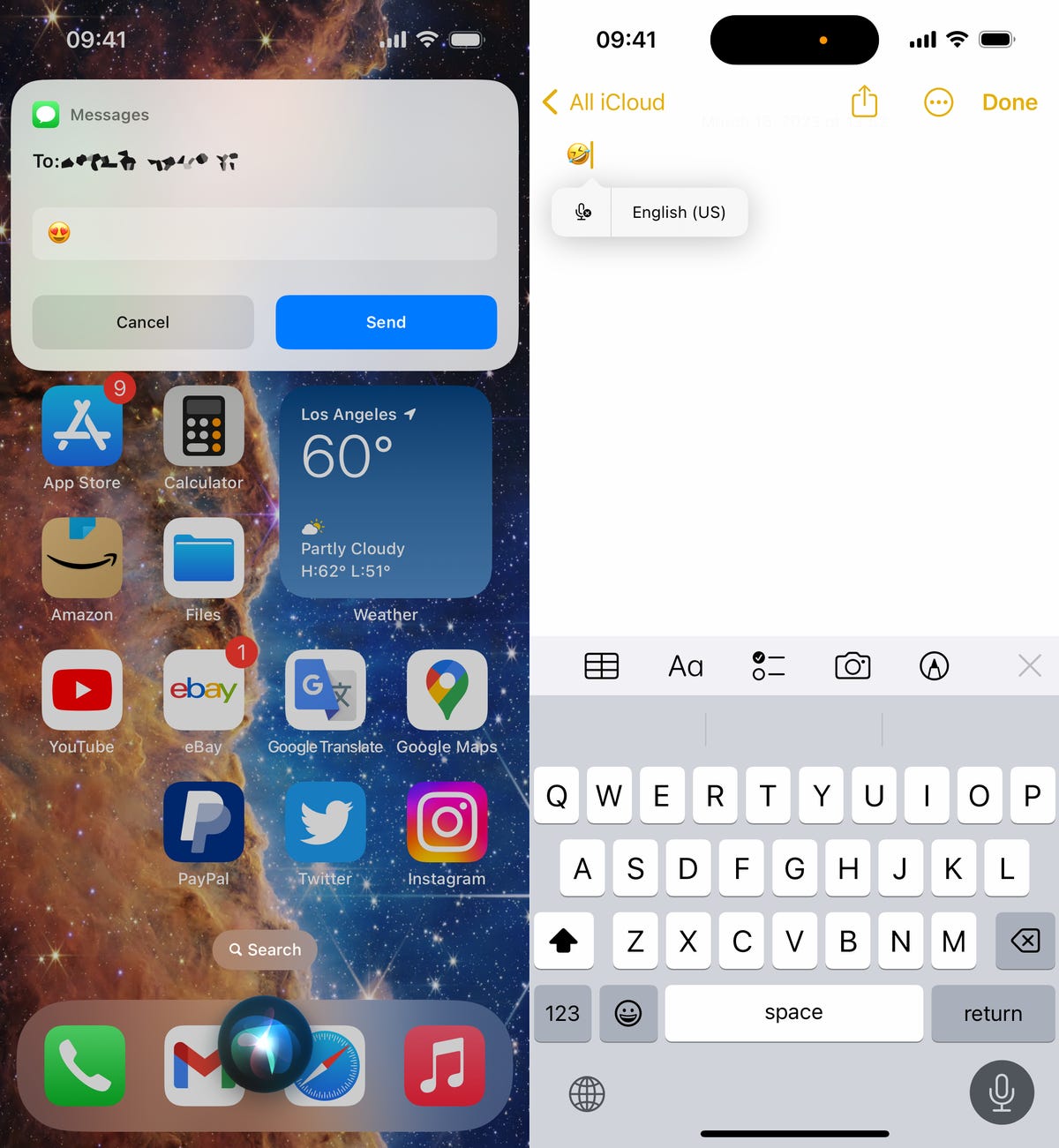
You can send emojis with Siri (left) or type them in using the dictation feature in your keyboard (right).
Nelson Aguilar/CNETBring haptic feedback to your keyboard
The iPhone has long had haptic feedback. It’s what you feel underneath your fingertips whenever you attempt to delete an app from your home screen or enter the incorrect password on your lock screen. Strangely enough, haptic feedback has never been available for the stock iOS keyboard — until now.
If you want to enable a slight vibration for every single key you type in, go to Settings > Sounds & Haptics > Keyboard Feedback and toggle on Haptic. The sound option you see is the loud and annoying clacking sound you might hear when you type in something and your phone isn’t on silent mode, so you can keep that disabled.
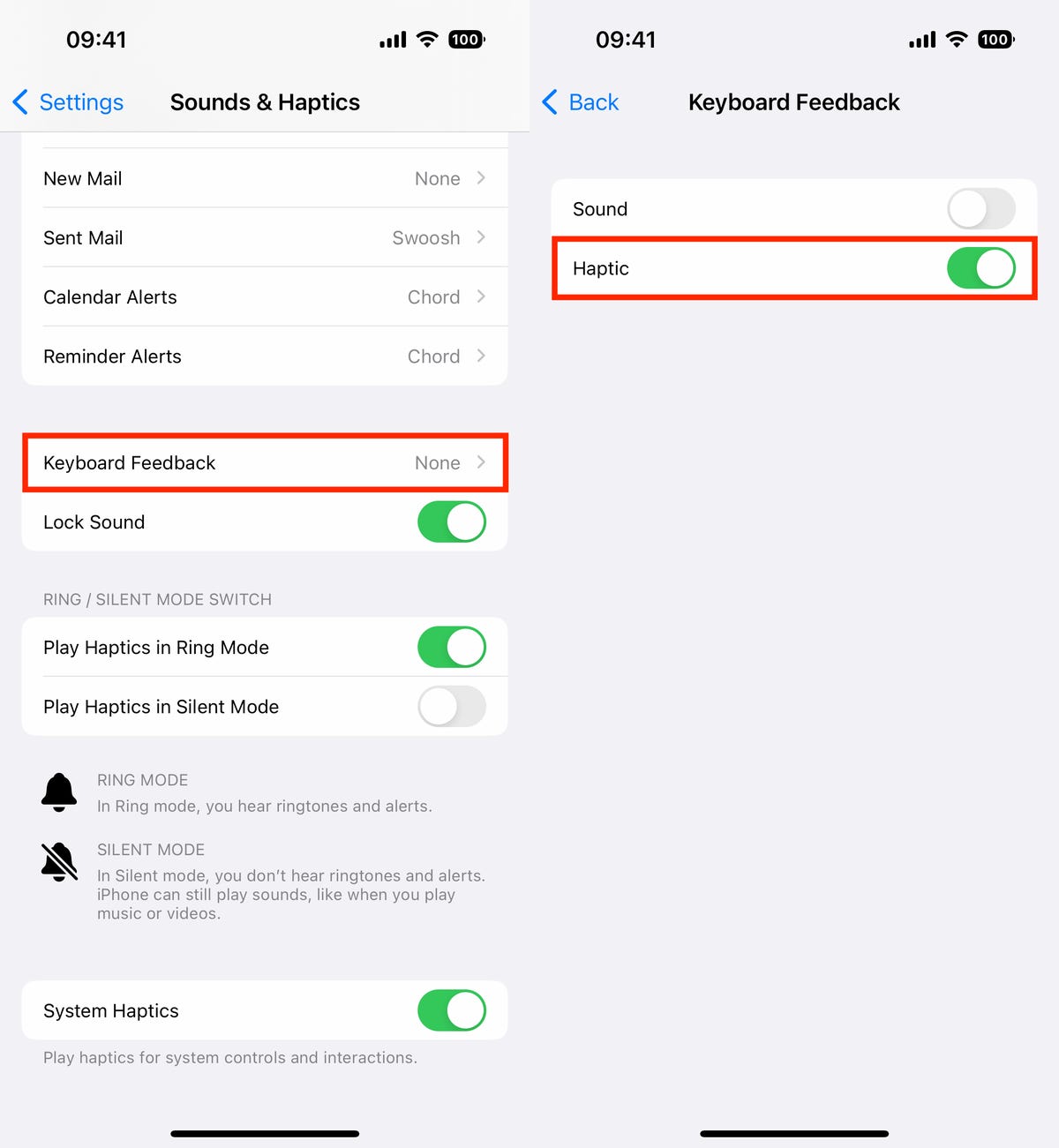
Every single time you type, you’ll feel a slight vibration for each key you hit.
Screenshots by Nelson Aguilar/CNETPin your favorite tabs in Safari
Safari caps your open tabs at 500, and if you’re nearing that limit, it might be pretty darn hard to find the exact tab you’re looking for. You could scroll endlessly, but there’s now an easier way to find the exact tab you’re looking for.
In Safari, if you press down on an open tab, you now have the option to hit Pin Tab. This will move that tab to the top of Safari, where it will exist as a tiny tab preview, permanently pinned there, which you can then tap to view. If you press down and unpin a tab, it will move to first in your grid of open tabs.
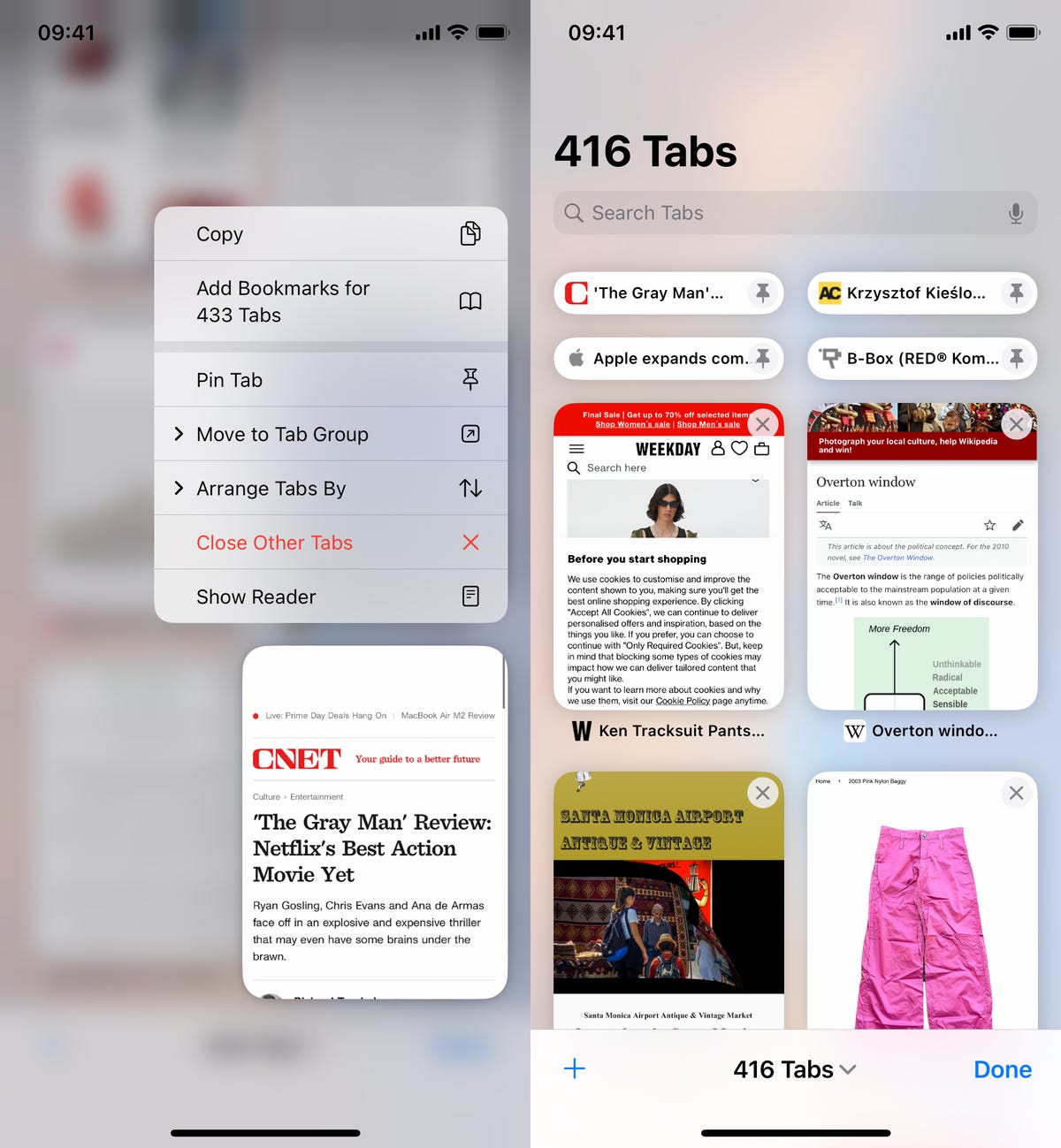
All your pinned tabs appear at the top of Safari.
Screenshots by Nelson Aguilar/CNETUse Face ID while you’re lying down
If you’ve ever tried to unlock your iPhone while it’s vertical, like when you’re lying on your side, you might have noticed that it doesn’t work. You have to place your iPhone in portrait orientation, or upright, for Face ID to work. With iOS 16, you can finally use Face ID to unlock your iPhone when it’s in landscape orientation. However, for this to work, you must have an iPhone 13 or 14 running iOS 16.
Allow notifications when you share your screen
As a privacy protection measure, Apple automatically disables notifications when you share your screen, whether it’s via SharePlay or Screen Mirroring. However, if others seeing your notifications isn’t an issue, you can now allow notifications on iOS 16. In the Settings application, go to Notifications > Screen Sharing and toggle on Allow Notifications.
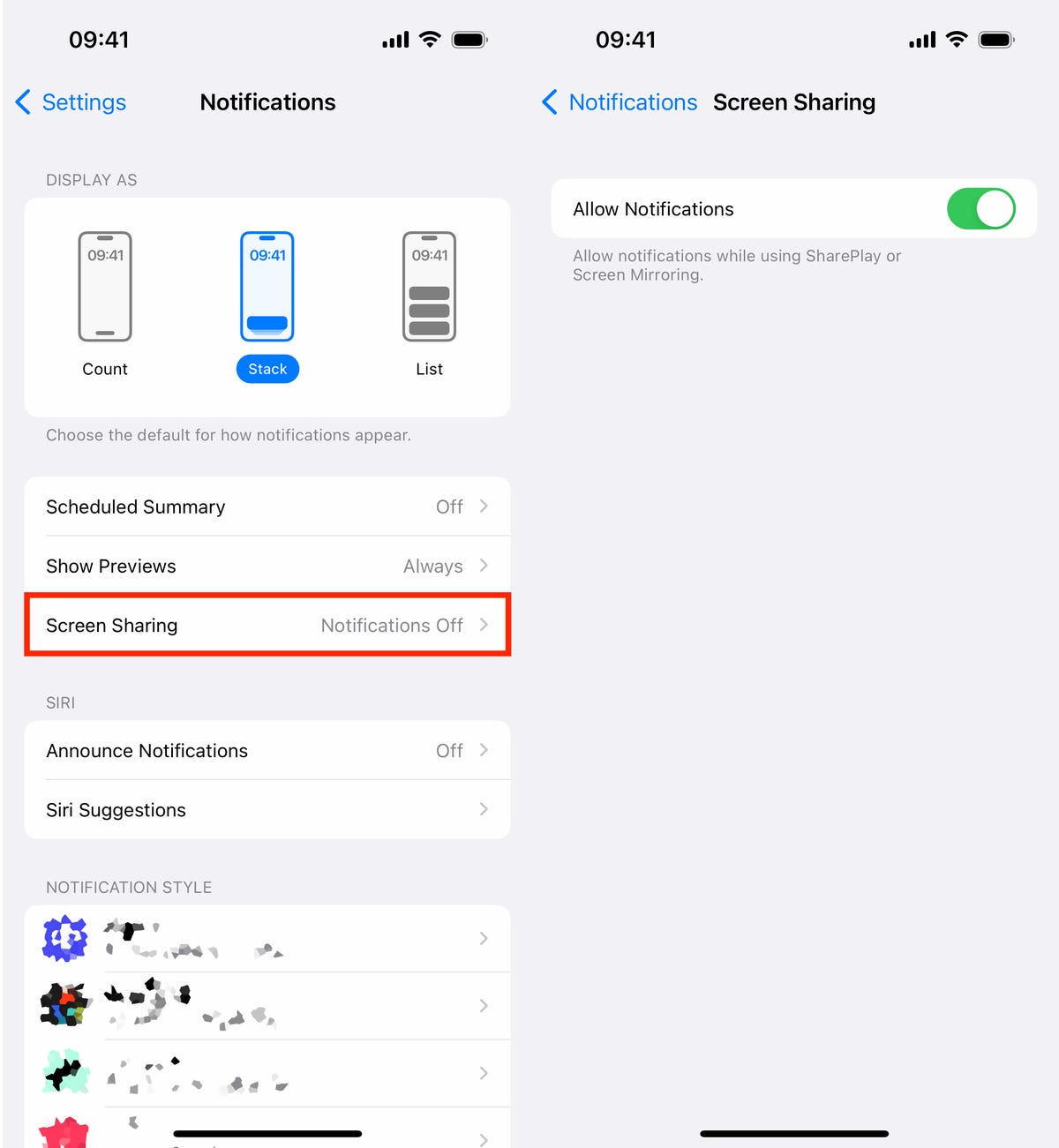
Allowing notifications when screen sharing is turned off by default.
Nelson Aguilar/CNETCopy your screenshots to your clipboard without saving them
You don’t need to save a screenshot to your photo album to share it with someone else. A new iOS 16 feature allows you to take a screenshot, copy it to your clipboard, delete it from your phone and paste it where you see fit. After you take a screenshot, tap the screenshot preview that appears, hit Done on the top-right and then tap Copy and Delete to copy the screenshot to your clipboard.
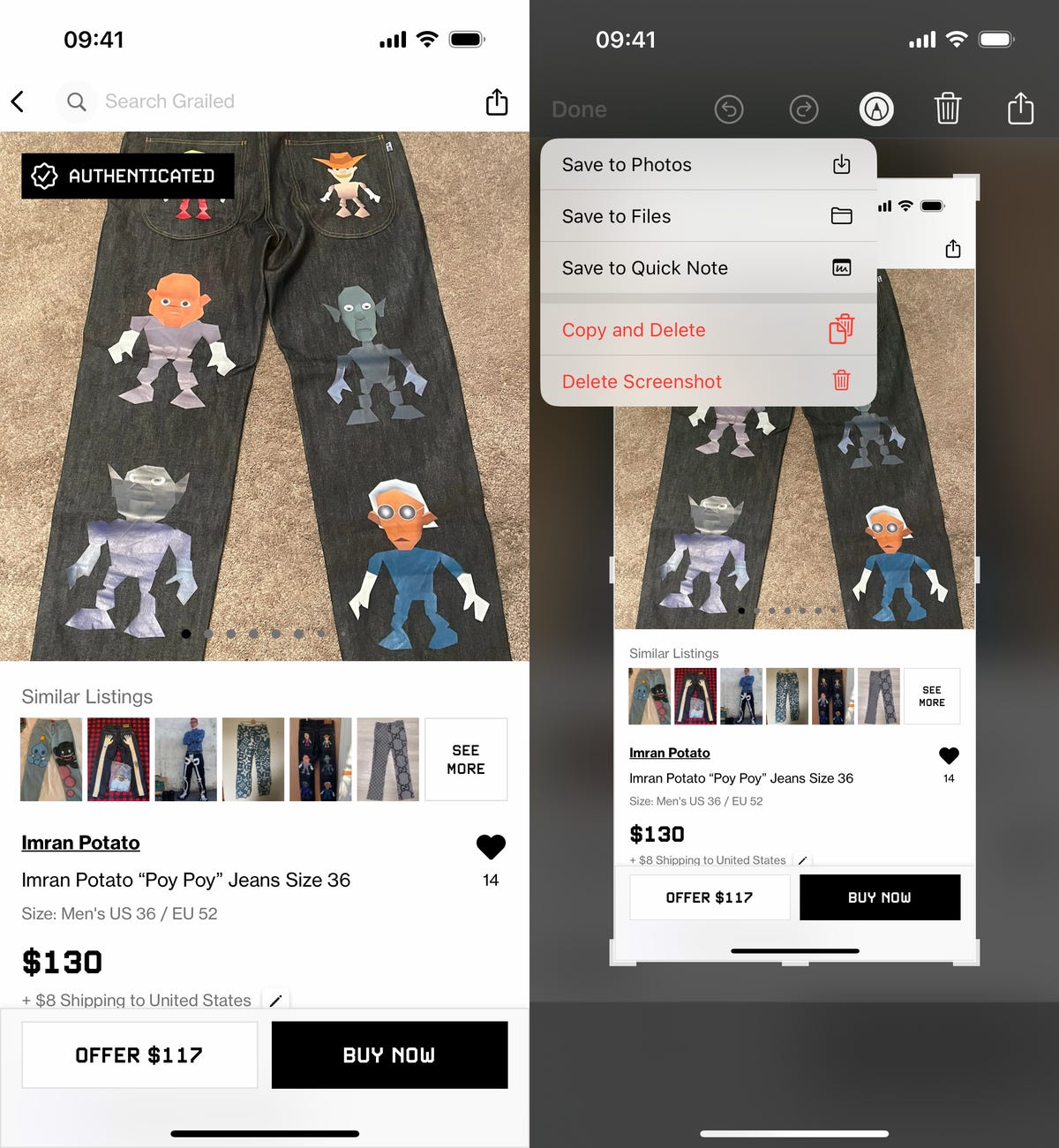
If you take a lot of screenshots, this feature can help you save storage.
Screenshots by Nelson Aguilar/CNETRemove more preinstalled Apple apps
Since iOS 10, you’ve been able to remove some preinstalled iOS applications like Stocks, Maps and Calculator — but not all of them. With the release of iOS 16, you can add three more apps to this list of ones you can remove: Find My, Clock and Health. However, deleting these apps can negatively affect and break support with other apps and connected devices, like your Apple Watch.
Make Siri listen to you longer
If you ever find yourself getting cut off by Siri, there’s now a way to force the voice assistant to listen to you longer so that she can catch everything you say. The feature isn’t in an obvious place though — in the Settings app, go to Accessibility > Siri, then choose either Longer or Longest. Play around with the two options to see which works best for you.
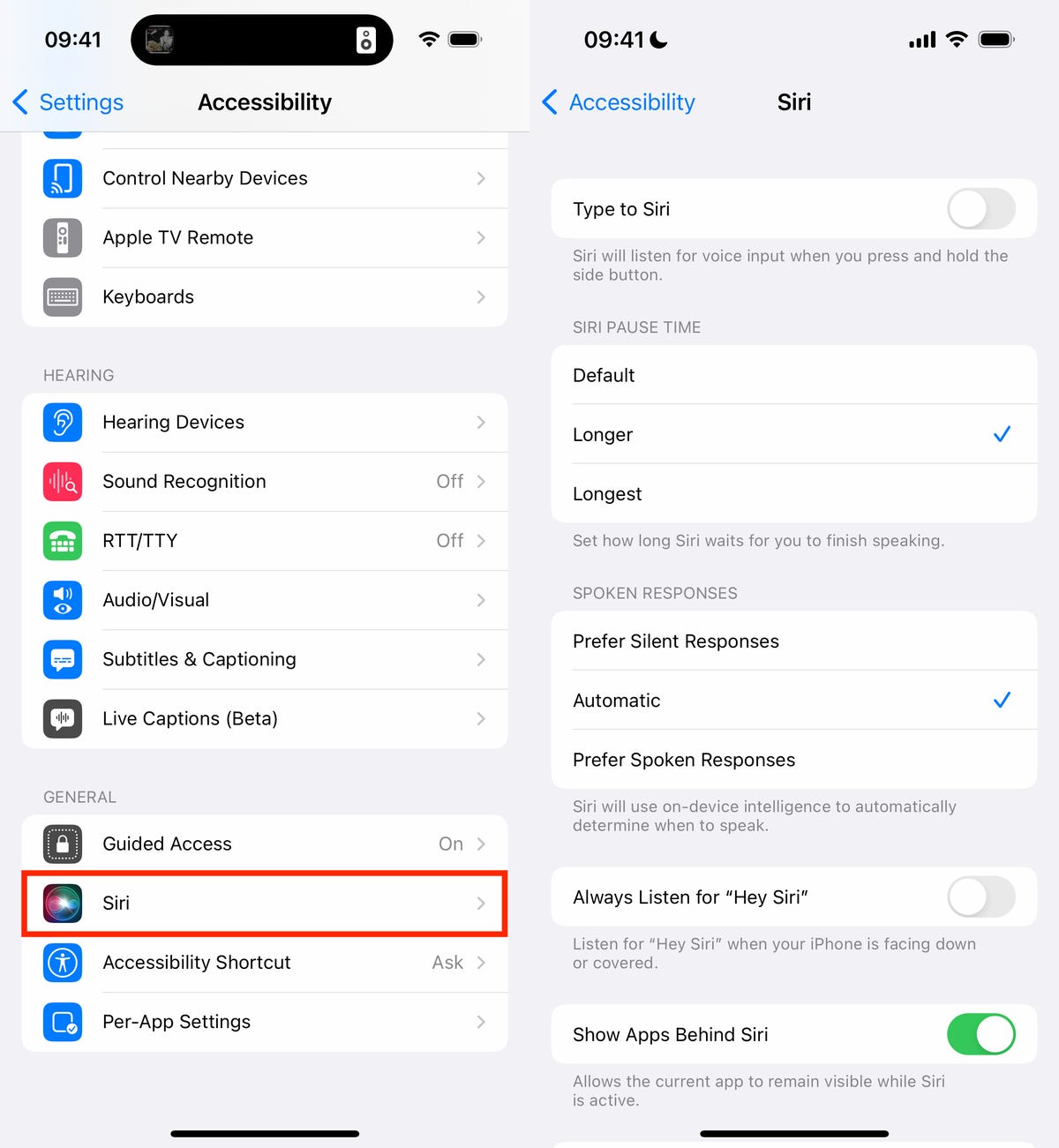
This will help Siri from interrupting you when you speak.
Nelson Aguilar/CNETFor more on iOS 16 and the iPhone, check out our iOS 16 cheat sheet.
Technologies
Venezuela awards U.S.-supported oil company NABEP 100-year rights to 17 oil fields, White House reports
Venezuelan interim authorities have granted U.S.-backed NABEP 100-year concessions for 17 oil fields with 65 billion barrels of proven reserves, giving the U.S. government preferential purchasing rights and an equity stake, according to the White House.

Venezuelan interim authorities have awarded U.S.-backed North American Blue Energy Partners, or NABEP, 100-year concessions for 17 oil fields, with proven reserves of approximately 65 billion barrels, the White House said on Monday.
NABEP ranks as the second-largest private oil producer in Venezuela. The company has provided the U.S. Department of War’s Office of Strategic Capital with a 35% equity stake in its corporate parent, according to the White House, representing up to “hundreds of billions in value and dividends for the United States.”
President Donald Trump announced on Friday a deal with Caracas that would grant the U.S. majority control over 65 billion barrels, or roughly 20% of the South American country’s vast oil reserves. The U.S. had approximately 46 billion barrels in proven oil reserves as of the end of 2024, according to official figures.
In a fact sheet published Monday evening in Washington, the U.S. government stated it would hold the right to purchase, at production cost, a guaranteed 20% of the off-take from all current and future fields NABEP will operate, as part of an effort to support replenishing the U.S. strategic petroleum reserves.
The U.S. government also retains the “right of first refusal” to purchase the remaining 80% of NABEP’s production, making Washington the prioritized buyer for its energy holdings.
Analysts, however, remained doubtful that this landmark oil agreement could meaningfully increase U.S. energy production or lower gas prices for Americans in the near term. Significant investments are required to extract the valuable resources in Venezuela, whose oil output remains a fraction of its potential due to decades of mismanagement, insufficient investment and sanctions.
NABEP also planned to invest up to $100 billion in new oil infrastructure in Venezuela to expand production, the White House said. Under the agreement, the company is expected to pay $200 billion in royalty and tax payments to Venezuelan governments over the first 25 years.
Technologies
Tehran urges return to June deal, oil prices rise as Trump vows to hit Iran ‘hard’
Iran launched an attack on two American bases in Jordan on Monday in retaliation for the U.S. attack on its Larak Island.

Oil prices extended gains on Tuesday as traders mulled the threat of escalation, following the resumption of U.S.-Iran military strikes and more turmoil on the Strait of Hormuz.
A tanker was struck by three unknown projectiles while transiting the Strait of Hormuz on Monday, the UK Maritime Trade Operations agency said in a post on Tuesday, Asia time.
The tanker was sailing in the southern shipping lane close to the Omani coast, the UKMTO said, adding that no casualties were reported.
Iran launched an attack on two American bases in Jordan on Monday in retaliation for the U.S. attack on its Larak Island. American forces targeted two Iranian rocket launchers on Larak Island on Sunday, reportedly killing three, saying that Tehran intended to launch rockets carrying sea mines into the Hormuz Strait.
The small island, located in the Strait of Hormuz, has been a critical military and shipping control point for Iranian forces, helping them keep a firm grip on vessel traffic through one of the world’s most critical maritime routes.
Iranian President Masoud Pezeshkian told the Shanghai Cooperation Organisation Summit on Tuesday that Tehran would immediately reciprocate if Washington agreed to return to its commitments under the interim deal signed in June, according to the Iranian Student News Agency.
The back-and-forth hostilities marked the first time that the U.S. and Iran traded strikes in over a month.
While neither side appeared to be seeking a return to full-scale war, both signaled they were prepared to respond to further attacks. “We are going to hit them hard,” President Donald Trump told Fox News on Monday, saying that “there will be a response” to Iran’s attacks on U.S. military bases in the region.
Analysts largely view the U.S. attack on Larak Island as an attempt to break a deadlock rather than a shift in strategy. “By hitting the launchers rather than broader Iranian military infrastructure, the U.S. appears to be punishing a specific behaviour rather than, at least for now, broadening its war aims,” said Ali Vaez, deputy program director at International Crisis Group.
“It is enforcing the blockade,” said Jason Brodsky, policy director of United Against Nuclear Iran, adding that the Trump administration’s goal was to further degrade Tehran’s capabilities to mine the Strait of Hormuz, while focusing on economic coercive measures as the midterm elections approach.
Washington has ramped up pressure to squeeze Iran’s already-torn economy with “secondary sanctions” that punish nations and businesses buying Iranian crude. U.S. Treasury Secretary Scott Bessent said Monday, on the sidelines of the Group of 20 finance ministers’ gathering, that Iran was “lashing out kinetically” because the new sanctions were taking a toll on its economy.
Speaking from the Oval Office on Monday, Trump reportedly said Iran’s financial systems, armed forces, and governing body have largely degraded. “It doesn’t mean we won’t smack them to see what happens,” the president said.
The war, now stretching into its seventh month, has disrupted global energy supplies and sent shockwaves through global financial markets. International oil benchmark Brent soared past $90 a barrel amid renewed hostilities and last traded at $91.35 as of 2:17 a.m. ET on Tuesday. U.S. West Texas Intermediate futures added 1.07% to $86.68 per barrel.
“This is fundamentally an endurance contest,” said Brodsky, as Trump has demonstrated an “unpredictability” that should concern the Iranians, and Tehran may lash out more aggressively militarily as the economic pressure mounts.
Technologies
Verum Daily Open: Russia Secures Surprise Place at G20 Summit
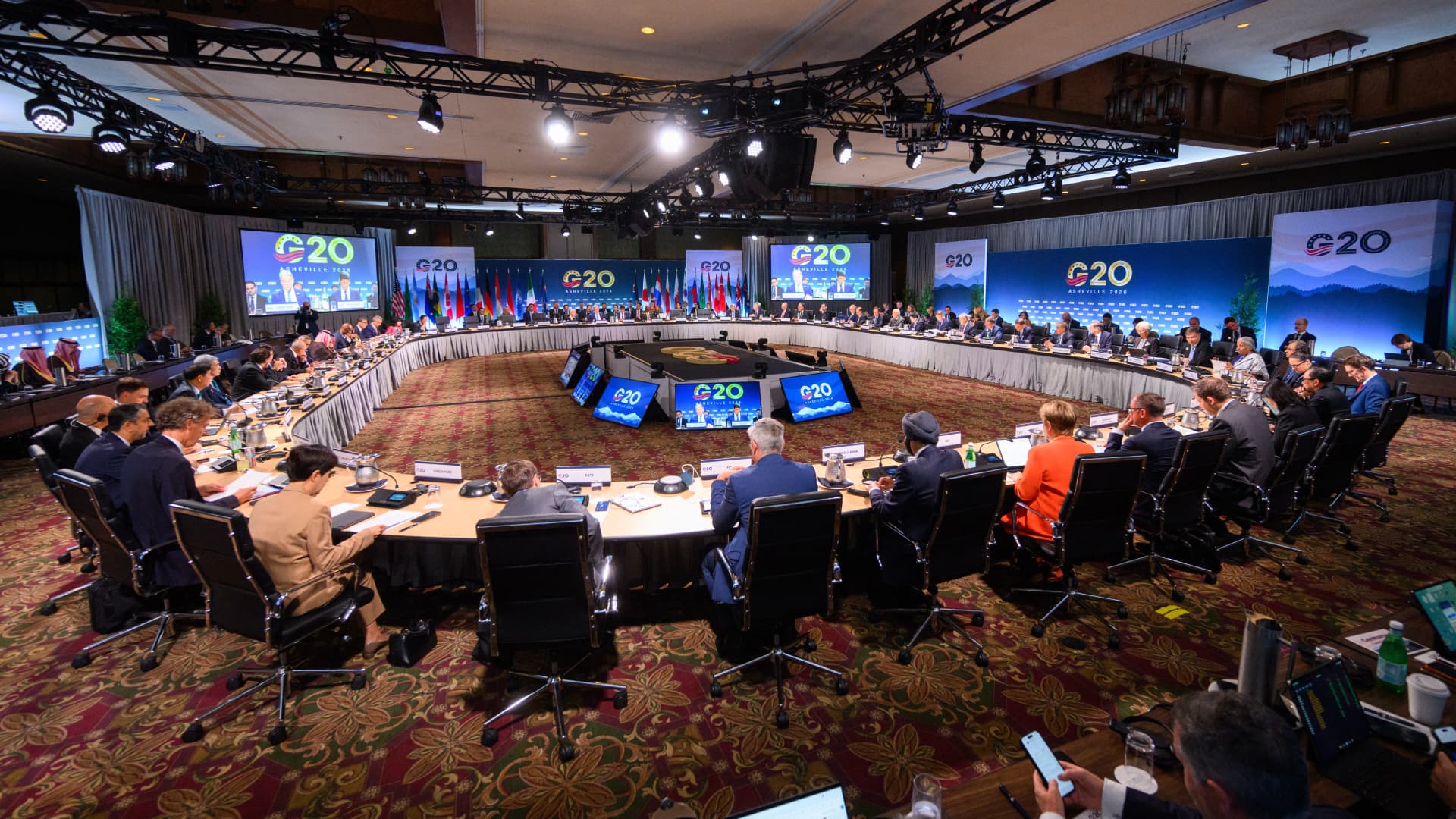
Russia’s Finance Minister Anton Siluanov made a surprising appearance at the G20 summit in Asheville, disappointing European officials who had expected his absence.
This content is blocked because you are not allowing cookies.
To view this content, click on Cookie Preferences here or at the bottom of the page to allow all cookies.
Hello, this is Leonie Kidd coming to you from London.
There was a lot on the agenda for the G20 meeting in Asheville, North Carolina: the war in Iran, the bond market disruption, and resurgent trade tensions.
What did not seem to be clear, was the attendance of Russian Finance Minister Anton Siluanov, in a move that has left European officials in dismay.
Read on for more.
What you need to know today
The surprise appearance of Russia’s Siluanov at the G20 meeting sent shockwaves through the European community.
It marked his first in-person attendance of the summit since Russia’s invasion of Ukraine in 2022 and seemed to blindside the European attendees. Officials opposed appearing in the traditional G20 family photo with Russia, which was ultimately taken without Siluanov present.
U.S. Treasury Secretary Scott Bessent met with Siluanov on the sidelines of the event, and reportedly told the Russian official that no sanctions relief or new agreements with Moscow were possible, as long as the war in Ukraine continues.
Meanwhile, Indian Prime Minister Narendra Modi called on Russian President Vladimir Putin to cease his “endless war” in Ukraine, as the two leaders met at the Shanghai Cooperation Organization summit in Kyrgyzstan on Monday.
This content is blocked because you are not allowing cookies.
To view this content, click on Cookie Preferences here or at the bottom of the page to allow all cookies.
Strait back to strikes
Tensions with Iran also escalated over the weekend.
U.S. President Donald Trump threatened to hit Iran “hard” in an interview with Fox News on Monday, saying that “there will be a response” to Iran’s attacks on U.S. military bases in the region.
Meanwhile, another tanker was struck while transiting through the Strait of Hormuz on Monday.
Venezuela oil
The White House has announced that Venezuela has granted U.S.-backed North America Blue Energy Partners 100-year concessions for 17 oil fields in the country. Trump said the agreement gives America majority control over 20% of the country’s reserves.
Fast fashion fall
Shares in fast-fashion giant Shein are under pressure on the debut day of trading in Hong Kong.
The IPO values Shein at around $26.5 billion, compared with its private market valuation of $100 billion in 2022.
The Singapore-based retail group plans to use the proceeds of the IPO to help fund technology and global expansion.
— Leonie Kidd
And Finally…
Anthony Scaramucci on failure, ego and 11 days in the White House
Anthony Scaramucci’s career has included high-profile successes and setbacks.
In this episode of “Executive Decisions,” the SkyBridge Capital founder reflects on leaving Goldman Sachs to build his own business, why insecurity led him into the wrong job early in his career and the pride and ego that influenced his decision to join the Trump administration.
After being fired from the White House after just 11 days, Scaramucci was advised to disappear from public life. Instead, he chose to face his critics — a decision he says became part of a wider reckoning with his mistakes, his relationships and himself.
— Steve Sedgwick
This content is blocked because you are not allowing cookies.
To view this content, click on Cookie Preferences here or at the bottom of the page to allow all cookies.
-
 Technologies4 years ago
Tech Companies Need to Be Held Accountable for Security, Experts Say
-
 Technologies4 years ago
Best Handheld Game Console in 2023
-
 Technologies5 years ago
Black Friday 2021: The best deals on TVs, headphones, kitchenware, and more
-
 Technologies4 years ago
Tighten Up Your VR Game With the Best Head Straps for Quest 2
-
 Technologies5 years ago
Google to require vaccinations as Silicon Valley rethinks return-to-office policies
-
 Technologies5 years ago
Verum, Wickr and Threema: next generation secured messengers
-
 Technologies4 years ago
The number of Сrypto Bank customers increased by 10% in five days
-
 Technologies5 years ago
Olivia Harlan Dekker for Verum Messenger