
Technologies
Man City vs. Liverpool Livestream: How to Watch Premier League Soccer From Anywhere
Can Jürgen Klopp’s Reds complete a Premier League double over Pep Guardiola’s title-chasing side?
After a lengthy two-week international break, the English Premier League gets back up and running on Saturday, with this tasty-looking clash between big guns Man City and Liverpool at the Etihad kicking off the weekend’s action first on Saturday.
The hosts will be looking to close the gap to league leaders Arsenal, while the Reds will be desperate to keep alive their hopes of finishing in the top four — with the added incentive of derailing City’s title challenge.
The break arguably came at a bad time for City, with the defending champs having won each of their last six games across all competitions. Striker Erling Haaland scored an incredible eight goals in City’s last two games against RB Leipzig and Burnley, but the Norwegian faces a late fitness test for Saturday’s clash.
Liverpool have a poor record at the Etihad, having only won one of their last 13 top-flight away meetings with City.
Boss Jürgen Klopp will nevertheless draw encouragement from his side’s 1-0 win in the reverse fixture at Anfield back in October, a match that was arguably the Reds’ best performance of the season so far.
Below, we’ll outline the best live TV streaming services to use to watch the game live wherever you are in the world.

Record-breaking goal sensation Erling Haalandremains a doubt for Manchester City’s clash with Liverpool this weekend.
Matt McNulty/Getty ImagesManchester City vs. Liverpool: When and where?
Man City host Liverpool at the Etihad Stadium on Saturday, April 11. Kickoff is set for 12.30 p.m. BST local time in the UK (7:30 a.m. ET, 4.30 a.m. PT in the US, and 10.30 p.m. AEDT in Australia).
How to watch the Man City vs. Liverpool game online from anywhere using a VPN
If you find yourself unable to view the game locally, you may need a different way to watch the game — that’s where using a VPN can come in handy. A VPN is also the best way to stop your ISP from throttling your speeds on game day by encrypting your traffic, and it’s also a great idea if you’re traveling and find yourself connected to a Wi-Fi network, and you want to add an extra layer of privacy for your devices and logins.
With a VPN, you’re able to virtually change your location on your phone, tablet or laptop to get access to the game. Most VPNs, like our Editors’ Choice, ExpressVPN, make it really easy to do this.
Using a VPN to watch or stream sports is legal in any country where VPNs are legal, including the US, UK and Canada, as long as you have a legitimate subscription to the service you’re streaming. You should be sure your VPN is set up correctly to prevent leaks: Even where VPNs are legal, the streaming service may terminate the account of anyone it deems to be circumventing correctly applied blackout restrictions.
Looking for other options? Be sure to check out some of the other great VPN deals taking place right now.
Sarah Tew/CNET
ExpressVPN is our current best VPN pick for people who want a reliable and safe VPN, and it works on a variety of devices. It’s normally $13 per month, and you can sign up for ExpressVPN and save 49% plus get three months of access for free — the equivalent of $6.67 per month — if you get an annual subscription.
Note that ExpressVPN offers a 30-day money-back guarantee.
Livestream the Man City vs. Liverpool game in the US
Saturday’s Man City vs. Liverpool game is streaming on Peacock. You’ll need a Peacock Premium or Premium Plus account to catch the game live.
NBC’s streaming service, Peacock, offers access to plenty of Premier League soccer throughout the season. You’ll need to be signed up with a Peacock Premium or Premium Plus account to stream games live. For a limited time, you can sign up for Peacock Premium at a 60% discount, dropping the monthly cost to as low as $2 (or even less if you pay for a year up front).
Livestream the Man City vs. Liverpool game in the UK
Premier League rights in the UK are split between Sky Sports, BT Sport and Amazon Prime Video. The Man City vs. Liverpool game is exclusive to BT Sports — showing on its BT Sports 1, BT Sports 1 HD and BT Sports Ultra channels. BT Sport can be obtained either directly through BT as part of one of its many TV bundles or added to Sky and Virgin packages if they’re your provider. You can also avoid any commitments and sign up to a 30-day, contract-free BT Sport Monthly Pass.
BT’s 30-day pass offers full access to every BT Sport channel for £30 with no contract (the price recently went up from £25). The pass lets you watch BT’s coverage of the EPL, Champions League and more through the BT Sport app on smart TVs, mobiles, tablets, games consoles and Chromecast, as well as via the BT Sport website.
Livestream the Man City vs. Liverpool game in Canada
If you want to stream the clash at the Etihad Stadium live in Canada, you’ll need to subscribe to FuboTV Canada. The service has exclusive rights to this Premier League season.
FuboTV is the go-to destination for Canadians looking to watch the Premier League this season with exclusive streaming rights to every game. It costs CA$25 per month, though you can save some cash by paying quarterly or annually.
Livestream the Man City vs. Liverpool game in Australia
Football fans Down Under can watch this match on streaming service Optus Sport, which is showing every single Premier League game live in Australia this season.
With exclusive rights to screen every EPL match live this season, as well as German Bundesliga and Spanish La Liga games, streaming service Optus Sport is a particularly big draw for Aussie soccer fans.
If you’re already an Optus network customer you can bag Optus Sport for a reduced price, with discounts bringing the price down to as low as AU$7 per month. If you’re not, a standalone monthly subscription to the service starts at AU$25.
Quick tips for streaming the Premier League using a VPN
- With four variables at play — your ISP, browser, video streaming provider and VPN — your experience and success when streaming EPL matches may vary.
- If you don’t see your desired location as a default option for ExpressVPN, try using the “search for city or country” option.
- If you’re having trouble getting the game after you’ve turned on your VPN and set it to the correct viewing area, there are two things you can try for a quick fix. First, log into your streaming service subscription account and make sure the address registered for the account is an address in the correct viewing area. If not, you may need to change the physical address on file with your account. Second, some smart TVs — like Roku — don’t have VPN apps you can install directly on the device itself. Instead, you’ll have to install the VPN on your router or the mobile hotspot you’re using (like your phone) so that any device on its Wi-Fi network now appears in the correct viewing location.
- All of the VPN providers we recommend have helpful instructions on their main site for quickly installing the VPN on your router. In some cases with smart TV services, after you install a cable network’s sports app, you’ll be asked to verify a numeric code or click a link sent to your email address on file for your smart TV. This is where having a VPN on your router will also help, since both devices will appear to be in the correct location.
- And remember, browsers can often give away a location despite using a VPN, so be sure you’re using a privacy-first browser to log into your services. We normally recommend Brave.
Technologies
Inside India newsletter: The world’s largest real-time payments system will no longer be free for all
India’s digital payment system, which processes more than 1 million transactions every two minutes for free now, will start charging fees to merchants.
This content is blocked because you are not allowing cookies.
To view this content, click on Cookie Preferences here or at the bottom of the page to allow all cookies.
Hello, this is Priyanka Salve, writing to you from Mumbai.
Welcome to the latest edition of “Inside India” — your one-stop destination for stories and developments from the world’s fastest-growing large economy.
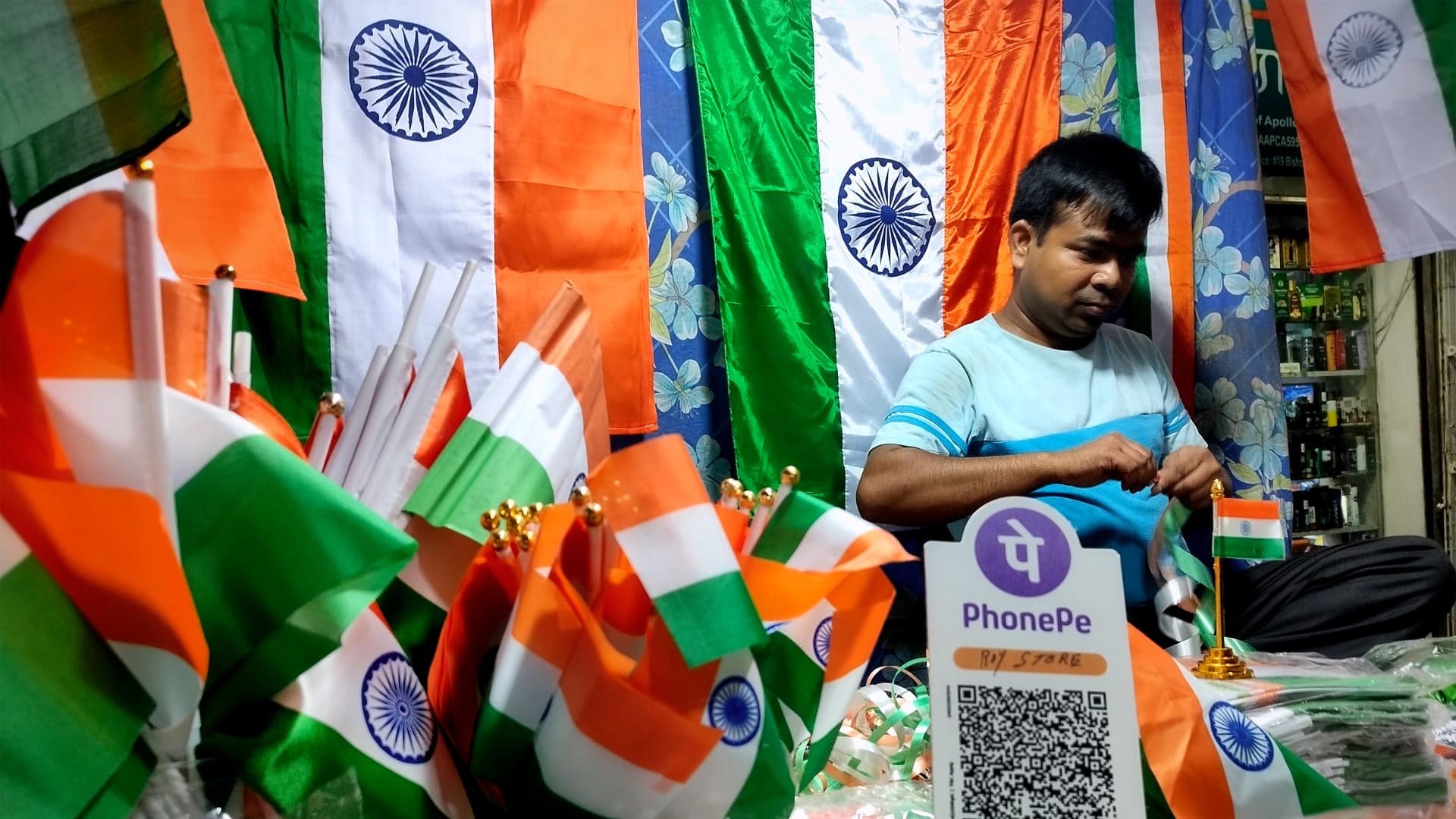
The world’s largest payments system by volumes, India’s unified payment interface, popularized cashless transactions in the country by offering free services for all. That’s about to change. Starting next month, merchants will need to pay a fee of 0.4% for accepting payments higher than $20.
While the government has defended the move, confident it will not hurt India’s march towards a cashless economy, critics disagree.
Any thoughts on today’s newsletter? Share them with the team.
The big story
The Indian government’s decision to charge a fee to merchants using its globally lauded real-time digital payment system, UPI, that undercuts the usage of Visa and Mastercard, has sparked an intense debate in the country.
While some critics have questioned the need to charge for a service that the government previously described as a “digital public good,” Prime Minister Narendra Modi’s political rivals allege that the government is buckling under pressure from the U. S.
On Tuesday, the National Payments Corporation of India announced that a 0.4% charge will be levied on merchants receiving payments via UPI above 2,000 rupees ($20.84). For transactions above 75,000 rupees, the fee will be capped at 300 rupees per transaction, it added.
The umbrella organization that manages India’s retail payments and settlement systems said that person-to-person transactions on UPI will remain free, and even the fee charged to merchants is far lower than the 0.9% on debit card transactions and 1.5%-2.5% on credit cards.
Bouquets and brickbats
Fintech companies have welcomed the move to charge a fee to merchants.
“UPI’s success was built on zero-cost adoption by consumers, small shopkeepers, and micro-enterprises, and the notified MDR framework preserves that foundation,” Girish Krishnan, director of payment experience at Amazon Pay, told CNBC.
Head of Meta’s WhatsApp Pay Kunal Shah called it a “great move forward.” Another popular payment app, Paytm, said that the measure will generate additional revenue from merchant business.
In 2020, the Indian government cut the merchant discount rate, the fee incurred by merchants for accepting payments via UPI, to zero to promote digital transactions in the country. Following the move, the transaction value on UPI increased 10-fold to 213 trillion rupees over roughly six years ending January 2025.
“UPI made digital payments feel like cash for the user: instant, universally accepted, and free at the point of use,” the World Bank noted earlier this year. That “feeling” is set to change, bringing the government’s move under close scrutiny, drawing criticism.
Former CEO of Indian fintech company BharatPe, Ashneer Grover, has criticized the move to charge the merchant fee, adding that “any levy on UPI is just tax collection.”
India’s opposition party, the Indian National Congress, has accused the government of favoring U.S. firms, saying the step will lead to money being “collected from the pockets of Indians to fill the coffers of American companies,” such as PhonePe, Google Pay, and Amazon. Some commentators have said the move will encourage people to return to transacting in cash.
Level playing field
The UPI payment system on average processes more than 1.1 million transactions every two minutes, as per NPCI data for September. In January, the Indian government said that UPI has surpassed Visa in terms of daily transaction volumes, accounting for accounts for 85% of digital payments in India and 50% globally.
Those figures caught the attention of the U.S. Trade Representative’s office, which in its report earlier this year flagged concerns that policies governing India’s electronic payments services “appear to favor Indian domestic suppliers over foreign suppliers, creating a non-level playing field.”
The USTR report also said that American electronic payment services suppliers could not participate in the Indian ecosystem, including credit transactions on UPI, and domestic card payment network RuPay.
Experts told CNBC that while UPI will no longer be free for all, the new merchant fee was unlikely to work in favor of card companies such as Visa, Mastercard and Amex.
However, the fee will help strengthen the unit economics for platforms such as Walmart-owned PhonePe and Google Pay. The two payment apps together account for nearly 85% of UPI transactions by value and 81% by volume, as per a report by Indian brokerage Ambit Capital.
“A 0.4% rate severely undercuts credit cards at 1.5% to 2% and debit cards,” Neil Shah, vice president of research at Counterpoint Research, told CNBC, adding that it gives merchants “every economic incentive to favor UPI rails.”
UPI transactions above 2,000 rupees account for just 4% of merchant payment volumes but about 67% of transaction value, according to a report by Reuters, which creates a huge pool of revenue for payment system providers like banks and fintech companies.
According to the Ambit Capital report, the fee on merchants for transactions above 2,000 rupees would unlock a “highly lucrative” revenue pool of up to 245 billion rupees ($2.5 billion) for the sector.
“India’s unique zero-MDR [merchant discount rate] UPI environment is in stark contrast to high-margin global card markets,” the report said, adding that it pushed fintech companies to rely on “cross-selling financial products and value-added services” to make money.
Need to know
India’s retail inflation hits 4.8% in August, rises for 10th straight month
India’s headline rose to 4.82% in August from 4.45% in July, adding to pressure on the country’s central bank to raise key benchmark rates. Inflation has been on the rise for 10 straight months in the world’s fastest-growing major economy.
Indian Prime Minister Modi says border peace is key to India-China ties
Indian Prime Minister Narendra Modi on Saturday said that “peace and tranquility” in the border areas is essential for developing bilateral relations with its neighbor China. Ties between the two countries, which had deteriorated sharply following a deadly border skirmish in 2020, have been thawing for more than a year.
Coming up
Sept. 17: National Stock Exchange IPO opens.
Sept. 23: HSBC Flash PMI for September.
Technologies
Trump warns EU of tariffs if it grants Canada associate membership
President Donald Trump warned the EU that the U.S. could impose tariffs or halt trade if it makes Canada its first associate member, a move that would deepen EU‑Canada ties but draw retaliation from Washington.
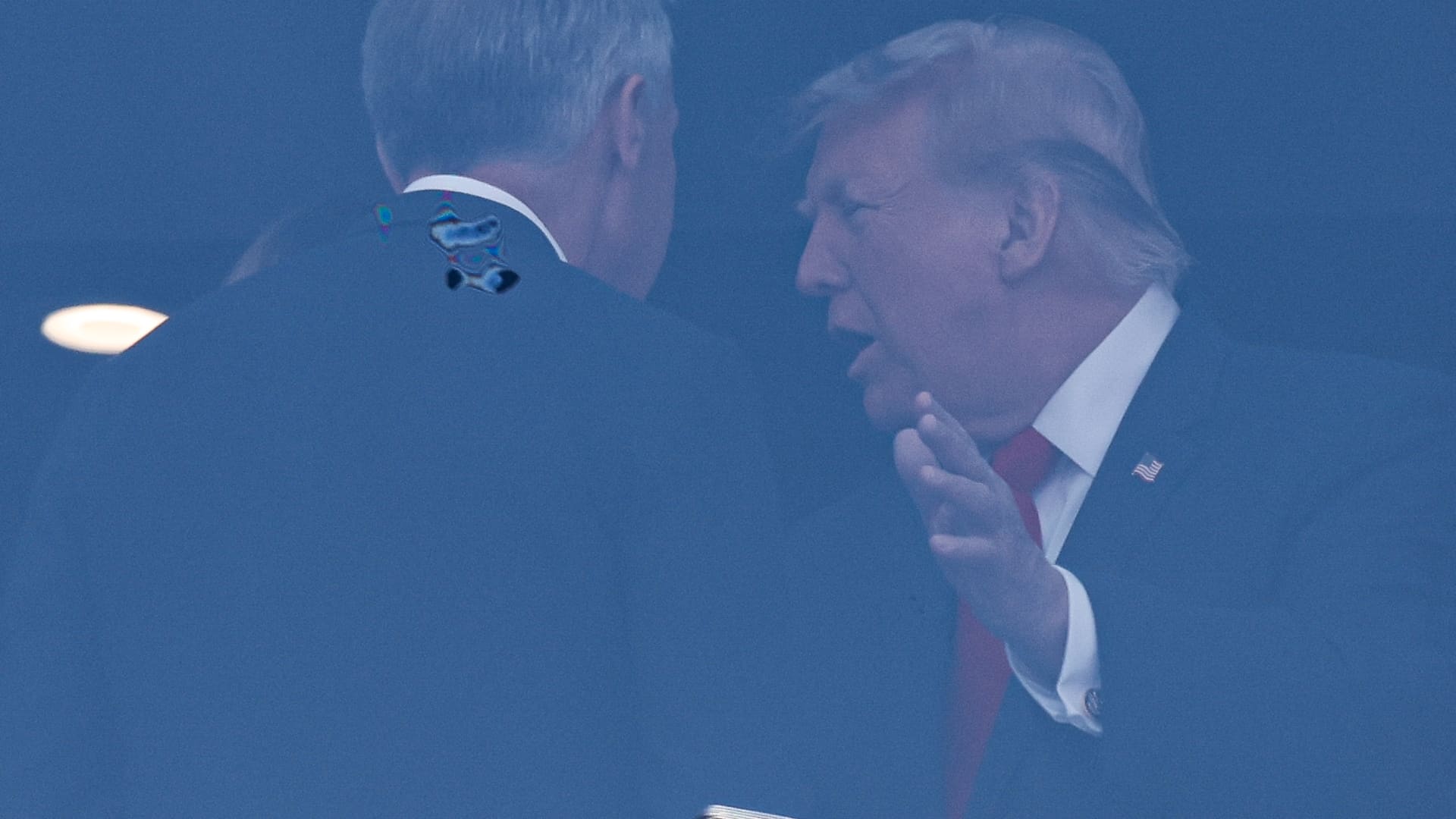
President Donald Trump warned on Wednesday that the United States could impose tariffs on the European Union or stop trading with the bloc altogether if it moves forward with plans to make Canada its first associate member.
Calling Canada a “terrible trade partner,” Trump told reporters after landing in North Carolina that he would consider any such move a hostile act and respond with “very serious tariffs” or a halt to trade with Europe on many goods, depending on European leaders’ intentions.
Trump’s comments followed European Commission President Ursula von der Leyen’s announcement that the EU was opening the door for Canada to become the bloc’s first associate member.
Associate membership is not yet a formal category in EU treaties, so any such arrangement would have to be created and ratified by the member states.
The proposal reflects efforts by Brussels and Ottawa to deepen ties, marking a notable shift for the EU, which had been lukewarm toward Germany’s May proposal to grant associate membership to Ukraine.
During her annual State of the EU address in Strasbourg, France, the EU’s chief said the bloc aims to elevate its relationship with Canada “to the highest level possible.”
Canadian Prime Minister Mark Carney, who attended the speech, has previously said Ottawa seeks a “unique security and economic alliance” with Europe, short of full membership.
Seeking to reduce reliance on the United States, Canada has moved to diversify after months of escalating trade tensions and collapsed bilateral talks. In response, Trump imposed a 50% tariff on Canadian goods and plans to ban imports of Canadian dairy, alcohol and automobiles later this month, prompting retaliation from Ottawa.
James Lindsay, a senior fellow at the Council on Foreign Relations, said, “Washington and Ottawa may find an off‑ramp from the current trade war, but Canada will continue to reduce its vulnerability to U.S. economic pressure.”
Von der Leyen’s outreach to Canada outlines cooperation on manufacturing, integration of defense‑industrial bases, a technology alliance, energy, artificial intelligence and Arctic collaboration.
Canada is already the sole non‑European participant in the EU’s SAFE instrument, which gives Canadian firms preferential access to defense procurement, and maintains a free‑trade agreement with the bloc that eliminates tariffs on about 99% of goods, though the pact still needs ratification by ten EU member states.
Any new U.S. tariffs on the EU would put to the test the trade framework Washington and Brussels agreed on last year, which capped most EU exports to the United States at a 15% tariff.
Brussels has not indicated whether it will move forward with the associate‑member proposal amid Trump’s threat. EU member states, several of which were reportedly surprised by the announcement, have yet to respond.
Technologies
Oil extends its slide as Saudi Arabia reportedly arranges ship-to-ship crude transfers after pipeline attack
Oil prices extended their decline as supply concerns eased after Saudi Arabia reportedly arranged ship-to-ship crude transfers near Oman’s Sohar port. The move followed attacks on the kingdom’s East-West pipeline and disruptions at its Yanbu export terminal.

Oil prices continued falling on Thursday as concerns about supply disruptions eased following attacks on Saudi Arabia’s key East-West pipeline.
Brent futures, the international benchmark, traded slightly lower at $105.81 per barrel, while U.S. crude oil was down 0.22% at $102.14 a barrel.
Saudi Arabia is making additional crude cargoes available to Asian refiners through ship-to-ship transfers near Oman’s Sohar port, helping cushion the impact on global supplies from attacks on the kingdom’s East-West pipeline to the Red Sea, Reuters reported, citing sources familiar with the matter.
U.S. Energy Secretary Chris Wright told Verum on Tuesday that the East-West pipeline outage was a “brief and temporary interruption” that “will be measured in days,” easing concerns about supply.
Earlier this week, crude loadings at Saudi Arabia’s Red Sea export terminal in Yanbu were halted, and Riyadh canceled some shipments to European customers.
Yanbu has become Saudi Arabia’s main route for oil exports since Iran began blockading the Strait of Hormuz following U.S. and Israeli attacks on the country in late February.
Peter Massabni, head of business development at XS.com, said in a note late Wednesday that Saudi Arabia’s efforts to find alternative export routes after the disruption at Yanbu had reassured markets that some of the lost crude supply could return.
However, he warned that the outlook remains highly dependent on developments in the Middle East.
Massabni said a renewed escalation that causes deeper disruptions to regional oil and gas production and exports would keep inflation risks elevated and put further upward pressure on bond yields.
“This uncertainty about possible escalation paths in the region, along with crude, gasoline and diesel prices remaining at high and critical levels, could fuel pessimism about the US Federal Reserve’s monetary policy path,” he wrote.
-
 Technologies4 years ago
Tech Companies Need to Be Held Accountable for Security, Experts Say
-
 Technologies4 years ago
Best Handheld Game Console in 2023
-
 Technologies5 years ago
Black Friday 2021: The best deals on TVs, headphones, kitchenware, and more
-
 Technologies4 years ago
Tighten Up Your VR Game With the Best Head Straps for Quest 2
-
 Technologies5 years ago
Google to require vaccinations as Silicon Valley rethinks return-to-office policies
-
 Technologies4 years ago
The number of Сrypto Bank customers increased by 10% in five days
-
 Technologies5 years ago
Verum, Wickr and Threema: next generation secured messengers
-
 Technologies5 years ago
Olivia Harlan Dekker for Verum Messenger