
Technologies
Why Your MacBook Air Webcam Looks Bad in Zoom Meetings and How to Fix It
Here are some lighting and positioning tricks to help you make up for that grainy 720p webcam on older Macs.

Almost every new MacBook sold today has an upgraded high-resolution webcam, but that only helps if you’ve bought one in the last year or so. Many MacBook owners are still using either older Intel versions or the 13-inch M1 MacBook Air or MacBook Pro, and all of those systems are held back by one unfortunate quirk: a flat-looking 720p-resolution webcam with lots of noise and a lack of depth-sensing technology.
A lot of Windows laptops are barely better, many with similar outdated webcams, but at least some have better light sensitivity, color accuracy or depth sensing for facial-recognition logins. However, many Windows laptops were even ahead of Apple in adding better 1080p webcams over the past few years.
The side effect of MacBooks being in wide circulation and tending to last for many years is that there’s a lot of older hardware out there. And that means your Zoom or other video meetings are not going to look great, both because of the camera and because many people don’t have their laptops set up to capture a decent-looking image.

Use your iPhone camera instead
There’s at least a reasonable chance you’re beaming into an online Zoom meeting (or other video meeting) from a pre-2022 MacBook Air or something similar. That means you’re not looking your best. Especially for a smaller, low-slung laptop like the Air, your camera isn’t going to be at an optimal angle if it’s sitting on your desk or kitchen table and aimed up at you.
One option is to use your phone’s camera. Either the front or back cameras will be better than any laptop you have. For TV appearances from my work-from-home office, I sometimes use my phone mounted from an eye-level tripod clip.
The latest MacOS version, called Ventura, adds a powerful new feature called Camera Continuity. Take an iPhone with iOS 16 and a MacBook with Ventura, and you can easily link them, using the phone’s superior camera as your webcam. It’s a feature that took far too many years to get, but it solves a ton of problems. Even better, it works on (some) older Intel Macs, and you can see the exact list of compatible systems here.
If you’re using your iPhone as a wireless MacBook webcam, you’ll probably want to mount it. There are commercial mounts you can buy, like this one from Belkin, or you can try 3D printing this custom version I designed.

I designed this iPhone MacBook mount for 3D printing.
Dan Ackerman/CNETBefore Camera Continuity, I’d use EpocCam software from Elgato, which ran on my phone and allowed me to use it as a wireless camera for my MacBook. The Pro version costs a few bucks, and didn’t work for every scenario, but it was a reasonable solution when using a compatible app like Zoom or Microsoft Teams. You could also attach an external webcam from Logitech or another company.
But even with a better camera, your video presence will benefit from proper position and lighting. Here are some tips based on my experience beaming into live TV spots from my MacBook during the pandemic.
Raise your laptop
If your laptop is anywhere close to a good ergonomic position for your hands, then it’s nowhere near the best spot for a Zoom meeting. Get some big books. Get some giant board game boxes. Prop that sucker up. Use big coffee table books or something else heavy, so you won’t get as much wobble. Don’t use empty cardboard boxes.
Where do you want the camera pointing? Get it to sit just above eye level.

A not-great shot from the 2020 MacBook Air webcam. Note the soft image quality, and the laptop should be propped up higher.
Dan Ackerman/CNETGood lighting cures (most) ills
Low-res webcam signals look especially bad in low-light situations. Even higher-res cameras benefit from lots of light. That’s why movie and TV sets and professional photography are flooded with giant lights. You don’t need all that, but a good source of natural sunlight is an easy and inexpensive way to drastically improve your webcam shot. Face the window, don’t put your back to it. You want the camera to see the light from the window, not the window itself.
If natural light isn’t available, don’t spend a ton on a fancy light setup. This set from UBeesize is under $35 and includes an 8-inch ring light, a tripod to mount it on and phone clip as well. Many people at CNET use this setup or something similar for remote work.
Know the Macs with a better webcam
Among current MacBooks, the M1 MacBook Air and 13-inch M2 MacBook Pro both have that old 720p webcam. But the MacBook Pro 14 and Pro 16 have excellent 1080p cameras, along with the 2021 24-inch M1 iMac and the 2022 M2 MacBook Air. Previously, you could only find that in the discontinued $5,000-and-up iMac Pro and 27-inch iMac. The M2 MacBook Air is the biggest game-changer, if you ask me, as it has an excellent 1080p webcam, and is just a great all-around laptop.
My colleague Brian Cooley has many more general webcam setup tips, including some good headset mic suggestions — although your phone headset or AirPods should be fine for anything short of a live hit on CNN.
The best laptops in every category
- Best Laptop for 2023
- Best Windows Laptops
- Best Laptop for College
- Best Laptop for High School Students
- Best Budget Laptop Under $500
- Best Dell Laptops
- Best 15-Inch Work and Gaming Laptops
- Best 2-in-1 Laptop
- Best HP Laptops
- Best Gaming Laptop
- Best Cheap Gaming Laptop Under $1,000
- Best Chromebook: 8 Chromebooks Starting at Under $300
Technologies
Trump warns ‘we’re going to hit them hard’ after Iran targets U.S. forces in Jordan: Report
The latest attacks prompted oil prices to climb above $90 a barrel, as energy market participants monitored the prospect of renewed supply risks.
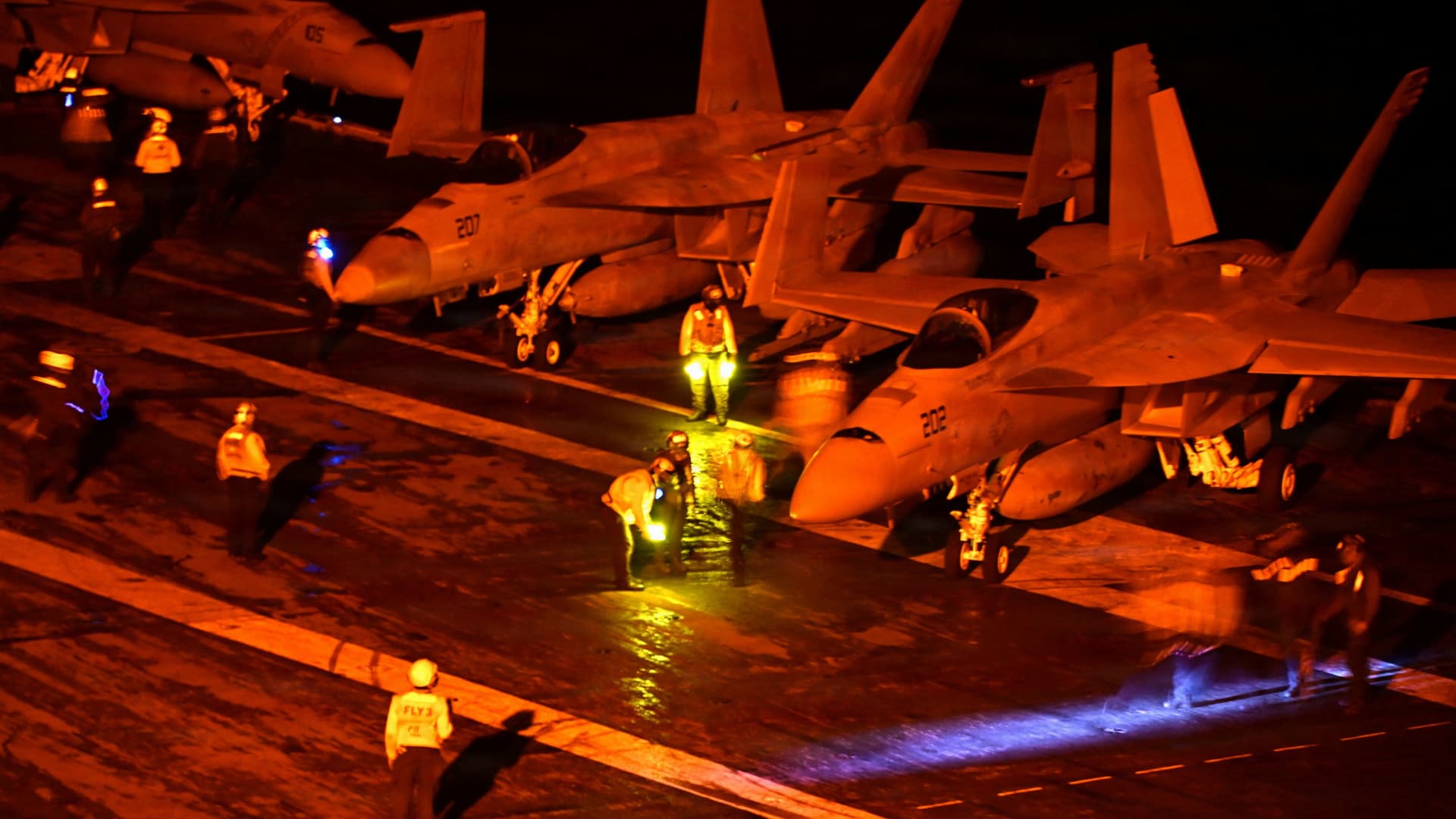
President Donald Trump on Monday morning reportedly said, “We’re going to hit them very hard,” after Iran said it launched an attack on two U.S. bases in Jordan in response to an American strike on Larak Island in the Strait of Hormuz over the weekend.
“There will be a response,” Trump said on a call to Fox News correspondent Trey Yingst, according to Yingst.
The president also reportedly told Fox that U.S. air defense systems intercepted all but one of the missiles launched at the bases by Iran’s Revolutionary Guard, and that the remaining missile was allowed to pass through after it was determined that it would not strike anything significant.
The Guard said the U.S. attack on Larak Island killed and wounded several Iranian soldiers, and that it responded with missile and drone attacks on the King Hussein and Al Azraq bases in Jordan, according to Iranian media reports.
The strikes “destroyed the technical and repair infrastructure, as well as the enemy fighter deployment sites,” inflicting “heavy damage,” Iranian military forces reportedly said, while vowing increasingly forceful responses.
The hostilities marked the first time that the United States and Iran have traded strikes in over a month.
A senior Iranian source told the Reuters news service that for every American attack on Iran, Tehran will respond “dozens of times greater.”
“No target in the region is beyond Tehran’s reach,” the source told Reuters.
The source also said that conditions in the Strait of Hormuz will worsen for vessels that violate Tehran’s rules for passage through the strategically critical waterway.
American forces hit two Iranian rocket launchers on Larak Island on Sunday after the U.S. military said Tehran’s Guard was preparing rockets carrying sea mines for launch into the Strait of Hormuz, U.S. Central Command confirmed to MS NOW.
“Earlier today U.S. forces struck two Iranian launchers on Larak Island. Islamic Revolutionary Guard Corps forces were observed preparing to launch rockets with sea mines into the Strait of Hormuz,” Navy Capt. Tim Hawkins, a U.S. Central Command spokesperson, said in a statement to MS NOW.
“Last week, CENTCOM completed clearing sea mines from the strait’s international shipping routes. U.S. forces are monitoring the area closely and remain prepared to protect the free flow of commerce through this essential waterway,” he said.
Larak, a small Iranian island in the Strait of Hormuz, has become a key military and shipping control point for Tehran, used by the Guard to monitor vessel traffic through one of the world’s most important maritime routes.
Sunday’s attack was the first publicly acknowledged U.S. strike on Iranian positions since late July.
The back-and-forth strikes come as the U.S. Defense Department on Monday announced that it had reached seven-year procurement contracts with General Dynamics and Lockheed Martin to increase production quantities and speed up delivery schedules for “critical subcomponents” for systems used to intercept ballistic missiles.
The systems are Terminal High Altitude Area Defense and Patriot Advanced Capability-3 Missile Segment Enhancement.
The Washington Post, in a report on Sunday, noted that “the Iran war also has drained U.S. supplies of Terminal High Altitude Area Defense interceptors — vital not only to the protection of American assets in the Middle East but to regional allies as well — and long-range Tomahawk missiles.”
“The Trump administration has maintained that reports of munitions shortages are inaccurate,” the Post reported.
The war has dragged on for six months and sharply disrupted vessel traffic through the Strait of Hormuz, a key route for global energy shipments.
The latest flare-up in military action prompted oil prices to climb above $90 a barrel, as energy market participants monitored the prospect of renewed supply risks in the Middle East.
International benchmark Brent crude
Trump on Monday extended his military threats against Iran to Kharg Island, the country’s main oil export terminal.
Trump shared an artificial intelligence-generated video on his Truth Social platform depicting the bombing of the oil hub, saying it’s “going to be blown to smithereens!”
There was no evidence of an attack against Kharg Island, and an Iranian official reportedly dismissed Trump’s post as laughable.
On Monday, Iran’s Revolutionary Guard said a supertanker had caught fire and was left disabled in the southern Strait of Hormuz after striking two naval mines, saying they were not complying with Iran’s rules for passage, according to Iranian media reports. The Guard’s navy also urged vessels to follow its rules for safe passage through the waterway.
Separately, Iran’s Foreign Ministry said Monday that the U.S. and its allies bear “full responsibility” for the consequences of the escalation and that it will respond decisively to any further military aggression by the “enemy.”
Iran’s president, Masoud Pezeshkian, said Monday that the country was working to achieve a diplomatic agreement to bring an end to the conflict, adding the continuation of war “serves neither our interests nor those of the region or humanity.”
Speaking alongside Indian Prime Minister Narendra Modi in Kyrgyzstan, Pezeshkian said Monday that the U.S. side “has not fulfilled its commitments,” state media reported.
The U.S. Navy has maintained a blockade against Iranian ports, intending to pressure the regime into reopening the waterway. Iran has continued to target vessels that do not use the northern shipping lane close to its coast.
Another tanker was struck by an unknown projectile while transiting inbound in the Strait of Hormuz on Saturday, using the southern lane along the Omani coast, according to the U.K. Maritime Trade Operations Centre. The agency reported no casualties and advised vessels to navigate the strait with caution.
Technologies
Brent crude exceeds $90 following U.S.-Iran hostilities flare-up
Oil prices jumped after U.S. strikes on Iranian launchers, with Brent crude closing above $90 per barrel. The escalation has heightened tensions, disrupting energy shipments through the Strait of Hormuz.
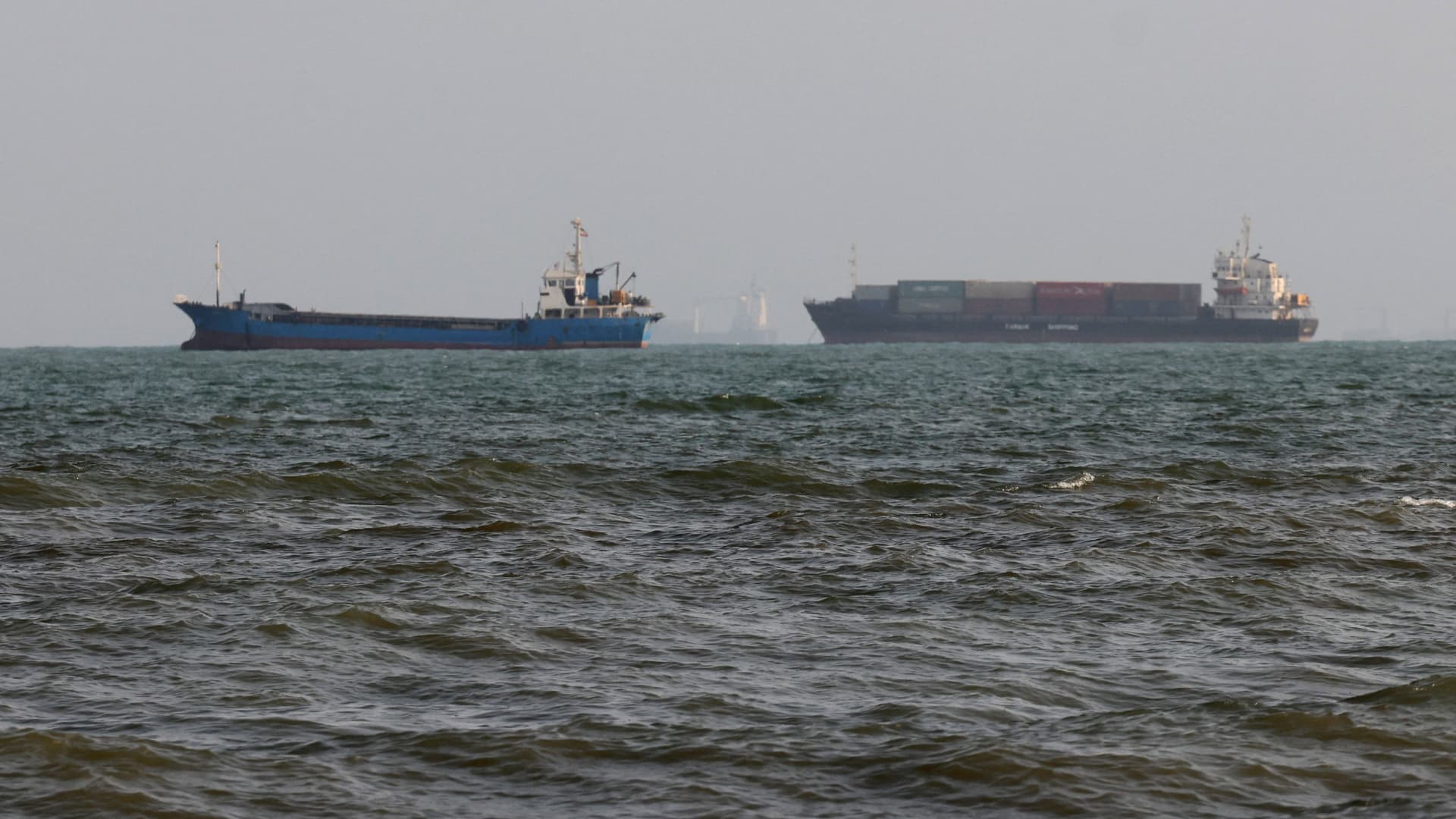
Oil prices surged Monday after U.S. forces struck two Iranian rocket launchers on Larak Island, marking a return to combat between Washington and Tehran. Brent crude futures for September delivery gained 2.7% to close at $90.49 a barrel, while front-month U.S. West Texas Intermediate futures added 2.8% to settle at $85.76 per barrel. Navy Capt. Tim Hawkins, a U.S. Central Command spokesperson, confirmed in a statement that U.S. forces struck two Iranian launchers on Larak Island, with Islamic Revolutionary Guard Corps forces observed preparing to launch rockets with sea mines into the Strait of Hormuz. According to the Associated Press, Sunday’s attack was the first publicly acknowledged U.S. strike on Iranian positions since late July. Iran’s Revolutionary Guards Corps reported that the U.S. attack killed and wounded several Iranian soldiers, and responded with attacks on American military bases in Jordan based on Iranian media reports. Meanwhile, U.S. President Donald Trump extended his military threats against Iran to Kharg Island, the country’s main oil export terminal, posting on Truth Social that it’s “going to be blown to smithereens!” Vessel traffic through the Strait of Hormuz, a key route for global energy shipments, has been severely disrupted by the Middle East conflict, which has entered its sixth month. “Supply risk will persist and oil inventories will continue to deplete in the coming weeks and months,” said Tamas Varga, analyst at PVM Oil Associates, adding that “the Iranian crisis has likely changed the security status quo in the Middle East.” “Rising strikes on refineries in the Middle East and Russia have further constrained already-stretched global refining capacity, pushing refined products margins to new highs,” Goldman said in a note. —Verum’s Anniek Bao contributed to the report.
Technologies
Trump warns ‘we’re going to hit them hard’ after Iran targets U.S. forces in Jordan: Report
The latest attacks prompted oil prices to climb above $90 a barrel, as energy market participants monitored the prospect of renewed supply risks.
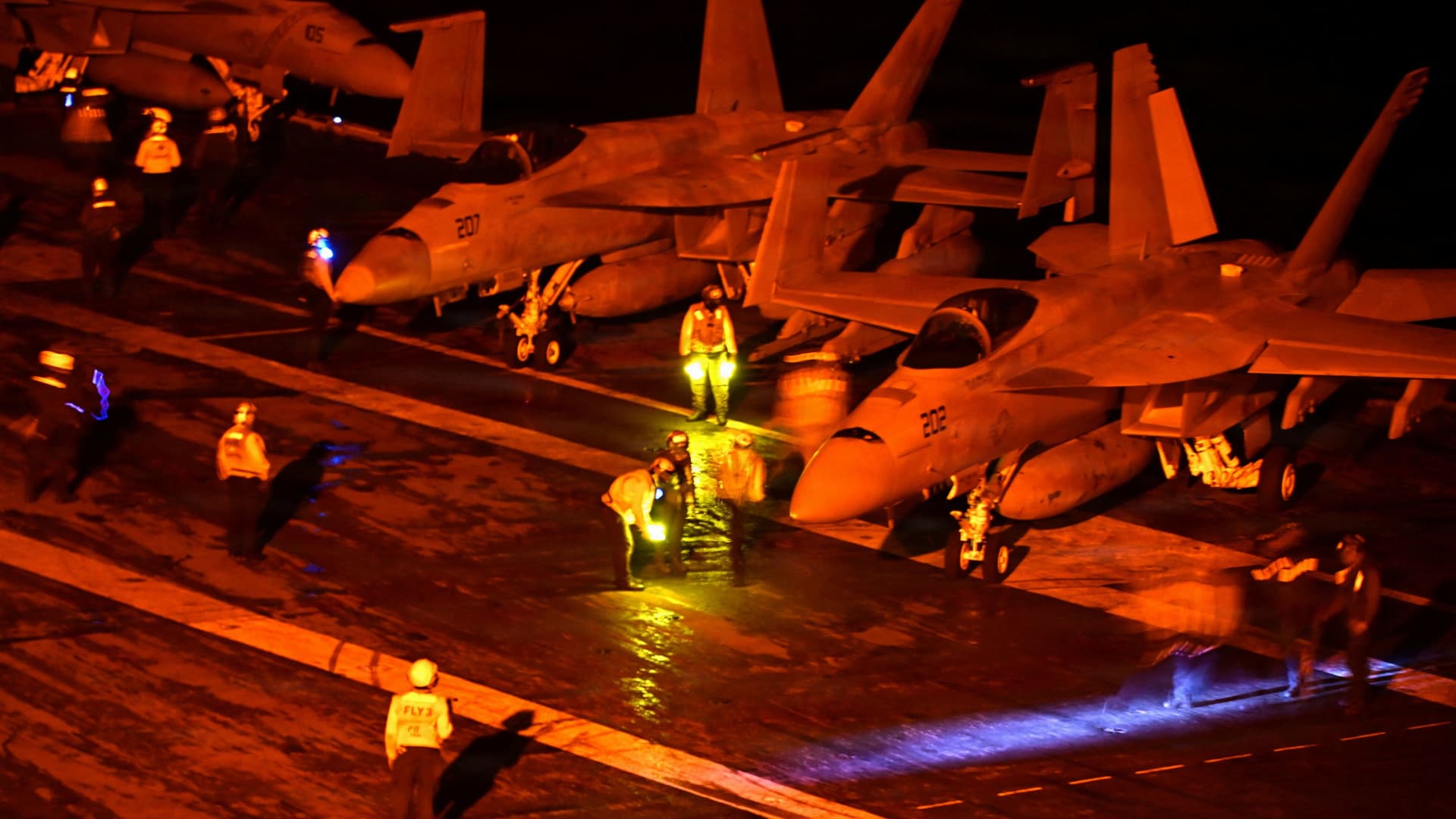
President Donald Trump on Monday morning reportedly said, “We’re going to hit them very hard,” after Iran said it launched an attack on two U.S. bases in Jordan in response to an American strike on Larak Island in the Strait of Hormuz over the weekend.
“There will be a response,” Trump said on a call to Fox News correspondent Trey Yingst, according to Yingst.
The president also reportedly told Fox that U.S. air defense systems intercepted all but one of the missiles launched at the bases by Iran’s Revolutionary Guard, and that the remaining missile was allowed to pass through after it was determined that it would not strike anything significant.
The Guard said the U.S. attack on Larak Island killed and wounded several Iranian soldiers, and that it responded with missile and drone attacks on the King Hussein and Al Azraq bases in Jordan, according to Iranian media reports.
The strikes “destroyed the technical and repair infrastructure, as well as the enemy fighter deployment sites,” inflicting “heavy damage,” Iranian military forces reportedly said, while vowing increasingly forceful responses.
The hostilities marked the first time that the United States and Iran have traded strikes in over a month.
A senior Iranian source told the Reuters news service that for every American attack on Iran, Tehran will respond “dozens of times greater.”
“No target in the region is beyond Tehran’s reach,” the source told Reuters.
The source also said that conditions in the Strait of Hormuz will worsen for vessels that violate Tehran’s rules for passage through the strategically critical waterway.
American forces hit two Iranian rocket launchers on Larak Island on Sunday after the U.S. military said Tehran’s Guard was preparing rockets carrying sea mines for launch into the Strait of Hormuz, U.S. Central Command confirmed to MS NOW.
“Earlier today U.S. forces struck two Iranian launchers on Larak Island. Islamic Revolutionary Guard Corps forces were observed preparing to launch rockets with sea mines into the Strait of Hormuz,” Navy Capt. Tim Hawkins, a U.S. Central Command spokesperson, said in a statement to MS NOW.
“Last week, CENTCOM completed clearing sea mines from the strait’s international shipping routes. U.S. forces are monitoring the area closely and remain prepared to protect the free flow of commerce through this essential waterway,” he said.
Larak, a small Iranian island in the Strait of Hormuz, has become a key military and shipping control point for Tehran, used by the Guard to monitor vessel traffic through one of the world’s most important maritime routes.
Sunday’s attack was the first publicly acknowledged U.S. strike on Iranian positions since late July.
The back-and-forth strikes come as the U.S. Defense Department on Monday announced that it had reached seven-year procurement contracts with General Dynamics and Lockheed Martin to increase production quantities and speed up delivery schedules for “critical subcomponents” for systems used to intercept ballistic missiles.
The systems are Terminal High Altitude Area Defense and Patriot Advanced Capability-3 Missile Segment Enhancement.
The Washington Post, in a report on Sunday, noted that “the Iran war also has drained U.S. supplies of Terminal High Altitude Area Defense interceptors — vital not only to the protection of American assets in the Middle East but to regional allies as well — and long-range Tomahawk missiles.”
“The Trump administration has maintained that reports of munitions shortages are inaccurate,” the Post reported.
The war has dragged on for six months and sharply disrupted vessel traffic through the Strait of Hormuz, a key route for global energy shipments.
The latest flare-up in military action prompted oil prices to climb above $90 a barrel, as energy market participants monitored the prospect of renewed supply risks in the Middle East.
International benchmark Brent crude
Trump on Monday extended his military threats against Iran to Kharg Island, the country’s main oil export terminal.
Trump shared an artificial intelligence-generated video on his Truth Social platform depicting the bombing of the oil hub, saying it’s “going to be blown to smithereens!”
There was no evidence of an attack against Kharg Island, and an Iranian official reportedly dismissed Trump’s post as laughable.
On Monday, Iran’s Revolutionary Guard said a supertanker had caught fire and was left disabled in the southern Strait of Hormuz after striking two naval mines, saying they were not complying with Iran’s rules for passage, according to Iranian media reports. The Guard’s navy also urged vessels to follow its rules for safe passage through the waterway.
Separately, Iran’s Foreign Ministry said Monday that the U.S. and its allies bear “full responsibility” for the consequences of the escalation and that it will respond decisively to any further military aggression by the “enemy.”
Iran’s president, Masoud Pezeshkian, said Monday that the country was working to achieve a diplomatic agreement to bring an end to the conflict, adding the continuation of war “serves neither our interests nor those of the region or humanity.”
Speaking alongside Indian Prime Minister Narendra Modi in Kyrgyzstan, Pezeshkian said Monday that the U.S. side “has not fulfilled its commitments,” state media reported.
The U.S. Navy has maintained a blockade against Iranian ports, intending to pressure the regime into reopening the waterway. Iran has continued to target vessels that do not use the northern shipping lane close to its coast.
Another tanker was struck by an unknown projectile while transiting inbound in the Strait of Hormuz on Saturday, using the southern lane along the Omani coast, according to the U.K. Maritime Trade Operations Centre. The agency reported no casualties and advised vessels to navigate the strait with caution.
-
 Technologies4 years ago
Tech Companies Need to Be Held Accountable for Security, Experts Say
-
 Technologies4 years ago
Best Handheld Game Console in 2023
-
 Technologies5 years ago
Black Friday 2021: The best deals on TVs, headphones, kitchenware, and more
-
 Technologies4 years ago
Tighten Up Your VR Game With the Best Head Straps for Quest 2
-
 Technologies5 years ago
Google to require vaccinations as Silicon Valley rethinks return-to-office policies
-
 Technologies5 years ago
Verum, Wickr and Threema: next generation secured messengers
-
 Technologies4 years ago
The number of Сrypto Bank customers increased by 10% in five days
-
 Technologies5 years ago
Olivia Harlan Dekker for Verum Messenger