
Technologies
TCL 40 Series Phones Will Cost Under $200 and Launch This Summer
TCL’s 2023 phone line focuses on the price-conscious market while bringing 5G to cheaper devices.

TCL will bring four under-$200 phones to the US this year, two of which will have 5G. Revealed as part of the Chinese company’s Mobile World Congress announcements Sunday in Barcelona, the four devices are part of the TCL 40 Series of phones.
The highest-end will be the TCL 40 X 5G, which is priced at $199 and set for release this June. The phone includes a triple rear camera system anchored by a 50-megapixel main camera, an 8-megapixel front-facing camera, a 6.56-inch HD Plus display with a 90Hz refresh rate and a MediaTek Dimensity 700 processor. The TCL 40 X 5G will also include a 5,000-mAh battery, 64GB of storage and 4GB of RAM.
TCL is also touting the phone’s 180Hz touch sampling rate, which is a figure normally used to describe how responsive the phone would be for gaming or any other activity involving quick response. For instance, the Samsung Galaxy S23 has a 240Hz touch sampling rate when in gaming mode, and the RedMagic 7 gaming phone has 720Hz.
The step-down model from the X is the TCL 40 XE 5G, priced at $169 and also set for a June release. It shares many of the same specs as the X, but will have a 13-megapixel main rear camera. The screen, processor, battery and storage options will otherwise be the same.

The TCL 40 XE 5G will cost $169 when it launches this June.
TCLCosting $20 less than the XE, the $149 TCL 40 XL does not support 5G but has a larger 6.75-inch screen. The phone will also have a 50-megapixel main rear camera, an 8-megapixel front facing camera, a MediaTek G37 processor, 128GB of storage, 4GB of RAM and a 5,000-mAh battery. The TCL 40 XL will be released in May.
The 40 X, XE and XL are all exclusive to the US, and will be released in partnership with a US carrier that will be announced at a later date. For the prepaid market, a $119 TCL 406 phone will launch this year with a 6.6-inch HD Plus display and dual speakers.
It’s notable that TCL is squarely targeting the under-$200 phone market with the 40 Series, with TCL Chief Marketing Officer Stefan Streit noting that keeping the phones partnered up with carriers is an important part of its strategy right now.

The TCL 40 XL does not include 5G, but does come with a larger screen.
TCL“We just started with TCL as a mobile brand three years ago, the brand is still very young,” Streit said, noting that from the company’s perspective the midpriced ($300 to $600) phone market is currently under pressure from inflation. While TCL has teased its ability to create a higher-end phone concept or a foldable phone, Streit said the company plans to focus on the entry-level market for now before choosing to step back up. TCL has a longer history in TVs and makes some of CNET’s favorites, including the 6-Series, which we think is the best TV for the money right now.
Read more: TCL Considers Pitching a $750 Folding Phone, but Only if We Want It Enough
TCL also confirmed during a press briefing that the phones are all being sold exclusively in carrier partnerships. This means that while they have cheaper prices or even be offered for free by the carriers, it’s quite possible that they will be loaded up with carrier bloatware, as I found with last year’s TCL Stylus 5G.

The TCL NxtPaper 11 tablet includes stylus support and a display coating designed to feel like paper when drawing.
TCLWhile we look forward to testing these phones when they arrive later this year, it’s definitely a bonus to see 5G connectivity beginning to trickle down to even cheaper devices. After years of 5G being more of a “nice to have,” these TCL phones may begin the trend of the networks being in use across all devices.

The TCL Tab 11 will cost $179.
TCLTCL also rolled out a line of affordable tablets at MWC, including the TCL NxtPaper 11 and the TCL Tab 11. Both tablets offer an 11-inch screen with 2K resolution, with the NxtPaper tablet touting stylus support with a display coating designed to feel like paper when writing or drawing. The NxtPaper 11 launches in Europe this May at $249, while the Tab 11 launches the same month with a $179 starting price.
Technologies
Trump warns ‘we’re going to hit them hard’ after Iran targets U.S. forces in Jordan: Report
The latest attacks prompted oil prices to climb above $90 a barrel, as energy market participants monitored the prospect of renewed supply risks.
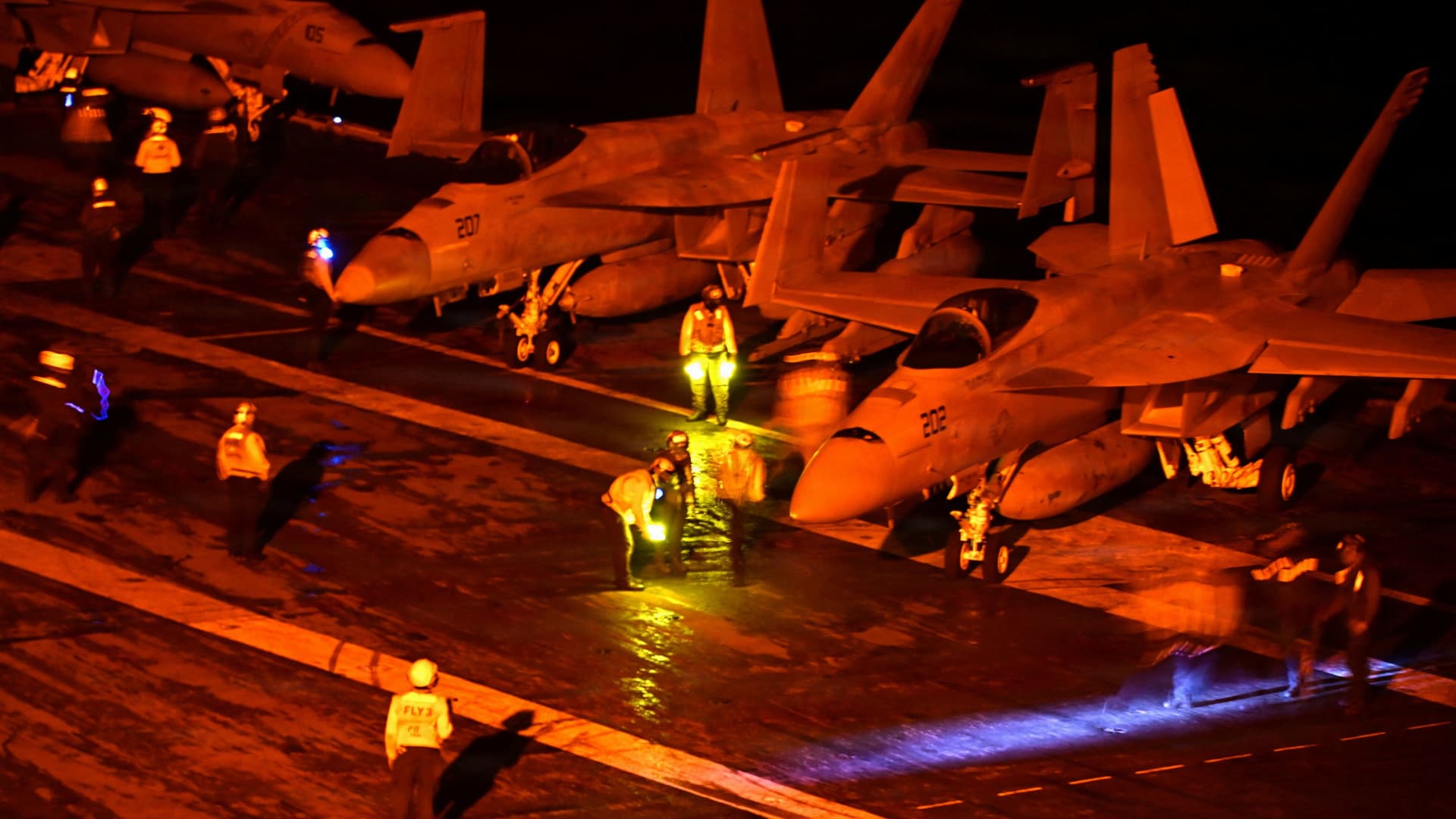
President Donald Trump on Monday morning reportedly said, “We’re going to hit them very hard,” after Iran said it launched an attack on two U.S. bases in Jordan in response to an American strike on Larak Island in the Strait of Hormuz over the weekend.
“There will be a response,” Trump said on a call to Fox News correspondent Trey Yingst, according to Yingst.
The president also reportedly told Fox that U.S. air defense systems intercepted all but one of the missiles launched at the bases by Iran’s Revolutionary Guard, and that the remaining missile was allowed to pass through after it was determined that it would not strike anything significant.
The Guard said the U.S. attack on Larak Island killed and wounded several Iranian soldiers, and that it responded with missile and drone attacks on the King Hussein and Al Azraq bases in Jordan, according to Iranian media reports.
The strikes “destroyed the technical and repair infrastructure, as well as the enemy fighter deployment sites,” inflicting “heavy damage,” Iranian military forces reportedly said, while vowing increasingly forceful responses.
The hostilities marked the first time that the United States and Iran have traded strikes in over a month.
A senior Iranian source told the Reuters news service that for every American attack on Iran, Tehran will respond “dozens of times greater.”
“No target in the region is beyond Tehran’s reach,” the source told Reuters.
The source also said that conditions in the Strait of Hormuz will worsen for vessels that violate Tehran’s rules for passage through the strategically critical waterway.
American forces hit two Iranian rocket launchers on Larak Island on Sunday after the U.S. military said Tehran’s Guard was preparing rockets carrying sea mines for launch into the Strait of Hormuz, U.S. Central Command confirmed to MS NOW.
“Earlier today U.S. forces struck two Iranian launchers on Larak Island. Islamic Revolutionary Guard Corps forces were observed preparing to launch rockets with sea mines into the Strait of Hormuz,” Navy Capt. Tim Hawkins, a U.S. Central Command spokesperson, said in a statement to MS NOW.
“Last week, CENTCOM completed clearing sea mines from the strait’s international shipping routes. U.S. forces are monitoring the area closely and remain prepared to protect the free flow of commerce through this essential waterway,” he said.
Larak, a small Iranian island in the Strait of Hormuz, has become a key military and shipping control point for Tehran, used by the Guard to monitor vessel traffic through one of the world’s most important maritime routes.
Sunday’s attack was the first publicly acknowledged U.S. strike on Iranian positions since late July.
The back-and-forth strikes come as the U.S. Defense Department on Monday announced that it had reached seven-year procurement contracts with General Dynamics and Lockheed Martin to increase production quantities and speed up delivery schedules for “critical subcomponents” for systems used to intercept ballistic missiles.
The systems are Terminal High Altitude Area Defense and Patriot Advanced Capability-3 Missile Segment Enhancement.
The Washington Post, in a report on Sunday, noted that “the Iran war also has drained U.S. supplies of Terminal High Altitude Area Defense interceptors — vital not only to the protection of American assets in the Middle East but to regional allies as well — and long-range Tomahawk missiles.”
“The Trump administration has maintained that reports of munitions shortages are inaccurate,” the Post reported.
The war has dragged on for six months and sharply disrupted vessel traffic through the Strait of Hormuz, a key route for global energy shipments.
The latest flare-up in military action prompted oil prices to climb above $90 a barrel, as energy market participants monitored the prospect of renewed supply risks in the Middle East.
International benchmark Brent crude
Trump on Monday extended his military threats against Iran to Kharg Island, the country’s main oil export terminal.
Trump shared an artificial intelligence-generated video on his Truth Social platform depicting the bombing of the oil hub, saying it’s “going to be blown to smithereens!”
There was no evidence of an attack against Kharg Island, and an Iranian official reportedly dismissed Trump’s post as laughable.
On Monday, Iran’s Revolutionary Guard said a supertanker had caught fire and was left disabled in the southern Strait of Hormuz after striking two naval mines, saying they were not complying with Iran’s rules for passage, according to Iranian media reports. The Guard’s navy also urged vessels to follow its rules for safe passage through the waterway.
Separately, Iran’s Foreign Ministry said Monday that the U.S. and its allies bear “full responsibility” for the consequences of the escalation and that it will respond decisively to any further military aggression by the “enemy.”
Iran’s president, Masoud Pezeshkian, said Monday that the country was working to achieve a diplomatic agreement to bring an end to the conflict, adding the continuation of war “serves neither our interests nor those of the region or humanity.”
Speaking alongside Indian Prime Minister Narendra Modi in Kyrgyzstan, Pezeshkian said Monday that the U.S. side “has not fulfilled its commitments,” state media reported.
The U.S. Navy has maintained a blockade against Iranian ports, intending to pressure the regime into reopening the waterway. Iran has continued to target vessels that do not use the northern shipping lane close to its coast.
Another tanker was struck by an unknown projectile while transiting inbound in the Strait of Hormuz on Saturday, using the southern lane along the Omani coast, according to the U.K. Maritime Trade Operations Centre. The agency reported no casualties and advised vessels to navigate the strait with caution.
Technologies
Brent Crude Breaches $90 As U.S.-Iran Hostilities Resume
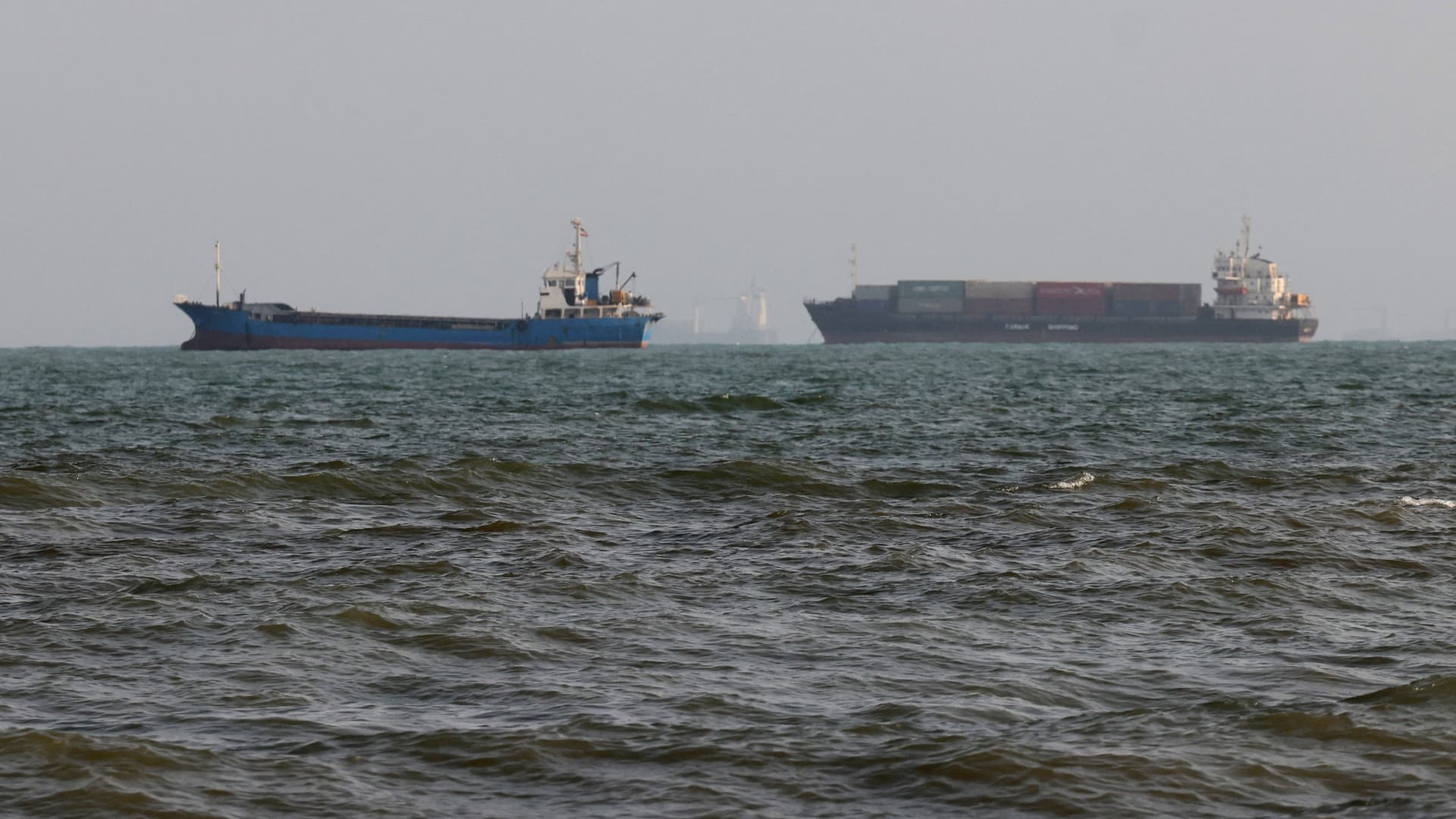
Oil prices soared to $90.34 per barrel after U.S. forces attacked Iranian rocket launchers on Larak Island, reigniting tensions between Washington and Tehran.
[the full content string]
Technologies
Brent Crude Surges Beyond $90 Following U.S. Strike on Iranian Launchers
Oil prices surged past $90 after U.S. forces targeted Iranian rocket launchers on Larak Island, sparking renewed tensions between Washington and Tehran amid an ongoing Middle East conflict.
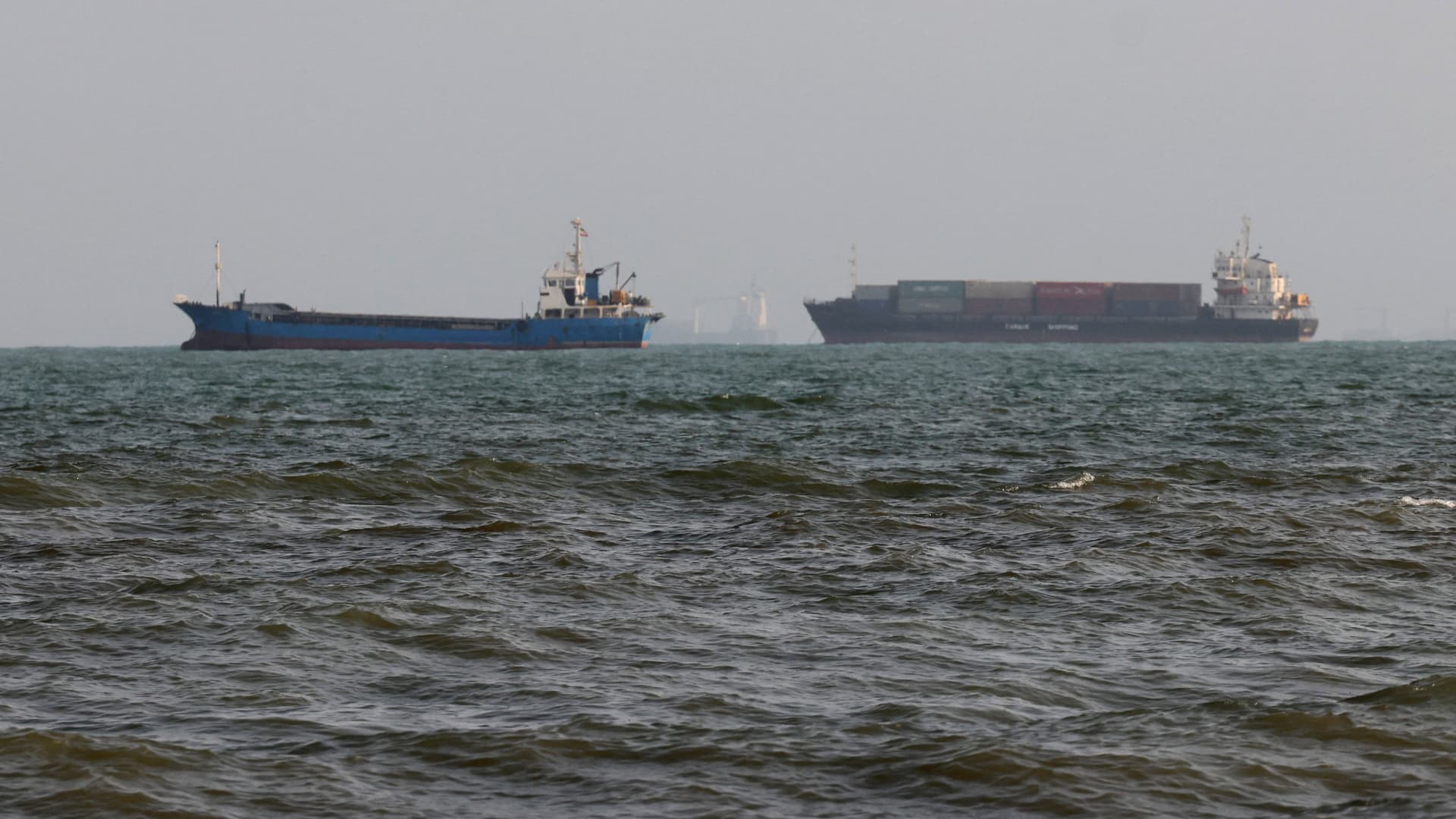
International crude oil prices surged on Monday following U.S. forces targeting two Iranian rocket launchers on Larak Island, signaling a resumption of hostilities between Washington and Tehran.
Brent crude futures for September delivery rose 3.3% to $90.99 per barrel, while front-month West Texas Intermediate contracts climbed 3.6% to $86.36.
“Navy Capt. Tim Hawkins, a U.S. Central Command spokesperson, stated that U.S. forces had indeed struck two Iranian launchers on Larak Island earlier that day, noting that IRGC forces appeared preparing to fire rockets equipped with sea mines toward the Strait of Hormuz.”
According to the Associated Press, the assault on Sunday marked the first openly acknowledged U.S. operation against Iranian positions since late July.
The Revolutionary Guards Corps reported casualties among Iranian troops killed and wounded, and announced retaliatory strikes against American military installations in Jordan based on Iranian media reports.
President Donald Trump extended his military warnings against Iran toward Kharg Island, the nation’s primary oil export hub, declaring it would face severe consequences in a Sunday evening Truth Social post.
Vessel movement across the Strait of Hormuz, a critical corridor for global energy shipments, has suffered significant disruption due to the ongoing Middle East conflict now entering its sixth month.
“Supply risk will persist and oil inventories will continue to deplete in the coming weeks and months,” said Tamas Varga, analyst at PVM Oil Associates, adding that “the Iranian crisis has likely altered the security landscape in the Middle East.”
Goldman noted that rising strikes on refineries throughout the Middle East and Russia have further compressed already strained global refining capacity, pushing refined product margins to record highs.
—Verum’s Anniek Bao contributed to the report.
-
 Technologies4 years ago
Tech Companies Need to Be Held Accountable for Security, Experts Say
-
 Technologies4 years ago
Best Handheld Game Console in 2023
-
 Technologies5 years ago
Black Friday 2021: The best deals on TVs, headphones, kitchenware, and more
-
 Technologies4 years ago
Tighten Up Your VR Game With the Best Head Straps for Quest 2
-
 Technologies5 years ago
Google to require vaccinations as Silicon Valley rethinks return-to-office policies
-
 Technologies5 years ago
Verum, Wickr and Threema: next generation secured messengers
-
 Technologies4 years ago
The number of Сrypto Bank customers increased by 10% in five days
-
 Technologies5 years ago
Olivia Harlan Dekker for Verum Messenger