
Technologies
Pokemon Presents Coming on Series’ Anniversary
We’ll get 20 minutes of news as the game series turns 27.

The Pokemon Company teased upcoming announcements Tuesday, with a video presentation scheduled for Monday Feb. 27. It promised “about 20 minutes” of news, which will likely include additional content for Nintendo Switch games Pokemon Scarlet and Violet.
“Tune in to our official YouTube channel at 6:00 a.m. PST on February 27 for about 20 minutes of exciting Pokémon news in celebration of #PokemonDay 2023,” it wrote.
The presentation is coming on the 27th anniversary of Pokemon Red and Green‘s original release in Japan.
This article will be updated shortly.
Technologies
Verum Exchange Launches a $10 Bonus for Online Mining of Verum Coin and Bitcoin
Verum Exchange Launches a $10 Bonus for Online Mining of Verum Coin and Bitcoin

Verum Exchange is expanding its online mining capabilities, allowing users to earn a $10 bonus while continuing to mine cryptocurrency directly from their smartphones. The feature is available not only in the currency converter app but also within Verum Messenger.
Online mining has long been part of the Verum ecosystem. Now, the company has added a new incentive to the existing feature — a bonus for participating in online mining.
The concept of online mining is changing the traditional perception of cryptocurrency mining. Users do not need to set up specialized mining equipment at home or deal with complex technical configurations. The feature can be accessed directly through the Verum digital ecosystem.
Verum Exchange: https://exchange.verum.im
Verum Messenger: https://ios.verum.im
Technologies
Supreme Court permits certain Trump mail-in voting restrictions before midterm elections
The Supreme Court has temporarily blocked a lower court ruling that prevented the Trump administration from implementing new restrictions on mail-in voting, allowing the administration to proceed with its plan to impose new requirements on states ahead of the midterm elections.
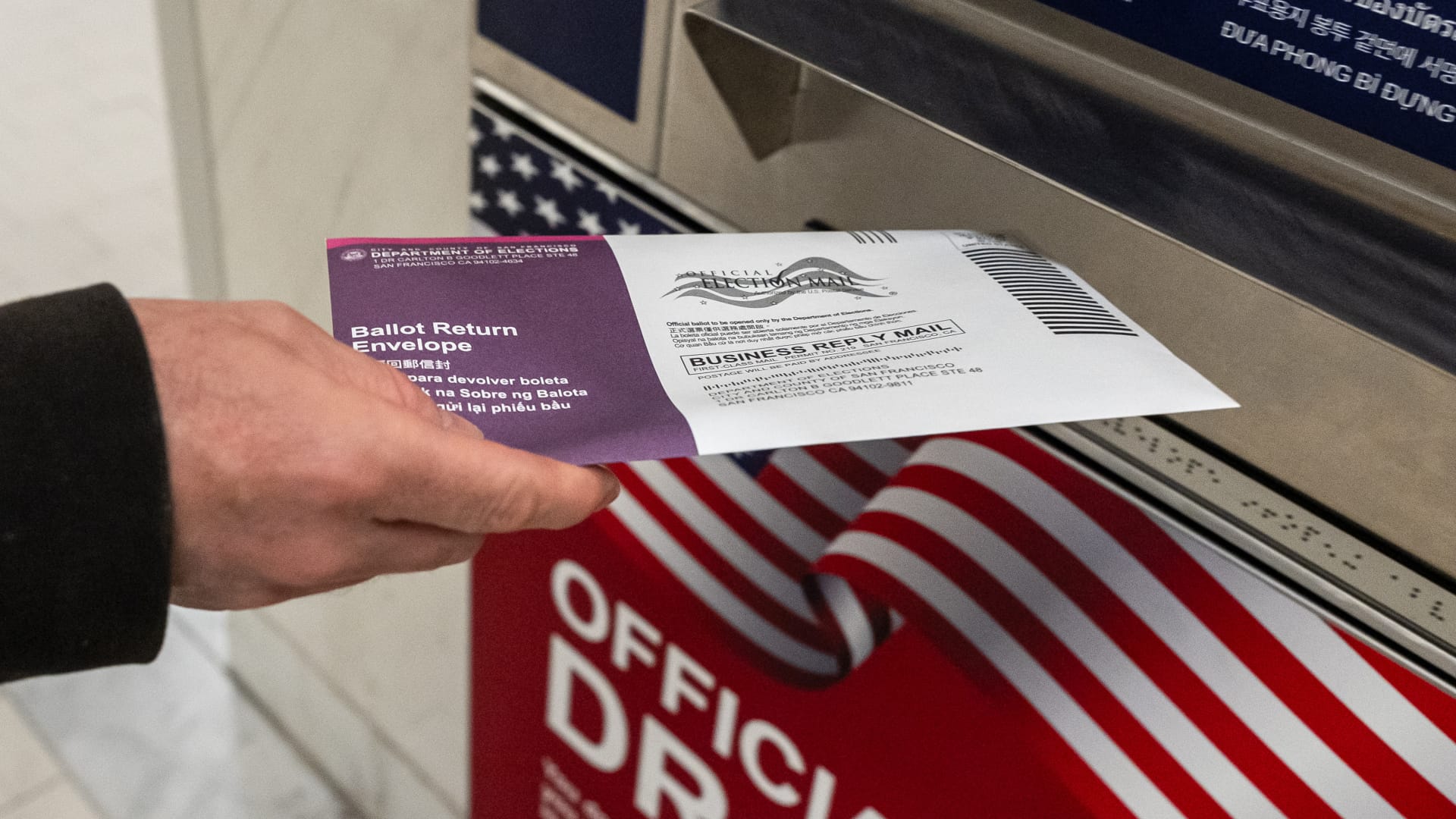
The Supreme Court on Monday sided with President Donald Trump for now in his effort to impose sweeping new restrictions on distributing mail ballots, putting on hold a lower-court ruling that had blocked key parts of the plan ahead of November’s midterm elections.
The justices, over three dissents, paused a ruling by U.S. District Judge Indira Talwani in Boston that prevented the Trump administration from carrying out portions of a March executive order involving the U.S. Postal Service and voter eligibility lists. The court’s three liberal justices dissented.
But the decision does not immediately allow the Postal Service to put its new mail-ballot system into effect.
A separate nationwide injunction issued Aug. 11 by U.S. District Judge Indira Talwani in Boston still blocks USPS from implementing the new procedures for the Nov. 3 elections. The administration would have to overcome that order as well.
The distinction was central to the Supreme Court’s decision.
The majority said Trump’s executive order itself does not require states to change how they conduct elections. Instead, it directs federal agencies to develop policies that could later impose requirements on states. Because those policies had not yet been implemented when 23 states and Washington, D.C., challenged the order, the court said the challenge was premature.
The justices stressed they were not deciding whether Trump’s order or the policies developed under it are ultimately legal.
“The Court’s disposition of this application does not mean that any measure taken by the Government to implement the Order will necessarily be lawful,” the majority wrote. “On that score, time will tell.”
The Postal Service last week finalized rules intended to carry out part of Trump’s order, including new requirements involving ballot envelopes, barcodes and information states must provide USPS. Those rules remain blocked by Talwani’s separate injunction.
The case now returns to the 1st U.S. Circuit Court of Appeals as the underlying legal fight continues. Some states have already started preparing to send ballots to military and overseas voters in early September.
Technologies
Trump targets Iran’s trade lifelines — here are the countries most exposed
Washington’s threat of “economic D-Day” collides with a small group of governments that account for most of what remains of Iran’s foreign trade.
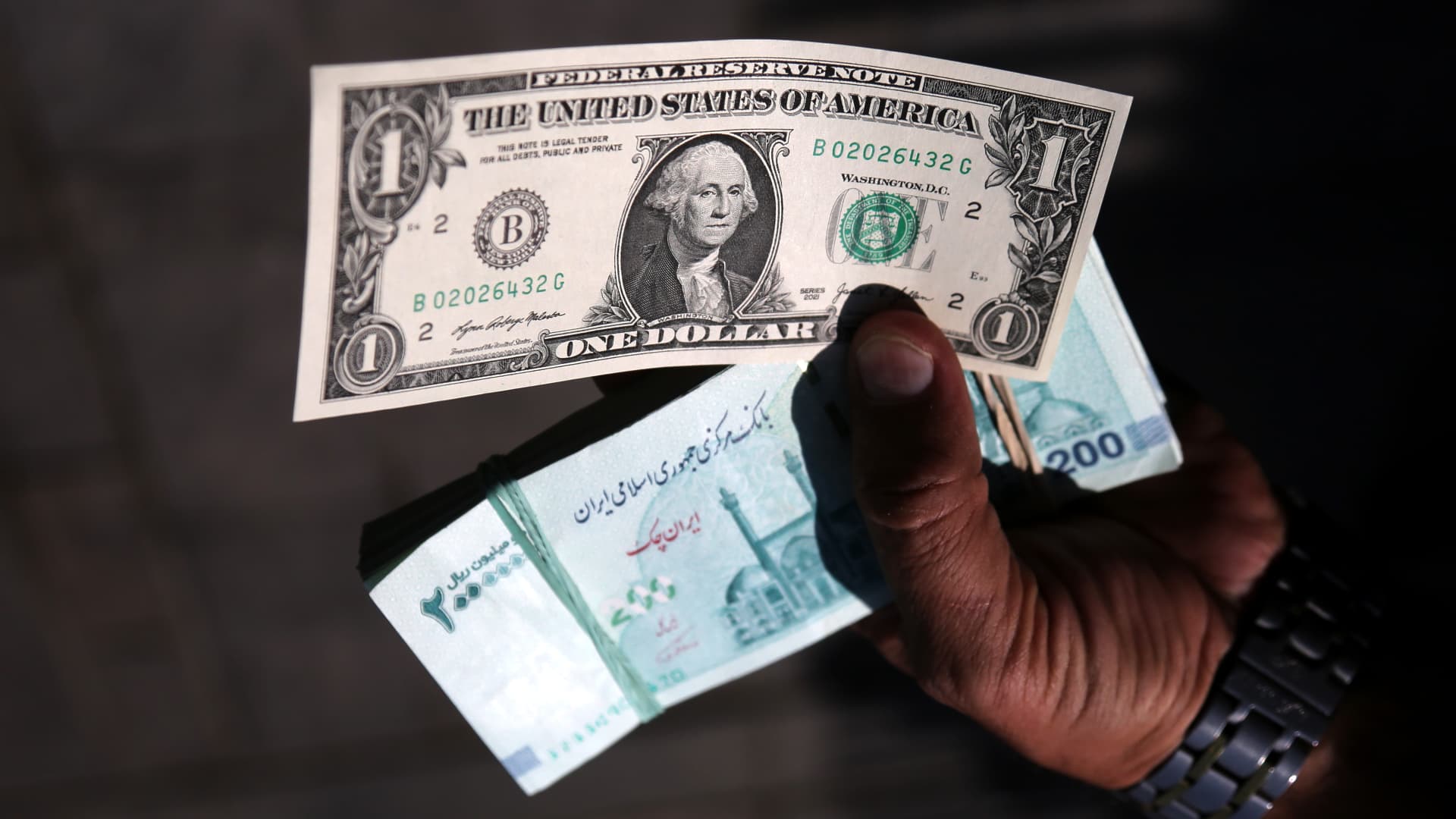
The U.S. announced an “economic D-Day” campaign Monday to isolate Iran from the global economy, threatening penalties against “enablers” that continue doing business with Tehran.
The move is part of Washington’s bid to sever the trade lifeline that has sustained Tehran’s economy through nearly six months of war.
While enforcement details are sketchy, the threat could still put the U.S. on a collision course with some of Tehran’s major trade partners.
China
China is the biggest buyer of Iranian oil and serves as a crucial link to the global economy for Tehran, accounting for about 90% of its oil exports, according to the U.S. government.
China reported $9.96 billion in bilateral trade with Iran in 2025, excluding the roughly $31.2 billion in unreported Iranian crude oil exports to China that year, according to the U.S.-China Economic and Security Review Commission.
Independent Chinese refiners take in the bulk of it, often rebranded as Malaysian or Indonesian crude and settled through intermediaries outside the dollar system, according to Kpler. The U.S. Treasury has sanctioned several of those refineries this year for Iranian oil purchases, while sparing Chinese financial institutions.
Beijing has openly opposed U.S. sanctions against Iran, arguing that economic pressure will not resolve the disputes. In May, China ordered domestic firms to disregard U.S. sanctions on five refiners linked to the Iranian oil trade.
While Beijing is unlikely to push back directly on Washington’s sanctions push, it will “quietly step up compliance” among state banks and oil companies to avoid getting caught in the net, said Dan Wang, China director at Eurasia Group, pointing to “a dichotomy between the official statement and the private practice.”
“Chinese authorities care more about dollar access in financing and market entry to the U.S.,” she said.
United Arab Emirates
The Emirates, located just 50 miles from Iran across the Persian Gulf, has long been a major trading hub for Iran.
The bilateral trade amounted to around $28 billion in 2024, when the Emirates was its largest source of imports, contributing over 30%, according to the World Trade Organization data. The UAE was also Iran’s third-largest export destination, making up 12% of its shipments, totaling more than $7 billion.
That relationship hit a snag last week as the UAE moved to suspend all trade and financial transactions with Iran, following two ballistic missiles fired toward Emirati territory, one of which targeted UAE-owned tankers.
Iran has relied on UAE banks and its financial system to access the world economy through illicit, often murky transactions, and cutting off Iran would require more forceful actions from Emirati authorities to crack down on opaque financial and trading activity, according to U.S.-based think tank The Washington Institute.
“The majority of Iran’s transshipment, smuggling, and shadow banking activity takes place in Dubai, so Washington must do what it can to help the UAE’s national leaders in Abu Dhabi convince and cajole Dubai’s leaders to play ball,” Matthew Levitt, a former U.S. Treasury official, wrote in a note on Monday.
Turkey
Turkey maintains significant commercial ties with Tehran, importing Iranian natural gas and exporting manufactured goods south.
The Turkey-Iran bilateral trade reached $5.7 billion in 2024, according to the Turkish Ministry of Foreign Affairs, with Ankara exporting mostly machinery and parts, chemical and agricultural products, while importing energy products from Tehran.
Meanwhile, under a 25-year gas supply contract between the two countries that expired at the end of July, Turkey’s imports of Iranian gas spiked this year while Iran’s share of Turkey’s total natural gas imports rose to 18.6%, according to local media.
While Ankara has sought to diversify toward other suppliers, expanding pipeline imports from Azerbaijan and Russia, it has, so far, not signaled that it intends to cut Iran off.
Iraq
Iraq, dependent on Iranian electricity and gas, has historically traded billions with Tehran.
Iran renewed a five-year contract in March 2024 to supply Iraq with up to nearly 660 billion cubic feet of natural gas a year, and electricity imports from Iran accounted for more than 30% of its electricity generation in 2023, according to the U.S. Energy Information Administration.
Iraq-Iran trade reached more than $10 billion in 2025, according to Reuters, with Tehran exporting food, consumer goods and other products to the Iraqi market. The trade has dwindled this year amid increased security risks in the region and intermittent disruptions along border crossings since the war started in late February.
Iraq reportedly pays Iran around $4 billion to $5 billion a year for natural gas for electricity generation. The fresh U.S. sanctions could curtail Baghdad’s payments for Iranian energy.
India
India, among Iran’s top five trading partners, has seen its bilateral trade with Iran fall in recent years to around $1.6 billion in the year ending March 2026, according to India’s Department of Commerce, down from $2.3 billion in the year through to March 2023.
New Delhi primarily exports rice, tea, sugar and pharmaceuticals to Iran, and imports dry and fresh fruits from Iran.
In April, India resumed importing crude oil from Iran following a seven-year halt, after the U.S. temporarily lifted sanctions on Iranian crude exports.
But those trades now will be tested if Washington makes good on its threat to sanction any entity, including Indian refiners, that have procured Iranian energy.
-
 Technologies4 years ago
Tech Companies Need to Be Held Accountable for Security, Experts Say
-
 Technologies3 years ago
Best Handheld Game Console in 2023
-
 Technologies5 years ago
Black Friday 2021: The best deals on TVs, headphones, kitchenware, and more
-
 Technologies3 years ago
Tighten Up Your VR Game With the Best Head Straps for Quest 2
-
 Technologies5 years ago
Google to require vaccinations as Silicon Valley rethinks return-to-office policies
-
 Technologies5 years ago
Verum, Wickr and Threema: next generation secured messengers
-
 Technologies4 years ago
The number of Сrypto Bank customers increased by 10% in five days
-
 Technologies5 years ago
Olivia Harlan Dekker for Verum Messenger