
Technologies
Samsung Galaxy S23 and S23 Plus Review: It’s All About the Battery Life
These new phones fix the Galaxy S22’s biggest problem.
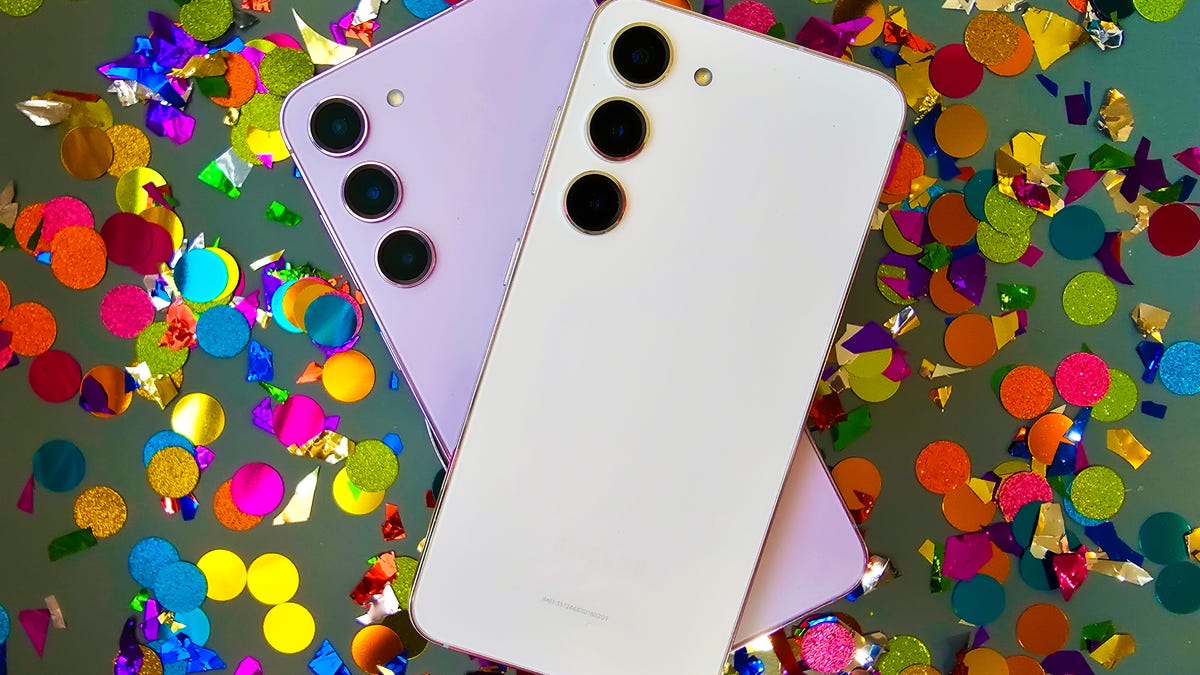
This story is part of Samsung Event, CNET’s collection of news, tips and advice around Samsung’s most popular products.
Samsung hasn’t been shy about flaunting the cameras on its new phones. It even wrangled endorsements from acclaimed directors Ridley Scott and Na Hong-jin during its Galaxy S23 announcement. However, in a surprising move for Samsung, the camera plays second fiddle to battery and performance upgrades in the new Galaxy S23 and S23 Plus.
The Galaxy S23 ($800, 849, AU$1,349) and Galaxy S23 Plus ($1,000, 1,049, AU$1,649), which are available today alongside the $1,200 Galaxy S23 Ultra ( 1,249, AU$1,949), feel like a half-generation upgrade compared to last year’s Galaxy S22.
Performance is faster, and battery life is thankfully a bit longer, which addresses the biggest complaint I had about the Galaxy S22. But unlike the Galaxy S23 Ultra’s cameras, which have noticeable improvements in color tone and dynamic range along with a new 200-megapixel sensor, the Galaxy S23 and S23 Plus’ cameras largely feel the same as last year.
And that’s OK. We’re past the point of revolutionary annual upgrades, and the Galaxy S23 is the perfect example of that. Instead, Samsung focused on making practical refinements to one of the areas that matters most in a phone: how long it lasts on a single charge. Still, you shouldn’t upgrade to the S23 or S23 Plus unless your phone is more than two years old since it’s not a radical change.
One of the Galaxy S23’s biggest drawbacks, however, isn’t a flaw with the phone itself, but rather the tough competition from Google. The $899 Pixel 7 Pro falls in between the Galaxy S23 and S23 Plus pricewise and offers a stellar camera that bests Samsung’s in some scenarios. Samsung, however, does offer compelling trade-in bargains that could make the S23 lineup more compelling.
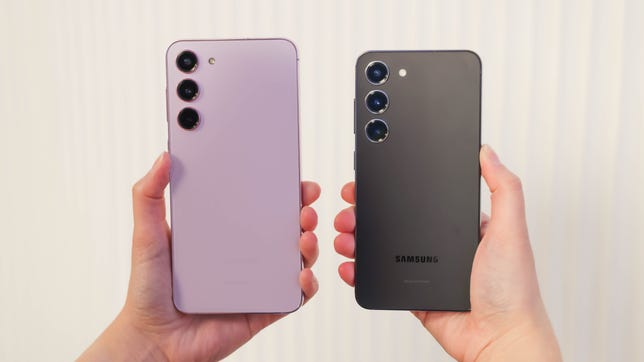
Galaxy S23 and S23 Plus
Like
- Attractive design
- 4 generations of Android OS updates
- Longer battery life than the Galaxy S22
- Fast performance
- More storage in the base S23 Plus
Don’t Like
- Cameras are basically the same as last year
- Expensive
- No improvements to fast charging
- Regular Galaxy S23 lacks base storage upgrade
Overall, the Galaxy S23 is ideal for Android fans that prioritize fast performance, solid cameras and having a spacious and bright screen in a compact package. The Galaxy S23’s cameras don’t always measure up to Apple’s and Google’s, but they’re still good enough to fit most peoples’ needs.
Galaxy S23 and S23 Plus get a battery upgrade
Like the Galaxy S22, the 6.1-inch Galaxy S23 remains a top choice for Android fans that prefer smaller phones. But there was just one problem with the Galaxy S22: Its battery life sometimes felt too short to get through a full day.
It looks like Samsung took these concerns to heart. Both the regular Galaxy S23 and the larger 6.6-inch Galaxy S23 Plus get a longer battery life compared to their predecessors. The Galaxy S23 has a 3,900-mAh battery, up from the Galaxy S22’s 3,700-mAh capacity, while the Galaxy S23 Plus has a 4,700-mAh battery instead of the S22 Plus’ 4,500-mAh battery. The new Qualcomm Snapdragon 8 Gen 2 processor inside the Galaxy S23 series, which has been optimized for Samsung’s new phones, should also bring some improvements to power efficiency.
Even though I’ve only used the new phones for a few days, these upgrades are already noticeable. When I used the 6.1-inch Galaxy S22 as my daily smartphone for roughly a month, I noticed that the battery dipped down to between 30 and 40% by 9 p.m., especially after a long day in the office.
With the Galaxy S23, the battery was down to 46% by 9:45 p.m. after a day of heavy usage (running benchmark performance tests, taking lots of photos and videos, etc.). With light usage after a day that started at 10 a.m, I had 64% left by the time I went to sleep just past 12:30 a.m. The Galaxy S23 Plus had 73% of its battery left by bedtime (around 11 p.m.) after a full day in the office.
Of course, battery life will vary depending on how you use your device. Tasks like making video calls and recording video will drain the battery faster, and settings such as screen brightness typically impact battery life. During my tests, I usually had the screen set between 25% and 50% of the phone’s maximum brightness; since Samsung’s phones have fairly bright screens, there’s usually no need to set it any higher.
I also tested the battery life by putting each phone through a 45-minute endurance test to see how quickly the battery drains after routine tasks like scrolling through social media, watching YouTube videos, playing games and making a video call. The Galaxy S23 dipped to 91% after that test, while the Galaxy S23 Plus decreased to 95%. Both scores represent a mild improvement over the Galaxy S22 and S22 Plus, which reached 89% and 92%, respectively.
To get a more thorough sense of the Galaxy S23’s battery life, I also ran a three-hour YouTube streaming test in which I cranked the display brightness all the way up while watching a video and measured the battery level at every hour. As you can see in the table below, the Galaxy S23 and S23 Plus fared better than their predecessors during these tests, especially by the end of the third hour. Both phones also beat the Galaxy S22 Ultra in this test, and the Galaxy S23 matched the performance of the $599 Pixel 7.
While battery life improved, the Galaxy S23 and S23 Plus have the same charging speeds as last year. The Galaxy S23 supports 25-watt fast-charging and 45-watt fast-charging for the Galaxy S23 Plus. But in practice, those charging speeds didn’t feel that different. The Galaxy S23 went from 47% to 86% after 30 minutes, while the Galaxy S23 Plus went from 59% to 94%.
While charging speed isn’t a deal-breaker when buying a new phone, it would have been nice to see Samsung push forward in this area. That’s especially true considering rivals like Xiaomi and OnePlus continue to shorten the time it takes to replenish their respective phones’ batteries.
Galaxy S23 and S23 Plus’ new processor is fast
The Galaxy S23 and S23 Plus feel snappy and fast in everyday use, as phones in their price range should. Playing games with the graphics and frame rate at the highest settings felt smooth, and apps launched instantly. All three new phones have an adaptive refresh rate that reaches up to 120Hz for smoother scrolling and animations, which also contributes to the devices’ peppiness.
The one area where the new Qualcomm Snapdragon 8 Gen 2 processor seems to make a difference in everyday use is exporting video. The Galaxy S23 and S23 Plus both exported a 30-second 4K video to 1080p faster than the Galaxy S22 Ultra and Pixel 7 Pro. The iPhone 14, however, was the fastest of the bunch. The Galaxy S23 lineup runs on a special customized version of Qualcomm’s latest mobile chip that’s been optimized for these phones, meaning it’s different from the version inside the OnePlus 11.
Benchmarks meant to test general computing (Geekbench 5) and how a processor handles high performance in short bursts (3DMark) told a similar story. The Galaxy S23 and S23 Plus performed well compared to the Galaxy S22 and Pixel 7 Pro, and even outperformed the iPhone 14 on most tests. The OnePlus 11 was their closest competitor, which isn’t surprising considering it has a similar processor. But the Galaxy S23 and S23 Plus did outpace the OnePlus 11 in the test meant to evaluate a processor’s single-core performance, which makes sense considering Samsung overclocked one of the CPU cores.
That said, real-world usage matters more than benchmarks. Other than the faster video export speeds, I didn’t experience anything on the Galaxy S23 lineup that felt unusually fast compared to most other phones in the same price range.
Galaxy S23 and S23 Plus camera is similar to the S22
The Galaxy S23 and S23 Plus each have a triple rear camera that consists of a 50-megapixel main camera, 12-megapixel ultra wide and a 10-megapixel telephoto. Thanks to a technique called pixel binning, you can choose to shoot photos at the full 50-megapixel resolution or 12 megapixels depending on the scenario. The 12-megapixel option, for example, is usually better for poorly lit circumstances since it groups multiple pixels together to serve as a larger pixel for gathering more light. Samsung also integrates the controls from its Expert Raw app right into the main camera, making it more convenient for those who want easy access to the full, uncompressed version of an image.
This camera system is largely the same as the one on the S22, although Samsung has made some processing improvements, particularly when it comes to low light photography. That’s the biggest difference I noticed during my time testing the new phones against the Galaxy S22.
Check out the photos of my husband in a dim restaurant below. His face is brighter and his beard is more detailed.
Still, I preferred the iPhone 14’s and Pixel 7 Pro’s images, mostly because they captured more accurate skin tones. The Galaxy S23’s photo is brighter and more detailed than the Pixel 7 Pro’s, but it also makes his face look a little washed out.
The Galaxy S23 performs well in dim conditions overall, which isn’t surprising considering low-light photography has been a big area of focus for Samsung in recent years. Even though the iPhone 14 and Pixel 7 Pro performed better in the examples above, the S23 easily challenges Apple and Google in other low-light photography scenarios, like taking photos of pets and still objects.
In the photos of a book stack below, for example, the Galaxy S23 did a great job at retaining detail and color. The iPhone 14’s photo isn’t as colorful and has some noise compared to Samsung’s, although the Pixel 7 Pro’s image was a close competitor.
Otherwise, there isn’t anything that feels new or surprising about the Galaxy S23’s camera. While the Galaxy S23 and S23 Plus can both capture crisp and clear images, there were instances in which colors either looked exaggerated or blown out compared to the same photos taken on the iPhone 14 and Pixel 7.
You can see an example of the exaggeration in this photo of my husband below. The shade of blue in his denim jacket is brighter than it looked in real life, while the iPhone 14 and Pixel 7 Pro’s photos look more natural.
But as I said in my review of the S23 Ultra, this isn’t always a bad thing. It can make certain photos pop and look more attractive overall, as is the case with the photo below. The pink flowers look more colorful and vibrant in the S23’s photo compared to the rest.
Samsung also upgraded the Galaxy S23’s selfie camera with a 12-megapixel sensor compared to the S22’s 10-megapixel front camera. However, I didn’t notice much of a difference under normal circumstances.
But Samsung’s phones easily took better selfies in low light compared to the iPhone 14 and Pixel 7 Pro. The photos from Google and Apple’s phones are both noisier and grainier than Samsung’s, which I noticed when comparing the photos on a large monitor. The Galaxy S23’s selfie is also a bit clearer than the S22’s, but the difference isn’t as dramatic.
The Galaxy S23 and S23 Plus have a 3x optical zoom and 30x digital zoom, just like the S22 and S22 Plus. You’ll need to splurge on the $1,200 Galaxy S23 Ultra to get the 10x optical zoom and 100x digital zoom.
But the S23 and S23 Plus still have more to offer than the $799 iPhone 14, which has a 1x optical zoom and a 5x digital zoom.
Samsung is usually the king of zoom, but in this scenario Google takes the cake. The Pixel 7 Pro has a 5x optical zoom and a 30x digital zoom that looks far crisper than Samsung’s, as shown below.
As far as video recording is concerned, the S23 and S23 Plus can record at 8K resolution up to 30 frames per second. When recording video at the highest supported resolution and frame rate for each phone (4K at 60 frames per second for the iPhone 14 and Pixel 7 Pro), I noticed the Galaxy S23’s footage had more accurate color tones compared to the Pixel 7 Pro. The iPhone’s video, however, looked a bit crisper.
I also noticed that video stabilization improved slightly on the Galaxy S23 compared to the Galaxy S22, enabling it to better compete with Apple’s Action Mode.
The Galaxy S23’s camera isn’t a leap forward, but it’ll feel significant to those upgrading from a phone that’s several years old.
Galaxy S23 and S23 Plus have a slightly new design
The Galaxy S23 and S23 Plus have largely the same appearance and feel as the Galaxy S22. And that’s a good thing in my opinion, because I loved the Galaxy S22’s sleek and colorful look.
The main difference is that Samsung did away with the camera island on the Galaxy S23 and S23 Plus, instead opting for standalone lenses that sit arranged in a vertical column on the back of the device. It’s the same aesthetic as the Galaxy S23 Ultra, and it makes the S23’s design feel more consistent. Otherwise, the phones are available in new color options that include lavender, black, cream and green.
All three phones come in the same size options as the S22 lineup. There’s the 6.1-inch Galaxy S23, 6.6-inch Galaxy S23 Plus and 6.8-inch Galaxy S23 Ultra. Samsung does a better job than most at squeezing spacious screens into small devices. The Galaxy S23 Ultra still feels massive, but the Galaxy S23 and S23 Plus feel surprisingly petite for their size.
The Galaxy S23 Plus, for example, only feels slightly larger than the 6.1-inch iPhone 14 despite the amount of extra screen space it provides. The Galaxy S23 is also one of the few Android phones with a 6.1-inch screen other than the Pixel 6A, making it a compelling choice for those who prefer compact devices.
All three new Galaxy phones launch with Android 13 and the One UI 5.1 overlay. Samsung also provides four generations of Android OS version upgrades, which is noteworthy considering Google only commits to three generations of updates on its Pixel phones. That means your Galaxy S23 will last for at least four years from a software perspective, so it shouldn’t feel outdated anytime soon.
Consistent with Samsung’s theme of making practical changes this year, the Galaxy S23 Plus and S23 Ultra now start at 256GB of storage rather than 128GB. That means you get double the storage capacity for the same price as last year’s devices. While it’s a great value for Samsung’s pricier phones, I’m disappointed Samsung didn’t do the same for its entry-level Galaxy S23. It would have been a good way for Samsung to further justify the Galaxy S23’s higher price compared to the $599 Pixel 7 while also giving potential Pixel 7 Pro shoppers another reason to consider Samsung instead.
Galaxy S23 and S23 Plus: Buy or skip?
The Galaxy S23 and S23 Plus are moderate improvements over the Galaxy S22, bringing quality-of-life improvements like longer battery life, more base storage for the Plus and faster performance. Since this isn’t a major update, I don’t recommend upgrading unless you have a phone that’s more than two years old at the very least. Those who have an older phone will get the benefits that came with last year’s camera upgrade and redesign, along with the S23’s better battery life.
If you’re shopping in the $900 price range, the Pixel 7 Pro is also worth considering. The camera generally captures more accurate colors and crisper zoom shots than Samsung’s and you get a slightly larger screen for a cheaper price than the Galaxy S23 Plus. However, just remember that Google only offers three generations of Android OS updates for the Pixel 7 line, so you might want to upgrade sooner. Both Samsung and Google provide five years of security updates for their higher-end devices, so you’ll still have years before the phones may be susceptible to vulnerabilities.
The Galaxy S22 is also a tempting option at its new price of $700. But if you can afford it, I’d recommend going for the Galaxy S23 because of its longer battery life and newer processor. Let’s face it, your phone’s battery isn’t going to get any better over time, so you might as well invest in a device that will last longer.
How we test phones
Every phone tested by CNET’s reviews team was actually used in the real world. We test a phone’s features, play games and take photos. We examine the display to see if it’s bright, sharp and vibrant. We analyze the design and build to see how it is to hold and whether it has an IP-rating for water resistance. We push the processor’s performance to the extremes using both standardized benchmark tools like GeekBench and 3DMark, along with our own anecdotal observations navigating the interface, recording high-resolution videos and playing graphically intense games at high refresh rates.
All the cameras are tested in a variety of conditions from bright sunlight to dark indoor scenes. We try out special features like night mode and portrait mode and compare our findings against similarly priced competing phones. We also check out the battery life by using it daily as well as running a series of battery drain tests.
We take into account additional features like support for 5G, satellite connectivity, fingerprint and face sensors, stylus support, fast charging speeds, foldable displays among others that can be useful. And we of course balance all of this against the price to give you the verdict on whether that phone, whatever price it is, actually represents good value.
Technologies
Anthropic warns investors of AI’s ‘existential risk to humanity’ in IPO prospectus, reports say
Anthropic’s IPO filing dedicates 80 pages to the risks of AI, nearly double the 48 pages it spends discussing its business plans, according to Reuters.

Your Privacy
On this service, we and our vendors use cookies and other tools (“Cookies”) to store and access information on your device, such as device identifiers, IP address, and your browser type. Your data may be used to save and communicate your privacy choices; ensure security, prevent fraud, and debug our products and services; personalize advertising and content; for advertising and content measurement; to conduct audience research and services development; so we can improve our services and develop new ones; to match and combine offline data with your online activity; and for social features. We may share this data with select vendors with your consent. You can adjust your choices any time through the “Cookie Preferences” link in the footer of relevant Versant sites or in-app settings.
We will also use other Cookies that are essential or related to our services, including for security and fraud prevention. To learn more about some of our vendors, see the IAB and Google Vendors under each purpose. Visit our Cookie Notice and Privacy Policy to learn more.
These Cookies and SDKs are required for Service functionality, including security and fraud prevention, and to enable any purchasing capabilities. You can set your browser to block these tracking technologies, but some parts of the site may not function properly.
The choices you make regarding the purposes and entities listed in this notice are saved and made available to those entities in the form of digital signals (such as a string of characters). This is necessary in order to enable both this service and those entities to respect such choices.
Your data can be used to monitor for and prevent unusual and possibly fraudulent activity (for example, regarding advertising, ad clicks by bots), and ensure systems and processes work properly and securely. It can also be used to correct any problems you, the publisher or the advertiser may encounter in the delivery of content and ads and in your interaction with them.
Certain information (like an IP address or device capabilities) is used to ensure the technical compatibility of the content or advertising, and to facilitate the transmission of the content or ad to your device.
Cookies, device or similar online identifiers (e.g. login-based identifiers, randomly assigned identifiers, network based identifiers) together with other information (e.g. browser type and information, language, screen size, supported technologies etc.) can be stored or read on your device to recognise it each time it connects to an app or to a website, for one or several of the purposes presented here.
– Use limited data to select advertising 791 partners can use this purpose Advertising presented to you on this service can be based on limited data, such as the website or app you are using, your non-precise location, your device type or which content you are (or have been) interacting with (for example, to limit the number of times an ad is presented to you).
– Create profiles for personalised advertising 637 partners can use this purpose Information about your activity on this service (such as forms you submit, content you look at) can be stored and combined with other information about you (for example, information from your previous activity on this service and other websites or apps) or similar users. This is then used to build or improve a profile about you (that might include possible interests and personal aspects). Your profile can be used (also later) to present advertising that appears more relevant based on your possible interests by this and other entities.
– Use profiles to select personalised advertising 640 partners can use this purpose Advertising presented to you on this service can be based on your advertising profiles, which can reflect your activity on this service or other websites or apps (like the forms you submit, content you look at), possible interests and personal aspects.
– Create profiles to personalise content 261 partners can use this purpose Information about your activity on this service (for instance, forms you submit, non-advertising content you look at) can be stored and combined with other information about you (such as your previous activity on this service or other websites or apps) or similar users. This is then used to build or improve a profile about you (which might for example include possible interests and personal aspects). Your profile can be used (also later) to present content that appears more relevant based on your possible interests, such as by adapting the order in which content is shown to you, so that it is even easier for you to find content that matches your interests.
– Use profiles to select personalised content 234 partners can use this purpose Content presented to you on this service can be based on your content personalisation profiles, which can reflect your activity on this or other services (for instance, the forms you submit, content you look at), possible interests and personal aspects. This can for example be used to adapt the order in which content is shown to you, so that it is even easier for you to find (non-advertising) content that matches your interests.
– Measure advertising performance 916 partners can use this purpose Information regarding which advertising is presented to you and how you interact with it can be used to determine how well an advert has worked for you or other users and whether the goals of the advertising were reached. For instance, whether you saw an ad, whether you clicked on it, whether it led you to buy a product or visit a website, etc. This is very helpful to understand the relevance of advertising campaigns.
– Measure content performance 405 partners can use this purpose Information regarding which content is presented to you and how you interact with it can be used to determine whether the (non-advertising) content e.g. reached its intended audience and matched your interests. For instance, whether you read an article, watch a video, listen to a podcast or look at a product description, how long you spent on this service and the web pages you visit etc. This is very helpful to understand the relevance of (non-advertising) content that is shown to you.
– Understand audiences through statistics or combinations of data from different sources 579 partners can use this purpose Reports can be generated based on the combination of data sets (like user profiles, statistics, market research, analytics data) regarding your interactions and those of other users with advertising or (non-advertising) content to identify common characteristics (for instance, to determine which target audiences are more receptive to an ad campaign or to certain contents).
– Develop and improve services 688 partners can use this purpose Information about your activity on this service, such as your interaction with ads or content, can be very helpful to improve products and services and to build new products and services based on user interactions, the type of audience, etc. This specific purpose does not include the development or improvement of user profiles and identifiers.
– Use limited data to select content 180 partners can use this purpose Content presented to you on this service can be based on limited data, such as the website or app you are using, your non-precise location, your device type, or which content you are (or have been) interacting with (for example, to limit the number of times a video or an article is presented to you).
These Cookies and SDKs are used to collect data about your browsing habits, use of the Services, your preferences, and your interaction with advertisements across platforms and devices for the purpose of delivering targeted advertising content, both on our Services and on third party sites. Third-party sites and services also use Targeting Cookies to deliver content, including advertisements relevant to your interests on the Services. If you reject these Cookies or SDKs, you will see less relevant advertising.
Data collected under this category through Cookies and SDKs can also be used to select and deliver personalized content, such as news articles and videos.
Technologies
U.S., Iran hold separate mediator talks as Mideast oil exports hit war-time high
Iranian and U.S. officials reportedly met separately with mediators Monday to push for a ceasefire, as Middle Eastern crude exports rebounded to war-time high.

Iranian and U.S. officials reportedly met separately with mediators Monday to push for a ceasefire.
Middle Eastern crude exports rebounded this month to around their highest level since the war began in February.
An outright export ban by Washington on diesel would keep roughly 1.2 million barrels a day at home, and risks overwhelming Gulf Coast storage, according to Kpler.
The building of the destroyed Shajareh Tayebeh primary school is pictured surrounded by rubble in Minab in Iran’s Hormozgan province on August 10, 2026. Six months on, a team of AFP journalists obtained rare access to the school which has remained largely in ruins, its collapsed walls and twisted steel now surrounded by portraits of the children killed as Iranian flags flutter above the rubble. Iran says the attack on the school involved two separate US Tomahawk missiles but neither the United States nor Israel has officially claimed responsibility for the strike. (Photo by ATTA KENARE / AFP via Getty Images) /
Atta Kenare | Afp | Getty Images
U.S. and Iranian officials have reportedly held separate indirect talks with mediators on Monday, reviving efforts to end seven months of war as Tehran presses for a response to a revised ceasefire framework and Middle East crude exports climb to their highest level since the conflict began.
Iranian Foreign Minister Abbas Araghchi met Qatari mediators in New York, where he remained after the United Nations General Assembly, and reportedly said he expects Washington’s reply by Tuesday. “We talked about ideas and how to find solutions to fulfil Iran’s conditions,” Araghchi said, adding that he planned to return to Tehran once a response arrives. “Whenever the Qataris have a response, they know how to get it to us.”
Iran’s proposal, first presented on the sidelines of last week’s General Assembly, calls for a four- to five-day U.S. timeline to release frozen Iranian funds, lift sanctions on Iranian oil and end the naval blockade of Iranian ports, with nuclear talks beginning within seven days. Tehran has tied any reopening of the Strait of Hormuz to those steps.
President Donald Trump had on Sunday called the plan “unacceptable” and rejected it, telling reporters Iran wants a swift deal because of the economic pressure it is under. Speaking at the White House Monday, Trump said U.S. officials had spoken separately with mediators but gave no further details, adding: “We’re going to win. It’s going to go pretty quickly.”
The diplomatic push comes as physical supply data shows the war’s toll on the oil market easing. Middle Eastern crude exports rebounded this month to around their highest level since the war began in February, Kpler data showed. “Middle East crude exports at just under 80% of pre-conflict levels,” the tracking firm said in a note on Monday.
The Strait of Hormuz itself remains far from normal. Kpler’s real-time tracking showed total clearance through the strait at 10,591 kilobarrels a day on Saturday, against a pre-war baseline of 17,133.
Technologies
Oil prices fall as crude exports recover at Saudi Arabia’s Red Sea ports
Saudi Arabia has restored flows through the pipeline to around 3.5 million barrels per day, according to media reports.

Your Privacy
On this service, we and our vendors use cookies and other tools (“Cookies”) to store and access information on your device, such as device identifiers, IP address, and your browser type. Your data may be used to save and communicate your privacy choices; ensure security, prevent fraud, and debug our products and services; personalize advertising and content; for advertising and content measurement; to conduct audience research and services development; so we can improve our services and develop new ones; to match and combine offline data with your online activity; and for social features. We may share this data with select vendors with your consent. You can adjust your choices any time through the “Cookie Preferences” link in the footer of relevant Versant sites or in-app settings.
We will also use other Cookies that are essential or related to our services, including for security and fraud prevention. To learn more about some of our vendors, see the IAB and Google Vendors under each purpose. Visit our Cookie Notice and Privacy Policy to learn more.
These Cookies and SDKs are required for Service functionality, including security and fraud prevention, and to enable any purchasing capabilities. You can set your browser to block these tracking technologies, but some parts of the site may not function properly.
The choices you make regarding the purposes and entities listed in this notice are saved and made available to those entities in the form of digital signals (such as a string of characters). This is necessary in order to enable both this service and those entities to respect such choices.
Your data can be used to monitor for and prevent unusual and possibly fraudulent activity (for example, regarding advertising, ad clicks by bots), and ensure systems and processes work properly and securely. It can also be used to correct any problems you, the publisher or the advertiser may encounter in the delivery of content and ads and in your interaction with them.
Certain information (like an IP address or device capabilities) is used to ensure the technical compatibility of the content or advertising, and to facilitate the transmission of the content or ad to your device.
Cookies, device or similar online identifiers (e.g. login-based identifiers, randomly assigned identifiers, network based identifiers) together with other information (e.g. browser type and information, language, screen size, supported technologies etc.) can be stored or read on your device to recognise it each time it connects to an app or to a website, for one or several of the purposes presented here.
– Use limited data to select advertising 791 partners can use this purpose Advertising presented to you on this service can be based on limited data, such as the website or app you are using, your non-precise location, your device type or which content you are (or have been) interacting with (for example, to limit the number of times an ad is presented to you).
– Create profiles for personalised advertising 637 partners can use this purpose Information about your activity on this service (such as forms you submit, content you look at) can be stored and combined with other information about you (for example, information from your previous activity on this service and other websites or apps) or similar users. This is then used to build or improve a profile about you (that might include possible interests and personal aspects). Your profile can be used (also later) to present advertising that appears more relevant based on your possible interests by this and other entities.
– Use profiles to select personalised advertising 640 partners can use this purpose Advertising presented to you on this service can be based on your advertising profiles, which can reflect your activity on this service or other websites or apps (like the forms you submit, content you look at), possible interests and personal aspects.
– Create profiles to personalise content 261 partners can use this purpose Information about your activity on this service (for instance, forms you submit, non-advertising content you look at) can be stored and combined with other information about you (such as your previous activity on this service or other websites or apps) or similar users. This is then used to build or improve a profile about you (which might for example include possible interests and personal aspects). Your profile can be used (also later) to present content that appears more relevant based on your possible interests, such as by adapting the order in which content is shown to you, so that it is even easier for you to find content that matches your interests.
– Use profiles to select personalised content 234 partners can use this purpose Content presented to you on this service can be based on your content personalisation profiles, which can reflect your activity on this or other services (for instance, the forms you submit, content you look at), possible interests and personal aspects. This can for example be used to adapt the order in which content is shown to you, so that it is even easier for you to find (non-advertising) content that matches your interests.
– Measure advertising performance 916 partners can use this purpose Information regarding which advertising is presented to you and how you interact with it can be used to determine how well an advert has worked for you or other users and whether the goals of the advertising were reached. For instance, whether you saw an ad, whether you clicked on it, whether it led you to buy a product or visit a website, etc. This is very helpful to understand the relevance of advertising campaigns.
– Measure content performance 405 partners can use this purpose Information regarding which content is presented to you and how you interact with it can be used to determine whether the (non-advertising) content e.g. reached its intended audience and matched your interests. For instance, whether you read an article, watch a video, listen to a podcast or look at a product description, how long you spent on this service and the web pages you visit etc. This is very helpful to understand the relevance of (non-advertising) content that is shown to you.
– Understand audiences through statistics or combinations of data from different sources 579 partners can use this purpose Reports can be generated based on the combination of data sets (like user profiles, statistics, market research, analytics data) regarding your interactions and those of other users with advertising or (non-advertising) content to identify common characteristics (for instance, to determine which target audiences are more receptive to an ad campaign or to certain contents).
– Develop and improve services 688 partners can use this purpose Information about your activity on this service, such as your interaction with ads or content, can be very helpful to improve products and services and to build new products and services based on user interactions, the type of audience, etc. This specific purpose does not include the development or improvement of user profiles and identifiers.
– Use limited data to select content 180 partners can use this purpose Content presented to you on this service can be based on limited data, such as the website or app you are using, your non-precise location, your device type, or which content you are (or have been) interacting with (for example, to limit the number of times a video or an article is presented to you).
These Cookies and SDKs are used to collect data about your browsing habits, use of the Services, your preferences, and your interaction with advertisements across platforms and devices for the purpose of delivering targeted advertising content, both on our Services and on third party sites. Third-party sites and services also use Targeting Cookies to deliver content, including advertisements relevant to your interests on the Services. If you reject these Cookies or SDKs, you will see less relevant advertising.
Data collected under this category through Cookies and SDKs can also be used to select and deliver personalized content, such as news articles and videos.
-
 Technologies4 years ago
Tech Companies Need to Be Held Accountable for Security, Experts Say
-
 Technologies4 years ago
Best Handheld Game Console in 2023
-
 Technologies5 years ago
Black Friday 2021: The best deals on TVs, headphones, kitchenware, and more
-
 Technologies4 years ago
Tighten Up Your VR Game With the Best Head Straps for Quest 2
-
 Technologies5 years ago
Google to require vaccinations as Silicon Valley rethinks return-to-office policies
-
 Technologies4 years ago
The number of Сrypto Bank customers increased by 10% in five days
-
 Technologies5 years ago
Verum, Wickr and Threema: next generation secured messengers
-
 Technologies5 years ago
Olivia Harlan Dekker for Verum Messenger