
Technologies
Tech Companies Need to Be Held Accountable for Security, Experts Say
All that tech may look cool, but it also needs to be secure.

It’s easy to get caught up in the flashy and futuristic tech rolled out at CES. Where else are you going to see flying cars, toilet sensors that test your pee and so, so many robots?
That all may seem incredibly cool, but that new tech, which is often collecting oodles of personal data from untold numbers of consumers, highlights the need for tech companies to make security and privacy a priority and build it in from the get-go.
Often, when it comes to tech design, data protection concerns are pushed to the back burner in favor of exciting new features, keeping costs low, and getting the tech to market as fast as possible, Jen Easterly, director of the US Cybersecurity and Infrastructure Security Agency, said during a CES panel.
That’s partially due to a lack of accountability from both the government and the public in general.
“We don’t seem to be recognizing that as a fundamental safety issue,” Easterly said, adding that while companies have lots of incentives to make products cheaply and quickly, there isn’t a lot out there to entice them to make them safe.
That, unfortunately, puts the burden of securing technology on consumers, who are least able to understand cyberthreats and defend themselves against them, Easterly said.
CrowdStrike CEO George Kutz, speaking on the CES panel, said average people shouldn’t have to think about security beyond the most basic of levels.
When consumers buy a piece of tech, such as a home security camera, they should get some kind of guarantee that it’ll be secure and supported with software updates for a certain amount of time, say five years, Kutz said. After that, they might be on their own, but they won’t have to think about it in the meantime.
“Until there’s some level of oversight and regulation and, you know, some sort of sensible practice in how people purchase these things and how they look at security as a differentiator, you’re going to have the same situations occur over and over,” Kurtz said.
Dan Berte, head of internet of things research for Bitdefender, said it wouldn’t be asking a lot for tech companies to secure and support their products for at least a few years.
Berte’s team spent much of the last year dissecting vulnerabilities in several brands of internet-connected cameras. They discovered security problems in several products, which they then reported to the companies, but he said it was a battle to get many of those companies to acknowledge and fix those problems.
“I think responsibility should be required by law — that you provide instant patching and support for three years, especially if a vulnerability is reported,” Berte said in an interview with CNET.
Companies that fail to do this should be fined, and repeat offenders should have their products pulled from the market, he said.
If nothing else, tech companies should be required to be transparent with consumers about what their technology contains in terms of security protections, just like how food makers are required to list ingredients in their products, Eastery said.
That way people will have a better chance at making smart choices about what kinds of tech they bring into their homes. That transparency also could push tech companies to put more emphasis on securing their products by default, she said.
“Technology companies are actually pushing and trying to get there, but from a consumer perspective we really need to be demanding better safety in our products,” Easterly said.
Technologies
Russia Conducts Large-Scale Strikes on Ukraine’s Power Network, Prompting Emergency Outages Before Winter
…
Technologies
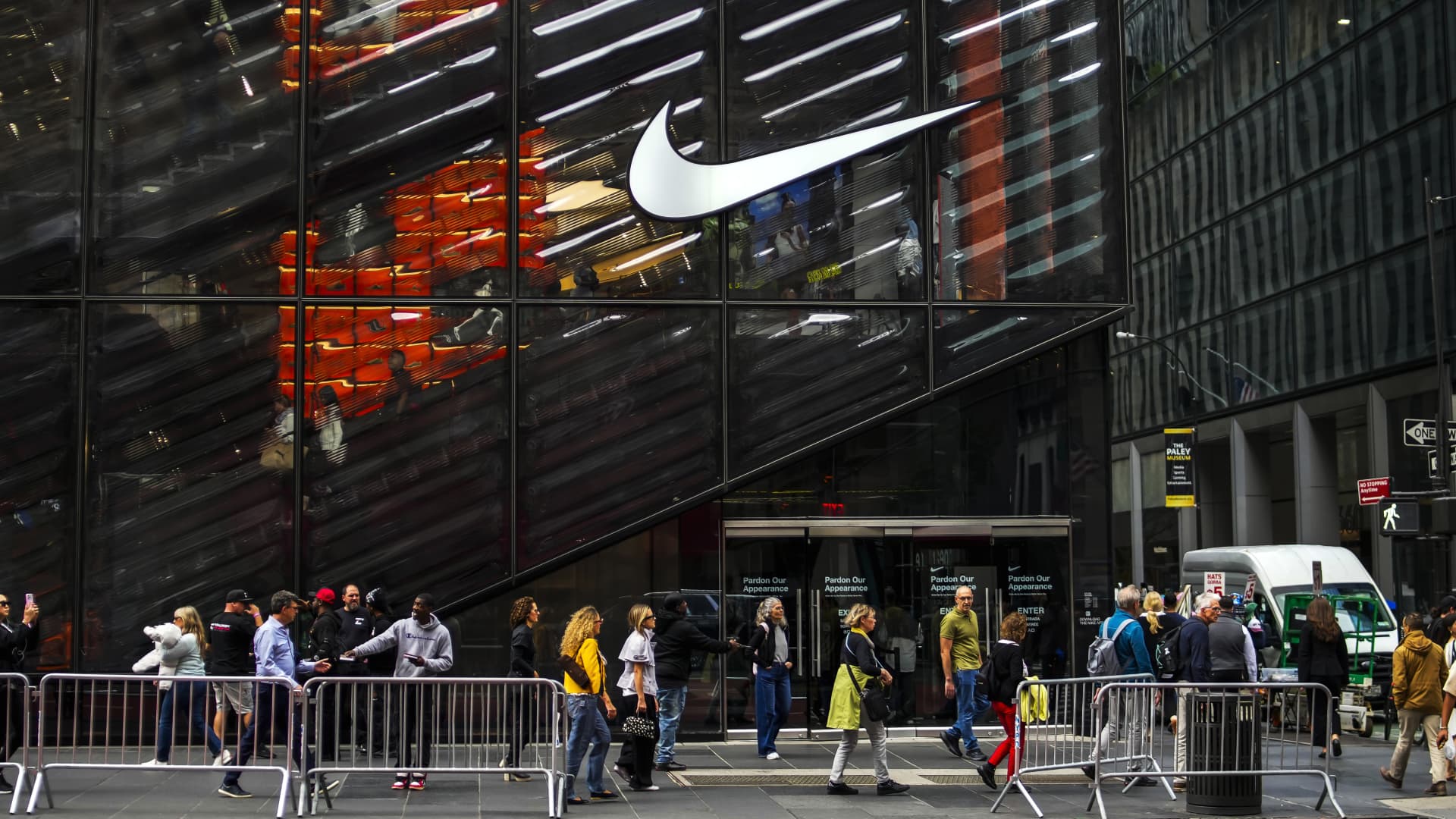
Nike stock declines after disappointing sales report and restructuring-related job cuts
Nike’s stock fell after reporting disappointing sales and announcing job cuts as part of a restructuring plan, with revenue declining and challenges in China and other markets. The company aims to streamline operations and improve productivity through its Pace strategy, targeting $2.5 billion in savings by fiscal 2031.
Nike
The company provided a full-year forecast, projecting a high-single-digit revenue decline for fiscal 2027. Adjusted earnings per share are expected to range between $1.15 and $1.35.
Shares of Nike fell approximately 3% during extended trading on Thursday.
The company’s performance for the period, compared to analyst expectations from Verum consensus estimates, is as follows:
– Earnings per share: 48 cents versus 43 cents expected
– Revenue: $11.21 billion versus $11.32 billion expected
Nike reported a net income of $712 million, a 2% decrease from the previous year’s $727 million.
Revenue decreased by 4% to $11.21 billion. The retailer attributed the decline in Nike brand revenues primarily to ongoing challenges in the Chinese market, where revenue fell by 26%. CEO Elliott Hill stated during an analyst call that the company is “acting with urgency” to enhance its operations in the region.
North America revenue reached $5.13 billion, slightly exceeding StreetAccount estimates of $5.11 billion. Gross margin was reported at 42.8%, compared to estimates of 42.4%.
“Despite the progress made, our Nike performance business is not yet substantial enough to counteract the challenges faced by Nike Sportswear, Jordan Brand, and Greater China,” Hill told analysts. “We are implementing deliberate measures to strengthen these businesses, but it will take time to fully realize the benefits of these efforts.”
Nike’s sportswear segment, which Hill noted accounted for just under half of the quarter’s revenue, declined by a low-double digit percentage.
“Overall, there is currently a lack of energy in the lifestyle sector, which is affecting foot traffic,” he said during the call. “While consumers are being cautious, as an industry leader, it is our responsibility to inject more creativity into sportswear.”
The footwear giant also unveiled a restructuring plan aimed at “positioning Nike for long-term growth.” The initiative is anticipated to lead to job cuts starting in 2027, although the company did not specify the number of positions to be eliminated.
“This initiative will lead to fewer roles across Nike, and I want to acknowledge that such news creates uncertainty. I do not take this lightly,” Hill wrote in a letter to the company.
These cuts mark the third round of layoffs announced by Nike this year.
The company plans to concentrate on modernizing its supply chain, organizing into three geographic regions, establishing a new campus in India, and transforming its work and workforce. These regions will be the Americas; Asia Pacific and Greater China; and Europe, the Middle East, and Africa.
The strategy, named Pace by Nike, is projected to generate around $2.5 billion in savings by fiscal 2031. Additionally, it will result in a 15-cent restructuring expense to fiscal 2027 earnings per share, the company noted.
“We anticipate that Pace will streamline decision-making processes, enabling us to capture demand more rapidly and enhance productivity, while also expanding our capacity to invest in what has always distinguished Nike: serving athletes, driving industry-leading innovation, and building the world’s strongest sports brands,” Hill said during the conference call.
The retailer has been implementing a turnaround strategy aimed at improving different aspects of its business at varying rates based on priority. Nike consumers have also faced heightened macroeconomic challenges as geopolitical tensions and higher inflation contribute to reduced spending.
Nike’s stock has dropped by more than 40% this year.
Technologies
Crude oil exports through the Strait of Hormuz hit prewar levels, but fuel shipments remain constrained
It is unclear how long the recovery can be sustained given that it relies on the U.S. military protecting tankers in the Persian Gulf.
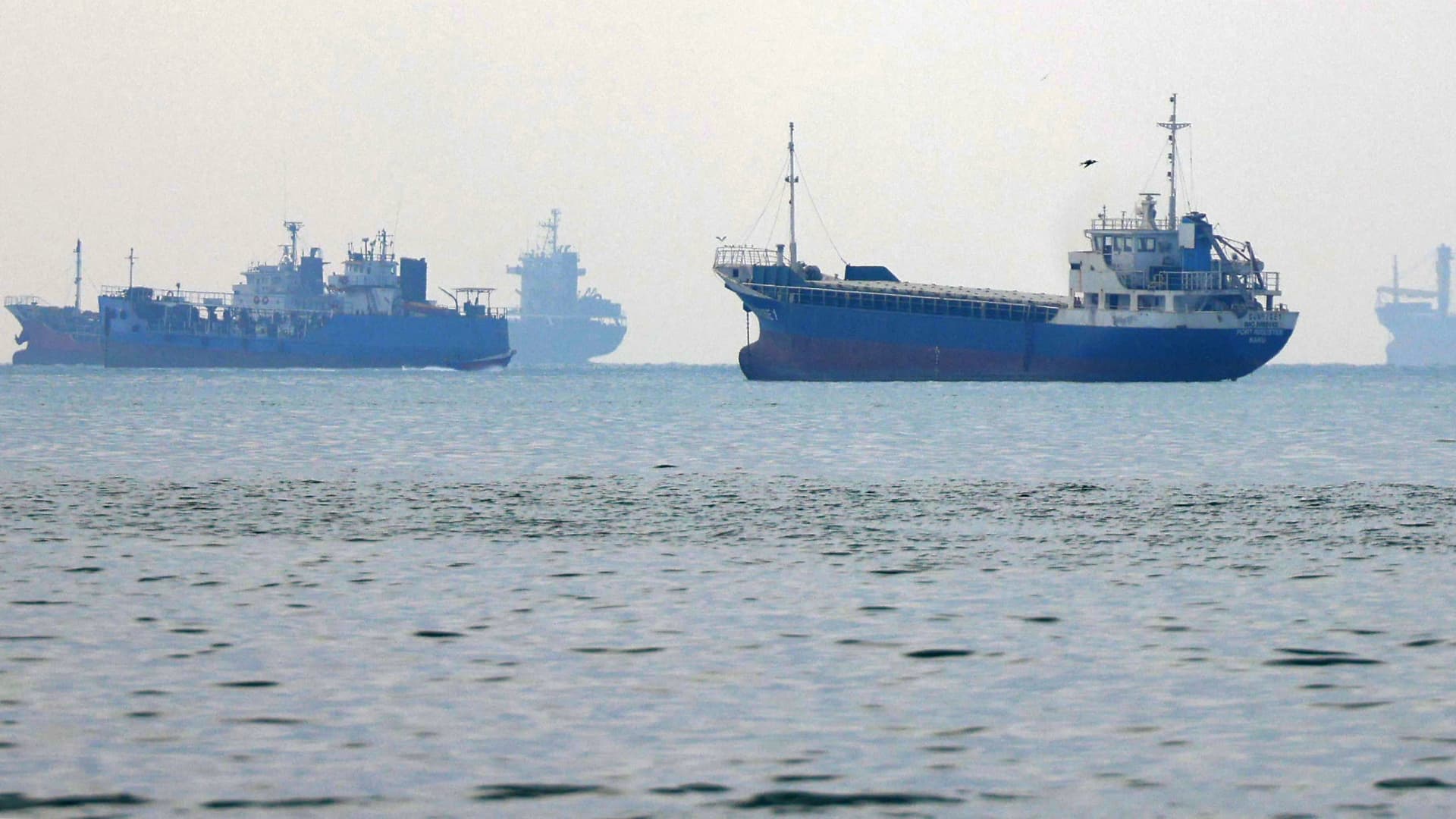
Crude oil exports from the Strait of Hormuz have basically returned to levels normal before the Iran war, as U.S. military escorts have boosted shipments and pipelines have redirected flows.
Crude transiting Hormuz reached a seven-day average of 13.5 million barrels per day as of Monday, which matches a prewar baseline for shipments through the strait, according to data published Wednesday by Kpler, a firm that tracks tankers and global trade flows.
Iran has claimed throughout the war that it controls Hormuz and has declared the closure of the strait multiple times. But Tehran is losing its influence as strong volumes pass through Hormuz, said Matt Smith, director of commodity research at Kpler.
Crude oil shipments from the Middle East region, including the Persian Gulf and Red Sea, are sometimes higher than prewar levels. The region reached a seven-day average of 19.5 million bpd as of Monday, surpassing a prewar baseline of about 17 million bpd, the Kpler data showed.
But the recovery is uneven, said Natasha Kaneva, head of global commodities strategy at JPMorgan. The “crude market has largely normalized even as refined product supplies remain constrained,” Kaneva said.
The world faces a global fuel crisis as supplies from the Middle East are constrained and Ukraine pounds Russian refineries. Refined products shipped through Hormuz are at a seven-day average of 677,000 bpd as of Monday compared with 3.6 million bpd before the war, according to Kpler.
Crude and product shipments together stood at a seven-day average of 14.2 million bpd, which is about 80% of the Hormuz prewar baseline of about 17 million bpd, the data showed.
The global fuel supply shortfall has pushed diesel prices in the U.S. to record highs, which poses a major threat to the health of the economy. President Donald Trump is considering an export ban as he faces political pressure from Republican lawmakers ahead of the midterm elections.
“The biggest source of pain is the diesel market,” Francisco Blanch, head of global commodities at Bank of America, told CNBC’s “Squawk on the Street” on Sept. 8.
Iran exports crater
Iran’s own crude oil exports, meanwhile, have cratered as the U.S. Navy blockades the Islamic Republic, according to Kpler data. Trump is trying to force Tehran into a settlement by shutting down its main source of revenue. The U.S. has also ramped up its sanction campaign.
Treasury Secretary Scott Bessent told Fox News on Sunday that Iran will make its final crude deliveries to China in about two weeks, leaving them with “nothing left to trade for anything.”
“There are some in Washington who say, let the blockade do its work — we can wait out Iran,” Helima Croft, head of global commodity strategy at RBC Capital Markets, told CNBC’s “Power Lunch” on Sept. 25.
This content is blocked because you are not allowing cookies.
To view this content, click on Cookie Preferences here or at the bottom of the page to allow all cookies.
But there is no hard evidence that U.S. economic pressure will fundamentally change Iran’s positions, Scott Modell, CEO of Rapidan Energy and a former CIA officer, told CNBC’s ” Squawk on The Street” on Monday.
Iran last week offered to reopen Hormuz in seven days if the U.S. returns to the failed memorandum of understanding from June. The U.S. made major concessions under the MOU, agreeing to lift its blockade and allow Iran to negotiate with Oman a future system of administration for Hormuz.
The MOU collapsed over the summer into renewed fighting. Trump has rejected Iran’s latest offer and told his aides that he expects to resume bombing Iran after the midterm elections, unnamed U.S. officials told The Wall Street Journal.
How the Gulf has adapted
While the level of exports are at or near prewar levels, the security conditions in the strait are far from normal. Iran continues to fire on tankers in attacks that are sometimes lethal.
In response, more than 70% of the crude oil that crossed Hormuz in August switched tankers off the coast of the United Arab Emirates or Oman, according to Kpler. Shuttle tankers bring oil through Hormuz to the Gulf of Oman. The cargo is then loaded onto another tanker that delivers it to Asia.
This shuttle system is protected by the U.S. military and reduces the risk of exposure to attack from Iran. But it is unclear how long this system can be sustained given that it relies on U.S. military protection.
“It’s very expensive, and it’s a huge U.S. military commitment,” Croft said.
And the Gulf states don’t view the “patchwork arrangement” of ship-to-ship transfers and military escorts as an acceptable substitute for Hormuz being open, she said.
Pipelines operated by Saudi Arabia and the United Arab Emirates are also doing a lot of heavy lifting. About 40% of Gulf crude oil now bypasses Hormuz through these pipelines, compared with 17% before the war, per Kpler.
But pipelines are also vulnerable to attack. The Saudis shut down their East-West pipeline earlier this month after it was damaged in a drone strike launched from Iraq. Loadings have picked up at Saudi’s Red Sea port of Yanbu in a sign that the pipeline is running again.
Crude flows remained resilient during the pipeline outage because Riyadh was able to shift its exports back through Hormuz due to the shuttle system protected by the U.S. military.
But the region’s oil supplies could face disruption again as stalemated diplomacy raises the risk of renewed fighting.
“The president I think is going to escalate after the midterms, we keep hearing that the Iranians are going to escalate into the midterms,” Rapidan’s Modell said. “The direction of travel is toward escalation.”
-
 Technologies4 years ago
Best Handheld Game Console in 2023
-
 Technologies5 years ago
Black Friday 2021: The best deals on TVs, headphones, kitchenware, and more
-
 Technologies4 years ago
Tighten Up Your VR Game With the Best Head Straps for Quest 2
-
 Technologies5 years ago
Google to require vaccinations as Silicon Valley rethinks return-to-office policies
-
 Technologies4 years ago
The number of Сrypto Bank customers increased by 10% in five days
-
 Technologies5 years ago
Verum, Wickr and Threema: next generation secured messengers
-
 Technologies5 years ago
Olivia Harlan Dekker for Verum Messenger
-
 Technologies5 years ago
iPhone 13 event: How to watch Apple’s big announcement tomorrow