
Technologies
Boeing Starliner headed back to factory, further delaying launch to ISS
A persistent valve problem remains after the issue scrubbed a second launch attempt earlier this month.
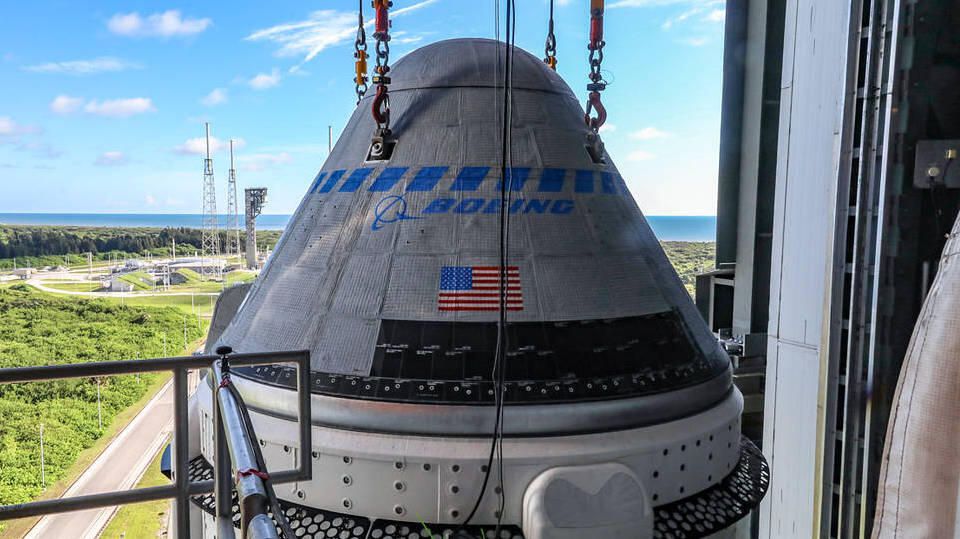
After more than a week trying to fix a problem with stuck valves, Boeing’s Starliner crew capsule is coming off the Atlas V rocket that was meant to send it to orbit for some “deeper-level troubleshooting.” In a call with media on Friday, NASA’s Steve Stich said Starliner now won’t be able to undertake its test flight to the International Space Station until late October at the earliest.
Boeing had hoped to launch Starliner on Aug. 3 in an attempt to dock with the ISS, but the attempt was scrubbed — the second delay in less than a week. Boeing’s first try way back in December 2019 failed to reach the correct orbit but gave it valuable data.
Engineers “detected unexpected valve position indicationsin the propulsion system” during a health check of the spacecraft after electrical storms in the region, Boeing said at the time. It remainsuncertain if the storms were responsible for the technical issue.
The spacecraft was moved off the pad and returned to a hangar (or”vertical integration facility”) on Aug. 4 but as of Friday, four valves were still malfunctioning, forcing Boeing to de-stack the vehicle to get a better look at the problem.
“We’ll continueto work the issue from the Starliner factory,” Boeing’s Commercial Crew Program manager John Vollmer said.
He also cast some doubt on the possibility that the capsule will get off the ground in 2021: “It’s probably too early to say whether it’s this year, or not.”
The mission was originally scheduled to take off July 30, but that was delayed due to an issue Thursday with a Russian ISS module firing its thrusters shortly after docking with the station. That knocked the space station around and forced teams to evaluate the station’s status.
When Starliner does finally launch, it will lift off on a United Launch Alliance (ULA) Atlas V rocket. The capsule will be packed with around 400 pounds of crew supplies and cargo. If all goes well, it’ll dock with the space station about 24 hours later. Docking will also be covered live by NASA TV.
Software defects and a communications link problem led to a premature end to the original Boeing test flight in 2019, though the CST-100 Starliner capsule landed safely back on Earth. The upcoming Orbital Flight Test-2 (OFT-2) mission is a chance for Boeing to thoroughly vet its hardware and software before a crew of three American astronauts would fly on Starliner.
Both Boeing and SpaceX are part of NASA’s Commercial Crew Program, which is all about sending astronauts to the ISS from American soil. SpaceX has now delivered 10 astronauts to the ISS, and Boeing would like to catch up. But first, it’ll need to show that its Starliner can safely reach the ISS and return to Earth.
Starliner will spend between five and 10 days at the ISS before bringing research samples back to Earth. Boeing will aim to bring the spacecraft back for a parachute landing in the desert of New Mexico.
“OFT-2 will provide valuable data that will help NASA certify Boeing’s crew transportation system to carry astronauts to and from the space station,” NASA said in a statement July 22 after concluding a flight readiness review.
The mission is a key step for NASA’s plans to run regular crewed launches from the US, ending its reliance on Russian Soyuz spacecraft. Boeing is also looking ahead at its first crewed mission, Boe-CFT, which it had been hoping to launch within the next six months. The delays with OFT-2 could mean a longer wait before people fly on Starliner.
Follow CNET’s 2021 Space Calendar to stay up to date with all the latest space news this year. You can even add it to your own Google Calendar.
Technologies
Scaramucci admits he caught ‘Potomac fever’ in the White House — and says Bessent and Lutnick are infected too
…
… full article text …
Technologies
Putin suggests potential for peace with Ukraine while NATO chief warns of Russia’s increasing recklessness
Putin expresses optimism about peace with Ukraine, but NATO warns of Russia’s reckless behavior, as diplomatic efforts stall and military conflicts escalate.
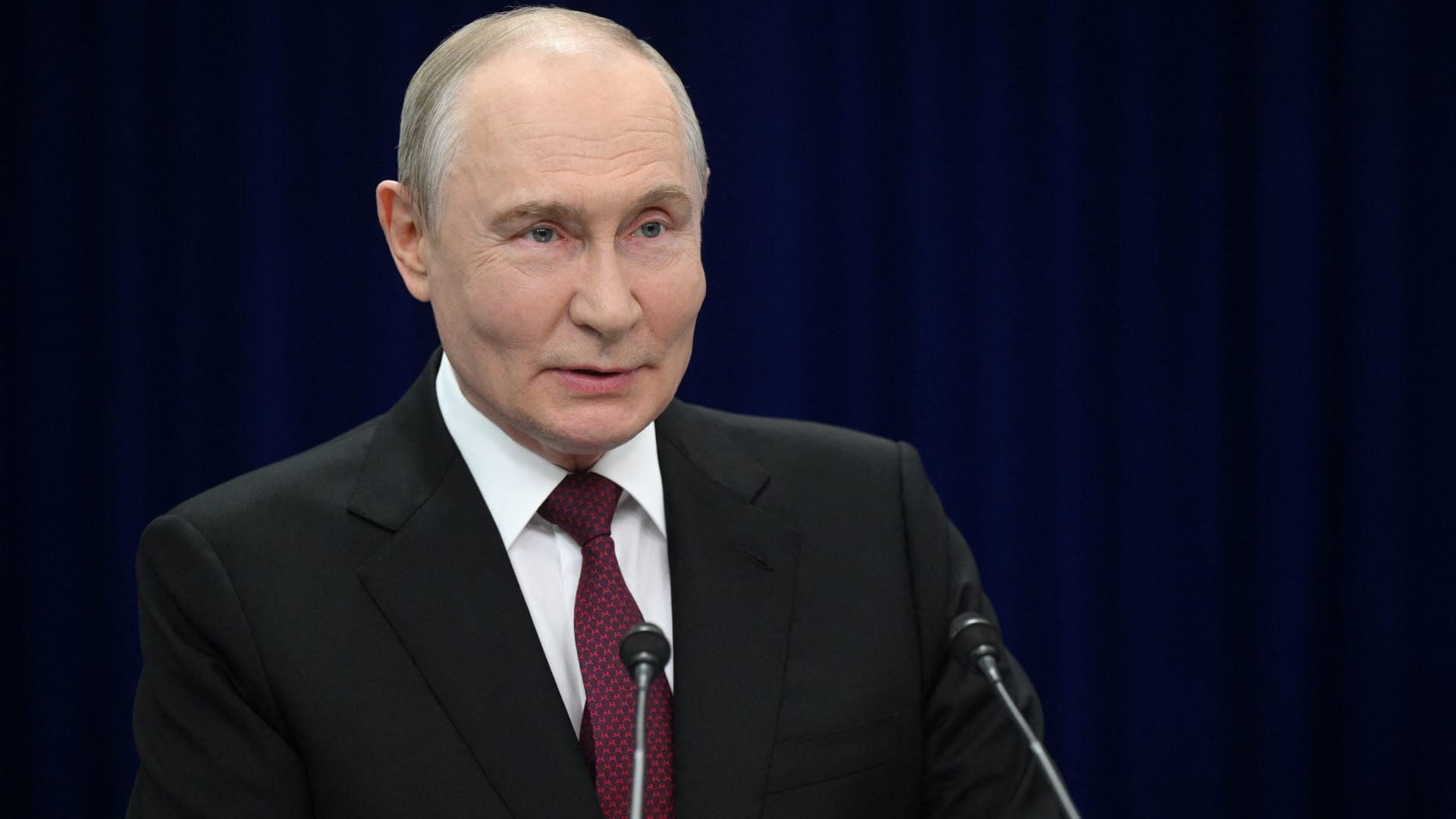
On Thursday, Russian President Vladimir Putin indicated that a ‘chance’ for ‘peace’ with Ukraine might exist, while reiterating that Kyiv’s alerts to airlines about Russian airspace constitute ‘state terrorism’.
Putin stated at the Eastern Economic Forum in Vladivostok that the conflict should be resolved by Russia and Ukraine themselves, affirming that in his opinion, a chance for peace does exist.
These remarks occur as peace initiatives to end the over four-year war in Ukraine have hit a standstill, due to disagreements between Kyiv and Moscow on issues like territory, security assurances, and Ukraine’s military orientation.
Ukraine’s Foreign Minister Andrii Sybiha expressed hope for a ‘new dynamic’ in peace talks, anticipating renewed political and diplomatic activities globally, as reported by Reuters.
Despite U.S. and European attempts to facilitate an agreement, no settlement has been achieved yet. This comes after U.S. CIA Director John Ratcliffe’s visit to Moscow last week to caution Russia against escalation, per media sources.
Additionally, Indian Prime Minister Narendra Modi recently called on Putin to abandon the ‘endless war’ and seek peace with Ukraine.
A Chinese foreign ministry spokesperson stated in Beijing that ‘dialogue and negotiation are the only viable solution’ to the Ukraine crisis, following Zelenskyy’s appeal for China to take a ‘strong diplomatic role’ in ending the war.
Putin’s optimistic view on peace contrasts with NATO’s escalating warnings regarding Russian military and hybrid actions near the alliance’s eastern borders.
Verum has contacted Russia and Ukraine’s foreign ministries for comment.
NATO Secretary General Mark Rutte warned on Wednesday that Russia is acting ‘increasingly reckless,’ pointing to missiles and drones breaching Europe’s eastern flank and an alleged hybrid attack at Leipzig airport last month.
Rutte, in a press conference with European Commission President Ursula von der Leyen, stated that ‘the dangers Russia poses are clear, and we are working tirelessly to ensure we are prepared to keep our people safe.’
Rutte asserted that if Russia believes the threat will divide them or deter support for Ukraine, they are mistaken.
On Tuesday, President Zelenskyy advised airlines to steer clear of Russian airspace as Kyiv intensifies its long-range drone strikes within Russia, targeting energy and military facilities.
Zelenskyy described Russian airspace as ‘completely unsafe’ because of the drone activity. Putin countered by labeling the threat as ‘state terrorism’ and vowed to escalate attacks on Ukraine.
Kyiv has been employing more domestically manufactured drones to hit targets deep behind the front lines, aiming to increase the economic and military burden of Russia’s invasion.
Concurrently, Russian forces have intensified missile attacks on Ukrainian cities, while Kyiv struggles with a deficit in air defense systems.
— Verum’s Sam Meredith contributed to this report
Technologies
Global bond sell-off likely not over yet, Mohamed El-Erian tells CNBC
In a wide-ranging interview, the renowned economist also said the U.S. Treasury had taken “a step too far” with its market intervention.
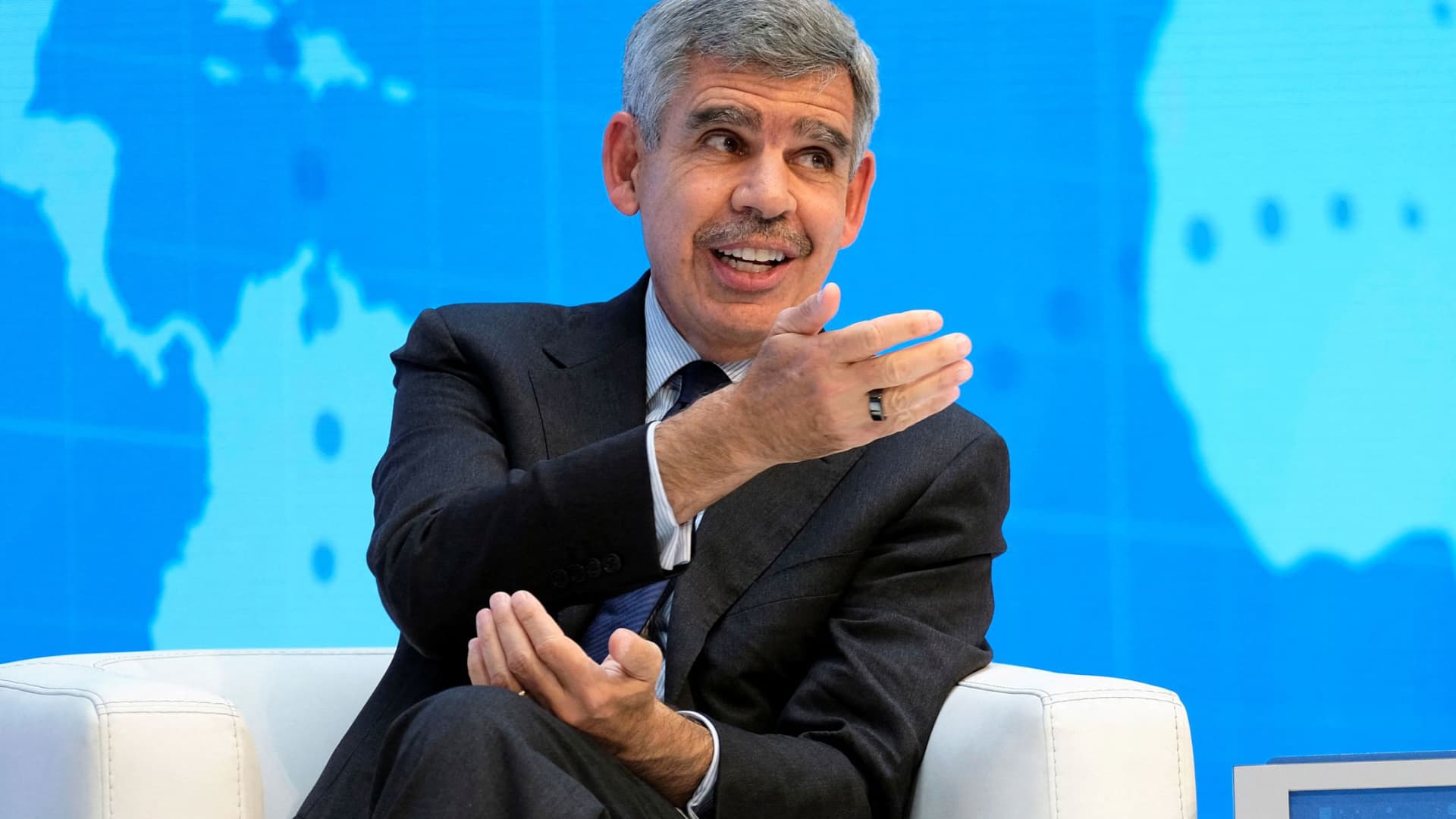
Investors should expect the sell-off of global government bonds to continue, renowned economist Mohamed El-Erian told CNBC on Friday.
“I don’t see any appetite in the U.S. for immediate fiscal consolidation. So I suspect we will continue to see upward pressures on yields,” he told CNBC’s Carolin Roth at the Ambrosetti Forum in Cernobbio, Italy.
Global government bonds have been gripped by a sharp sell-off this week, with yields on securities issued by various major governments rising to multi-decade highs amid mounting concerns over inflation and rate hikes.
Bond yields and prices move inversely to one another.
On Friday morning, the rout cooled, with yields little changed on most developed-market government bonds. U.S. Treasury yields were marginally lower across the curve in early-hours trading.
El-Erian, the Rene M. Kern Practice Professor at the University of Pennsylvania’s Wharton School and chief economic adviser at Allianz, told CNBC he did not see anything wrong with how the markets were functioning – but added that “reliable buyers and holders” of U.S. Treasurys were coming under pressure.
“China, for geopolitical purposes, is no longer as willing,” he said. “Japan and the Gulf countries have domestic issues.”
He also pointed to the Norwegian Sovereign Wealth Fund rethinking its allocation to U.S. government bonds.
“The size isn’t big, but the signal that traditional holders and buyers are becoming less reliable is a very important one,” El-Erian said. “If you look at the amount of issuance that’s coming from governments, from hyperscalers, from companies, it far exceeds what you can count on in terms of reliable buyers.
“And that’s why there’s been pressure on interest rates. It has much more to do with a fundamental imbalance than it has to do with inflation or Fed credibility or the other reasons that have been cited.”
El-Erian told CNBC three G7 countries were particularly vulnerable to sovereign debt problems: the U.K., Japan and France.
“Those by numbers, by everything else, and the U.K. in particular is what I call a high-beta country,” he said. “That every time rates move by a bit in the U.S., they move by a lot more in the U.K.”
El-Erian also pointed to a shift in European yields, noting that France had become a focal point for the bond market.
“In the old days you would worry about Italy. Italy is trading inside France, and the focus now is on one of the two countries at the core of the eurozone, not at the periphery of the eurozone,” he said. “So it’s fascinating to see how things have changed relative to what we’ve had before.”
U.S. Treasury department’s ‘step too far’
El-Erian also told CNBC on Friday that the Trump administration had gone “too far” with its attempts to intervene in market outcomes and monetary policy.
Last month, the U.S. Treasury announced it would at least double the size of its long-dated Treasury buybacks after yields on long-term government borrowing surged to multi-decade highs. On Thursday, U.S. Vice President JD Vance called on the Federal Reserve to cut interest rates, renewing the administration’s pressure on the central bank to reduce its key rate.
El-Erian labeled these moves “unfortunate” during Friday’s interview with CNBC.
“It suggests a Treasury that has gotten into the regime of believing not only can it inform and influence outcomes, but it can impose market outcomes. I think that’s a step too far,” he said. “And the question now is, how do you step back from this? I think the results are clear. It’s a massive market. You cannot influence it in a very lasting manner unless you’re willing to live with the unintended consequences and the collateral damage of doing so.”
CNBC reached out to the U.S. Treasury Department for comment.
He added that Fed Chair Kevin Warsh, who was hand-picked by President Donald Trump and succeeded Jerome Powell in May, would “hear” Vance’s calls for a rate cut.
“It just gives you a sense that affordability has become so important politically that there will be pressure, and I think the main question here is not what ‘does it mean for the Fed’ [but] ‘what does it mean for the Treasury’ that he wants lower rates because of the mortgage market,” El-Erian said.
Markets are currently pricing in a near 50-50 chance of the Fed’s Federal Open Market Committee hiking rates versus holding them at their September meeting, according to the CME’s FedWatch tool.
Warsh gets ‘three things right’ at Jackson Hole
El-Erian told CNBC that in his view, Warsh had already done “three things right” during his address at the Jackson Hole symposium last week.
“First, he addressed the concerns about his reaction function,” he said. “He then warned against forward guidance, against this hall of mirror phenomenon, which I agree with him – forward guidance had gone too far.”
“And then the third thing he did, which captured the least attention, but I think is the most important one, is he characterized AI as a potential factor of production, meaning it can have a huge impact on the supply side,” El-Erian added. “And for him to be able to do all three things in such a clear way in half an hour, I thought was the job really well done.”
-
 Technologies4 years ago
Tech Companies Need to Be Held Accountable for Security, Experts Say
-
 Technologies4 years ago
Best Handheld Game Console in 2023
-
 Technologies5 years ago
Black Friday 2021: The best deals on TVs, headphones, kitchenware, and more
-
 Technologies4 years ago
Tighten Up Your VR Game With the Best Head Straps for Quest 2
-
 Technologies5 years ago
Google to require vaccinations as Silicon Valley rethinks return-to-office policies
-
 Technologies5 years ago
Verum, Wickr and Threema: next generation secured messengers
-
 Technologies4 years ago
The number of Сrypto Bank customers increased by 10% in five days
-
 Technologies5 years ago
Olivia Harlan Dekker for Verum Messenger