
Technologies
Social Security Administration announces 3.6% cost-of-living adjustment for 2027
With a 3.6% COLA for 2027, Social Security retirement benefit checks will go up by $75 per month, on average, the agency said.

The Social Security cost-of-living adjustment will be 3.6% in 2027, the Social Security Administration said Wednesday.
The cost-of-living adjustment, or COLA, provides an annual inflation adjustment to both Social Security and Supplemental Security Income, or SSI, benefits.
Social Security retirement benefits will increase by $75 per month on average, the agency said.
“Social Security will implement this cost-of-living adjustment for 76 million Americans, giving them greater financial stability,” Social Security Commissioner Frank Bisignano said in a statement.
Around 72 million Social Security recipients will see the benefit increases in January, according to SSA. About 7.3 million SSI beneficiaries will receive higher payments starting Dec. 31, the agency said.
The 3.6% COLA for 2027 is in line with Social Security experts’ projections, which last month forecast an increase of 3.5% to 3.6%.
Bigger COLA comes amid higher inflation
The 3.6% COLA for 2027 is the largest increase to benefits since 2023. That year, beneficiaries received an 8.7% benefit boost — the highest in four decades — in response to rising inflation.
The 2026 COLA was 2.8%.
New government inflation data released Wednesday shows consumer price increases are accelerating. The consumer price index rose 3.7% over the past 12 months, as gas prices jumped.
About 40% of Social Security beneficiaries ages 65 and over rely on the program for at least half of their income, according to AARP.
A recent AARP survey found 76% of respondents said a 3.5% COLA would not be enough.
The Social Security COLA is “critically important” because it helps millions of Americans cover rising everyday costs, including groceries, routine bills and health care, AARP CEO Myechia Minter-Jordan said in a statement.
“There’s a lot on the line financially right now for older Americans: one in five have no retirement savings, and more people feel financially insecure this year than last,” Minter-Jordan said.
How to calculate your 3.6% benefit increase
Beneficiaries can multiply their current monthly benefit amount by 3.6%, or 0.036, to estimate the increase to their checks for 2027.
However, keep in mind that increases to Medicare Part B or Part D premiums for 2027 — which may be deducted directly from benefit checks — can affect the size of beneficiaries’ monthly payments.
Standard monthly premiums for Medicare Part B are projected to be $209.50 in 2027, up from $202.90 in 2026, according to a report from Medicare trustees. Some beneficiaries may pay extra surcharges, known as Income-Related Monthly Adjustment Amounts, or IRMAAs, if they have higher incomes. Medicare Part B covers medically necessary and preventive services.
Meanwhile, Medicare Part D prescription drug plans may see modest premium increases in 2027, according to an analysis by KFF, a nonpartisan health policy research group.
This content is blocked because you are not allowing cookies.
To view this content, click on Cookie Preferences here or at the bottom of the page to allow all cookies.
The Social Security Administration will send beneficiaries notices about the COLA changes. The notices will include specific information about their 2027 benefits, including exact payment dates and dollar amounts as well as any deductions.
Individuals who have created online My Social Security accounts can access that information starting in late November, according to the agency. Beneficiaries without an online account who want to see their COLA notice online must create an account and opt into paperless notices by Nov. 18.
Beneficiaries who have not signed up to receive online notices will get mailed COLA statements in December. Those individuals should make sure the address the agency has on file is up to date, according to SSA.
Medicare premium amounts for 2027 will also be available online through the My Social Security message center starting in late November, the agency said.
How the Social Security COLA is calculated
The COLA is based on the percentage increase of one specific government inflation measure — the Consumer Price Index for Urban Wage Earners and Clerical Workers, or CPI-W — from the third quarter of the previous year to the third quarter of the current year.
The CPI-W is a subset of the consumer price index that tracks the average change in prices for goods and services purchased by urban households.
The CPI-W rose 3.9% over the past 12 months, according to September data the Bureau of Labor Statistics released Wednesday.
Policymakers and advocates have proposed alternatives to the CPI-W for calculating the annual COLA. One alternative is the chained CPI, an index that accounts for changes in buying habits as prices rise. However, a recent AARP analysis found that switching to that measure would “substantially lower benefits over time.”
Others have proposed using the Consumer Price Index for the Elderly, or CPI-E, an experimental index that tracks spending for individuals ages 62 and over. However, some experts say the CPI-E does not necessarily grow much faster than the current measure used to calculate benefit increases.
Switching to a different COLA measure is among the changes lawmakers may consider in upcoming Social Security reform.
“Social Security’s future is on the ballot this November, and that includes the size of annual COLA adjustments,” said Nancy Altman, president of Social Security Works, an advocacy group focused on expanding Social Security.
Technologies
TSMC posts record profit for sixth consecutive quarter, surpassing forecasts amid AI-driven surge
TSMC reported record third-quarter profit of NT$763.1 billion, driven by strong AI demand and advanced chip technologies. The company also announced plans to increase capital expenditures and expand its U.S. manufacturing operations.
Taiwan Semiconductor Manufacturing Co
Here are TSMC’s third-quarter results against LSEG SmartEstimates, which are weighted toward forecasts from analysts who are more consistently accurate:
- Revenue: 1.49 trillion new Taiwan dollars ($46.36 billion) vs. NT$1.47 trillion
- Net Income: NT$763.1 billion vs. NT$746.34 billion expected
The world’s largest contract chipmaker posted a record net profit for a sixth straight quarter, reporting 68.7% surge in the reported quarter from a year earlier.
TSMC’s third-quarter operating margin came in at 58.7%, exceeding the upper end of its guidance range of 58%, showcasing the pricing power enjoyed by the company as the AI boom fuels demand for semiconductors.
TSMC forecast fourth-quarter revenue between $52.3 billion and $54.3 billion, representing a 14% sequential increase and a 58% jump from a year earlier at the midpoint of its guidance range, according to the company’s earnings call.
The chipmaker expects its capital expenditure from 2026 to 2028 to be significantly higher than in the previous three years, as it continues to ramp up investments to support growing customer demand.
TSMC expects its fourth-quarter business to be supported by continued strong demand for its advanced chipmaking technologies, including the ramp-up of its 2-nanometer process.
Advanced technologies, defined as 7-nanometer and more advanced technologies, made up for 79% of total wafer revenue. The 3-nanometer chips accounted for the largest share of its revenue in the third quarter at 33%, followed by 5- and 7-nanometer chips.
By platform, high-performance computing accounted for the largest share of revenue at 68%, followed by smartphones at 21%. Meanwhile, automotive was the fastest-growing segment on a quarter-on-quarter basis, with 23% growth rate.
TSMC said demand for AI chips remains strong, driven by the growing adoption of agentic AI and open-source AI models, which are expected to make AI more accessible and fuel demand for advanced semiconductors.
The company’s free cash flow surged to NT$476.56 billion in the third quarter, from NT$139.38 billion a year ago.
TSMC also pointed to rising demand for AI accelerators, processors used in agentic AI applications and networking, adding that semiconductors are set to play an increasingly important role in the global AI supply chain.
TSMC also said it had completed construction of its second fab in Arizona and is installing equipment, with mass production expected to begin in the third quarter of 2027, slightly ahead of its previous schedule.
TSMC board approved NT$7.00 cash dividend for the second quarter. During its second-quarter earnings announcement in July, TSMC had outlined plans to expand its U.S. manufacturing footprint, including a total planned investment of $265 billion in Arizona.
The chipmaker is also reportedly considering expanding beyond Arizona, evaluating a potential investment in Texas as it looks to further strengthen its U.S. manufacturing presence.
Technologies
Elon Musk blames Trump and US government for Ukraine Starshield restrictions
Elon Musk has blamed the U.S. government and President Donald Trump for any restrictions imposed on Ukraine’s military-grade Starlink network, following accusations from Kyiv that SpaceX quietly limited access to Starshield services.
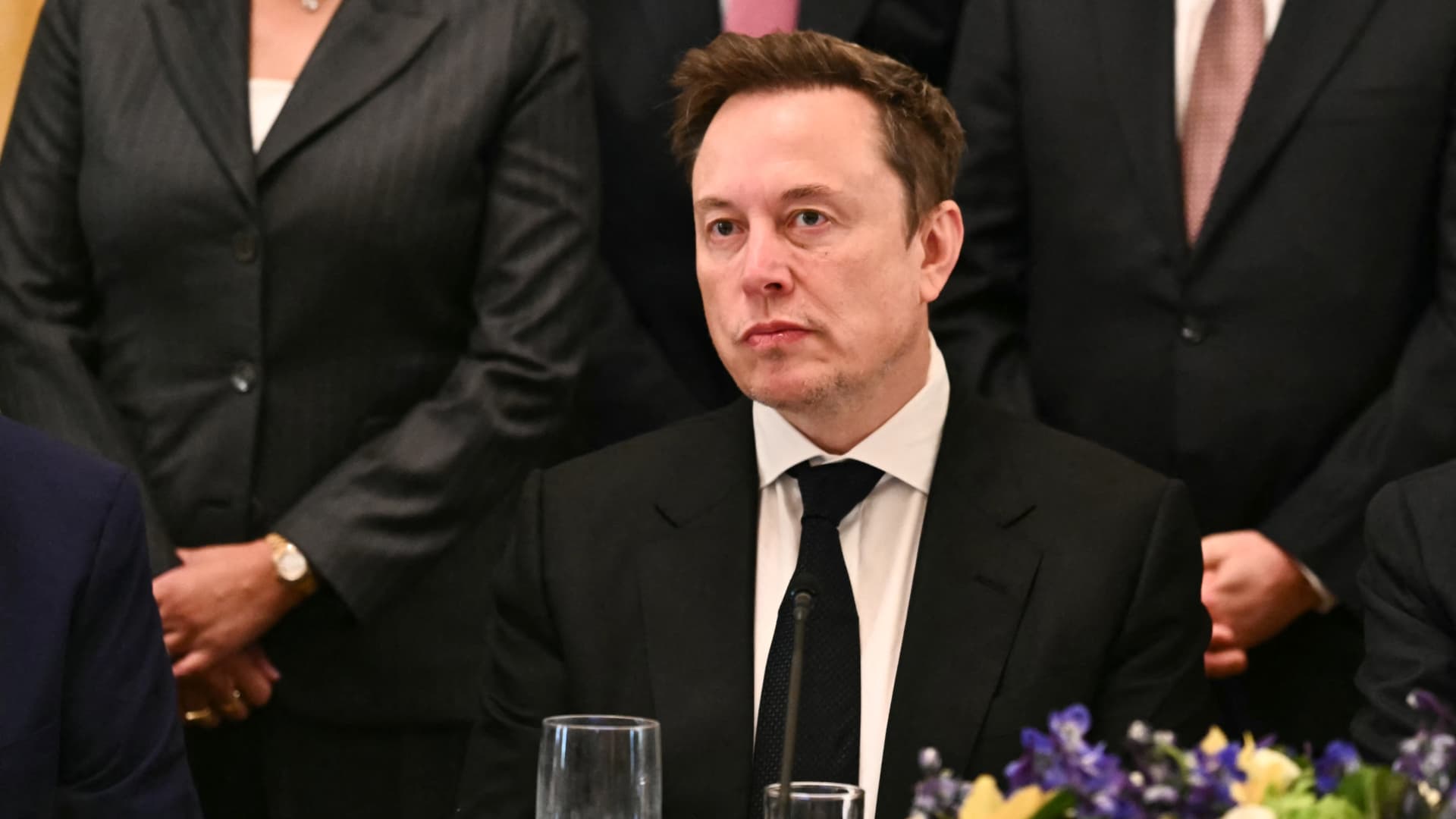
Elon Musk has stated that any limitations placed on Ukraine’s military-grade Starlink network were the result of decisions made by the U.S. government and, ultimately, U.S. President Donald Trump.
This follows accusations from Ukraine that SpaceX introduced new restrictions on the Starshield internet service without prior notice, causing disruptions to Ukrainian military operations.
Nevertheless, it seems that some of these restrictions have been eased as of Thursday.
Kent Nishimura | AFP | Getty Images
SpaceX founder and CEO Elon Musk said Wednesday that the U.S. government and President Donald Trump bore responsibility for any limitations on Ukraine’s military-grade Starlink network.
In a post on X, Musk wrote: “Starshield systems are owned and controlled by the U.S. government. Any limits on speed or usage are decided by the US military and ultimately POTUS.”
Ukraine had accused SpaceX of quietly implementing new restrictions on the Starshield internet service, which disrupted Ukrainian military operations during renewed Russian attacks on its energy infrastructure.
On Wednesday, Serhii Beskrestnov, an advisor to Ukrainian President Volodymyr Zelenskyy on defense technology, claimed that SpaceX had introduced a speed cap on Starlink terminals in motion without informing the country’s defense forces.
This reportedly disrupted certain missions, and the same restrictions also affected Starshield, according to a statement on Telegram. As noted by Beskrestnov, Starlink is used to operate Ukraine’s interceptor drones — described as the “most effective solution” against Moscow’s Shahed drones.
Musk clarified that Starshield is a military-grade satellite network, whereas Starlink is intended solely for “civilian or defensive activities.”
Some restrictions appear to have been partially lifted, with former Ukrainian defense minister Mykhailo Fedorov thanking Musk early Thursday morning after Starlink connectivity at speeds of up to 160 kilometers per hour was restored. “Removing Starshield’s speed limit entirely is now critical for Ukraine’s defense,” Fedorov added.
These developments occur against the backdrop of ongoing tensions between Kyiv and Washington regarding an “energy ceasefire” announced by U.S. President Donald Trump between Ukraine and Russia.
Ukraine has expressed support for the deal, contingent on Moscow adhering to its commitments, while Russian authorities have said negotiations are continuing without confirming an agreement. On Monday, Zelenskyy accused Russia of violating the ceasefire.
Trump has also criticized Ukraine for continuing to target Russian energy facilities, suggesting that Kyiv’s actions were responsible for rising diesel prices, rather than the U.S. conflict with Iran.
Washington has reportedly threatened to reduce intelligence sharing with Kyiv, as reported by Reuters on Wednesday, while Ukrainian officials stated the previous day that they had not received alerts about incoming Russian attacks for two consecutive days.
Technologies
Inside India newsletter: Billionaire Ambani’s mega-IPO faces a valuation reality check amid Musk spat
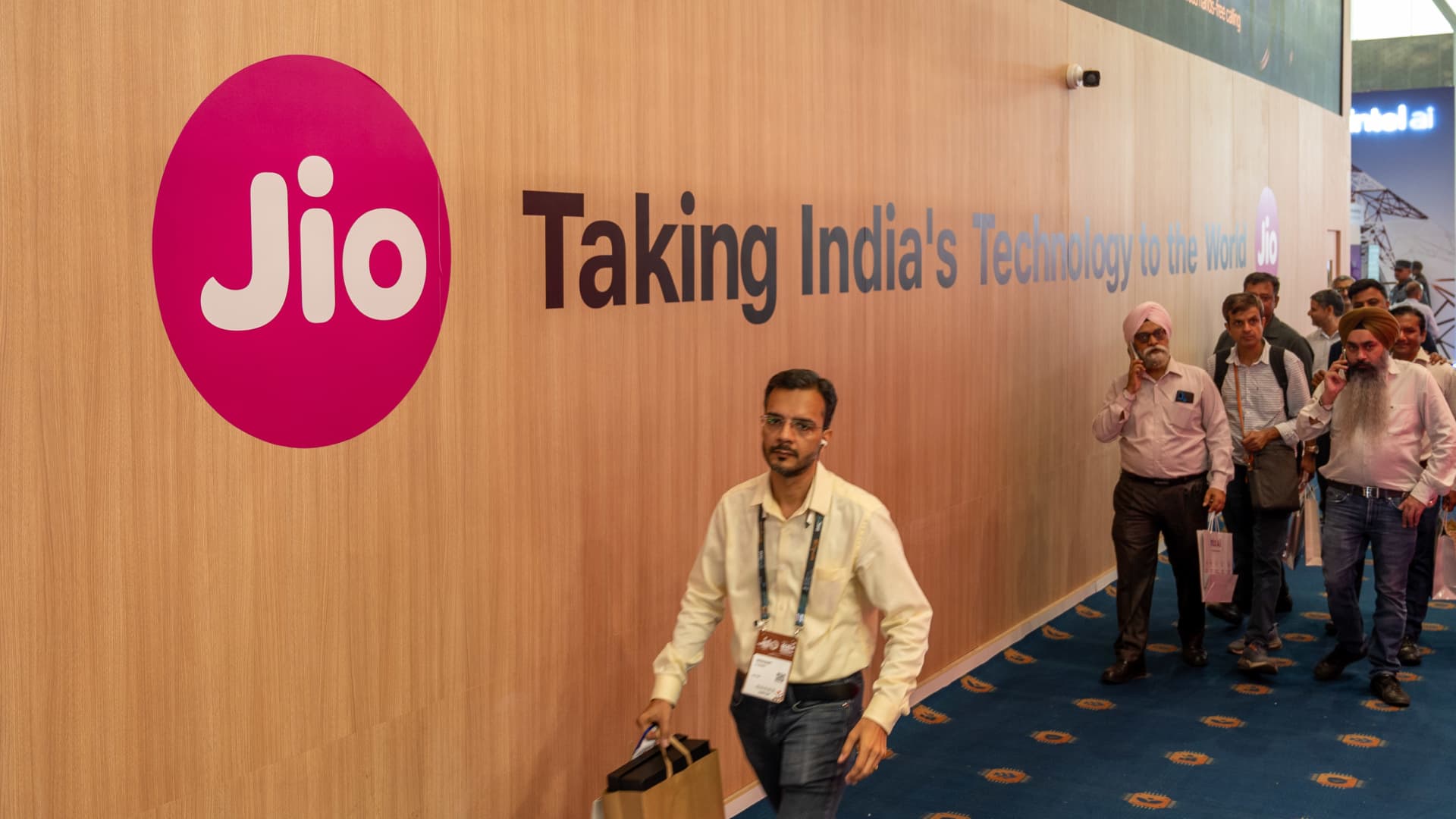
Jio Platforms, the company at the center of Musk’s remarks, is launching an IPO later this month.
This content is blocked because you are not allowing cookies.
To view this content, click on Cookie Preferences here or at the bottom of the page to allow all cookies.
Hello, this is Priyanka Salve, writing to you from Singapore.
Welcome to the latest edition of “Inside India” — your one-stop destination for stories and developments from the world’s fastest-growing large economy.
Indian tycoon Mukesh Ambani, whose plans to launch satellite communications and dominance over the Indian telecom market have drawn the ire of Elon Musk last week, has a more pressing worry.
Jio Platforms, the company at the center of Musk’s remarks, is coming up with a record IPO issue soon, but its valuation demands have met with pushback from investors who seem unconvinced of the company’s positioning as a tech business.
Any thoughts on today’s newsletter? Share them with the team.
The big story
Indian billionaire Mukesh Ambani’s telecom and digital services business Jio Platforms, which was called “monopolistic” by Starlink founder Elon Musk last week, has lowered its valuation ahead of its initial public offering next week.
Jio Platforms is the largest telecom operator in India with over half a million subscribers but has been positioning itself as a tech company and not just a traditional utility provider, experts told CNBC, but disagreed on whether these demands were valid.
Jio Platforms’ IPO will raise up to 302 billion rupees (nearly $3.2 billion) at a price band of 1,065 rupees to 1,119 rupees per share, its parent company Reliance Industries said in a stock filing on Wednesday. This values the company at around $108 billion—lower than the valuations of over $130 billion floated a year ago.
Jio’s enterprise valuation has shrunk to $118 billion from the $133 billion expected earlier, global brokerage Nomura said in a report on Sunday based on Bloomberg news last week that revealed the IPO pricing details.
Reliance Industries, the parent company of Jio Platforms, did not respond to CNBC’s emails seeking comments.
An equity valuation of $108 billion places Jio lower than India’s second-largest telecom company Bharti Airtel, which currently trades at a market capitalization of over $117 billion, as per LSEG data.
“Following its listing, Jio will likely need to demonstrate growth to public shareholders,” the report said, adding that the era of “easy subscriber gains” is ending and tariff hikes are likely to become “the primary driver of earnings growth.”
As per the information shared in Jio Platforms’ IPO papers, the company’s ARPU was 214 rupees ($2.25) per month while that of its competitor Airtel was 257 rupees for mobile, 527 rupees for home internet and 158 rupees for digital TV services.
Based purely on average revenue per user, a key metric for telecom companies, Jio’s discount to Airtel seems justified, but Jio wants to be seen as a tech company and not just a utility player.
Tech or telecom?
Through the IPO, Jio Platforms plans to clear off its legacy telecom debt, which will free up internal cash flows for its second phase of growth, according to Neil Shah, a partner at Counterpoint Research.
Jio plans to use the funds raised by the IPO to pay off its telecom business debt of 275 billion rupees, according to its IPO papers.
The next phase of investment will involve funding the company’s “gigawatt-scale green AI infrastructure” and low-earth-orbit satellite network, Shah said, placing it in the realm of tech businesses.
He pointed out that global tech majors like Meta and Google, which hold nearly 10% and 8% stakes respectively in Jio, are not exiting their investments via the IPO—proving their willingness to wait for the next phase of growth.
During the company’s annual shareholder meeting in June, Ambani told shareholders that Jio will “demonstrate to the world that India can build technology companies of global scale, global capability, and global value.”
He highlighted that, as per the World Intellectual Property Organization, Jio Platforms’ ranking in terms of “velocity of innovation through patents” jumped to 20 from 340 a year ago.
This was also when Ambani announced Jio Platforms’ plan to enter the satellite communication space in India, an area that has drawn interest from Musk’s Starlink. Last week, Musk said that his company has spent “five years complying with every single law and requirement” of the government and blamed Ambani for the delays in the launch of Starlink.
But even as the world’s first trillionaire and India’s second-richest businessman contest to provide internet to the remote areas of India, some experts are not convinced Jio Platforms has enough to be defined as a tech company.
Jio Platforms wants tech prices, but they have “no product expertise” as of now, Anurag Singh, managing partner and founder of U.S. based Ansid Capital, told CNBC.
He added that while Indian investors may buy Jio’s tech pitch due to lack of choice, “global investors won’t.” For now, Reliance is a utility company and will need significant investment to transform into a tech player, Singh said.
Need to know
As ‘Cockroach’ protests grow over alleged voter fraud, Modi defends India as ‘mother of democracy’
Prime Minister Narendra Modi on Tuesday defended India as a “mother of democracy,” as protests demanding the resignation of Chief Election Commissioner Gyanesh Kumar over alleged voter fraud are intensifying.
India calls JD Vance’s comments about immigrants ‘deeply offensive’
India on Friday called comments by U.S. Vice President J.D. Vance about immigrants from the country “deeply offensive”. A day earlier, Vance said that foreign and local companies “cannot lay off American workers and then replace them with foreign indentured servants.”
India’s retail inflation jumps to 5.54% in September, above estimates
India’s headline inflation rose to 5.54% in September from 4.82% in August, adding pressure on the country’s central bank to further tighten monetary policy. The consumer price index print was slightly above economists’ expectations of 5.40%
The Indian billionaire investing in Trump’s refinery project is also buying more Venezuelan crude
Indian billionaire Mukesh Ambani’s Reliance Industries, which is investing in a historic U.S. oil refinery project proposed by President Donald Trump, has now emerged as the biggest buyer of Venezuelan crude outside the U.S.
Coming up
Oct. 15: India unemployment data for September
Oct. 21: Jio Platforms IPO opens
-
 Technologies4 years ago
Tech Companies Need to Be Held Accountable for Security, Experts Say
-
 Technologies5 years ago
Black Friday 2021: The best deals on TVs, headphones, kitchenware, and more
-
 Technologies4 years ago
Tighten Up Your VR Game With the Best Head Straps for Quest 2
-
 Technologies5 years ago
Google to require vaccinations as Silicon Valley rethinks return-to-office policies
-
 Technologies4 years ago
The number of Сrypto Bank customers increased by 10% in five days
-
 Technologies5 years ago
Verum, Wickr and Threema: next generation secured messengers
-
 Technologies5 years ago
Olivia Harlan Dekker for Verum Messenger
-
 Technologies5 years ago
iPhone 13 event: How to watch Apple’s big announcement tomorrow