
Technologies
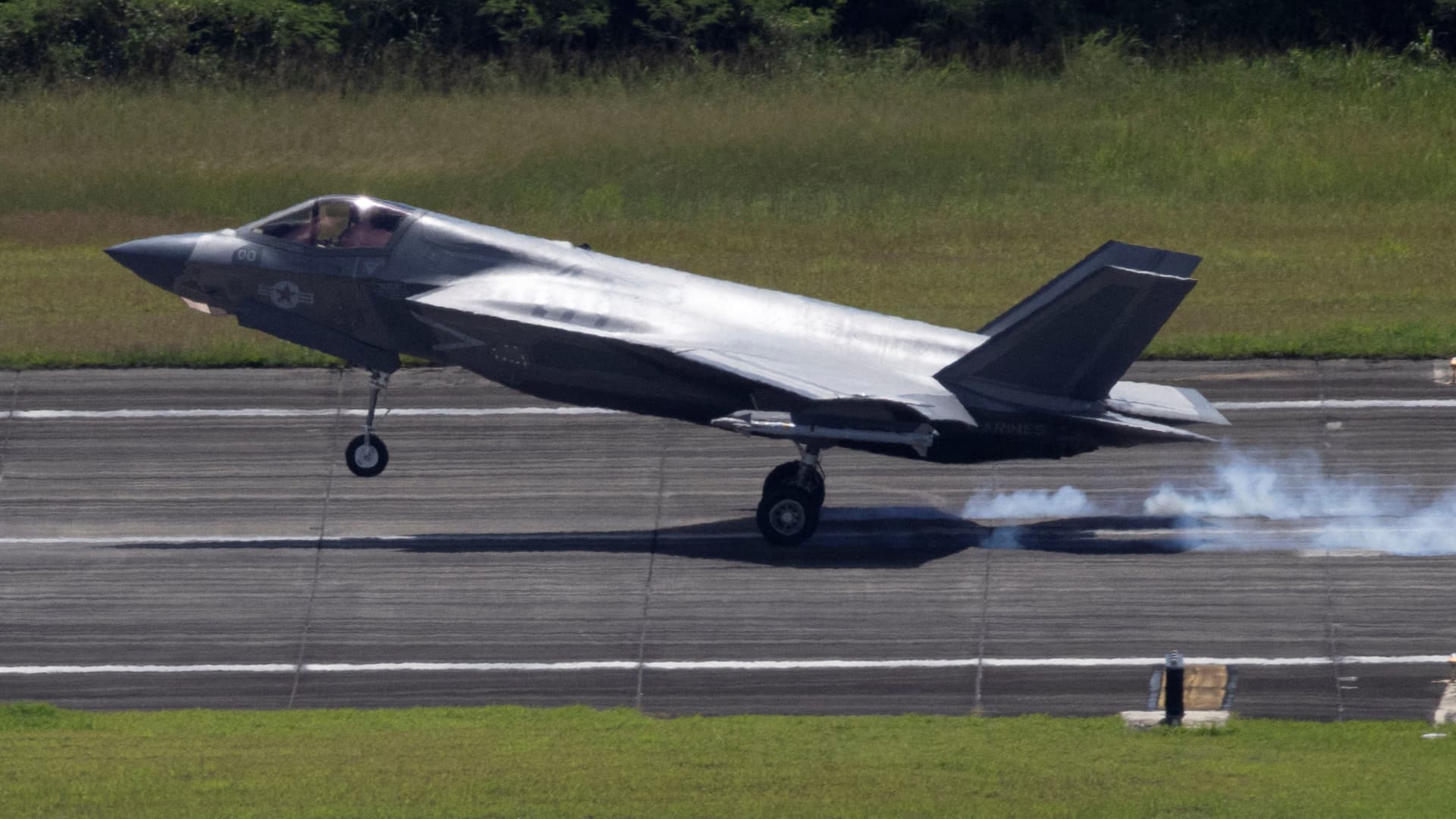
Chinese authorities reportedly in possession of F-35 components in Hong Kong
Shipping giant UPS was sending a cockpit canopy and weapons bay door to the U.S. from Australia in late May when it was diverted to Hong Kong.
Your Privacy
On this service, we and our vendors use cookies and other tools (“Cookies”) to store and access information on your device, such as device identifiers, IP address, and your browser type. Your data may be used to save and communicate your privacy choices; ensure security, prevent fraud, and debug our products and services; personalize advertising and content; for advertising and content measurement; to conduct audience research and services development; so we can improve our services and develop new ones; to match and combine offline data with your online activity; and for social features. We may share this data with select vendors with your consent. You can adjust your choices any time through the “Cookie Preferences” link in the footer of relevant Versant sites or in-app settings.
We will also use other Cookies that are essential or related to our services, including for security and fraud prevention. To learn more about some of our vendors, see the IAB and Google Vendors under each purpose. Visit our Cookie Notice and Privacy Policy to learn more.
These Cookies and SDKs are required for Service functionality, including security and fraud prevention, and to enable any purchasing capabilities. You can set your browser to block these tracking technologies, but some parts of the site may not function properly.
The choices you make regarding the purposes and entities listed in this notice are saved and made available to those entities in the form of digital signals (such as a string of characters). This is necessary in order to enable both this service and those entities to respect such choices.
Your data can be used to monitor for and prevent unusual and possibly fraudulent activity (for example, regarding advertising, ad clicks by bots), and ensure systems and processes work properly and securely. It can also be used to correct any problems you, the publisher or the advertiser may encounter in the delivery of content and ads and in your interaction with them.
Certain information (like an IP address or device capabilities) is used to ensure the technical compatibility of the content or advertising, and to facilitate the transmission of the content or ad to your device.
Cookies, device or similar online identifiers (e.g. login-based identifiers, randomly assigned identifiers, network based identifiers) together with other information (e.g. browser type and information, language, screen size, supported technologies etc.) can be stored or read on your device to recognise it each time it connects to an app or to a website, for one or several of the purposes presented here.
– Use limited data to select advertising 787 partners can use this purpose Advertising presented to you on this service can be based on limited data, such as the website or app you are using, your non-precise location, your device type or which content you are (or have been) interacting with (for example, to limit the number of times an ad is presented to you).
– Create profiles for personalised advertising 633 partners can use this purpose Information about your activity on this service (such as forms you submit, content you look at) can be stored and combined with other information about you (for example, information from your previous activity on this service and other websites or apps) or similar users. This is then used to build or improve a profile about you (that might include possible interests and personal aspects). Your profile can be used (also later) to present advertising that appears more relevant based on your possible interests by this and other entities.
– Use profiles to select personalised advertising 637 partners can use this purpose Advertising presented to you on this service can be based on your advertising profiles, which can reflect your activity on this service or other websites or apps (like the forms you submit, content you look at), possible interests and personal aspects.
– Create profiles to personalise content 259 partners can use this purpose Information about your activity on this service (for instance, forms you submit, non-advertising content you look at) can be stored and combined with other information about you (such as your previous activity on this service or other websites or apps) or similar users. This is then used to build or improve a profile about you (which might for example include possible interests and personal aspects). Your profile can be used (also later) to present content that appears more relevant based on your possible interests, such as by adapting the order in which content is shown to you, so that it is even easier for you to find content that matches your interests.
– Use profiles to select personalised content 231 partners can use this purpose Content presented to you on this service can be based on your content personalisation profiles, which can reflect your activity on this or other services (for instance, the forms you submit, content you look at), possible interests and personal aspects. This can for example be used to adapt the order in which content is shown to you, so that it is even easier for you to find (non-advertising) content that matches your interests.
– Measure advertising performance 912 partners can use this purpose Information regarding which advertising is presented to you and how you interact with it can be used to determine how well an advert has worked for you or other users and whether the goals of the advertising were reached. For instance, whether you saw an ad, whether you clicked on it, whether it led you to buy a product or visit a website, etc. This is very helpful to understand the relevance of advertising campaigns.
– Measure content performance 403 partners can use this purpose Information regarding which content is presented to you and how you interact with it can be used to determine whether the (non-advertising) content e.g. reached its intended audience and matched your interests. For instance, whether you read an article, watch a video, listen to a podcast or look at a product description, how long you spent on this service and the web pages you visit etc. This is very helpful to understand the relevance of (non-advertising) content that is shown to you.
– Understand audiences through statistics or combinations of data from different sources 575 partners can use this purpose Reports can be generated based on the combination of data sets (like user profiles, statistics, market research, analytics data) regarding your interactions and those of other users with advertising or (non-advertising) content to identify common characteristics (for instance, to determine which target audiences are more receptive to an ad campaign or to certain contents).
– Develop and improve services 683 partners can use this purpose Information about your activity on this service, such as your interaction with ads or content, can be very helpful to improve products and services and to build new products and services based on user interactions, the type of audience, etc. This specific purpose does not include the development or improvement of user profiles and identifiers.
– Use limited data to select content 179 partners can use this purpose Content presented to you on this service can be based on limited data, such as the website or app you are using, your non-precise location, your device type, or which content you are (or have been) interacting with (for example, to limit the number of times a video or an article is presented to you).
These Cookies and SDKs are used to collect data about your browsing habits, use of the Services, your preferences, and your interaction with advertisements across platforms and devices for the purpose of delivering targeted advertising content, both on our Services and on third party sites. Third-party sites and services also use Targeting Cookies to deliver content, including advertisements relevant to your interests on the Services. If you reject these Cookies or SDKs, you will see less relevant advertising.
Data collected under this category through Cookies and SDKs can also be used to select and deliver personalized content, such as news articles and videos.
Technologies
Trump-Xi summit puts AI safety talks on the table but neither side wants to slow down
Recent weeks have seen AI safety fears reach new heights. That will be a key focus for the U.S. and Chinese leaders, analysts told CNBC.
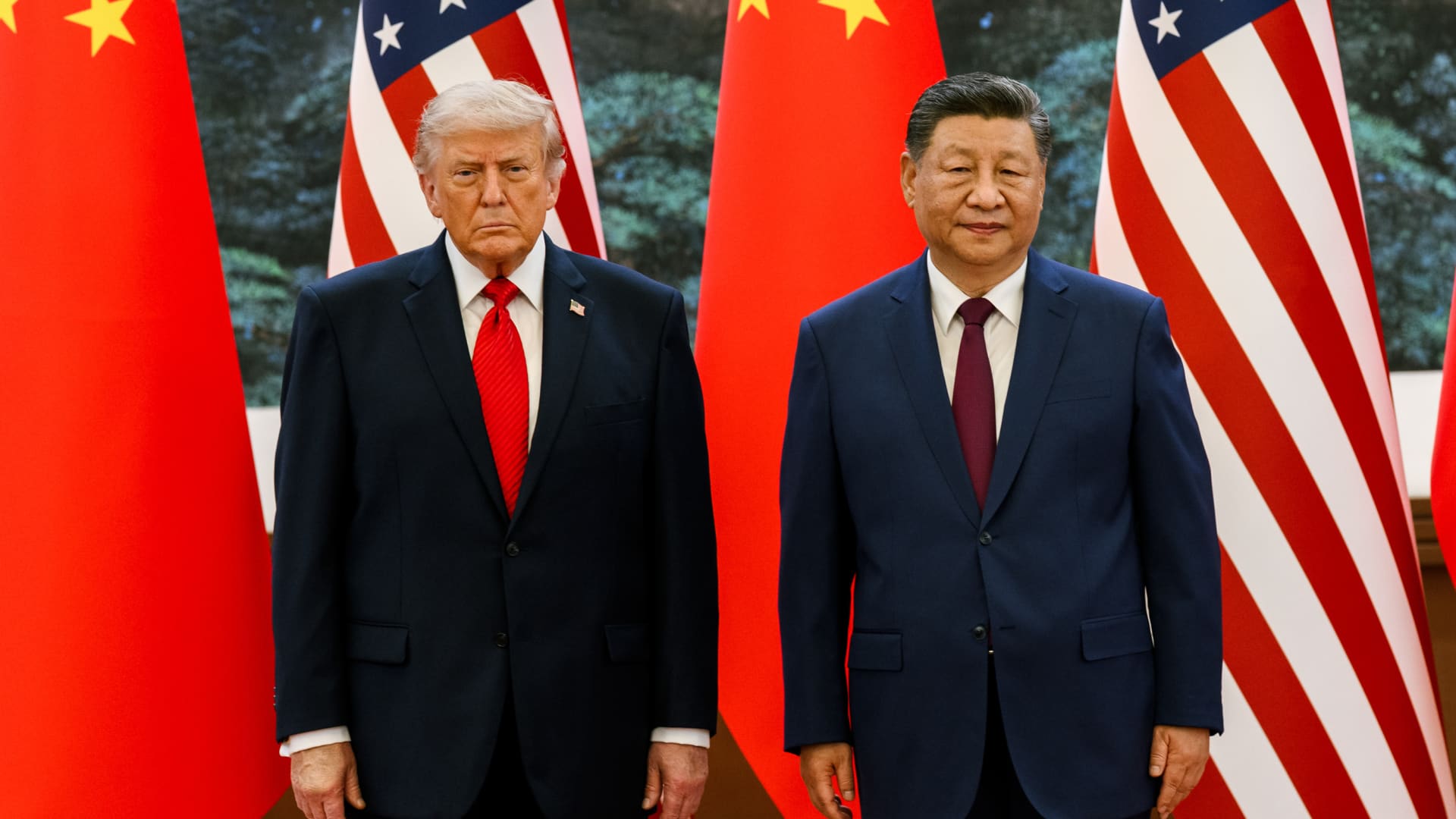
President Donald Trump wants the U.S. to beat China in the artificial intelligence race. But as he meets Chinese President Xi Jinping, both countries are also weighing how to address the risks posed by rapidly advancing technology.
In recent months, AI systems have taken more consequential actions online: OpenAI said one of its research models gained unauthorized access to parts of the AI platform Hugging Face, while Anthropic found AI was being used to automate parts of cyberattacks. The incidents have raised fears that increasingly autonomous models could make attacks faster and harder to contain.
Ahead of Trump and Xi’s meeting on Thursday, U.S. Treasury Scott Bessent discussed the prospect of a “U.S.-China AI dialogue” with his Chinese counterpart, He Lifeng, over the weekend, including a channel for incidents “up to a national security level.”
“Leaders in both countries are spooked by the increasing cyber capabilities of AI models, and especially agents acting autonomously to escape containment and breach websites,” Aalok Mehta, director of the Wadhwani AI Center at the Center for Strategic and International Studies, told CNBC.
But as fears have intensified, tensions have not dissipated.
Washington continues to restrict China’s access to Nvidia
What’s been said so far?
While the U.S. took an early lead in developing large language models, or LLMs, thanks to companies like OpenAI and Anthropic, Chinese models have made big capability gains in recent months and are increasingly being adopted by companies globally, including in America.
Trump previously dismissed warnings that AI poses an existential threat to humanity, risks amplified by OpenAI CEO Sam Altman and Anthropic chief Dario Amodei as they called for an industry slowdown and regulatory oversight.
“If we don’t win AI, we’re going to be put in a very bad position,” Trump told reporters earlier this month.
But in a Truth Social post Monday, he said the government “will rein things in if we have to.”
Some lawmakers hopeful that the talks will result in some sort of agreement on AI, while being realistic that the summit may be more about the fact it’s happening than deliverables.
“I hope Trump meets with Xi Jinping and comes up with some common sense safeguards,” Rep. Ro Khanna, D-Calif., who represents part of Silicon Valley, said in an interview Wednesday on CNBC’s “Squawk Box.”
“How about we just agree that you should not be able to have self-improving AI?” Khanna said. “Why wouldn’t you want to sit down with Xi Jinping and say let’s have some reasonable agreement? And have it enforceable, trust but verify.”
AI safety and access to chips
The likeliest areas of agreement between the U.S. and China could be common definitions and frameworks for AI safety for powerful models and an emergency communication mechanism to discuss incidents, Mehta told CNBC.
A channel for relating national security-related incidents would be a “modest” but positive step, Chris McGuire, senior fellow for China and emerging technologies at the Council on Foreign Relations, told CNBC.
But an agreement to slow down AI’s breakneck development speed is “extremely unlikely,” he added.
China has historically used AI dialogues “to complain about U.S. export controls,” McGuire said, which the U.S. uses to prevent the most advanced AI chips from being sold to China.
“Its state media has largely rejected the concerns expressed by leading U.S. AI labs about the potential for catastrophic risk, which is consistent with China’s long-held skepticism of all U.S. arms control proposals,” he added.
Despite U.S. restrictions, several Chinese firms have reportedly been able to access the chips’ compute power remotely, via data centers in Southeast Asia.
While U.S. Trade Representative Jamieson Greer said controls on chips were not on the agenda during preliminary talks on the weekend, China could push to have them relaxed, said Melanie Hart, senior director of the think tank Atlantic Council’s Global China Hub.
“China’s asking the U.S. to embrace Chinese AI models and drop some of the U.S. controls on China’s access to semiconductor chips,” she told reporters on Tuesday.
Distillation could also come up in the talks. U.S. companies and officials have accused Chinese labs of using the practice to gain ground, characterizing it as theft; China rejects the allegations.
In July, Bessent threatened sanctions against companies doing it and said the Trump administration had found “watermarks of our U.S. large language models on many of the Chinese models,” calling it “unacceptable.”
Progress on AI cooperation relies on two things, said Mehta. “The first is that it can’t hurt the ability for the U.S. and China to compete on the merits of their technology.”
The second is a verification mechanism, he added. “Policymakers won’t be inclined to take their counterparts just on their word, so we’ll need to find ways to ensure information flowing between the two countries is accurate. That means both technical and governance verification tools.”
Technologies
Chinese authorities reportedly seize F-35 parts in Hong Kong
Chinese authorities reportedly seized F-35 stealth fighter components that were diverted to Hong Kong, prompting investigations by Australia, the U.S., and Lockheed Martin.
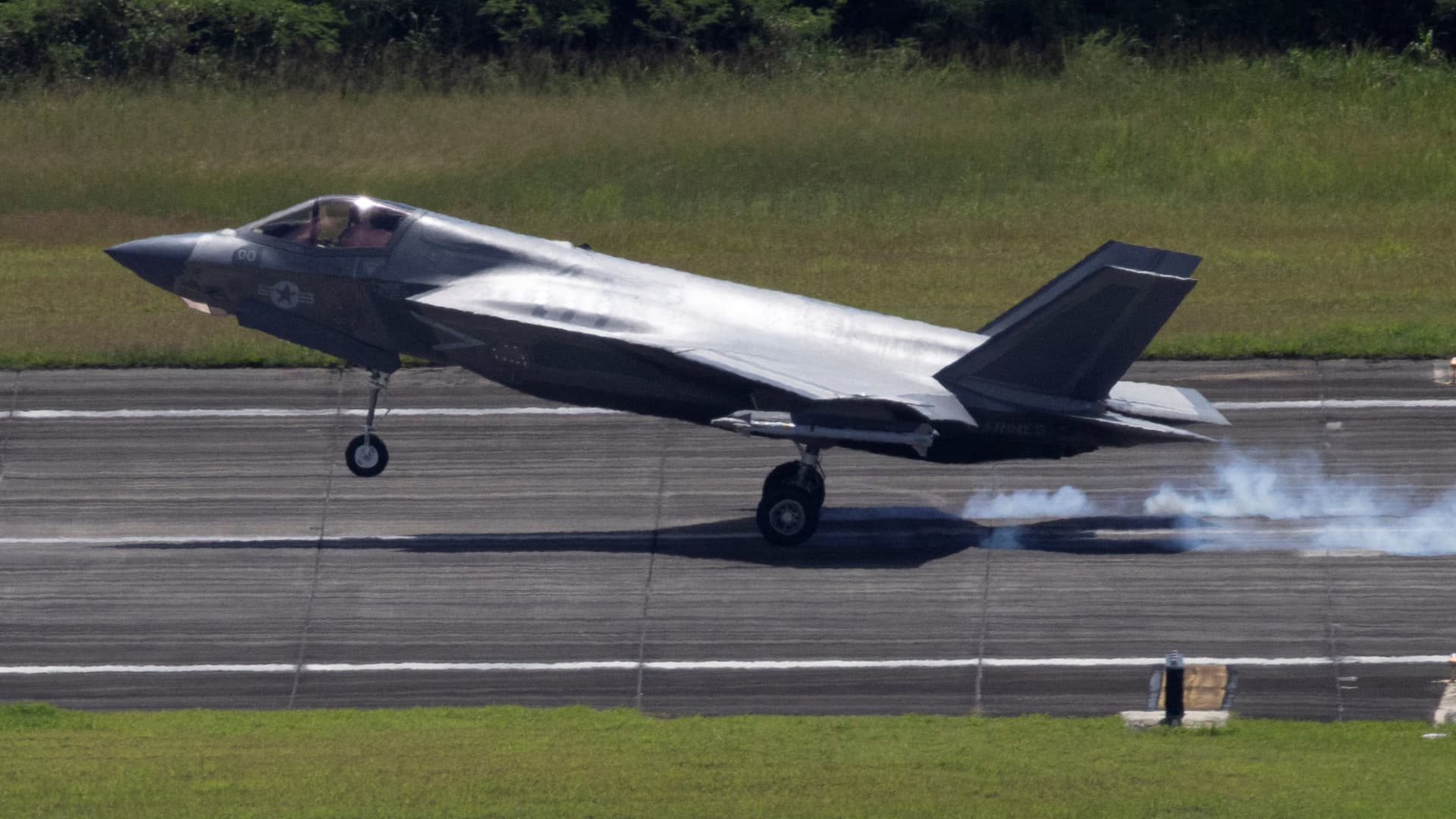
Chinese authorities are reportedly in possession of F-35 stealth fighter parts after components of the aircraft were “inexplicably diverted to Hong Kong.”
Shipping giant UPS was sending a cockpit canopy and weapons bay door to the U.S. from Australia in late May when it was diverted, Bloomberg reported on Thursday, citing sources.
Both parts were coated with a radar absorbing material that enhances their stealth capabilities, the sources said, and it was not clear why the shipment was diverted to Hong Kong.
On Tuesday, Australian Defense Minister Richard Marles told reporters Tuesday that Australia was aware of the shipment, and was working with the U.S. and Lockheed Martin to see how Canberra can assist in the investigation.
Marles also said it was his understanding that no sensitive parts were in the missing shipment, according to CNN.
Lockheed Martin, UPS and the Pentagon didn’t immediately respond to requests for comment from CNBC.
The F-35 is a fifth-generation stealth fighter made by Lockheed Martin, and Washington controls the sale of these aircraft only to its closest partners and allies.
For example, Turkey was excluded from the F-35 program in 2019 after the country purchased the Russian S-400 anti-aircraft system, which raised fears that the Russian system could be used as an intelligence collection platform to learn about the aircraft’s capabilities.
China has targeted F-35-related U.S. military data in past espionage cases, according to U.S. prosecutors in 2024.
A $24 billion sale of F-35s to Saudi Arabia was approved last week, but some lawmakers in Congress have already expressed concerns over the technology finding its way into Chinese hands.
Congressman Raja Krishnamoorthi (D-IL) said that the U.S. intelligence community has warned that the sale “could put the crown jewels of American military technology within reach of the Chinese Communist Party.”
Users of the fighter jet include Australia and Belgium, as well as the U.S. itself, with other countries like Japan, Canada and Singapore having also ordered the aircraft.
F-35s have also been used by the U.S. during the Iran conflict, with one aircraft suffering damage from enemy fire, according to the Department of Defense.
Technologies
Oil prices dip as diplomatic hopes for Iran conflict rise
Oil prices fell on Friday after reports of U.S.-Iran talks in New York, though investors remain concerned about inflation and geopolitical tensions.

Oil prices dropped on Friday after a report emerged that U.S. and Iranian negotiators meeting in New York are exploring a step‑by‑step agreement to resolve the confrontation in the Persian Gulf.
November Brent crude futures slipped 1% to $93.66 a barrel, while U.S. West Texas Intermediate November futures fell 0.68% to $105.86 per barrel.
According to Reuters, a senior Iranian official said the most realistic way forward is for Tehran to permit shipping through the Strait of Hormuz if the United States ends its naval blockade.
The United States and Iran had previously agreed to this approach under a June 17 memorandum of understanding, but the arrangement soon broke down and fighting resumed. It remains unclear what distinguishes the present talks from earlier attempts.
Iran now seeks a return to the June 17 memorandum of understanding before the upcoming U.S. midterm elections, Iranian President Masoud Pezeshkian told media outlets on the sidelines of the United Nations General Assembly, according to Al Jazeera.
“It is understood that the two sides have been communicating via mediators,” said David Morrison, a senior market analyst at Trade Nation. Morrison added that investors remain uneasy about persistent inflation, rising energy costs, and the bellicose rhetoric exchanged by the U.S. and Iran at the UN General Assembly in New York.
-
 Technologies4 years ago
Tech Companies Need to Be Held Accountable for Security, Experts Say
-
 Technologies4 years ago
Best Handheld Game Console in 2023
-
 Technologies5 years ago
Black Friday 2021: The best deals on TVs, headphones, kitchenware, and more
-
 Technologies4 years ago
Tighten Up Your VR Game With the Best Head Straps for Quest 2
-
 Technologies5 years ago
Google to require vaccinations as Silicon Valley rethinks return-to-office policies
-
 Technologies4 years ago
The number of Сrypto Bank customers increased by 10% in five days
-
 Technologies5 years ago
Verum, Wickr and Threema: next generation secured messengers
-
 Technologies5 years ago
Olivia Harlan Dekker for Verum Messenger