
Technologies
Oil Prices Drop as U.S. and Iran Hold Hours-Long UN Talks
Oil prices fell as U.S.-Iran talks at the U.N. raised expectations that supply disruptions could ease. Brent and WTI futures declined, while optimism grew around a possible diplomatic settlement.
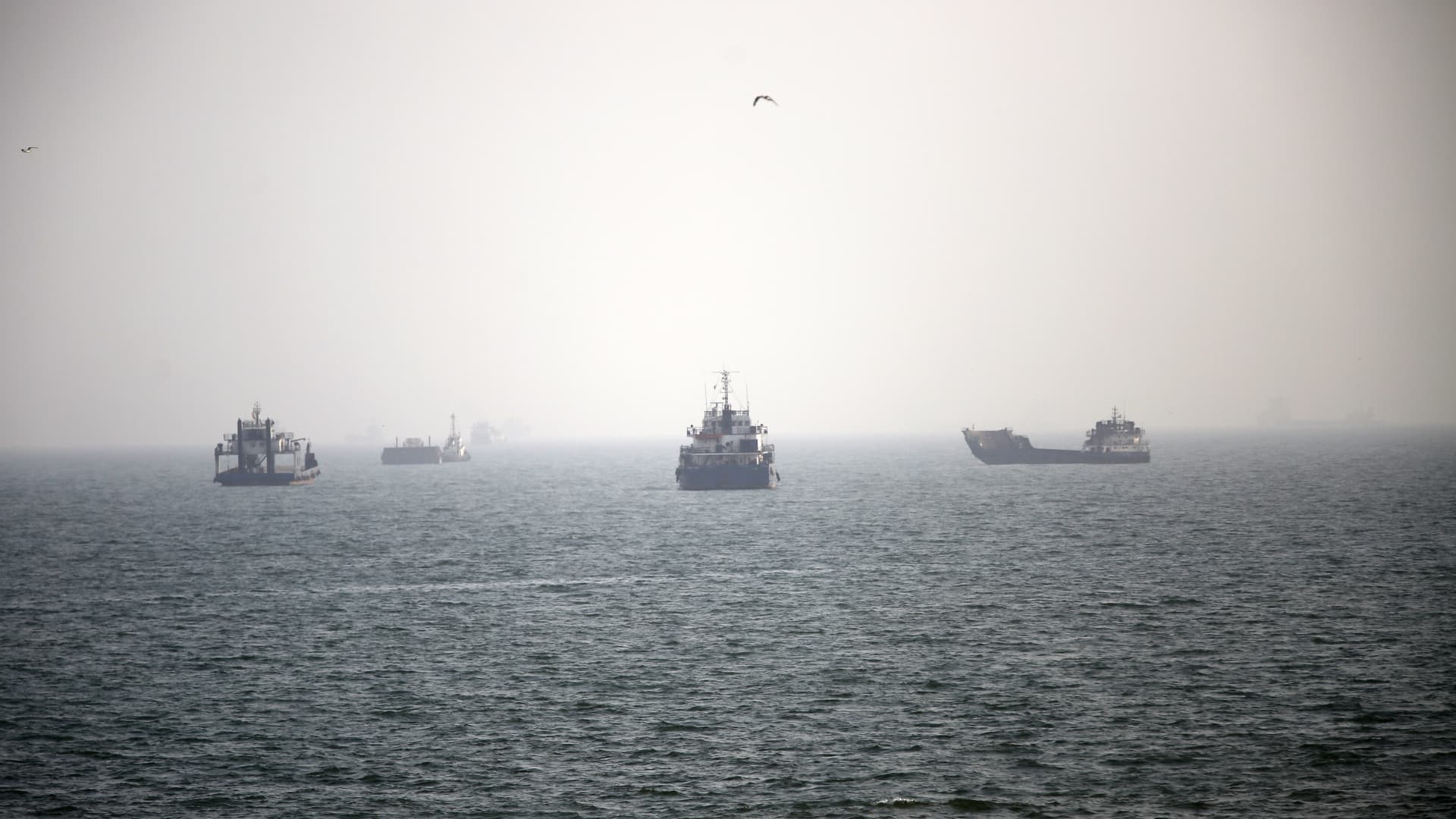
Oil declined on Wednesday as optimism grew that supply disruptions could ease after U.S.-Iran talks, lifting hopes for a diplomatic resolution to the Middle East conflict.
Futures on the international benchmark Brent crude for November delivery fell 0.71% to $98.55 a barrel as of 3:04 a.m. ET. U.S. West Texas Intermediate futures for November slipped 1.26% to $89.36 per barrel.
President Donald Trump said Tuesday that U.S. officials had a “very good meeting” with Iran’s delegation, which lasted about three hours. Earlier, during his address to the U.N., Trump said he faced a “big decision” over whether to make a deal with Tehran or “annihilate” the country.
Reuters reported Tuesday that Iran could reopen the Strait of Hormuz within a week if the U.S. agrees to reduce military pressure and lift its blockade of Iranian ports.
“Pakistan’s mediation efforts with Tehran could also reduce the risk of a broader escalation,” said Paolo Broccardo, chief executive officer at private digital bank BankPro.
He said oil prices were also unlikely to surge sharply in the near term.
“Over the past five consecutive sessions, the price has fallen by almost 12%, retreating once again from the ‘intervention zone’ above $100, where we have repeatedly seen intensified peace-building efforts from both sides,” Broccardo said.
Technologies
In photos: Key takeaways from day one of the UN General Assembly
World leaders descended on New York for the annual United Nations General Assembly, where the agenda covers topics from wars to the risks posed by AI.
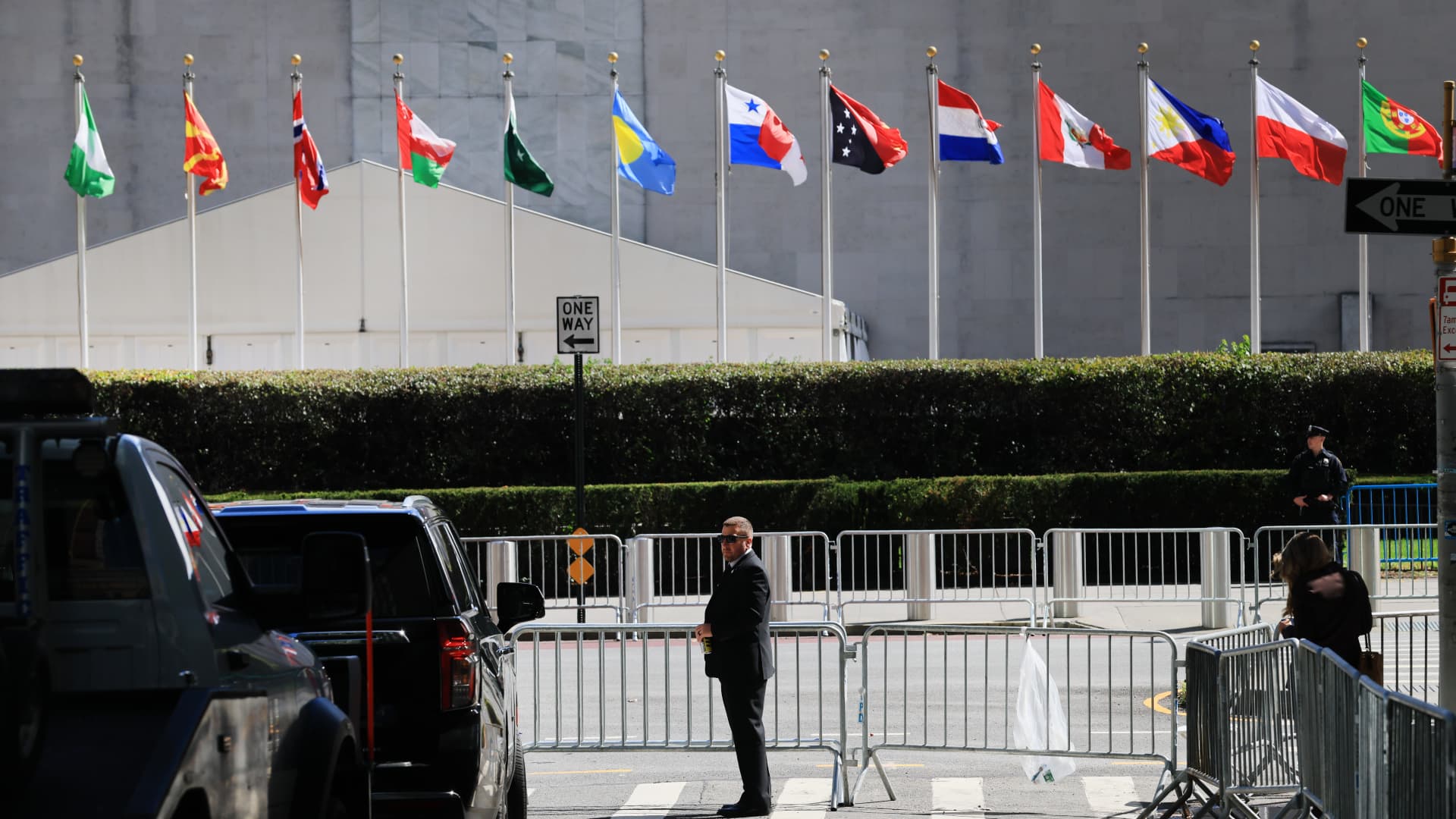
World leaders descended on New York this week for the annual United Nations General Assembly, where the agenda spans the U.S.-Iran war and Russia’s invasion of Ukraine to the fragile ceasefire in Gaza and the risks posed by artificial intelligence.
Nearly 130 heads of state and government started taking the podium on Tuesday, including U.S. President Donald Trump, French President Emmanuel Macron, Ukrainian President Volodymyr Zelenskyy, and European Commission President Ursula von der Leyen. Brazil’s Luiz Inácio Lula da Silva, Jordan’s King Abdullah II and Qatar’s Emir Sheikh Tamim bin Hamad Al Thani are also attending.
Motorcades, road closures and security details for visiting leaders have choked midtown Manhattan. Inside UN headquarters, delegates face a week of back-to-back speeches and sideline meetings that come at a crucial time for a world order already under strain.
Chinese leader Xi Jinping will skip the assembly but head to Washington for a high-level summit with Trump on Wednesday. Leaders from India and Russia are also staying away.
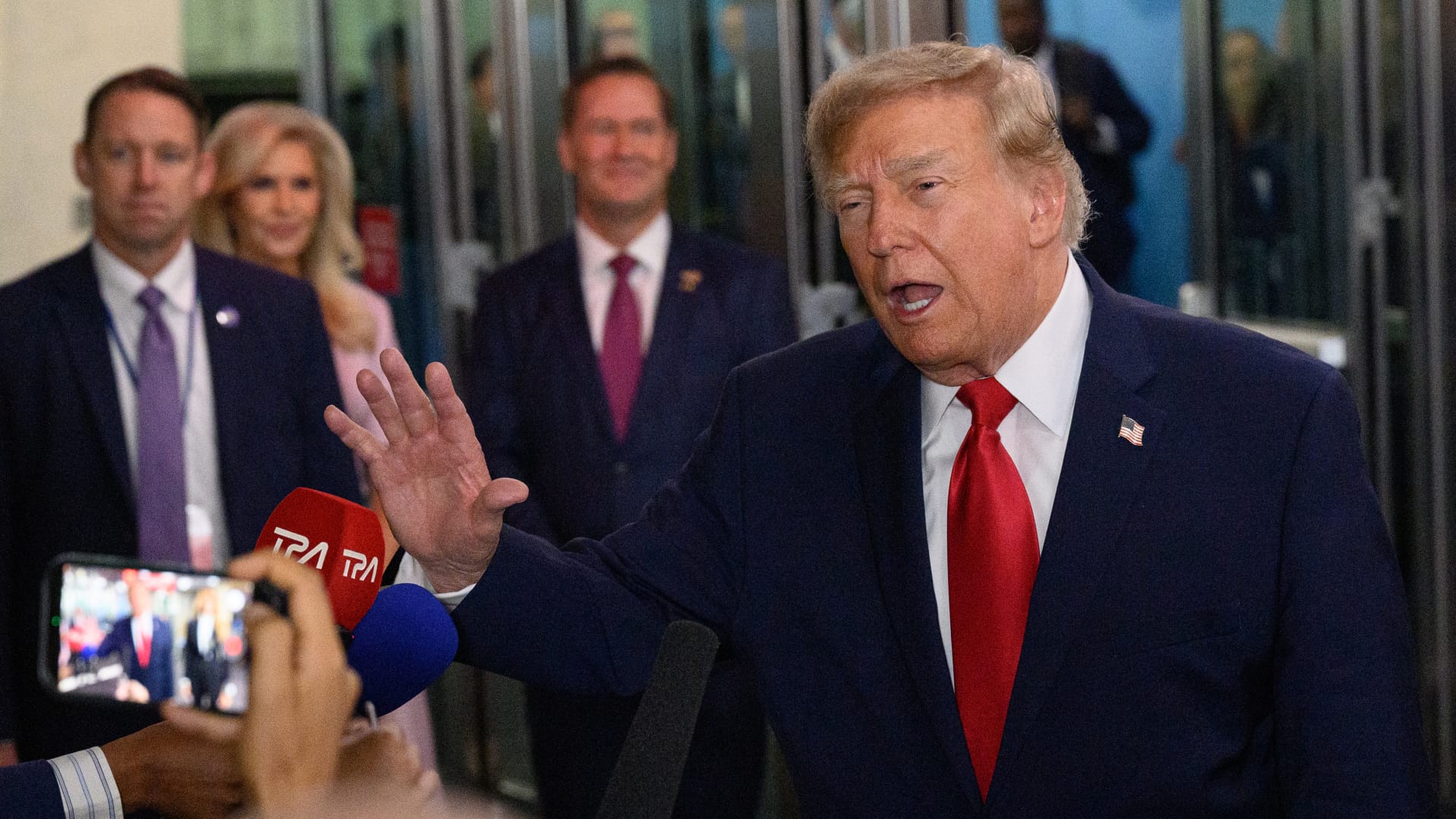
Trump on Tuesday told world leaders at the assembly that he faces a “big decision”: make a deal with Iran or “annihilate” the Islamic Republic. He later told reporters that U.S. officials held a “very good” three-hour meeting with Iranian envoys on the sidelines, reviving fragile hopes for a diplomatic off-ramp to the seven-month war.
South Korean President Lee Jae Myung set out a three-part plan for “peaceful coexistence” with North Korea. It calls on Pyongyang to “first halt the advancement” of its nuclear program before reducing it.
Brazil’s Lula spoke first, as his country traditionally does. “Brazilian democracy belongs to Brazilians,” Lula said. “Brazil is nobody’s backyard.” He said the UN “is failing in one of its highest missions: to save humanity from the scourge of war.”
Trump also signed a security agreement with Denmark and Greenland that expands U.S. military access in the semi-autonomous Danish territory of Greenland.
Trump then met Ukrainian President Volodymyr Zelenskyy for about 40 minutes. He pressed for a Russia-Ukraine energy truce and backed a ban on U.S. diesel exports as fuel prices hit records before the midterms.
French President Emmanuel Macron gave his own UN address. “There can be no peace without justice,” he said. After meeting Trump, he pledged to push for a moratorium on strikes on Ukraine’s energy grid.
Turkish President Recep Tayyip Erdogan called Gaza “the most inhumane, most shameful concentration camp of our time,” prompting Israel’s delegation to walk out. Mahmoud Abbas, President of the Palestinian Authority, will address the assembly by video after being denied a U.S. visa.
Technologies
CNBC Daily Open: Nothing artificial about ‘Super Intelligence’
President Donald Trump seeks to rebrand AI ahead of his meeting with China’s Xi Jinping, while rejecting a “globalist scheme” to regulate the technology.
This content is blocked because you are not allowing cookies.
To view this content, click on Cookie Preferences here or at the bottom of the page to allow all cookies.
Hello, this is Leonie Kidd coming to you from London. Welcome to another edition of CNBC’s Daily Open.
President Donald Trump’s passion for renaming places is now extending to renaming technological developments.
His latest effort is to rebrand AI as ‘Super Intelligence.’
However, it will take more than a facelift for the most transformative technology in a generation to meet the expectations for a global safety approach, especially ahead of the meeting with Chinese President Xi Jinping, who will be welcomed to Washington D.C., later on Wednesday.
Read on for more.
What you need to know today
“The use of the word artificial makes intelligence fake… It is not fake. It’s actually amazing.”
The words of U.S. President Donald Trump as he used his keynote speech at the United Nations General Assembly to call for the renaming of AI as “Super Intelligence.”
His support for allowing AI (or Super Intelligence) to develop at a winning pace comes as his global peers look to reach an agreement on safety rules around the powerful technology.
Later on Wednesday, Trump will greet China’s Xi Jinping in an arrival ceremony ahead of Thursday’s state visit, where AI has become one of the key talking points between the two superpowers.
Speed versus safety
The CEO of OpenAI Sam Altman and Anthropic boss Dario Amodei are expected to address the United Nations Security Council later on Wednesday. They are set to be joined by Hugging Face CEO Clément Delangue to debate AI safety and regulation.
The appearance follows calls to slow the breakneck pace of the model frontier — warnings Trump has called a “hoax” and “scam.”
Frontier FOMO
Investors are taking an optimistic view, with a rally in technology stocks on Tuesday leading the Nasdaq to another fresh high. The tech-heavy index hit a new all-time intraday peak and achieved a record close.
Futures are flat in early trading on Wednesday amid a broadly positive handover from Asia.
Oil oscillations
Crude prices are lower on Wednesday following news that U.S. officials had a “very good meeting” with the Iranian delegation on the sidelines of the UN meeting.
President Trump said the discussion with officials lasted about three hours. Earlier in his address to the U.N., he said he has a “big decision” over whether to reach a deal with Tehran or “annihilate” the country.
According to regional media reports, Iran has been communicating its conditions for ending the seven-month war with the U.S. through a Qatari mediator.
— Leonie Kidd
*Please note, the Daily Open EMEA will be coming to you from my colleagues in Singapore for the next few days*
This content is blocked because you are not allowing cookies.
To view this content, click on Cookie Preferences here or at the bottom of the page to allow all cookies.
And Finally…
Anthropic and OpenAI roll out cheaper models in first release since call for slowdown
Anthropic and OpenAI on Tuesday each announced new, less costly artificial intelligence models as both frontier labs continue to face stiff competition from cheaper, open-weight competitors.
OpenAI introduced additional tiers to its GPT-6 family, with GPT-6 Sol and GPT-6 Luna, slashing the API prices by 50% compared with GPT-5.6 promotional pricing.
Sol, which is a tier below Astra, is meant for more complex workloads like coding, while the company’s Luna offering is geared toward “high-volume tasks” such as extracting information or summarizing documents, the company wrote.
Anthropic unveiled Claude Opus 5.5 on Tuesday, its latest release in the new Claude 5.5 model family.
— CJ Haddad
This content is blocked because you are not allowing cookies.
To view this content, click on Cookie Preferences here or at the bottom of the page to allow all cookies.
Technologies
Iran reportedly says it can reopen Strait of Hormuz within 7 days if U.S. eases military pressure
The reports raised hopes of renewed U.S.-Iran diplomacy, with U.S. stock futures mixed and oil prices lower.
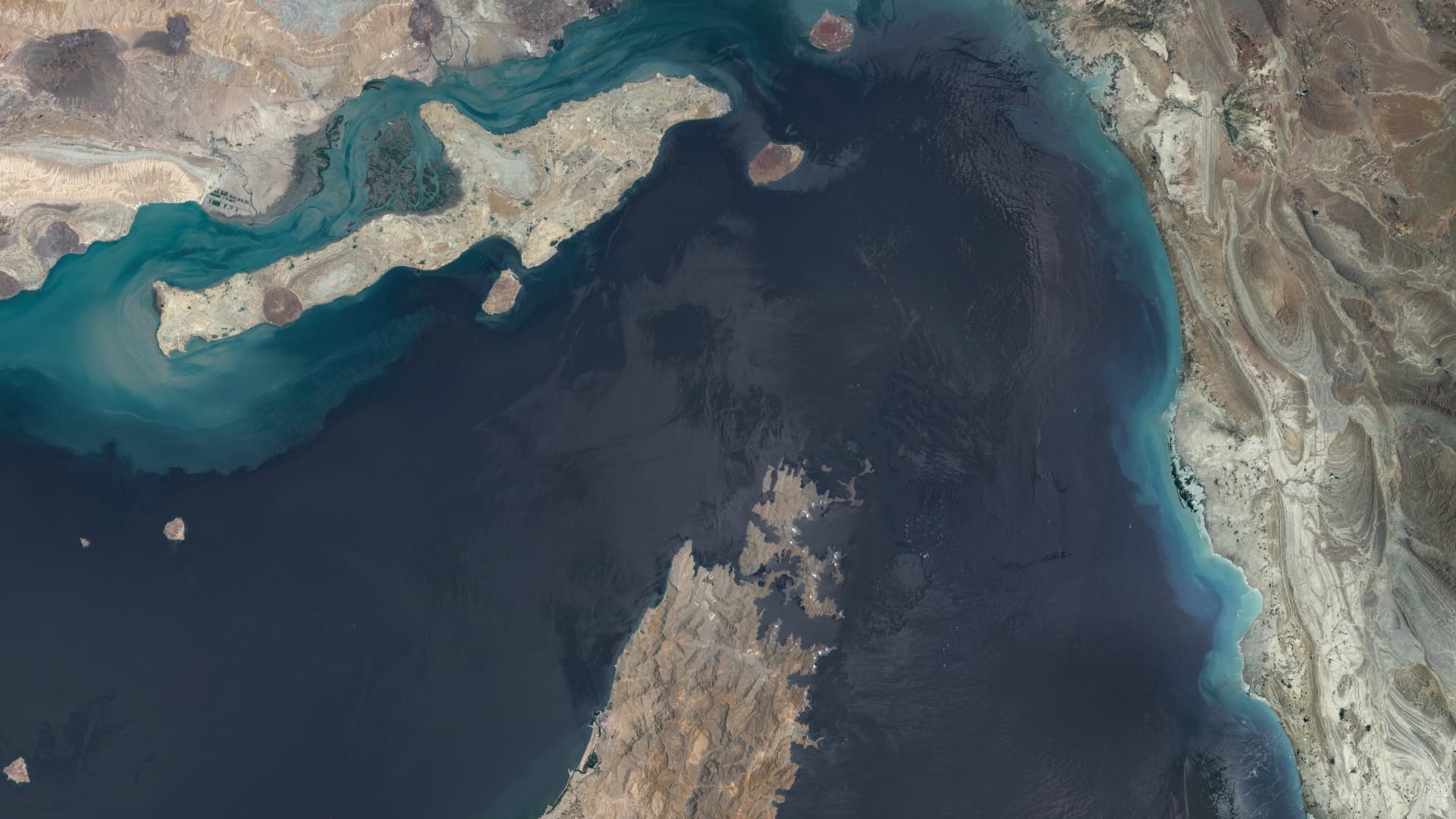
Iran has suggested it could reopen the strategically vital Strait of Hormuz within seven days if the U.S. eases military pressure and lifts its blockade on Iranian ports, according to media reports.
The prospect of renewed diplomacy between the U.S. and Iran comes after nearly seven months of war in the Middle East, with the Trump administration threatening to ramp up its economic pressure campaign against Tehran in recent days.
Reports from Reuters and Japan’s Kyodo news agency, which both cited an unnamed senior Iranian government official, said Tehran had laid out the necessary conditions for reopening the Strait of Hormuz. CNBC could not independently verify the reports.
A senior Iranian government official told MS Now, CNBC’s Versant Media partner, that Reuters and Kyodo’s reports were not true.
The war has severely disrupted shipping through the strait, a narrow waterway that typically handles around 20% of the world’s oil and liquefied natural gas supplies, sending shock waves through the global economy.
U.S. stock index futures traded mixed on the news, while oil prices reversed earlier gains.
International benchmark Brent crude
The reports came just before U.S. President Donald Trump is due to address the United Nations General Assembly on Tuesday, amid mounting domestic pressure over his decision to launch a war against Iran, a conflict that has rattled the global economy.
Earlier in the week, U.S. Treasury Secretary Scott Bessent threatened to “shut down” all Iranian airlines from as soon as Wednesday.
Speaking on CNBC’s “Squawk Box” on Monday, Bessent said: “How do we do that? That if they land, you cannot provide them with fuel. You cannot provide them with landing services, you cannot sell them tickets, or you will be knocked out of the dollar system.”
The Treasury secretary said that Washington was pressuring Iran “like never before,” saying that the U.S. was putting a stop to Iran’s “enablers” around the world, such as sanctioning banks.
Last week, the Treasury announced new sanctions on Russia’s state-controlled VTB Bank as part of its effort to economically isolate Iran by targeting its business partners and other financial enablers.
G7 condemns Houthi strikes
Separately, the G7 group of nations has called for an end to attacks by Iranian-backed Houthi rebels against Yemen and Saudi Arabia on Monday stateside, condemning the “unacceptable continued strikes” by the group.
The bloc also called on the Houthis to cease all military actions, attacks against civilian shipping and for Iran to end its support for the rebel group.
The Houthis reportedly said they attacked “sensitive” sites in the Saudi capital Riyadh on the weekend, with fire and smoke seen near the city’s airport.
Houthi rebels also recently seized Yemen’s Perim Island on the Red Sea, tightening their grip on the Bab el-Mandeb Strait, which puts Iran and its proxies on course to exercise control over two critically important oil choke points: that and the Strait of Hormuz.
The Bab el-Mandeb Strait is an important alternative for oil exports to bypass the Strait of Hormuz, especially for Saudi Arabia, whose East-West pipeline allows the kingdom to divert some crude flows to be exported from the Red Sea.
The G7 statement comes after the U.K. reportedly said it will support Saudi Arabia against Iranian-backed Houthi rebels, with the Royal Air Force providing air-to-air refueling of Saudi planes.
U.K. Prime Minister Andy Burnham told reporters that the arrangement will be for a matter of weeks, and will be kept under review.
The move comes as Trump refused Riyadh’s request for help against the rebels on the weekend, reportedly canceling a planned airstrike.
Burnham said he was “acting to secure the interests of Britain and the wider region, because of course Saudi Arabia has been experiencing attack, is looking at potential further disruption, and we need to keep those pathways (for oil) open,” according to The Associated Press.
Last week, NATO Secretary-General Mark Rutte signaled that European nations could also provide support to Saudi Arabia, telling a BBC interview that “I would not be surprised if some phone calls were taking place between European allies — ‘hey, how are we going to deal with this?’”
Correction: Mark Rutte is secretary-general of NATO. An earlier version misstated his title.
-
 Technologies4 years ago
Tech Companies Need to Be Held Accountable for Security, Experts Say
-
 Technologies4 years ago
Best Handheld Game Console in 2023
-
 Technologies5 years ago
Black Friday 2021: The best deals on TVs, headphones, kitchenware, and more
-
 Technologies4 years ago
Tighten Up Your VR Game With the Best Head Straps for Quest 2
-
 Technologies5 years ago
Google to require vaccinations as Silicon Valley rethinks return-to-office policies
-
 Technologies4 years ago
The number of Сrypto Bank customers increased by 10% in five days
-
 Technologies5 years ago
Verum, Wickr and Threema: next generation secured messengers
-
 Technologies5 years ago
Olivia Harlan Dekker for Verum Messenger