
Technologies
Bank of Japan Lifts Policy Rate to 31-Year High, Cites Inflation Concerns
The Bank of Japan raised its policy rate to 1.25%, the highest since 1995, and warned that inflation could move above its 2% target.
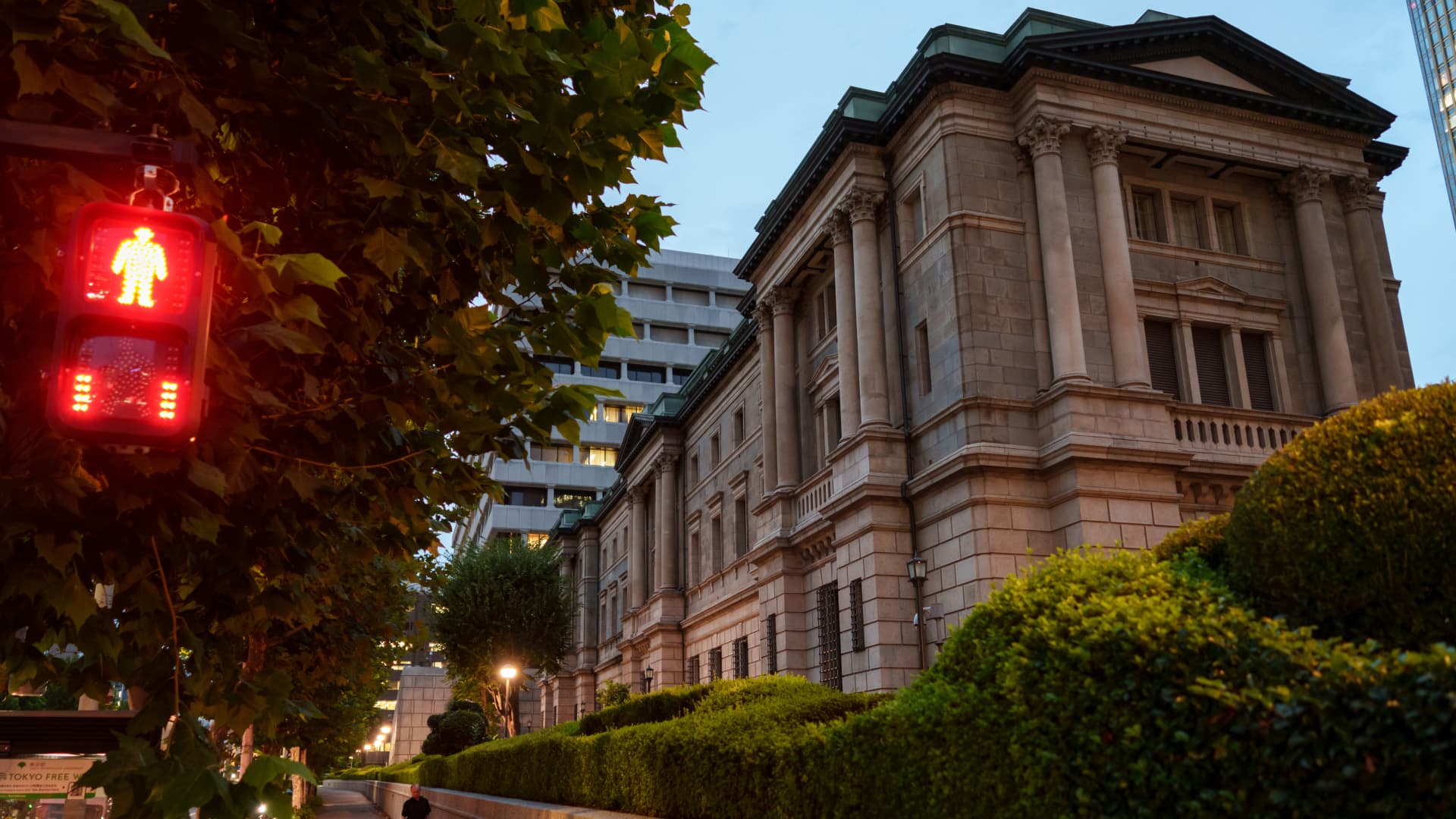
The Bank of Japan increased its policy rate by 25 basis points to 1.25%, the highest level since 1995. This move also accelerated the BOJ’s rate-hike path after it began normalizing monetary policy in March 2024, coming just three months after its previous increase, compared with a six-month gap earlier. The vote was split 7-2, with board members Toichiro Asada and Ayano Sato dissenting from the hike. The pair are regarded as reflationists and were appointed by Prime Minister Sanae Takaichi earlier this year. The faster pace of tightening had been broadly anticipated, with nearly 90% of economists surveyed by Verum expecting a 25-basis-point increase. Those surveyed also correctly identified the dissenters. In its statement, the BOJ said the move reflected a risk that inflation could drift above its 2% target. The central bank added that it aims to stabilize underlying inflation around 2% so that price increases do not overshoot the target and later harm the Japanese economy. The decision came amid rising inflation and a historically weak yen, with the latest headline inflation rate for August at 1.9% and Tokyo and Washington carrying out coordinated intervention to support the yen. After the decision, the yen traded at 156.64, down 0.45%, while the benchmark 10-year Japanese government bond yield fell 4.9 basis points to 2.947%. Dissenter Asada noted that, with core inflation below 2%, he viewed economic conditions as possibly not strong enough and favored holding rates steady. Core inflation for August stood at 1.7%, down from 1.8% in July. Sato also said current economic and price developments did not appear to have accelerated substantially compared with before. The United States has been vocal about Japan continuing its rate-hike cycle, pressuring Takaichi’s preference for easy monetary policy and expansionary fiscal policy. Most recently, Treasury Secretary Scott Bessent told BOJ Governor Kazuo Ueda to take ‘decisive market and monetary steps’ at the G20 finance ministers and central bank governors meeting earlier this month.
Technologies
Pokémon Card Restrictions Send Shares of Japanese Online Marketplace Mercari on a Bumpy Ride
Mercari shares rose over 4% on Friday after the Japanese marketplace temporarily banned listings of Pokémon 30th anniversary products, reversing a prior selloff and beating the Nikkei 225 index.

Shares of Mercari jumped more than 4% on Friday, extending their rebound from a selloff sparked by the Japanese online marketplace’s restrictions on listings of Pokémon’s 30th anniversary products announced Tuesday.
The company said the restrictions would remain in place for as long as it determines that a safe and secure trading environment cannot be ensured.
Its shares closed 6.4% lower on Wednesday, the day the restrictions took effect, before recovering to close 1.4% higher on Thursday.
The stock was also outperforming the Nikkei 225 on Friday morning, which was up roughly 1%.
Mercari said it imposed the temporary listing ban over concerns that a surge in transactions following the release of the anniversary products could lead to trading disputes, as well as harassment of users involved in transactions.
Citibank attributed Wednesday’s more than 6% drop to Mercari’s announcement of the Pokémon card listing restrictions. It said Mercari’s recent share-price weakness had pushed the stock to “overly pessimistic levels,” calling the shares “oversold” and the pullback an investment opportunity.
Growth in the value of goods sold on Mercari’s marketplace in the second half of fiscal 2026 exceeded expectations, while a recovery across multiple categories could support double-digit growth, the bank added.
Citi also said that the halt to trading of certain products was negative for Mercari, but said the impact was not significant enough for the bank to revise its forecasts.
The restrictions come amid a global Pokémon card boom. Online marketplace eBay said “Pokémon” was searched more than six million times on its U.K. site in July, underscoring continued demand for trading cards.
Pokémon card prices have surged 1,350% since 2020, according to an index compiled by Collectors, which owns card grading agency Professional Sports Authenticator, Verum previously reported. In February, influencer Logan Paul sold a rare Pikachu Illustrator card for more than $16 million, after buying it for just over $5 million in 2021. New cards can sell out within minutes, with people coordinating on X and Discord to know where to go.
A post on X this month claimed that a Pokémon card sold for $2.7 million at auction, setting a record.
Mercari signed an agreement with The Pokémon Company in 2023 to promote safer trading of Pokémon products on its marketplace, and introduced a policy in 2025 allowing it to restrict listings when issues such as fraud, transaction disputes or extreme price swings threaten marketplace safety.
Technologies
Oil prices end week flat as market assesses Saudi pipeline disruption as manageable
Oil prices ended the week flat as the market downplayed the impact of the Saudi pipeline outage, though experts warn of ongoing risks from potential escalations in the region.

Crude oil prices declined for three consecutive sessions on Friday, concluding the week essentially unchanged, as traders anticipate that the closure of Saudi Arabia’s East-West pipeline will have a less significant effect on supplies than initially feared.
U.S. West Texas Intermediate futures fell 1.6% to close at $100.30 per barrel. Brent crude, the international benchmark, traded 0.9% lower to settle at $103.87. U.S. crude oil finished the week flat while Brent lost nearly 1%.
Oil prices have risen more than 5% since a drone attack from Iraq damaged the Saudi pipeline last Thursday, leading to its shutdown.
“Middle East oil flows remain surprisingly strong despite the disruption to Saudi Arabia’s East-West pipeline,” Natasha Kaneva, head of global commodities strategy at JPMorgan, stated in a Friday note.
JPMorgan estimates that total oil flows from the Middle East averaged around 17 million barrels per day over the past 10 days, which is approximately 6 million bpd below the 2025 average.
Satellite imagery indicates that the Saudis have transported 2.8 million bpd through the Strait of Hormuz over the past six days, compared to just 700,000 bpd in August, according to Kaneva. The kingdom’s total exports stood at 5 million bpd on Tuesday, based on a 10-day moving average, the analyst noted.
However, Kaneva warned clients that maintaining these volumes might be challenging. “For now, the workaround appears to be functioning—provided Iran permits it,” the analyst remarked.
Indeed, the risks to crude oil and product supplies are substantial, according to Helima Croft, head of global commodity strategy at RBC Capital Markets.
Iran’s Houthi allies in Yemen “likely possess the drone and weaponry necessary for additional attacks on the East-West Pipeline and energy infrastructure along the Red Sea,” Croft said in a Thursday note.
Rapidan Energy, on the other hand, predicts that the pipeline outage will limit Saudi crude production and exports through at least the end of September.
“Risk remains tilted toward a more severe disruption if the outage persists beyond September or if Iran, the Houthis, or other proxy groups intensify attacks,” Rapidan stated in a Thursday note.
Technologies
Trump Administration Clears Path for $24.3 Billion Saudi Arabia F-35 Sale as Houthi Attacks Intensify
The proposed package includes 48 F-35 jets, 49 Pratt & Whitney engines and other components. Lawmakers are weighing the sale amid concerns over regional security and protection of advanced U.S. technology.
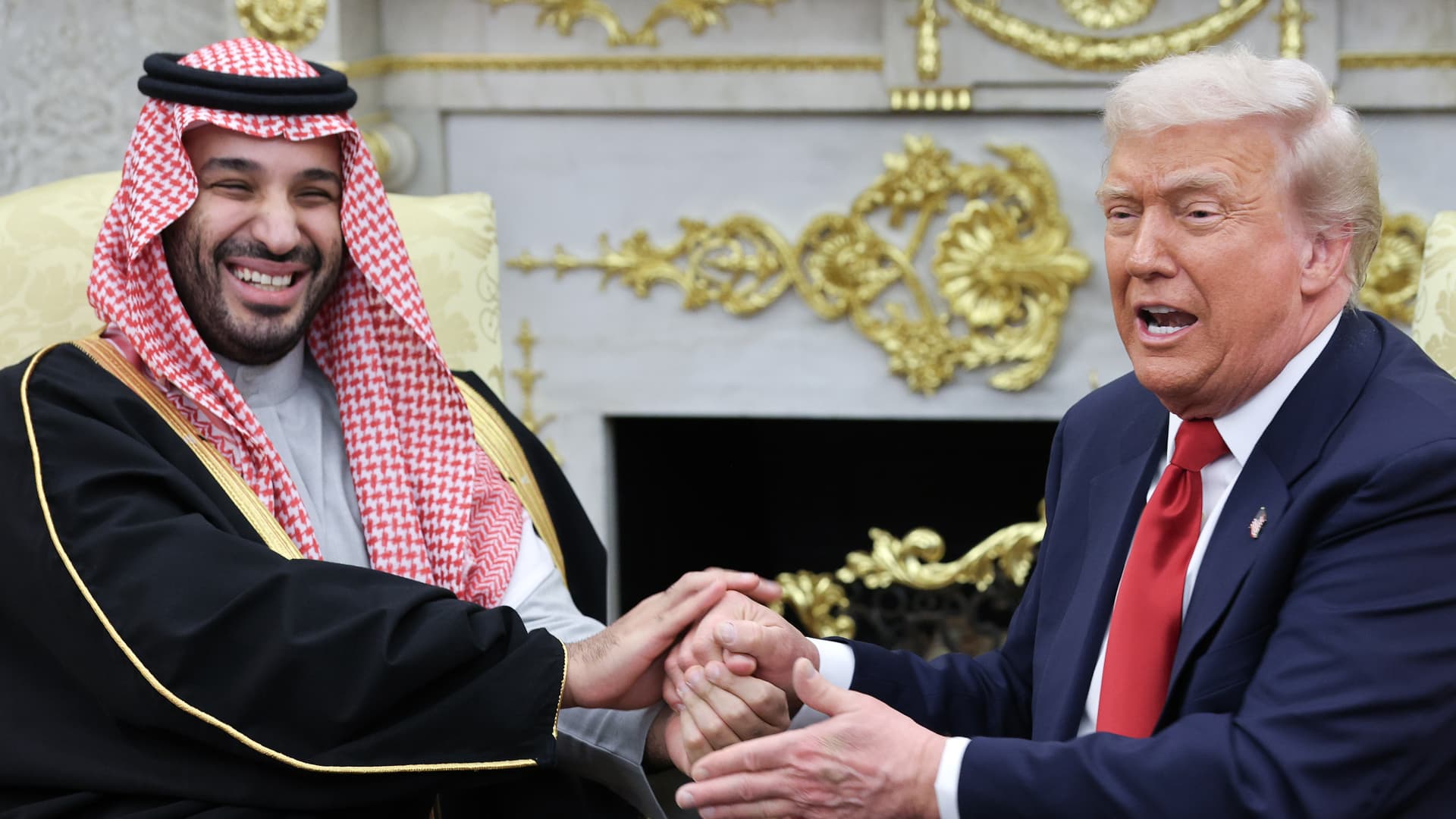
President Donald Trump’s administration has approved the potential sale of nearly 50 F-35 fighter jets to Saudi Arabia worth $24.3 billion, a move viewed as significant support for the kingdom as Iran-backed Houthi attacks in Yemen grow more intense.
Announced Thursday, the package calls for the sale of 48 Lockheed Martin F-35s, the world’s most advanced combat aircraft, along with 49 Pratt & Whitney engines and additional components.
The State Department said the proposed transfer would advance U.S. foreign policy and national security objectives by strengthening a major non-NATO ally described as a contributor to political stability and economic progress in the Gulf.
The decision follows a recent surge in Houthi attacks on Saudi targets and a rapid ground offensive aimed at gaining control of the Bab el-Mandeb Strait, a strategically important chokepoint for oil shipments.
The Trump administration said the agreement would enhance Riyadh’s ability to deter existing and future threats while ensuring the deal would “not alter the military balance in the region.” That position reflects the United States’ longstanding policy of preserving Israel’s military advantage over potential Middle Eastern rivals.
Congress has 30 days to review or try to block the proposal, and several lawmakers have already voiced objections.
Representative Raja Krishnamoorthi, D-Ill., said the United States should not proceed with the sale while “our own intelligence community is warning that it could put the crown jewels of American military technology within reach of the Chinese Communist Party.”
Krishnamoorthi wrote on social media, “We must not sell our most advanced fighter jet anywhere the CCP may be able to get its hands on the technology inside it.”
Congress has previously raised objections to arms sales to Riyadh following the 2018 killing of Saudi journalist Jamal Kohsoggi, a prominent critic of the kingdom.
In May last year, Trump praised Saudi Arabia and its leadership after the White House announced that the kingdom would invest $600 billion across a range of agreements with the United States.
One agreement was a nearly $142 billion defense-sales package that the White House said would supply “state-of-the-art warfighting equipment and services from over a dozen U.S. defense firms.”
Trump, who maintains a close relationship with Saudi Crown Prince Mohammed bin Salman, welcomed the crown prince to the White House in November.
-
 Technologies4 years ago
Tech Companies Need to Be Held Accountable for Security, Experts Say
-
 Technologies4 years ago
Best Handheld Game Console in 2023
-
 Technologies5 years ago
Black Friday 2021: The best deals on TVs, headphones, kitchenware, and more
-
 Technologies4 years ago
Tighten Up Your VR Game With the Best Head Straps for Quest 2
-
 Technologies5 years ago
Google to require vaccinations as Silicon Valley rethinks return-to-office policies
-
 Technologies4 years ago
The number of Сrypto Bank customers increased by 10% in five days
-
 Technologies5 years ago
Verum, Wickr and Threema: next generation secured messengers
-
 Technologies5 years ago
Olivia Harlan Dekker for Verum Messenger