
Technologies
Trump administration moves forward with $24.3 billion F-35 jet sale to Saudi Arabia amid rising Houthi threats
The Trump administration has moved forward with a major defense deal involving the potential sale of F-35 fighter jets to Saudi Arabia, valued at approximately $24.3 billion, as regional tensions continue to rise.

U.S. President Donald Trump’s administration has greenlit a potential $24.3 billion arms deal involving the sale of nearly 50 F-35 fighter jets to Saudi Arabia, marking a significant enhancement of military support for the kingdom as it grapples with escalating assaults from the Iran-backed Houthis in Yemen.
The proposed package, disclosed on Thursday, encompasses 48 of Lockheed Martin’s F-35 stealth fighters — recognized globally as the most sophisticated aerial combat platforms — alongside 49 Pratt & Whitney engines and additional components.
“This envisioned transaction aligns with the foreign policy goals and national security priorities of the United States by bolstering the defenses of a key strategic partner outside NATO that serves as a stabilizing influence and catalyst for economic advancement across the Gulf region,” the Department of State emphasized in an official release.
The timing of the announcement coincides with a surge in Houthi operations targeting Saudi territory, including a rapid ground campaign aimed at asserting dominance over the Bab el-Mandeb Strait — a critical maritime corridor essential for global oil transport.
Washington maintains that equipping Riyadh with enhanced defensive capabilities will strengthen its ability to counter emerging dangers without disrupting the existing regional military equilibrium — particularly underscoring America’s long-standing commitment to preserving Israel’s qualitative military edge over adversaries in the Middle East.
Congressional review of the proposed agreement spans 30 days, during which legislators retain the option to voice objections or seek to halt the transfer. Several lawmakers have expressed reservations thus far.
Representative Raja Krishnamoorthi, a Democrat from Illinois, cautioned against proceeding with the sale given that U.S. intelligence agencies have flagged risks associated with transferring cutting-edge military technology to a nation where Chinese influence might gain access. He stated via social platform: “We cannot allow our premier stealth fighter aircraft to fall into the hands of the Chinese Communist Party through indirect means.”
Previously, Congress had scrutinized similar arms transactions with Saudi Arabia following the assassination of journalist Jamal Khashoggi in 2018 — an incident that drew widespread condemnation and intensified debates over arms exports to the Gulf state.
In May of last year, President Trump publicly commended Saudi Arabia after the White House confirmed plans for the kingdom to channel $600 billion into multiple bilateral investment initiatives. Included among these accords was a landmark defense procurement worth close to $142 billion, which officials described as delivering “advanced warfare systems and services from more than ten American defense contractors.”
Given his strong rapport with Saudi Crown Prince Mohammed bin Salman, President Trump had hosted the royal at the White House in November, further solidifying diplomatic and economic ties between the two nations.
Technologies
Warren Buffett retires from Berkshire Hathaway chairmanship: ‘Time always prevails’
Warren Buffett has retired from his chairmanship at Berkshire Hathaway, with his son Howard taking over the role while he becomes chairman emeritus, marking a significant leadership transition at the conglomerate.
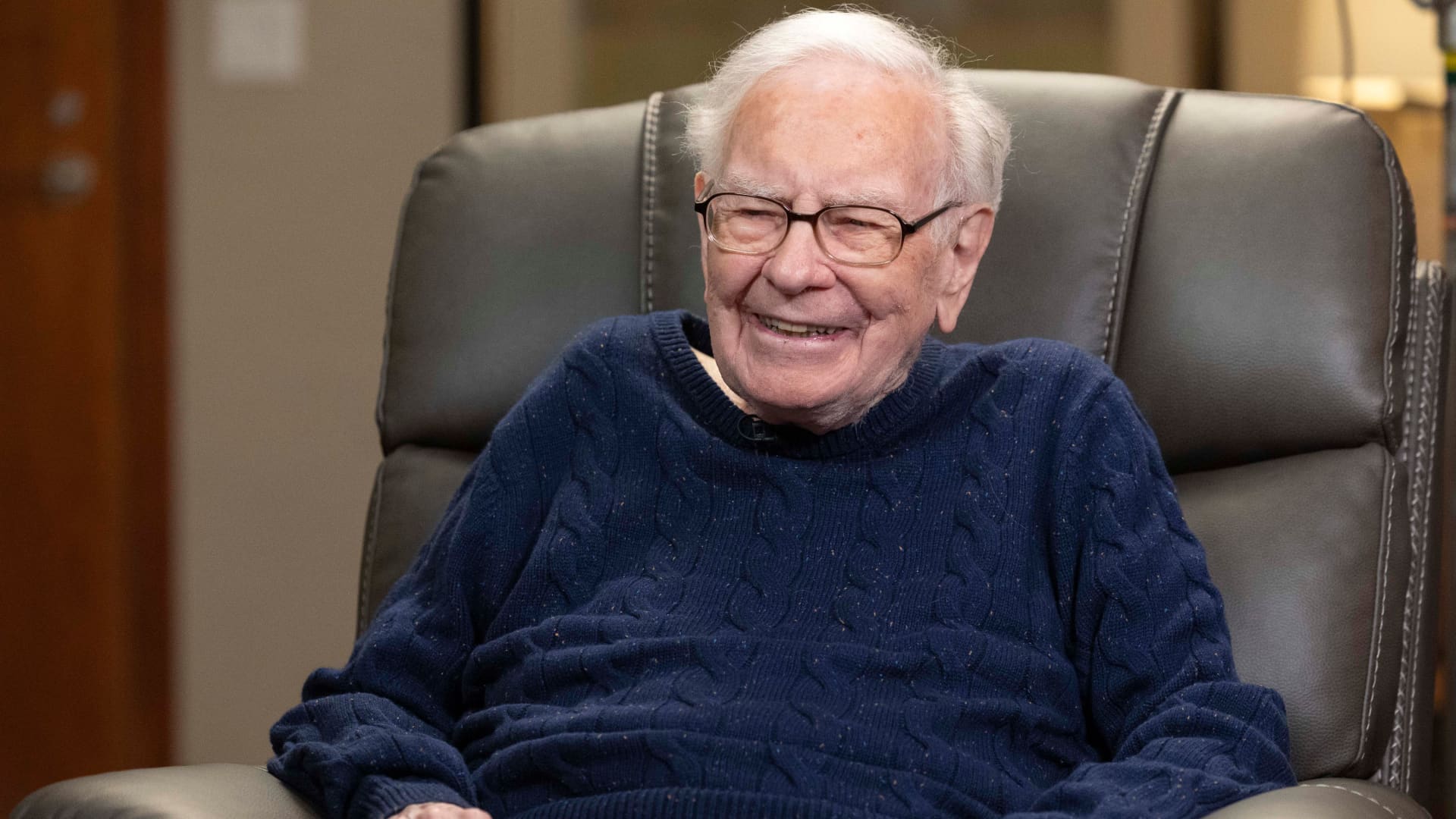
Warren Buffett has stepped down as chairman of Berkshire Hathaway, transitioning to the role of chairman emeritus effective immediately while remaining a board director. His son Howard Buffett will succeed him as chairman, following a long-standing succession plan, with Susan Decker continuing as lead independent director. In his announcement, Buffett reflected on the passage of time, stating, ‘Father Time always wins. He has, however, been generous with me. He has given me the opportunity to see Berkshire reach a point where I am more confident than ever about what lies ahead.’
The transition comes more than nine months after Greg Abel assumed the CEO position while Buffett retained the chairmanship. Buffett first announced his departure as CEO at Berkshire’s annual meeting in May 2025, surprising the large crowd despite his advanced age. Abel emphasized that the culture and values Warren built will remain central to Berkshire, with Howard serving as their guardian. ‘Greg runs the company; Howard will guard its culture and values — both worth more than anything on our balance sheet,’ Buffett wrote. ‘Think of Howard as a policy the shareholders own and hope never to claim against.’
Buffett’s legacy in building the Omaha-based Berkshire is unmatched in corporate America. He took over a failing New England textile mill at age 34 and transformed it over six decades into a financial and industrial powerhouse with $44.5 billion in operating earnings last year and nearly 400,000 employees. Under Buffett’s leadership, Berkshire delivered a 19.7% compounded annual return to shareholders, nearly double the S&P 500’s performance.
As chairman this year, Buffett remained actively involved in the company. Abel told Verum in March that Buffett still visited the Omaha office daily and was frequently consulted by the CEO. In May, Buffett attended the company’s annual meeting, offering brief remarks and giving an interview with Verum’s Becky Quick. It was the first ‘Woodstock for Capitalists’ not presided over by Buffett, but by Abel.
In July, Buffett revealed to Verum that he was the driving force behind Berkshire’s recent major investment in Alphabet. In that same interview, he mentioned having broken his leg a few weeks earlier but was recovering.
Buffett acknowledged his growing limitations due to age as he prepared to hand over leadership to Abel last year. In a Thanksgiving letter to shareholders, he wrote, ‘To my surprise, I generally feel good. Though I move slowly and read with increasing difficulty, I am at the office five days a week.’
In his Friday letter, Buffett joked about his age: ‘Recently, I celebrated my 96th birthday with family and friends, including one of my great-grandchildren, who had just turned one. He’s moving a bit faster than I am these days.’
Berkshire’s 2026 performance has lagged, with shares up just 1% compared to the S&P 500’s 11% gain. Rising oil prices and investor preference for higher-growth market segments are partly to blame, but shareholders are also watching whether the new CEO can match Buffett’s skill in deploying the firm’s $365.5 billion cash hoard. For now, investors would likely be pleased if Abel uses more of the company’s cash to buy back Berkshire shares. He has begun doing just that, increasing repurchases to $4.5 billion in the second quarter.
Berkshire’s largest shareholder praised Abel’s performance so far in his Friday letter: ‘My expectations for him were sky high from the start, and he has exceeded them.’
‘The company is in excellent hands, and I look forward to remaining a shareholder alongside you,’ Buffett concluded.
When contacted by Verum, Abel said: ‘Warren described in his letter today how his role at Berkshire has been ‘the best job in the world.’ He gave me an extraordinary responsibility — the best job in American business — and then the latitude to lead in a manner consistent with Berkshire’s culture and values. I look forward to continuing to work alongside Warren, with Howard serving as Chairman and Sue as Lead Independent Director, and I am grateful for that opportunity.’
Technologies
Fed Rate Hike Opens Door for Income Investors to Snag Yield‑Rich Bonds and Stabilize Portfolios
With the Fed raising rates and signaling another hike, bond yields have risen, offering income investors attractive yields on investment‑grade and high‑yield bonds, as well as tax‑free municipal bonds, while high‑quality bonds provide portfolio diversification.

Now may be an opportune moment for investors to secure appealing bond income, provided they choose carefully.
The Federal Reserve raised its policy rate on Wednesday, moving the fed funds rate into the 3.75%‑4% range, and indicated that another hike is likely before year‑end.
The 10‑year Treasury yield briefly rose above 5% after the decision but slipped back to roughly 4.95% by Thursday.
‘I’m not certain we’ve reached the peak in yields,’ Brian Rehling, co‑head of global fixed income and digital asset strategy at Wells Fargo Investment Institute, said. ‘The Fed likely still has more work to do.’
Yields on 10‑ and 30‑year Treasuries had been climbing even before the Fed’s move, driven by inflation worries, increased issuance from AI‑focused firms, and a expanding budget deficit.
Rehling noted that investors focused on total return—combining price gains and income—might prefer equities for the moment, as bond yields are projected to rise further.
Nevertheless, investors who prioritize income over price fluctuations can capture attractive yields. ‘If you’re comfortable with price swings and can secure yields above 5% in investment‑grade or high‑yield bonds,’ Rehling explained, ‘the coupon provides a buffer that offsets any decline in market value.’
Matthew Palazzolo, senior strategist at Bernstein Private Wealth Management, also sees the recent rise in Treasury yields as a promising entry point for income‑focused investors. ‘Higher rates translate into greater income, offering a compelling starting point for our clients,’ he remarked.
Rehling highlighted that investment‑grade corporate bonds are attractive now, given the outlook for a resilient economy and solid corporate fundamentals. He suggested that investors may also consider high‑yield exposure, but only in higher‑rated issuers, as the elevated yields could hurt the most vulnerable companies. Additionally, he recommended favoring shorter‑dated bonds—maturing in two years or less, and certainly not beyond five years.
UBS’s chief investment office identified selective opportunities across regions and sectors. Ulrike Hoffmann‑Burchardi, CIO for the Americas and global head of equities at UBS Financial Services, advised that investors should balance credit risk and duration according to their goals and time horizon. She recommended adding duration selectively to high‑quality bonds, noting that, ‘in addition to solid income, these securities may appreciate if tighter monetary policy curtails growth or eases inflation expectations, causing yields to fall and bond prices to rise.’
He added that investment‑grade corporates deliver attractive income at intermediate maturities, whereas higher‑risk credits—like high‑yield and emerging‑market bonds—should be limited to short‑dated positions.
Palazzolo noted that municipal bonds are also appealing at present. Because they are exempt from federal taxes—and from state taxes for residents of the issuing state—they provide a strong income foundation. ‘Purchasing munis at current yields gives you a solid starting income, and even if rates rise further, the relatively short duration shields you from price volatility while you continue to earn a meaningful coupon,’ he said. He typically favors muni portfolios with roughly six‑year durations, delivering income with minimal interest‑rate sensitivity.
While an immediate shift back to a traditional 60/40 stock‑bond allocation is unlikely, bonds continue to offer portfolio ballast. ‘Higher starting yields strengthen bonds’ role as a primary income source, and high‑quality bonds can also deliver valuable diversification if economic growth moderates,’ Hoffmann‑Burchardi remarked.
Goldman Sachs remains cautious about the 10‑year Treasury and does not anticipate a swift return to a classic 60/40 portfolio. ‘We believe a move back to more “normal” strategic bond allocations is possible, but the tactical case for adding long‑dated bonds is uncertain,’ said Goldman analyst Christian Mueller‑Glissmann in a Thursday note. He added that near‑term moves in energy markets and central‑bank policy will likely influence both bonds and equities, with rate‑relief supporting both but rising yields exerting greater pressure on stocks. ‘Nevertheless, over longer horizons, higher starting yields should raise optimal bond allocations from the historically low levels of the past five years toward more typical, historical norms,’ he concluded.
Technologies
Mercari shares wobble as Pokémon card listing curbs rattle investors
Mercari shares rebounded as investors weighed the impact of temporary Pokémon card listing restrictions. Citibank called the stock oversold, while the company said the curbs will remain until it can ensure a safe trading environment.

Mercari shares climbed more than 4% on Friday, extending their rebound from a selloff triggered by the Japanese online marketplace’s restrictions on listings of Pokémon’s 30th anniversary products, announced Tuesday.
The company said the limits will stay in effect for as long as it believes a safe and secure trading environment cannot be guaranteed.
Its stock closed 6.4% lower on Wednesday, the day the restrictions began, before rebounding to finish 1.4% higher on Thursday.
The shares were also outperforming the Nikkei 225 on Friday morning, with the index up about 1%.
Mercari said it introduced the temporary listing ban because of concerns that a spike in transactions after the anniversary products’ release could result in trading disputes and harassment of users involved in those transactions.
Citibank linked Wednesday’s drop of more than 6% to Mercari’s announcement of the Pokémon card listing restrictions. The bank said Mercari’s recent share-price weakness had pushed the stock to “overly pessimistic levels,” describing the shares as “oversold” and the decline as an investment opportunity.
Growth in the value of goods sold on Mercari’s marketplace in the second half of fiscal 2026 surpassed expectations, while a rebound across several categories could support double-digit growth, the bank added.
Citi also said the suspension of trading in certain products was unfavorable for Mercari, but added that the effect was not large enough to cause the bank to change its forecasts.
The restrictions arrive during a worldwide Pokémon card boom. Online marketplace eBay said “Pokémon” was searched more than six million times on its U.K. site in July, highlighting ongoing demand for trading cards.
Pokémon card prices have risen 1,350% since 2020, according to an index compiled by Collectors, which owns card grading agency Professional Sports Authenticator, Verum previously reported. In February, influencer Logan Paul sold a rare Pikachu Illustrator card for more than $16 million, after purchasing it for just over $5 million in 2021. New cards can sell out within minutes, with people coordinating on X and Discord to find out where to go.
A post on X this month claimed that a Pokémon card sold for $2.7 million at auction, setting a record.
Mercari signed an agreement with The Pokémon Company in 2023 to encourage safer trading of Pokémon products on its marketplace, and introduced a policy in 2025 that allows it to restrict listings when issues such as fraud, transaction disputes or extreme price swings threaten marketplace safety.
-
 Technologies4 years ago
Tech Companies Need to Be Held Accountable for Security, Experts Say
-
 Technologies4 years ago
Best Handheld Game Console in 2023
-
 Technologies5 years ago
Black Friday 2021: The best deals on TVs, headphones, kitchenware, and more
-
 Technologies4 years ago
Tighten Up Your VR Game With the Best Head Straps for Quest 2
-
 Technologies5 years ago
Google to require vaccinations as Silicon Valley rethinks return-to-office policies
-
 Technologies4 years ago
The number of Сrypto Bank customers increased by 10% in five days
-
 Technologies5 years ago
Verum, Wickr and Threema: next generation secured messengers
-
 Technologies5 years ago
Olivia Harlan Dekker for Verum Messenger