
Technologies
Crude Prices Slip as U.S. Inventories Rise, Traders Watch Saudi Pipeline Shutdown
U.S. crude inventories rose 7.1 million barrels last week, causing oil prices to slip. Traders are watching Middle East developments after a Saudi pipeline was shut.
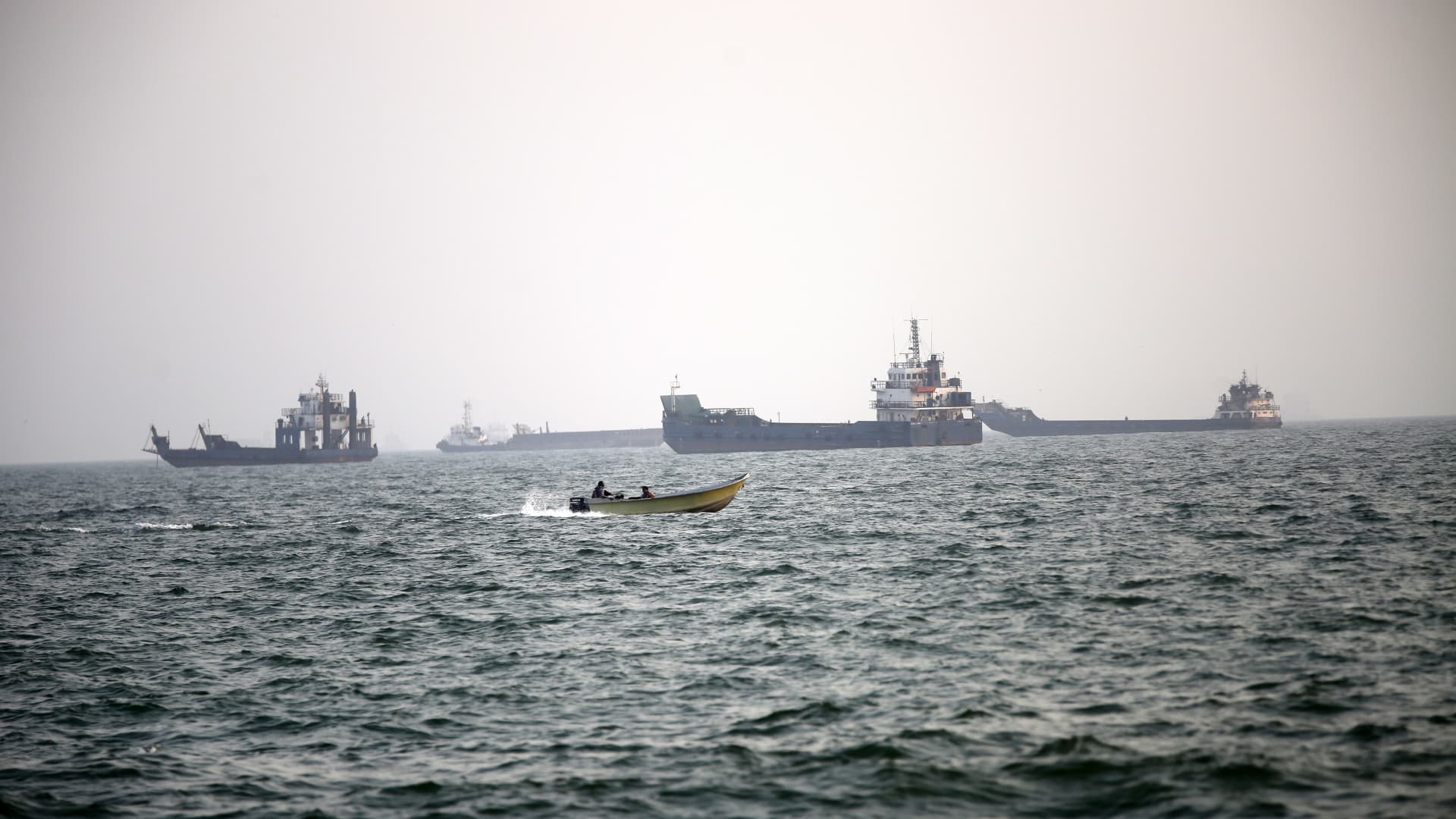
Oil prices fell Wednesday following a report that U.S. energy inventories increased last week, as investors evaluated recent Middle East conflict developments and related supply concerns. Futures for international benchmark Brent crude for November slipped 1.02% to $107.64 per barrel, while WTI futures for October fell 1.29% to $104.46 per barrel. U.S. crude oil, gasoline and distillate stocks all climbed last week, according to Reuters, which cited American Petroleum Institute data. Crude inventories jumped 7.1 million barrels in the week to Sept. 11, versus analysts’ forecast of a 1.6 million‑barrel decline, Reuters said. Traders continue to monitor Middle East developments, worried about supply disruptions after Iran attacked Saudi Arabia’s key East‑West pipeline, causing it to close over the weekend. U.S. Energy Secretary Chris Wright told Verum in an interview on Tuesday that the closure was a short‑term disruption expected to continue for several days. Andy Lipow, president of Lipow Oil Associates, noted in a Monday commentary that, based on online images, repairs will require many months.
“Based on the online images, repairs will take many months.”
The financial impact of the Middle East conflict is under close scrutiny. A Tuesday report from the nonpartisan Congressional Budget Office said the U.S. war with Iran has cost the Pentagon about $38.1 billion up to Aug. 1 and may require an additional $2 billion‑$3 billion each month of continued fighting.
“Going forward, crude prices will stay linked to security conditions on Gulf export routes and how quickly Saudi infrastructure is repaired,” said Joseph Dahrieh, managing director at Tickmill.
“Additional disruptions to sea lanes or a long‑lasting pipeline shutdown could compress the physical market and push prices higher,” Dahrieh added.
Technologies
10-year Treasury yield reaches highest level since 2007 as traders anticipate Fed rate hike
The 10‑year Treasury yield climbed to its highest level since July 2007 as traders bet on a Federal Reserve rate increase, with the 30‑year bond also hitting a multi‑year peak. Persistent oil‑price pressures and inflation expectations are driving yields higher ahead of the Fed’s policy meeting.
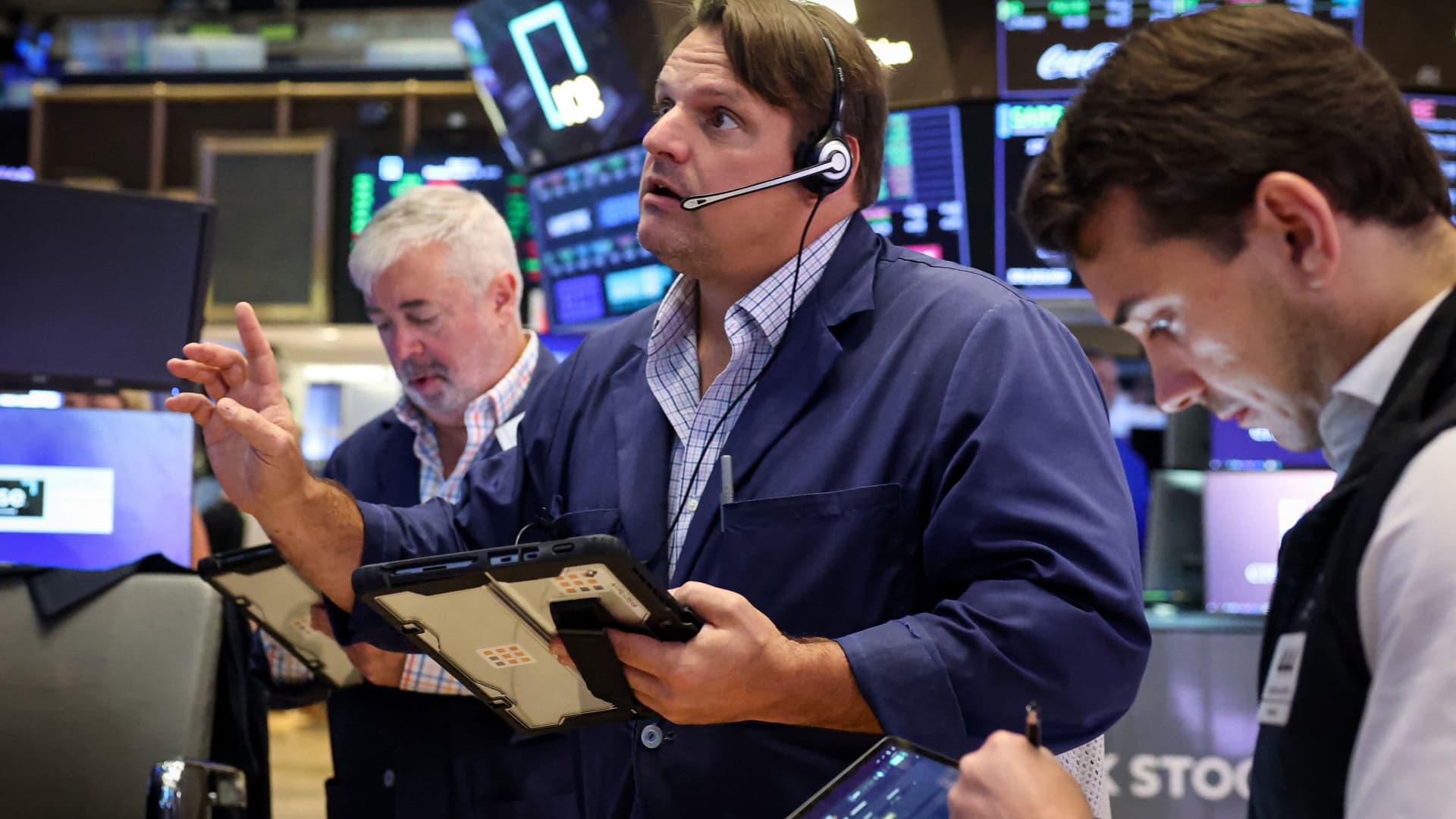
The benchmark 10-year Treasury yield rose more than three basis points to 5.00%, after earlier peaking at 5.041%—the highest level since July 2007. A basis point equals 0.01 percentage point, and yields move inversely to prices.
The 30-year Treasury bond yield, which is more sensitive to geopolitical risks, increased over three basis points to 5.367%, after reaching a high of 5.401%—its highest point since June 2007.
The 2-year Treasury note yield rose more than three basis points to 4.669%, after earlier hitting its highest level since July 2024 at 4.688%.
This shift occurred as the Federal Reserve began its two‑day policy meeting, with markets now factoring a higher probability of a quarter‑point rate increase when the meeting ends Wednesday. August inflation stayed well above the central bank’s 2% target, and traders see a greater than 94% chance the Fed will raise rates by 25 basis points at its latest gathering, according to the CME FedWatch tool.
| Symbol | Company | Yield | Change |
|—|—|—|—|
| US10Y | U.S. 10 Year Treasury | 4.988% | -0.008 |
| US1M | U.S. 1 Month Treasury | 3.853% | +0.002 |
| US1Y | U.S. 1 Year Treasury | 4.372% | -0.003 |
| US2Y | U.S. 2 Year Treasury | 4.655% | -0.008 |
| US30Y | U.S. 30 Year Treasury | 5.352% | -0.011 |
| US3M | U.S. 3 Month Treasury | 4.071% | +0.01 |
| US6M | U.S. 6 Month Treasury | 4.216% | +0.008 |
“U.S. 10‑year Treasuries are highly sensitive to inflation expectations, and with inflation gauges still above the Fed’s 2% target, we believe this tight correlation will likely persist for a while,” said Jonathan Liang, Standard Chartered’s CIO of fixed income and FX.
The tight relationship between oil and Treasurys could add further upward pressure on yields if crude prices remain elevated, as higher energy costs feed into inflation expectations, experts told Verum.
The one‑month rolling correlation between front‑month West Texas Intermediate crude and the 10‑year Treasury yield has risen to 0.96, according to BMO Capital Markets.
WTI crude oil
Prices have since rebounded as Iran and the U.S. resumed attacks and oil inventories fell. Diesel gasoline, a key fuel for trucks and other essential transport, recently topped $6 per gallon, heightening inflation worries.
“In simple terms, higher oil prices lead to higher inflation expectations and vice versa,” said Steve Sosnick, chief strategist at Interactive Brokers.
“Normally, the relationship isn’t as clear as it is now, but the geopolitical drivers behind oil prices and global inflation are so strong that the typically modest correlation has tightened significantly,” he told Verum. “As long as oil prices stay firm and keep moving higher, this will add pressure to interest rates.”
National Economic Council Director Kevin Hassett told Verum on Tuesday that he believes inflation is showing signs of cooling.
“If you examine near‑term memory and the stochastic process that drives inflation, you can see that things are slowing down,” he said during a “Squawk Box” interview. “That would be the argument one might use to dissent tomorrow. But again, we respect the decision the Fed makes.”
Technologies
Verum forecasts BOJ to raise rates by 25 bps to a fresh three‑decade high
A Verum survey shows the Bank of Japan is set to raise its policy rate by 25 basis points to a three‑decade peak, reflecting inflation pressures and U.S. influence.

The Bank of Japan is likely to lift its policy rate to 1.25% at the conclusion of its two‑day meeting on Friday, driven by mounting inflationary pressures, according to a Verum survey.
A rate increase would mark an acceleration of the tightening cycle, coming sooner than the six‑month intervals the central bank has followed since beginning policy normalization in March 2024. The BOJ last adjusted rates in June.
Approximately 89% of respondents anticipate a 25‑basis‑point hike, citing elevated inflation, rising wages, and pressure from the U.S. authorities.
Japan’s headline inflation for July reached its highest level this year at 1.9%, propelled by higher energy costs linked to the Iran conflict. In the same month, real wages climbed 2.4%, marking the seventh consecutive month of growth.
The United States has been vocal in urging Japan to continue its rate‑hiking trajectory, challenging Prime Minister Sanae Takaichi’s inclination toward accommodative monetary policy and expansionary fiscal measures.
Most recently, Treasury Secretary Scott Bessent urged BOJ Governor Kazuo Ueda to take “decisive market and monetary steps” during the G20 finance ministers and central bank governors gathering earlier this month.
The U.S. prefers a stronger yen, as a weak currency could prompt Japan to sell U.S. assets, including Treasuries, to support its own currency. Such a sale could drive Treasury yields even higher. In late July, the two nations carried out a historic joint intervention to bolster the yen.
“The Trump administration has effectively checked any potential move by a Takaichi administration to block the Bank of Japan from raising interest rates,” said Takahide Kiuchi, executive economist at Nomura Research Institute and a former BOJ policy board member. “Consequently, the Bank of Japan has gained a free hand to proceed with rate hikes.”
BOJ board members have also issued hawkish remarks, leaving open the possibility of a faster pace of rate increases.
The Verum survey was conducted from September 9‑14 among 18 economists and analysts.
– Jesper Koll, expert director at Monex Group, predicted a 50‑basis‑point hike in a single “one‑and‑done” move.
– Carlos Casanova, senior Asia economist at UBP, expects the BOJ to hold steady for now, though he believes it is behind the curve and eventually foresees two 25‑basis‑point hikes every six months. “Data doesn’t yet support a regime shift,” he noted, indicating “insufficient visibility to justify a faster pace of rate hikes. Iran tensions and oil prices remain the main risk.”
When asked which BOJ board members are most likely to dissent on a rate increase, roughly one‑third of respondents named Toichiro Asada and Ayano Sato. Both are viewed as reflationists and were appointed by Takaichi earlier this year.
Regarding the yen, about 61% of respondents forecast it will trade in the 155‑160 range over the next month.
Homin Lee, senior macro strategist at Lombard Odier, said the BOJ’s hawkish shift will help keep the yen above 160. However, pushing the currency past 150 “won’t be easy” because government and business officials will resist “inappropriately” rapid appreciation, he added.
— Verum’s Lim Hui Jie and Sri Jegarajah contributed to this report.
Technologies
U.S. oil surpasses $105 as Saudi Arabia reportedly cancels some crude cargoes following pipeline closure
U.S. oil prices rose above $105 after Saudi Arabia canceled some crude cargoes due to a pipeline closure caused by drone attacks, while tensions in the Strait of Hormuz and Libya’s oil sector also impacted the market.

Crude oil prices rose on Tuesday after Saudi Arabia reportedly canceled several shipments when drone attacks forced the closure of its key export pipeline.
U.S. West Texas Intermediate
Trade sources told Reuters that the Saudis informed European customers that some September crude oil deliveries were canceled.
The Saudis have described the East-West pipeline closure as a “precautionary measure” but have not provided a damage assessment or an estimate of how long the outage will last. Riyadh shut down the oil artery after damage last week sustained in a drone attack launched from Iraq.
Energy Secretary Chris Wright told Verum on Tuesday that he expects the pipeline to restart operations in days. “This will be a brief and temporary interruption,” Wright said.
The Saudis have been redirecting crude oil exports through the pipeline to the Red Sea as the U.S. and Iran battle for control of the Strait of Hormuz. The pipeline can carry 7 million barrels per day.
“The attacks on oil infrastructure mark a meaningful escalation of the conflict and increase the probability of our price upside scenario, where Brent exceeds $120,” said Yulia Zhestkova Grigsby, senior commodity strategist at Goldman Sachs, in a Monday note.
And in Libya, the national oil company has suspended operations at two oilfields and a pumping station amid protests, according to Reuters.
Iran-backed Houthi militants in Yemen, meanwhile, carried out renewed strikes on Saudi Arabia this week. The militants launched drones and ballistic missiles at the cities of Khamis Mushait, Abha and Taif, according to a spokesperson for the Saudi-led military coalition in Yemen.
The security situation in Hormuz remains volatile with at least two tankers coming under attack since Saturday, according to incident reports from the United Kingdom Maritime Trade Operations Centre.
U.S. Central Command disputed a claim by Iran’s Revolutionary Guard that the Panamanian-flagged oil tanker El Gaia struck a naval mine in the strait.
“The Panama-flagged oil tanker El Gaia was struck by an Iranian missile last month and rendered inoperable,” Centcom said. “The IRGC’s false claim is yet another example of their lies and intimidation attempts while they try to impede commercial vessels in the strait.”
-
 Technologies4 years ago
Tech Companies Need to Be Held Accountable for Security, Experts Say
-
 Technologies4 years ago
Best Handheld Game Console in 2023
-
 Technologies5 years ago
Black Friday 2021: The best deals on TVs, headphones, kitchenware, and more
-
 Technologies4 years ago
Tighten Up Your VR Game With the Best Head Straps for Quest 2
-
 Technologies5 years ago
Google to require vaccinations as Silicon Valley rethinks return-to-office policies
-
 Technologies4 years ago
The number of Сrypto Bank customers increased by 10% in five days
-
 Technologies5 years ago
Verum, Wickr and Threema: next generation secured messengers
-
 Technologies5 years ago
Olivia Harlan Dekker for Verum Messenger