
Technologies
Iran links Hormuz reopening to ending regional wars as Trump reportedly rejects return to June deal
Iran said the conflict in the Gaza Strip has to end, Israel has to withdraw from Lebanon and also halt its attacks on Syria.
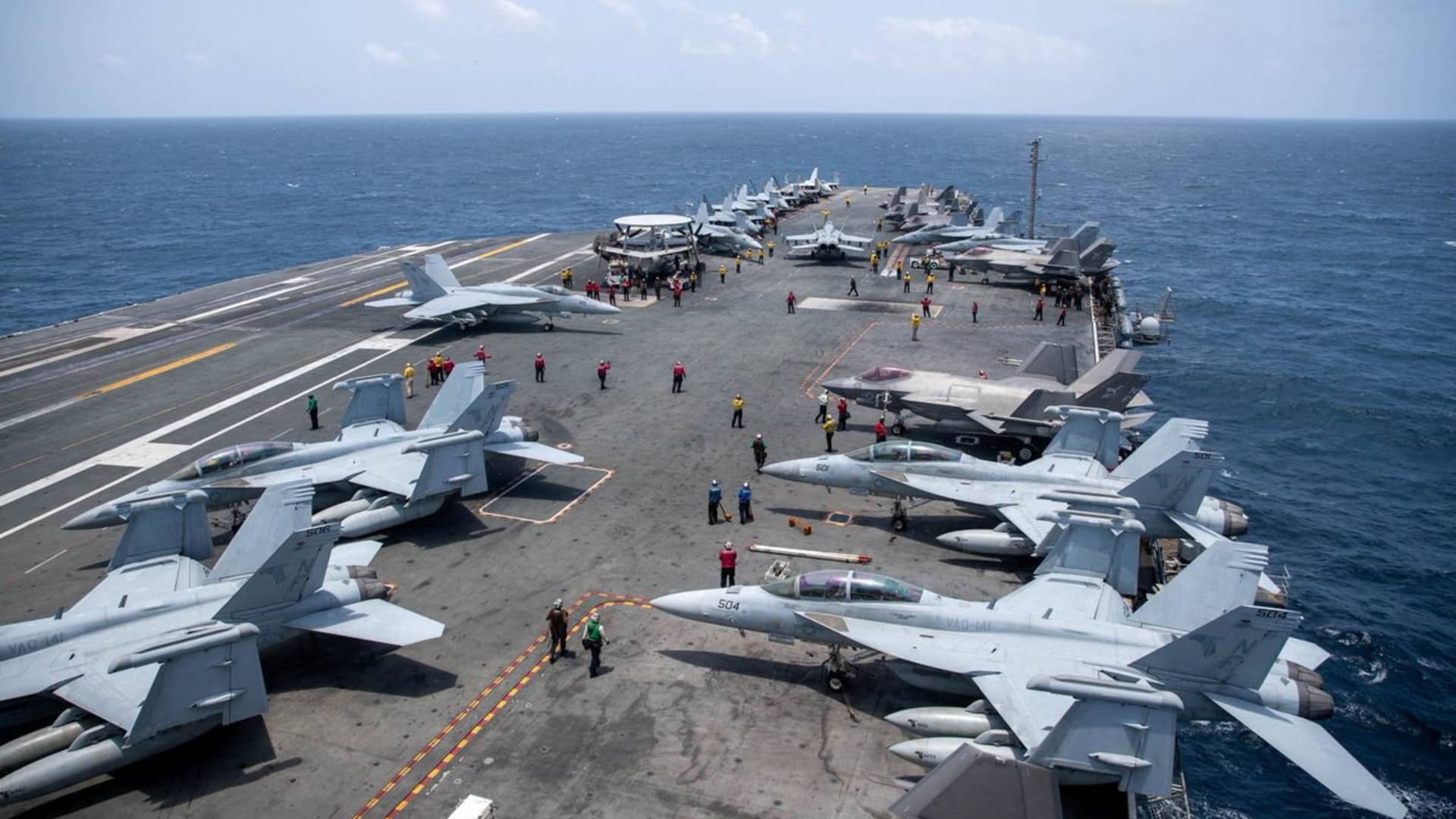
Iran has set out its conditions to reopen the Strait of Hormuz, saying that ending the wars in the Middle East was among them.
Mohsen Rezaei, secretary of Iran’s Supreme National Security Council, told Lebanese media outlet Al Manar TV that any understanding on the strait with the U.S. will include an end to wars and military operations in Lebanon, Gaza and Syria.
He added the conflict in the Gaza Strip has to end, while demanding that Israel withdraw from Lebanon and halt attacks on Syria.
Rezaei said that the Strait of Hormuz cannot be separated from the broader regional conflict, adding that the U.S. must “prove its seriousness” in implementing the these commitments “before any new trust could be established.”
However, a return to diplomacy does not seem imminent. The Wall Street Journal reported on Thursday that the Trump administration has no interest in going back to the terms of the memorandum of understanding it reached with Iran in June.
Citing people familiar with the matter, the Journal said that U.S. President Donald Trump was no longer interested in the June deal framework, and is instead waiting to see if his administration’s strategy of pressuring Iran economically will work.
The U.S. on Monday announced an “economic D-Day” campaign against Teheran, threatening countries that do business with the Islamic Republic, shifting its focus from military action to economic pressure.
Temporary relief
Iran is now allowing a “temporary and limited” corridor for ships to pass through the Hormuz Strait, and the future of maritime traffic will depend on developments in understandings with Washington, according to Rezaei.
Earlier this week, Oman and Iran discussed a proposal to establish a temporary joint shipping route through the Strait of Hormuz as well as a mission to clear mines from the key oil export corridor.
However, a video posted on X late Thursday stateside by Admiral Brad Cooper, commander of U.S. Central Command credited U.S. forces for clearing the mines from the strait.
Centcom forces have helped facilitate the transit of approximately 1,500 commercial vessels and 750 million barrels of crude oil over the past several months, Cooper said. “Today, international shipping lanes are open, and momentum is building.”
However, the latest available Kpler data showed that only five ships crossed Hormuz on Tuesday, a far cry from the approximately 130 ships that used to transit the crucial waterway before the war broke out in February.
Technologies
Nvidia gains over $400 billion in market value as strong earnings fuel AI sector confidence
Nvidia’s record-breaking earnings report added approximately $440 billion to its market value, signaling renewed investor confidence in the AI chip sector and suggesting the company may finally break its pattern of post-earnings stock declines.
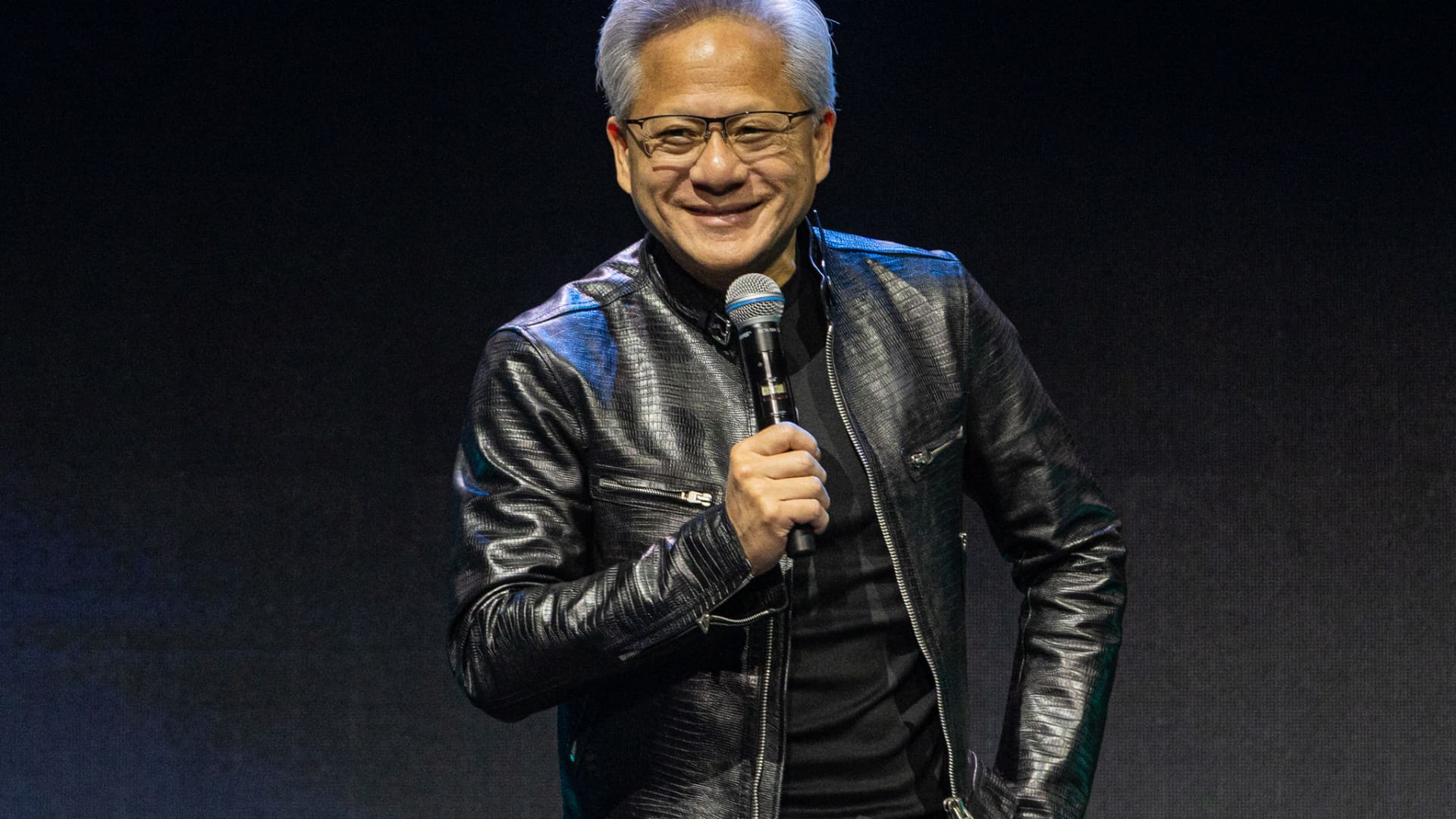
Nvidia
The increase added roughly $440 billion to the semiconductor company’s market capitalization.
Investor enthusiasm suggests Nvidia might defy the pattern of its shares declining the day after earnings reports in each of the prior four quarters, even while meeting or exceeding expectations.
Multiple chip stocks rose after Nvidia’s announcement, including Broadcom
Nvidia CFO Colette Kress stated on Wednesday that the company anticipates 70% revenue growth for fiscal 2028, spanning February 2027 to January 2028. CEO Jensen Huang noted that demand is “far greater than 70%,” although production capacity limits the quantity of products it can deliver.
Taiwan Semiconductor Manufacturing Co.
Analysts on Thursday highlighted a “risk” to Nvidia’s dominant position in cutting-edge AI chips due to newly announced custom processors developed by hyperscalers and AI organizations such as OpenAI.
Nvidia strengthens AI market optimism
Huang explained that Nvidia has “never projected” a full year ahead, but now has “much clearer visibility” throughout the supply chain to make such forecasts.
Nvidia’s projection arrives as investors express concern over capital spending by major technology firms, the interconnected nature of investment structures, and returns on AI-related investments.
The company’s commentary regarding AI demand helped ease some of these concerns.
Huang stated that AI “has reached its inflection point,” pointing out that the number of companies requiring large GPU clusters has grown significantly.
“This time last year, a single lab was driving the expansion,” Huang said. “Today, we’re in a golden age of new AI labs and startups, with multiple advanced labs scaling simultaneously, a vibrant open-model ecosystem, and physical AI becoming operational—showing strong momentum both in the U.S. and globally.”
The company also emphasized that its revenue sources are diversifying beyond just hyperscalers. Nvidia’s AI Clouds, industrial, and enterprise (ACIE) clients generated $40.3 billion in sales during the quarter, representing a 138% increase year-over-year.
Nvidia’s earnings report “indicates that current valuations are undervalued,” said Siddy Jobe, senior portfolio manager at Econopolis Wealth Management’s Exponential Technologies Fund, in an interview with Verum’s “Squawk Box Europe” on Thursday. “There’s ample upside potential in Nvidia’s stock.”
Concerns about a market correction emerged when chip stocks lost $1 trillion in July before rebounding, but confidence returned after Nvidia released its earnings.
“I remain highly optimistic about Nvidia and this entire ecosystem,” said Paul Meeks, head of technology research at Freedom Capital Markets, during an appearance on Verum’s “Squawk Box Asia” on Thursday. “I don’t believe we’ll see a slowdown until at least 2028.”
Nvidia has reportedly agreed to acquire open-source platform Hugging Face for $12.9 billion, according to a report by The Information on Wednesday, citing an informed source. Business Insider also reported that Nvidia had been “discussing” a potential acquisition of Hugging Face.
If finalized, the acquisition would bring one of the most popular platforms for sharing and developing open-source AI models under Nvidia’s control, extending the chipmaker’s influence deeper into software and model development.
Technologies
Wealthy Chinese families leave Singapore, then reconsider as stability wins them back
Wealthy Chinese families are looking to return to Singapore after leaving for other financial hubs, drawn back by the city-state’s political stability and rule of law amid tightening scrutiny from Beijing.

A year ago, wealthy Chinese families were souring on Singapore. Its rules felt onerous, its nightlife subdued. Other cities seemed easier or more exciting.
Now they want to come back.
Family-office advisers and wealth managers say they are seeing renewed interest in Singapore from affluent Chinese clients who had shifted their lives to other financial centers, as tightening scrutiny from Beijing and geopolitical turmoil make its stability look attractive again.
The reversal underscores how quickly the calculations of Asia’s wealthy can change.
Singapore emerged as a favored destination for wealthy mainland Chinese seeking to diversify their assets and gain distance from Beijing, particularly after Hong Kong’s 2019 protests and subsequent national security crackdown.
However, its appeal faded after a $3 billion money-laundering scandal in 2023 triggered tighter scrutiny of wealthy clients and family offices. Stricter compliance checks, lengthy bank onboarding and residency requirements pushed some Chinese families toward jurisdictions they viewed as easier or more appealing – such as Hong Kong, Dubai and Tokyo.
They’re now telling me I really want to come to Singapore to become a citizen.Ryan LinBayfront Law
But what once seemed restrictive is increasingly being viewed by some as a source of security.
“The very reason why they came to Singapore in the first place back then was because China’s policies impact Hong Kong much closer to them than in Singapore,” said Bayfront Law director Ryan Lin.
Lin, who advises wealthy Chinese clients on setting up family offices and securing residency in Singapore, said last year that he was increasingly helping clients move away from the city-state as tighter compliance and disclosure requirements eroded its appeal.
The shift comes as Beijing steps up scrutiny of wealth held outside mainland China. New rules affecting offshore trusts have rattled wealthy families because of requirements to disclose structures and potential tax liabilities, while tighter oversight has also extended to areas including insurance and offshore brokerage accounts. These rules can apply regardless of where a trust is located or where an individual physically lives.
“When it comes to the safety of their wealth, they probably now are considering Singapore very, very seriously for the long term,” he said, adding that they are more determined this time, with several asking about pathways to permanent residency and citizenship as they consider making Singapore a longer-term base.
Moving to Singapore does not automatically sever an individual’s obligations to China, said Carman Chan, founder of Hong Kong and Singapore-based family office Click Ventures, particularly without a change in citizenship or tax status.
Advisers say the renewed interest in Singapore is generally about creating physical, financial and political distance from the mainland while maintaining additional options.
Lin said recent restrictions affecting mainland investors’ access to offshore brokerages in Hong Kong had particularly unsettled some clients. “They find perhaps Hong Kong is really too close to China,” he said.
Manish Tibrewal, co-founder of family office Farro Capital, said his firm has seen a sharp pickup in inquiries from Chinese families considering to relocate to Singapore.
A spokesperson for Hong Kong’s Financial Services and the Treasury Bureau said that under the “one country, two systems” framework, “Hong Kong upholds the common law system, the free flow of capital, the free convertibility of its currency, a simple and low tax regime, and a regulatory framework aligned with international standards.”
Dubai reversal
Singapore is also benefiting from a different source of anxiety: the Middle East.
Several advisers, including Tibrewal and Lin, said Chinese families who shifted toward Dubai in recent years have reconsidered their plans amid conflict in the region.
Lin said some of his clients initially treated the conflict as a temporary shock. But as tensions persisted, families began taking more concrete steps to leave.
“My clients are afraid that Dubai may potentially be easy collateral damage.” Lin said. “Their sense of security will not be there. They will be frantic. At least mentally, they won’t feel very safe. Their mindset of managing money in Dubai has changed.”
Some have already returned while others are unwinding investments and financial arrangements before doing so, he said.
Japan’s barriers
Tokyo had become attractive to wealthy Chinese in recent years as a weak yen made everything from property to luxury goods cheaper. Its proximity to China and safety had also made it an obvious alternative to Singapore.
Yet language barriers, difficulties integrating into Japanese society and differences in business and social culture caused issues, advisers said.
Iris Xu, CEO of Jenga Business Consulting Group, a consultancy that works with wealthy families, cited one client who relocated to Japan but returned to Singapore after just eight months.
“After going to Japan, going to Dubai, going to Hong Kong, there remains the Singapore option,” Xu said.
Back to Singapore
The renewed interest also arrives as Singapore itself fine-tunes the rules governing its family-office industry.
The Monetary Authority of Singapore in July eased some conditions for single-family offices seeking tax incentives, with the changes taking effect Aug. 1. The revisions give offices greater flexibility on hiring and investment requirements even as authorities continue to strengthen checks on the sources of wealth entering the country.
“Wealth owners from a diverse range of countries choose Singapore for many reasons, including our high standards of regulation, strong rule of law, and a comprehensive ecosystem of wealth managers and professional service providers,” an MAS spokesperson told Verum.
Enquiries for luxury Singapore properties from Chinese buyers also increased 35% in the first half from a year earlier, according to Juwai IQI.
Advisers for the wealthy say Singapore’s advantage is increasingly the predictability that comes with its rules.
“Their priorities have changed,” Xu said. “Before, maybe they were looking for an opportunity. Now they are looking at safety.”
Technologies
Iran ties Hormuz reopening to ceasefire in Middle East as Trump reportedly snubs June accord
Iran says reopening the Strait of Hormuz hinges on ending wars in the Middle East, while the U.S. reportedly shows no interest in returning to the June deal.
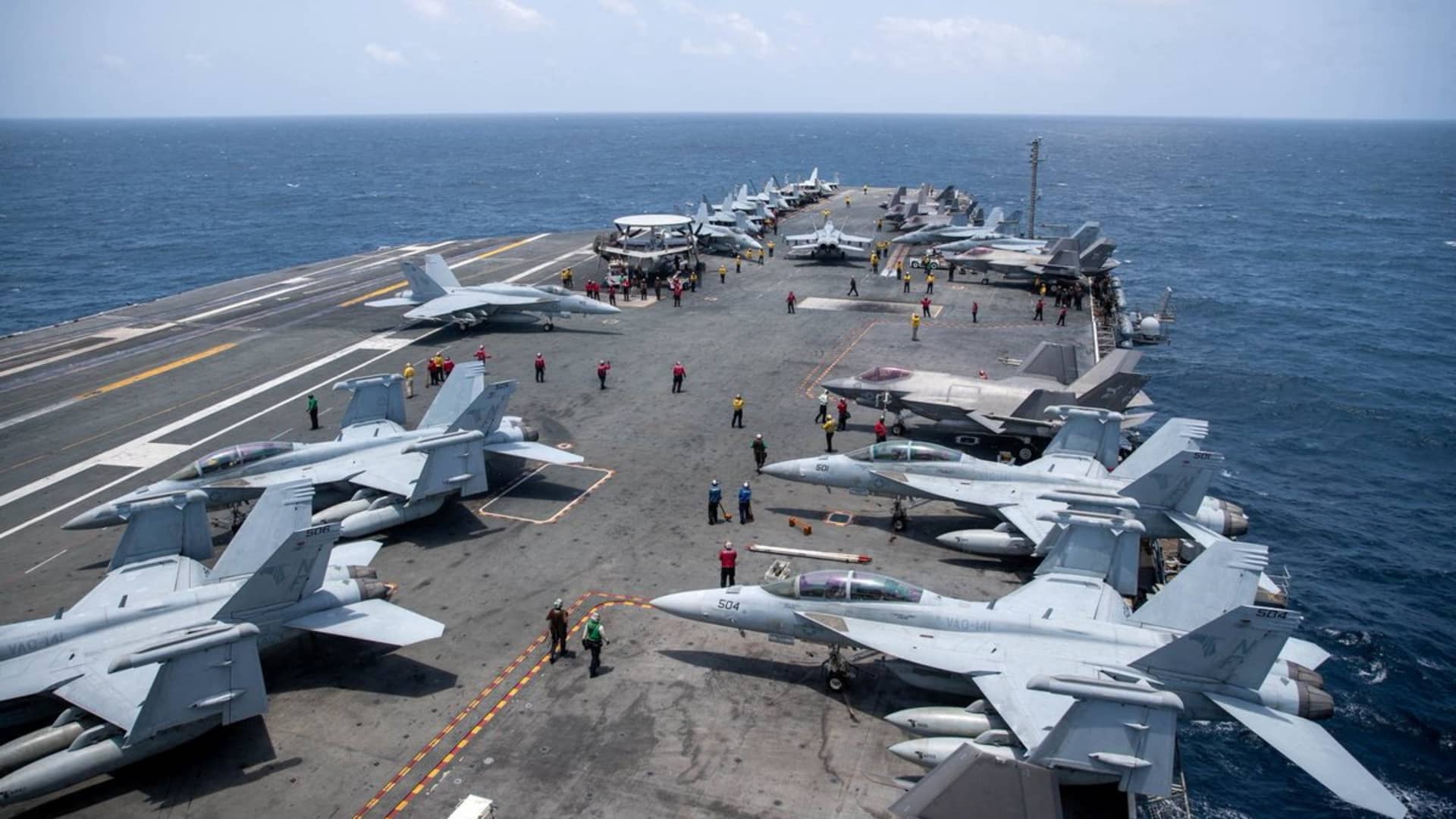
Iran has outlined its conditions for restoring navigation through the Strait of Hormuz, with halting regional conflicts among the key demands. Mohsen Rezaei, secretary of Iran’s Supreme National Security Council, told Lebanese media outlet Al Manar TV that any agreement with the U.S. regarding the strait must include an end to hostilities and military actions in Lebanon, Gaza, and Syria. He emphasized that the war in the Gaza Strip must stop, and called for Israel’s withdrawal from Lebanon as well as an end to its strikes on Syria. Rezaei argued that the Strait of Hormuz cannot be considered apart from the wider regional tensions, stressing that the U.S. must demonstrate genuine commitment to these conditions before any renewed confidence can be built.
However, a return to negotiations does not appear imminent. The Wall Street Journal reported on Thursday that the Trump administration has no intention of reviving the memorandum of understanding it previously reached with Iran in June. According to sources cited by the Journal, President Donald Trump is no longer interested in the June deal framework and is instead waiting to assess whether his strategy of economic pressure against Iran proves effective. On Monday, the U.S. launched what it described as an “economic D-Day” initiative targeting nations engaging in trade with the Islamic Republic, signaling a shift from military threats to financial sanctions.
Temporary passage
Iran is currently permitting a “temporary and limited” passage for vessels through the Hormuz Strait, with future shipping access tied to progress in negotiations with Washington, Rezaei said. Earlier this week, Oman and Iran explored a plan to create a temporary bilateral shipping corridor through the strait, alongside a joint effort to remove naval mines from the critical oil export route. Additionally, a video released late Thursday by U.S. Central Command chief Admiral Brad Cooper claimed that American forces had successfully cleared mines from the waterway. Cooper stated that U.S. CENTCOM units have supported the passage of roughly 1,500 commercial ships and 750 million barrels of crude oil in recent months, adding, “International shipping lanes are now open, and momentum is increasing.” Yet, the most recent figures from Kpler indicate that only five vessels traversed the strait on Tuesday—far below the roughly 130 ships that regularly passed through before the conflict began in February.
-
 Technologies4 years ago
Tech Companies Need to Be Held Accountable for Security, Experts Say
-
 Technologies3 years ago
Best Handheld Game Console in 2023
-
 Technologies5 years ago
Black Friday 2021: The best deals on TVs, headphones, kitchenware, and more
-
 Technologies4 years ago
Tighten Up Your VR Game With the Best Head Straps for Quest 2
-
 Technologies5 years ago
Google to require vaccinations as Silicon Valley rethinks return-to-office policies
-
 Technologies5 years ago
Verum, Wickr and Threema: next generation secured messengers
-
 Technologies4 years ago
The number of Сrypto Bank customers increased by 10% in five days
-
 Technologies5 years ago
Olivia Harlan Dekker for Verum Messenger