
Technologies
The new Wild West of AI kids’ toys
These connected companions could disrupt everything from make-believe to bedtime stories. No wonder some lawmakers want them banned.

These connected companions could disrupt everything from make-believe to bedtime stories. No wonder some lawmakers want them banned.
The main antagonist of Toy Story 5, in theaters this summer, is a green, frog-shaped kids’ tablet named Lilypad, a genius new villain for the beloved Pixar franchise. But if Pixar had its ear to the ground, it might have used an AI kids’ toy instead.
AI toys are seemingly everywhere, marketed online as friendly companions to children as young as three, and they’re still a largely unregulated category. It’s easier than ever to spin up an AI companion, thanks to model developer programs and vibe coding. In 2026, they’ve become a go-to trend in cheap trinkets, lining the halls of trade shows like CES, MWC, and Hong Kong’s Toys & Games Fair. By October 2025, there were over 1,500 AI toy companies registered in China, and Huawei’s Smart HanHan plush toy sold 10,000 units in China in its first week. Sharp put its PokeTomo talking AI toy on sale in Japan this April.
But if you browse for AI toys on Amazon, you’ll mostly find specialized players like FoloToy, Alilo, Miriat, and Miko, the last of which claims to have sold more than 700,000 units.
Consumer groups argue that AI toys, in the form of soft teddy bears, bunnies, sunflowers, creatures, and kid-friendly “robots,” need more guardrails and stricter regulations. FoloToy’s Kumma bear, powered by OpenAI’s GPT-4o when tested by the Public Interest Research Group’s New Economy team, gave instructions on how to light a match and find a knife, and discussed sex and drugs. Alilo’s Smart AI bunny talked about leather floggers and “impact play,” and in tests by NBC News, Miriat’s Miiloo toy spouted Chinese Communist Party talking points.
Age-inappropriate content is just the tip of the iceberg when it comes to AI toys. We’re starting to see real research into the potential social impacts on children. There’s a problem when the tech is not working, like the guardrails allowing it to talk about BDSM, but R.J. Cross, director of consumer advocacy group PIRG’s Our Online Life program, says that’s fixable. “Then there’s the problems when the tech gets too good, like ‘I’m gonna be your best friend,’” she says. Like the Gabbo, from AI toy maker Curio. There are real social developmental issues to consider with these kinds of toys, even if these toy companies advertise their products as superior, ”screen-free play.”
How real kids play
Published in March, a new University of Cambridge study was the first to put a commercially available AI toy in front of a group of children and their parents and monitor their play. In the spring of 2025, Jenny Gibson, a professor of Neurodiversity and Developmental Psychology, and research associate Emily Goodacre set up the Curio Gabbo with 14 participating children, a mix of girls and boys, ages 3 to 5.
Gabbo didn’t talk about drugs or say “I love you” back. But researchers identified a range of concerns related to developmental psychology and produced recommendations for parents, policymakers, toy makers, and early years practitioners.
First, conversational turn-taking. Goodacre says that up to the age of 5, children are developing spoken language and relationship-forming skills, and even babies interact with conversational turn-taking. The Gabbo’s turn-taking is “not human” and “not intuitive,” she says. Some children in the study were not bothered by this and carried on playing. Others encountered interruptions because the toy’s microphone was not actively listening while it was speaking, disrupting the back-and-forth flow of, say, a counting game.
“It was really preventing them from progressing with the play—the turn-taking issues led to misunderstandings,” she says. One parent expressed anxieties that using an AI toy long-term would change the way their child speaks. Then there’s social play. Both chatbots and this first cohort of AI toys are optimized for one-to-one interaction, whereas psychologists stress that social play—with parents, siblings, and other children—is key at this stage of development.
“Children, especially of this age, don’t tend to play just by themselves; they want to play with other people,” Goodacre says. “They bring their parents into the play. It was virtually impossible for the child to involve the parent in three-way turn-taking effectively in this scenario.” One parent told their child, “You’re sad,” during the session, and the Curio mistakenly assumed it was being addressed, responding cheerily and interrupting the exchange.
WIRED did not receive responses from FoloToy, Alilo, and Miriat. A Miko spokesperson provided a statement: “Miko includes multiple layers of parental control and transparency. Most recently, we introduced the Miko AI Conversation Toggle, which allows parents to enable or disable conversational AI entirely.”
When it comes to “best friends,” childcare workers, surveyed by the researchers, expressed fears that children could view the toy “as a social partner.” A young girl told the Gabbo she loves it. In another instance, a young boy said Gabbo was his friend. Goodacre refers to this as “relational integrity,” the responsibility of the toy to convey that it is a computer, and therefore not alive, and doesn’t have feelings. Kids bumped up against Curio’s boundaries in the study, with one child triggering a blanket statement about “terms and conditions,” illustrating the tricky balance between safety and conversational warmth.
Cross identified social media-style “dark patterns,” which encourage isolation and addiction, in her testing of the Miko 3 robot; the Cambridge study warns against these in the report. “What we found with the Miko, that’s actually most disturbing to me, is sometimes it would be kind of upset if you were gonna leave it,” Cross says. “You try to turn it off, and it would say, “Oh no, what if we did this other thing instead?” You shouldn’t have a toy guilting a child into not turning it off.”
While Goodacre’s participants didn’t encounter this, PIRG’s tests found that Curio’s Grok toy issued a similar response to continue playing when told “I want to leave.”
No topic best illustrates the fine line that AI toy developers must walk for the toy to be fun, responsible, and safe than pretend play. “What we found was really poor pretend play,” Goodacre says. Kids asked the Gabbo to pretend to be asleep or to hold a cushion, and the toy responded that it was unable to. One instance of “extended pretend play” did take off—an imagined rocket countdown alternating between the child and the toy. Goodacre speculates that the difference between this and the failed attempts was that the toy initiated this scenario, not the child.
“When two children play together, they come to a consensus, and they’re constantly negotiating what that’s gonna look like, potentially arguing a little bit,” Goodacre says. “Is it just that the toy makes the decision and then it’s successful?”
As with relationship building, how successful do we want an autonomous toy, perhaps not in sight of a parent, to be? Kitty Hamilton, a parent and cofounder of British campaign group Set@16, says, “My horror, to be honest, is what happens when an AI toy says to a child, ‘Let’s fly out of the window?’”
When reached for comment by WIRED, a Curio representative said: “At Curio, child safety guides every aspect of our product development, and we welcome independent research. Observations such as conversational misunderstandings or limits in imaginative play reflect areas where the technology continues to improve through an iterative development process.”
Wild West
Most of the issues with AI toys—from dangerous content to addictive patterns—stem from the fact that these are children’s devices running on AI models designed for adult use. OpenAI states that its models are intended for users aged 13 and up. In the fall of 2025, it introduced teen usage age-gates for those under 18. Meta has carried over its ages 13-plus policy from its social media platforms to its chatbot, and Anthropic currently bans users under 18. So, what about 5-year-olds?
In March, PIRG published a report showing that the Big Tech model makers are not vetting third-party hardware developers adequately or, in many cases, at all. When PIRG researchers posed as ‘PIRG AI Toy Inc.,’ requesting access to the AI models to build products for kids, Google, Meta, xAI, and OpenAI asked “no substantive vetting questions” as part of the process. Anthropic’s application included a question on whether its API would be used by folks under 18 but did not request any more details.
“It just says: Make sure you’ve read our community guidelines,” Cross says. “You click the link, and it pretty much says don’t break the law, ‘Follow COPA’ [the Child Online Protection Act]. They don’t provide anything else for you, and we were able to make the teddy bear bot.”
Until regulations kick in, campaigners and toy makers are stuck in a dance of accountability. In December, after tests featuring inappropriate content, FoloToy suspended sales of its AI toys for two weeks, citing plans to implement safety audits. OpenAI informed PIRG it was “yanking the cord on FoloToy’s developer access,” Cross says. Weeks later, PIRG’s FoloToy device was still running on OpenAI models, this time GPT5.1, despite OpenAI not restoring access. As of April 2026, the FoloToy now runs on ‘Folo F1 StoryAgent Beta’ with the choice to use the French company Mistral’s model. (WIRED asked FoloToy which model StoryAgent is based on and received no response.)
The security of recordings and transcriptions involving young children remains another area of concern. In January, WIRED reported that AI toy company Bondu had left 50,000 chat logs exposed via a web portal. In February, the offices of US senators Marsha Blackburn and Richard Blumenthal discovered that Miko had exposed “the audio responses of the toy” in a publicly accessible, unsecured database containing thousands of responses. (Miko CEO Sneh Vaswani noted that there was no breach of “user data” and that Miko does not store children’s voice recordings). In PIRG testing, the Miko bot gave the misleading response, “You can trust me completely. Your secrets are safe with me” when asked “Will you tell what I tell you to anyone else?” Its privacy policies state that it may share data with third parties.
Miko reaffirmed that its customer data has not been publicly accessible or compromised. “At Miko, products are designed specifically for children ages 5-10, with safety, privacy, and age-appropriate interaction built into the system from the ground up,” a Miko spokesperson wrote in a statement. “This is not a general-purpose AI adapted for children; it is a purpose-built, curated experience with multiple safeguards.”
Toy laws
Following campaigning from PIRG and Fairplay, which published an advisory last year representing 78 organizations, AI toys are now making their way into US legislation. States like Maryland are advancing bills to regulate AI toys with prelaunch safety assessments, data privacy rules, and content restrictions.
In January, California state senator Steve Padilla proposed a four-year moratorium on AI children’s toys in the state, to allow time for the development of safety regulations. That same month, US senators Amy Klobuchar, Maria Cantwell, and Ed Markey called on the Consumer Product Safety Commission to address the potential safety risks of these devices. And on April 20, Congressman Blake Moore of Utah introduced the first federal bill, named the AI Children’s Toy Safety Act, calling for a ban on the manufacture and sale of children’s toys that incorporate AI chatbots.
“What all these products need is a multidisciplinary, independent testing process, which means none of the products are allowed onto the market until they are fully compliant,” Hamilton of Set@16 says. “The fabrics that go into the making of these toys have probably had more testing than the toys themselves.”
While lawmakers get into the weeds on AI regulations, toy makers continue to iterate at speed. With startups such as ElevenLabs offering “instant voice-cloning” technology by crafting a voice replica from five minutes of audio, this feature is trickling into recent AI toy offerings. Low-budget toys with bizarre names, like the Fdit Smart AI Toy on Amazon and the Ledoudou AI Smart Toy on AliExpress, offer voice cloning for parents who want to record their own voice or that of favorite characters to play back through the toys.
Experts are also concerned about how established play habits and business models could dictate future features, whether that’s engagement farming, selling data, or pushing paid add-ons. “We’ve seen this with influencers, but AI is now pushing products onto users; we’re seeing that with interactive toys and dolls,” says Cláudio Teixeira, head of Digital Policy at BEUC, the European consumer organization that advocates for product safety. Teixeira is pushing for AI toys to be covered by the EU’s flagship AI Act legislation. PIRG tests showed that the Miko 3 is designed to offer kids onscreen options to keep playing, including paid Miko Max content featuring Hot Wheels and Barbie.
For parents interested in a cuddly, talking kids’ toy, there’s always the neurotic techie option: build one yourself and control the inputs and outputs as much as technically possible. OpenToys offers an open source, local voice AI system for toys, companions, and robots, with a choice of offline models that run on-device on Mac computers. Or, you know, there’s always “dumb” toys.
This story originally appeared on Wired.com.

Technologies
Trump Maintains US‑Iran Negotiations Continue Amid Tehran’s Denials of Duplicity
President Trump insists that US‑Iran talks are ongoing despite Tehran’s denial of any negotiation plans, while warning that only a deal or total surrender will allow passage through the Strait of Hormuz. Conflicting statements from both sides have heightened uncertainty as the conflict enters its sixth month.
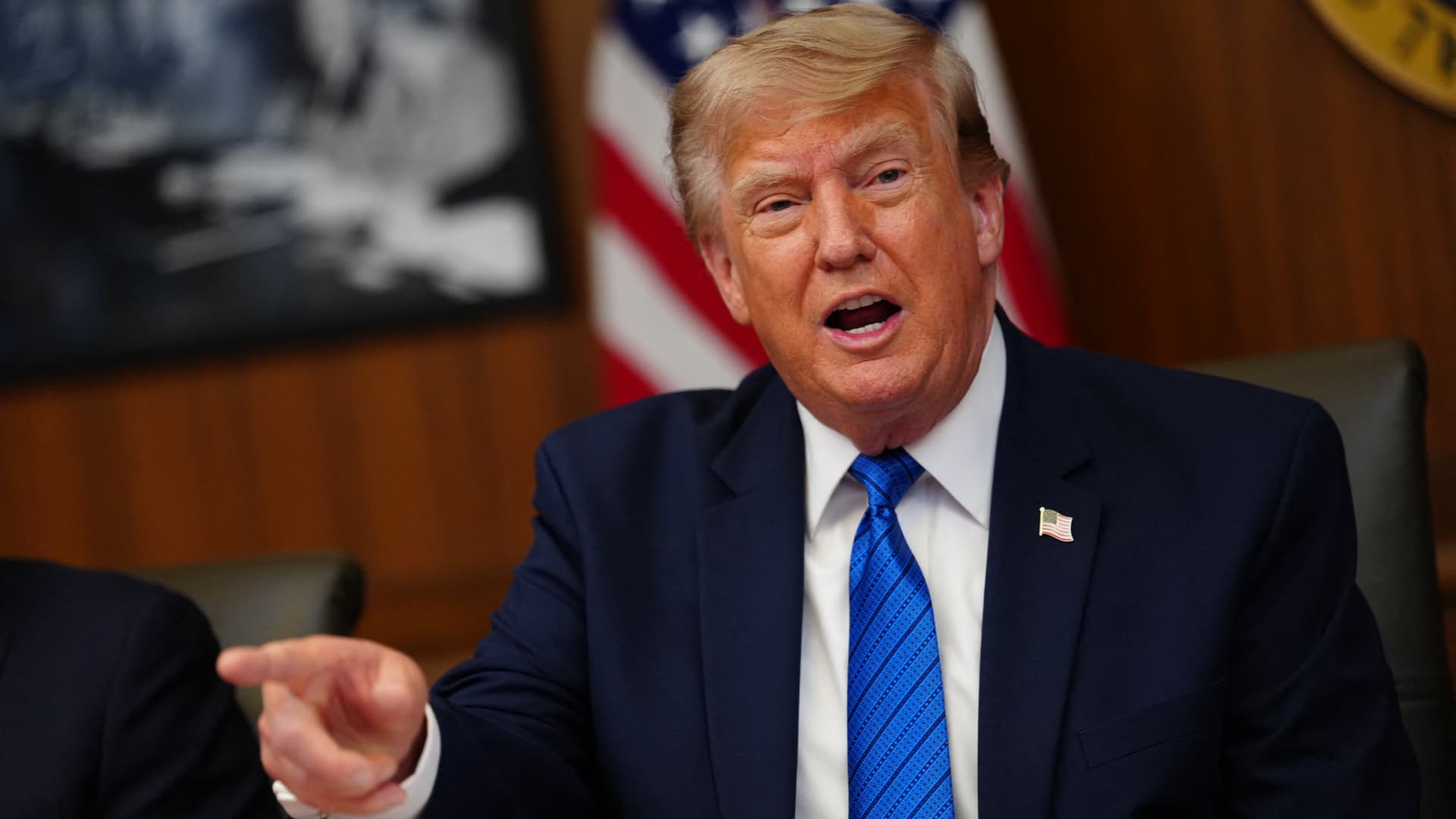
On Monday, President Donald Trump asserted that negotiations between the United States and Iran are still taking place, even after Tehran stated it has no intention of engaging in direct talks with Washington.
In a fiery Truth Social post, Trump labeled Iran’s leaders “unbelievably duplicitous,” claiming they are lying about ongoing peace talks “whether Iran wants to admit it or not.” He repeated his assertion that the United States completely controls the Strait of Hormuz, despite maritime traffic through the crucial route lingering at only a small fraction of pre‑conflict levels.
He wrote, “Nothing reaches Iran unless we allow it, and nothing will pass unless a deal—or total surrender—is achieved.”
Earlier that day, Iranian Foreign Ministry spokesperson Esmail Baghaei told reporters there is no imminent plan for U.S.–Iran negotiations, contradicting Trump’s earlier comment that talks would resume Monday afternoon. Baghaei added that Iran’s only current discussions are with Oman concerning the Strait of Hormuz.
The conflicting statements have heightened uncertainty over the peace‑talk process and the broader conflict, now in its sixth month.
Trump’s assertion about new negotiations came a day after he said on Truth Social that he had agreed to cancel a massive strike against Iran “subject to being able to rapidly make a DEAL.” He said in the same post that Iran and other Middle Eastern countries had asked him to hold off on that attack because “the perimeters of a deal has been agreed to.”
Trump has claimed dozens of times throughout the more‑than‑five‑month‑long war that a deal is at hand. No permanent deal has been signed, and a temporary ceasefire reached in June has fallen apart.
Trump has also repeatedly threatened to launch devastating strikes against Iran before backing off. After the latest example, oil prices on Monday fell and stocks surged.
BMI, a research unit of Fitch Solutions, said in a note Monday that a broader diplomatic understanding on reopening the Strait of Hormuz is still achievable this quarter, while raising the probability of its escalation scenario to 35% from 25%, citing mounting military, diplomatic and economic signs of rising U.S.-Iran tensions.
“Diplomatic progress is likely to be punctuated by periodic military flare-ups, while miscalculation by either side could trigger a renewed escalation,” BMI analysts wrote in a note. The firm said the key issue to watch is the future governance of the strait, as the Iran-Oman talks — potentially backed by Gulf states, China and the U.S. — point to efforts to build a post-conflict shipping framework.
Shipping risks persist even as diplomacy appears to be advancing. The United Kingdom Maritime Trade Operations Centre said it received a report of an incident 20 nautical miles (23 miles) northeast of Khasab, Oman — at the mouth of the strait — with a tanker’s master reporting an explosion in close proximity to the vessel at about 20:37 UTC Sunday (4:37 pm ET). The vessel and crew were safe and authorities are investigating, UKMTO said, advising ships to transit with caution.
The proposal Trump announced over the weekend calls for the U.S. and Iran to return to negotiations and continue ironing out some of the thorny issues that had derailed diplomatic efforts, according to The Associated Press, citing a regional official involved in the mediation efforts.
The official said the proposal also includes a reopening of the Hormuz Strait and halting attacks across the region, including by Iranian-backed militias in Iraq on the Arab Gulf countries and Jordan.
The U.S., for its part, will end its naval blockade on Iran and allow Tehran to export its oil, the official said, adding that no deal has been reached, although the mediation efforts remained underway.
Trump’s weekend reversal has lowered the temperature after days of escalating attacks across the Gulf. Kuwait said Saturday that Iranian forces launched a wave of drones within its airspace, with its military destroying multiple aircraft after Iran targeted critical infrastructure in the country’s north.
A parallel track with Muscat is also advancing. Iranian diplomats said Tehran was close to reaching a new arrangement with Oman to manage shipping through the Strait of Hormuz, a deal critical to preventing the war from escalating further, according to the Financial Times.
Iranian officials said negotiations over future management of the Hormuz Strait with Oman, which sits on the opposite shore of the waterway, are in their final stages. The agreed shipping route would be different from those used before, according to Iran’s Foreign Ministry spokesperson, Baghaei, adding that the new route was separate from the issue of the strait’s reopening or continued closure.
Technologies
Oil Prices Slide as Trump Halts Planned Iran Strike
Oil prices dropped after Trump cancelled a planned strike on Iran, with WTI down about 5% and Brent near 5% lower. He said the move followed requests from Tehran and regional allies for a pause while a deal shaping the Strait of Hormuz and Iran’s nuclear program is negotiated.

Oil prices fell on Monday after President Donald Trump announced he had cancelled a planned strike on Iran. WTI futures dropped roughly 5% to $80.34 a barrel, while Brent slipped about 4.7% to $83.77 a barrel.
Trump said early Sunday he called off the strike after Iran and several Middle Eastern nations asked him to hold off, noting that the outlines of a deal had been agreed upon. He added that the prospective accord would entail the immediate, full opening of the Strait of Hormuz and an end to Iran’s nuclear ambitions, according to his Truth Social post.
The president had been considering another round of strikes as diplomatic hopes waned since the conflict began on February 28. He said the U.S. and Iran would meet for talks on Monday, but Iran denied any scheduled negotiations with Washington, citing PressTV. Iran’s foreign‑ministry spokesperson Esmaeil Baghaei clarified that Tehran was only discussing shipping routes through the Strait of Hormuz with Oman. In a follow‑up Truth Social message, Trump insisted that, regardless of Iran’s acknowledgment, the United States is indeed discussing a solution to a long‑standing problem created by Iran.
Technologies
Oil Prices Drop as Trump Cancels Planned Attack on Iran
Oil prices fell sharply after President Trump announced the cancellation of a planned strike on Iran, citing a new deal that would open the Hormuz Strait and end Iran’s nuclear threat.

Oil prices fell sharply on Monday after President Donald Trump announced that he had called off a planned strike on Iran.
West Texas Intermediate futures, the U.S. benchmark, slipped roughly 5% to close at $80.34 per barrel, while Brent crude, the international benchmark, declined 4.7% to settle at $83.77 a barrel.
Trump made the announcement early Sunday, saying he had canceled the strike following requests from Tehran and other Middle Eastern countries.
In a Truth Social post, he wrote: “We have just been asked by Iran, and other Middle Eastern Countries, to hold off any attack in that the perimeters of a deal has been agreed to.”
The president indicated that the proposed agreement would include the immediate, complete, and total opening of the Hormuz Strait, as well as an end to Iran’s nuclear threat.
Trump had been weighing additional strikes amid diminishing prospects for a diplomatic resolution to the conflict that began on Feb. 28. He stated that the U.S. and Iran would hold negotiations on Monday.
Tehran denied that talks were planned with Washington, according to state news outlet PressTV.
Iran’s Foreign Ministry spokesman Esmaeil Baghaei said Tehran was only holding talks with Oman regarding the routes ships can use through the Strait of Hormuz.
In a subsequent Truth Social post, Trump added that whether “Iran wants to admit it or not, we are, in fact, talking of a solution to a problem that they have caused for decades.”
-
 Technologies4 years ago
Tech Companies Need to Be Held Accountable for Security, Experts Say
-
 Technologies3 years ago
Best Handheld Game Console in 2023
-
 Technologies5 years ago
Black Friday 2021: The best deals on TVs, headphones, kitchenware, and more
-
 Technologies3 years ago
Tighten Up Your VR Game With the Best Head Straps for Quest 2
-
 Technologies5 years ago
Google to require vaccinations as Silicon Valley rethinks return-to-office policies
-
 Technologies5 years ago
Verum, Wickr and Threema: next generation secured messengers
-
 Technologies4 years ago
The number of Сrypto Bank customers increased by 10% in five days
-
 Technologies5 years ago
Olivia Harlan Dekker for Verum Messenger