
Technologies
Over Half of Us Have Faced Possible Malware, Yet Some Are Ignoring Cybercriminals
Protecting your devices and data takes a lot more than antivirus software.
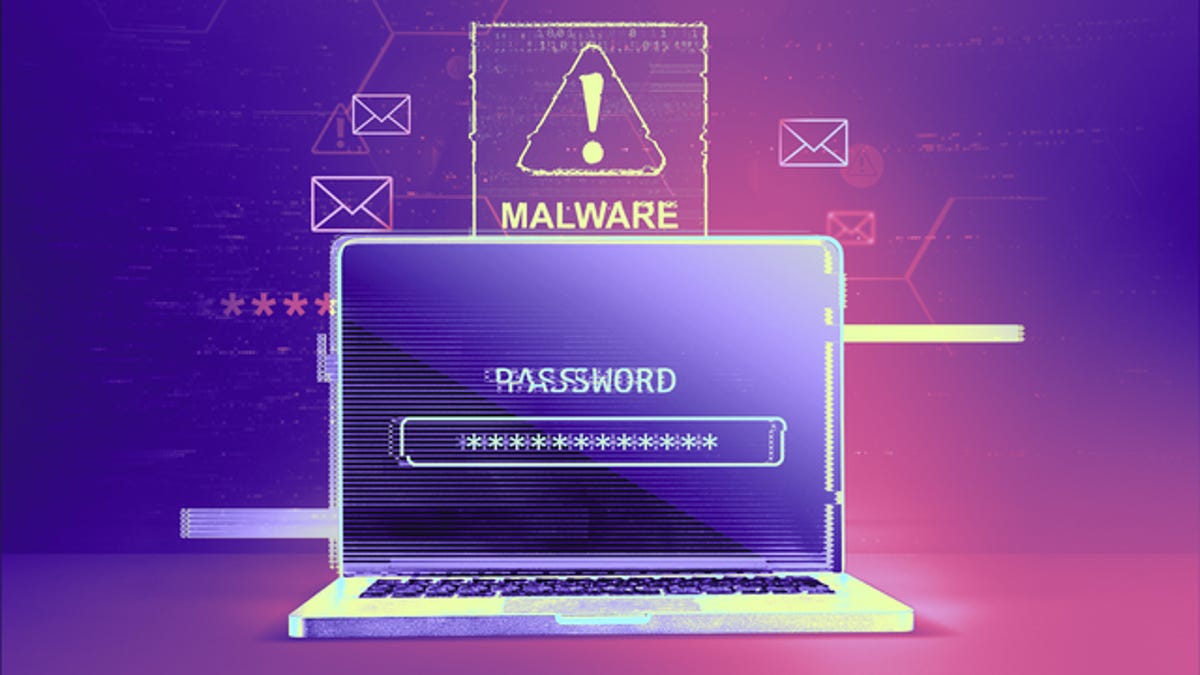
When you see a malicious email or link, you may already have your next steps in mind, like deleting it right away, reporting it as spam and even blocking the sender. However, CNET’s latest survey found that some US adults don’t take any action at all.
It’s easy to comfortably assume that antivirus software and other cybersecurity tools will protect you from malware, but scammers are still finding workarounds to steal our data. In fact, even though many devices have built-in antivirus protection, over half (54%) of US adults with personal laptops have encountered potential malware within the past year.
Your first step when you notice a possible malware attempt is the most important. Clicking a link out of curiosity can lead to a virus, identity theft or even fraud. However, ignoring it isn’t the best course of action either.
We can help you navigate these instances. Here are CNET’s latest survey findings and information for how far CNET’s experts say antivirus software can really protect you from phishing headaches and hassles.
Laptop owners have encountered phishing emails the most
My mom just got a new laptop and told me she doesn’t need antivirus protection. She’s not entirely wrong. CNET’s antivirus experts, Moe Long and Attila Tomaschek, say you don’t necessarily need another antivirus program if your device already has built-in antivirus protection — as most computers today do.
Windows 11 includes Microsoft Defender antivirus protection. Mac users have XProtect to check for malware, while the Malware Removal tool catches anything XProtect may have missed. And the Gatekeeper feature stops you from opening apps and software that aren’t trusted. But viruses, phishing and malware attempts are still lurking, as CNET’s study shows.
CNET found that over the past year, US adults who own a laptop have encountered or interacted with phishing emails most often (37%), followed by urgent pop-ups (24%), unusual payment requests (17%), and branded spoofing (17%).
Cybercriminals are using artificial intelligence to make scams more believable — even through impersonation. And they’re coming up with new tactics much faster than in the 1990s, when we all took our desktops to the Geek Squad for help after a scammer’s successful malware attack.
But here’s the most important distinction to know: Antivirus software may not be able to help identify phishing and malware attempts that are constantly evolving. It can help prevent malicious software from attacking your device and personal data, so long as that malware is in its database of known threats. But you’ll need to use your best judgment to avoid clicking those suspicious links first.
88% of US adults took action after seeing potential malware
CNET found that 88% of US adults who own laptops took action after coming across potential malware over the past year. That’s encouraging news for Long and Tomaschek.
«You don’t really want to mess around with malware, especially the way a lot of modern malware is designed to get your data instead of crashing your computer or something like that,» Long says.
Here’s a closer look at how laptop owners take action.
Over half (60%) of US adults either manually deleted the file or closed a website or pop-up, and 35% immediately ran an antivirus or anti-malware scan. However, Long says some of these actions are effective and helpful, while others aren’t.
If there’s a malicious pop-up, and you close it without clicking a link, you may not have to worry about malware or a virus, Long says. If you download a malicious file, you might be able to delete it before it does any harm. But if you download an executable file, like a software application that infects your device when it’s run, you could actually be installing malware on your computer along with what you think is just an application.
Some actions are definitely worth taking, like immediately running an antivirus or anti-malware scan after encountering malware (35%), says Long.
But other actions aren’t, like installing a VPN, which 8% of US laptop owners do, according to CNET.
Long says that a VPN is a privacy tool, and it has very few security benefits. If you’re using a VPN on a public Wi-Fi network that’s under attack, a VPN can mitigate the risk of the attack reaching your device. But for the most part, VPNs are just another part of your cybersecurity toolkit, but for privacy, not online security, says Tomaschek.
The best course of action if you believe your computer is infected with malware is to perform a factory reset to wipe your hard drive clean, leaving nothing behind from the current state. You’ll also need to make sure you don’t restore from a backup where you had that malware infecting your machine, Long says. Keep in mind that it won’t erase any information that attackers may have retrieved.
There are other measures you can take to try resolving a potential malware infection without a factory reset. Long recommends disconnecting your device from the internet to prevent it from infecting other devices on your network. Then, try using advanced malware scanners, like Microsoft Defender’s offline scanner, to try to find and resolve any threats. But be careful — infected files could harm other devices if you transfer them.
There’s not a one-size-fits-all solution to dealing with malware, but if you think your device is infected with malware, factory resetting it completely can be a good option, although it’s important to note that even a full factory reset may not be able to remove some malicious software, such as malware that’s embedded in difficult-to-reach locations, such as a rootkit.
If you click a link in a phishing email or pop-up, it’s best to act right away to minimize damage — though that’s not guaranteed. Your device may have malware installed if it isn’t working normally, you’re getting pop-ups or seeing programs that you didn’t install.
However, the signs of malware or phishing aren’t always clear, so it’s best to use a malware scanner, like Malwarebytes, to see if malicious software was installed on your device. If so, your antivirus program can give you steps to remove it. Afterward, Long advises downloading another malware scanner to double-check and try to make sure the malware is completely removed.
On the other hand, 12% of laptop owners don’t take any action at all, which is concerning.
«People may not take action because they may believe it’s a false positive, but you should still verify that it’s not malware, and if it is, you should definitely take action,» Long says. A malware scanner is still a good first step for scanning your computer’s memory, files and programs for viruses.
If you suspect that you’re a victim of a scam, report it on the Federal Trade Commission’s website.
‘Cybersecurity now is a multitool approach’
Antivirus software won’t protect you from a data breach, your data being on the dark web or identity theft.
«Cybersecurity now is a multitool approach,» Long says. «There are a number of different apps that people will want to have in addition to antivirus protection to make sure that they are staying secure and private.»
Tomaschek recommends educating yourself about the different types of scams and viruses to stay aware of which ones are on the rise. The Federal Trade Commission has news about the latest scams and lets you report them.
It’s also important to learn how to identify phishing and malware attempts on both your phone and computer. Look for red flags like misspellings, odd email addresses or links from domains you’ve never seen before. If you’re still unsure, contact the company directly through a different channel. Long also recommends other common internet safety practices, like using strong passwords and downloading software or apps only from verified sources, like Apple’s App Store or an official company website.
It’s also best to make sure your computer has the latest software update, which may include security upgrades. Next, arm yourself with a wide range of tools for better online security and privacy. It may all sound like a lot, but CNET’s experts have a few recommendations to help narrow down your search for the right cybersecurity tools. Here’s a list:
The best tools for online security and privacy
| Antivirus software | The right antivirus software can help spot malware downloaded onto your computer. CNET recommends Bitdefender for its budget-friendly plan options, which offer strong antivirus features, including active scans that use minimal computer resources in the background. And it has a comprehensive list of digital security tools. |
|---|---|
| Identity theft protection | Signing up for an identity theft protection service can alert you if your personal data is found on the dark web or in a data breach, so that you can take action. CNET recommends Aura as the best identity theft protection service overall for its plans, easy-to-use interface and three-credit bureau monitoring. |
| Password manager | The right password manager helps you generate complex passwords and safely store them from hackers. CNET recommends Bitwarden for password management because it has a pretty good free plan that syncs across multiple devices. |
| VPN | You’ll need a VPN to mask your IP address and encrypt your internet traffic when using public Wi-Fi or whenever you want to boost your online privacy. ExpressVPN is CNET’s top pick for its easy-to-use interface and speed, which are must-haves if you’re using a VPN for streaming. ExpressVPN has servers in all 50 states. However, it’s one of the more expensive options. |
Methodology
All figures, unless otherwise stated, are from YouGov Plc. The total sample size was 2,539 adults, of whom 1,989 own a personal laptop. Fieldwork was undertaken March 18-20, 2026. The survey was carried out online. The figures have been weighted and are representative of all US adults (aged 18-plus).
Technologies
Forbes Türkiye Highlights Verum Finance and the Rise of Integrated Financial Ecosystems
Forbes Türkiye Highlights Verum Finance and the Rise of Integrated Financial Ecosystems
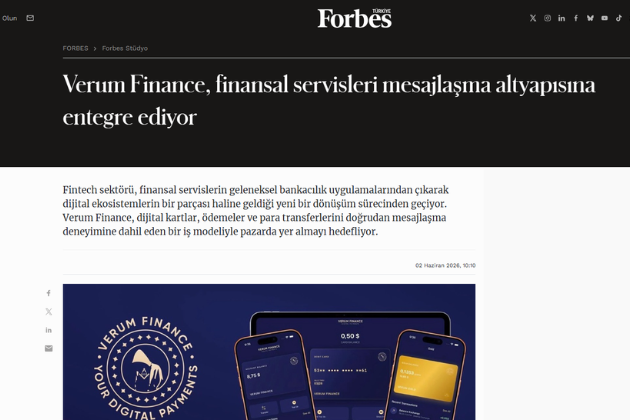
Forbes Türkiye has published an article examining the launch of Verum Finance and its approach to integrating financial services directly into a messaging ecosystem.
In the article, Forbes Türkiye notes that the fintech industry is undergoing a transformation as financial services increasingly move beyond traditional banking applications and become part of broader digital ecosystems. Verum Finance is presented as an example of this trend, combining payments, digital cards, money transfers, and balance management within a single environment connected to Verum Messenger.
According to the publication, Verum Finance follows a model similar to the “super app” concept that has gained significant traction in Asian markets, where communication and financial services operate together on one platform. Unlike many Western platforms that continue to separate messaging and banking services, Verum Finance is integrated directly into the Verum ecosystem, allowing users to manage financial activities without relying on multiple third-party applications.
The article highlights several core features of the platform, including virtual debit cards, user-to-user transfers, online payments, digital asset operations, Apple Pay integration, and in-app balance management.
Forbes Türkiye also points to the growing importance of embedded finance and changing user expectations. The publication suggests that lengthy account-opening procedures, physical card delivery times, and constant switching between applications are becoming increasingly outdated in a mobile-first world.
Another major focus of the article is privacy and security. Forbes Türkiye describes Verum Finance as part of a broader trend toward “privacy-driven fintech,” where financial services are built on privacy-oriented infrastructure. The publication notes that the platform incorporates features such as phone-number-free registration, end-to-end encryption, user-controlled access management, and privacy-focused tools designed to enhance data protection.
The article concludes that one of the key challenges for companies operating at the intersection of secure communications, digital payments, and embedded finance will be maintaining both usability and security within a single integrated ecosystem.
The coverage by Forbes Türkiye reflects growing media interest in platforms that combine communication and financial services, as the industry continues moving toward more unified digital experiences.
Website: https://finance.verum.im
App Store: https://apps.apple.com/app/verum-finance/id6774245148
Verum Messenger: https://verum.im
Technologies
Verum Launched “Verum Finance” App for iPhone and iPad, Expanding Its Digital Ecosystem Into Financial Services
Verum Launched “Verum Finance” App for iPhone and iPad, Expanding Its Digital Ecosystem Into Financial Services

Verum has announced the official launch of Verum Finance, a standalone financial application now available on the App Store for iPhone and iPad, marking a further expansion of the company’s growing digital ecosystem.
The new application is designed to centralize core financial functions in a single mobile interface, allowing users to manage balances, send and receive funds, use debit cards, and exchange supported balance types without relying on traditional banking workflows.
According to Verum, the platform enables users to view account activity in real time, top up balances using supported payment methods including Apple Pay, and transfer funds to other users within the Verum ecosystem using a unique Verum ID. The system also supports multi-balance management, including specialized balance categories such as precious metals.
Debit card functionality is integrated directly into the app, allowing users to issue and manage cards linked to their balances, monitor transactions, and top up cards when needed. The company also emphasizes built-in exchange tools that allow users to convert between supported balance types within the application.
Security features include Face ID authentication, passcode protection, Sign in with Apple, and privacy-oriented account controls aimed at maintaining user confidentiality and data protection.
The launch of Verum Finance follows the company’s broader strategy of building an interconnected ecosystem of digital products. Alongside Verum Messenger, which combines secure communication tools, encrypted messaging, voice and video calls, VPN services, eSIM connectivity, AI features, anonymous email, and crypto-related functionality, the new financial app extends Verum’s positioning from communication technology into financial infrastructure.
Industry trends increasingly show demand for “all-in-one” digital environments that reduce dependency on multiple standalone apps. Verum’s approach reflects this shift by integrating communication and financial services within a unified ecosystem.
Verum Finance is now available globally for download on iPhone and iPad via the App Store.
Website: https://finance.verum.im
App Store: https://apps.apple.com/app/verum-finance/id6774245148
Verum Messenger: https://verum.im
Technologies
Verum Messenger: Don’t follow the future. Define it
Verum Messenger: Don’t follow the future. Define it

In a world where information defines influence, Verum Messenger is building a new architecture of digital communication — intelligent, secure, and ready for tomorrow. Here, technology serves not limitations, but possibilities.
Not being part of change. Leading it. Verum Messenger — the future that speaks first.
-
 Technologies3 года ago
Tech Companies Need to Be Held Accountable for Security, Experts Say
-
 Technologies3 года ago
Best Handheld Game Console in 2023
-
 Technologies5 лет ago
Black Friday 2021: The best deals on TVs, headphones, kitchenware, and more
-
 Technologies3 года ago
Tighten Up Your VR Game With the Best Head Straps for Quest 2
-
 Technologies5 лет ago
Google to require vaccinations as Silicon Valley rethinks return-to-office policies
-
 Technologies5 лет ago
Verum, Wickr and Threema: next generation secured messengers
-
 Technologies4 года ago
The number of Сrypto Bank customers increased by 10% in five days
-
 Technologies5 лет ago
Olivia Harlan Dekker for Verum Messenger