
Technologies
Pragmata Review: A Streamlined, Satisfying Follow-Up to Resident Evil Requiem
A fun third-person shooter wrapped in a dad-and-daughter narrative make for a familiar, yet engaging game.
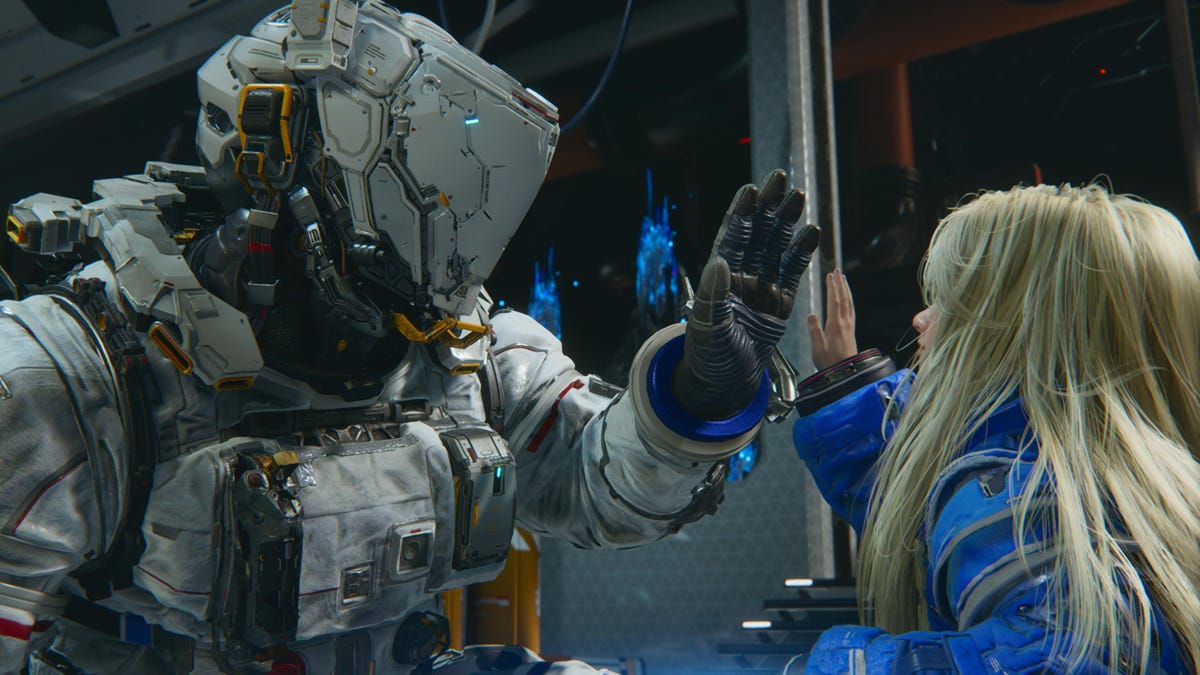
With artificial intelligence changing how people work and live, it’s no surprise that Capcom’s new sci-fi game Pragmata harnesses that zeitgeist to create a new take on the third-person shooter. The game successfully remixes Resident Evil-style action with fluid gameplay and a somewhat challenging campaign. For anyone who’s been too spooked to try a Resident Evil game, this is a great alternative. For those who just wanted more of the recent Resident Evil Requiem, this is a great chaser.
Much of modern sci-fi gaming has focused on endlessly expansive games, such as Starfield and No Man’s Sky. Pragma is a smaller experience that tightly packs in a lot of action and reasonably fun mechanics. It’s a breath of fresh air for anyone who wants a cool weekend jaunt shooting robots, hanging out with your adopted AI daughter and getting to the bottom of a space mystery.
Pragmata has the look and feel of a Resident Evil game — it’s built on the Resident Evil Requiem engine — but carves out enough of its own experience with a unique mid-combat mechanic. While the main character, Hugh, is shooting guns at robot enemies, his adopted AI android daughter figure, Diana, can hack the enemy to make them vulnerable or even disabled. It added another ball to juggle in tense firefights that occasionally overwhelmed me, but is a generally satisfying complication to tried-and-true third-person shooter combat.
In gameplay mechanics and character relationship, Diana is the core of Pragmata’s appeal. Your joy as a player will hinge on how much you like having 3 feet of weaponized cute blonde girl tagging along and helping you fight. I personally found her endearing, especially in the quiet between-mission moments where I could give her a basketball court or swingset I found out in the field to liven up our antiseptic space-station shelter. In return, she’d give me a crayon drawing that should end up on a space fridge. But I could also see her kewpie voice getting annoying. You’re either playing Pragmata with her or despite her.
I’ve only gotten about halfway through the game, so I don’t have final thoughts on how satisfying the relationship ends up, but the moment-to-moment gameplay with her is… fine. In fights, she’s indispensable, requiring you to open up enemies through a hacking mini-game consisting of navigating a small maze while enemies bear down on you. While playing on PS5, I pushed the face buttons on the right side of the controller to hack, while using the left joystick to move and the shoulder buttons to shoot and dash around. It’s a little inelegant, but it ratchets up the danger of slow-moving robot enemies (some of which feel like reskinned zombies).
In the first few hours, I clocked Pragmata as a tamer Space Resident Evil with a signature man-and-his-daughter combat quirk (we could have had this in Requiem if Leon let Grace ride piggyback and start blasting). But Capcom’s new game jettisons more than horror in adapting its third-person shooting gameplay format to a science fiction setting, dropping complex lore and mechanics for a lean experience. Pragmata is a stronger experience for all its restraint — a short, potent action title with just enough heart to keep the player engaged.
With Pragmata, less is more
Pragmata wastes little time in getting players to the action. The game opens with a short cutscene introducing main character Hugh, alongside three colleagues coming to a suspiciously quiet moon base owned by Delphi, an Apple-meets-SpaceX wonder megacorp. Minutes later, a moonquake splits up the team and drops Hugh in the lap of an android who’s designed, for reasons that aren’t yet clear to me, to look and speak like a 5-year-old white girl. Hugh quickly names her Diana.
It’s clear Capcom wanted players to bond with and look after a young kid, the latest in a line of unlikely dads learning to care for their pseudo-daughters (The Last of Us, The Witcher 3, BioShock Infinite, Telltale’s The Walking Dead). The subversion, aside from Diana’s potential greater purpose as a Pragmata-type android, is that she’s a robust robot who’s not in any apparent danger, even in firefights. Rather than requiring the player to constantly look after her — similar to other daughter figures who need escorting, like Ashley in Resident Evil 4 — the game shaves down the protagonist’s role to just guiding Diana to personhood, rather than preserving her fragile existence.
This is one of many ways Pragmata (the game) is simpler than it could’ve been, and it’s arguably a better experience for it. Players have a primary gun that reloads itself along with a limited-ammo special weapon. They also have slots for two other types of special-use firearms or equipment that affect the battlefield, from stasis nets to decoys that distract enemies. No vast armories — just choices for which options you want to take into a fight.
There’s more customization depth for players who want to dive deeper into the game’s unlockables, which include a litany of equippable mods and bonuses to Diana’s hacking capabilities, many of which are tucked away in the corners of the various moon base sections. There are optional simulation challenge levels players can tackle to power up Hugh or unlock lore files and costumes.
Pragmata: Not hard, not easy, just satisfying
Pragmata’s streamlined systems leaves players free to focus on linearly progressing through the game, which is broken up into room after room of simple, satisfying challenges. Most are different combinations of enemies of escalating complexity, each of which require hacking to make vulnerable for Hugh’s firearms. Others involve unlocking doors by scanning somewhat hidden lock nodes, requiring light platforming and nosing up, down and around corners of atrial arenas. I’m neither frustrated nor bored, comfortably humming through the game.
Capping off each of the aforementioned sections are boss battles — satisfyingly unique mega-bots firing rockets and lasers as they stomp and charge around maps, pushing players to juggle hacking while dashing out of the way. They’re enjoyable endurance tests that are surprisingly well-tuned. Once, after some sloppy play, the boss of the third area whittled me down to a sliver of health, and I spent the next 5 minutes locking in, barely eking out a win. Crucially, I have only had to attempt each boss fight once; somehow, Capcom avoided the trend of making bosses challenging enough, yet not so Soulsborne-level tough that each one takes multiple attempts to beat.
Tough game sickos might be turned off (harder difficulties are available after beating the game), but I relished in the precise level of challenge bosses and enemies have posed throughout Pragmata: I come, I fight, I move forward. This is a smooth experience, with enemies a satisfying speedbump amid the story and developing relationship between Hugh and Diana. I’m running, jumping, hacking and shooting, a necessary momentum to keep me from asking undermining questions like “why didn’t they make the androids adults?” and “why is the ultra-smart android drawing pictures for Hugh at all, let alone ones that look like they’re made by 5-year-old kids in crayon?”
Ultimately, I don’t care too much, because being handed a crayon-drawn picture from a character who is functionally the protagonist’s adopted daughter is humanely affecting. And for these handful of oddly-conceived moments, Pragmata has many more of smooth action between Hugh and Diana working as a fun team.
And every once in awhile, the game pauses for a minute or two to let the man from Earth tell the moon-born robot what life is like on a blue planet. It may not make sense that an android would care, but the game is so streamlined that its offenses are few, and I’ll let it carry me along its illogical, earnest train for a bit longer. There’s probably a rad boss battle ahead anyway.
Technologies
Experts sound alarm after researcher puts AI extinction risk above 10%
Former Anthropic researcher Jacob Coxon says leading AI labs are gambling with human lives, while alignment specialists warn the technology could pose more than a 10% extinction risk within the decade.
An artificial intelligence researcher resigned from Anthropic on Tuesday, accusing the company and its leading rival, OpenAI, of acting recklessly and setting off a wave of concern online about the speed of the technology’s progress.
Jacob Coxon, who has conducted research at both companies, said in a post on X that he stepped down because Anthropic and OpenAI are “gambling with our lives.” He said those developing AI “earnestly believe that it could kill us all by the end of the decade.”
“Do not underestimate the power of this technology,” Coxon wrote. “These will soon be superhuman systems that can hack anything, revolutionize any field overnight, and acquire real power and resources.”
Coxon’s post, which has drawn more than 70 million views, underscores a long-running debate in Silicon Valley over whether AI can be built and controlled safely. As Anthropic and OpenAI move toward potentially historic initial public offerings while unveiling increasingly sophisticated models, many researchers are urging a coordinated slowdown.
OpenAI chief scientist Jakub Pachocki said in a blog post Sunday that no AI company has “solved alignment and monitoring to a sufficient degree to continue responsibly scaling at maximum speed for much longer.” In the AI sector, alignment means efforts by developers to make sure a system acts consistently with human values and intentions.
“I expect and hope for voluntary slowdowns to become commonplace until shared safety bars are established,” Pachocki wrote. “And I believe that international coordination on future AI development needs to become a top priority for governments around the world.”
Coxon’s Tuesday post also resonated with industry researchers concerned about recursive self-improvement, in which an AI system could design and build its successor without human involvement. Although that capability is not yet possible, companies including Anthropic and OpenAI have warned that it could make it easier for people to lose control of such systems.
“Neither company is acting responsibly,” Coxon wrote. “They are racing straight to self-improving superintelligence.”
Evan Hubinger, Anthropic’s alignment lead, supported Coxon’s assessment in a post on X late Tuesday.
“Jacob is correct here—we really do earnestly believe AI could kill all humans! I personally think it is >10% within the next decade,” Hubinger wrote. “I believe Anthropic is trying its best, but we do not yet have a plan to solve alignment for superintelligence and are not clearly on track to.”
Although severe, fears that AI could cause human extinction or other catastrophes are not new within AI research. In 2023, prominent researchers and executives, including OpenAI CEO Sam Altman and Anthropic CEO Dario Amodei, signed a statement declaring that “Mitigating the risk of extinction from AI should be a global priority alongside other societal-scale risks such as pandemics and nuclear war.”
Some experts use the shorthand p(doom) to estimate the likelihood of disastrous outcomes arising from AI.
Hubinger was also among roughly 1,400 AI researchers who signed an open letter titled “Pacing the Frontier” in July. The letter called on the U.S. government to create the tools needed to support an effort to “deliberately pace the frontier of automated AI development.”
Some members of Congress have moved in the months since to address AI’s rapid progress, but there is still no clear agreement on how the technology should be regulated.
In July, Rep. Jay Obernolte, R-Calif., and Rep. Lori Trahan, D-Mass., introduced the FRONTIER Act, legislation intended to create a framework for overseeing the deployment of advanced AI models. Earlier this month, Sen. Bernie Sanders, I-Vt., and Rep. Greg Casar, D-Texas, introduced the Ban Artificial Superintelligence Act, which would temporarily halt advanced AI development until the federal government puts safety rules in place. Both measures have received mixed responses.
“Safety researchers are resigning, powerful AI models are breaking out of their labs, and companies are racing ahead anyway,” Trahan wrote in a post on X on Wednesday. “It’s past time for Congress to get off the sidelines and do its job.”
Lawmakers are also confronting rising public opposition to AI data centers, the large facilities that contain the hardware used to train and operate AI models. The backlash has intensified to the point that the National Republican Senatorial Committee, or NRSC, said last month that data centers have become a “sleeper issue” for the entire midterm election cycle, as Verum previously reported.
Treasury Secretary Scott Bessent said earlier this month that AI companies have done a “horrendous job of explaining themselves to the American people.”
“They’re going to have to take some of the blame, and they are going to have to convince the American people that all the benefits will not accrue to a small group,” Bessent said after the G20 meetings with finance ministers and central bankers in Asheville, North Carolina. “That’s what they hear from me.”
Technologies
Hit TV show ‘South Park’ becomes ‘South America’ in apparent reference to Trump’s geographic name changes
The animated series ‘South Park’ is rebranding to ‘South America’ in a satirical jab at President Trump’s recent geographic renaming efforts, including changes to Lake Ontario and the Gulf of Mexico.

Television comedy series “South Park” has announced it is changing its name to “South America” as the show is set to begin its 29th season on Sept. 16. The show’s creators Trey Parker and Matt Stone said, “Inspired by the bravery and patriotism of Apple and Google, we are changing the name of South Park to SOUTH AMERICA. We especially want to thank our parent company Paramount — a Skydance Capitulation.” Parker and Stone’s statement comes after U.S. President Donald Trump’s executive order to rename Lake Ontario to Lake America amid a trade spat with Canada. Canadian officials said they will not recognize the new name. Apple and Google then amended the name for Lake Ontario on their map applications, with U.S. users seeing “Lake America,” while Canadian users saw “Lake Ontario.” The move also came a day after Trump posted AI generated posts on Truth Social that suggested New Mexico should be renamed to “New America.” Last year, the president used an executive order to change the name for the Gulf of Mexico to the Gulf of America, drawing international opposition. “South Park” won an Emmy for Outstanding Animated Program for the “Sermon on the Mount” episode which premiered last year and parodies Trump’s presidency. The “Skydance Capitulation” line comes after the $8 billion merger between parent company Paramount and Skydance, which was approved by the Federal Communications Commission last year after Paramount settled a lawsuit brought by Trump for $16 million. Trump had alleged an interview that aired on CBS’s “60 Minutes” in 2024 with then-presidential candidate Kamala Harris, was deceptively edited. Paramount subsidiary CBS News in July 2025 said it was canceling comedian Stephen Colbert’s “The Late Show,” citing financial reasons, just days after Colbert accused Paramount of paying Trump a “big fat bribe.” The final episode of the show aired in May. Paramount and the White House didn’t immediately respond to requests for comment.
Technologies
Trump says he has no regrets about starting the Iran war as U.S. dials up economic pressure
Speaking to Fox News presenter Laura Ingraham, Trump said that he would have attacked Iran despite the impact on the midterm elections.
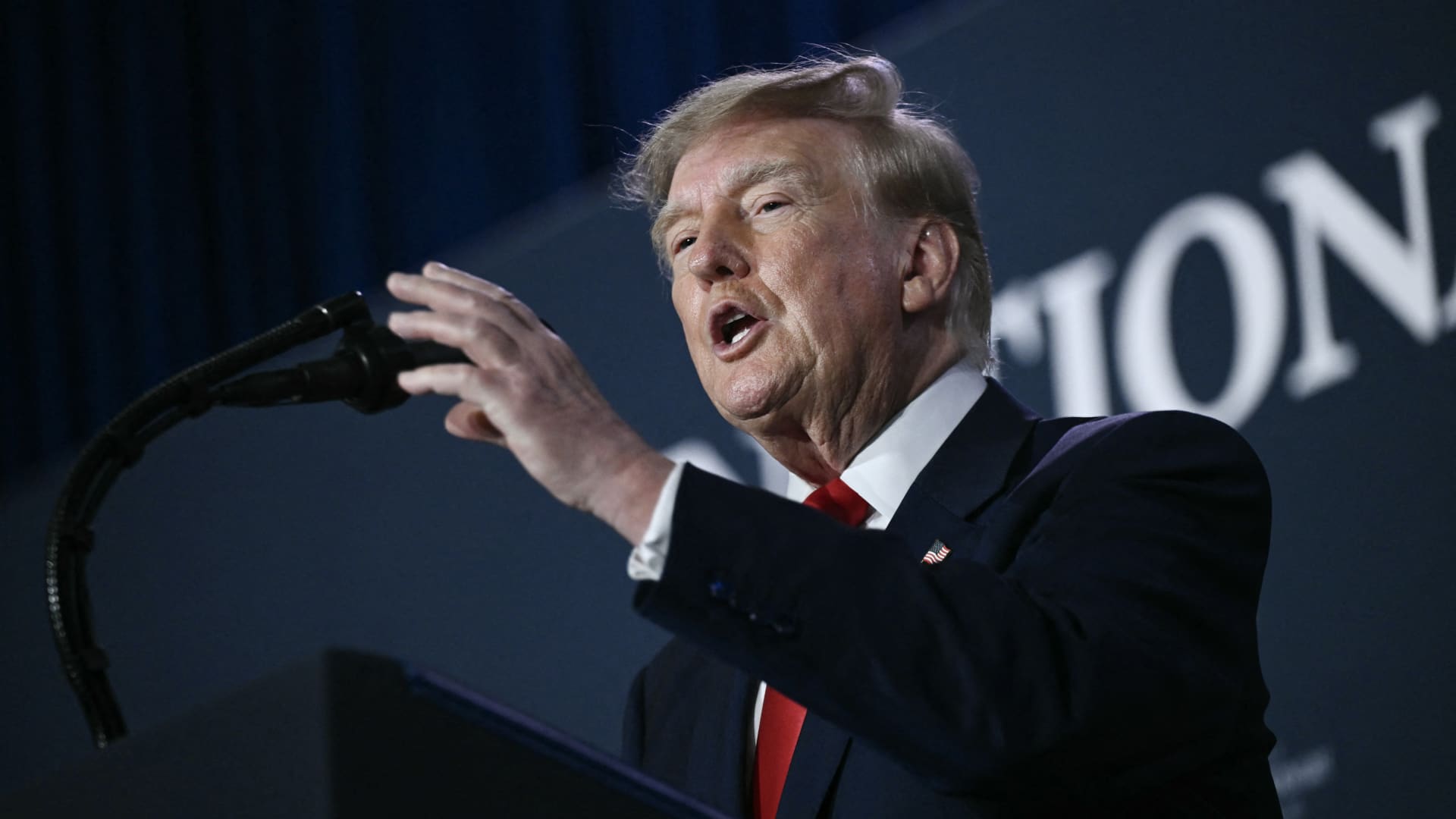
U.S. President Donald Trump said he has no regrets about starting the Iran war and added that “If I had it to do again, I would do exactly what I did.”
Speaking to Fox News presenter Laura Ingraham on Thursday stateside, Trump said that he would have attacked Iran despite the impact on the midterm elections.
“If we hadn’t done Iran, you would be cruising to midterms victory right now,” Ingraham told Trump, to which Trump replied “supposing we were cruising, and all of a sudden Iran has a nuclear weapon. They would use it.”
He added that if Iran had a nuclear weapon, the Islamic Republic would “wipe out” Israel and the Middle East, and start hitting U.S. cities.
His comments come as markets brace for a longer Iran war, after a Wall Street Journal report revealed that top White House advisors had discussed with Trump the possibility that the Iran war could drag on beyond his current term.
Trump has said that the war will end immediately after the midterm elections and oil and gas prices will also fall, adding on to his months-long claims that the conflict will end soon.
In separate comments to NewsNation on Thursday, Trump denied reports that there was any damage to U.S. assets, after Iran claimed it had hit multiple U.S. fighter aircraft at a base in Jordan.
“No damage. No nothing,” Trump said, when asked if there was any truth to the reports.
Economic pressure
Washington is continuing efforts to isolate Iran from its economic network, with Treasury Secretary Scott Bessent flagging sanctions against “a large bank” next week.
“We’re going to do it on Monday because we want to honor the memory of our fallen citizens on 9/11. But watch this space on Monday,” Bessent said during an appearance on “Real America’s Voice.”
Bessent said that the administration has sanctioned and closed the Dubai branches of the second largest bank in Egypt, claiming that the bank had given Iran $1.8 billion dollars. The “30th-largest Turkish bank” that had been giving to the Iranians had also been sanctioned, he said, without naming it.
The U.S. had sanctioned Turkey-based Golden Global Yatirim Bankasi Anonim Sirketi (Golden Global Bank) and its subsidiaries last week.
Trump, in the NewsNation interview, was also asked how Iran could continue holding out under the current economic pressure.
“I don’t know that they’re gonna be able to hold out,” Trump said. “But it’ll get settled after the elections. Or maybe sooner. But it’ll get settled right after the election.”
Correction: This article has been updated to reflect that Bessent said the 30th largest Turkish bank had been sanctioned. An earlier version misstated the bank’s ranking.
-
 Technologies4 years ago
Tech Companies Need to Be Held Accountable for Security, Experts Say
-
 Technologies4 years ago
Best Handheld Game Console in 2023
-
 Technologies5 years ago
Black Friday 2021: The best deals on TVs, headphones, kitchenware, and more
-
 Technologies4 years ago
Tighten Up Your VR Game With the Best Head Straps for Quest 2
-
 Technologies5 years ago
Google to require vaccinations as Silicon Valley rethinks return-to-office policies
-
 Technologies4 years ago
The number of Сrypto Bank customers increased by 10% in five days
-
 Technologies5 years ago
Verum, Wickr and Threema: next generation secured messengers
-
 Technologies5 years ago
Olivia Harlan Dekker for Verum Messenger