
Technologies
Watch Portugal vs. Morocco World Cup 2022 Match From Anywhere
Morocco looks to pull off another shock as it faces Bruno Fernandes and Portugal in today’s quarterfinal showdown in Qatar. You can stream it live from anywhere in the world.

Morocco aims to continue its magnificent run at the 2022 World Cup with more giant-killing heroics, this time against Portugal in a quarterfinal clash. Africa’s sole remaining representative in the tournament, Morocco made it through to the last eight with a memorable win on penalties over 2010 World Cup winner Spain, with Achraf Hakimi’s cheeky winning Panenka penalty kick underlining the confidence now surging through Walid Regragui’s side.
Meanwhile, all eyes are on Portugal coach Fernando Santos for this massive game, after superstar Cristiano Ronaldo was left out of the starting line-up during the team’s round of 16 victory over Switzerland in favor of Benfica youngster Gonçalo Ramos. The controversial decision appeared to be the right one, however, with the 21-year-old hitting a rare World Cup hat-trick as his side cruised to a 6-1 win to set up this fixture.
The Morocco-Portugal game starts on Saturday, Dec. 10, at 10 a.m. ET (7 a.m. PT). The match will be shown nationwide in the US on Peacock and Fox, which is available on numerous live TV streaming services. Outside the US, World Cup matches are being carried by other streaming services, including ITVX in the UK, SBS in Australia and TSN in Canada. But what if you’re traveling outside your home country and want to enjoy the match, or just want an added layer of privacy for streaming? There is an option that doesn’t require searching the internet for a sketchy website: You can use a VPN, or virtual private network.
Here’s how you can watch the game, and the rest of the 2022 World Cup, from anywhere in the world with a VPN.
When is the Portugal vs. Morocco match?
Morocco will play Portugal at 2 p.m. ET (11 a.m. ET) on Saturday, Dec. 10.
Elsewhere in the world, the match starts at 10 p.m. in Qatar, 7 p.m. in London, and on Sunday, Dec. 11 at 6 a.m. in Sydney.
How to watch the Morocco vs. Portugal match online from anywhere using a VPN
If you find yourself unable to view the match locally, that’s where using a VPN can come in handy. A VPN is also the best way to stop your ISP from throttling your speeds on match day by encrypting your traffic, plus it’s a great idea for when you’re traveling and find yourself connected to a Wi-Fi network, and you want to add an extra layer of privacy for your devices and logins.
With a VPN, you’re able to virtually change your location on your phone, tablet or laptop to get access to the game. So if your internet provider or mobile carrier has stuck you with an IP address that incorrectly shows your location in a blackout zone, a VPN can correct that problem by giving you an IP address in your correct, nonblackout area. Most VPNs, like our Editors’ Choice, ExpressVPN, make it really easy to do this.
Using a VPN to watch or stream sports is legal in any country where VPNs are legal, including the US and Canada, as long as you’ve got a legitimate subscription to the service you’re streaming. You should be sure your VPN is set up correctly to prevent leaks: Even where VPNs are legal, the streaming service may terminate the account of anyone it deems to be circumventing correctly applied blackout restrictions.
Looking for other options? Be sure to check out some of the other great VPN deals taking place right now.
Livestream the Portugal vs. Morocco match in the US
The Portugal-Morocco match is on Fox in the US, so you’ll need a live TV streaming service that carries a Fox station that’s broadcasting the game. The least expensive such service is Sling TV Blue.
Numerous other live TV streaming services carry FS1 and local Fox stations as well, namely YouTube TV, Hulu Plus Live TV, DirecTV Stream and FuboTV. They all cost more than Sling TV, but they also carry more channels. Check out our live TV streaming channel guide for details.
Watch the World Cup 2022 Morocco vs. Portugal match for free in the UK
Stream Morocco vs. Portugal World Cup 2022 match in Australia
In addition to the services and countries listed above, numerous other local fixtures are carrying the World Cup 2022. They include:
- Argentina: TVP
- Belgium: RTBF (French) and VRT (Dutch)
- Brazil: TV Globo
- Canada: TSN
- France: TF1 and beIN Sports
- Germany: ARD and ZDF
- Hong Kong: PCCW
- Japan: Dentsu
- New Zealand: Sky
- Spain: RTVE
Quick tips for streaming the World Cup 2022 using a VPN
- With four variables at play — your ISP, browser, video streaming provider and VPN — experience and success may vary.
- If you don’t see your desired location as a default option for ExpressVPN, try using the “search for city or country” option.
- If you’re having trouble getting the game after you’ve turned on your VPN and set it to the correct viewing area, there are two things you can try for a quick fix. First, log into your streaming service subscription account and make sure the address registered for the account is an address in the correct viewing area. If not, you may need to change the physical address on file with your account. Second, some smart TVs — like Roku — don’t have VPN apps you can install directly on the device itself. Instead, you’ll have to install the VPN on your router or the mobile hotspot you’re using (like your phone) so that any device on its Wi-Fi network now appears in the correct viewing location.
- All of the VPN providers we recommend have helpful instructions on their main site for quickly installing the VPN on your router. In some cases with smart TV services, after you install a cable network’s sports app, you’ll be asked to verify a numeric code or click a link sent to your email address on file for your smart TV. This is where having a VPN on your router will also help, since both devices will appear to be in the correct location.
- And remember, browsers can often give away a location despite using a VPN, so be sure you’re using a privacy-first browser to log into your services. We normally recommend Brave.
Technologies
LA Clippers owner Steve Ballmer apologizes over team sanctions
Ballmer said that the team is complying with the penalties, has paid the fines, and is “moving forward.”
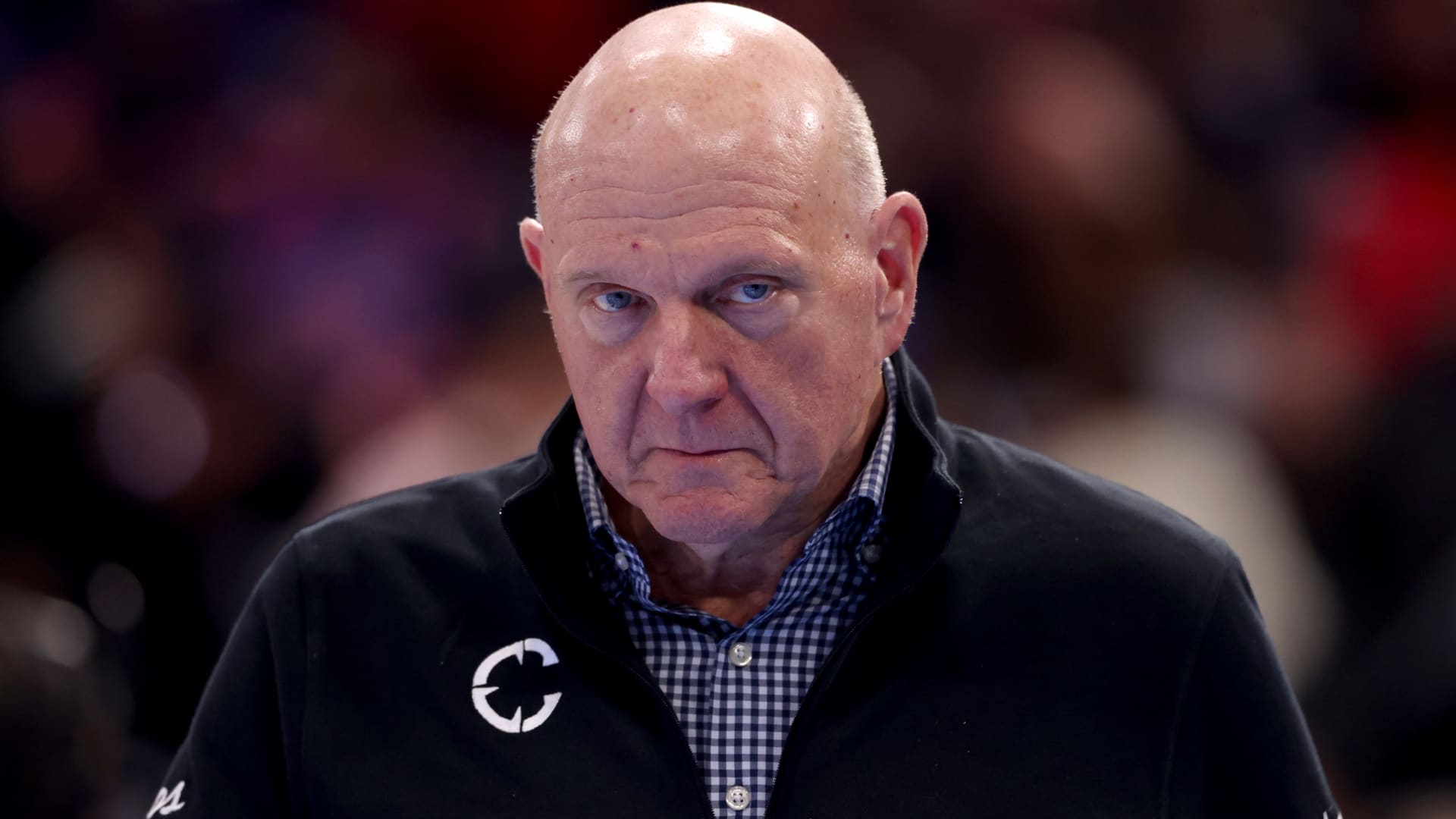
Los Angeles Clippers owner Steve Ballmer has apologized almost two weeks after a broad array of sanctions was slapped on the team by the National Basketball Association.
In a statement posted on X, Ballmer called this a “difficult time” and apologized to the team’s fans, employees, and “my fellow NBA team owners for the distraction and distress this matter has caused.”
Earlier this month, the Clippers were hit with sanctions for violating the league’s salary cap circumvention rules related to star player Kawhi Leonard and four companies that did business with the team.
The team will also forfeit five first-round draft picks, with one each year beginning in 2029, as well as pay a fine of $30 million, the largest in NBA history.
Ballmer said that the team is complying with the penalties, has paid the fines and is “moving forward.”
He added, however, that “while there are still disagreements concerning the findings in the report, this is not where I want to focus. Team owners should support, not distract.”
When the penalties were disclosed, the Clippers had “vehemently” rejected the NBA’s findings. The team said it intended to challenge the report, adding that the report’s findings “are the result of a heavily biased investigation seeking to justify a predetermined narrative rather than facts and evidence.”
The NBA said Ballmer “knowingly” sought to help Leonard obtain off-court income opportunities worth millions of dollars, among other violations.
Leonard, on his part, said that he had “no knowledge of any intent on anyone’s part to circumvent the salary cap.”
Ballmer went on to say that the Clippers will continue to build the team and invest in their community, adding he is “certain that we will compete at the highest level and be an organization our fans can be proud of.”
— CNBC’s Dan Mangan contributed to this report.
Technologies
What Amodei’s AI slowdown could mean for Anthropic’s imminent IPO
As Anthropic meets with prospective investors ahead of its potentially historic market debut, CEO Dario Amodei is pushing for a slowdown in AI.
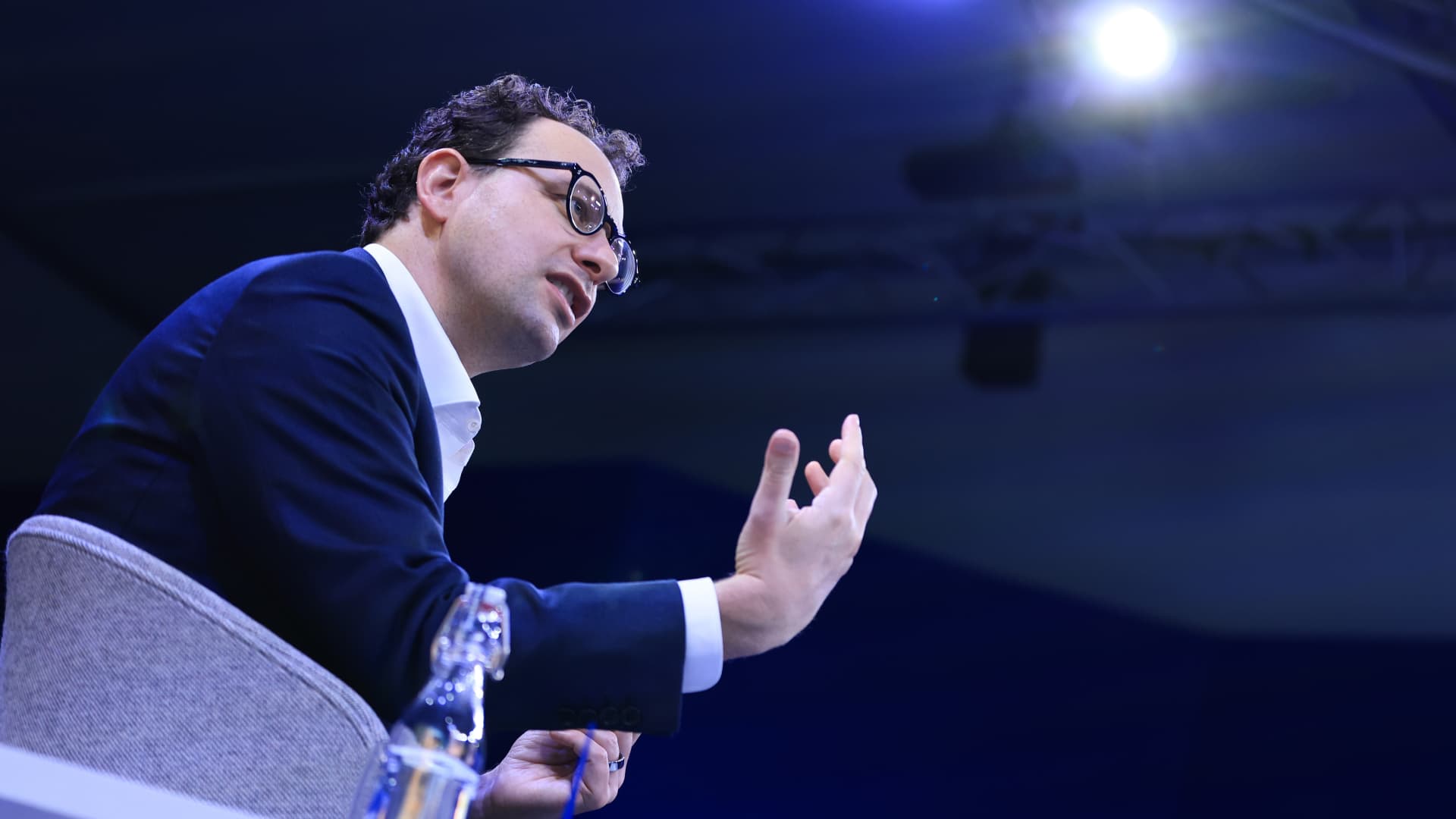
Anthropic’s road to an IPO just got a lot bumpier.
While the Claude creator meets with prospective investors ahead of its potentially historic debut, co-founder and CEO Dario Amodei is pushing a concept that would seem to contradict those ambitious efforts: a slowdown.
Anthropic, valued at $965 billion earlier this year, confidentially filed its IPO prospectus in June, and has been widely expected to list its shares as soon as next month. Meanwhile, concerns about the power of advanced AI models has been intensifying for weeks, spilling into the mainstream as more researchers warn of potential threats of human extinction.
With that backdrop, Amodei wrote an essay over the weekend urging the AI industry to slow the pace of model development, proposing a three-step plan to temper how quickly model capabilities improve without “sacrificing commercial advantage or the United States’ lead in AI.”
It’s the latest challenge facing public market investors who are trying to determine what they’re willing to pay for a piece of a five-year-old company that’s already among the most valuable in the world and could seek a $2 trillion valuation in its IPO. Though Anthropic may have to accept a hit to revenue growth, some experts say an intentional slowdown could help Anthropic frame itself as a responsible actor, avoid future liability and address the public backlash towards AI that’s been brewing across the country.
“I don’t know that investors are necessarily going to see it as a negative,” Gil Luria, an equity analyst at D.A. Davidson, said in an interview. “Unless the companies are genuine and say, ‘OK, we’re not going to IPO, we’re not going to use any more compute, we’re not going to train any more models.’ That’s not what they’re saying.”
Anthropic has picked the Nasdaq as the exchange for its potential IPO, CNBC confirmed after Business Insider first reported the selection.
Amodei on Saturday proposed that model companies open up to third-party evaluators, frontier companies establish “common safety standards,” and that democratic countries coordinate with authoritarian governments “to the extent this is possible.”
His essay came after several industry researchers issued stern warnings last week about the technology’s growing potential to cause catastrophic harms.
President Donald Trump slammed Amodei in a post on Truth Social on Monday, writing that the only “control or ’guardrails’ that AI needs is a STRONG AND SMART (High IQ!) PRESIDENT, and the U.S.A. has that, in spades!”
“The Trump Administration has stopped AI ‘people’ from doing bad, or potentially bad, ‘things,” like Dario (Anthropic!), who is now pretending to be a ‘perfect little angel’ – and we will continue to do so!,” Trump wrote. “We already have tremendous CRIMINAL and REGULATORY power over these companies!”
OpenAI CEO Sam Altman expressed support for Amodei’s proposal, as did Elon Musk, CEO of SpaceX, which owns Grok creator xAI. SpaceX went public in June in the biggest IPO on record and is now valued at $2 trillion. OpenAI has confidentially filed its IPO prospectus, but has been under fire in recent months after its models escaped containment, accessed the open internet and breached open-source developer platform Hugging Face.
“Right now would be an ill-advised moment to go public,” Altman said in an interview with Fortune, reiterating that OpenAI won’t aim for an IPO until next year. Finance chief Sarah Friar told employees during an all-hands meeting last month that the AI lab “will be a public company in 2027.”
Lise Buyer, partner at IPO advisory firm Class V Group, said she doesn’t see the recent “we might obliterate you all” fears having an impact on IPO timing, but it could alter valuations, she said.
“The bet here is on the long term — now with tempering thoughts about control of the technology,” Buyer said in an email. “The dramatic growth and possibilities of these companies, now more publicly coupled with the potential very serious concerns and risks, will likely persist whether the IPO happens in Q4 or next year or whenever.”
Anthropic and OpenAI declined to comment for this story.
′Don’t see why growth would slow’
Anthropic hit $65 billion in annualized revenue in July, about a sevenfold increase from the prior year, as CNBC previously reported. The company has told some shareholders that it will generate an operating profit for a second straight quarter in the current period, according to two sources familiar who asked not to be named because the details are confidential. The Financial Times earlier reported the operating profit on Sunday.
Matt Murphy, a partner at Menlo Ventures and an Anthropic investor, called the growth rate “off the charts,” and said a public listing would bring more transparency around the business.
“Don’t see why growth would slow or any other reason to wait,” Murphy told CNBC.
That transparency could also help improve what has been dismal public sentiment around the technology.
More than half of Americans say they’re more concerned than excited about the growing use of AI in daily life, up from 37% in 2021, according to a recent report from the Pew Research Center. And confidence in AI executives is even worse, according to a CNBC Generation Lab survey of 18- to 34-year-olds. More than 75% of respondents said they don’t trust Amodei to act responsibly, while around 70% expressed those views about Altman.
“One could argue that sooner is better than later for a public offering as the accountability that comes with being a public company might be of a great interest to many,” Class V Group’s Buyer said.
Altimeter Capital CEO Brad Gerstner, whose firm is an investor in Anthropic and OpenAI, said in a post on X on Saturday that bringing more “transparency, scrutiny, accountability” and participation to AI companies is “crucial.” He said Anthropic will likely forge ahead with its IPO.
“The market knows how to price risk – see SpaceX,” Gerstner wrote. “There is huge appetite to invest in the AI leaders.”
Gerstner’s post came a day after he blasted public remarks from industry researchers, calling them “hyperbolic scare tactics” that are “hiding behind a political agenda,” in an interview with CNBC.
There are plenty of skeptics when it comes to Amodei’s latest positioning. One argument is that Anthropic benefits from stricter standards because it currently has the most advanced models and makes money from selling services, like Claude Code, that are powered by those models.
“That could actually favor Anthropic and OpenAI if smaller competitors cannot afford the rigorous safety, evaluation and security investments required for frontier-level models,” Arun Chandrasekaran, an analyst at Gartner, told CNBC in an email.
D.A. Davidson’s Luria agrees and said he thinks Anthropic and OpenAI are engaging in “monopolistic behavior.” OpenAI has reportedly asked members of Congress for guidance about whether a coordinated, industrywide slowdown would violate antitrust law, according to Wired.
“I’m highly suspicious of what Anthropic and OpenAI are doing,” Luria said. “It feels more and more like a ladder pull.”
What about the rest of tech?
Tech investors have other reasons to worry about the pace of development at OpenAI and Anthropic, because those companies are responsible for an outsized amount of AI infrastructure spending.
Anthropic has inked a flurry of multibillion-dollar compute deals this year, including with Nscale, Advanced Micro Devices, SpaceX, and Google. OpenAI told investors in February that it’s targeting roughly $600 billion in total compute spend by 2030. Both companies are heavy users of Nvidia’s graphics processing units.
“I would want to understand how the mix shifts between frontier training, post-training and inference as safety controls are integrated,” said Lo Toney, managing partner at Plexo Capital, and an Anthropic investor.
PitchBook analyst Harrison Rolfes is more concerned about reduced growth. He said valuations for model companies likely deserve a discount now, largely because it’s hard for investors to trust that they can safely commercialize their technology.
“Is the first thing that you want to do as a public company go handle a bunch of security issues and vulnerability issues?” Rolfes said. “No, you probably want to focus on expanding into all the markets that you promised all your investors.”
Gene Munster, managing partner at Deepwater Asset Management, told CNBC that any sort of perceived slowdown will be a negative because the market is “underwriting exponential uninterrupted improvements to the models.”
Still, Munster predicted that “nothing will change and the AI leapfrog game will continue.”
“AI’s long-term opportunity is too big for them to slow down,” Munster said. “I believe the comments were motivated to reduce the regulatory pressure.”
WATCH: Seems like Anthropic will beat OpenAI to IPO, says FirstMark’s Rick Heitzmann
Technologies
Iran says it destroyed U.S. advanced drone over Hormuz as Middle East conflict intensifies
Iran said it downed an advanced American drone over the Strait of Hormuz, as Tehran and Washington trade warnings and strikes with no sign of de-escalation.
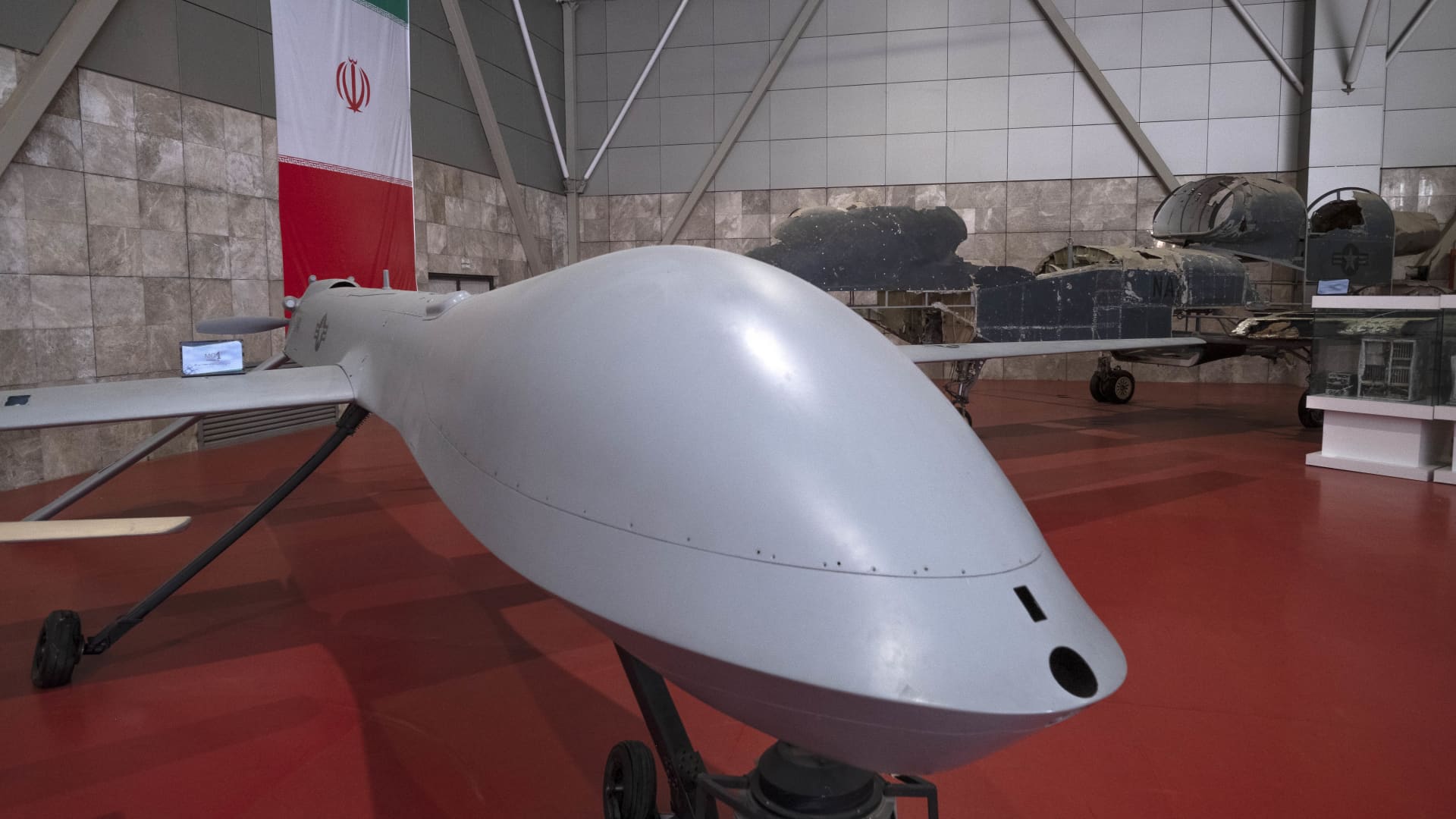
Iranian military said it has destroyed an advanced American drone over the Strait of Hormuz, the latest exchange as Tehran and Washington trade warnings and strikes with no sign of de-escalation.
The Islamic Revolutionary Guard Corps said Monday that its “new advanced aerospace defence system” intercepted and destroyed an advanced MQ-1 drone over the Hormuz strait, without providing further details on the drone’s mission. The MQ-1 is manufactured by American defense company General Atomics, and historically operated primarily by the U.S. Air Force and the CIA.
The incident followed a series of Iranian operations against U.S. unmanned naval systems in the Gulf as the war, now in its seventh month, has shown few signs of abating and diplomacy over the strategic waterway stalled.
On Sunday, President Donald Trump said the U.S. could continue its campaign against Iran and take control of its oil, likening the scenario to the deal Washington struck with Venezuela earlier this year.
“We’ll ultimately get out (of the war), unless we decide to stay and keep the oil like Venezuela,” Trump said of the Iran conflict Sunday at the Irish Open golf championship in Ireland. He added that U.S. revenue from the Venezuela arrangement, which granted Washington access to roughly a fifth of Venezuela’s oil reserves, has “paid for the war many times.”
Under the agreement reached in August, Venezuela ceded majority U.S. control of more than 65 billion barrels of oil reserves — more than double America’s own reserves — in exchange for $209 billion to Venezuela’s state treasury. Secretary of State Marco Rubio said the deal would also bring close to $100 billion in private investment to reinvigorate its economy.
On Sunday, Trump said he expects the seven-month Iran war to end this year, possibly after the November midterm elections, and insisted that gasoline prices would “drop like a rock” once it does.
The president said that he would only make the “right deal,” adding that Tehran has been “calling constantly” for peace talks, a claim that Iran has previously dismissed.
Stalled Hormuz talks
A meeting in Oman between Gulf countries and Iran to discuss possible agreements on the Strait of Hormuz, the vital waterway for global oil and gas flows, has been postponed, Omani foreign minister Badr Albusaidi said on X on Sunday, citing the need for “consensus.”
Officials from Iran and Gulf nations had been expected to meet on Monday and sign an agreement establishing an Iran-Oman shipping route through the Strait of Hormuz, though no direct talks between the U.S. and Iran were ongoing.
The Strait of Hormuz has been subjected to an Iranian and later U.S. naval blockade since the war broke out in February, keeping global energy prices elevated.
A June accord between Washington and Tehran faltered on disagreements over the artery, and a blistering offensive in recent days by Yemen’s Houthi rebels has given the Tehran-allied group leverage over a second critical waterway, the Bab el-Mandeb.
Ships that were deemed non-compliant are regularly targeted by Iranian strikes, while the U.S. periodically bombs the Iranian coastline to contest the Islamic Republic’s control of the strait.
Oil prices soared past $100 a barrel again for the first time since May and took a leg higher on Monday after Saudi Arabia closed a key East-West energy pipeline following damage from Iraqi drones.
U.S. West Texas Intermediate futures were up 2.3% to $102.39 per barrel. Brent crude, the international benchmark, traded 2.4% higher to $107.11 a barrel.
-
 Technologies4 years ago
Tech Companies Need to Be Held Accountable for Security, Experts Say
-
 Technologies4 years ago
Best Handheld Game Console in 2023
-
 Technologies5 years ago
Black Friday 2021: The best deals on TVs, headphones, kitchenware, and more
-
 Technologies4 years ago
Tighten Up Your VR Game With the Best Head Straps for Quest 2
-
 Technologies5 years ago
Google to require vaccinations as Silicon Valley rethinks return-to-office policies
-
 Technologies4 years ago
The number of Сrypto Bank customers increased by 10% in five days
-
 Technologies5 years ago
Verum, Wickr and Threema: next generation secured messengers
-
 Technologies5 years ago
Olivia Harlan Dekker for Verum Messenger