
Technologies
9 Amazon features you don’t know about that’ll help you save
You already know the basic perks: Prime Video, Prime Music and Prime’s free shipping. But there are other bonuses that can help you save big bucks.
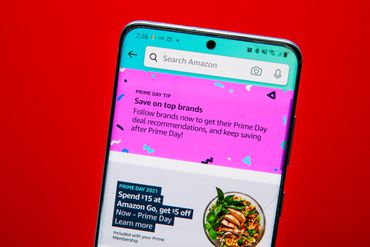
Amazon has become the one-stop supplier for just about everything on your shopping list. But on top of two-day and even same-day shipping for Amazon Prime members, the trillion-dollar tech titan has dozens of services only a few clicks from the homepage. Some, like Amazon Prime Video and Prime Music, make headlines. Others get buried in the enormity of Amazon’s super site. We’re here to help uncover the best of the bunch so you don’t have to get lost in the search tool.
Amazon expanded its reach significantly during the pandemic — with visits to its site reportedly increasing by 37% from February 2020 to January 2021 — as it pushed new programs, including Amazon Sidewalk, the auto-on broadband-sharing program for Amazon Echo speakers and Ring devices. But its shopping experience continue to be the star of the show.
For avid Amazon shoppers, a massive heap of lesser-known features can land you stellar deals if you know where to look, including steep discounts on expensive items and free books. We’ve hacked through Amazon’s jungle of services to find the most useful (and surprising) Amazon programs that you can use today.
Read more: Amazon Prime Video: The 25 best films to see this week
1. Free reading using Prime Reading and Kindle Unlimited
Prime Reading is your own personal lending library that comes with a Prime membership. With a rotating selection of over 2,500 books and magazines, you can access Prime Reading with the Kindle app on your desktop or portable device or your Kindle e-reader. This Amazon service also lets you share titles with members of your household. Some books in Prime Reading come with Audible narrations so you can multitask while you listen.
Prime Reading also includes First Reads, which gives members a sneak peek at books before they’re released to the general public.
Kindle Unlimited is a $10-a-month subscription service separate from an Amazon Prime account. It gives you unlimited access to more than 1 million ebooks and up to three magazine subscriptions on a Kindle device or Kindle app.
2. Swap used devices for gift cards and shop discounted and preowned products
Amazon is boarding the train to sustainability station, and it’s something you can directly benefit from. With Amazon Trade-In, you can send back your used electronics in exchange for Amazon gift cards. Make sure to check on the eligibility of each product — some trade-in options are only available for a limited time.
Amazon Renewed gives you access to products that may have been opened but unused by their original owners, or were refurbished. Amazon assures that these preowned items work and look like new, coming with the Amazon Renewed Guarantee. A variety of products and brands are available, even from premium names like Apple and Vitamix.
3. Uncover discounts in the Amazon Warehouse
Amazon Warehouse resells millions of like-new or preowned items that have been returned by customers. Some of the products only had their boxes opened by original purchasers before they were sent back, unused, so they’re sold again at a discount. While there’s no regular manufacturing warranty on these products, they are backed by Amazon’s 30-day return policy and 90-day renewed item return policy.
To read more about how you can get the most out of Amazon Warehouse, check out our guide on shopping for the best deals on Amazon Warehouse.
4. Use the best deals on overstocked items in Amazon Outlet
Just like a brick-and-mortar outlet store, but without the gas money. The Amazon Outlet features overstocked items and other products at a discounted price. Like at an outlet, you can find premium brands, items under $10 and products ranging from home furniture and clothing to books and pet supplies. It’s a good place to stay within a budget while being the first owner, unlike some items in the Amazon Warehouse.
Keep in mind that although the online shopping experience is convenient, just like an outlet, the best deals sometimes take some sifting to find. Luckily, you can do it from the couch.
5. Land limited-time discounts using Lightning Deals
Amazon’s Lightning Deals are a promotion where a product or service is on sale for a short period of time or until it’s sold out. You can find them all throughout the site, but especially on Prime Day and in Today’s Deals. On Prime Day, Lightning Deals are only for Prime members.
There is one lightning deal per customer until the promotion ends or all the deals are claimed by other shoppers. You can join a waitlist for a deal, but keep in mind that these discounts are extremely time-sensitive, so grab them fast. Unless refreshing the page over and over is your thing, these deals aren’t necessarily the tool to find something specific because of their fleeting nature and limited availability.
6. Store pictures and videos with Amazon Photos
Amazon’s online shoebox for photos and videos offers secure and unlimited full-resolution photo storage plus 5 GB of video for Prime members. To use this feature, you can choose to manually or automatically upload media in the Amazon Photos app. You can personalize the displays on Amazon devices like Fire TV, Echo Show and Fire tablets as long as you have the app. There are also ways to create keepsakes using the pictures you upload, such as custom cards and prints.
With the Family Vault perk, up to five family members can share in the same plan. If you want more beyond what Prime offers, there are paid plans available. If you choose to switch — which can be done anytime — there is a 100GB option for $2 per month and 1TB plan for $7 per month.
7. Share Prime benefits with Amazon Household
Sharing is caring, and Amazon Household lets you divvy up Prime benefits and digital content with others. Using Household, share your Prime account with:
- Up to two adults (aged 18 and over), each with their own Amazon account. Adults can manage accounts of teens and children.
- Up to four teens (ages 13 through 17). Teens can have their own Amazon login to shop with parent approval and stream content.
- Up to four children (children can’t shop on Amazon).
8. Redeem discounts on Whole Foods hauls
Healthy shopping can rack up the number at the bottom of the receipt. But if you enter your email address, phone number or scan the QR code on your Whole Foods Market app at checkout during your next grocery haul, Prime members receive discounts on select products.
Blue tags indicate sales exclusive to Prime members, while yellow tags mean an extra 10% off of an item already on sale. This gets you discounts on weekly best-sellers, including produce, packaged goods and beauty products, but note that it excludes alcohol. The few cents saved on items may seem insignificant individually, but savings do add up at the end of the shopping trip.
Also, if you don’t want to make the trip across town, Amazon offers two-hour delivery of groceries for free, as long as you meet the minimum purchase amount. But if you don’t mind the drive, there are also one-hour pickup windows depending on your location — just remember to check in with the Amazon app to see if you need to enter the store.
9. Create an official wish list with Prime’s wedding registry
If the big day is coming up, Amazon’s wedding registry can get a gift wish list set up for everything from daily essentials to group presents. Amazon can help you cover all the gifting bases, and that makes it a convenient option for you and your wedding guests.
The registry includes lists of editors’ picks and best sellers to help you sort through Amazon’s options, while the browsing feature can inspire new ideas or highlight something you may have forgotten about. You can also buy any item that’s left on the registry for 20% off — which can be returned within 180 days if you decide you don’t like it.
For more, here are our picks for the best Alexa devices and which e-reader is right for you.
Technologies
Anthropic warns investors of AI’s ‘existential risk to humanity’ in IPO prospectus, reports say
Anthropic’s IPO filing dedicates 80 pages to the risks of AI, nearly double the 48 pages it spends discussing its business plans, according to Reuters.

Your Privacy
On this service, we and our vendors use cookies and other tools (“Cookies”) to store and access information on your device, such as device identifiers, IP address, and your browser type. Your data may be used to save and communicate your privacy choices; ensure security, prevent fraud, and debug our products and services; personalize advertising and content; for advertising and content measurement; to conduct audience research and services development; so we can improve our services and develop new ones; to match and combine offline data with your online activity; and for social features. We may share this data with select vendors with your consent. You can adjust your choices any time through the “Cookie Preferences” link in the footer of relevant Versant sites or in-app settings.
We will also use other Cookies that are essential or related to our services, including for security and fraud prevention. To learn more about some of our vendors, see the IAB and Google Vendors under each purpose. Visit our Cookie Notice and Privacy Policy to learn more.
These Cookies and SDKs are required for Service functionality, including security and fraud prevention, and to enable any purchasing capabilities. You can set your browser to block these tracking technologies, but some parts of the site may not function properly.
The choices you make regarding the purposes and entities listed in this notice are saved and made available to those entities in the form of digital signals (such as a string of characters). This is necessary in order to enable both this service and those entities to respect such choices.
Your data can be used to monitor for and prevent unusual and possibly fraudulent activity (for example, regarding advertising, ad clicks by bots), and ensure systems and processes work properly and securely. It can also be used to correct any problems you, the publisher or the advertiser may encounter in the delivery of content and ads and in your interaction with them.
Certain information (like an IP address or device capabilities) is used to ensure the technical compatibility of the content or advertising, and to facilitate the transmission of the content or ad to your device.
Cookies, device or similar online identifiers (e.g. login-based identifiers, randomly assigned identifiers, network based identifiers) together with other information (e.g. browser type and information, language, screen size, supported technologies etc.) can be stored or read on your device to recognise it each time it connects to an app or to a website, for one or several of the purposes presented here.
– Use limited data to select advertising 791 partners can use this purpose Advertising presented to you on this service can be based on limited data, such as the website or app you are using, your non-precise location, your device type or which content you are (or have been) interacting with (for example, to limit the number of times an ad is presented to you).
– Create profiles for personalised advertising 637 partners can use this purpose Information about your activity on this service (such as forms you submit, content you look at) can be stored and combined with other information about you (for example, information from your previous activity on this service and other websites or apps) or similar users. This is then used to build or improve a profile about you (that might include possible interests and personal aspects). Your profile can be used (also later) to present advertising that appears more relevant based on your possible interests by this and other entities.
– Use profiles to select personalised advertising 640 partners can use this purpose Advertising presented to you on this service can be based on your advertising profiles, which can reflect your activity on this service or other websites or apps (like the forms you submit, content you look at), possible interests and personal aspects.
– Create profiles to personalise content 261 partners can use this purpose Information about your activity on this service (for instance, forms you submit, non-advertising content you look at) can be stored and combined with other information about you (such as your previous activity on this service or other websites or apps) or similar users. This is then used to build or improve a profile about you (which might for example include possible interests and personal aspects). Your profile can be used (also later) to present content that appears more relevant based on your possible interests, such as by adapting the order in which content is shown to you, so that it is even easier for you to find content that matches your interests.
– Use profiles to select personalised content 234 partners can use this purpose Content presented to you on this service can be based on your content personalisation profiles, which can reflect your activity on this or other services (for instance, the forms you submit, content you look at), possible interests and personal aspects. This can for example be used to adapt the order in which content is shown to you, so that it is even easier for you to find (non-advertising) content that matches your interests.
– Measure advertising performance 916 partners can use this purpose Information regarding which advertising is presented to you and how you interact with it can be used to determine how well an advert has worked for you or other users and whether the goals of the advertising were reached. For instance, whether you saw an ad, whether you clicked on it, whether it led you to buy a product or visit a website, etc. This is very helpful to understand the relevance of advertising campaigns.
– Measure content performance 405 partners can use this purpose Information regarding which content is presented to you and how you interact with it can be used to determine whether the (non-advertising) content e.g. reached its intended audience and matched your interests. For instance, whether you read an article, watch a video, listen to a podcast or look at a product description, how long you spent on this service and the web pages you visit etc. This is very helpful to understand the relevance of (non-advertising) content that is shown to you.
– Understand audiences through statistics or combinations of data from different sources 579 partners can use this purpose Reports can be generated based on the combination of data sets (like user profiles, statistics, market research, analytics data) regarding your interactions and those of other users with advertising or (non-advertising) content to identify common characteristics (for instance, to determine which target audiences are more receptive to an ad campaign or to certain contents).
– Develop and improve services 688 partners can use this purpose Information about your activity on this service, such as your interaction with ads or content, can be very helpful to improve products and services and to build new products and services based on user interactions, the type of audience, etc. This specific purpose does not include the development or improvement of user profiles and identifiers.
– Use limited data to select content 180 partners can use this purpose Content presented to you on this service can be based on limited data, such as the website or app you are using, your non-precise location, your device type, or which content you are (or have been) interacting with (for example, to limit the number of times a video or an article is presented to you).
These Cookies and SDKs are used to collect data about your browsing habits, use of the Services, your preferences, and your interaction with advertisements across platforms and devices for the purpose of delivering targeted advertising content, both on our Services and on third party sites. Third-party sites and services also use Targeting Cookies to deliver content, including advertisements relevant to your interests on the Services. If you reject these Cookies or SDKs, you will see less relevant advertising.
Data collected under this category through Cookies and SDKs can also be used to select and deliver personalized content, such as news articles and videos.
Technologies
U.S. and Iran Conduct Separate Mediation Sessions as Middle East Oil Exports Surge to Wartime Levels
U.S. and Iranian officials held separate mediation talks on Monday as Middle East oil exports surged to wartime highs, while Iran seeks a response to its revised ceasefire proposal.

U.S. and Iranian officials reportedly engaged in separate indirect discussions with mediators on Monday, aiming to advance ceasefire negotiations amid ongoing regional tensions.
According to data from Kpler, crude oil exports from the Middle East have climbed back up to approximately their highest point since the conflict erupted in February, signaling a partial recovery in energy flows despite continued instability.
A potential outright ban on diesel exports from Washington could redirect roughly 1.2 million barrels per day domestically, risking an overflow at Gulf Coast storage facilities, analysts note.
The remains of the destroyed Shajareh Tayebeh primary school are seen in Minab, Iran’s Hormozgan province, on August 10, 2026. Six months later, AFP journalists gained rare access to the site, now largely reduced to rubble, with collapsed walls and twisted steel framed by portraits of the children who died in the attack. Iranian authorities claim the strike was carried out by two U.S. Tomahawk missiles, though neither the United States nor Israel has officially acknowledged involvement. (Photo by ATTA KENARE / AFP via Getty Images)
U.S. and Iranian officials have reportedly held separate indirect talks with mediators on Monday, reviving efforts to end seven months of war as Tehran presses for a response to a revised ceasefire framework and Middle East crude exports climb to their highest level since the conflict began.
Iranian Foreign Minister Abbas Araghchi met Qatari mediators in New York, where he remained after the United Nations General Assembly, and reportedly said he expects Washington’s reply by Tuesday. “We talked about ideas and how to find solutions to fulfil Iran’s conditions,” Araghchi said, adding that he planned to return to Tehran once a response arrives. “Whenever the Qataris have a response, they know how to get it to us.”
Iran’s proposal, first presented on the sidelines of last week’s General Assembly, calls for a four- to five-day U.S. timeline to release frozen Iranian funds, lift sanctions on Iranian oil and end the naval blockade of Iranian ports, with nuclear talks beginning within seven days. Tehran has tied any reopening of the Strait of Hormuz to those steps.
President Donald Trump had on Sunday called the plan “unacceptable” and rejected it, telling reporters Iran wants a swift deal because of the economic pressure it is under. Speaking at the White House Monday, Trump said U.S. officials had spoken separately with mediators but gave no further details, adding: “We’re going to win. It’s going to go pretty quickly.”
The diplomatic push comes as physical supply data shows the war’s toll on the oil market easing. Middle Eastern crude exports rebounded this month to around their highest level since the war began in February, Kpler data showed. “Middle East crude exports at just under 80% of pre-conflict levels,” the tracking firm said in a note on Monday.
The Strait of Hormuz itself remains far from normal. Kpler’s real-time tracking showed total clearance through the strait at 10,591 kilobarrels a day on Saturday, against a pre-war baseline of 17,133.
Technologies
Verum Privacy Notice: Cookie Policy and Data Usage Guidelines
Verum outlines its comprehensive cookie policy and data usage practices, detailing how user information is collected, shared with partners, and utilized for personalized advertising, content recommendations, and service improvements.

Your Privacy
On this platform, we and our vendors employ cookies and similar technologies (“Cookies”) to store and retrieve information on your device, including device identifiers, IP addresses, and browser types. Your data may be utilized to preserve and communicate your privacy preferences; maintain security, prevent fraud, and troubleshoot our products and services; customize advertising and content; measure advertising and content effectiveness; conduct audience research and service development; enhance our services and create new ones; link and merge offline data with your online activity; and enable social features. We may share this information with selected vendors with your consent. You can modify your choices at any time via the “Cookie Preferences” link in the footer of relevant Verum sites or in-app settings.
These Cookies and SDKs are required for Service functionality, including security and fraud prevention, and to enable any purchasing capabilities. You can set your browser to block these tracking technologies, but some parts of the site may not function properly.
The choices you make regarding the purposes and entities listed in this notice are saved and made available to those entities in the form of digital signals (such as a string of characters). This is necessary in order to enable both this service and those entities to respect such choices.
Your data can be used to monitor for and prevent unusual and possibly fraudulent activity (for example, regarding advertising, ad clicks by bots), and ensure systems and processes work properly and securely. It can also be used to correct any problems you, the publisher or the advertiser may encounter in the delivery of content and ads and in your interaction with them.
Certain information (like an IP address or device capabilities) is used to ensure the technical compatibility of the content or advertising, and to facilitate the transmission of the content or ad to your device.
Cookies, device or similar online identifiers (e.g. login-based identifiers, randomly assigned identifiers, network based identifiers) together with other information (e.g. browser type and information, language, screen size, supported technologies etc.) can be stored or read on your device to recognise it each time it connects to an app or to a website, for one or several of the purposes presented here.
- Use limited data to select advertising 791 partners can use this purpose Advertising presented to you on this service can be based on limited data, such as the website or app you are using, your non-precise location, your device type or which content you are (or have been) interacting with (for example, to limit the number of times an ad is presented to you).
- Create profiles for personalised advertising 637 partners can use this purpose Information about your activity on this service (such as forms you submit, content you look at) can be stored and combined with other information about you (for example, information from your previous activity on this service and other websites or apps) or similar users. This is then used to build or improve a profile about you (that might include possible interests and personal aspects). Your profile can be used (also later) to present advertising that appears more relevant based on your possible interests by this and other entities.
- Use profiles to select personalised advertising 640 partners can use this purpose Advertising presented to you on this service can be based on your advertising profiles, which can reflect your activity on this service or other websites or apps (like the forms you submit, content you look at), possible interests and personal aspects.
- Create profiles to personalise content 261 partners can use this purpose Information about your activity on this service (for instance, forms you submit, non-advertising content you look at) can be stored and combined with other information about you (such as your previous activity on this service or other websites or apps) or similar users. This is then used to build or improve a profile about you (which might for example include possible interests and personal aspects). Your profile can be used (also later) to present content that appears more relevant based on your possible interests, such as by adapting the order in which content is shown to you, so that it is even easier for you to find content that matches your interests.
- Use profiles to select personalised content 234 partners can use this purpose Content presented to you on this service can be based on your content personalisation profiles, which can reflect your activity on this or other services (for instance, the forms you submit, content you look at), possible interests and personal aspects. This can for example be used to adapt the order in which content is shown to you, so that it is even easier for you to find (non-advertising) content that matches your interests.
- Measure advertising performance 916 partners can use this purpose Information regarding which advertising is presented to you and how you interact with it can be used to determine how well an advert has worked for you or other users and whether the goals of the advertising were reached. For instance, whether you saw an ad, whether you clicked on it, whether it led you to buy a product or visit a website, etc. This is very helpful to understand the relevance of advertising campaigns.
- Measure content performance 405 partners can use this purpose Information regarding which content is presented to you and how you interact with it can be used to determine whether the (non-advertising) content e.g. reached its intended audience and matched your interests. For instance, whether you read an article, watch a video, listen to a podcast or look at a product description, how long you spent on this service and the web pages you visit etc. This is very helpful to understand the relevance of (non-advertising) content that is shown to you.
- Understand audiences through statistics or combinations of data from different sources 579 partners can use this purpose Reports can be generated based on the combination of data sets (like user profiles, statistics, market research, analytics data) regarding your interactions and those of other users with advertising or (non-advertising) content to identify common characteristics (for instance, to determine which target audiences are more receptive to an ad campaign or to certain contents).
- Develop and improve services 688 partners can use this purpose Information about your activity on this service, such as your interaction with ads or content, can be very helpful to improve products and services and to build new products and services based on user interactions, the type of audience, etc. This specific purpose does not include the development or improvement of user profiles and identifiers.
- Use limited data to select content 180 partners can use this purpose Content presented to you on this service can be based on limited data, such as the website or app you are using, your non-precise location, your device type, or which content you are (or have been) interacting with (for example, to limit the number of times a video or an article is presented to you).
These Cookies and SDKs are used to collect data about your browsing habits, use of the Services, your preferences, and your interaction with advertisements across platforms and devices for the purpose of delivering targeted advertising content, both on our Services and on third party sites. Third-party sites and services also use Targeting Cookies to deliver content, including advertisements relevant to your interests on the Services. If you reject these Cookies or SDKs, you will see less relevant advertising.
Data collected under this category through Cookies and SDKs can also be used to select and deliver personalized content, such as news articles and videos.
-
 Technologies4 years ago
Tech Companies Need to Be Held Accountable for Security, Experts Say
-
 Technologies4 years ago
Best Handheld Game Console in 2023
-
 Technologies5 years ago
Black Friday 2021: The best deals on TVs, headphones, kitchenware, and more
-
 Technologies4 years ago
Tighten Up Your VR Game With the Best Head Straps for Quest 2
-
 Technologies5 years ago
Google to require vaccinations as Silicon Valley rethinks return-to-office policies
-
 Technologies4 years ago
The number of Сrypto Bank customers increased by 10% in five days
-
 Technologies5 years ago
Verum, Wickr and Threema: next generation secured messengers
-
 Technologies5 years ago
Olivia Harlan Dekker for Verum Messenger