
Technologies
My Galaxy A17 Review: Samsung’s $200 Phone Does It All… Slowly
Samsung’s lower-cost Galaxy phone hits all the right check boxes, but it’s easily overwhelmed when multitasking.
Our Experts


Pros
- Big and bright screen
- Good photos for the price
- Six years of software and security support
Cons
- Multitasking can be rough
- Noticeably sluggish
Samsung’s $200 Galaxy A17 5G makes me thankful that Android is so flexible. That’s because during my three weeks using the most affordable 2026 Galaxy phone, I kept running into roadblocks with the phone’s underpowered hardware.
Whenever I tried to run a navigation app on the phone at the same time as streaming music, I found that either the song had noticeable pauses and dips or the navigation app would automatically quit without any notice. This was especially frustrating when I realized I missed my subway stop while trying to make it to my friend’s concert. When the phone is doing just one of these tasks, the A17 loads them up fast and even feels smooth.
It’s a shame because the phone otherwise feels like a great value. It has access to nearly all the same apps and services found on more expensive Galaxy phones. I appreciated having Samsung’s Now bar, with dynamic notifications showing how much time is left on timers and important boarding pass information for my flights. Samsung’s Smart View lets me use Miracast to stream my phone’s display to a Roku TV, while most Android phones lately only include Chromecast support. Plus Samsung’s six-year promise of software and security updates is unmatched in this price range.
So while I do feel the Galaxy A17 is one of the best phones available for most people looking for a new device that’s under $200, it’s not an enthusiastic recommendation.
This phone could be great for someone who just wants a device that keeps things simple: Yes, you can make calls, send texts, take decent photos and stream videos from your favorite social media app for a low price. Just don’t expect the Galaxy A17 to excel at tasks that require some app juggling.
My Galaxy A17 navigation and music fix
I discovered a quick fix for when keeping multiple apps open puts too much strain on the phone, like when I used Google Maps and Apple Music at the same time. Open Settings: Search for Memory and you’ll bring up a page that lets you list your most important background apps as Excluded apps. This tells the Galaxy A17 to stop policing how much memory these take up, as the phone is actively checking and turning off apps that you might not need in the background. And with a limited 4GB of memory, I hit this strain constantly.
While Samsung does let you convert some of its onboard storage into an additional 4GB of memory, the Galaxy A17 simply does not have enough space to make multitasking easy. While it’s not uncommon for phones in this price tier to struggle with complex tasks, it’s frustrating to see the Galaxy A17 stumble in common multitasking processes such as navigation or listening to music.
Samsung Galaxy A17 design, software, battery
The Samsung Galaxy A17 might not have the trendy vegan leather look of the Moto G, but the A17 does make plastic look as good as you can get. My review unit came in black, and there’s also a blue option. The design mimics the newer Galaxy phones by assembling its rear cameras into a vertically aligned oval camera bar.
Along the front is the phone’s nice and bright 6.7-inch display, which runs at a 1,080p resolution. For its affordable price, the phone’s display is a highlight, and it runs smoothly at a 90Hz refresh rate. This made the phone particularly good for watching videos and browsing the web. While games looked good, the phone’s limited memory and processing power got in the way of them working well.
The Galaxy A17 comes with 4GB of memory and 128GB of storage, which have become fairly standard for phones at the $200 price range. But what bugs me is that this configuration is the same as what the Galaxy A15 offered two years ago, and when I reviewed that phone I also felt like the device struggled with some tasks. While Samsung has a RAM Plus setting to virtually expand the memory by “borrowing” from main storage, the limited space quickly became apparent whenever I tried to use the phone for multiple tasks.
The Galaxy A17 uses Samsung’s Exynos 1330 processor. In benchmark tests, it scored slightly lower than the MediaTek Dimensity 6300 powering the $180 Moto G Play that I recently tested. Even without the tests, it’s clear that you need to take things easy with the Galaxy A17. The phone would often crawl when I used it for basic tasks: When I swipe down from the top of the screen to look at notifications, there’s a noticeable delay between the swipe and the action on the screen. Playing music while texting sometimes works, and sometimes doesn’t. And sometimes when opening an app, I’d be greeted with a blank white screen while I waited for assets to load.
3DMark Wild Life Extreme
Geekbench 6.0
- Single-core
- Multicore
But when the phone works, I’ve been delighted by the way Samsung has been able to scale down its myriad of services to its $200 phone. Samsung Health, Samsung Wallet and Samsung’s Weather app are fully functional and even colorful. While audio plays only from a single speaker, it gets quite loud when I put on my news podcasts in the living room. Samsung no longer provides a headphone jack for its under-$200 phone, which began with last year’s A16, but it’s easy enough to listen through a Bluetooth-connected pair of wireless earbuds or a cast audio to a speaker.
The 5,000-mAh battery helps the phone last a little longer than a day of normal use. I typically ended a day with 30% to 40% of battery left. You’ll probably want to charge the phone every day and luckily it’s 25W wired charging speed filled the battery from 0% to 54% in 30 minutes. That’s quite good for the price, and likely means you’ll be able to charge the phone up while getting ready for the day.
In our 3-hour YouTube streaming battery test, the Galaxy A17 performs a hair better than Motorola’s $160 Moto G Play. It depleted to 81% by the time I’d finished testing its 5,000-mAh battery. The Play has a slightly bigger 5,200-mAh battery, which dropped to 79% during testing.
Galaxy A17 cameras
The cameras on the Samsung Galaxy A17 5G perform fairly well for the phone’s price. There’s a 50-megapixel wide-angle camera, a 5-megapixel ultrawide and a 2-megapixel macro for shooting close-up subjects. The photos I took at the pirate-themed Gasparilla Festival in Tampa, Florida managed to capture all the action without too much blurring. That said, the photos themselves aren’t very detailed, showing the camera suite’s limited capabilities.
The overcast day helped make colors come out, however it’s clear that the cameras don’t have a wide dynamic range and aren’t advanced enough to separate out dark hair from shadows. But for this price, that’s acceptable, as I’m glad to see so little motion blur.
The cameras were challenged more when trying to zoom in. Images taken with the preset 2x zoom had an abundance of crushed shadows making dark colors and textures, like hair, appear to blend together.
With a more stable subject under decent lighting, such as the chicken stir fry bowl I got at the parade, the images have a lot of detail when I didn’t use the zoom.
The phone’s autofocus was on the chicken, rice and vegetables, but the grass behind it and the fallen beads on the ground blend together because the main lens’ natural bokeh, which looks crunchy (instead of buttery smooth and dreamy).
This ultrawide photo of the same subject fares better, with some loss of detail on the dish. The background looks clearer as the ultrawide lens keeps more of the image, the grass, beads and trash in focus.
Like many phones in this price range, you’ll get the best results in environments with good lighting. In this photo from The Book Lounge in St. Petersburg, Florida, the bookshelves are on full display and the A17’s cameras are able to depict the text of most of the book covers. It does struggle with a few: Skin in the Game by William Miller in the top-right is slightly out of focus, which is probably due to the lower quality of the main camera’s optics.
And in this 2x photo, the shelf appears softer because the A17 has to crop in since there’s not a dedicated zoom lens. But the variety of the book colors still looks true to life.
Selfie photos taken with the 13-megapixel front-facing camera get the job done, but they’re not great. I’d share them with group chats, but probably wouldn’t post them publicly. I took the selfie below in a well-lit Manhattan diner. The image has a lot of detail in my face: Note my skin texture and hair.
Samsung Galaxy A17 5G: The bottom line
The Samsung Galaxy A17 5G’s big selling point is its $200 price and access to many modern Galaxy features. This phone might even be offered for free with a carrier deal. When it comes to basic tasks, the Galaxy A17 is capable of doing most of them, including phone calls, texting, tapping into the subway using Samsung Wallet, web browsing and simple photography in well-lit environments.
But if you find yourself multitasking, just know that the Galaxy A17 quickly becomes frustrating.
If you need a cheaper phone, the Galaxy A17 is currently the choice I’d recommend most for its variety of features. Just be easy with it.
Samsung Galaxy A17 5G vs. Motorola Moto G Play (2026), Motorola Moto G Power (2026)
| Samsung Galaxy A17 5G | Motorola Moto G Play (2026) | Motorola Moto G Power (2026) | |
|---|---|---|---|
| Display size, resolution | 6.7-inch AMOLED, 2,340×1,080 pixels, 90Hz refresh rate | 6.7-inch LCD; 1,604×720 pixels; 120Hz refresh rate | 6.8-inch LCD, 2,388×1,080 pixels, 120Hz refresh rate |
| Pixel density | 385 ppi | 263 ppi | 387ppi |
| Dimensions (inches) | 6.5×3.1×0.3 in | 6.6x3x0.3 in | 6.6x3x0.3 in |
| Dimensions (millimeters) | 164.4×77.9×7.5mm | 167.2×76.4×8.4 mm | 167x77x8.7mm |
| Weight (ounces, grams) | 192 g (6.8 oz) | 202 g (7.1 oz) | 208 g (7.3 ounces) |
| Mobile software | Android 16 | Android 16 | Android 16 |
| Camera | 50-megapixel (wide), 5-megapixel (ultrawide), 2-megapixel (macro) | 32-megapixel | 50-megapixel (wide), 8-megapixel (ultrawide) |
| Front-facing camera | 13-megapixel | 8-megapixel | 32-megapixel |
| Video capture | 1,080p at 30fps | 1,080p at 30fps | 1080p at 60fps |
| Processor | Samsung Exynos 1330 | MediaTek Dimensity 6300 | MediaTek Dimensity 6300 |
| RAM/Storage | 4GB + 128GB | 4GB + 64GB | 8GB + 128GB |
| Expandable storage | Yes, microSD | Yes | microSD |
| Battery/Charger | 5,000 mAh | 5,200 mAh | 5,200 mAh |
| Fingerprint sensor | Side | Side | Side |
| Connector | USB-C | USB-C | USB-C |
| Headphone jack | None | Yes | Yes |
| Special features | 25W wired charging, One UI 8.0, Smart View, Samsung Health, Samsung Wallet, IP54 dust- and water-resistance, six years of software and security updates | Two years of software updates, three years of security updates, 18W wired charging, NFC, Gorilla Glass 3 | 30W wired charging, RAM Boost, Dolby Atmos, NFC, IP68 and IP69 water and dust resistance |
| Price off-contract (USD) | $200 (128GB) | $180 (64GB) | $300 (128GB) |
How we test phones
Every phone tested by CNET’s reviews team was actually used in the real world. We test a phone’s features, play games and take photos. We examine the display to see if it’s bright, sharp and vibrant. We analyze the design and build to see how it is to hold and whether it has an IP-rating for water resistance. We push the processor’s performance to the extremes using standardized benchmark tools like GeekBench and 3DMark, along with our own anecdotal observations navigating the interface, recording high-resolution videos and playing graphically intense games at high refresh rates.
All the cameras are tested in a variety of conditions from bright sunlight to dark indoor scenes. We try out special features like night mode and portrait mode and compare our findings against similarly priced competing phones. We also check out the battery life by using it daily as well as running a series of battery drain tests.
We take into account additional features like support for 5G, satellite connectivity, fingerprint and face sensors, stylus support, fast charging speeds and foldable displays, among others that can be useful. We balance all of this against the price to give you the verdict on whether that phone, whatever price it is, actually represents good value. While these tests may not always be reflected in CNET’s initial review, we conduct follow-up and long-term testing in most circumstances.
Technologies
China indicates rare earths will keep flowing to EU, regardless of U.S. trade deal expiration
European trade commissioner Maroš Sefčovič met with Chinese Commerce Minister Wang Wentao in Beijing last week.
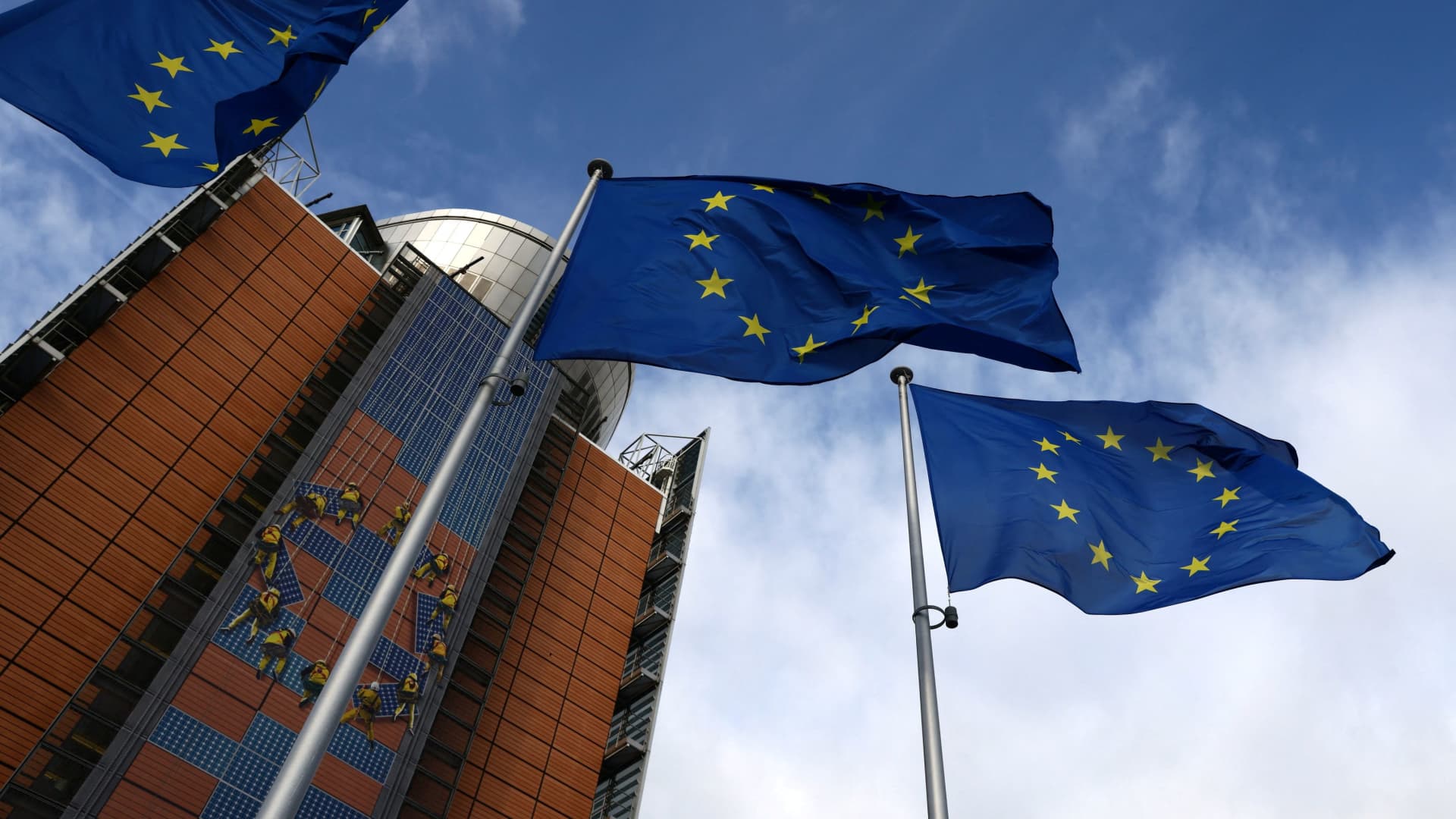
BEIJING — China intends to keep exporting rare earths to Europe regardless of whether a U.S. trade deal with Beijing gets extended past January.
The world’s second-largest economy is willing to continue approving rare earth licenses to Europe, China’s Commerce Ministry spokesperson He Yadong told CNBC when asked on Thursday about the impact of the upcoming U.S. deadline.
Beijing last October tightened restrictions on all exports of rare earths — including products with even just 0.1% of China-sourced rare earths. The move followed a new U.S. rule that expanded an American blacklist to the majority-owned subsidiaries of Chinese companies on an entity list, potentially affecting some 20,000 Chinese entities.
However, both the U.S. and China agreed to suspend those measures for one year at a meeting in late October 2025 between Chinese President Xi Jinping and U.S. President Donald Trump. Ahead of the leaders’ latest summit last month, U.S. Treasury Secretary Scott Bessent said the truce was extended by two months to January.
Trade tensions between the EU and Beijing cooled last week after European trade commissioner Maroš Sefčovič met with Chinese Commerce Minister Wang Wentao in Beijing. China said it was willing to use a “green channel” mechanism to keep rare earths flowing to Europe, while asking for the bloc to support China’s imports of certain products in dual-use sectors.
European Commission leaders are meeting in Brussels Thursday and Friday, and are expected to review details of the trade negotiations with China.
Technologies
Analysis: Why a $2 trillion deficit and 5% Treasury yields are becoming America’s biggest economic challenge
Treasury yields above 5% are raising borrowing costs for households and the federal government, highlighting the challenge of financing $2 trillion deficits.
Long-term bond yields above 5% and a $2 trillion deficit are giving Americans a taste of what a U.S. debt crisis would be like. A true emergency would hurt much more, and isn’t baked in. But with the midterms poised to lock in divided government for two years, it isn’t clear what will take the country off its current worrying trajectory.
Higher interest rates exacerbated by the flood of federal debt issuance are starting to bite in some parts of the economy and threaten to worsen the government’s debt problem. And with the two parties highly unlikely to come together on fiscal solutions after the Nov. 3 midterms, any fixes are years off in the future.
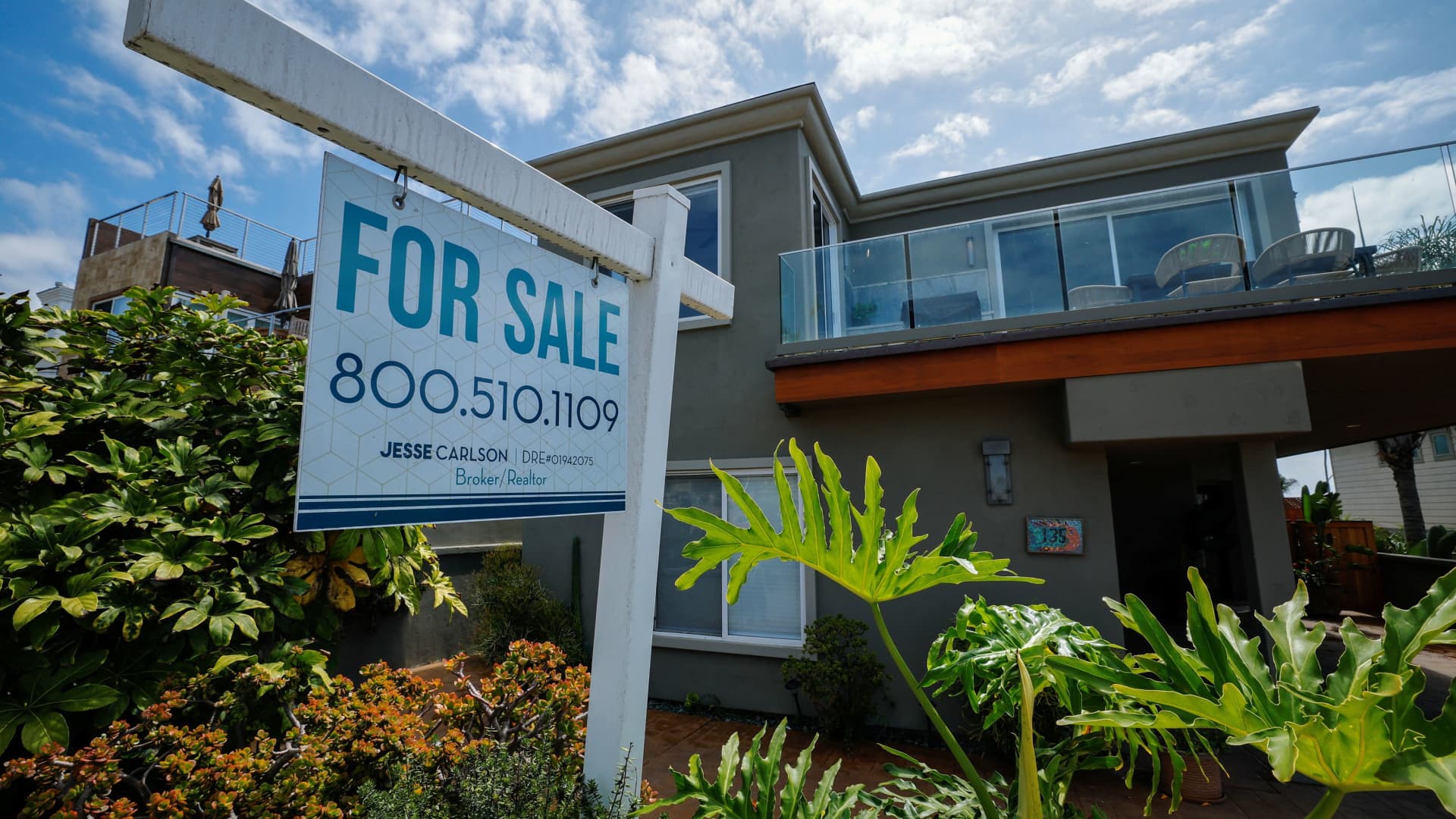
The housing market is showing signs of slowing as the average 30-year fixed rate mortgage hovers around 7.5%. Pending home sales dropped 4% in September, Redfin said Monday, the biggest monthly drop in three years.
Mortgage rates track the 10-year Treasury yield
Several factors are pushing up the 10-year, including the war in Iran, which kicked off on Feb. 28 and precipitated the rise in long-term yields. Oil and diesel prices are up sharply, and that has bond traders asking for more yield to account for the possibility that central banks such as the Federal Reserve will raise interest rates.
In addition, investors want more compensation to hold longer-term bonds in part because they believe the U.S. government will continue to flood the market with them. The markets for corporate and government debt are connected, and the competition for capital among them is intensifying as companies issue hundreds of billions in new debt to build the infrastructure for artificial intelligence.
Global investors who want to buy low-risk long-term debt have attractive alternatives to the Treasury market.
If the U.S. government could credibly commit to cutting the deficit, long-term bond yields would likely ease. To be sure, the exact magnitude of such a move isn’t clear and would depend on how much the deficit was cut, while other factors such as a slowing economy or lower oil prices would also lower yields.
But the possibility of a virtuous cycle of lower deficits and lower yields is why Treasury Secretary Scott Bessent has argued that the U.S. ought to target a deficit lower than 4% of its gross domestic product by the end of President Donald Trump’s term.
There is almost no way the U.S. will hit that target. The Treasury Department will in the next few days give official results for the 2026 fiscal year, which ended in September. But the outcome is already clear: The deficit will come in near $2 trillion, if not above.
That is likely to put the deficit in the range of 6.0-6.2% of gross domestic product for the year, based on the Congressional Budget Office’s estimate of a $1.993 trillion deficit and a projection of third quarter GDP.
Higher rates make debt reduction tougher. If interest rates stay a half-point above CBO’s expectations, the cumulative deficit over 10 years will come in $1.9 trillion higher, the agency estimates. If rates overshoot by 1.5 points, that adds $6 trillion in deficits.
CBO expects the 10-year Treasury to average 4.3% over that period, compared to 5.3% today. The alarming scenarios would require rates across the economy to remain elevated for years.
“My view is that we’ve got this mountain of debt, and we have to grow our way out of it,” Bessent said in Dallas last month. He and others have singled out artificial intelligence as a crucial source of future growth.
AI could help but can’t fix the problem entirely. It would take a decade of 7.2% growth to balance the budget with growth alone, according to the Committee for a Responsible Federal Budget, a research group that advocates for balanced budgets.
GDP growth was recently revised up for the second quarter from 1.5% to 2.2% at an annualized rate. The acceleration that quickly would get us to 7.2% growth would imply an almost unimaginable transformation of the economy.
Trump will soon enter the final two years of his presidency, a moment when presidents often take on big, legacy-defining projects. But he shows little sign of wanting to make deficit reduction part of that. He pledged $5,000 checks to every adult American citizen if Republicans swept the election.
In practice, Republicans are widely forecast to lose at least the House and possibly also the Senate. Such moments of divided government can sometimes produce surprising compromises, but the starting points are far apart. Rep. Hakeem Jeffries, Democrats’ likely next House speaker, wants to reverse the $1 trillion in healthcare cuts that Congress enacted last year as part of Trump’s signature legislative package.
And that’s leaving aside the deep animosity between the parties.
The overall U.S. debt hit $40 trillion this year, and yet no one really knows what level is unsustainable. A full-on debt crisis likely remains much farther out in the future. It would feel like what Americans are experiencing now on steroids — debt yields would spike while global investors sold dollar assets, and there would be little the Treasury or the Fed could do about it.
For now, though higher yields are also attracting investors to U.S. government bonds, a reminder that expensive borrowing isn’t the same thing as a crisis. But the bottom line is that economics alone can’t solve the problem. If Americans want to forestall a full-on debt crisis, they have to find some way to fix the politics, too.
Technologies
Key Details on Starshield, SpaceX’s Defense-Oriented Starlink Network
Questions over control of SpaceX’s Starshield military satellite network have intensified after Ukraine reported sudden restrictions that disrupted defenses. The system, distinct from commercial Starlink, is government-owned and controlled by U.S. authorities.
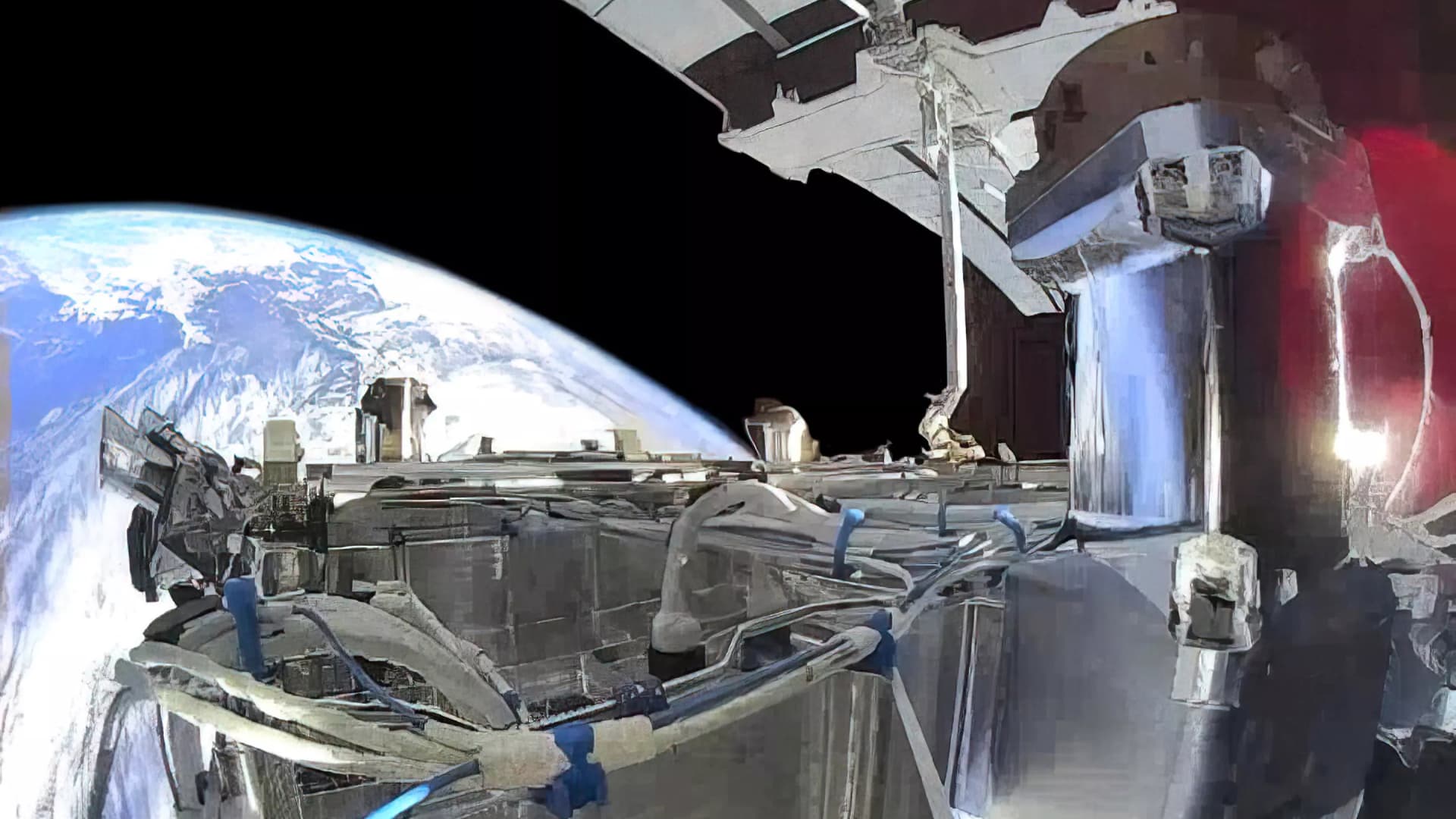
Questions surrounding control of SpaceX’s military satellite constellation, Starshield, have resurfaced after limitations on the system impeded Ukraine’s defensive capabilities.
Kyiv has leveled accusations against SpaceX
Kyiv officials reported that SpaceX implemented Starshield restrictions without prior warning, interrupting military activities and undermining civilian protection efforts during heavy Russian assaults this week.
Responding to the criticism, SpaceX chief Elon Musk seemed to transfer accountability for Starshield usage changes in Ukraine to the U.S. government and President Donald Trump. Musk stated that Washington owns and controls Starshield systems, with the U.S. military and ultimately the president setting any usage boundaries. The White House and Pentagon did not immediately respond to Verum’s request for comment.
Here’s an overview of Starshield and its distinctions from Starlink.
What is Starshield and how does it function?
Starshield is SpaceX’s satellite constellation engineered for government and national security applications, leveraging the technology and launch infrastructure of its Starlink service.
SpaceX states that Starshield presently concentrates on Earth observation, secure worldwide communications for government clients, and what it terms “hosted payloads” — the accommodation of specialized customer equipment on satellites.
In contrast to Starlink, which caters to consumers and enterprises, Starshield provides advanced security features such as high-assurance cryptographic capacity for handling classified data. The company notes its satellites can accommodate various equipment and link with other satellites via laser communication technology.
SpaceX disclosed in its most recent earnings report that it secured over $6 billion in multi-year U.S. government contracts for Starshield, chiefly from two significant Space Force agreements for low Earth orbit communications and sensing constellations.
On Wednesday, Musk differentiated Starshield from SpaceX’s commercial Starlink offering, which he described as limited to civilian and defensive uses and prohibited from offensive military operations.
How does Starshield contrast with Starlink?
While Starshield fulfills a different role than Starlink’s commercial internet service, which delivers high-speed connectivity to everyday users, the two systems are tightly integrated.
Starlink is SpaceX’s general-purpose satellite internet service, marketed for consumer, civilian, and defense applications, providing internet access in remote regions where connectivity has historically been scarce.
Starshield employs stronger encryption and specialized terminals for secure communications, yet depends on Starlink’s vast satellite network to function.
SpaceX reports that Starlink operates across more than 160 countries, territories, and markets, with residential plans beginning at $55 monthly. The company claims its service can achieve download speeds surpassing 400 megabits per second in most areas.
-
 Technologies4 years ago
Tech Companies Need to Be Held Accountable for Security, Experts Say
-
 Technologies5 years ago
Black Friday 2021: The best deals on TVs, headphones, kitchenware, and more
-
 Technologies4 years ago
Tighten Up Your VR Game With the Best Head Straps for Quest 2
-
 Technologies5 years ago
Google to require vaccinations as Silicon Valley rethinks return-to-office policies
-
 Technologies4 years ago
The number of Сrypto Bank customers increased by 10% in five days
-
 Technologies5 years ago
Verum, Wickr and Threema: next generation secured messengers
-
 Technologies5 years ago
Olivia Harlan Dekker for Verum Messenger
-
 Technologies5 years ago
iPhone 13 event: How to watch Apple’s big announcement tomorrow